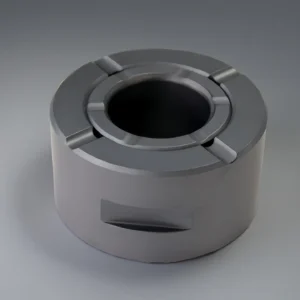
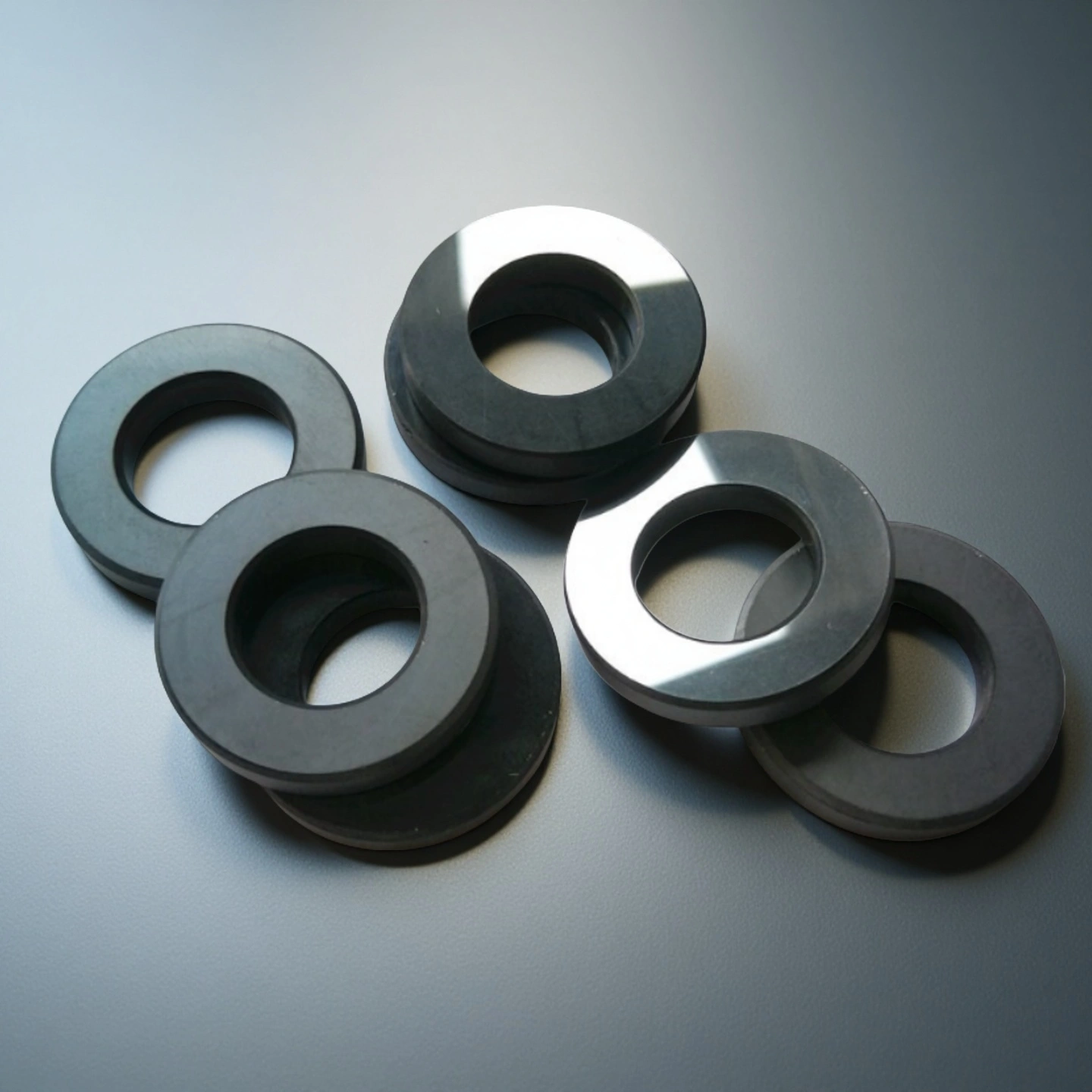
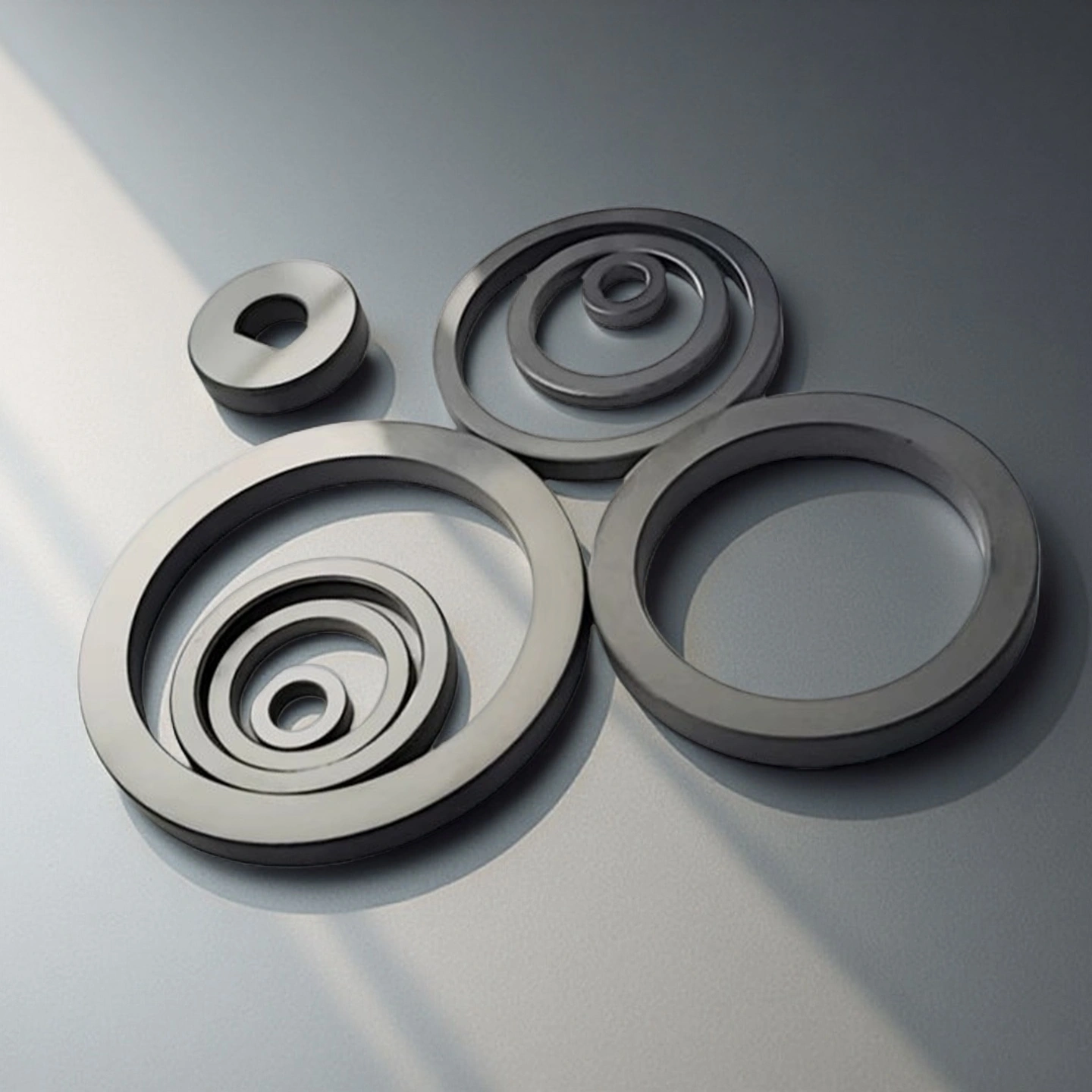
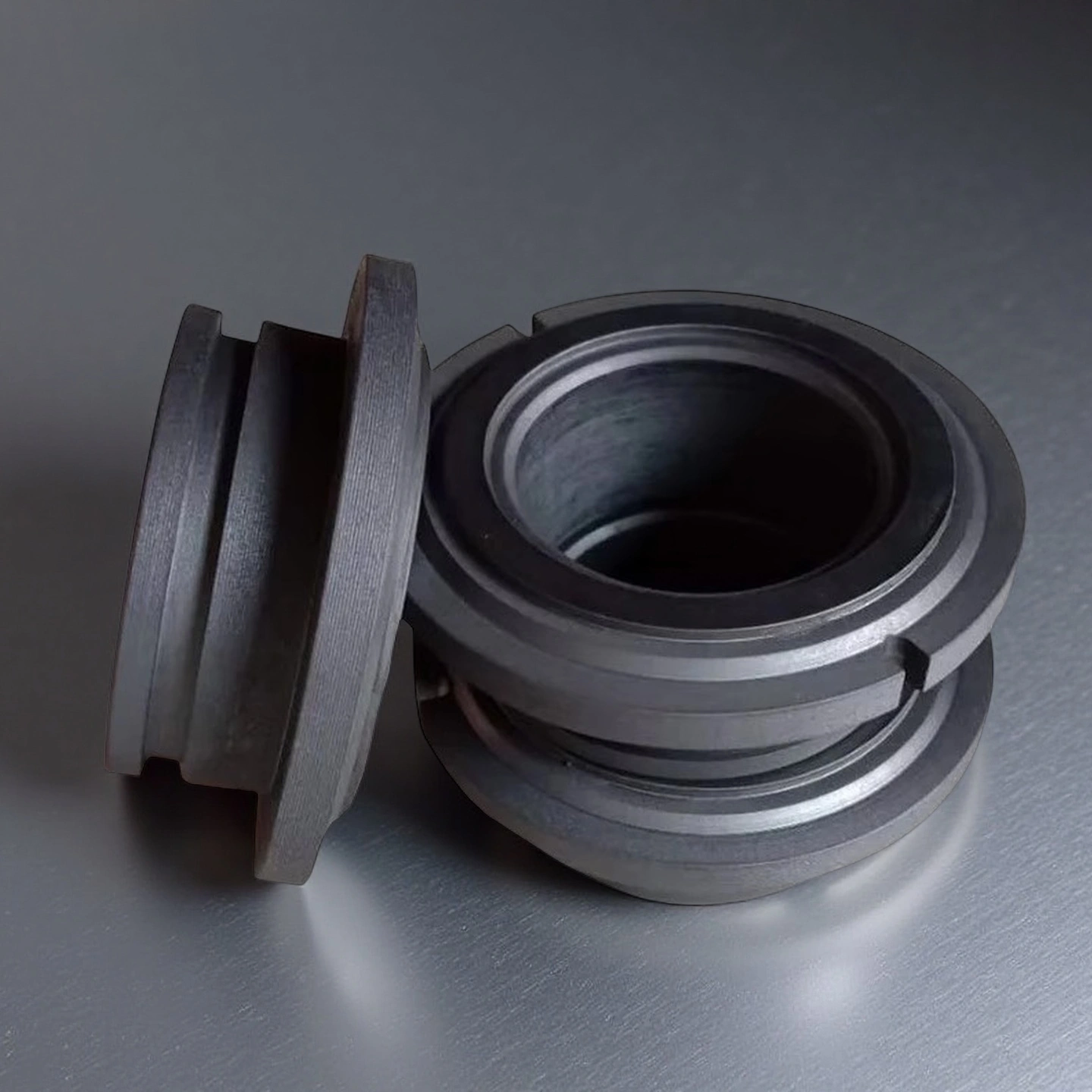
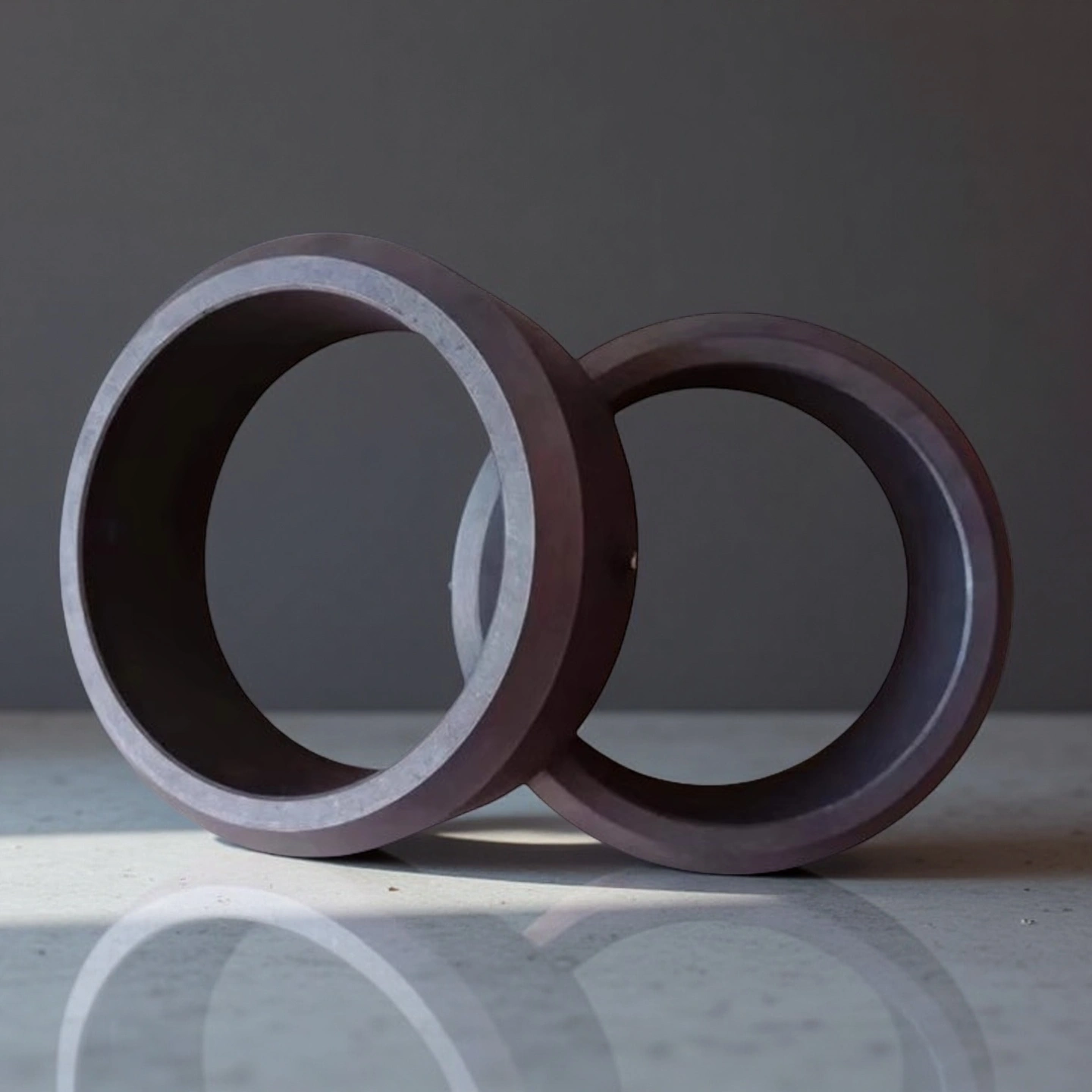
Silicon Carbide Seal Rings in Flat & Stepped Designs

A SiC seal ring is a hard-face component at the sealing interface of rotating equipment. Choose the ring profile and its rotating or stationary role, then define the working face, seating surfaces and mating component. ADCERAX supports catalogue-ring inquiries and custom geometry for OEM and repair projects.

Catalogue No. AT-SC-H001
Material Reaction-Bonded SiC (RBSiC) / Sintered SiC (SSiC)
Microstructure Density High-density architecture with porosity typically <0.2%
Thermal & Chemical Stability Thermal conductivity 70–120 W/m·K and strong acid/alkali resistance
Dimensions/Sizes Download PDF
Engineering RFQ Review
Small-Batch Custom Support
Drawing-Based Production
Drawing & Process Review

What Is a Silicon Carbide Mechanical Seal Ring?

A silicon carbide mechanical seal ring is a precision ceramic sealing face used in rotating equipment to control leakage between stationary and rotating components. It is selected when abrasive particles, corrosive liquids, hot water, hydrocarbons or slurry media make carbon, alumina or metal seal faces wear too quickly.

For most industrial buyers, the key selection point is not only the ring diameter. The final sealing performance depends on the silicon carbide grade, face flatness, surface finish, mating material, lubrication or flushing method, and the real operating conditions of the equipment.

Specifications of Silicon Carbide Seal Ring

Type 1 Silicon Carbide Seal Ring 
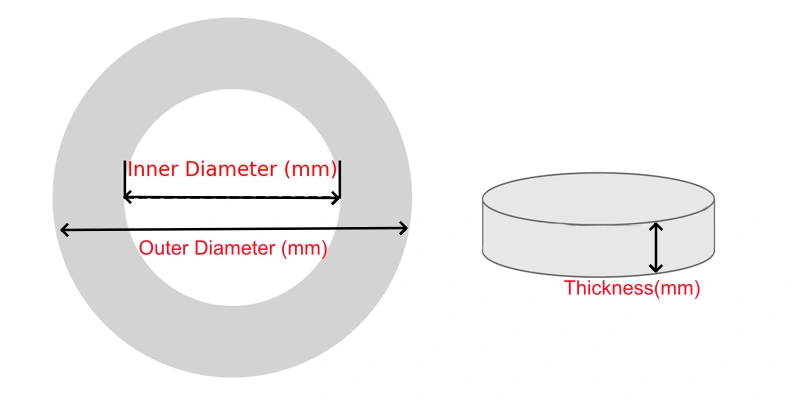
alumina ceramic washer size

Item Outer D(mm) Inner D(mm) Height(mm) Purity(%)
AT-SC-H001 10.0  5.0  2.1  99
AT-SC-H002 10.0  6.0  3.5  99
AT-SC-H003 11.0  6.0  3.0  99
AT-SC-H004 11.5  4.0  3.5  99
AT-SC-H005 11.9  6.0  4.5  99
AT-SC-H006 12.0  6.0  4.0  99
AT-SC-H007 12.9  8.5  3.0  99
AT-SC-H008 14.5  8.5  3.5  99
AT-SC-H009 14.5  8.0  4.0  99
AT-SC-H010 14.5  9.0  3.5  99
AT-SC-H011 14.5  9.0  4.0  99
AT-SC-H012 14.5  10.0  4.0  99
AT-SC-H013 14.5  8.5  3.5  99
AT-SC-H014 18.0  12.0  4.0  99
AT-SC-H015 20.0  6.0  4.0  99
AT-SC-H016 22.3  15.2  11.0  99
AT-SC-H017 25.0  16.0  6.0  99
AT-SC-H018 25.0  18.0  6.0  99
AT-SC-H019 26.0  14.0  4.0  99
AT-SC-H020 26.0  20.0  5.0  99
AT-SC-H021 28.0  12.0  4.0  99
AT-SC-H022 28.0  22.0  7.0  99
AT-SC-H023 28.0  21.0  4.0  99
AT-SC-H024 31.0  18.0  10.0  99
AT-SC-H025 32.0  20.0  3.0  99
AT-SC-H026 32.8  22.6  11.0  99
AT-SC-H027 34.0  23.0  4.5  99
AT-SC-H028 34.5  28.0  5.0  99
AT-SC-H029 36.0  20.0  10.0  99
AT-SC-H030 36.0  26.0  14.0  99
AT-SC-H031 37.0  30.0  7.0  99


Type 2 Silicon Carbide Seal Ring Stepped Ring
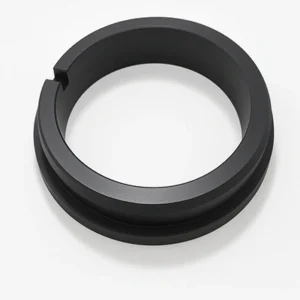
sic ring

Item Outer Diameter (mm) Inner Diameter (mm) Thickness (mm) Height (mm) Purity
AT-THG-J10001 1-150 0.5-140 0.25-50 1-50 98.5
AT-THG-J10002 25 15 5 15 98.5
AT-THG-J10003 26 12 2 4 98.5
AT-THG-J10004 31.60  20.49  5.56  11.11  98.5
AT-THG-J10005 34.77  23.66  5.56  11.11  98.5
AT-THG-J10006 37.95  26.95  5.50  12.70  98.5
AT-THG-J10007 41.12  29.92  5.60  12.70  98.5
AT-THG-J10008 47.47  33.30  7.09  12.70  98.5
AT-THG-J10009 50.65  36.40  7.13  12.70  98.5
AT-THG-J10010 53.82  39.57  7.13  12.70  98.5
AT-THG-J10011 57.00  42.66  7.17  12.70  98.5
AT-THG-J10012 60.17  46.03  7.07  12.70  98.5
AT-THG-J10013 63.35  49.20  7.08  12.70  98.5
AT-THG-J10014 66.52  52.38  7.07  12.70  98.5
AT-THG-J10015 69.70  55.86  6.92  14.90  98.5
AT-THG-J10016 72.87  59.03  6.92  14.90  98.5
AT-THG-J10017 76.05  62.21  6.92  14.90  98.5
AT-THG-J10018 79.22  65.38  6.92  15.88  98.5
AT-THG-J10019 82.40  68.63  6.89  15.88  98.5
AT-THG-J10020 85.57  71.81  6.88  15.88  98.5
AT-THG-J10021 88.75  74.98  6.89  15.88  98.5
AT-THG-J10022 91.92  78.16  6.88  15.88  98.5
AT-THG-J10023 95.10  81.30  6.90  15.88  98.5
AT-THG-J10024 98.27  84.51  6.88  15.88  98.5
AT-THG-J10025 101.45  87.68  6.89  15.88  98.5
AT-THG-J10026 104.62  90.86  6.88  17.46  98.5
AT-THG-J10027 107.80  94.16  6.82  17.46  98.5
AT-THG-J10028 114.15  97.33  8.41  17.46  98.5
AT-THG-J10029 117.32  100.21  8.56  17.46  98.5
AT-THG-J10030 120.20  103.68  8.26  17.46  98.5


Download Size Guide

SSiC and RBSiC Material Properties for Seal Rings

Both routes supply a dense SiC body for the hard working face. SSiC is pressureless-sintered, single-phase silicon carbide; RBSiC is silicon-infiltrated silicon carbide with residual free silicon. The values below are material-route selection values from the current material revision — use them to shortlist the route, then confirm the ring grade and inspection on the order drawing.

Property Unit/condition RBSiC · reaction-bonded SiC SSiC · sintered SiC
SiC content wt% 85 nominal ≥99
Residual free silicon wt% 15 nominal None — no silicon-infiltration phase
Bulk density g/cm³ · selection value ≥3.02 3.10 typical
Apparent open porosity vol% ≤0.1 <0.1
Flexural strength MPa · 20 °C · typical 250 380*
Flexural strength, elevated temperature MPa · 1,200 °C · typical 280 —
Compressive strength MPa · typical — ≥2,600
Young's modulus GPa · 20 °C · typical 330 420
Young's modulus, elevated temperature GPa · 1,200 °C · typical 300 —
Poisson's ratio typical — 0.16
Thermal conductivity W/(m·K) · typical — 100–120*
Thermal conductivity, elevated temperature W/(m·K) · 1,200 °C · typical 45 —
Application-temperature ceiling °C · initial material selection 1,380 1,600

RBSiC vs SSiC Seal Rings: Which Grade Should Be Reviewed?

Material Option Better Suited For Buyer Should Confirm
Reaction-Bonded Silicon Carbide, RBSiC General industrial seal rings where cost control, dimensional stability and wear resistance are important. Fluid chemistry, solids content, working temperature, mating face material and whether free silicon content is acceptable.
Sintered Silicon Carbide, SSiC More demanding chemical, high-temperature or high-purity fluid environments where dense microstructure and chemical stability are more critical. Acid or alkali concentration, thermal cycling, shaft speed, seal design, surface finish and required inspection standard.
Custom SiC Grade Review Equipment replacement projects, non-standard seal assemblies and harsh slurry or chemical systems. Drawing, sample photos, OD, ID, thickness, face width, groove details, tolerance needs and operating conditions.

Protective Packaging for Silicon Carbide Sealing Ring

Silicon Carbide Sealing Ring is individually protected in lined inner boxes to prevent surface contact and vibration during transit. Each boxed unit is then consolidated into reinforced cartons with clear labeling to support batch traceability and handling. All cartons are finally palletized and secured with strapping and film wrap to ensure stable, impact-resistant transport for international shipment.
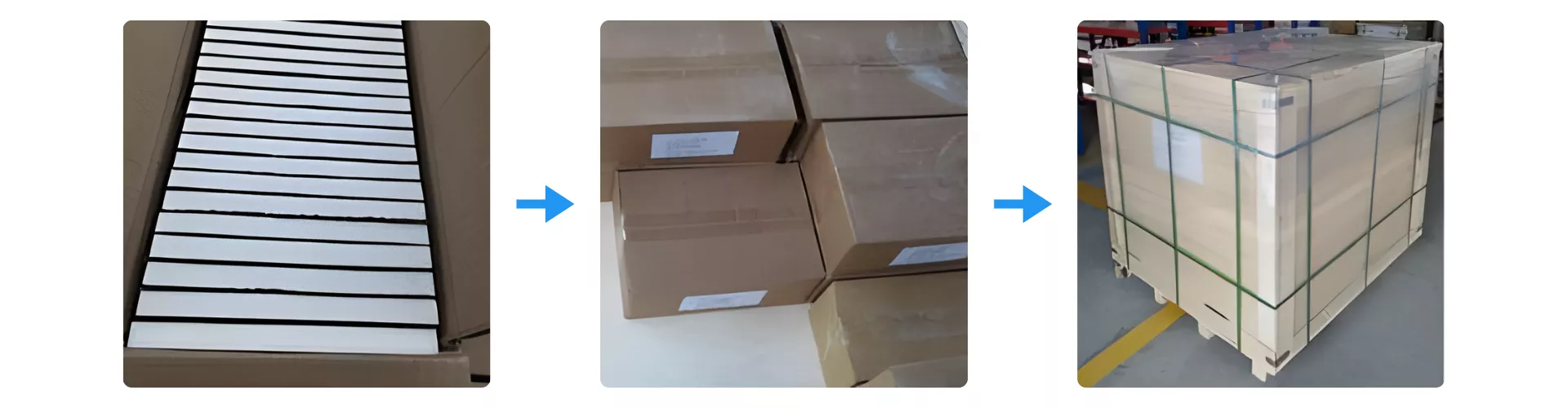
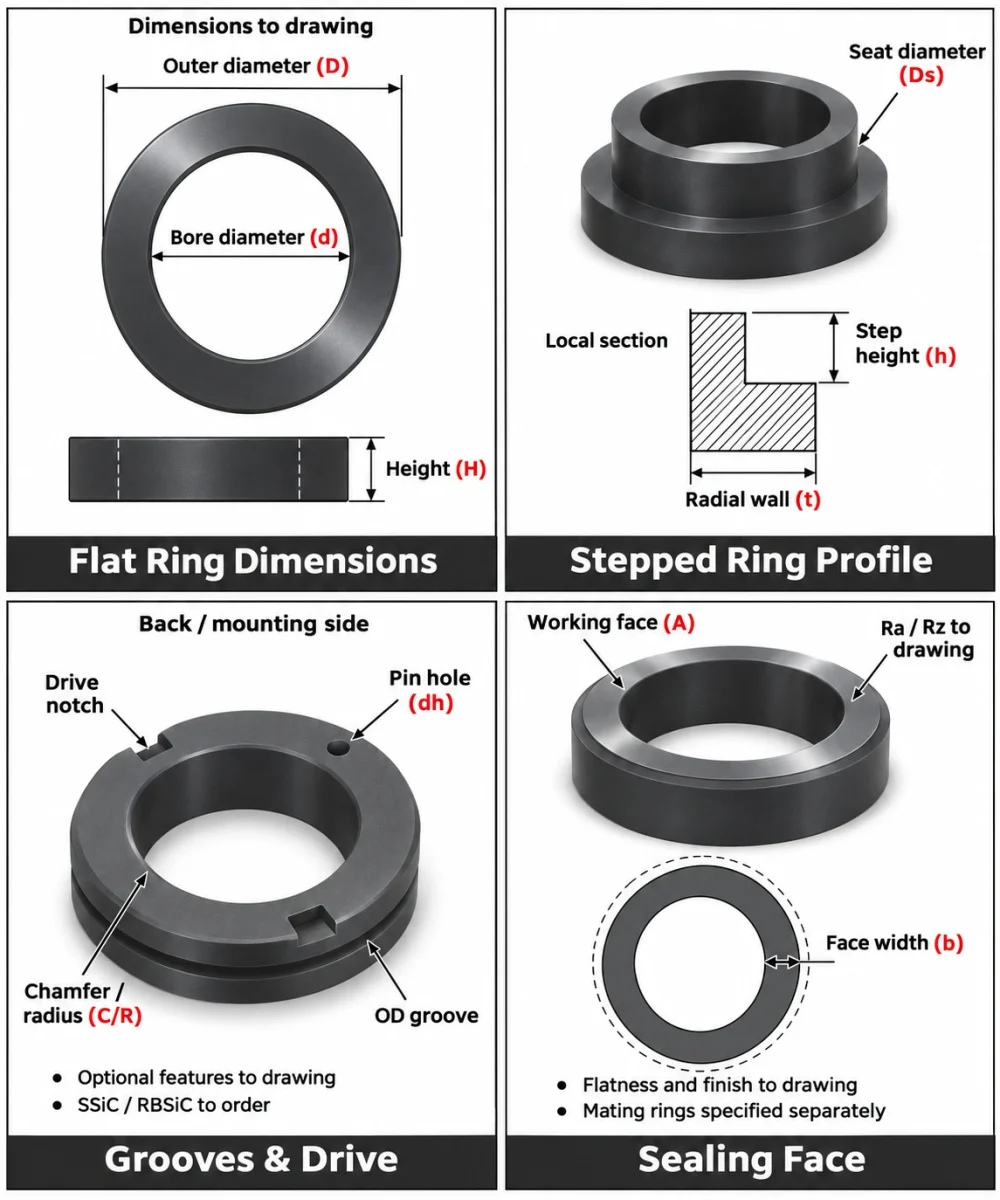
ADCERAX® Packaging of Silicon Carbide Sealing Ring

Applications of Silicon Carbide Seal Rings

Silicon carbide seal rings serve as the hard working face in mechanical seals for pumps, mixers, agitators and other rotating equipment handling abrasive, corrosive or hot fluids. Ring size alone does not define the duty — confirm the fluid, solids, temperature, mating face and flushing arrangement together with the ring selection.

  • Chemical process pumps.

    Acids, alkalis, solvents and cleaning fluids attack many conventional face materials. SSiC, with no free-silicon phase, is the usual starting point for aggressive chemistry. With your inquiry, state the chemical identity, concentration, temperature and any cleaning or flushing media so the material route can be confirmed for the actual fluid.

  • Slurry pumps and pulp transfer

    Suspended solids score softer seal faces and widen the leakage path. A SiC working face resists particle scoring, but the flushing plan and the mating-face material decide how long the pair lasts. Include the solids type, particle size and concentration, and the current flushing arrangement.

  • Mixers and agitators

    Batch changes, variable viscosity and shaft movement load the seal face unevenly. The ring’s seating, drive engagement and face-band geometry matter as much as the material. Provide the seal assembly drawing or the old part so the mounting interfaces can be matched, and note the start-stop cycle pattern.

  • Refinery and hot-fluid circulation

    Temperature transitions and friction heat distort a face that cannot shed heat evenly. Confirm the fluid temperature range, the thermal-cycling pattern and the seal maker’s flush plan; face flatness and finish are agreed on the drawing for the operating condition, not assumed from material data.

  • Filtration and vacuum separation equipment

    These systems combine slurry contact, repeated washing, pressure swings and chemical cleaning — abrasion and chemistry act on the face at the same time. State both the process fluid and the cleaning chemistry in the inquiry; a route suited to one may not suit the other.

  • Water, seawater and wastewater equipment

    Long operating cycles with particles and corrosion favor a hard, chemically stable working face. For repair orders, send the old-ring profile, seating details and front/back photographs so the replacement matches the installed seal.

Usage Guidelines for Trapezoid Alumina Crucibles

Silicon Carbide Sealing Ring should be used under controlled mechanical, thermal, and chemical conditions so that the seal face can keep a stable lubrication film and predictable leakage rate. This user guide summarizes key checks, installation steps, and operating practices that help avoid premature damage and align the product with the target process conditions. It is intended to support engineers and maintenance teams in daily operation, shutdown planning, and long-term reliability improvement.

  • Before Use

    1. Check the crucible for cracks, chips or edge damage before heating.
    2. Clean the crucible with non-metallic tools if dust or residue is present.
    3. Keep the crucible dry before use to reduce thermal shock risk.
    4. Use a clean support plate, ceramic holder or furnace setter when needed.

  • Use

    1. Preheat the crucible gradually before high-temperature operation.
    2. Do not fill the crucible beyond its safe working volume.
    3. Avoid sudden cooling, direct flame impact or forced air cooling.
    4. Use proper tongs and support the trapezoid sides carefully.
    5. Do not use strong alkalis or hydrofluoric acid with alumina crucibles.

  • Storage

    1. Store the crucible in a dry, clean and covered area.
    2. Keep used crucibles separate when processing different materials.
    3. Mark crucibles for aggressive samples to avoid cross-contamination.

  • Cleaning

    1. Let the crucible cool naturally before cleaning.
    2. Remove residue with a soft brush or non-metallic tool.
    3. Avoid strong chemical cleaning unless compatibility is confirmed.
    4. Check the bottom, corners and edges before reuse.

  • Common User Issues and Solutions

    1. Cracking after rapid heating or cooling
    Preheat gradually, avoid direct flame shock, and allow natural cooling.

    2. Residue or contamination after use
    Use separate crucibles for different materials and clean before repeated use.

    3. Edge chipping during handling
    Support the crucible from the bottom and avoid clamping the thin edges.

    4. Poor sample stability inside the crucible
    Do not overfill the crucible, and make sure it sits evenly on the furnace support.

FAQs About Silicon Carbide Mechanical Seal Rings

  1. Q1:What is the difference between a silicon carbide seal ring and a tungsten carbide seal ring?A silicon carbide seal ring is usually selected when corrosion resistance, low thermal expansion and strong wear resistance are important. Tungsten carbide can offer higher fracture toughness in some impact-prone conditions, but silicon carbide is often preferred for abrasive, chemically aggressive and high-temperature fluid systems. The final choice should be based on media chemistry, solids content, shock load, shaft movement and the complete seal design.
  2. Q2: Is RBSiC or SSiC better for mechanical seal rings?RBSiC is often reviewed for general industrial sealing applications where dimensional stability, wear resistance and cost control are important. SSiC is usually considered for more demanding chemical, high-temperature or highly corrosive environments. The better option depends on the fluid, temperature, solids content, mating ring material and required surface finish.
  3. Q3: Can silicon carbide mechanical seal rings be used in abrasive slurry?
    Yes, silicon carbide seal rings are commonly reviewed for slurry pumps, pulp transfer equipment, pigment processing, filtration systems and other abrasive services. Their high hardness helps reduce scoring from suspended particles. However, slurry concentration, particle size, flushing method and seal chamber design must be checked before material selection.
  4. Q4: Are silicon carbide seal rings suitable for corrosive chemicals?Silicon carbide has strong chemical stability in many acidic, alkaline and solvent-containing environments. It is often considered for chemical process pumps, refinery circulation systems, wastewater equipment and seawater handling. The actual suitability should be confirmed by chemical concentration, temperature, cleaning process and exposure time.
  5. Q5: What surface finish is required for a silicon carbide seal ring?The sealing face is usually lapped or polished to support a stable fluid film between mating faces. Surface finish, flatness and parallelism directly affect leakage control, friction heat and wear behavior. Buyers should provide the required roughness, flatness or original seal drawing when requesting a replacement or custom part.
  6. Q6: What information should I provide for a custom silicon carbide seal ring quotation?Please provide the drawing or sample dimensions, including OD, ID, thickness, face width, chamfer, groove and tolerance requirements. It is also helpful to provide the working media, temperature, pressure, shaft speed, solids content, mating ring material and whether the seal uses flushing or barrier fluid.
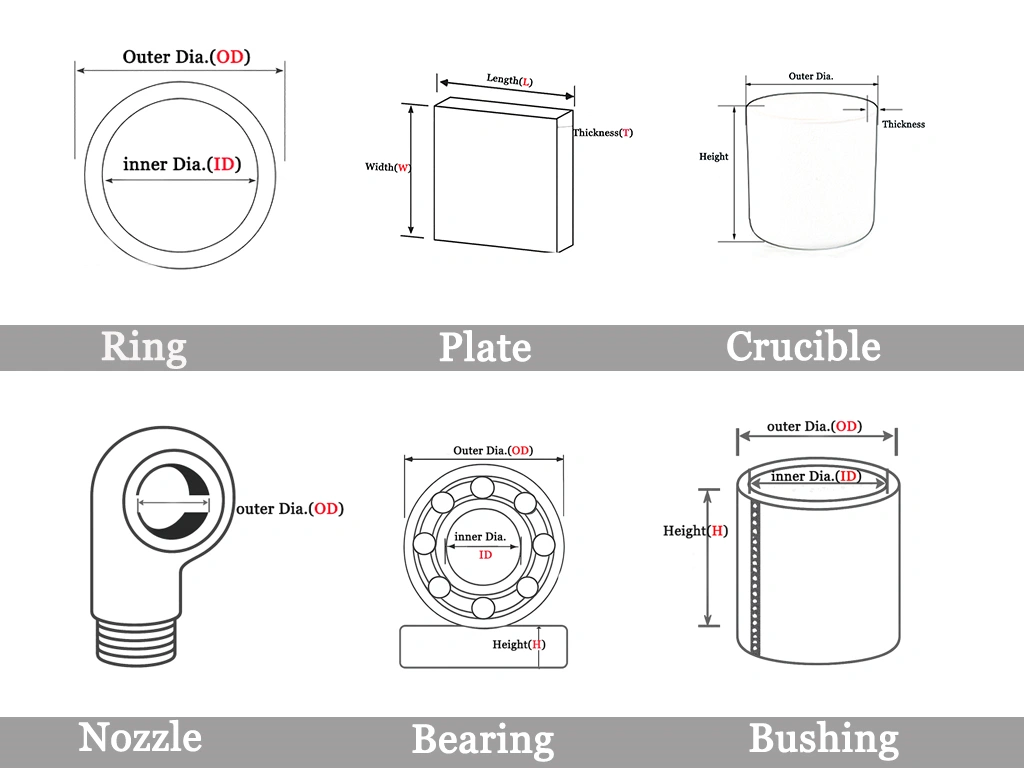
Silicon carbide seal ring diagrams showing flat and stepped profiles, diameters, height, radial wall thickness, sealing face width, grooves and drive features.

Develop a Custom SiC Seal Ring

For a profile beyond the listed catalogue sizes, explore the drawing-based options above and discuss a custom ring with ADCERAX.

Profile and body geometry 
OD, ID, height, local thickness, steps, shoulders and chamfers to your drawing

Working face and drive features
 Face-band dimensions, grooves, slots, holes, drive notches and anti-rotation interfaces

Material route and grade
SiC or RBSiC, composition basis, material documentation and agreed inspection

Surface finishing by zone
Machining, grinding, lapping or polishing specified per surface on the drawing

Multi-component arrangements
Individual rings or mating-ring sets, each defined with its own drawing and quantity

Sample and repeat supply
sample-approval drawing revision, inspection record and production-order planning

Related Products

ADCERAX - Your Trusted Advanced Ceramics Manufacturing Partner

ADCERAX – Custom Ceramic Supply and Engineering Coordination
ADCERAX coordinates drawing review, production and inspection with manufacturing partners against agreed specifications.

China-Based Ceramic Supply Partner

ADCERAX coordinates custom ceramic supply for overseas OEMs, equipment builders, and labs.

Custom Drawing Support

We review drawings, dimensions, materials, and application conditions before quotation.

Ceramic Process Control

Forming, sintering, machining, grinding, and finishing are arranged by part requirements.

Pre-Shipment Inspection

Dimensional checks, visual inspection, and packaging review help reduce procurement risk.

Get in Touch with Us

Our team will be happy to respond to you in less than 24 hours.

Adcerax's factory

Quick Quotation

*Our team will review your inquiry and respond with the next steps.

*Your information will be kept strictly confidential.

Ready to Solve Your Engineering Challenge?

Partner with ADCERAX for reliable, high-performance advanced ceramic solutions. Our engineers are ready to discuss your project.

E-mail

info@adcerax.com

Phone

Tel: +86-0731-84428843 WhatsApp: +86 19311583352

Response Time

Within 24 hours

Quick Quote

The more details you provide, the faster we can quote.

*All inquiries are confidential.

Get Your Custom Solution

The more details you provide, the faster we can respond.

customize size

*We respond within 24 hours. All inquiries are confidential.

Download Catalog