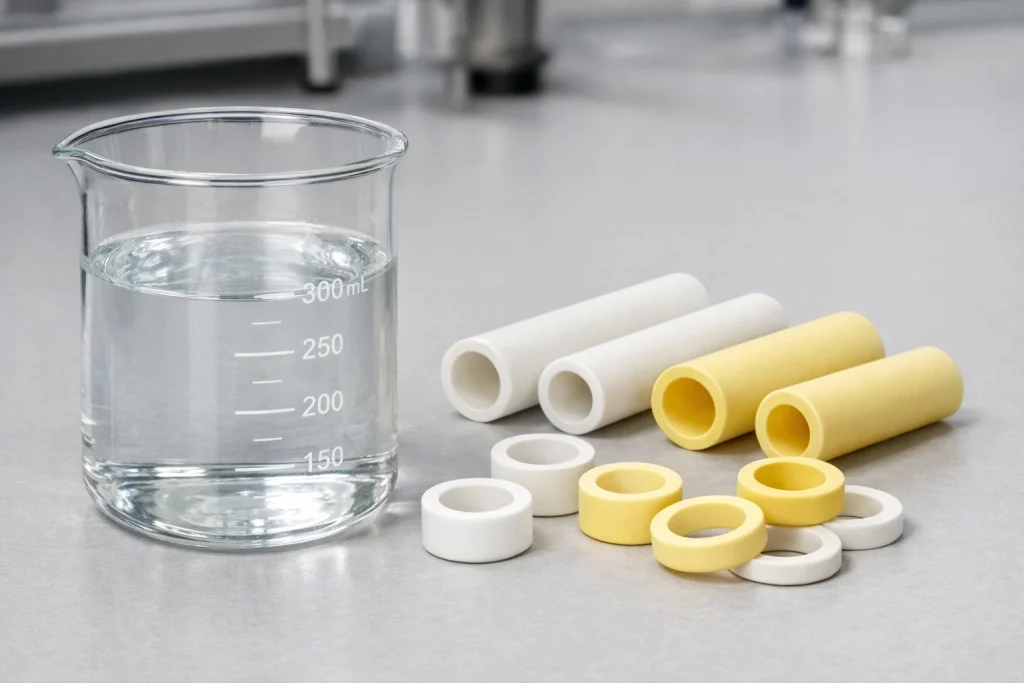
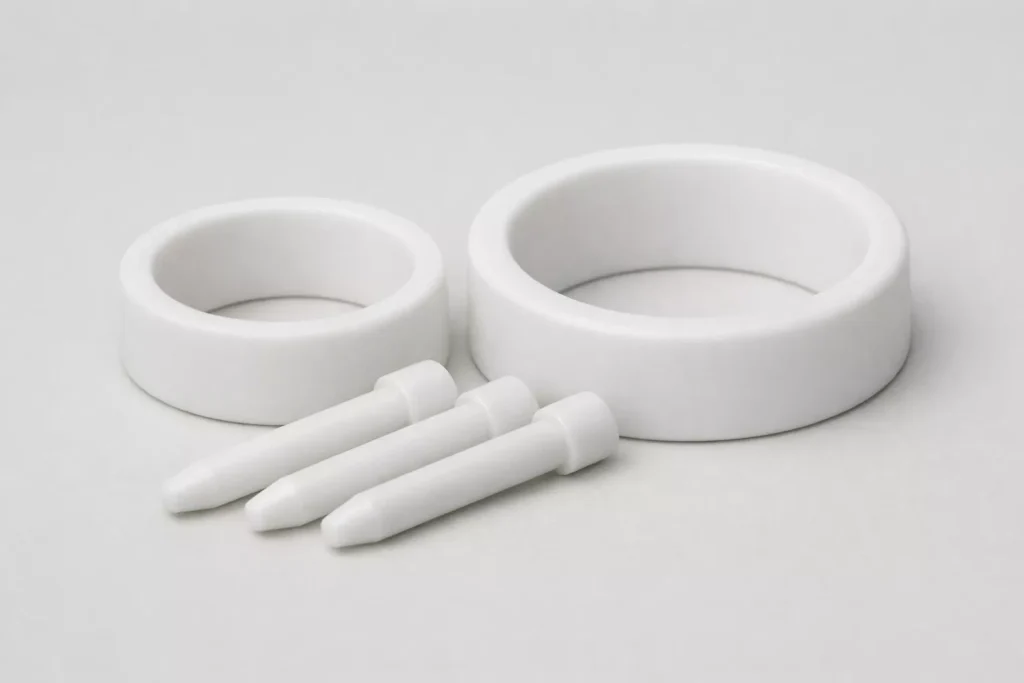
Anti-Abrasion Yttria Stabilized Zirconia Rod: Solutions by ADCERAX
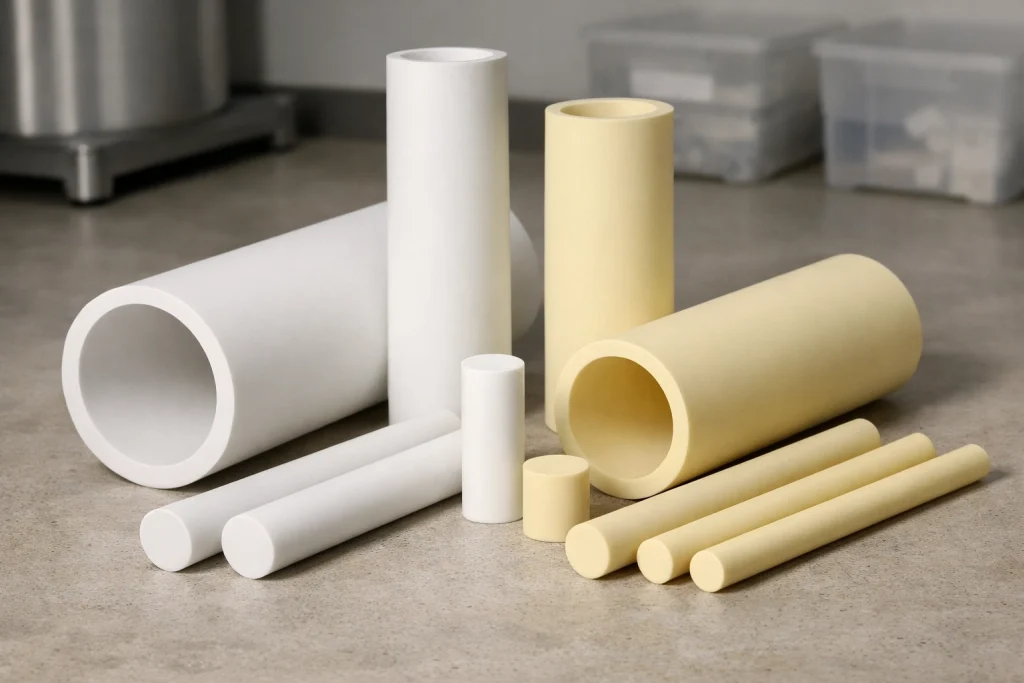
Zirconia ceramic rods from ADCERAX cover round rods, square bars, shafts, plunger rods and guide or locating pins – white to ivory YSZ / Y-TZP parts for spots where steel corrodes or contaminates and alumina rods snap. Dense, fine-grained material gives high toughness, wear resistance and dimensional stability for precision sliding and locating duty.
Every part is formed by isostatic pressing, sintered and finished to drawing: diameters from fine pins to shaft sizes, ground or polished surfaces, and end features such as chamfers, radii, threads and grooves. Prototypes and small batches are supported, with feasibility confirmed by engineering review before quotation.
Send a drawing, old-part photos or key dimensions with the working conditions – our engineers reply with what we can make and the typical lead time.
800-1200 MPa
Typical flexural strength
What is a Zirconia Rod?
ADCERAX Zirconia Rod Products Showcase
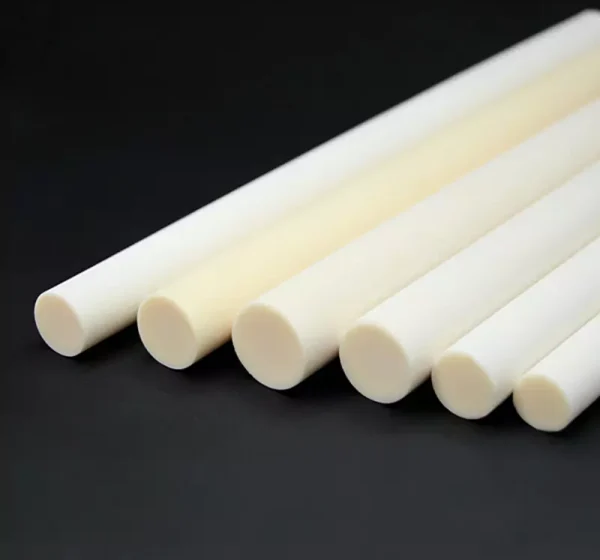
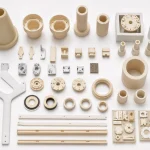
Zirconia Rod solutions from ADCERAX include round rods, square bars, shafts, and strips. These zirconia ceramic rods are available in standard sizes and custom options to support different engineering needs.
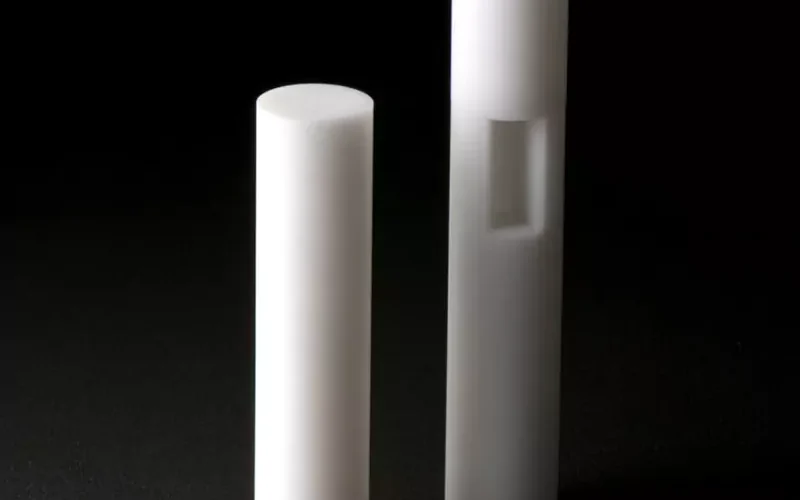
Zirconia Ceramic Shafts
Industrial zirconia ceramic rods in shaft form provide stability for rotating and sliding parts.
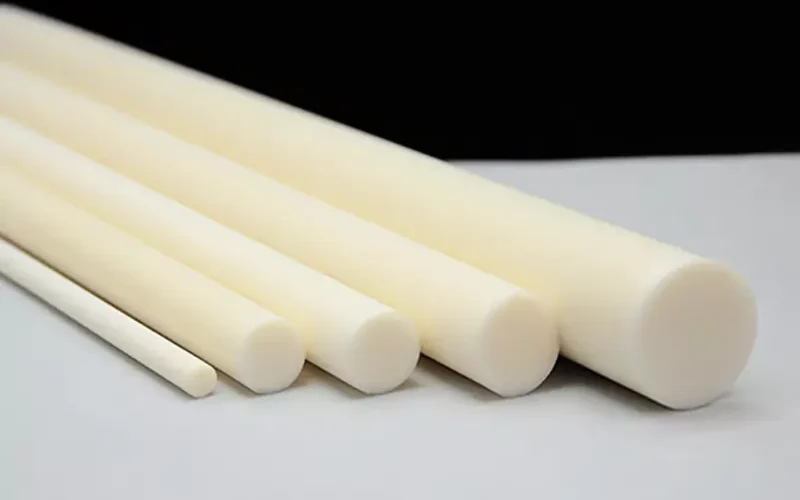
Zirconia Ceramic Round Rods
Round zirconia rods serve as grinding pins, plungers and structural parts.
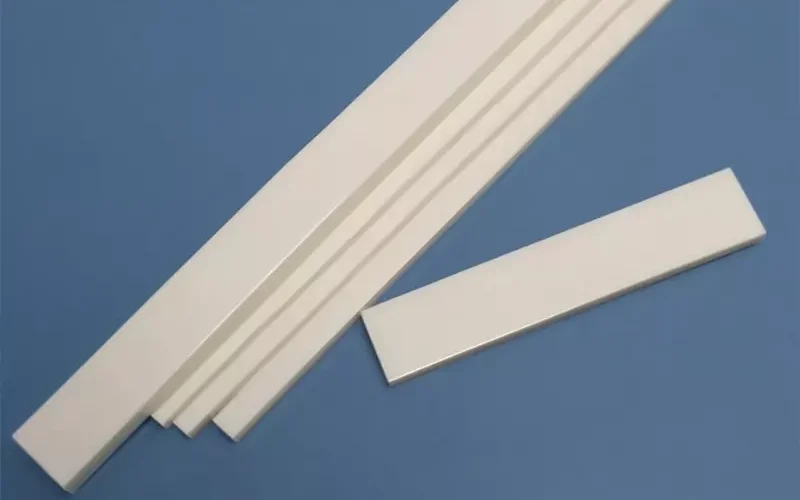
Zirconia Ceramic Flat Strips
Anti-abrasion zirconia rods shaped as strips are ideal for equipment requiring flat contact surfaces.
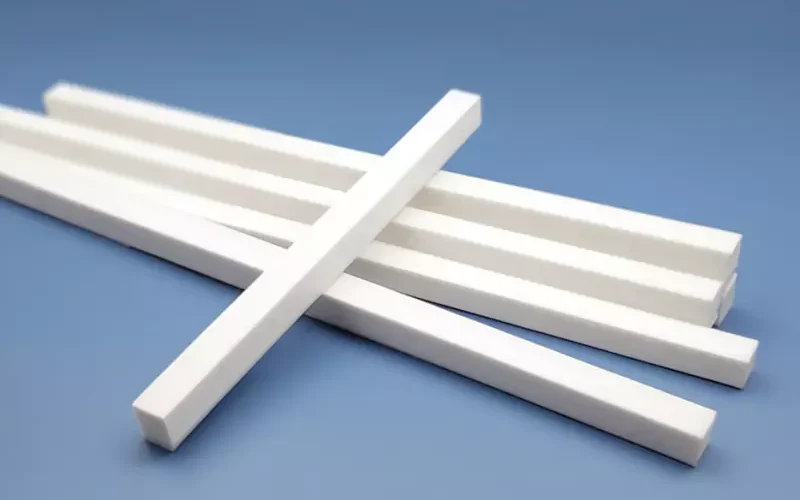
Zirconia Ceramic Square Bars
Zirconia ceramic bars offer strength and versatility for industrial assemblies.
Zirconia Rod, Shaft, Plunger or Pin — Same Material, Different Critical Specs
The same YSZ / Y-TZP material family appears on drawings under different names. The name usually tells us which dimension is critical — and that decides how the part is ground and inspected.
| Name on your drawing | Typical duty | What matters most |
|---|---|---|
| Zirconia ceramic rod / YSZ rod / Y-TZP rod | General structural, wear and insulation | Diameter, length, straightness |
| Zirconia shaft / guide rod | Rotating or sliding motion | Roundness, surface finish (Ra), fit tolerance |
| Zirconia plunger rod / ceramic metering rod | Pumps and dosing systems | Diameter tolerance, Ra of the sealing surface, chemical medium |
| Ceramic guide pin / locating pin / centering pin / dowel pin | Welding fixtures, precision tooling | Position-critical diameter, end chamfer, batch consistency |
| Gauge pin duty | Calibration and measurement | Reviewed case by case against your calibration requirement |
Send your drawing with the critical dimension marked. Our engineers confirm the grinding route, achievable tolerance and typical lead time within 24 hours — before you commit to anything.
Zirconia Rod Properties: Strength, Wear, Chemical & Thermal Limits
Chemical Properties
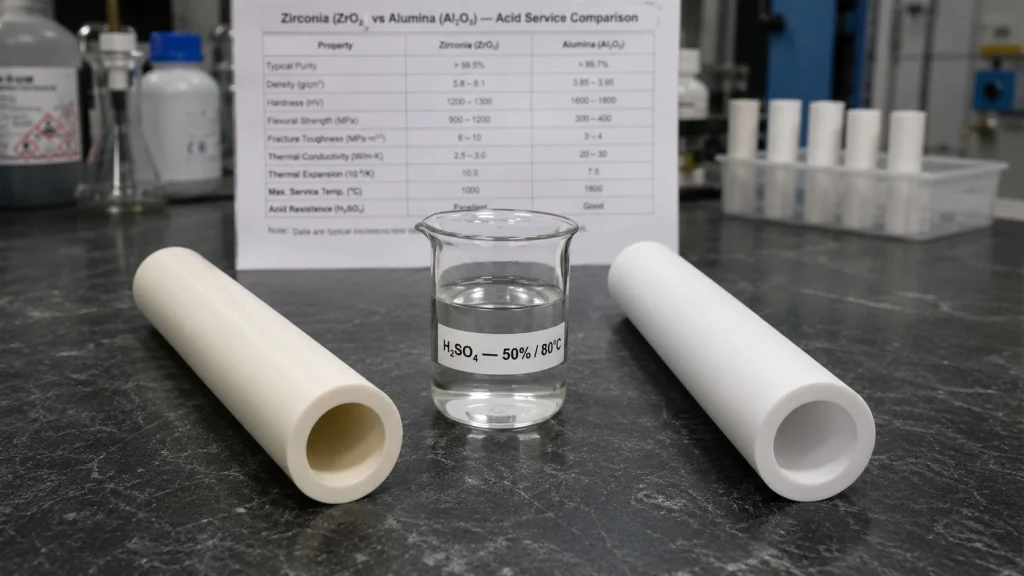
Resists most acids, alkalis and salts — why metal plungers and shafts get converted to ceramic.
- Compatibility depends on medium, concentration and temperature
- Low contamination risk in chemical and dosing duty
- Hot, humid service: YSZ grades checked for low-temperature ageing (LTAD) before recommendation
Physical Properties
Dense, fine-grained body that holds its dimensions under load.
- Uniform fine grain structure limits crack propagation
- Heavier and stiffer feel than alumina — closer to a metal part in hand
- Insulator at room temperature; hot insulation confirmed by grade
Mechanical Properties
Toughest common engineering ceramic — thin rods and pins survive where alumina snaps.
- Highest fracture toughness of the standard technical ceramics
- Takes bending and edge loads that chip or break other ceramics
- Still a ceramic: impact and prying loads reviewed at RFQ, not assumed
Thermal and Structural Stability
Expands like steel — pairs naturally with metal housings.
- Holds press-fits and clearances through temperature swings
- Suits warm-to-hot duty; upper limit depends on grade and load
- Extreme heat or thermal shock: Si₃N₄ / SiC may fit better — advised at review
Zirconia Rod Technical Specification Table
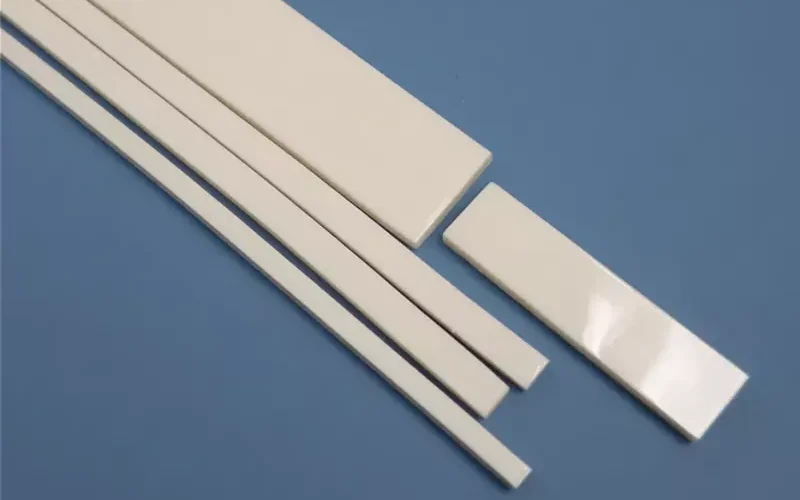
Typical industry values for material selection and page education only, not certified ADCERAX batch specifications. Properties vary with stabilizer system, sintering route, grain size and machining; working limits are confirmed at engineering review.
| Specification Item | Typical Value / Capability |
|---|---|
| Material Composition | Yttria-Stabilized Zirconia (3Y-TZP, 8YSZ) |
| Density | 6 – 6.08 g/cm³ |
| Flexural Strength | 800–1000 MPa (typical) |
| Hardness (Vickers) | ~12.5 GPa |
| Fracture Toughness | 7.2–9 MPa·m¹/² |
| Thermal Expansion Coefficient | ~11 × 10⁻⁶/K (20–400°C) |
| Thermal Conductivity | 2–3 W/m·K |
| Electrical Insulation | Volume resistivity >10¹⁴ Ω·cm |
Zirconia Rod Properties & Data
Typical technical parameters of zirconia ceramic rods, for material selection and comparison. Values vary with stabilizer system, sintering route and machining — figures for your part are confirmed at engineering review.
Zirconia Rod Cracked, Worn or Overpriced? Send It to Us.
Send your drawing or old-part photos — we reply with what we can make, the review points and the typical lead time. Prototypes and small batches are accepted alongside repeat production.
In metering, dosing and filling pumps, the plunger’s surface finish, roundness and fit clearance decide sealing and dosing stability. Y-TZP plunger rods run against ceramic or glass barrels with low friction and no metal contamination – a common conversion when steel plungers corrode, stick or contaminate the medium.
In projection and nut welding fixtures, ceramic guide and locating pins insulate the fastener, shrug off spatter and hold position where metal pins wear and short. Zirconia pins are chosen for bending strength; for the hottest, most abrasive stations silicon nitride is reviewed as the alternative – we advise by station, not by slogan.
Dimensional stability and wear resistance make zirconia a candidate for gauge pins, setting masters and precision fixture components. Gauge-grade claims are made only against stated calibration requirements.
For corrosive or abrasive sliding duty – guide rods, small shafts, rollers and wear parts – zirconia keeps its dimensions where coated steel wears through. Straightness, roundness and Ra are the review items, together with load, speed and medium; long slender rods are checked for distortion risk before commitment.
Zirconia Rod Applications by Industry
ADCERAX Zirconia Ceramic Rod Solutions are engineered to address critical performance needs across diverse industrial sectors. They combine wear resistance, thermal stability, and dimensional accuracy to ensure reliable operation in demanding engineering environments.
Custom Zirconia Rods, Machined to Your Drawing
ADCERAX custom zirconia rods are made to your drawing or old part — diameter, length, tolerance, end features and surface finish, in YSZ / Y-TZP grades (Mg-PSZ on request). From one-off prototypes to repeat batches; typical lead time depends on size, tolerance and quantity, and is confirmed with your quotation.
Customization Options
Diameters from fine pins to shaft sizes — roundness, straightness and concentricity held where your fit demands. Achievable tolerance confirmed against the drawing, not guessed.
Chamfers, radii, steps, grooves, flats and threads, diamond-machined after sintering. Share the mating part — we flag edge-chipping risks before they become scrap.
As-fired, ground or polished — specify Ra for sliding, sealing-support or metering duty. The right finish decides plunger life and leak behavior, so tell us the counter-face material too.
YSZ / Y-TZP standard, Mg-PSZ on request. Grade follows your load, temperature and medium — and we say honestly when alumina or SiC fits better.
Customization Process
Drawing, old-part photo or key dimensions, plus your working conditions — load, speed, temperature, medium, quantity.
We confirm grade (YSZ/Y-TZP), achievable tolerances, surface finish and the review points — before any price commitment.
Rods are pressed, sintered and diamond-ground to spec; critical dimensions inspected against your drawing, records available.
Parts protected, labeled and packed against chipping and contamination, shipped with export-ready documents.
One-Stop Zirconia Rod Manufacturing
Rods, shafts, plungers and pins made in-house — from powder pressing to final inspection, with engineering review before every quotation.
Drawing-First Engineering
Every rod, shaft, plunger or pin starts from your drawing or old-part photos — feasibility, tolerance risks and edge features confirmed before quotation.
Prototype to Repeat Supply
Single samples and small trial batches supported; repeat production planned once the sample is approved. Order size agreed at review, not promised in advance.
Direct Factory Communication
Your questions go to the engineers who plan the machining — answers cover what can be made and what still needs confirmation.
Manufacturing Capabilities
| Capability Item | Description |
|---|---|
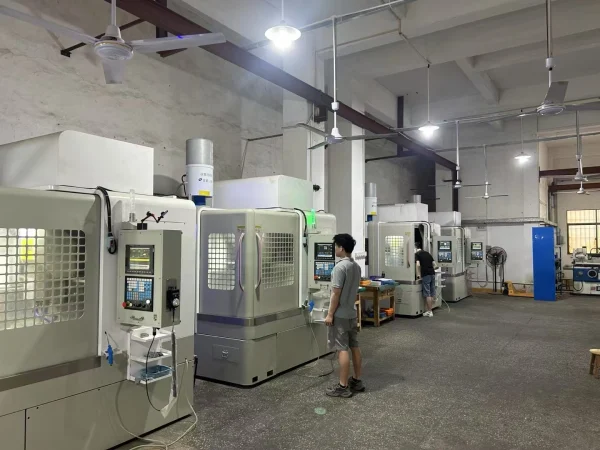
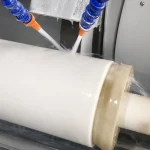
| Isostatic pressing | Uniform green density for round and square blanks across the diameter range. |
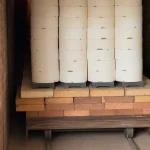
| High-temperature sintering | Controlled sintering for dense, fine-grained YSZ / Y-TZP microstructure. |
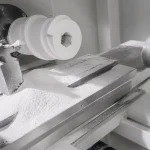
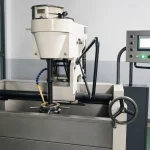
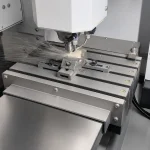
| Precision grinding & CNC | Diameters, lengths and end features machined to drawing tolerances confirmed at review. |
| Surface finishing | Ground and polished finishes down to Ra ≤ 0.8 μm for sliding and sealing-support duty. |
| Inspection | Dimensional and visual inspection against the drawing before shipment. |
Specific furnace, pressure, capacity and test-cycle figures are published only when backed by factory records.
Frequently Asked Questions about Zirconia Ceramic Rod
Yttria stabilizes the tough tetragonal phase, giving Y-TZP rods typical flexural strength of 800-1200 MPa and fracture toughness of 7-10 MPa·m^1/2 - the reason thin zirconia rods and pins survive loads that snap alumina. The exact grade is matched to your medium, temperature and load at review.
Diameters, lengths, straightness, roundness and concentricity are ground to the tolerances on your drawing; feasibility of tight fits and long slender rods is confirmed at engineering review rather than promised in advance. Send the drawing with the critical dimensions marked.
Dense zirconia resists most acids, alkalis and salts, which is why plungers and shafts in chemical and dosing service are often converted from metal. Compatibility is confirmed against your specific medium, concentration and temperature; for hot, humid service, YSZ grades are additionally reviewed for low-temperature ageing (LTAD).
Zirconia's thermal expansion (~10 x 10^-6/K) is close to steel, which eases pairing with metal housings under moderate cycling. Severe or rapid thermal shock is not zirconia's strength - for those stations silicon nitride or silicon carbide is reviewed as the alternative. Tell us the temperature range and cycle rate.
For YSZ/Y-TZP rod duty, typical continuous service in air is around 800 °C, depending on grade and load; melting point is far higher but is not a service temperature. If your duty runs hotter, we will say so honestly and review alternative ceramics.
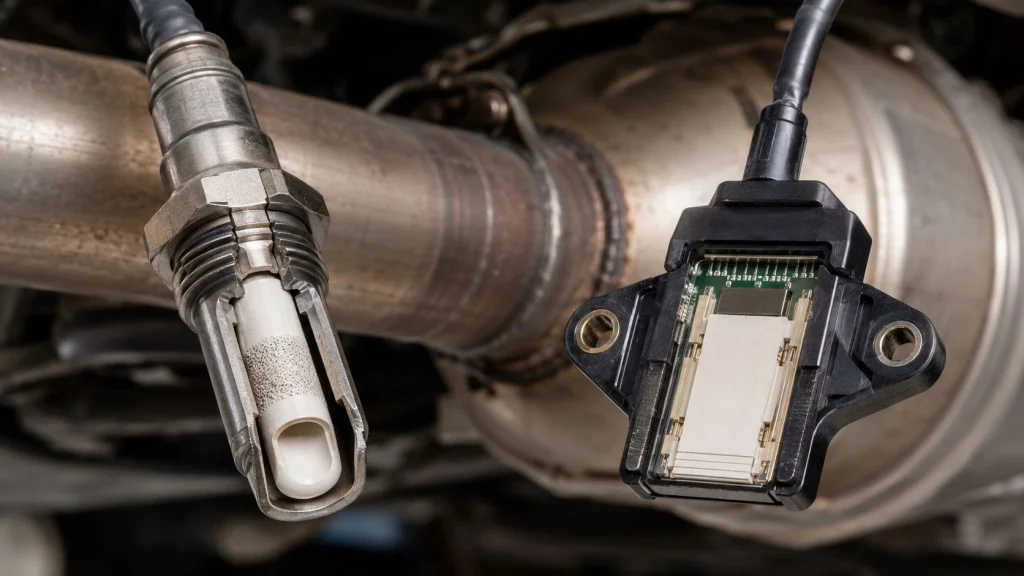
Zirconia is a good electrical insulator at room temperature, and ceramic pins are widely used to isolate fasteners in welding fixtures. Its resistivity falls as temperature rises, so insulation duty at elevated temperature is confirmed grade by grade - state the voltage and working temperature in your RFQ.
Plunger surface finish, roundness and fit clearance decide dosing stability, and Y-TZP delivers low friction, wear resistance and no metal contamination in ceramic or glass barrels. We review the pump type, medium, stroke and fit tolerance - or the old plunger's photos and dimensions - before quoting; pump-level accuracy remains a system property we do not promise.
Yes - in projection and nut welding, ceramic pins insulate the fastener, resist spatter and hold location where metal pins wear and short. Zirconia is chosen for bending strength; silicon nitride is reviewed for the hottest, most abrasive stations. Share the pin shape or DIN reference, mounting style and welding environment for review.
Often, where the failure is corrosion, wear, contamination or galling - but zirconia does not match metal's impact tolerance, so the load case is reviewed first. Send old-part photos with measured dimensions, the medium and what failed; we confirm feasibility and flag risks before quoting, and we do not promise drop-in replacement without that review.
What to Send for a Fast, Accurate Review
For rods, shafts, plunger rods and pins, the review starts from:
- Drawing or old-part photos
- Diameter / OD and length
- Straightness, roundness, concentricity
- Tolerance and fit class
- Surface finish (Ra)
- End features — chamfer, radius, thread, groove, hole
- Material route — YSZ / Y-TZP (Mg-PSZ if specified)
- Medium, temperature, load and motion (sliding / rotating / static)
- Quantity or annual demand
Send what you have — even a drawing or a sample is enough to start. Our engineers review material, tolerance and feasibility before quoting.
*Our team will answer your inquiries within 24 hours.
*Your information will be kept strictly confidential.
info@adcerax.com
Tel:+86-0731-84428843
WhatsApp:+86 19311583352
Within 24 hours