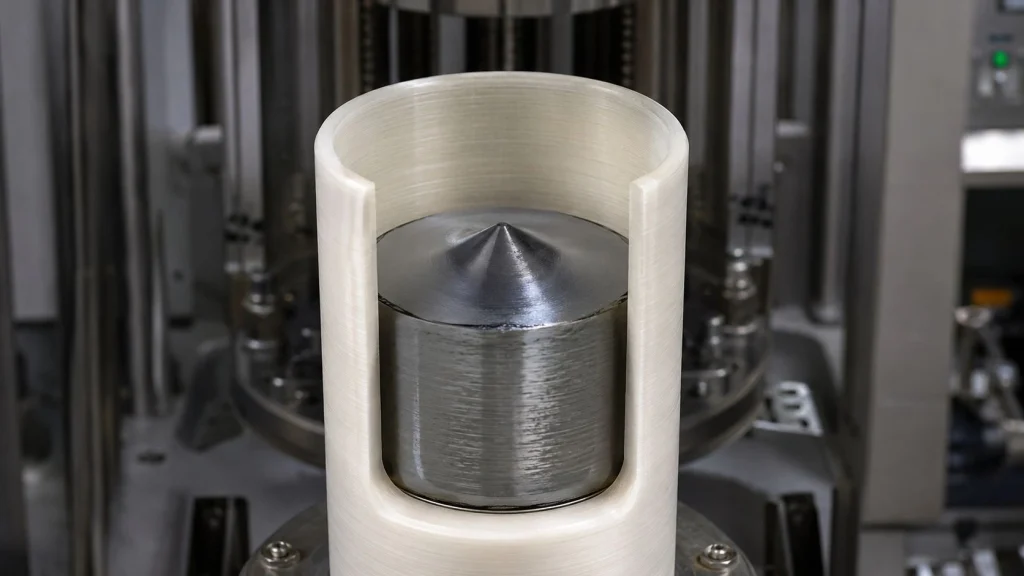
Boron Nitride (BN) Crucible | Hot-Pressed BN & PBN for Vacuum, Melting & Evaporation
Boron nitride (BN) crucibles are used for clean melting and high-temperature processing of metals and alloys in vacuum or inert atmospheres. Their non-wetting, chemically inert surface helps prevent contamination and sticking where graphite, alumina or quartz crucibles fall short.
Backed by manufacturing heritage over 20 years, ADCERAX supplies standard and custom BN crucibles — hot-pressed BN and PBN routes — for metal melting, evaporation sources, crystal-growth work and laboratory thermal applications. Send a drawing or an old-part photo, and our engineers will review material route, size and working conditions before quotation.
What is a Boron Nitride Ceramic Crucible?
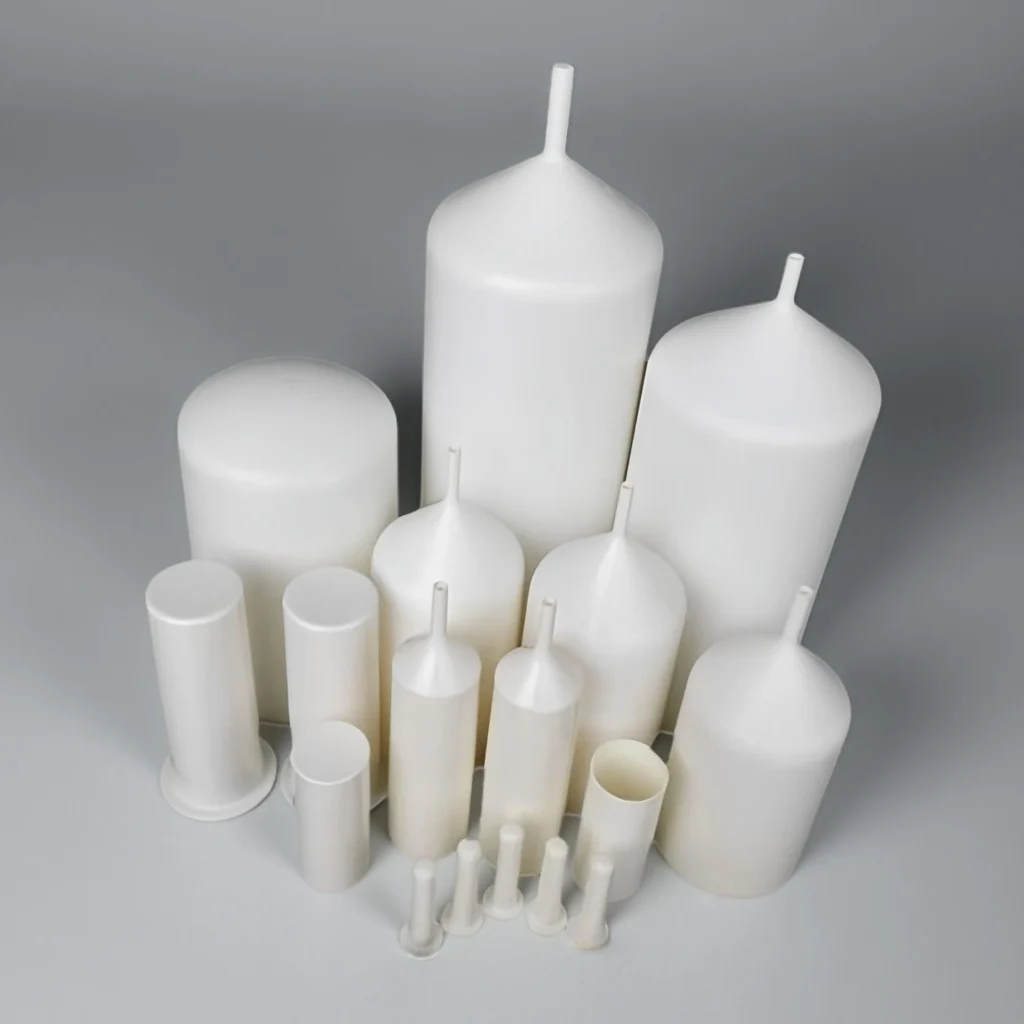
A boron nitride crucible is a high-temperature ceramic container made from hexagonal boron nitride (h-BN) — typically hot-pressed BN, or CVD-grown pyrolytic BN (PBN) for high-purity routes — used where processes demand non-wetting behavior, low chemical reactivity, electrical insulation and resistance to thermal shock in vacuum or inert atmospheres.
Boron Nitride Crucible Types — hBN, PBN & BN Liners
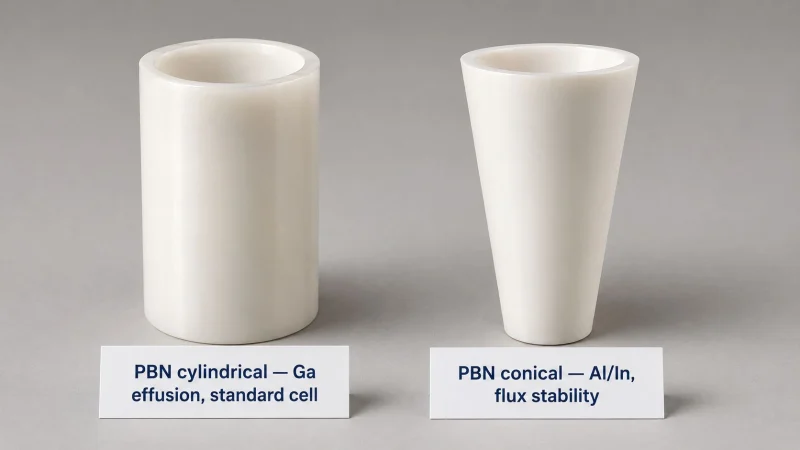
ADCERAX makes hot-pressed BN (hBN) crucibles, PBN crucibles and BN crucible liners for vacuum, inert-gas and molten-metal work. Non-wetting and thermal-shock resistant, they keep melts clean and release easy. Standard and drawing-based custom shapes fit your furnace, melting or evaporation system.
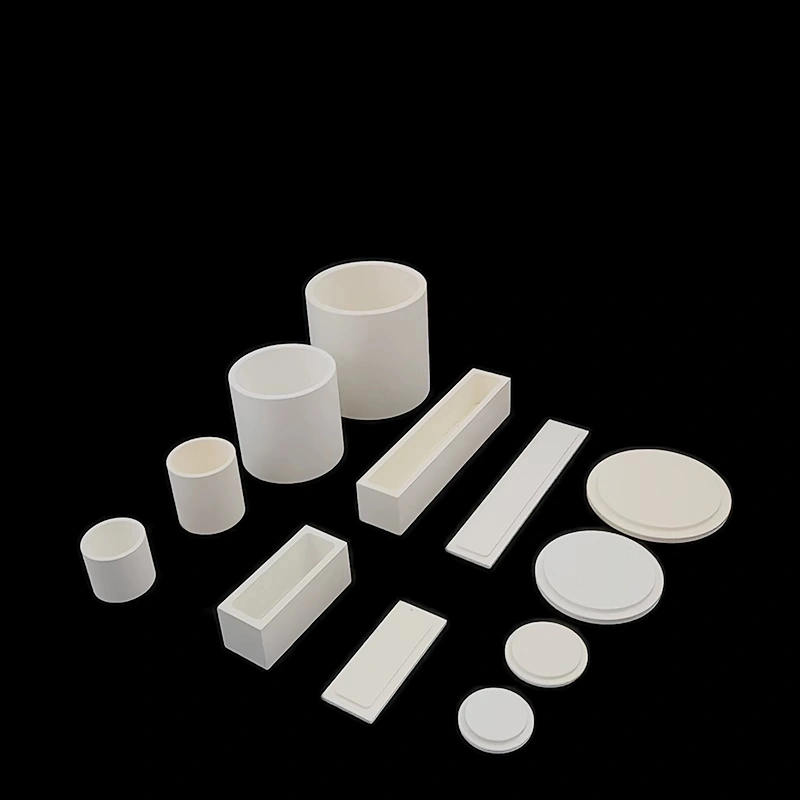
Machined to your drawing — cylindrical, conical, stepped, lidded or spouted, with custom cavities, ports and liners to fit your furnace and melt process.

CVD-formed, dense and gas-tight for higher-purity evaporation and crystal growth. Custom wall, flange and cavity for MBE, PVD or vacuum furnace systems
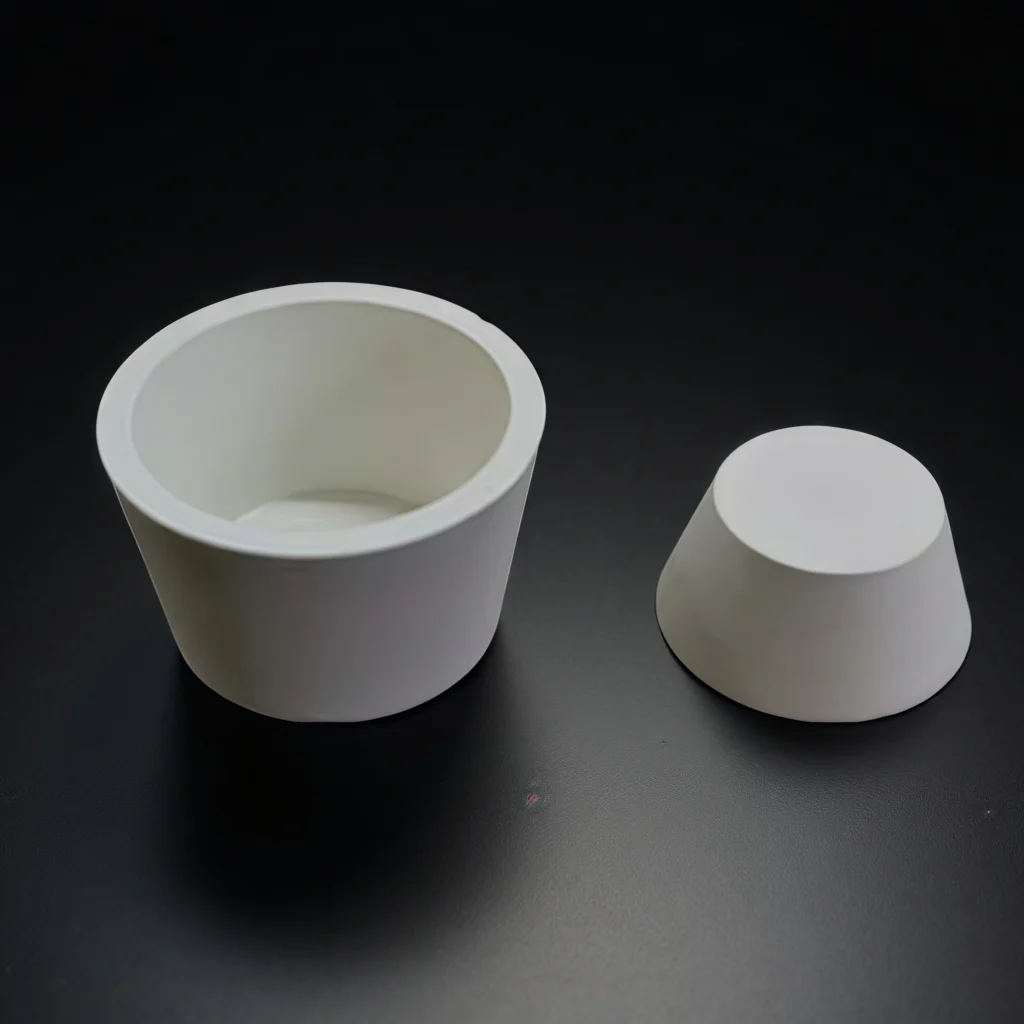
Non-wetting BN liners protect graphite, quartz or metal crucibles from contamination and give clean release. Custom sizes, stepped or tapered to fit existing chambers.
Boron Nitride Crucible Properties
Select a boron nitride crucible by material composition, pore structure, working volume and operating conditions. The tables below summarize material properties and the specifications needed to match a crucible to your process.
| Property | Unit / Condition | Dense Hot-Pressed BN — AD-BN-HP | Porous High-Purity BN — AD-BN-HC |
|---|---|---|---|
| BN Content | % | 99 — selection composition | >99.7 — specified minimum |
| Elemental Oxygen Content | wt% | 0.40 — typical | <0.12 — specified maximum |
| Bulk Density | g/cm³; typical | 1.98 | 1.60 |
| Porosity | % | 2.6 — typical | 25–35 — selection range |
| Flexural Strength | MPa; typical selection value | 35 — three-point bending | 20 — test configuration not specified |
| Thermal Conductivity | W/(m·K); typical selection value | 50 — room temperature | 50 — at 20 °C |
| Linear Thermal Expansion Coefficient | ×10⁻⁶/K; 25–1200 °C | 1.5 — typical | −0.5 — typical |
| Specific Heat Capacity | J/(g·K); near room temperature | Approximately 0.80 | Approximately 0.80 |
| Volume Resistivity | Ω·cm; room temperature | >10¹⁴ | >10¹⁴ |
Why Choose BN Crucibles Over Graphite or Alumina?
BN crucibles are more inert than graphite, alumina, or zirconia in contact with molten aluminum, magnesium, copper, silicon, titanium alloys, and precious metals. They help reduce contamination and maintain melt purity up to 1800–2000°C.
| Property / Feature | BN Crucible (Boron Nitride) | Graphite Crucible | Alumina Crucible | Zirconia Crucible |
|---|---|---|---|---|
| Reaction with Molten Metals | Non-wetting, non-reactive to Al, Mg, Cu, Ti alloys, Si, precious metals | Reacts with oxygen, may contaminate melt | Can react with active metals (Al, Mg) | More stable but may react with Ti & Si at high temp |
| Contamination Risk | Very low – clean melt surface | Medium – carbon contamination possible | Medium – oxide residues may enter melt | Low to medium, depending on alloy |
| Max Working Temperature | 1800–2000 °C (vacuum/inert gas) | Up to ~3000 °C in inert, but oxidizes above 500 °C in air | 1600–1700 °C | 2000+ °C but heavy and slow to heat |
| Thermal Shock Resistance | Excellent – rapid heating/cooling tolerable | Moderate – cracks if heated unevenly | Poor to moderate | Low – high risk of cracking |
| Electrical Properties | Excellent electrical insulator | Conductive | Insulator | Insulator |
| Ease of Demolding / Release | Easy – metals do not stick to surface | Sticking depends on surface oxidation | Molten metals wet surface – hard to release | Better than alumina, but sticking still possible |
Values above are typical industry reference ranges for material comparison, not ADCERAX guaranteed specifications. Final selection depends on your melt chemistry, temperature and atmosphere — reviewed before quotation.
Metal Compatibility Quick Reference
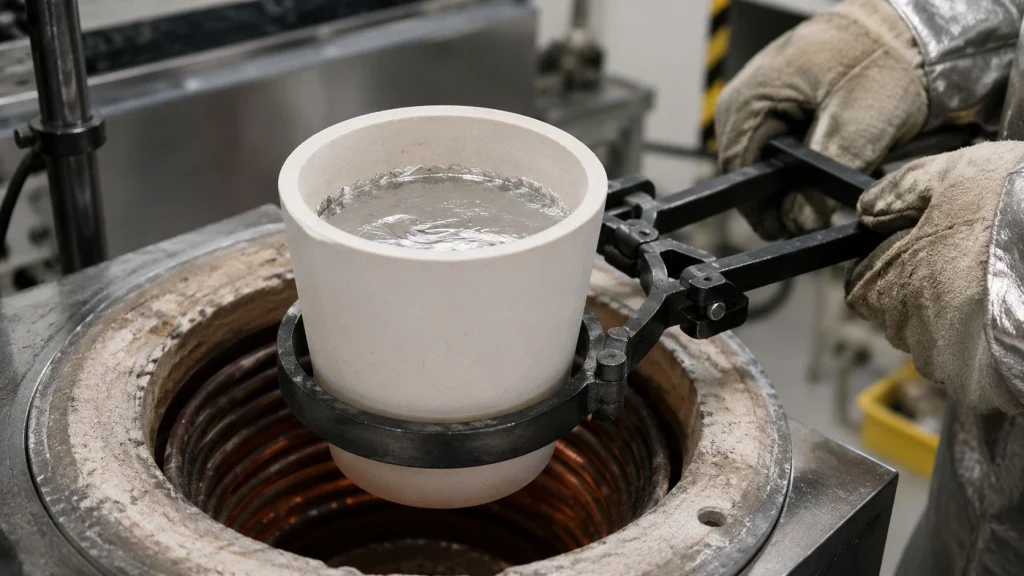
Compatibility and temperature ranges are typical references. Actual suitability depends on exact melt chemistry, temperature, holding time and atmosphere — share your working conditions and we will confirm before quotation.
| Metal / Alloy | Compatibility | Max Temp | Notes |
|---|---|---|---|
| Aluminum (Al) | ✅ Excellent | 750-900°C | Non-wetting, clean release |
| Magnesium (Mg) | ✅ Excellent | 700-800°C | Non-reactive, ideal for Mg alloys |
| Copper (Cu) | ✅ Excellent | 1100-1200°C | No wetting, high-purity output |
| Gold (Au) / Silver (Ag) | ✅ Excellent | 1100-1400°C | Zero contamination, easy pouring |
| Silicon (Si) | ✅ Excellent | 1450-1550°C | PBN route often reviewed for high-purity silicon work |
| Titanium (Ti) Alloys | ✅ Good | 1700-1800°C | Vacuum/inert required |
| GaAs / InP / GaN | ✅ Good (PBN route) | 1200-1600°C | PBN route for crystal-growth use, subject to engineering review |
| Steel / Iron (Fe) | ⚠️ Limited | 1500-1600°C | BN may react; graphite preferred |
🧩BN vs PBN — When to Use Which?
🌟 Choose Hot-Pressed BN When:
- General metal melting (Al, Cu, Mg, Zn)
- Industrial vacuum furnaces
- Cost-sensitive applications
- Larger sizes (up to 4000ml)
🌟Choose PBN When:
- High-purity PBN route required
- MBE, OLED and evaporation-source applications
- Crystal growth (GaAs, InP and related compound-semiconductor work)
- Gas-tight, low-porosity wall required
Hot-pressed BN suits general industrial melting and vacuum work; the PBN route serves high-purity evaporation and crystal-growth applications and is confirmed case-by-case at engineering review.
Boron Nitride (BN) Crucible Applications
Boron nitride crucibles serve four main application families: metal melting and casting, vacuum and thermal processing, crystal-growth and evaporation-source work, and laboratory research. Select your scenario below — each card explains where BN outperforms graphite, alumina or quartz, and what to confirm before ordering.
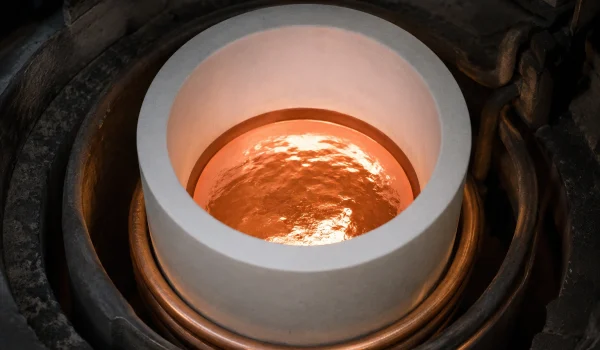
Metallurgy & Metal Melting
Melt Al, Mg, Cu, Zn, precious metals and Si — non-wetting, clean release, no carbon pickup.
- hBN & PBN-route crucibles + BN liners to protect graphite
- 3–4000 ml, custom by drawing; typical ±0.05–0.1 mm
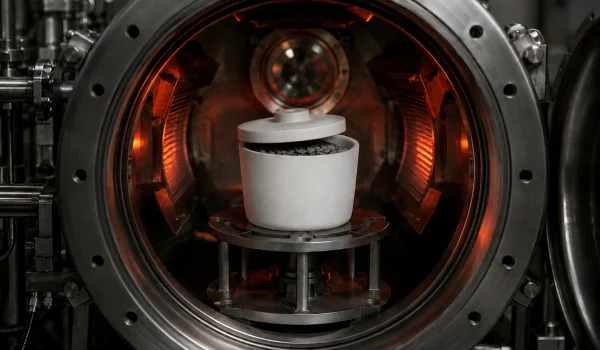
Vacuum & Thermal Processing
For reactive metals (Ti, Zr, Nb) in vacuum or inert gas where graphite/alumina crack or contaminate.
- Low-vapor-pressure BN; lidded/stepped/overflow designs, 5–3000 ml
- Compatibility confirmed by contact-material review
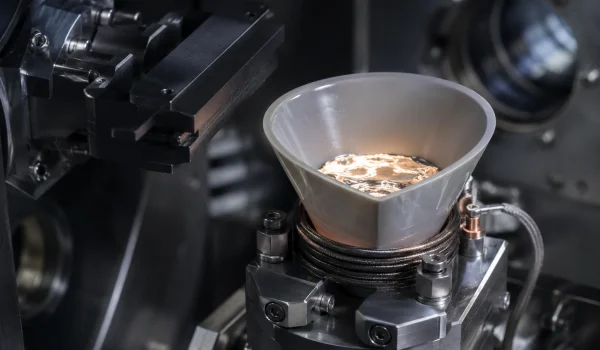
Crystal Growth & Semiconductor Material
PBN-route crucibles for MBE/OLED evaporation and VGF/LEC growth (GaAs/InP) needing clean, gas-tight walls.
- CVD-grown, dense, low-porosity; custom flanges & cavities
- Purity & geometry confirmed per order — no grade claim
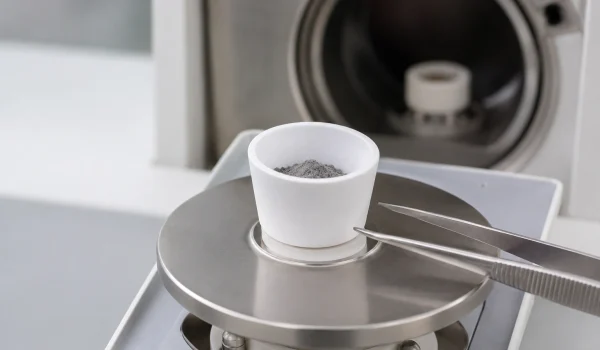
Laboratory & Research
Small-batch melting, thermal analysis (DTA/DSC/TGA) and sample work.
- 3–500 ml, no minimum order, drawing/sample-based custom
- Smooth non-wetting surface for easy sample removal
Clean Melts. Precision Machining. Engineering Review First — ADCERAX BN Crucibles
Tell us your size, temperature, atmosphere and the material you load. Our engineers confirm the right BN route and what we can make — before any quotation.
Custom Boron Nitride Crucible Manufacturer
ADCERAX machines custom BN and PBN crucibles, liners and boats to your drawing or sample — flexible geometries, tight tolerances and stable batch quality, with lead time confirmed after engineering review.
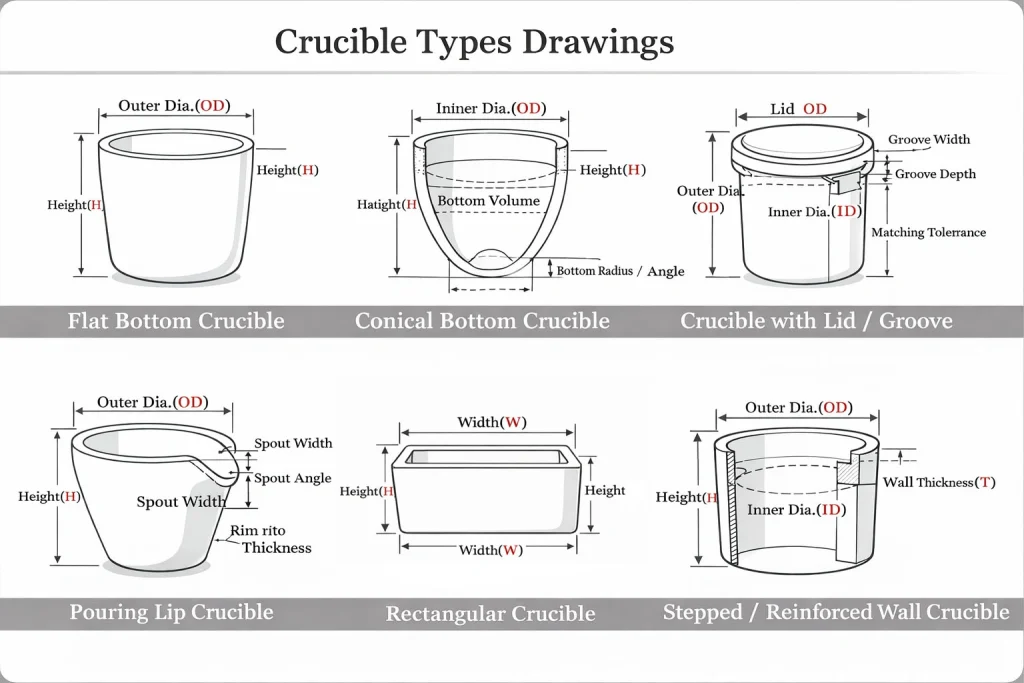
Customization Options
Extra-large or extra-small ID/OD, non-standard wall thickness, and ultra-long or ultra-short crucible heights.
Tighter ID, wall and concentricity control than standard, machined to ±0.05 mm.
Flanges, spouts, lids, tapered walls, overflow ports, steps and bores.
hBN, PBN or conductive BN chosen to match your atmosphere and contact material.
Polished or ground inner surface for cleaner release and lower contamination.
Customization Process
Send your crucible drawing, CAD or sample with material route, ID/OD/height, wall, atmosphere and quantity; our engineers review it and quote with lead time.
After the quote is approved, we machine 1–50 prototype crucibles when needed, so you can test fit and clean release before full production.
On approval we run batch forming, CNC machining and finishing, with every crucible checked for dimensions, wall thickness, purity and surface quality.
Finished crucibles are foam-packed against thermal shock and shipped worldwide via DHL, FedEx, UPS or your carrier, with full documentation.
Trusted Boron Nitride Crucible Supplier with Precision Manufacturing
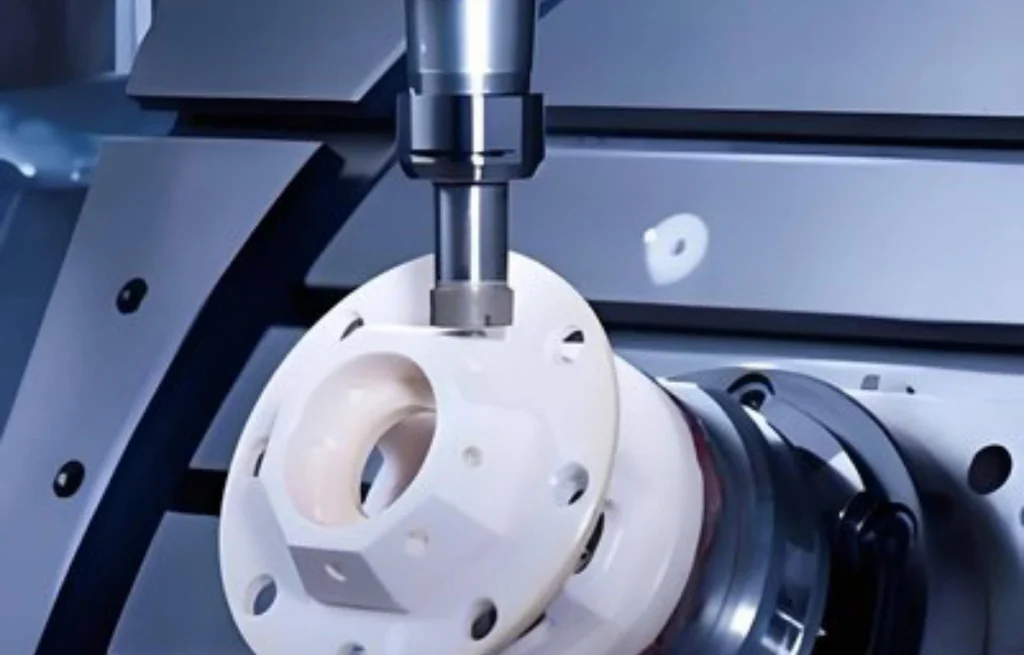
BN Crucible Processing Capacity
BN Crucible Benefits of ADCERAX
-
Clean Melting – Chemically inert and non-wetting to aluminum, magnesium, copper, silicon and precious metals, ensuring high-purity melts.
-
Longer Service Life – Withstands thermal shock and corrosion, reducing furnace downtime and replacement cost.
-
Smooth Release – Molten metals do not stick to the surface, allowing easy pouring and demolding.
-
Process Stability – Ideal for high-temperature work in vacuum, inert or reducing atmospheres.

Boron Nitride Crucible — Frequently Asked Questions
Common questions about BN and PBN crucibles — material routes, temperature and atmosphere limits, metal compatibility and custom sizing. Need a specific part reviewed? Send us your drawing.
Boron nitride crucibles outperform alumina and graphite when purity, non-wetting behavior and clean melt processing are required. Unlike alumina, BN does not crack under thermal shock or react with molten metals. Unlike graphite, it does not carbon-contaminate alloys or require inert coatings.
| Property / Performance | Boron Nitride (BN) | Alumina (Al₂O₃) | Graphite |
|---|---|---|---|
| Max Working Temp (Vacuum/Inert) | 1800 °C | 1700 °C | 3000 °C (but oxidizes >500 °C in air) |
| Reaction with Molten Al, Mg, Cu | No wetting / No reaction | Reacts slightly, causes sticking & erosion | Reacts, causes carbide formation & contamination |
| Metal Sticking / Demolding | No sticking, clean release | High sticking risk | Adhesion and residue buildup |
| Contamination Risk | Very low – no carbon or oxygen release | Possible oxide contamination | Carbon contamination, discoloration |
| Thermal Shock Resistance | Excellent | Moderate (cracks on rapid heating/cooling) | Good but brittle during machining |
| Machinability (± tolerance) | Easy, up to ±0.05 mm | Difficult, diamond tools required | Easy, but particles contaminate melt |
| Cost vs. Lifetime | Higher cost but longer life & cleaner output | Lower cost, shorter life in metal melting | Lower cost but requires coatings & inert gas |
- Hot-pressed BN crucibles (BN) are sintered under pressure and machined to shape. They offer good mechanical strength, machinable geometries and larger sizes, and are cost-effective for most vacuum and inert-gas metal-melting applications.
- Pyrolytic boron nitride crucibles (PBN) are CVD-formed, dense and gas-tight with thin walls. They are used for higher-purity evaporation, MBE/OLED source and crystal-growth work. Exact purity and geometry are reviewed per use condition — not offered as a default semiconductor-grade rating.
Typically up to 1800 °C in vacuum or inert atmospheres such as argon or nitrogen. In air, oxidation gradually becomes the limit at much lower temperatures, so BN crucibles are not recommended for long-term use in oxidizing atmospheres without protection. For the PBN route, service toward 2000 °C in high vacuum is discussed in industry references — actual limits are confirmed for your shape, wall thickness and atmosphere at engineering review.
Service life depends on metal type, thermal cycling, cleanliness of furnace atmosphere and mechanical handling. Under normal aluminum or copper melting, aService life depends strongly on the metal type, thermal cycling, furnace atmosphere and mechanical handling. As a typical industry reference, normal aluminum or copper melting may reach 50–200 cycles;. For silicon, titanium or precious metals, lifetime may be shorter but melt purity remains higher than other materials.
ADCERAX supplies hot-pressed BN and PBN-route crucibles directly from China, including standard sizes and drawing-based custom designs for silicon and other high-purity melting, evaporation and crystal-growth work. Send your dimensions or a drawing, and our engineers will confirm the material route, feasibility and typical lead time within 24 hours.
To get an accurate BN crucible price, simply send us the capacity (ml), drawing or diameter × height, with or without lid, and required purity. ADCERAX will reply within 12–24h with quotation, lead time and shipping options. No MOQ for prototypes.
Often yes, when carbon contamination, wetting or thermal-shock cracking is the failure mode — but never as a blind drop-in. Share your old-part material, dimensions, failure pattern and working conditions (temperature, atmosphere, melt), and we will review whether hot-pressed BN, a BN liner or another ceramic route is realistic before quotation.
Hot-pressed BN is the machinable, cost-effective route for general vacuum/inert melting and custom shapes up to large sizes. PBN is the CVD high-purity route reviewed for MBE, OLED evaporation and crystal-growth work. The decision depends on purity sensitivity, geometry and budget — tell us the application and we will confirm the right route.
Request an Engineering RFQ Review
To review your custom BN or PBN crucible, please provide:
- Material route: hot-pressed BN (hBN) / PBN / conductive BN — or let us recommend by condition
- Dimensions: OD, ID, height, wall thickness, bottom, rim, lid/spout, tolerance
- Atmosphere: vacuum / inert (Ar, N₂) / reducing / air
- Operating temperature
- Contact material: the metal, alloy, glass, salt or source material
- Application: metal melting / vacuum & thermal processing / MBE-OLED evaporation / VGF-LEC crystal growth / thermal analysis
- Purity / contamination sensitivity
- Current issue: wetting, contamination, cracking or short service life (for replacements)
- Quantity, target lead time and destination — plus a drawing, old part or photos if available
Replacing a worn or failed part? Send an old-part photo and we’ll check the right BN route and fit before quoting.
*Our team will answer your inquiries within 24 hours.
*Your information will be kept strictly confidential.
info@adcerax.com
Tel.:+86-0731-84428843
WhatsApp:+86 19311583352
Within 24 hours