Alumina Ceramic Rods – Solid, Square, Threaded & Porous Rods for High-Temperature Applications
ADCERAX manufactures solid alumina ceramic rods – round, square, threaded and porous types – in 95%,96%, 99%, 99.5% and 99.7% Al2O3 grades, supplied as-fired or precision-ground.
To check a rod, send your drawing or old-part photo with the diameter or cross-section, length, straightness or tolerance, purity grade, operating temperature and quantity.
Typical diameters run from small-bore pins to large-section rods, with cut-to-length and drawing-based machining; every size, grade and tolerance combination is confirmed by engineering review before quotation.
95–99.7%
Al2O3 purity grades
±0.005mm
Precision Tolerance
Support Small Batch Custom
What Are Alumina Rods?
Alumina rods, often referred to as alumina ceramic rods or Al₂O₃ ceramic components, are advanced materials celebrated for their exceptional physical and chemical properties.
Primarily composed of aluminum oxide, these ceramic solutions are indispensable in environments where conventional materials fall short, delivering superior performance and extended longevity.
Alumina Ceramic Rods Types
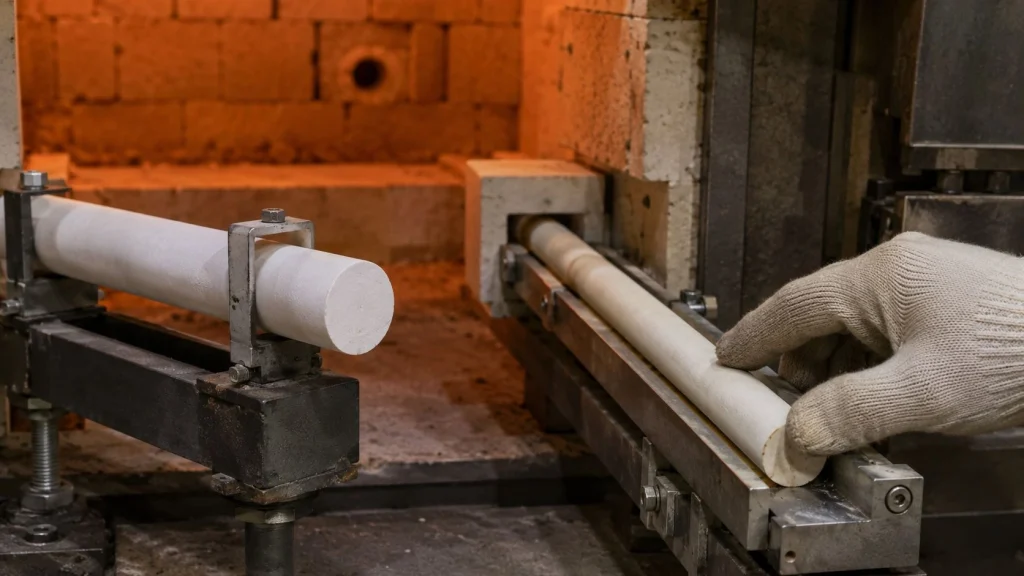
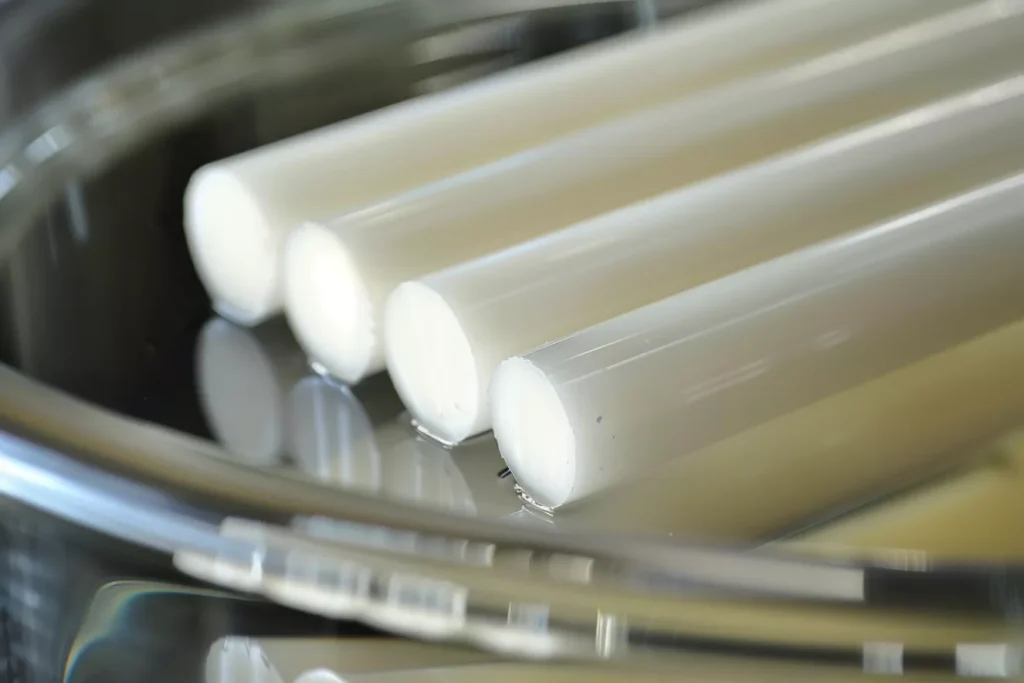
Alumina rods can be produced in various shapes, including solid rods, square rods, threaded rods, and custom-machined geometries.
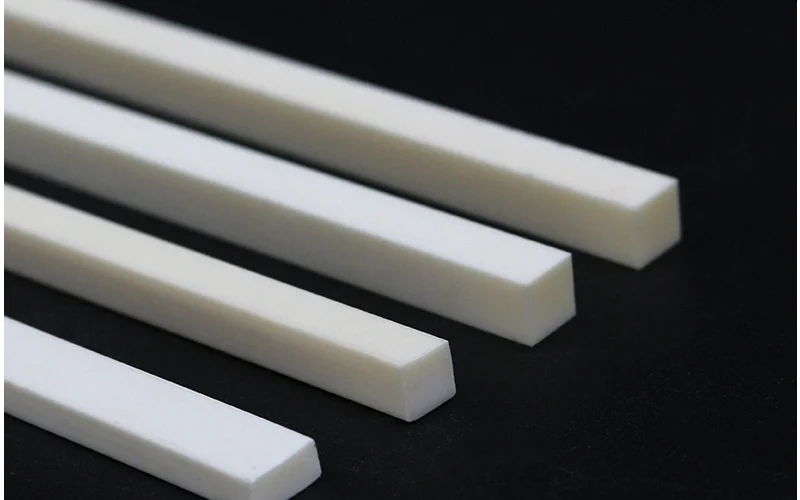
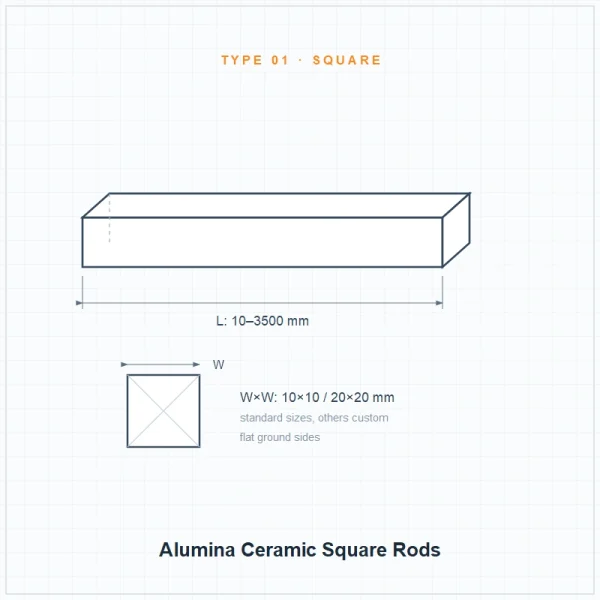
Alumina Ceramic Square Rods
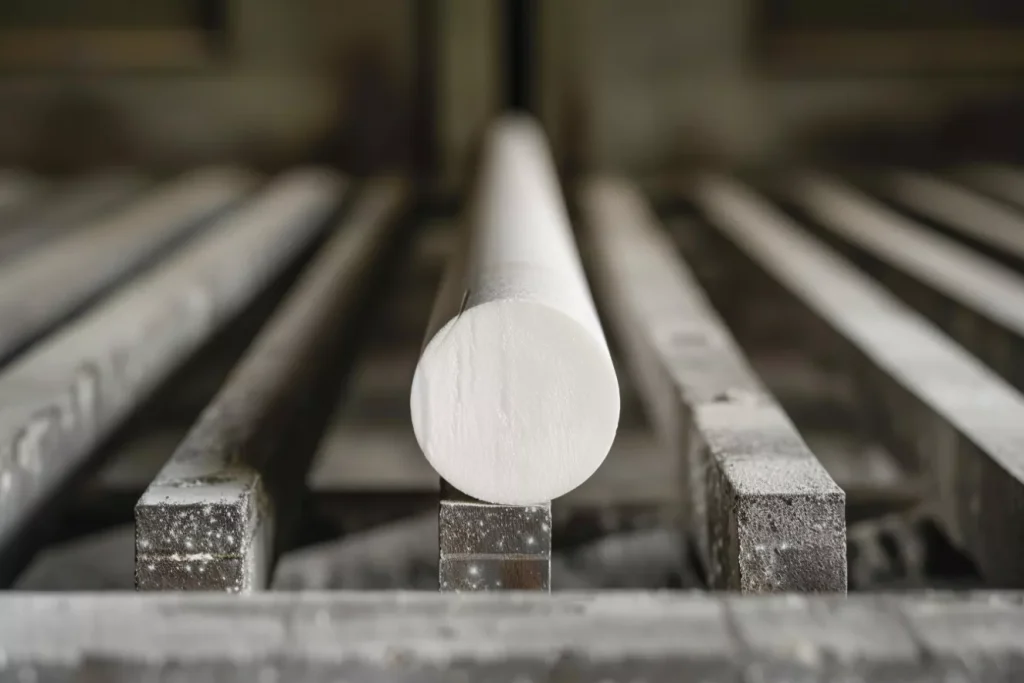
Square alumina rods for high-temperature support, guides and insulation.
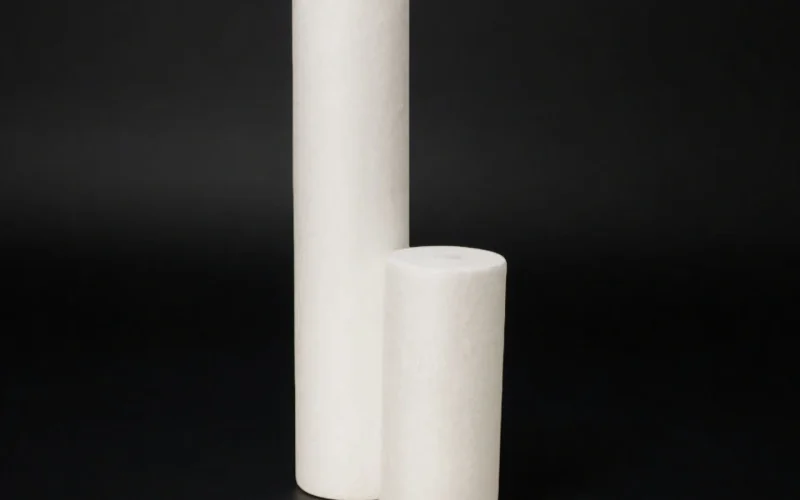
Porous Alumina Rod
Porous alumina rods for controlled gas diffusion, filtration and thermal insulation.
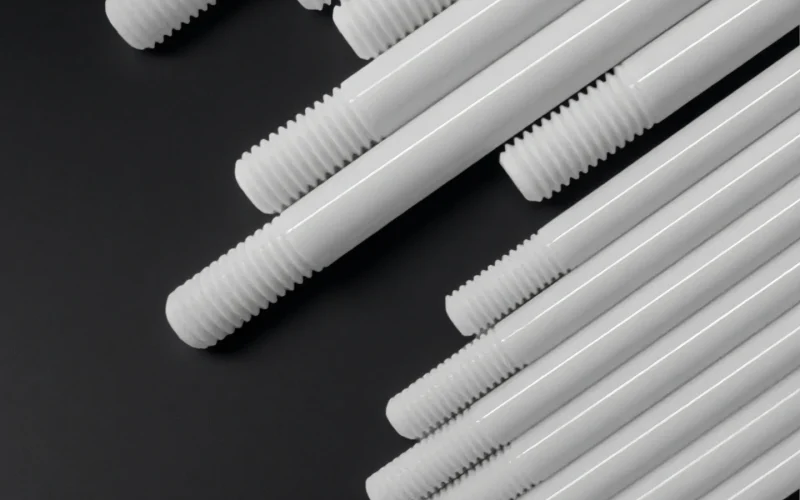
Alumina Threaded Rod
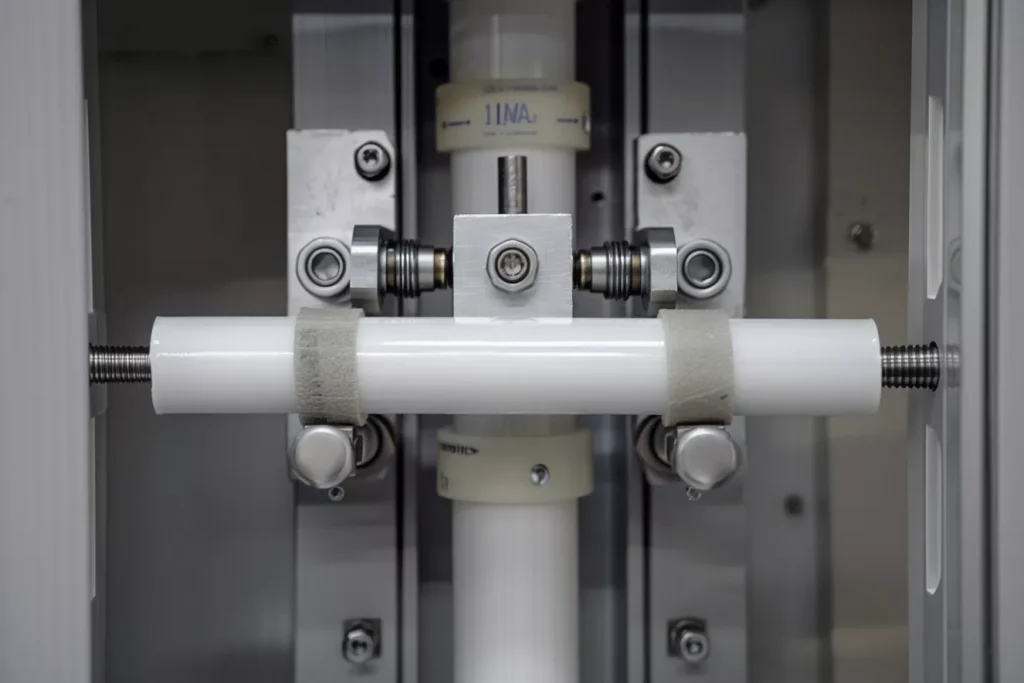
Threaded alumina rods for high-temperature fastening and insulated assemblies.
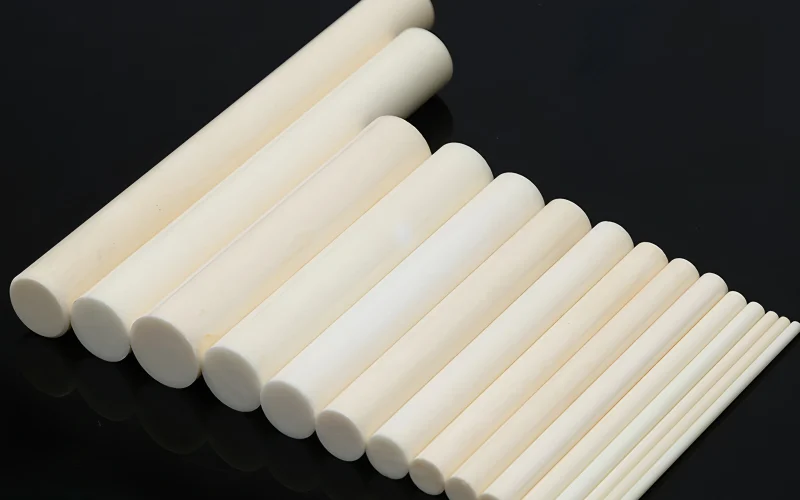
Cylinder Alumina Ceramic Rod
Dense alumina solid rods for insulation, wear-resistant guides and mechanical parts.
Alumina Ceramic Rod Sizes & Stock
The sizes below are typical, frequently produced alumina rod formats. Other diameters, square sections and lengths are made to order; length capability depends on diameter and forming route (extruded long rods vs pressed precision rods), so each combination is confirmed in engineering review.
| Type | Diameter/Size | Length | Purity | Stock |
|---|---|---|---|---|
| Solid Round | Ø3mm | 100mm, 300mm | 99%- 99.7% | Commonly produced – confirm current availability by RFQ |
| Solid Round | Ø5mm | 100mm, 300mm, 500mm | 99%- 99.7% | |
| Solid Round | Ø10mm | 100mm, 300mm, 500mm | 99%- 99.7% | |
| Solid Round | Ø20mm | 100mm, 300mm, 500mm | 99%- 99.7% | |
| Square | 10×10mm | 100mm, 300mm | 99%- 99.7% | |
| Square | 20×20mm | 100mm, 300mm | 99%- 99.7% |
Typical formats for reference. Exact size range, straightness and tolerance for your drawing are confirmed before quotation.
| Property | AD-ALU-999 | AD-ALU-997 | AD-ALU-995 | AD-ALU-990 | AD-ALU-960 | AD-ALU-950 |
|---|---|---|---|---|---|---|
| Al₂O₃ (wt%) | 99.90 | 99.70 | 99.50 | 99.00 | 96 | 95 |
| IEC class | C799 | C799 | C799 | C795 | C795 | C795 |
| Density (g/cm³) | 3.94 | 3.94 | 3.90–3.92 | 3.80–3.91 | 3.70 | 3.75 |
| Flexural strength (MPa, 20°C) | 315–340 | 330 | 320–350 | 300–320 | 300 | 280 |
| Thermal conductivity (W/(m·K), 25°C) | 35–42 | 35–40 | 30–38 | 24 | 25 (20°C) | 18–25 |
| CTE (10⁻⁶/K, 25–800°C) | 7.6 | 7.6 | 7.6 | 7.2 | 8.2 (25–1000°C) | 7.6 |
| Long-term use temperature (°C, typical review) | 1750 | 1700 | 1650 | 1600 | 1600 (maximum, air) | 1400 |
| Dielectric strength (kV/mm, 5 mm) | 10 | 10 | 10 | 10 | 8.3 (AC; 6.35 mm) | 10 |
| Mohs hardness | 9 | 9 | 9 | 9 | — | 9 |
| Tube straightness | — | 1 mm/m | 1 mm/m | 1 mm/m | — | 1 mm/m |
Alumina Ceramic Rod Benefits
Typical maximum service temperature around 1400–1730 °C depending on purity grade, geometry and load – confirmed per application in engineering review.
Mohs ~9 dense alumina resists abrasion far beyond steel or plastic guides, extending component life in sliding and guiding positions.
High dielectric strength and volume resistivity make alumina rods reliable insulators and standoffs in high-voltage assemblies .
Dense alumina resists most acids and alkalis, reducing contamination risk in chemical and laboratory environments.
Alumina Rod Properties & Benefits
Typical alumina rod performance varies with purity grade. Higher Al₂O₃ content generally improves thermal resistance, electrical insulation, and chemical stability, while lower-purity grades provide a more cost-efficient solution for general industrial use.
Alumina Rods Are the Best Choice When:
| Your Application | Why Alumina Rods | Recommended Type |
|---|---|---|
| Furnace structural support | Maintains strength at high temperature (up to 1730 °C with 99.7% grade) | Solid Round Rods or Square Rods |
| High-voltage electrical insulation | High volume resistivity (typically 10^12–10^14 Ω·cm) and high dielectric strength | Solid Round Rods (99%+ purity) |
| Kiln furniture / spacers | Stable under repeated thermal cycling; won’t react with ceramics | Square Rods |
| Heater coil supports | Excellent insulation; dimensional stability under heat | Solid Round Rods |
| High-temperature fastening | Non-conductive; corrosion-free alternative to metal fasteners | Threaded Rods |
| Gas diffusion / aeration | Controlled porosity; chemical inertness | Porous Rods |
| Chemical reactor guides | Resists acids, alkalis; no contamination | Solid Round Rods (99.7% purity) |
| Laboratory instrument supports | High purity minimizes contamination; dimensional stability | Solid Round Rods (99.5%+ purity) |
Alumina Rod vs Alumina Tube — When to Use Which?
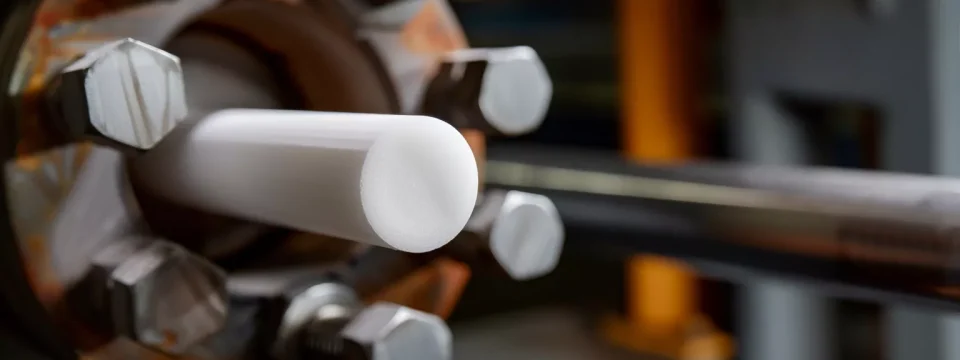
Quick rule: Use a rod when you need solid structural support or insulation. Use a tube when you need to protect wires, pass gas, or create a sealed chamber.
| Feature | Alumina Rod (Solid) | Alumina Tube (Hollow) |
|---|---|---|
| Structure | Solid cross-section | Hollow with defined wall thickness |
| Mechanical strength | Higher (no wall to crack) | Lower (wall thickness dependent) |
| Weight | Heavier (solid) | Lighter (hollow) |
| Best for | Structural supports, guides, spacers, electrical insulators | Wire/element protection, gas flow, thermocouple sheaths |
| Typical applications | Kiln furniture, heater coil supports, chemical reactor guides | Furnace tubes, thermocouple protection, insulating sleeves |
When to Choose Alumina Rods
Alumina ceramic rods combine excellent electrical insulation, high-temperature stability, and chemical resistance. They are the ideal choice when you need a solid ceramic support or guide element.
Alumina Rod Uses
Alumina rods are specified across furnace, sensor, laboratory, electrical and kiln applications. The sections above show where the rod sits, why alumina is chosen over metal or plastic, and which grade is typically used.
Alumina rods are used as furnace supports, heater coil supports, spacers and fixture rods in high-temperature furnaces. They help maintain electrical insulation and dimensional stability where metal parts may oxidize, deform or contaminate the heating zone.
In chemical processing environments, alumina rods work as corrosion-resistant supports, guides, stirring rods and fixture elements. Dense high-purity grades resist many acids and alkalis; share the medium, concentration and temperature so the right grade can be reviewed.
In electrical and electronic assemblies, alumina rods serve as insulating supports, spacers and standoffs. Their high dielectric strength, heat resistance and rigid structure make them suitable for high-voltage, sensor and thermal insulation components.
For laboratory and materials testing equipment, alumina rods are used as sample supports, stirring rods, furnace accessories and positioning elements. They provide high-temperature stability and low contamination risk for repeated heating and small-batch experimental work.
Custom Alumina Rods – Drawing-Based Manufacturing
ADCERAX manufactures custom alumina ceramic rods from your drawing, old part or sample — from one-off prototypes to repeat batch production.
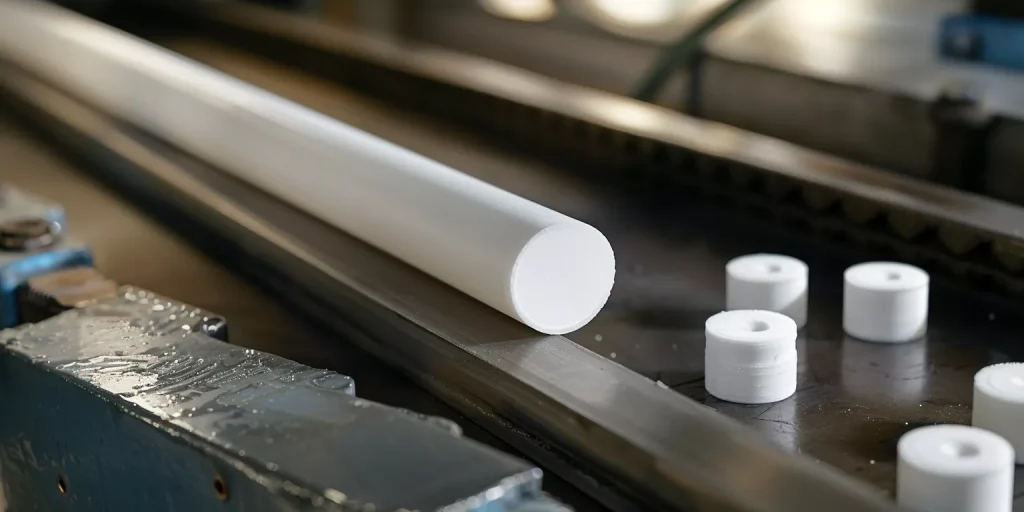
Customization Options
Extra-large / Extra-small diameters, non-standard thicknesses, and ultra-long / ultra-short lengths.
Provide higher - level dimensional accuracy and concentricity control than the standard.
Flanges, steps, threads, drilling holes, grooves, etc.
Adjust the material according to the application requirements.
Polish and grind the surface to achieve a specific surface roughness.
Customization Process
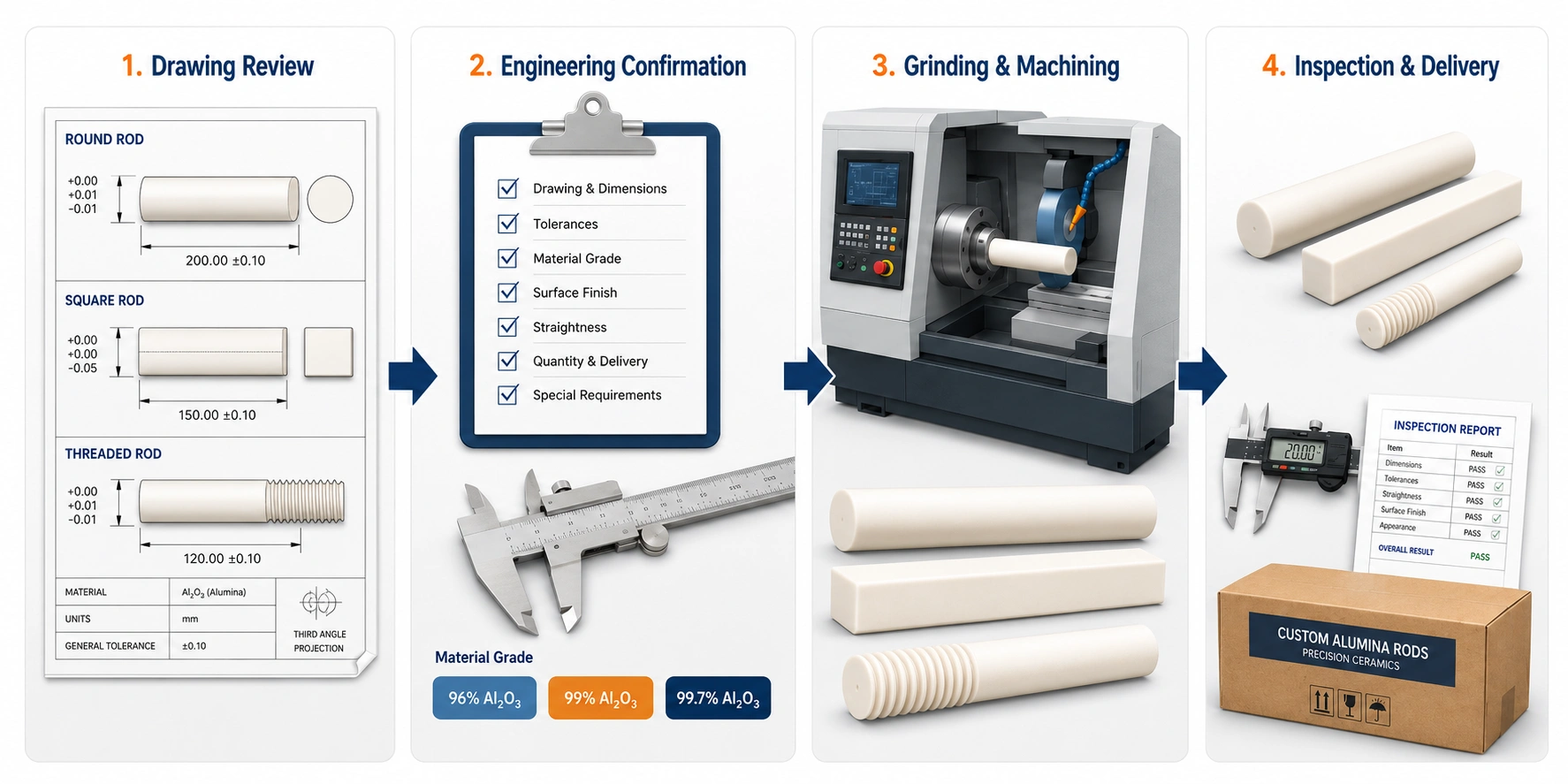
What to Send for a Custom Alumina Rod RFQ
A drawing plus working conditions is enough to start — the rest speeds up your quote.
Dimensions. Diameter (or W×W), length, and required tolerances. Mark which surface is critical.
Material grade. 95%,96%, 99%, 99.5% or 99.7% Al₂O₃ — or just tell us the temperature and voltage, and we'll recommend one.
Type and features. Solid, square, threaded or porous; any holes, slots, steps or threads with position and size.
Surface finish. As-fired, ground or polished; Ra value if critical.
Working conditions. Temperature, load, and medium (air, vacuum, acid, alkali).
Quantity and destination. Prototype or repeat production; country for freight. Lead time confirmed with your quotation.
Replacing a failed or overpriced part?
A photo of the old rod plus its key dimensions is all our engineers need to start. You'll hear back within 24 hours with feasibility and next steps — no complete drawing required.
Why Engineering Teams Work with ADCERAX on Alumina Rods
ADCERAX is a China-based advanced ceramics manufacturer for custom precision ceramic components. For alumina rods, the working method is simple: review your drawing, old part or working conditions first, then quote what can actually be manufactured.
We review your drawing, photo or old part for shape, capacity, grade and tolerance feasibility before quoting.
Grade (96/99/99.5/99.7/99.9%) and shape are selected by temperature, atmosphere and contamination risk.
Diameter, length, straightness, end shape and grinding tolerance are reviewed against your drawing before production.
Size and material review before shipment, with protective export packing planned by destination and quantity.
Alumina Rods Factory | ADCERAX

ADCERAX is a professional China alumina rods manufacturer that offers high-performance components with tight tolerances (up to ±0.005mm) and custom geometries. Using advanced forming methods and CNC machining, we deliver precision-engineered solutions for electronics, chemical, and high-temperature applications.
- 95–99.7% alumina grades matched to temperature, insulation and purity needs
- Custom rods made from your drawings, samples or old-part photos
- Prototype and small-batch support with confirmed lead time per order
- Dimensional inspection on critical sizes before shipment, reports available on request
- Direct engineering communication from drawing review to delivery
This table highlights our core technical strengths, including material options, tight tolerances, and advanced manufacturing methods. We offer tailored solutions to meet diverse industrial requirements.
| Technical Capabilities Overview | |
|---|---|
| Material Grades | 95%,96%, 99%, 99.5%, 99.7% Al₂O₃ – high purity for demanding applications |
| Tolerances | Up to ±0.005mm – suitable for precision assemblies |
| Forming Methods | Dry pressing, isostatic pressing, extrusion, casting, injection molding |
| Processing | CNC machining, fine grinding, polishing |
| Surface Finish | Polished / Unglazed / Glazed |
| Customization | Drawings, CAD files, or samples accepted for custom parts |
Alumina Rod FAQ
Yes. We manufacture standard-format alumina rods in commonly produced sizes and also run custom production for OEM requirements. Availability of any specific size and grade is confirmed at RFQ, together with the realistic lead time for your quantity.
Rod pricing depends on purity grade (96–99.7%), dimensions and tolerances, surface finish (as-fired or ground) and quantity. Send the drawing or size list with quantity and we reply with what we can make and the applicable price after a short engineering review.
High-purity Al2O3 powder is prepared with binders, formed into rods by extrusion, isostatic pressing or injection molding, then sintered above 1600 °C into a dense body. Critical diameters, lengths, chamfers, threads or holes are finished by diamond grinding; the achievable accuracy for each feature is confirmed against your drawing in engineering review.
Sintered alumina is cut with diamond tooling – typically a wet diamond cut-off wheel with the rod firmly clamped, followed by edge deburring; thin rods under about 6 mm can be scribed and snapped where precision is not critical. Always use eye and dust protection. If you prefer, we supply rods cut-to-length with ground end faces so no on-site cutting is needed.
Yes—used for heater coil support and insulation in kilns/heat-treat lines; stable under cyclic thermal load.
Yes. Alumina rods are widely used as reliable electrical insulators because of their high dielectric strength and excellent volume resistivity, ensuring safe performance even under high-voltage and high-temperature conditions.
Yes. We can manufacture parts strictly according to customer drawings and ensure tight tolerance control with precision machining. Ground tolerances up to ±0.005 mm on critical dimensions are confirmed against your drawing in engineering review.
To get a custom alumina rod quote, please provide:
1. Dimensions
- Diameter
- Length
- Tolerance requirements (e.g., ±0.05mm)
2. Material Purity
- Common options: 96%,99%, 99.5%, or 99.7% Al₂O₃
- Higher purity offers better thermal and electrical performance
3. Rod Type or Shape
- Solid rod, hollow tube, square rod, threaded rod, etc.
- Attach a drawing or sketch if available
4. Surface Finish
- Polished, unpolished, glazed, or custom surface treatment
- Indicate if edge chamfering or end-face grinding is needed
5. Special Features (if any)
- Holes, slots, threads, grooves, or notches
- Indicate position, size, and quantity
6. Application Environment
- Operating temperature
- Exposure to chemicals or voltage
- This helps us recommend the right alumina ceramic grade
7. Quantity & Delivery Requirements
- Estimated order volume (e.g., 50 pcs, 500 pcs)
- Required lead time or delivery deadline
- Shipping destination (for freight calculation)
- Alumina (Al₂O₃): better for very high temperatures, strong electrical insulation, lower cost, lighter; hardness-driven wear resistance.
- Zirconia (ZrO₂, e.g., 3Y-TZP/PSZ): much tougher and stronger (resists chipping/impact), great for tight fits with metals, but lower max temperature and higher cost.
- High impact / shock loads — consider zirconia rods (higher fracture toughness)
- Need for hollow passage — consider alumina tubes
- Extreme thermal shock — consider silicon carbide rods
- Need for thermal conductivity — alumina has moderate conductivity (22-29 W/m·K); SiC is better for heat transfer
96% alumina is the cost-effective choice for general supports and wear parts (continuous service up to about 1400 °C); 99% adds strength, insulation and temperature margin for structural and high-voltage use; 99.7% suits maximum-temperature, low-contamination and laboratory or vacuum environments. Grade values are typical material references – the final grade is confirmed against your temperature, atmosphere, insulation and purity needs in engineering review.
Get in touch with us
We believe that Adcerax will become your best partner!
Please fill in your contact information in the form or call us.
info@adcerax.com
Tel: +86-0731-84428843
WhatsApp: +86 19311583352
Within 24 hours
*Our team will answer your inquiries within 24 hours.
*Your information will be kept strictly confidential.