Silicon Carbide Nozzles—for FGD Spray & Kiln Burner Service
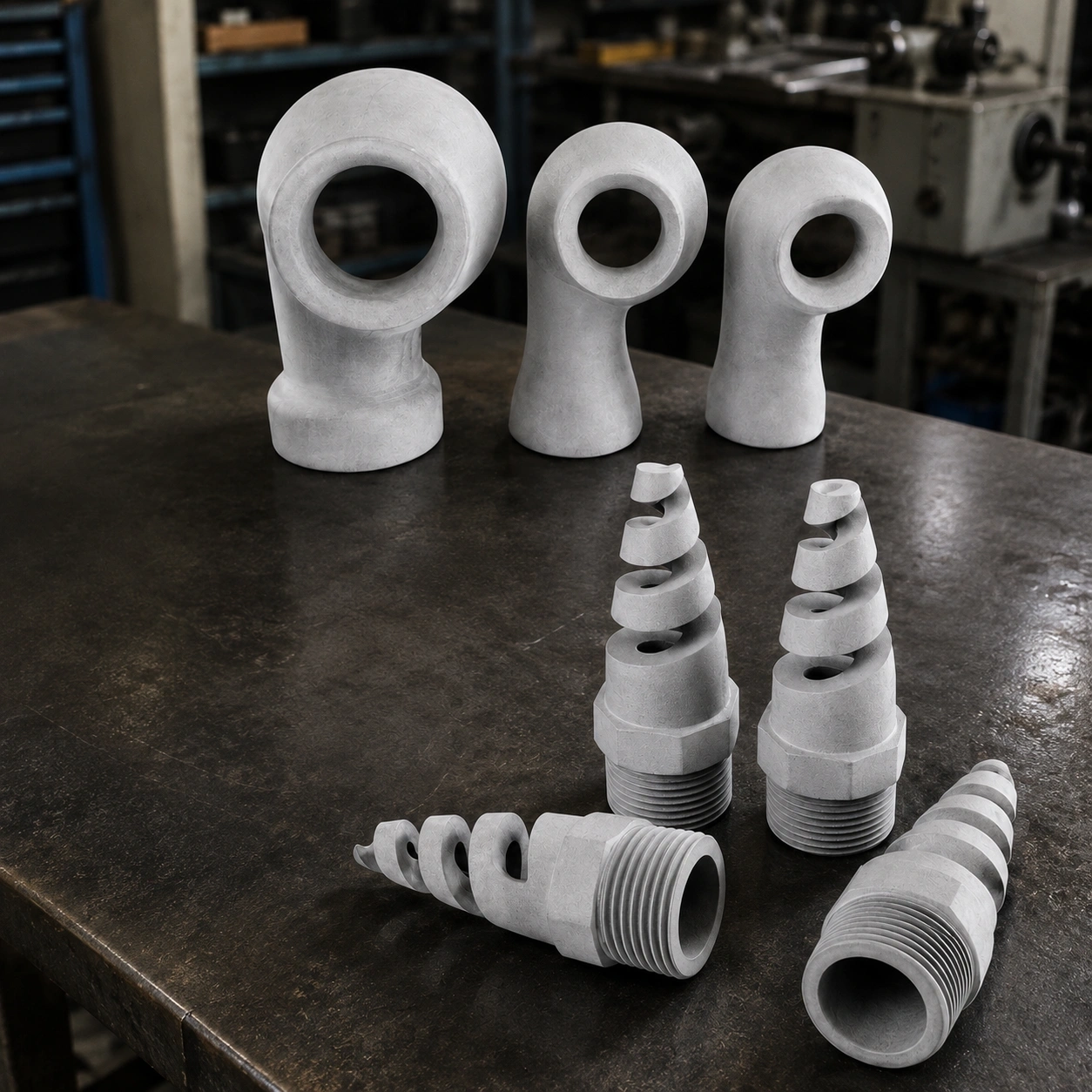
ADCERAX supplies silicon carbide (SiC) nozzles — RBSiC and SiSiC — in two lines: FGD/scrubber spray nozzles (spiral and vortex) for gas-scrubbing and slurry spray, and burner nozzles for kilns and industrial furnaces.
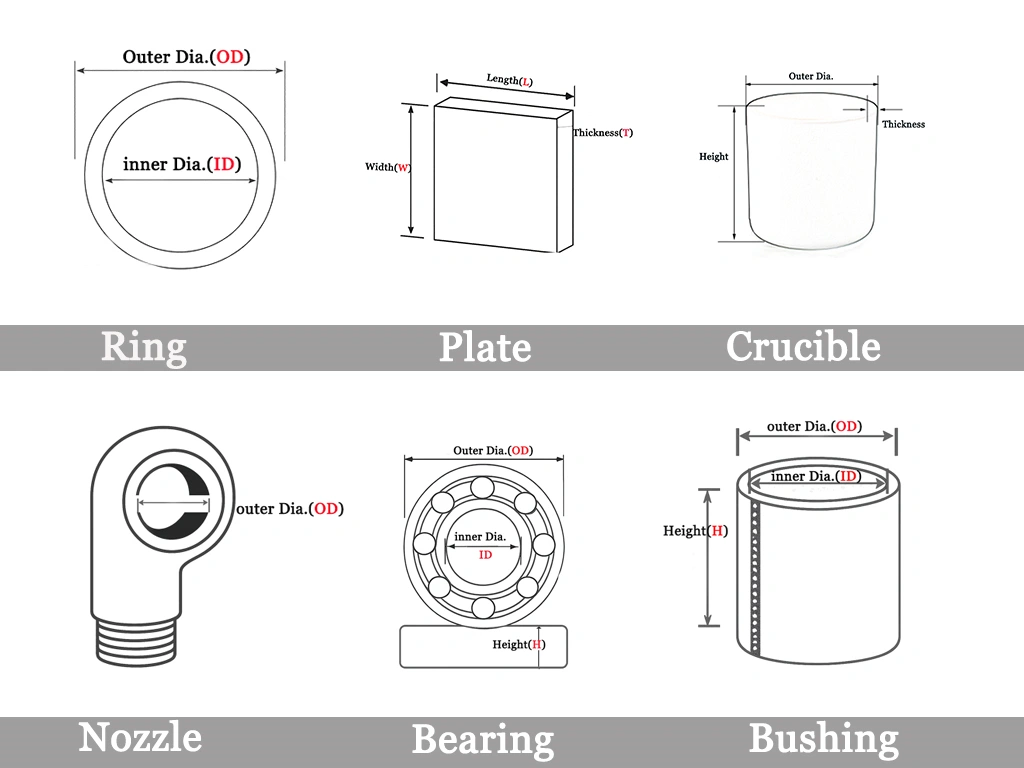
Send a drawing, old nozzle or spec with the application, flow, spray angle and connection (for spray) or the burner interface, ID/OD/length and furnace atmosphere (for burner), and our engineers review manufacturability before quotation.
SiC nozzles are chosen where metal or polymer nozzles wear, corrode or distort in abrasive slurries, acidic flue gas or high-temperature flame zones — with support for custom geometry, replacements and small batches.
±0.03mm-±2mm
Machining Accuracy
What Is a Silicon Carbide Nozzle?
A silicon carbide (SiC) nozzle is a ceramic spray or burner component made from reaction-bonded (RBSiC) or silicon-infiltrated (SiSiC) silicon carbide.
It is used in two main ways: as an FGD/scrubber spray nozzle (spiral or vortex) that forms a spray cone for gas scrubbing, quenching and slurry spray, and as a burner nozzle that shapes the flame outlet in kilns and industrial furnaces. SiC resists slurry abrasion, chloride and acidic condensate and high-temperature exposure, which is why it is used where metal or polymer nozzles wear, corrode or distort. The right material route, geometry and interface are confirmed per application by engineering review.
Typical Properties of Silicon Carbide Nozzles
RBSiC / SiSiC · SSiC Material-route reference for selection. Confirmed values follow an engineering review of your nozzle and duty.
| Property | Unit | RBSiC / SiSiC (Main FGD & Burner Route) | SSiC (Selective, Aggressive Media) |
|---|---|---|---|
| Density | g/cm³ | 2.95–3.10 | 3.10–3.15 |
| Flexural Strength | MPa | 250–350 | 350–450 |
| Vickers Hardness | GPa | ~22–26 | ~22–26 |
| Fracture Toughness | MPa·m⁰·⁵ | 3–4 | 3–4 |
| Elastic Modulus | GPa | 330–410 | ~410 |
| Thermal Conductivity | W/(m·K) | 150–200 | 110–150 |
| Coefficient of Thermal Expansion | ×10⁻⁶/K | 4.0–4.5 | 4.0–4.5 |
| Maximum Use Temperature (Atmosphere-Dependent) | °C | ~1350–1380 | ~1600 |
| Corrosion / Wear Resistance | — | Corrosion- and wear-resistant | Corrosion- and wear-resistant |
Note: Typical industry and material-route reference values only. These are not certified ADCERAX values and should be confirmed for each application through engineering review.
Why Engineers Choose Silicon Carbide Nozzles
Silicon carbide nozzles are chosen where slurry abrasion, corrosive gas, or thermal shock rule out metal or plastic. The four properties below show what that means for FGD/scrubber spray and kiln/furnace burner service — figures are in the table above.
Corrosion & Chemical Resistance
Stable in acidic, chloride-bearing FGD condensate and wet-scrubber media — why SiC replaces metal or plastic nozzles in absorber spray layers.
- Handles Cl⁻, HCl and SO₂ service (confirm medium & concentration)
- Suited to absorber, scrubber and gas-washing positions
- Holds bore and outlet geometry in aggressive flows
Wear & Abrasion Resistance
High hardness keeps the orifice and spray geometry through abrasive slurry duty.
- Resists slurry and solids abrasion at the outlet
- Limits orifice enlargement that shifts spray pattern
- Wear life depends on solids, velocity and geometry (per RFQ)
Thermal Stability & Shock
Low expansion and thermal-shock resistance keep geometry stable across temperature swings — in gas cooling, quench and burner service.
- Limits distortion under thermal cycling
- Holds burner outlet shape at high temperature
- Withstands rapid heating / cooling (quench, start-up)
Geometry & Spray/Flame Stability
A dense, precise SiC body holds nozzle geometry, so the spray cone or flame outlet stays consistent over long duty cycles.
- Stable spray angle and full-cone coverage (typical)
- Clean internal flow path resists clogging in high-solids slurry
- Thread / flange / bonded interfaces machined to fit your header
ADCERAX Silicon Carbide Nozzles Product Range
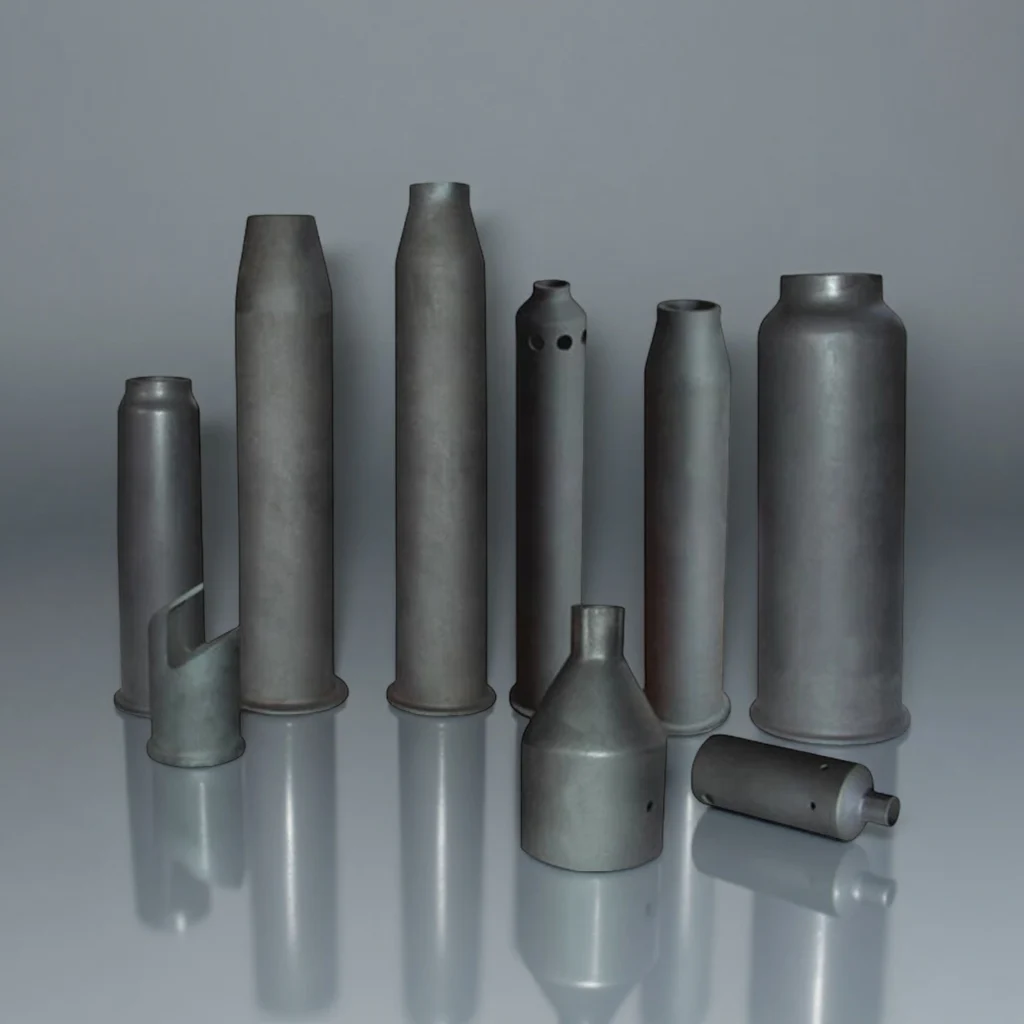
The ADCERAX silicon carbide nozzle range covers two duty lines: spiral and vortex spray nozzles for FGD and scrubber systems, and burner nozzles for kilns and furnaces — each matched by flow, spray angle, connection or burner interface, and material route before quotation.
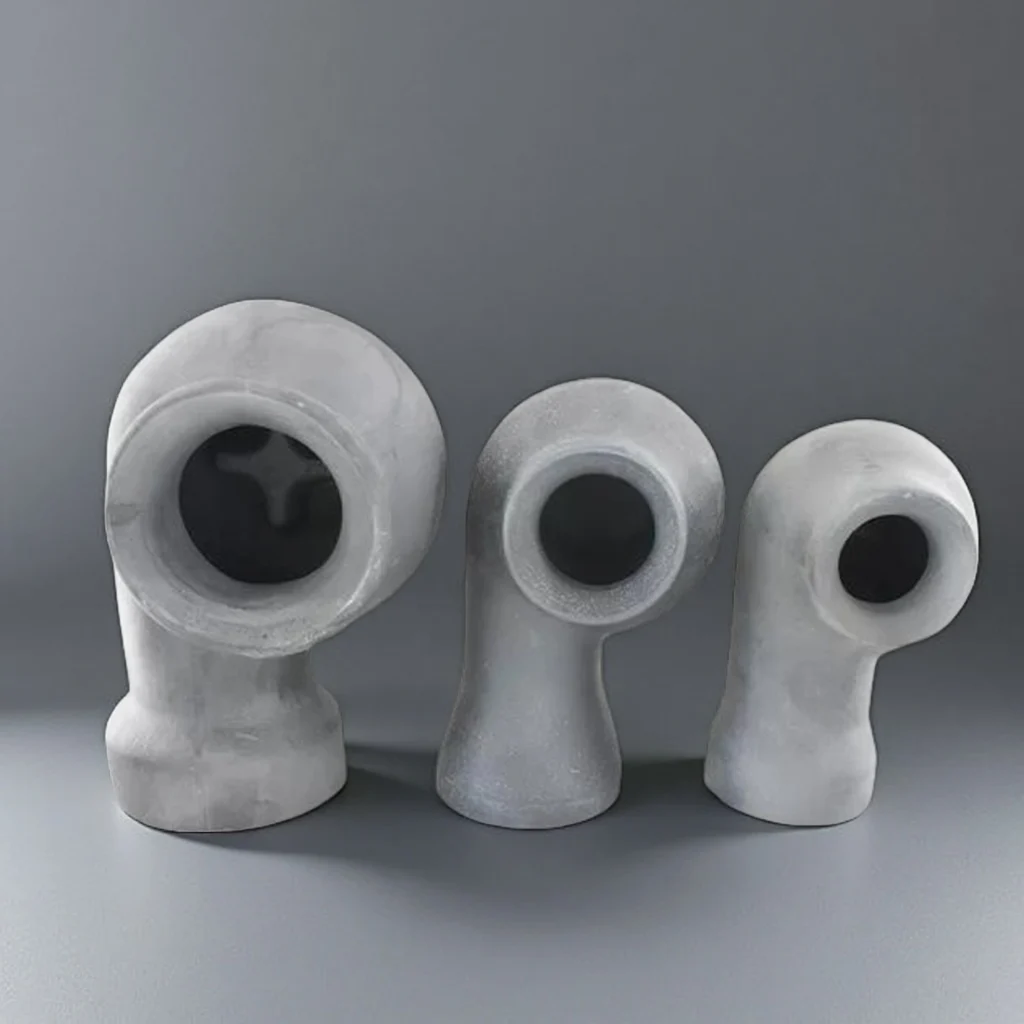
Vortex-induced internal flow is maintained through the SiC chamber structure.
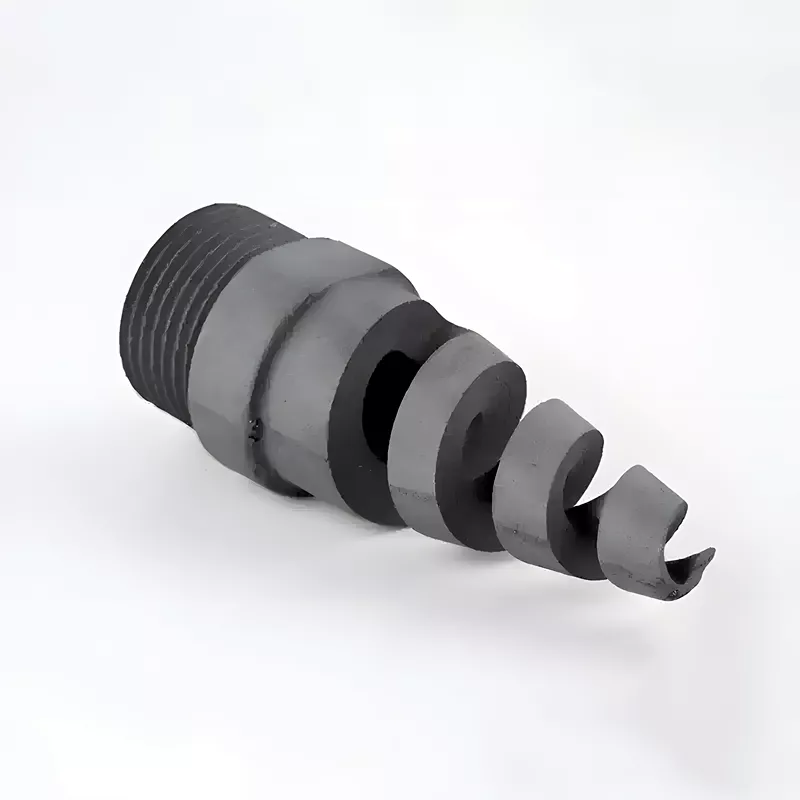
Not sure which SiC nozzle fits your system?
Send us your spray or burner details — flow rate, spray angle, connection, medium and temperature for FGD/scrubber, or burner interface, ID/OD/length and furnace atmosphere for kilns. A drawing, sample photo or old nozzle model is enough to start.
Our engineers review the material route (RBSiC / SiSiC) and geometry before quoting, so you get a nozzle matched to your system — not a generic part.
SiC Nozzles Applications Across Industrial Systems
Silicon carbide nozzles work in demanding gas- and liquid-handling systems where abrasion, corrosive media, or thermal shock rule out metal and plastic. Hardness, corrosion resistance, and thermal-shock stability keep the spray cone and burner outlet stable — across FGD/scrubber and kiln/furnace service.
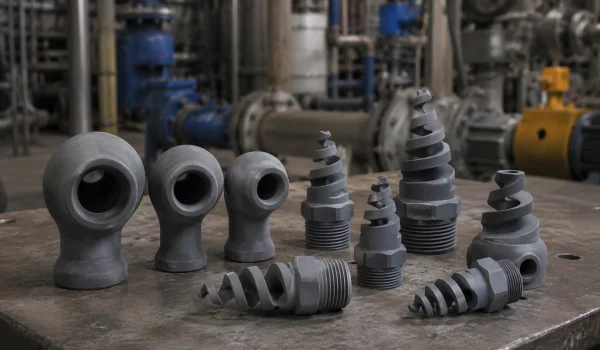
Flue-Gas Desulfurization (FGD) Absorber Spray
SiC spray nozzles are used in FGD absorber spray layers handling limestone–gypsum slurry, where metal nozzles wear and lose spray pattern. High-hardness SiC is selected for abrasive, high-solids service; spray angle and flow are confirmed per absorber layout.
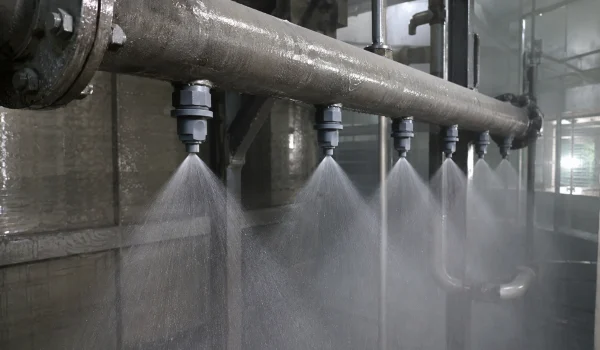
Steel & Metallurgical Gas Cleaning
In steel and metallurgical quench and desulfurization flows, SiC nozzles are selected for abrasive, chloride-bearing gas where geometry stability matters. Medium and temperature are confirmed per duty.
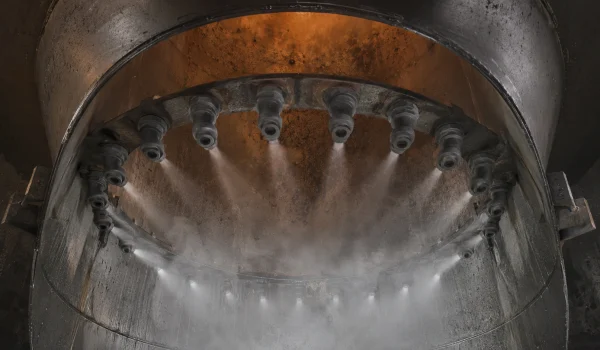
Waste-Incineration Quench & Scrubber
In waste-incineration quench and scrubber service with acidic, fly-ash-laden gas, SiC nozzles are chosen for corrosion and abrasion resistance. Chloride level and quench conditions are confirmed per application.
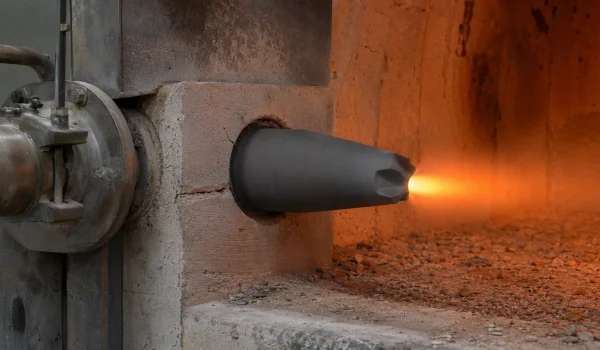
Kiln & Furnace Burner Outlets
SiC burner nozzles shape the flame outlet in tunnel kilns and industrial furnaces, selected for thermal-shock resistance and geometry stability under firing cycles. Burner interface, furnace atmosphere and fuel-air ratio are confirmed per drawing.
Custom Silicon Carbide Nozzles to Your Drawing
Every nozzle is reviewed against your application before quotation. Share a drawing, sample or old part with the nozzle type (spiral / vortex / burner), flow or burner interface, connection, material route (RBSiC / SiSiC) and operating conditions.
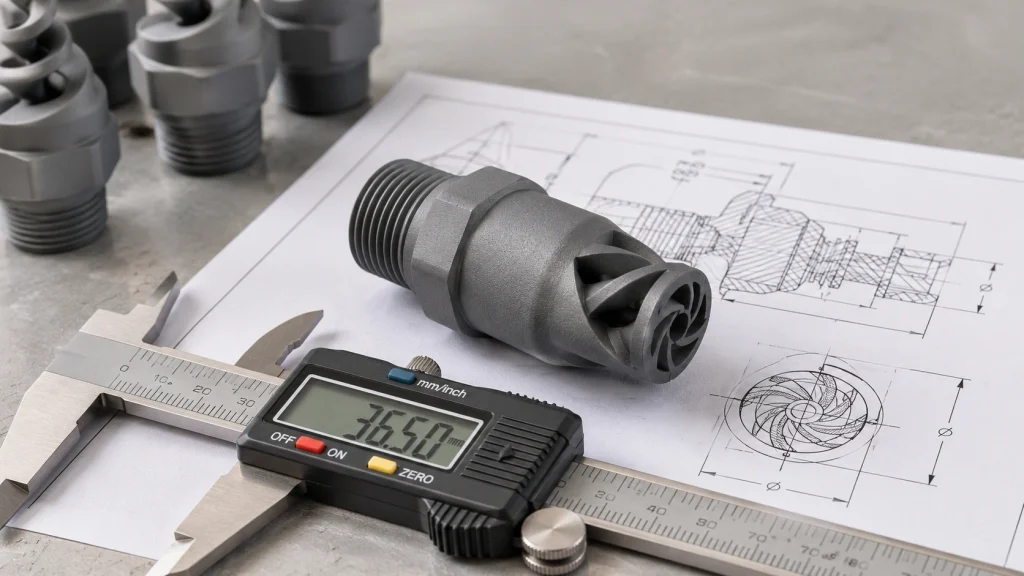
Customization process
Custom nozzle body, bore, outlet profile, ID/OD and length to your drawing.
Spiral, full-cone or vortex spray, or burner outlet profile to the required behaviour.
Flange (DIN/ASME/JIS), thread (NPT/BSPT), sleeve or bonded connection.
RBSiC or SiSiC selected by medium, abrasion and temperature.
Concentricity, sealing-surface finish and tolerance to RFQ.
How the custom process works
Send your details
Drawing or old-part photo, plus material, size, media, and quantity.
Engineering review
We check material fit and manufacturability for your working conditions.
Route & quote
You get a ceramic route, feasibility notes, and a quotation.
Sample → repeat
Approve a sample or small batch, then move to repeat production.
In-House Manufacturing Strength for Silicon Carbide Nozzles
ADCERAX supports silicon carbide nozzle projects end to end — from drawing review and material-route selection (RBSiC / SiSiC) to precision machining and inspection — so FGD and burner requirements are verified before production.
Forming, sintering, machining, finishing, and inspection under one roof — no outsourced quality gaps.
Multi-axis CNC and grinding of hard SiC for tight interfaces, threads, flanges and outlet profiles.
Dimensional and material-route checks on dense RBSiC / SiSiC (SSiC on request), with inspection records on request.
| Manufacturing Capabilities Overview | |||
|---|---|---|---|
| Manufacturing Capability | Engineering Strength Description | ||
| Cold Isostatic Pressing (CIP) Capacity | Pressing force up to 2000 bar ensures high-density uniformity for complex vortex, spiral, and burner-type silicon carbide nozzles. | ||
| High-Temperature Sintering Stability | Controlled sintering range 1350–2200 °C delivers low shrinkage deviation for both RBSiC and SSiC nozzle bodies. | ||
| Precision CNC Machining Accuracy | Thread, flange-face, and sealing-surface machining maintained within ±0.03 mm tolerance for interface reliability. | ||
| Internal Chamber Profile Control | Dedicated vortex-chamber tooling achieves repeatability within ±0.05 mm, ensuring consistent spray-path geometry. | ||
| Advanced Dimensional & Quality Inspection | OD/ID profiles, concentricity, and thread pitch measured with 0.01 mm resolution, supported by NDT detecting cracks ≥0.2 mm. | ||
| High-Volume & Repeatable Production Output | Monthly capacity up to 8000 pcs with mass-production dimensional variation controlled within ±0.2 mm for OEM-level repeatability. | ||
FAQs About ADCERAX Silicon Carbide Nozzles
SiC nozzles are used in two main ways: as FGD/scrubber spray nozzles (spiral or vortex) that form a spray cone for flue-gas desulfurization, gas cooling, quenching and slurry spray, and as burner nozzles that shape the flame outlet in kilns and industrial furnaces. The right type, geometry and material route are confirmed per application by engineering review.
A spiral nozzle uses spiral channels to form a full-cone spray; a vortex nozzle uses a swirl chamber to form a rotating spray cone; both are used for FGD and scrubber spray. A burner nozzle is a different line — it shapes the flame outlet in kilns and furnaces. Spray and burner nozzles are specified from different inputs, so we confirm the type first.
We use reaction-bonded (RBSiC) and silicon-infiltrated (SiSiC) silicon carbide, selected by medium, abrasion and temperature. Reaction-bonded routes are common for FGD spray and burner bodies. The route is confirmed per application; the values on this page are typical references, not certified specifications.
Yes. Send a drawing, spec or old nozzle with the type (spray or burner), flow or interface, connection and operating conditions, and our engineers review manufacturability and interface fit before quotation. We support custom geometry, replacements and small batches.
Flow, spray angle, spray pattern and droplet size depend on the nozzle model and geometry and are set to your RFQ rather than promised as fixed values. Share your absorber or spray-header requirement and we confirm the design that fits.
As a typical guide, SiC nozzles are used to around 1350–1600°C depending on material route and atmosphere, with good thermal-shock resistance for heating and cooling cycles. These are material-selection references, confirmed for your medium and atmosphere by engineering review, not certified limits.
SiC nozzles are used where metal or polymer nozzles wear, corrode or lose spray pattern in abrasive limestone–gypsum slurries and acidic gas. Whether SiC fits your absorber depends on the slurry, connection and layout, which we review from your old nozzle model and header details; we do not promise a fixed service life.
Silicon carbide is chemically resistant in many acidic and chloride-bearing media, which is why it is used in FGD, quench and waste-incineration scrubber service. Compatibility with a specific medium and temperature should be confirmed per application.
Yes. We supply SiSiC/RBSiC burner nozzles that shape the flame outlet in tunnel kilns and industrial furnaces, made to your burner interface, ID/OD/length and outlet profile. Furnace atmosphere and fuel-air conditions are confirmed per drawing.
Both are used in wear service. Tungsten carbide is very hard and dense; silicon carbide is lighter, chemically resistant and used widely in corrosive spray and high-temperature service. The right choice depends on medium, abrasion, temperature and cost, confirmed by engineering review.
Our current nozzle range focuses on FGD/scrubber spray and kiln/furnace burner nozzles. SiC blast nozzles are a related application; if you need one, contact us with the bore, abrasive and pressure and we will review whether we can support it.
Spiral and vortex geometries are designed with the internal clearance needed for high-solids slurry, and the abrasion-resistant SiC surface keeps passages smooth. The suitable geometry for your solids content is confirmed per application rather than assumed.
We support DIN/ASME/JIS flanges, NPT/BSPT threads and sleeve, insert or bonded connections, matched to your spray header or burner block. Send your interface detail and we confirm the fit.
Please provide the type (spray or burner), and for spray: flow rate, spray angle, pattern, connection and slurry/solids; for burner: interface, ID/OD/length, outlet profile, furnace atmosphere and fuel-air. Include medium, temperature, pressure, quantity and a drawing, old nozzle model or sample.
Inspection and test documentation are provided on request after engineering review, based on what applies to your application. We list only certifications and documents we can actually supply.
Request an Engineering RFQ Review
To review your SiC nozzle, please provide:
- Type: FGD/scrubber spray (spiral/vortex) or kiln/furnace burner
- Spray: flow rate, spray angle, pattern, connection, slurry/solids
- Burner: interface, ID/OD/length, outlet profile, furnace atmosphere, fuel-air
- Medium, temperature and pressure
- Drawing, old nozzle model or sample; quantity
Replacing a worn or failed part? Send an old-part photo and we check whether SiC nozzles fit.
*Our team will answer your inquiries within 24 hours.
*Your information will be kept strictly confidential.
Partner with ADCERAX for Silicon Carbide Nozzles
Looking for a reliable silicon carbide nozzle supplier? Let us help you with your next project.
info@adcerax.com
Tel.:+86-0731-84428843
WhatsApp:+86 19311583352
Within 24 hours