
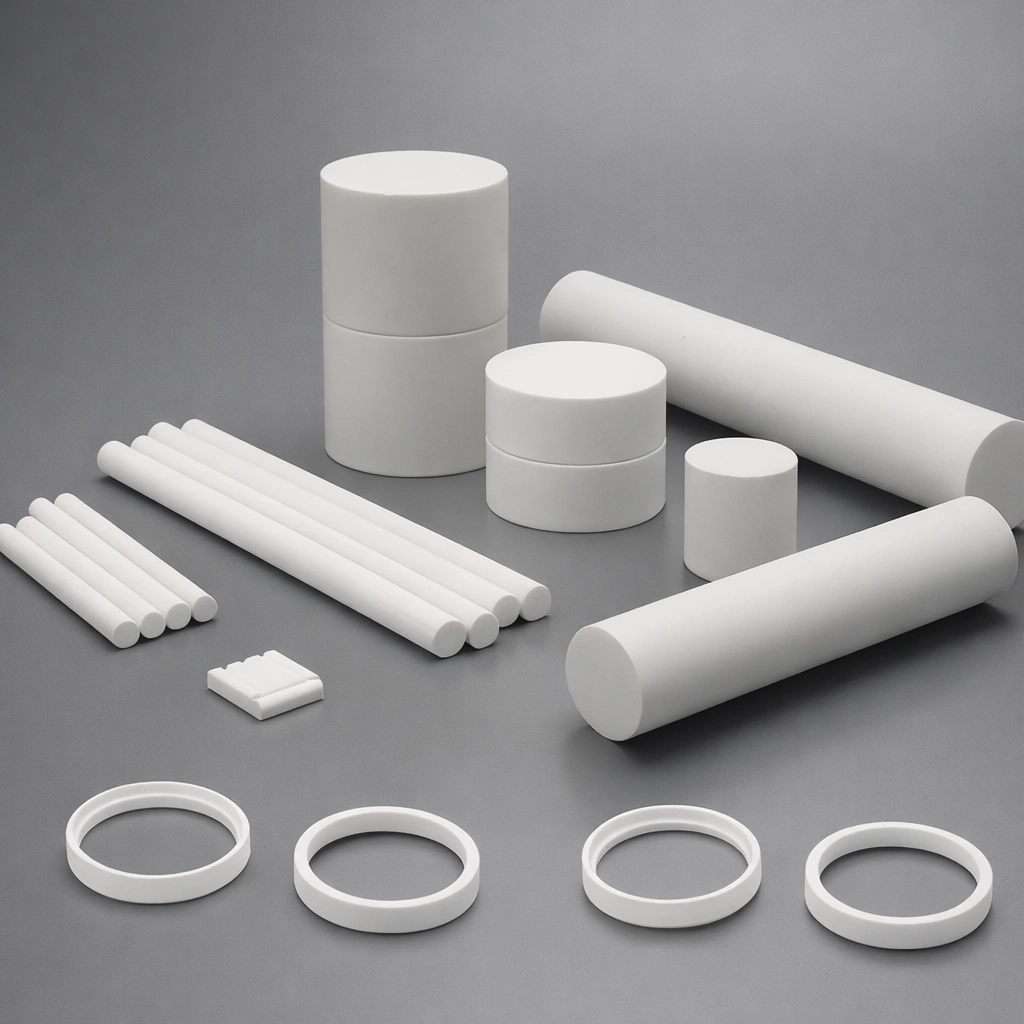
Machinable Glass Ceramic Solutions for Vacuum, Heating and Electrical Insulation
ADCERAX supplies Macor-like machinable glass ceramic blank forms and custom machined MGC components for vacuum fixtures, high-voltage insulation, heating jigs, optical alignment and laboratory instrument modules. Share drawings, critical holes, threads, tolerances, working temperature, voltage/frequency, load, cleaning process and quantity for a manufacturability check.
- Plate, rod, tube, ring & custom parts — machined to your drawing
- Insulating supports, spacers, sleeves, rings & fixtures
- Material route checked for vacuum, HV, heat, load & cleaning
- DFM review of holes, threads, tolerances & edges before quote
What Is Machinable Glass Ceramic?
Machinable glass ceramic (MGC) is a mica-based glass-ceramic that machines like metal with standard tools, yet insulates and stays stable in heat, vacuum and high-voltage service.
Its plate-like mica crystals let tools cut clean chips without cracking, so complex holes, slots and threads can be machined directly from stock — no sintering mold.
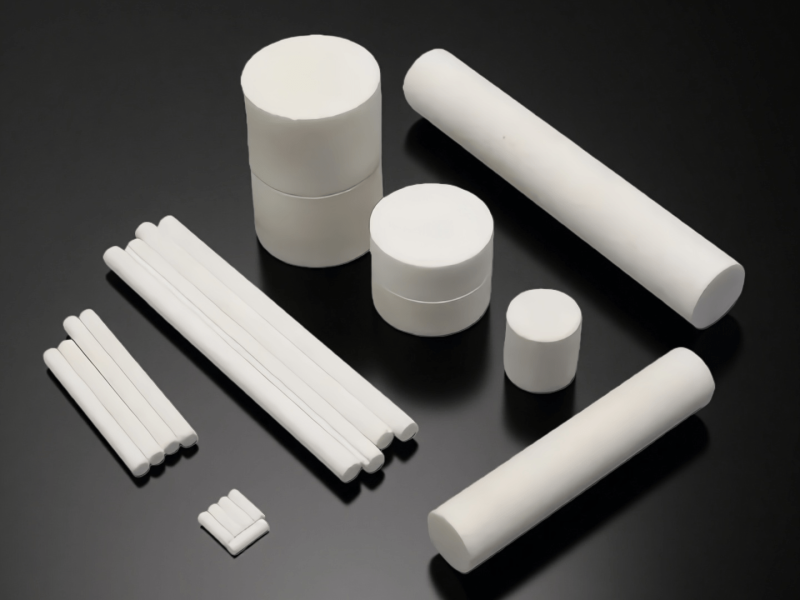
Why Engineers Choose Machinable Glass Ceramic
Start from stock with simple machining — no molds, presses or sintering trials.
Late dimension changes update machining paths, not forming and firing.
Section, re-measure and re-cut an improved part from the same batch.
Pre-crystallized stock with defined properties makes a second source easy to qualify.
Machinable Glass Ceramic Products
Machinable glass ceramic products from ADCERAX include plates, rods, tubes, rings and custom parts for high-temperature, high-voltage and vacuum equipment. Choose from stock blanks or send drawings for engineered solutions.
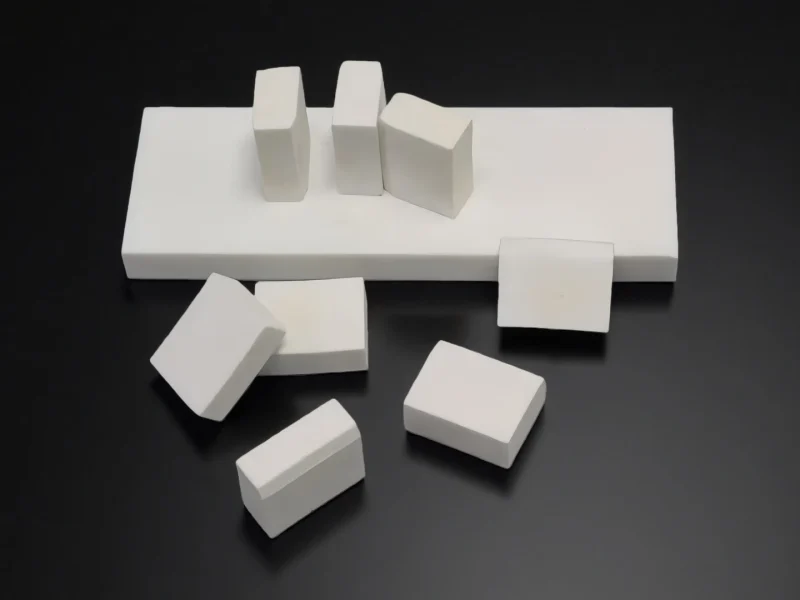
Machinable glass ceramic plate is a flat insulating slab that can be milled, drilled and pocketed with standard CNC tools for jigs, carrier plates and structural inserts in high-temperature or vacuum equipment.
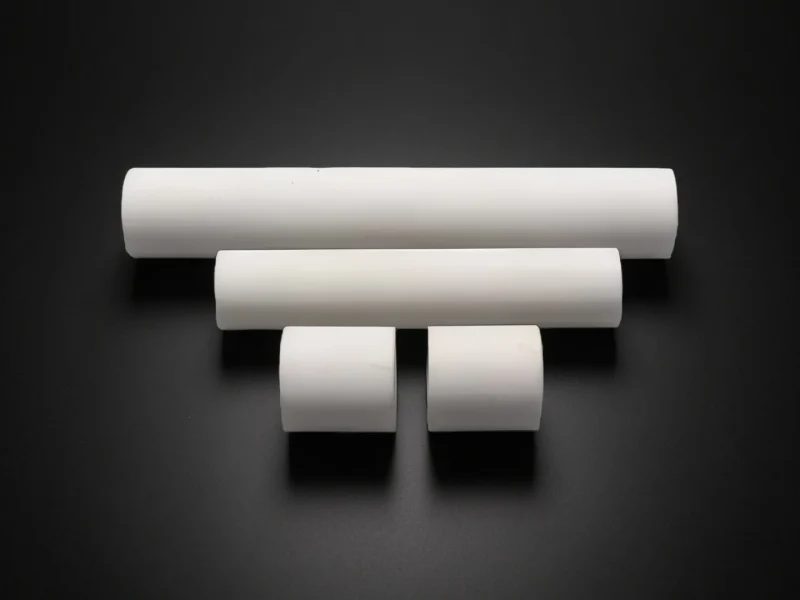
Machinable glass ceramic rod is a cylindrical blank used for spacers, standoffs and bushings where electrical insulation and thermal stability are required.
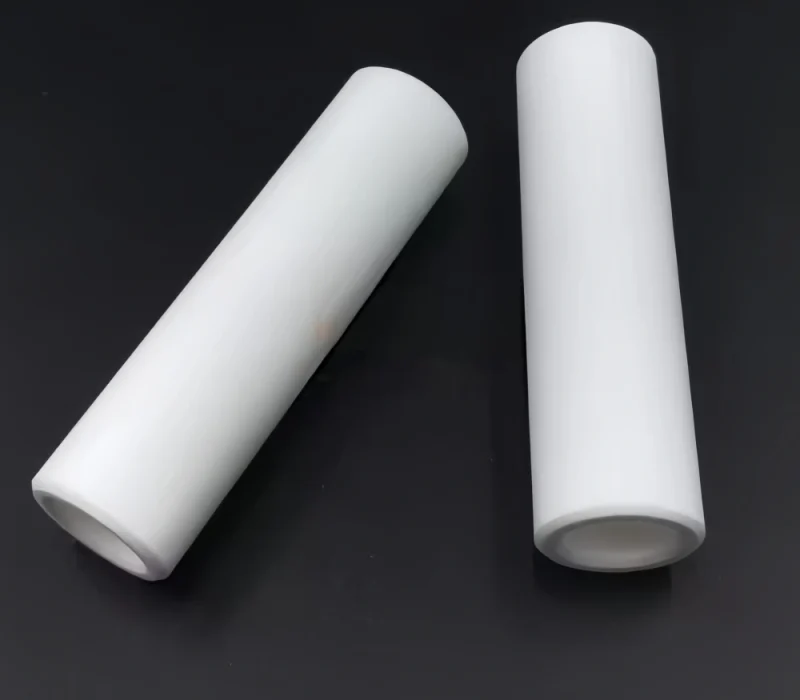
Machinable glass ceramic tube is a dense insulating sleeve that can be cut, drilled and grooved with standard tools for high-temperature and vacuum fixtures.
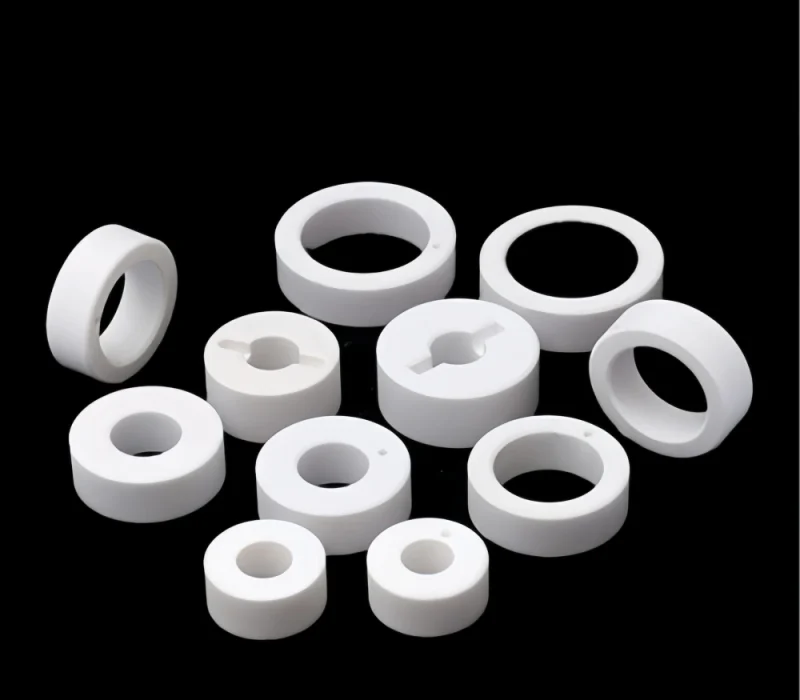
Machinable glass ceramic ring is used as an insulating spacer or collar around shafts, flanges and optics where tight fit and thermal stability are required.
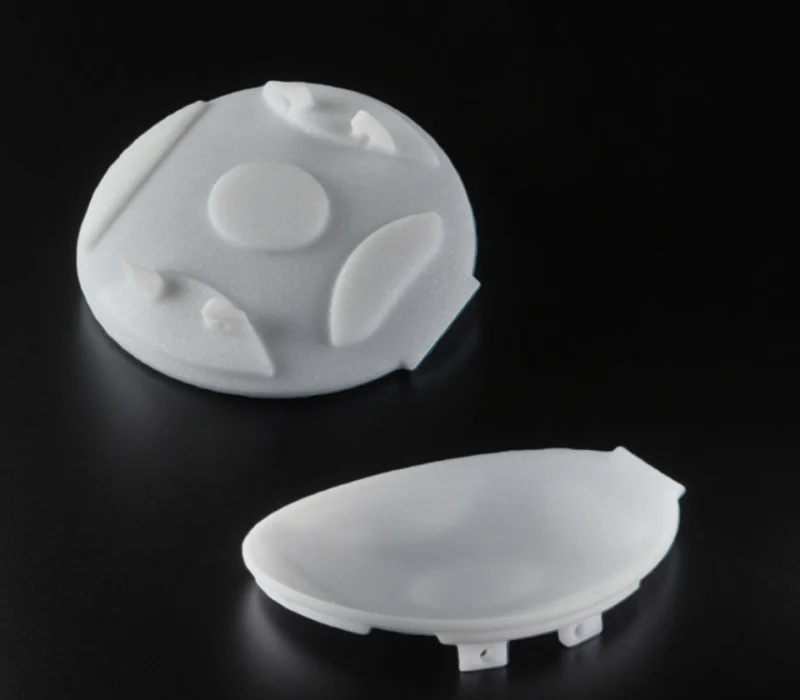
Machinable glass ceramic components are custom components made to your drawings, combining ceramic insulation with flexible CNC machining.
Machinable Glass Ceramic Properties
Machinable glass ceramic combines stable thermal expansion, strong electrical insulation and clean machinability, making it ideal for precise high-temperature insulating fixtures and spacers.
Machinable Glass Ceramic Physical Properties
Machinable glass ceramic is a dense, low-porosity glass-ceramic that stays dimensionally stable in heat, vacuum and humid environments. It combines ceramic-like rigidity with moderate hardness, so parts are durable in service yet still practical to machine precisely.
| Property | Value / requirement | Notes |
|---|---|---|
| Material grade | AD-MGC | White machinable glass ceramic; mica glass-ceramic composite |
| Bulk density | 2.60 g/cm³ | Typical material value |
| Water absorption | 0.00% | Reported at measurement resolution; not proof of hermeticity |
| Colour | White | Material appearance |
Machinable Glass Ceramic Thermal Properties
Machinable glass ceramic has a moderate thermal expansion and relatively low thermal conductivity, giving it good dimensional stability across typical heating and cooling cycles. These thermal properties make it suitable for high-temperature fixtures, insulating blocks and components that see repeated thermal cycling without severe distortion.
| Property | Value / requirement | Notes |
|---|---|---|
| Thermal conductivity | 1.71 W/(m·K) | At 25°C |
| Maximum-use temperature | 800°C | Application-qualified material selection value; not a universal continuous-duty or unloaded-peak guarantee |
| Thermal expansion | Measured expansion curve required | Use the actual design temperature interval; assess the specified component cycle |
Machinable Glass Ceramic Mechanical Properties
Machinable glass ceramic offers ceramic-like stiffness and compressive strength, but with lower fracture toughness than structural ceramics such as alumina or silicon nitride. This balance means it can carry typical fixture and support loads reliably while remaining brittle enough to chip cleanly under controlled machining.
| Property | Value / requirement | Notes |
|---|---|---|
| Flexural strength | 108 MPa | Typical at 20°C; not a guaranteed minimum |
| Compressive strength | 488 MPa | Typical at 20°C; must not be used as a bending limit |
| Young’s modulus | 65 GPa | Typical at 25°C |
| Rockwell hardness | 40, 45N scale | Typical; do not interpret as Mohs hardness |
Machinable Glass Ceramic Electrical Properties
Machinable glass ceramic provides high volume resistivity and good dielectric strength over a wide temperature range, making it a reliable insulator in compact, high-voltage and high-temperature designs. These electrical properties suit it to standoffs, terminal blocks, spacers and support parts in power, vacuum and instrumentation equipment.
| Property | Value / requirement | Notes |
|---|---|---|
| Volume resistivity | >10¹⁶ Ω·cm | At 20°C |
| Dielectric withstand | Finished-component qualification required | Specify AC/DC voltage, thickness, electrodes, test duration and failure criterion |
| Permittivity / dielectric loss | Application-specific electrical assessment | Specify frequency, temperature, electrode system and specimen thickness |
Machinable Glass Ceramic Chemical Properties
Machinable glass ceramic has good chemical stability in hot water, steam and many dilute mineral acids, so surfaces stay clean and dimensionally stable in most lab and industrial environments. It is less resistant to strong alkalis, so contact with concentrated caustic solutions should be limited.
| Solution | Weight loss | Notes |
|---|---|---|
| 5 % HCl | 0.26 mg/cm² | Acid resistance |
| 5 % Na₂CO₃ | 0.012 mg/cm² | Alkali, mild carbonate |
| 5 % NaOH | 0.85 mg/cm² | Strong alkali |
Where Machinable Glass Ceramic Is Used
Machinable glass ceramic (also called glass-mica ceramic) gives high-temperature insulation, precision fixtures and supports in power, vacuum and lab equipment — ideal where designs change often but reliability must stay high.
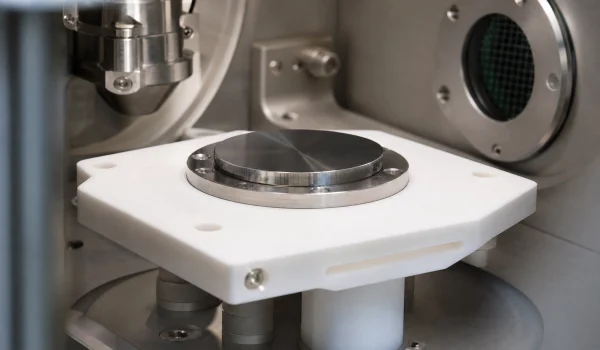
Lab & Analytical Fixtures
- Typical parts: sample-holder supports, feed-through insulators, detector spacers, low-outgassing vacuum fixtures.
- Why it fits:stable insulation near hot zones; complex features in one piece; easy design changes between experiments.
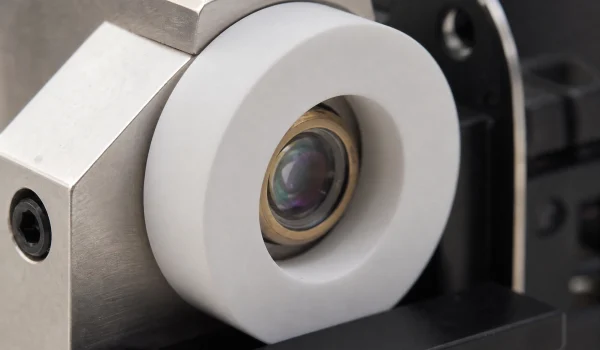
Laser & Optics Insulation
- Typical parts: thermal-isolation inserts, diode and current-lead supports, spacers and rings near hot components.
- Why it fits: low thermal expansion holds alignment; insulates in tight optical heads; fine machined features.
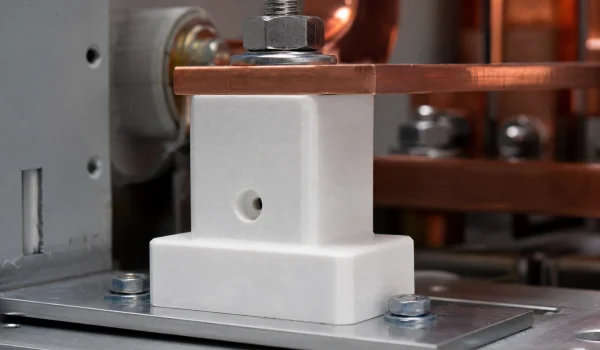
High-Voltage Insulation
- Typical parts: standoff insulators, bus-bar supports, terminal boards, feed-through supports.
- Why it fits:high dielectric strength in compact designs; machined creepage paths; no melting near conductors.
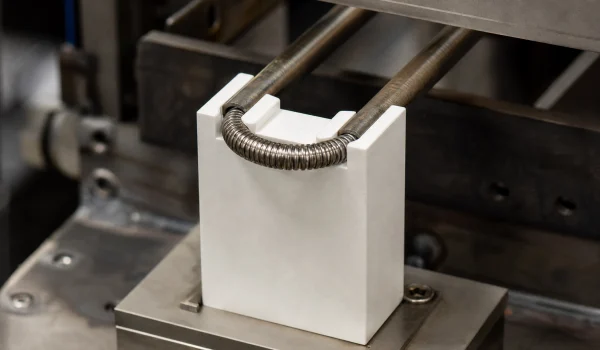
Heating & Brazing Fixtures
- Typical parts: fixture bases, thermal barriers, insulating supports for heater coils and bus bars.
- Why it fits: resists heat that softens metals; insulates live conductors; easy to re-machine during commissioning.
Send your drawing and operating conditions — our engineers review manufacturability before quoting.
Custom Machinable Glass Ceramic Parts
We machine plates, rods, tubes, rings and fixtures to your drawings, samples or operating conditions — dimensions, holes, threads and complex features to tolerance. Typical lead time is 3–9 weeks by complexity and finish.
Customization Options
Extra-large / Extra-small diameters, non-standard thicknesses, and ultra-long / ultra-short lengths.
Provide higher - level dimensional accuracy and concentricity control than the standard.
Flanges, steps, threads, drilling holes, grooves, etc.
Adjust the material according to the application requirements.
Polish and grind the surface to achieve a specific surface roughness.
Customization Process
Send us your drawing, CAD file, or physical sample with material grade, dimensions, tolerances, and quantity. Our engineers will evaluate the design and provide a detailed quotation with lead time and pricing.
Once the quote is approved, we proceed with sample prototyping (1–50 pcs) if needed, for testing and validation.
After sample approval or direct confirmation, we begin batch production by CNC machining, grinding and polishing. Every part goes through dimensional checks, material verification and surface-finish inspection before shipment.
Finished products are securely packed and shipped via DHL/FedEx/UPS or your preferred method. We support global delivery with full documentation.
Machinable glass ceramic manufacturing at ADCERAX
ADCERAX machines machinable glass ceramic in-house — CNC machining, grinding and inspection under one roof — with engineering review before every quote and documented quality for repeat production.
In-house machining, no trading markup.
DFM feedback on your drawing before quoting.
Complex geometries and tight tolerances.
We reply within 24 hours.
Machining machinable glass ceramic
Machinable glass ceramic cuts cleanly with standard tools, but edge chipping, tool load and thermal stress must be controlled for clean, repeatable features.
Tooling and Machine Setup
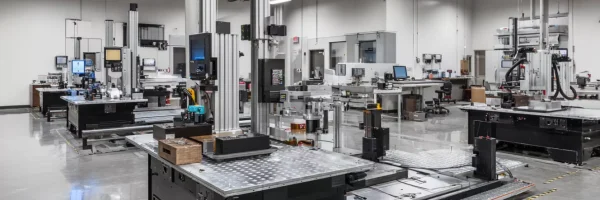
- Rigid standard CNC machines with good spindle condition suit most work
- Sharp carbide or PCD tools with positive rake to lower cutting forces
- Short, stable tool holders to control vibration
- Light depths of cut and moderate feeds; coolant or mist where needed
Process Recommendations
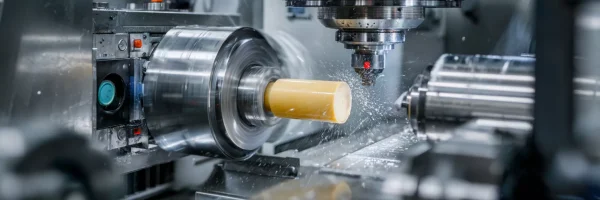
- Turning and grooving: smooth tool entry and exit; small radii at groove bottoms
- Milling and pocketing: climb milling, light radial engagement; ramp into pockets
- Drilling and threading: peck drilling with chip clearing; thread-mill or careful tapping
- Ultrasonic machining only for very small holes, thin webs or fine profiles
Tips-for-Machining (DFM)
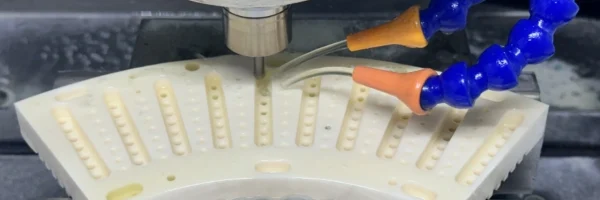
- Avoid knife-edge features; keep minimum wall and land widths
- Add corner radii and chamfers to reduce stress concentration
- Tighten tolerances only where function needs it
- Plan flat clamping pads so parts hold without stress
Processing capabilities
| Capability | Equipment | Engineering value |
|---|---|---|
| Precision CNC machining | Vertical and horizontal CNC centers | Stable dimensions and clean edges on plates, rods, tubes, and rings |
| Fine grinding and finishing | Surface grinders, diamond wheels, and lapping equipment | Improved flatness, parallelism, sealing surfaces, and bonding surfaces |
| Holes, slots, and threads | Drilling, tapping, and thread-milling equipment | Accurate features for coil formers, spacers, fasteners, and mounting hardware |
| Prototype and small-batch production | Quick-change tooling and flexible fixtures | Fast sample production and low-volume customized parts |
| Metrology and inspection | CMM, optical measurement systems, and precision gauges | Documented tolerances and consistent quality for repeat production |
Inspection and material documents — dimensional reports, material and compliance certificates — are available on request and confirmed per order.
FAQs about Machinable Glass Ceramic
Continuous use around 800°C with short-term peaks near 1000°C; the safe limit depends on load, atmosphere and geometry. It holds dimensions well through normal heating and cooling cycles — keep loads moderate and avoid sharp thermal shock.
Good for jigs, spacers, standoffs and light brackets, but not heavily loaded shafts or bearings. For high load or wear we suggest alumina, silicon nitride or silicon carbide.
Yes — by mechanical fasteners, high-temperature adhesives, or brazed/metalized joints. We usually recommend clamped or captured joints for easier maintenance.
- 2D/3D drawing or marked sketch
- Key tolerances and critical surfaces
- Working temperature, voltage or vacuum conditions
- Quantity, and prototype vs repeat
We flag any missing dimensions before quoting.
Yes — we review your part and propose a plate, rod or ring version, often merging several metal parts into one.
We avoid it for heavy impact, high-speed wear, rapid thermal shock or strong hot alkali, and suggest a tougher ceramic instead.
Yes, we regularly work under NDA with OEM customers. Drawings and process documents are handled under internal confidentiality procedures and are not shared with third parties.
If parts don't match the approved drawing, we investigate and arrange rework, replacement or another agreed solution.
What to Send for a Machinable Glass Ceramic RFQ
The fastest quote starts with a drawing and operating conditions — or send a sketch or old-part photo and we’ll flag the missing dimensions.
- 2D/3D drawing, sketch or old-part photos
- Critical holes, threads, grooves, slots, edges
- Tolerances, surface finish, flatness, parallelism
- Working temperature, thermal cycling, atmosphere
- Voltage, frequency, creepage/clearance (if electrical)
- Vacuum level, cleaning or chemical exposure
- Quantity, prototype vs repeat, packing/documents
- Start form: plate, rod, tube, ring or custom part
We check material route, mating metal and key tolerances before quoting, so the part fits your assembly.
*Our team will answer your inquiries within 24 hours.
*Your information will be kept strictly confidential.
info@adcerax.com
Tel:+86-0731-84428843
WhatsApp:+86 19311583352
Within 24 hours
