Porous Ceramic Manufacturer in China— Standard Sizes & Custom Porosity and Geometry
ADCERAX is a porous ceramic manufacturer in China, supplying ceramic foam filters, porous vacuum chucks, tubes, discs, plates, core rods and diffuser components in alumina, SiC, zirconia and magnesia. These engineered porous ceramics help engineers prevent the most common failure modes in filtration and flow-control duty—rapid pressure-drop rise, unstable flow distribution, premature clogging, and cracking from thermal cycling or abrasive wear.
With controlled pore structure, consistent batches, and custom-to-drawing capability, performance stays repeatable from prototype to repeat orders.
What is Ceramic Porous?
Ceramic porous refers to a ceramic material that contains a controlled network of interconnected pores. Those pores allow fluid or gas to pass through in a predictable way, so the part can function as a filter, diffuser/sparger, flow restrictor, or permeable support layer.
Porous vs non-porous ceramic
1.Choose porous when you need controlled flow, diffusion, or filtration.
2.Choose non-porous (dense) when you need sealing, wear surfaces, or leak-tight strength.
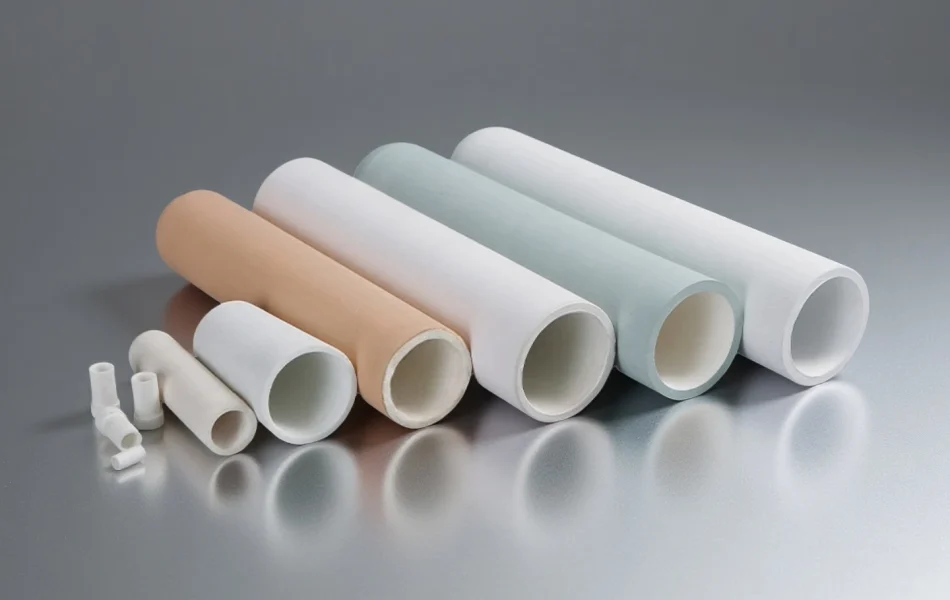
Porous Ceramic Material Properties
Porous ceramics combine controlled open porosity with reliable mechanical strength, thermal stability, and chemical durability. Tuned pore size and porosity deliver predictable permeability while maintaining consistent performance.
Mechanical Properties of Porous Ceramic Materials
| Material | Bulk Density (g/cm³) | Open Porosity (%) | Compressive Strength (MPa) | Flexural Strength (MPa) | Young’s Modulus (GPa) | Fracture Behavior | Typical Mechanical Notes |
|---|---|---|---|---|---|---|---|
| Porous Alumina (Al₂O₃) | 2.0 – 3.2 | 30 – 70 (extendable to 10 – 90) | 20 – 150 | 10 – 60 | 80 – 200 | Brittle | Wide tunable porosity window with a good balance of strength and permeability; special formulations extend porosity to 10–90%; widely used for filters, supports, and core rods. |
| Porous Zirconia (ZrO₂) | 3.0 – 4.5 | 30 – 90 | 50 – 250 | 20 – 100 | 100 – 210 | Semi-toughened | Higher fracture resistance than other porous ceramics with porosity tunable up to 90%; strength decreases toward the high-porosity end; suitable for precision and load-bearing porous parts at moderate porosity. |
| Porous Silicon Carbide (SiC) | 2.2 – 3.0 | 10 – 85 | 80 – 300 | 30 – 120 | 200 – 350 | Brittle | Broadest porosity range from dense-like 10% to open-cell 85%; very high stiffness and wear resistance retained at low-to-mid porosity; ideal for high-temperature and abrasive environments. |
| Porous Magnesium Oxide (MgO) | 1.6 – 2.5 | 30 – 93 | 10 – 80 | 5 – 40 | 30 – 120 | Brittle | Highest achievable porosity up to 93% for lightweight, highly permeable and insulating duty; mechanical strength is limited at the high-porosity end, so best where insulation or chemical compatibility matters more than load capacity. |
Thermal Properties of Porous Ceramic Materials
| Material | Max Service Temperature (°C) | Thermal Conductivity (W/m·K) | Thermal Expansion (×10⁻⁶ /K) | Thermal Shock Resistance | Heat Retention / Dissipation | Typical Thermal Notes |
|---|---|---|---|---|---|---|
| Porous Alumina (Al₂O₃) | 1200 – 1600 | 2 – 10 | 6.5 – 8.5 | Moderate | Balanced | Good high-temperature stability; reduced thermal conductivity due to porosity; suitable for heated filtration and hot gas flow components |
| Porous Zirconia (ZrO₂) | 900 – 1400 | 1.5 – 5 | 9.5 – 11 | Good | High heat retention | Low thermal conductivity with higher expansion; better thermal shock tolerance than most porous ceramics; suitable for precision thermal fixtures |
| Porous Silicon Carbide (SiC) | 1400 – 1800 | 15 – 60 | 4.0 – 4.8 | Excellent | Fast heat dissipation | High thermal conductivity even in porous form; outstanding thermal shock resistance; ideal for high-temperature and rapid heating/cooling environments |
| Porous Magnesium Oxide (MgO) | 1000 – 1600 | 1 – 6 | 12 – 14 | Fair | High insulation | Very low thermal conductivity; excellent thermal insulation performance; often used where heat loss must be minimized rather than controlled |
Electrical Properties of Porous Ceramic Materials
| Material | Volume Resistivity (Ω·cm) | Dielectric Strength (kV/mm) | Dielectric Constant (εr) | Electrical Insulation Stability | Typical Electrical Notes |
|---|---|---|---|---|---|
| Porous Alumina (Al₂O₃) | 10¹² – 10¹⁴ | 6 – 15 | 8 – 10 | Excellent | Strong electrical insulation even with open porosity; widely used for insulating supports, porous heaters, and vacuum systems |
| Porous Zirconia (ZrO₂) | 10⁹ – 10¹² | 4 – 10 | 20 – 30 | Good | Higher dielectric constant; suitable for applications requiring insulation with enhanced thermal compatibility |
| Porous Silicon Carbide (SiC) | 10² – 10⁶ | <1 | 10 – 40 | Limited | Semiconductive behavior; electrical resistivity decreases with temperature; suitable for heating or sensing rather than insulation |
| Porous Magnesium Oxide (MgO) | 10¹³ – 10¹⁵ | 5 – 12 | 9 – 11 | Excellent | High resistivity and low dielectric loss; preferred for high-temperature electrical insulation and heater supports |
Chemical Properties of Porous Ceramic Materials
| Material | Acid Resistance | Alkali Resistance | Solvent Resistance | Oxidation Resistance | Chemical Stability Notes |
|---|---|---|---|---|---|
| Porous Alumina (Al₂O₃) | Excellent | Good | Excellent | Excellent | Chemically inert to most inorganic acids and organic solvents; limited attack by strong alkalis at elevated temperature |
| Porous Zirconia (ZrO₂) | Excellent | Excellent | Excellent | Excellent | Outstanding chemical stability across acids, alkalis, and solvents; minimal ion leaching; suitable for aggressive chemical environments |
| Porous Silicon Carbide (SiC) | Excellent | Excellent | Excellent | Excellent | Highly resistant to acids, alkalis, and molten salts; surface oxidation possible at very high temperatures in oxidizing atmospheres |
| Porous Magnesium Oxide (MgO) | Fair | Poor | Good | Excellent | Sensitive to moisture, acids, and strong alkalis; prone to hydration; mainly used in dry or controlled chemical environments |
All values are typical industry reference ranges for porous ceramic materials, not certified ADCERAX ratings. Actual performance depends on pore structure, geometry, load and service conditions, and material-level values do not equal assembly-level ratings; final figures are confirmed in engineering review.
Porous Ceramic Pore Structure Quick Reference
Different duties need different pore structures. Use the typical ranges below to place your requirement, then confirm the exact window by engineering review.
| Duty / Branch | Typical Materials | Typical Pore Structure | Typical Open Porosity | Key Spec to Confirm |
|---|---|---|---|---|
| Ceramic foam filter for molten metal | SiC, Al₂O₃, ZrO₂, or MgO, depending on the alloy type. | The pore structure is usually 10–60 PPI, with common plate sizes of about 40–500 mm and thicknesses of about 11–50 mm. | The typical open-cell porosity is about 80–90%. | Please confirm the alloy type, PPI, plate size, and preheat condition. |
| Porous vacuum chuck or plate | Al₂O₃ or SiC is commonly used. | The pore size is usually about 1–120 µm, with common grades of 15 µm, 30 µm, 50 µm, and 100 µm. | The typical open porosity is about 30–50%. | Please confirm the flatness requirement, workpiece thickness, vacuum level, and whether fine pores are needed to prevent print-through. |
| Diffuser or sparger element | Al₂O₃ or cordierite is commonly used. | The pore size is usually about 40–200 µm. | The open porosity is usually medium to high. | Please confirm the target bubble size, flow rate, pressure drop, medium, and cleaning method. |
| Filter tube, disc, or plate | Al₂O₃ or SiC is commonly used. | The pore size can range from about 0.1 µm to more than 1000 µm, depending on the retention target. | The typical open porosity is about 15–65%. | Please confirm the particle retention requirement, flow rate, pressure drop, medium, and operating temperature. |
| Ceramic membrane element | Al₂O₃, ZrO₂, or TiO₂ is commonly used. | The cut-off range is usually about 2 nm to 1.4 µm for MF or UF applications, with a layered membrane structure. | The porosity depends on the membrane layer design and support structure. | Please confirm the separation target and the cleaning or regeneration cycle, as each case should be reviewed individually. |
Typical industry ranges, not ADCERAX guaranteed limits. Pore size, porosity and permeability cannot be chosen independently – send material, pore target, flow/ΔP, dimensions, medium, temperature, quantity and drawing for review.
Porous Ceramic Products & Types
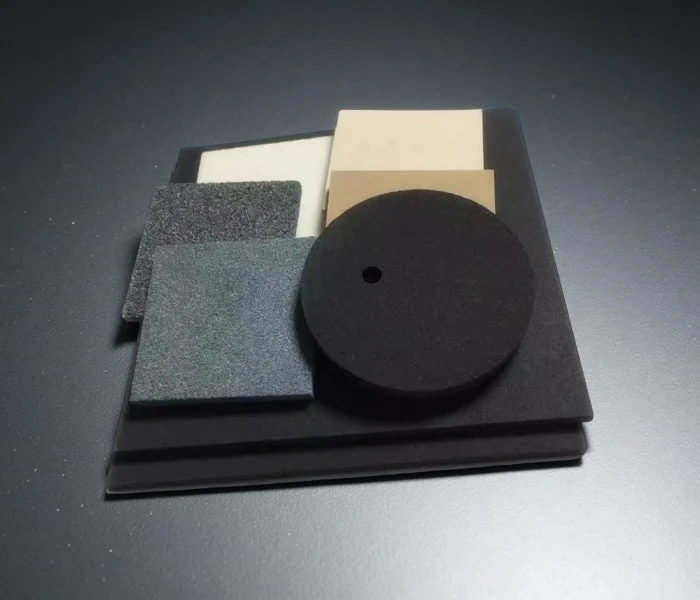
Explore porous ceramics in two ways: by material (alumina, zirconia, SiC, magnesia) and by product type (foam filter, balls, tube, rod, chuck, disc, plate). Use your pore size and permeability (flow/ΔP), plus temperature and chemistry, to quickly narrow to the right option.
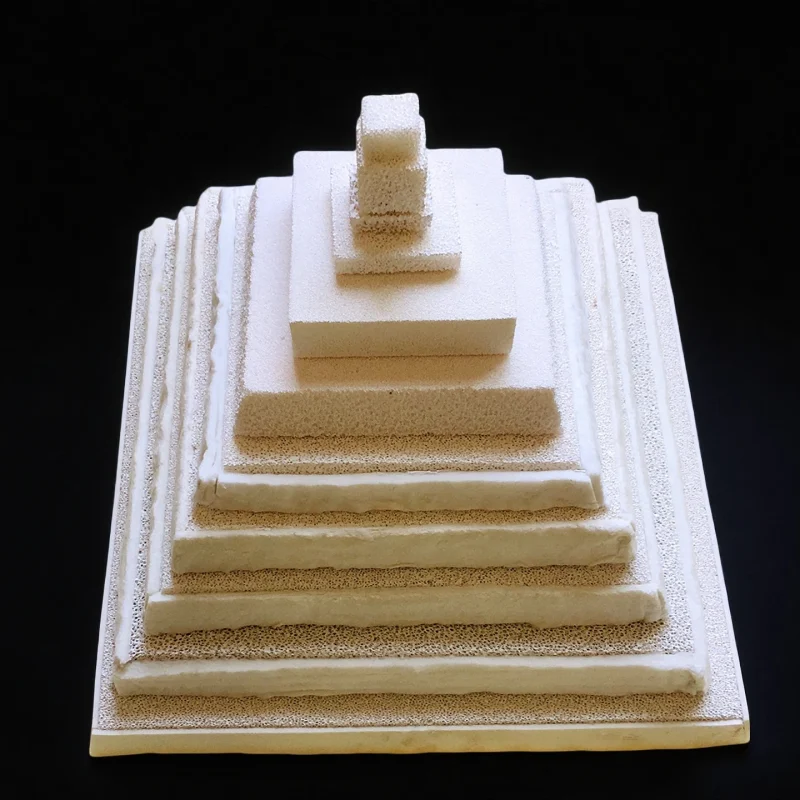
Porous Alumina Ceramic
Cost-effective porous alumina with stable pore structure, clean chemistry, and reliable insulation.
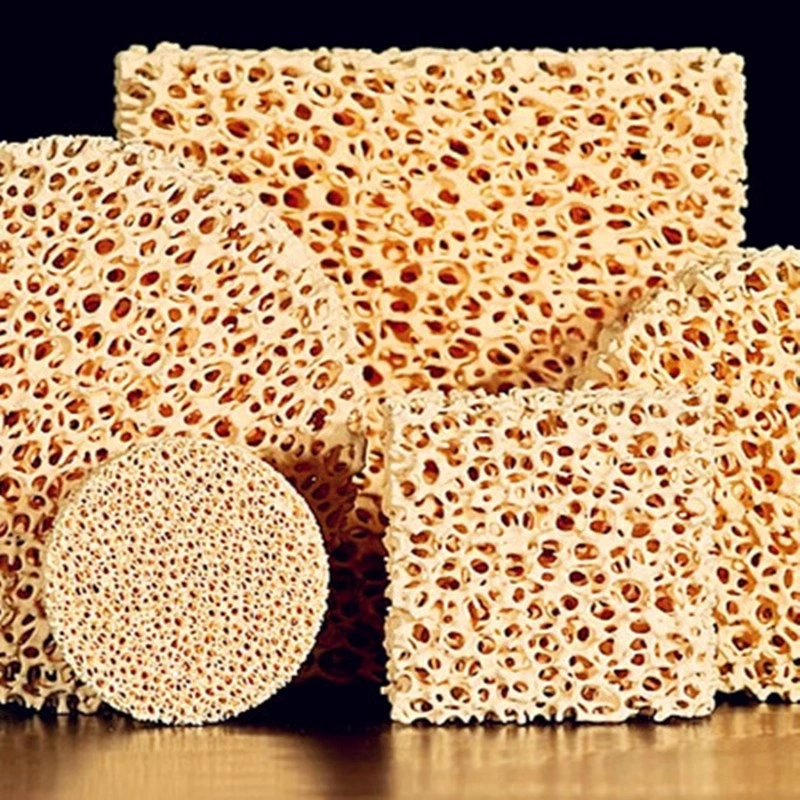
Porous Zirconia Ceramic
Tough porous zirconia with higher crack resistance and stable permeability under cycling.
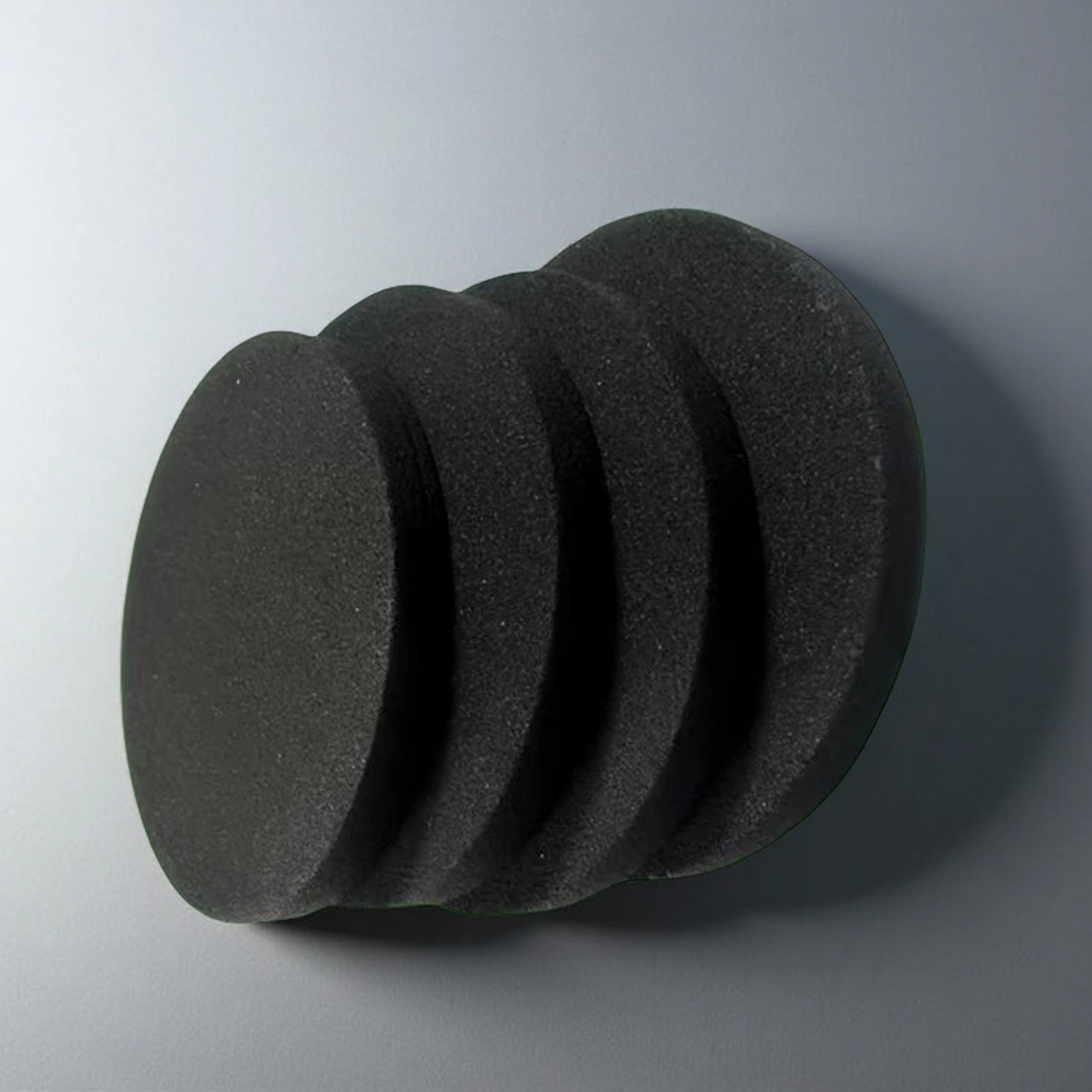
Porous Silicon Carbide Ceramic
Porous SiC for high wear and heat—high stiffness, strong permeability, excellent thermal-shock resistance.
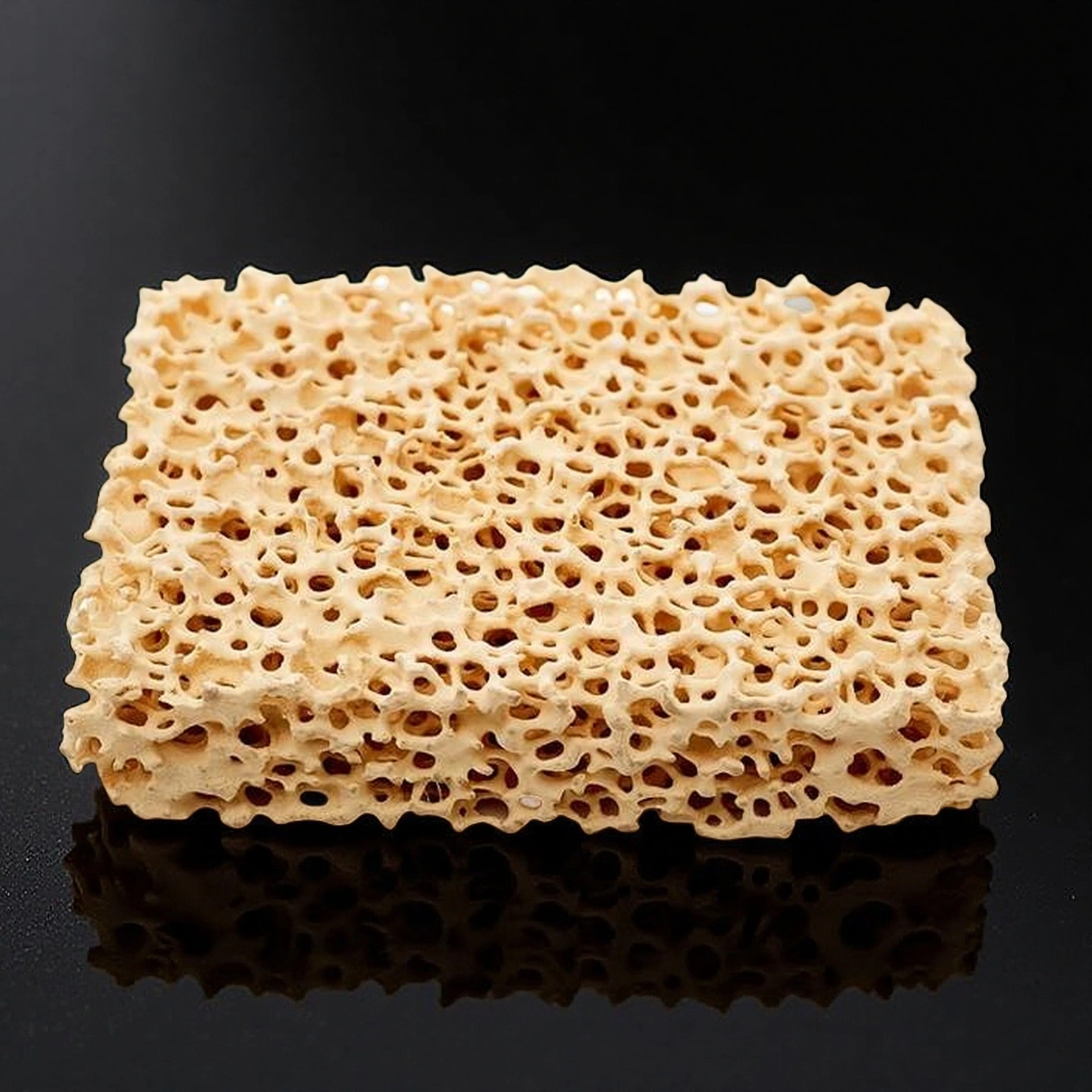
Porous Magnesia Ceramic
Porous magnesia for insulation—low heat loss, lightweight permeability, stable at high temperature (dry service).
Ceramic Foam Filter
Ceramic foam filters capture inclusions with a 3D open-cell network while keeping flow resistance low. The foam structure helps reduce bypass under flow surges.
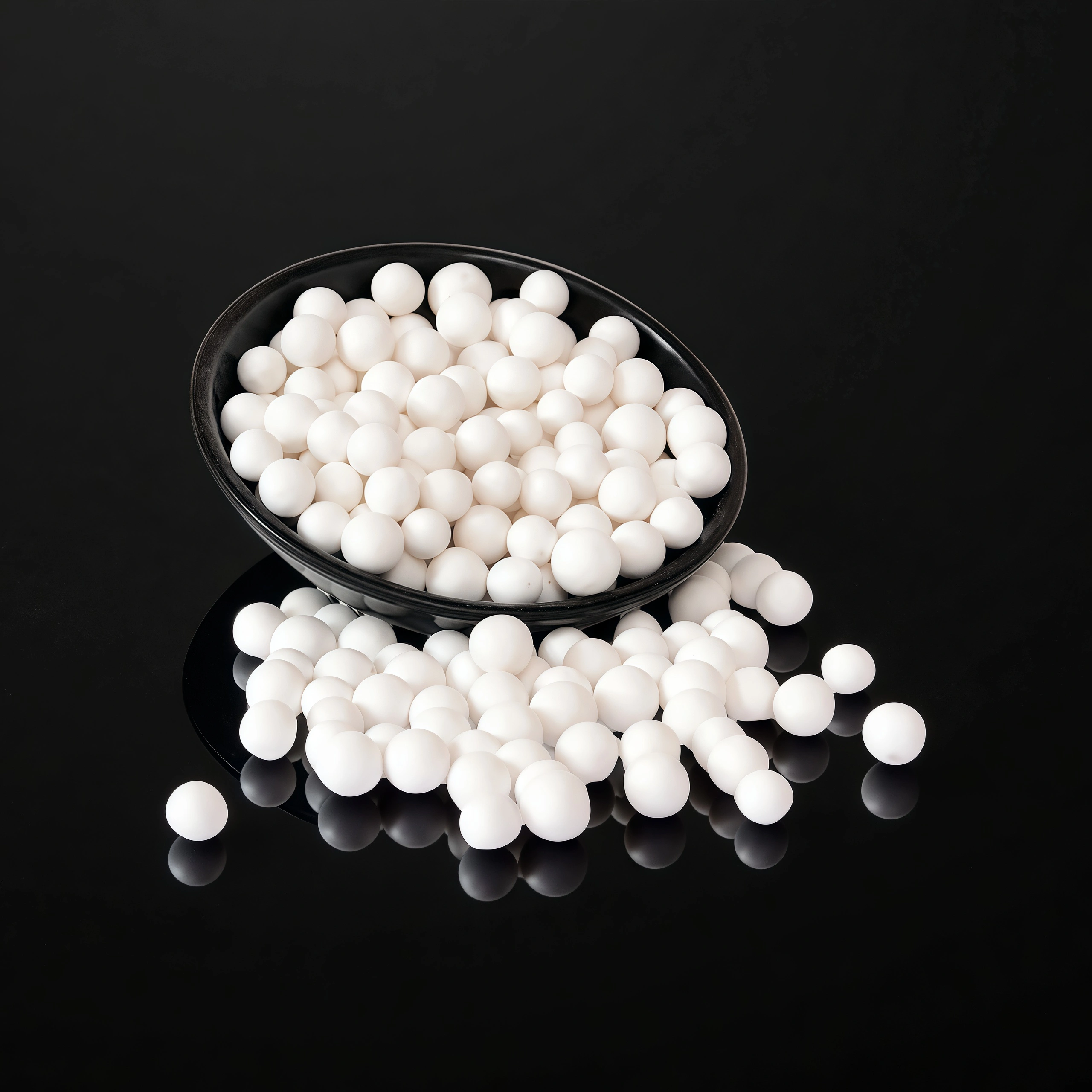
Activated Alumina Balls
Porous activated alumina balls for adsorption and drying duty - pore structure and bed sizing confirmed by engineering review.
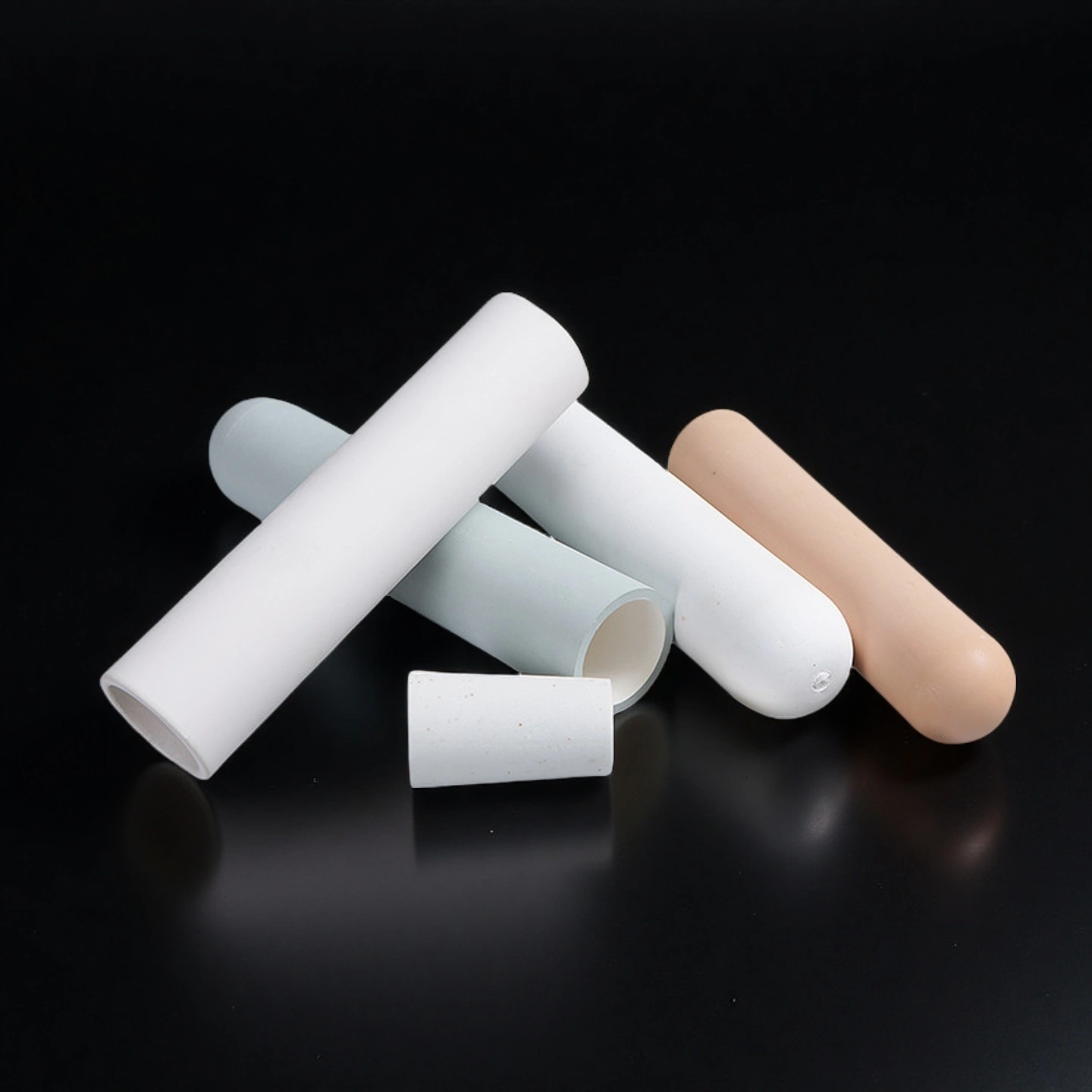
Porous Ceramic Tube
Porous ceramic tubes provide long, uniform flow paths and easy inline sealing. The tubular format delivers high effective area per footprint with stable pressure-drop control.
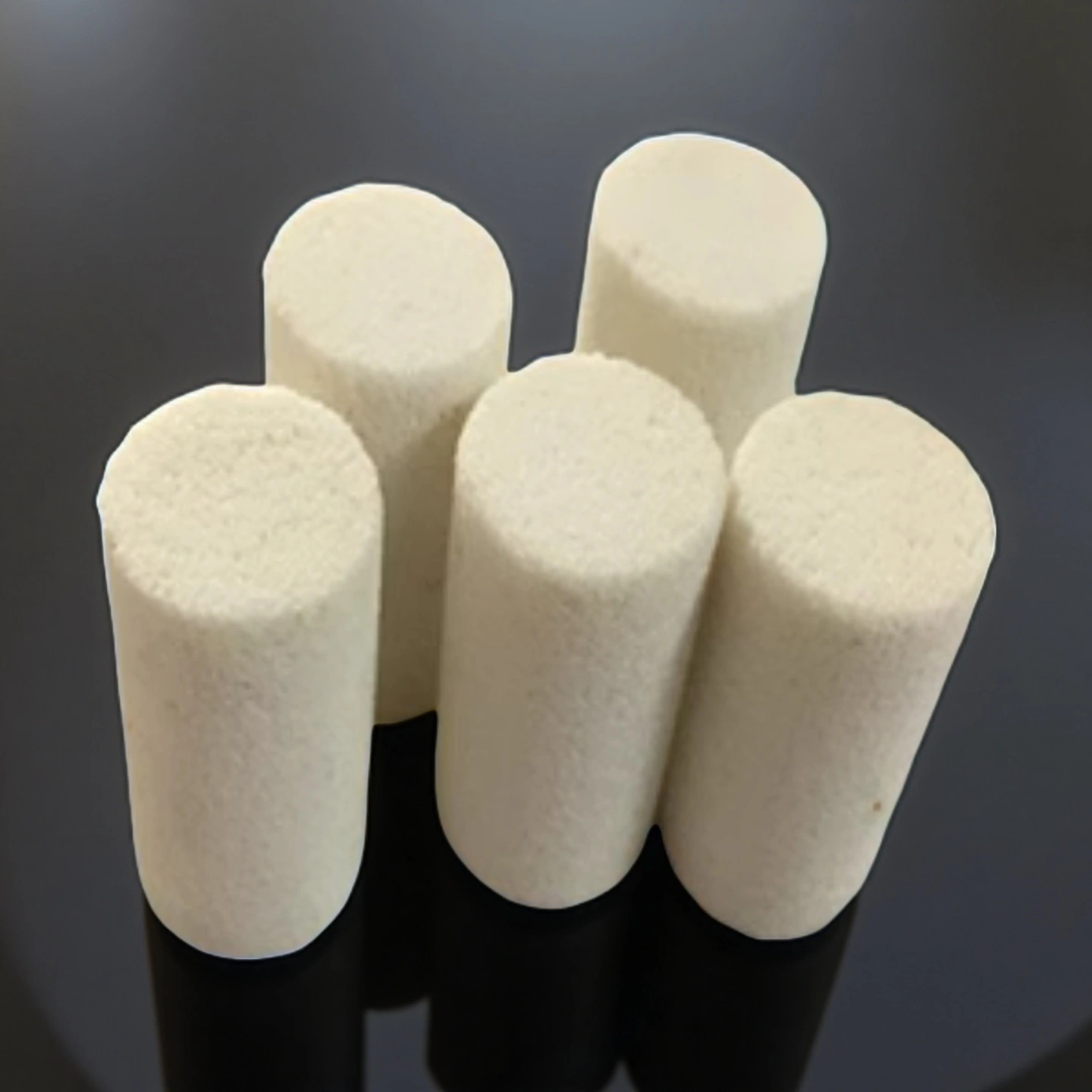
Porous Ceramic Rod
Porous ceramic rods enable controlled diffusion or wicking along a linear core. The rod form allows precise placement inside housings without complex redesign work.
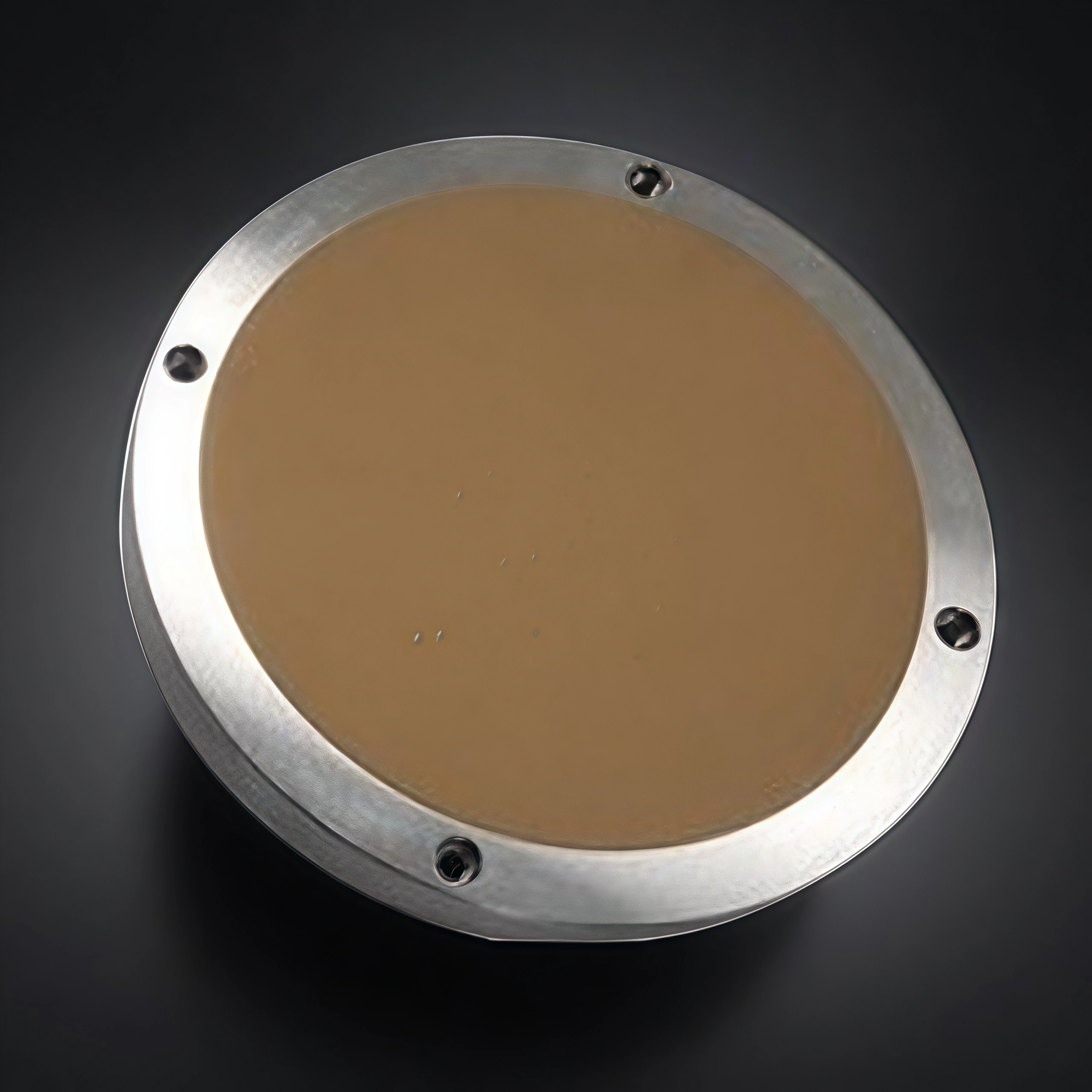
Porous Ceramic Chuck
Porous ceramic chucks provide uniform vacuum holding through a permeable surface, reducing slip and local leakage. Stable suction helps keep positioning repeatable.
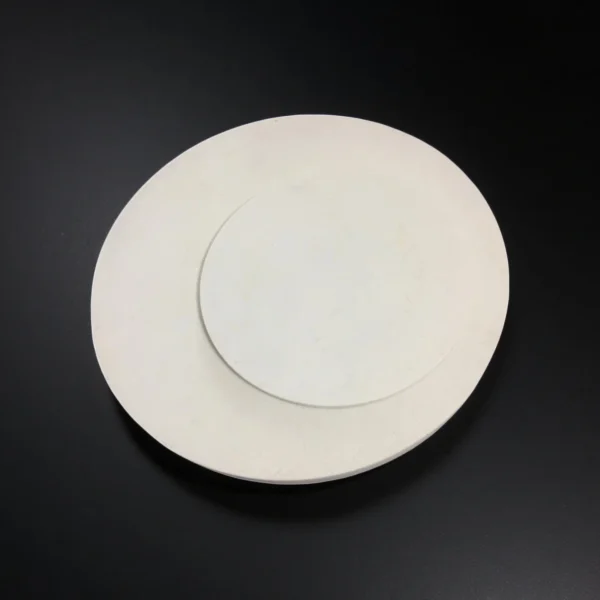
Porous Ceramic Disc
Porous ceramic discs deliver compact, uniform through-flow with stable pressure-drop behavior. The disc shape supports easy sealing and quick replacement.
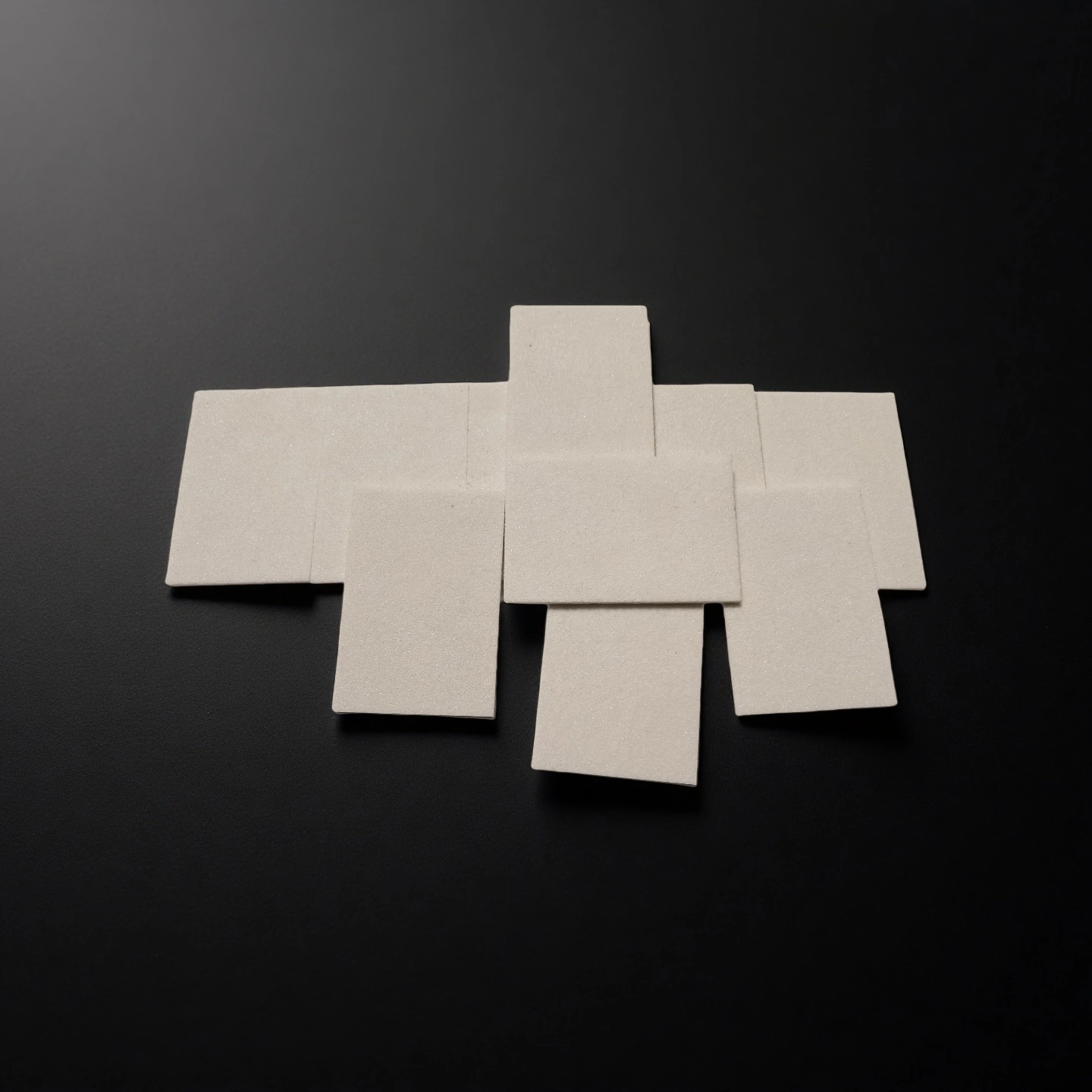
Porous Ceramic Plate
Porous ceramic plates spread permeability across a wide area, reducing channeling and edge lift. The flat format integrates easily into fixtures.

Porous Ceramic Membrane
Porous ceramic membranes use engineered pore size for repeatable separation performance. Rigid structure supports strong cleaning and recovery.
Porous Ceramic — Built for Stable Flow and Long Life.
Porous ceramics deliver controlled permeability and stable performance in abrasive, corrosive, or clogging-prone duty. Tuned pore size and porosity help reduce channeling, pressure-drop spikes, and output drift, while enabling repeatable batches for OEM integration.
Porous Ceramics Applications
Porous ceramics are used across industrial filtration, process equipment, chemical engineering, automation systems, thermal management, and high-temperature processing, where controlled permeability and material stability are critical.
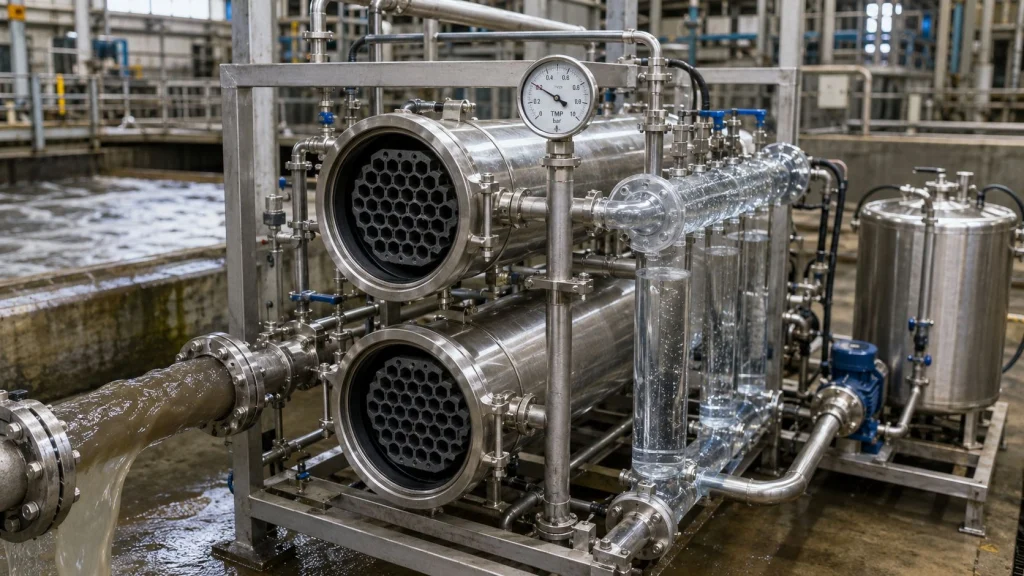
Rigid, cleanable pore network for liquid and gas filtration — geometry holds under pressure, abrasion and aggressive cleaning, so flow stays predictable.
Typical products: porous ceramic tubes, discs, plates, foam filters.
To review: medium, retention target, flow/ΔP.
A rigid flow distributor where uneven inlet flow causes channelling or seal stress — interconnected pores smooth velocity profiles and damp pressure spikes.
Typical products: porous ceramic plates, discs, core rods.
To review: line size, medium, allowable pressure drop.
Porous SiC and alumina keep permeability and structure where polymers soften and metals wear; ceramic foam filters trap inclusions at stable pour rates.
Products: porous SiC elements, porous alumina parts, ceramic foam filters by alloy and PPI.
To review: alloy or gas, temperature, PPI or pore target, dimensions
Even suction across the full surface holds thin or fragile parts — glass, film, PCB — without suction marks or slip.
Typical products: porous ceramic chucks, porous plates.
To review: workpiece size and thickness, flatness need, vacuum level.
Custom Porous Ceramic
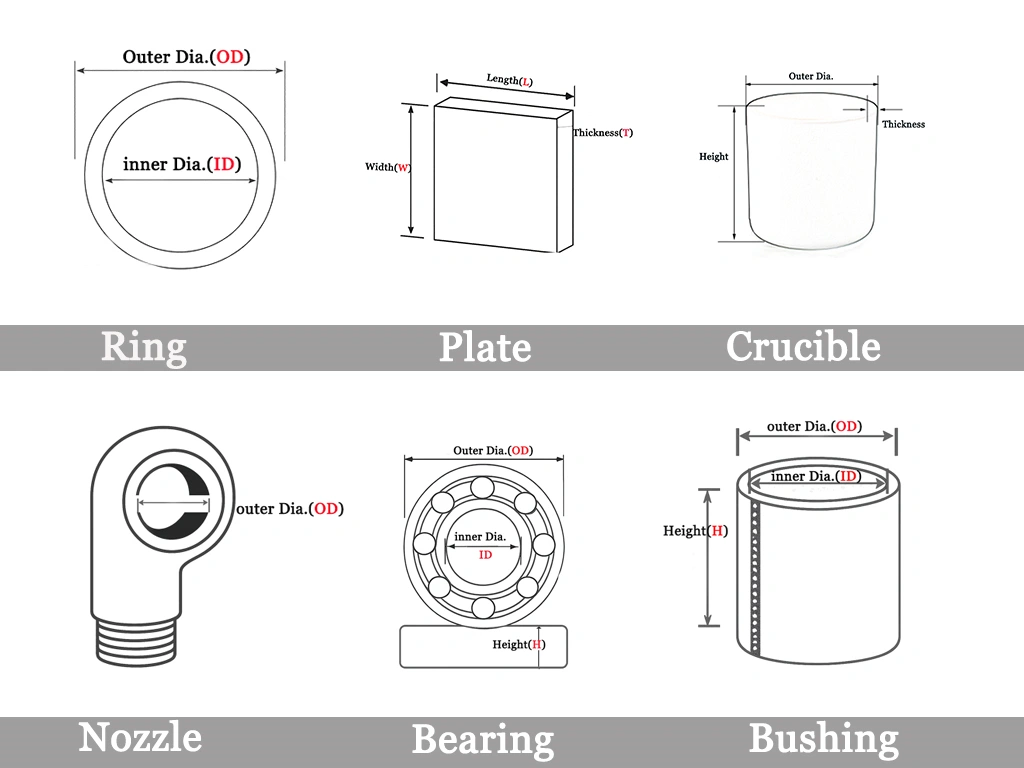
ADCERAX custom porous ceramic components are made to your drawing or process specs, including pore size target, porosity/permeability range (flow/ΔP), part geometry (OD/ID/length or plate size/thickness), end-face or sealing features, and surface finish requirements. Typical customization lead time is 2–9 weeks, depending on material choice, porosity grade, tolerances, and machining complexity.
Customization Options
Define the function first—filtration, diffusion, distribution, wicking, or vacuum holding—then set the pore size window and permeability target (flow/ΔP). Clear matching reduces output drift and avoids over-restriction or unstable flow behavior.
Share your drawing and fit points for reliable integration—OD/ID/length, plate size/thickness, end-face flatness, sealing lands, and mounting features. Controlled fit reduces bypass/leak paths and simplifies replacement in service.
Match the design to your media behavior—abrasive solids, sticky fines, viscosity shifts, or particulate spikes. Specify allowable ΔP rise and cleaning method (backwash, blowback, solvent/alkali wash) to maintain permeability and stable operation.
Choose the porous ceramic material based on chemistry, wear, and temperature—Al₂O₃ / ZrO₂ / SiC / MgO. The right surface finish and pore connectivity improve durability, cleanliness, and long-term consistency under harsh service.
Customization Process
Send function, pore size, flow/ΔP target, temp/chemistry, and cleaning method. Include drawing/interface, quantity, lead time, destination.
We confirm material (Al₂O₃/ZrO₂/SiC/MgO), porosity grade, pore window, OD/ID/length or plate size, and sealing/mount details.
We produce porous ceramic parts to spec and inspect key dimensions plus pore/permeability targets by batch. Traceable marking and records available.
Parts are protected, labeled, and packed to prevent chipping/contamination, then shipped with export-ready documents.
Why Source Porous Ceramics from ADCERAX?
ADCERAX supplies export-ready porous ceramic components with controlled processing and batch inspection. The working method: review your pore requirement, drawing or old part first, then quote what can actually be manufactured.
Forming, pore-structure control, sintering, machining and inspection run under one manufacturing chain, from raw material to final check.
Branch, material, pore window, permeability and interfaces are checked against your duty before any price is given.
Prototype and small-batch orders are accepted alongside repeat production, including non-standard geometries and machined sealing features.
Key dimensions plus pore grade and permeability (flow/ΔP) are inspected by batch; traceable marking and records are available on request.
China Porous Ceramic Manufacturers-ADCERAX
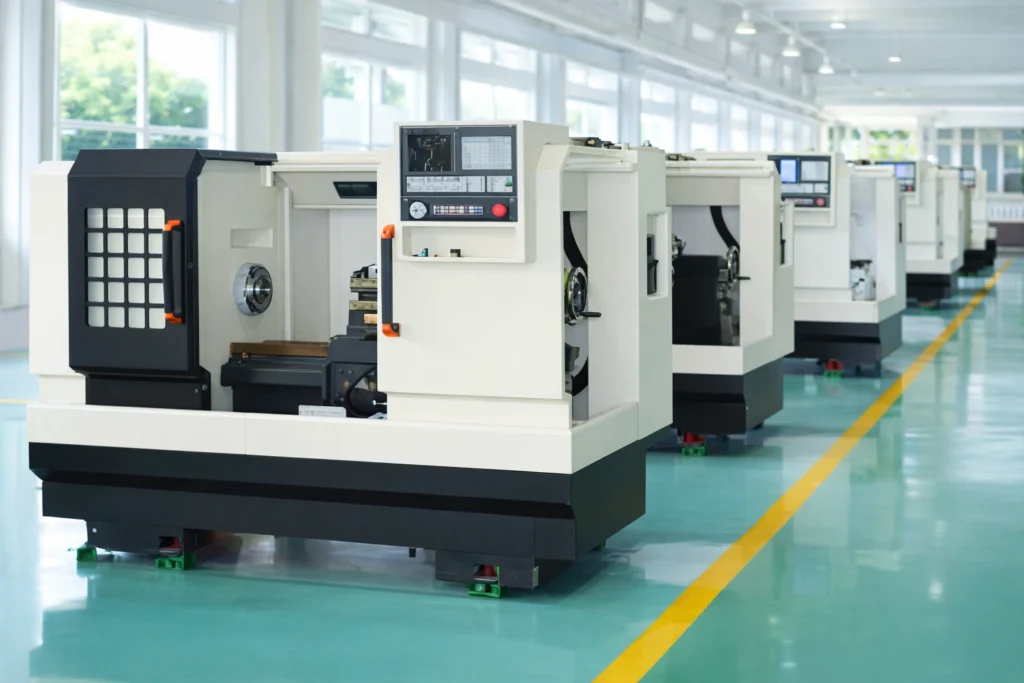
ADCERAX is a factory-direct porous ceramics supplier with a dedicated advanced-ceramics manufacturing chain, supplying porous ceramic plates, discs, tubes, rods, chucks, balls and foam filters for industrial duty where stable permeability and durability matter.
Commonly produced formats support replacement needs – confirm current availability by RFQ – and custom-to-drawing builds match pore size, porosity grade, permeability (flow/ΔP) and interface features. With documented inspection and protective packing, ADCERAX helps buyers keep performance consistent and maintenance cycles predictable.
Porous Ceramics Processing
Four proven pore-forming routes cover most porous ceramic duties; the route for your part is selected and confirmed per geometry and pore target in engineering review.
Pore-Former Sintering (Sacrificial Additives)
- How it’s made: ceramic powder is blended with pore formers (polymer beads, starch, graphite, etc.), formed, then fired; pore formers burn out to leave open pores.
- Best for: porous plates, discs, rods, blocks (uniform porosity).
- What it delivers: tunable porosity level and pore size band; good batch repeatability.
Partial Sintering (Necking-Control Porosity)
-
How it’s made: the green body is sintered below full densification so particles “neck” together while keeping inter-particle voids open.
- Best for: fine porous structures where strength must remain acceptable (often small parts).
- What it delivers: interconnected pores with relatively tight pore network; stable geometry.
Extrusion + Burnout + Sintering
- How it’s made: plasticized ceramic mix is extruded into tubes/rods; pore former burnout creates open pores; sintering locks structure.
- Best for: porous ceramic tube, porous ceramic rod, long straight flow paths.
- What it delivers: consistent ID/OD along length; good inline sealing and assembly.
Freeze Casting (Directional Porosity)
- How it’s made: slurry is frozen; ice crystals template aligned channels; ice is removed (freeze-dry), then sintering fixes the structure.
- Best for: parts needing anisotropic flow—one-direction channels, controlled gradients.
- What it delivers: aligned pore channels and high directional permeability.
FAQs About Porous Ceramics
Some ceramics can be porous, but industrial porous ceramics are intentionally engineered. Pore size, porosity, and permeability are controlled during forming and sintering.
Ceramic can be either porous or non-porous depending on processing.
Porous ceramics contain an interconnected pore network and are used for flow, filtration, and diffusion.
Non-porous (dense) ceramics have negligible open porosity and are used for insulation, sealing, wear surfaces, or leak-tight parts.
Engineers differentiate them by open porosity %, permeability (flow/ΔP), and leak rate. A simple lab test is to measure flow at a small pressure differential.
Start from the function: filtration needs a pore-size window tied to particle retention, while diffusion or vacuum holding focuses more on stable permeability. Define your target flow and allowable ΔP first, then confirm pore grade.
Porous alumina: cost-effective, good chemical & thermal stability, typical filtration duties.
Porous zirconia: higher fracture toughness, better mechanical shock resistance; good when strength under stress matters.
Porous SiC: high wear resistance, high temp tolerance, excellent for abrasive or heavy solids loading duties.
You should choose by media chemistry, temp range, solids load & desired permeation stability.
Yes, critical fit zones (OD/ID, flatness, sealing lands) can be finished to drawing. The porous region is handled carefully to avoid pore blockage and edge chipping.
Porous ceramics are made as:
Plates/discs: wide area flow & distribution.
Tubes: inline filtration & sealing integration.
Rods/core rods: diffusion & wicking cores.
Chucks: vacuum holding with uniform suction.
Balls/beads & foam: packed beds & high throughput media.
Common checks include key dimensions, pore grade confirmation, and permeability verification (flow/ΔP) by batch. Traceable marking and inspection records can be provided if required.
You should send part type, drawing/interface, pore size (µm), permeability (flow/ΔP), temperature/chemistry, and quantity.
Include cleaning method and lead time target to get the most accurate build recommendation and quote.
Porous ceramic is made by forming a ceramic “green body” and then engineering an interconnected pore network during burnout and sintering to meet a target pore size, porosity, and permeability (flow/ΔP).
Typical production workflow (step-by-step)
Define targets: pore size window, open porosity %, permeability (flow/ΔP), temperature/chemistry, and part geometry.
Raw material prep: select ceramic powder + binders; add pore-forming agents if required.
Mixing & de-airing: disperse uniformly to avoid pore banding and weak zones.
Forming: press/extrude/cast to create the green shape (plate/disc/tube/rod/foam).
Drying: controlled drying to prevent cracks and distortion.
Debinding & burnout: remove binders and pore formers to open the pore network.
Sintering: lock pore structure and mechanical integrity with a controlled firing profile.
Finish machining (as needed): OD/ID, flatness, sealing lands, grooves, mounting features—without blocking pores.
Cleaning: remove machining dust and residues to stabilize permeability.
Inspection: verify key dimensions plus pore grade and permeability (flow/ΔP) by batch, then pack for shipment.
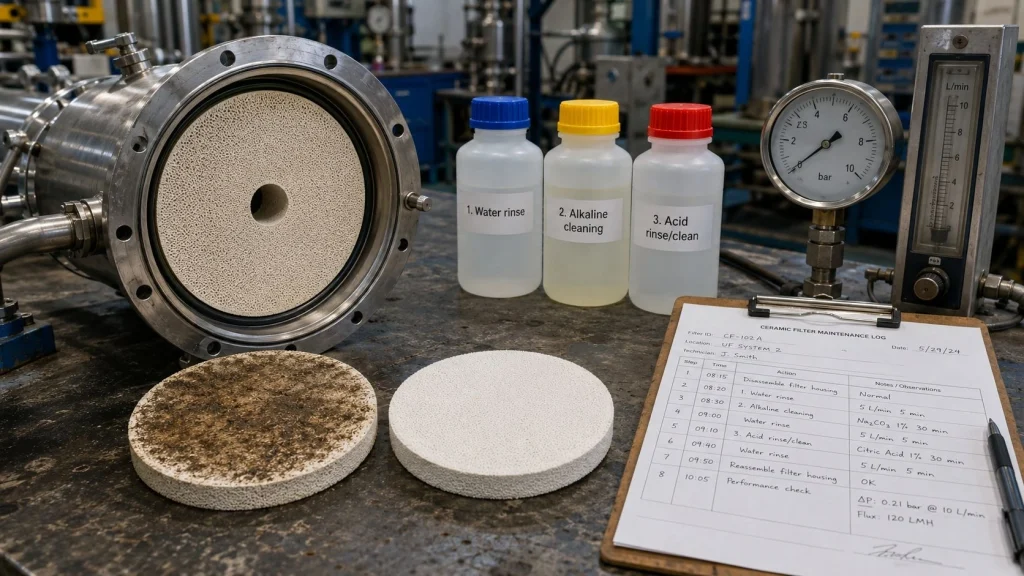
Porous ceramics can be cleaned without blocking pores by:
Rinse/flush at low ΔP to remove loose solids.
Soak in compatible solvent for oils/greases.
Controlled alkali or acid wash for specific foulants.
Backwash flow for filtration parts.
Final rinse & drying.
Avoid hard brushes or high-pressure jets that can chip pore walls. Confirm success by comparing flow vs. ΔP before and after cleaning.
Porous ceramics can be engineered with pore sizes from <1 µm up to several hundred µm depending on duty. For filtration, typical ratings are 5–50 µm; for diffusion or wicking, pore sizes can be broader (10–200 µm). Permeability and ΔP targets should be specified with desired flow rate.The workable window for a specific part is confirmed against geometry, material and duty in engineering review.
PPI (pores per inch) balances melt cleanliness against flow rate. As typical industry guidance: 10–20 PPI suits primary smelting and large billets where flow matters most; 30–40 PPI is the common choice for quality extrusion billets and general castings; 50–60 PPI serves critical, high-purity work. The right PPI also depends on alloy, gating design and filter size, so share the alloy, dimensions and pour conditions for engineering review.
Get in touch with us
Send your drawing, pore requirement or old-part photos with the working conditions. Our engineers reply with what we can make and what still needs confirmation.
info@adcerax.com
Tel:+86-0731-84428843
WhatsApp:+86 19311583352
Within 24 hours
*Our team will answer your inquiries within 24 hours.
*Your information will be kept strictly confidential.