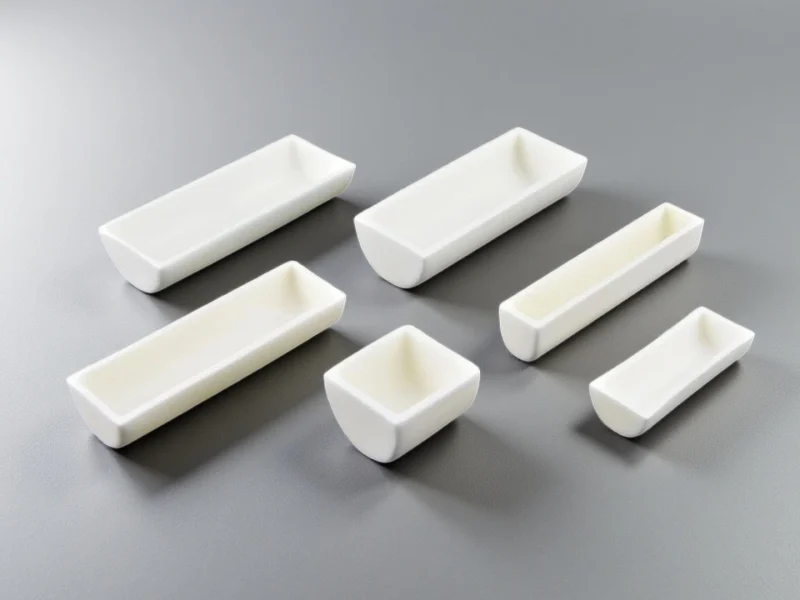
Alumina Boat Alumina Boats for Furnace and Laboratory Procurement
ADCERAX is a China-based manufacturer of alumina (Al₂O₃) boats, including combustion, rectangular, deep and custom boats for calcination, powder heating, debinding and elemental analysis. Available in 95%,96%,99.5%,99.7% and 99.9% purity for tube furnaces, muffle furnaces and analyzer lines. Need a non-standard size? We build to your drawing or furnace envelope.
Send your length, width, wall thickness, purity and working temperature. Our engineers will review the fit before quoting.
1730°C
Max. use temperature, 99.9% grade
Alumina Boats for Sample and Charge Handling
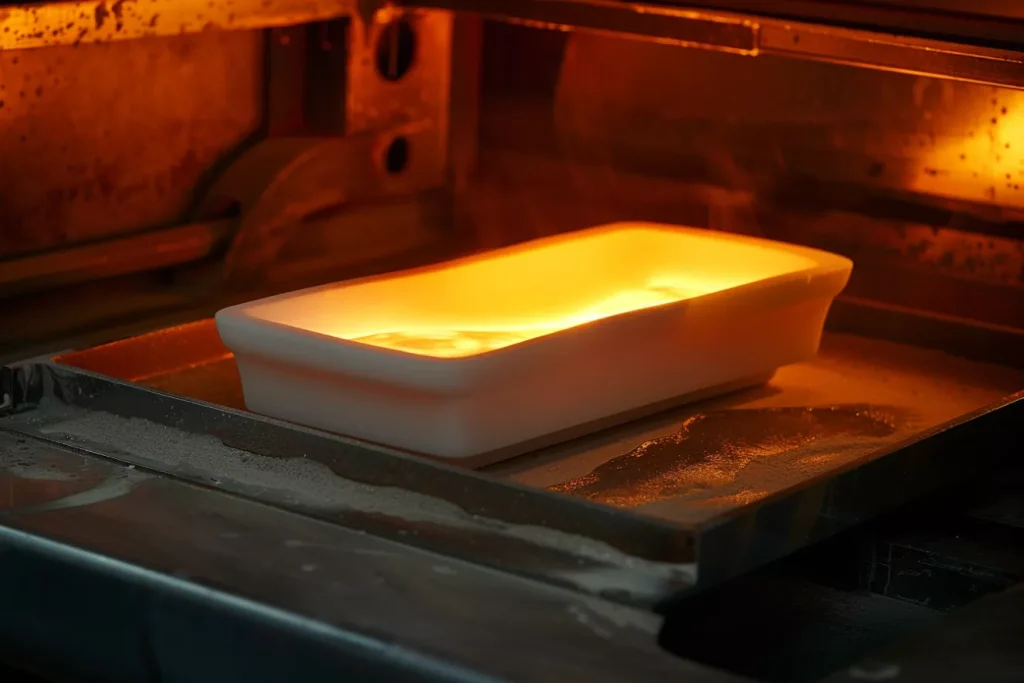
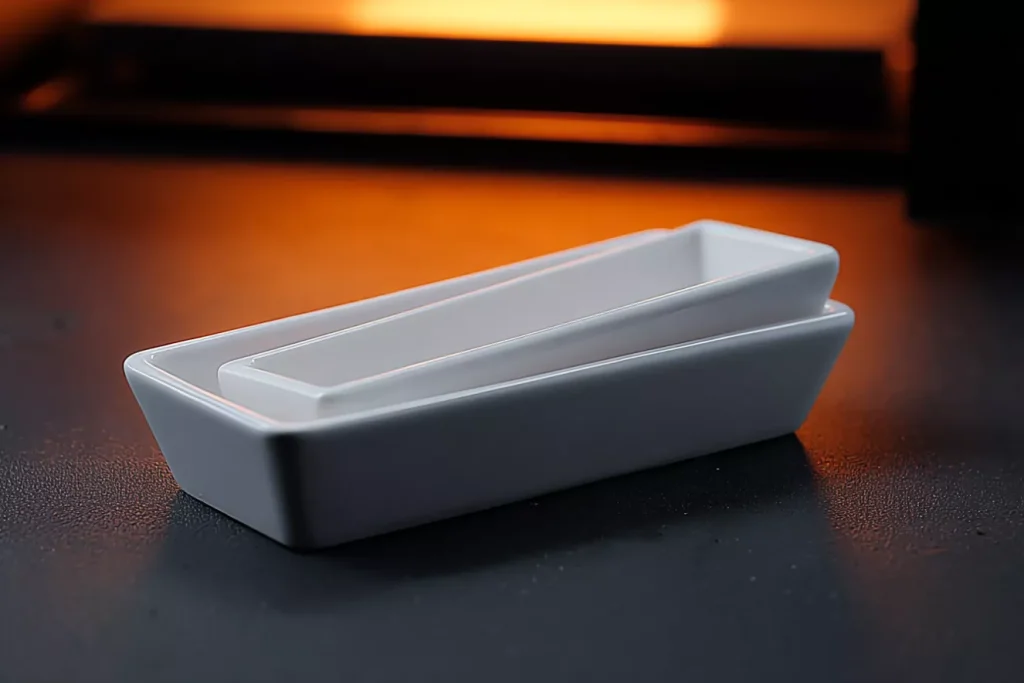
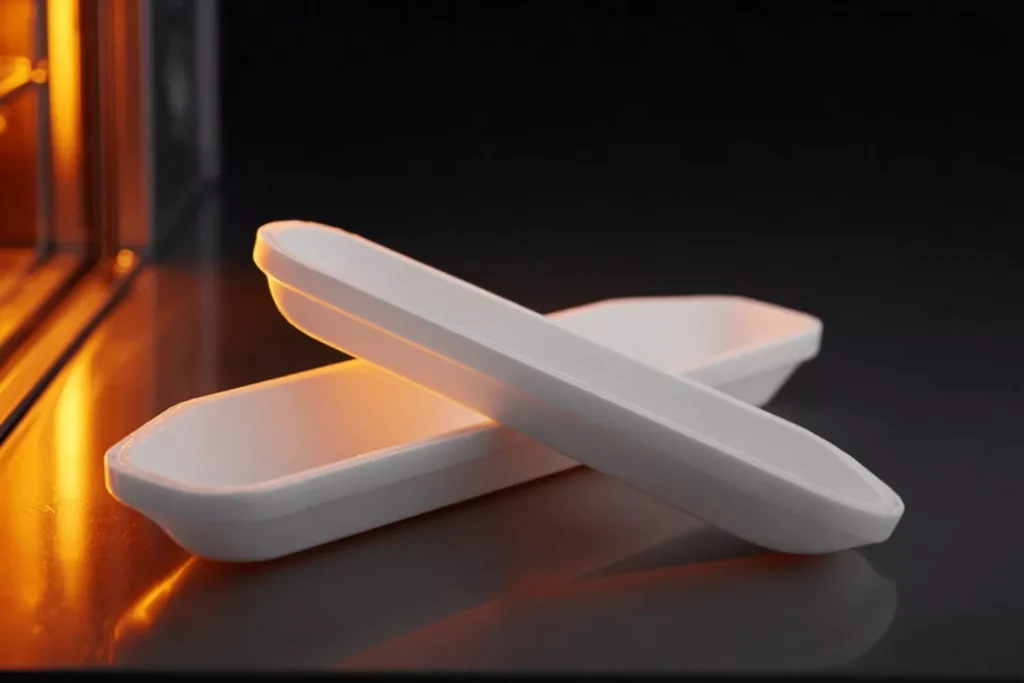
An alumina boat is an elongated ceramic holder for powders, granules or small parts during a thermal process. Its cavity, bottom profile and support arrangement define how the charge is loaded and handled.
For cup-style vessels and melt-holding enquiries, explore alumina crucibles.
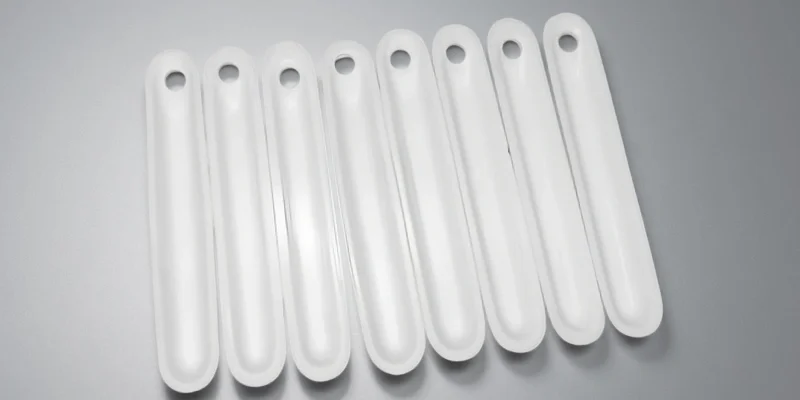
China Alumina Ceramic Boat Types
Compare combustion, ash-test and furnace-loading boats by the sample bed, cavity profile and handling arrangement. Standard sizes and drawing-based shapes support both replacement and new-process enquiries.
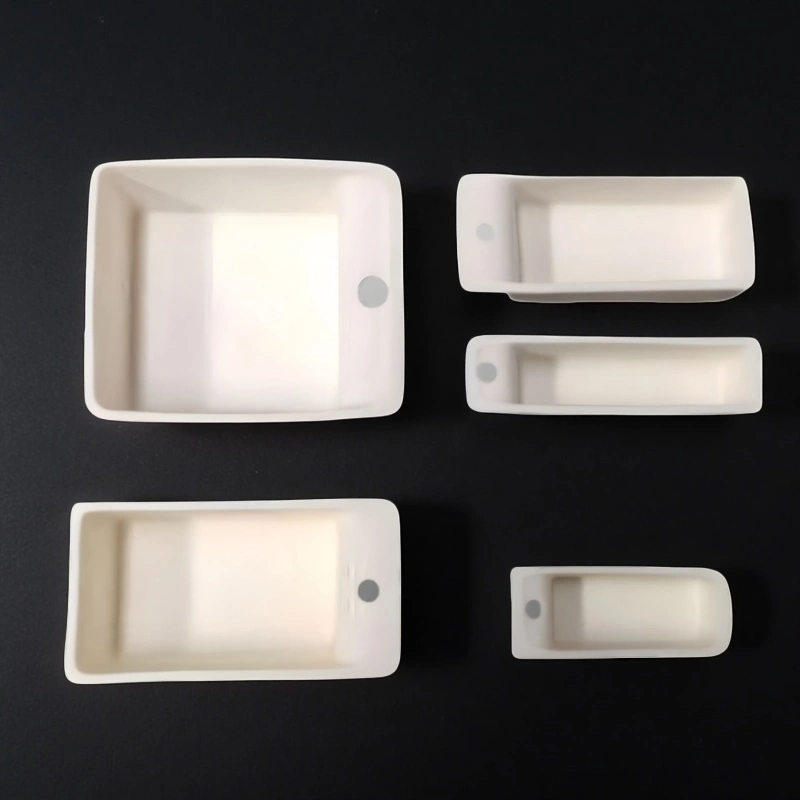
For a drawing or handling method that calls for an end opening. Compare its position, diameter, edge details and intended handling function.
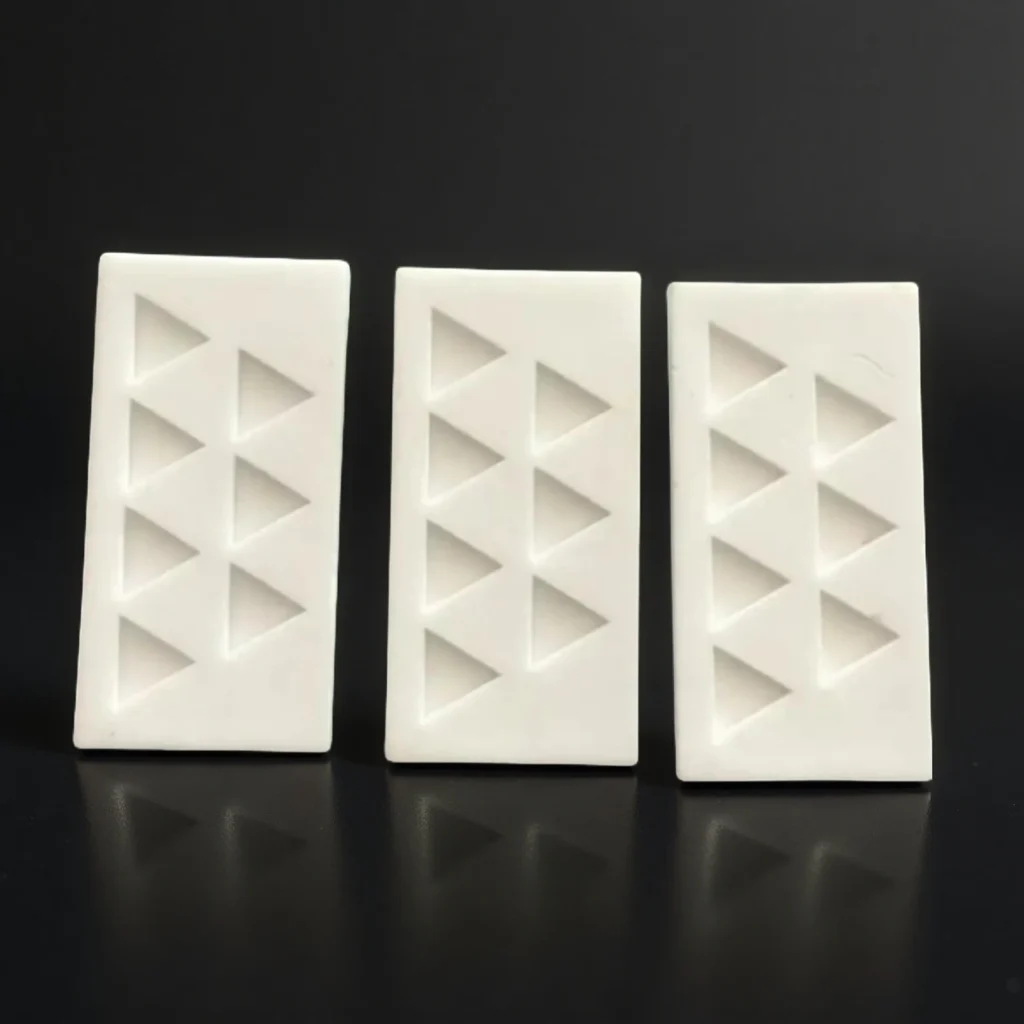
For ash determination, residue analysis and loss-on-ignition. Match sample mass, exposed area, cavity layout and tare procedure to the method.

For furnace charges needing a longer or deeper cavity. Compare useful loading space, bottom support and insertion or removal clearance.
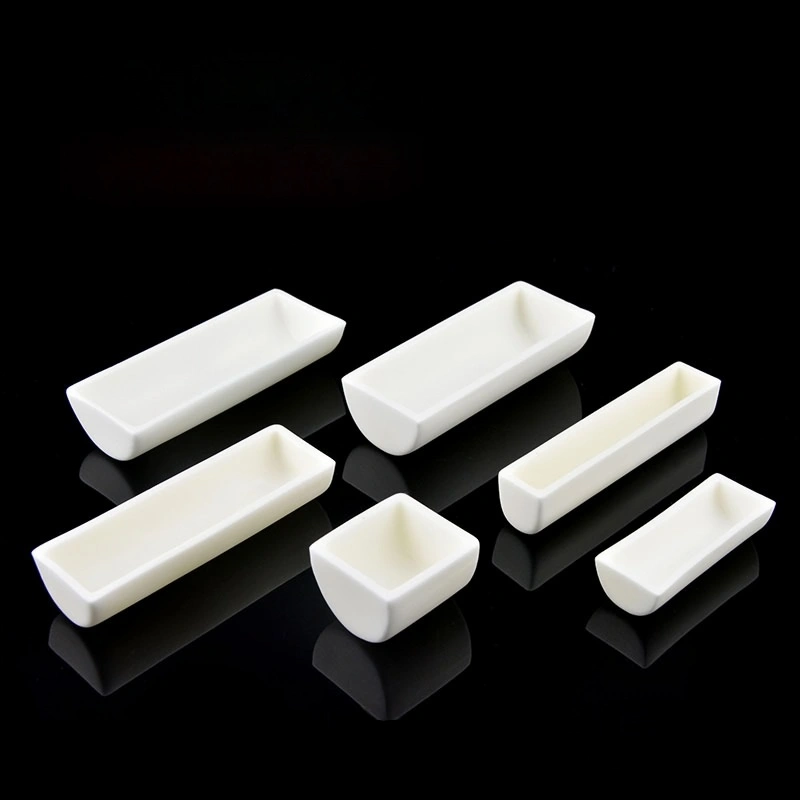
For combustion and elemental analysis. Match sample bed, original accessory reference, analyzer configuration and loading mechanism.
⭐ Which alumina boat route matches your job?
| Starting task | What changes the choice | Selection boundary | Continue with |
|---|---|---|---|
| General furnace loading | Charge footprint and depth, external envelope, bottom profile, support and loading tool | Match the boat and supports to the entrance clearance, charge and heating cycle. | Furnace-fit checklist and boat-style crucible options |
| Combustion or elemental analysis | Complete analyzer, furnace type, original consumable, sample bed and insertion or push mechanism | Boat dimensions, composition and the validated analytical method must all match the configuration. | Combustion boat route |
| Ashing, covered or holed configurations | Laboratory method, sample retention, opening location, cover clearance and loading access | Choose cavity, opening and cover geometry for the laboratory method and sample-handling task. | Ash boats or boats with holes |
| Long, deep or special drawing-based parts | Useful cavity, overall length/height, wall/base, straightness, support, cover and critical datums | Select the forming or finishing route and critical-feature tolerances for the proposed drawing. | Custom manufacturing review |
For a cup-style vessel or melt-holding enquiry, continue to alumina crucible selection. For a known analyzer accessory, use the identification guide below.
⭐Check furnace fit and usable charge space
| Measure or define | Why it matters for selection |
|---|---|
| External length × width × height; bottom profile and rim | Compare furnace-tube internal diameter, entry restrictions, supports and insertion/removal clearance. |
| Internal length, width and depth; sample fill height | Use cavity dimensions and fill height to establish working charge space; charge mass also depends on material and packing. |
| Wall and base thickness; support span and contact faces | Review loaded support, contact, thermal gradients and dimensional stability for the cycle. Specify the surfaces that locate the boat. |
| Effective uniform-temperature zone under stated conditions | Match charge length to the qualified uniform-temperature zone at the intended operating conditions. |
| Lid, hole, groove, lip or multiple cavities | Define each feature, clearance, quantity and purpose. Include any cover or handling-tool envelope when checking fit. |
| Critical datums, tolerances and inspection method | Identify as-fired areas, finished surfaces, critical datums and the inspection method for each controlled feature. |
For a rectangular boat in a round furnace bore, check the complete cross-section, including supports and handling clearance. A sketch of the loaded arrangement helps define the limiting clearance.
Alumina Boat Properties & Benefits
Alumina boats stay dimensionally stable at high temperature, with low thermal expansion, high strength, and strong chemical resistance. Their dense, inert body resists warpage over repeated heating cycles and keeps a clean surface that avoids sample contamination.
Alumina Boat Technical Data
| Property | AD-ALU-999 | AD-ALU-997 | AD-ALU-995 | AD-ALU-990 | AD-ALU-960 | AD-ALU-950 |
|---|---|---|---|---|---|---|
| Al₂O₃ (wt%, nominal) | 99.90 | 99.70 | 99.50 | 99.00 | 96 | 95 |
| IEC 60672-3 composition class | C799 | C799 | C799 | C795 | C795 | C795 |
| Density (g/cm³) | 3.94 | 3.94 | 3.90–3.92 | 3.80–3.91 | 3.70 | 3.75 |
| Color | Ivory | Ivory | Ivory | Ivory | White | Ivory / white |
| Flexural strength (MPa, 20°C) | 315–340 | 330 | 320–350 | 300–320 | 300 | 280 |
| Thermal conductivity (W/(m·K), 25°C unless noted) | 35–42 | 35–40 | 30–38 | 24 | 25 (20°C) | 18–25 |
| Mean CTE (10⁻⁶/K, 25–800°C unless noted) | 7.6 | 7.6 | 7.6 | 7.2 | 8.2 (25–1000°C) | 7.6 |
| Service temperature guide (°C, application-dependent) | 1750 | 1700 | 1650 | 1600 | 1600 (maximum, air) | 1400 |
| Dielectric strength (kV/mm, 5 mm unless noted) | 10 | 10 | 10 | 10 | 8.3 (AC; 6.35 mm) | 10 |
| Mohs hardness | 9 | 9 | 9 | 9 | Not specified | 9 |
| Vickers hardness (HV1, 1 kgf) | Not specified | Not specified | Not specified | Not specified | 1600 | Not specified |
| Water absorption (%) | ≤0.01 | ≤0.05 | ≤0.10 | ≤0.10 | ≈0 (typical, rounded) | ≤0.20 |
Why Engineers Choose Alumina Boats
— no deformation over repeated furnace cycles
— inert body prevents powder contamination
— low warpage for stable multi-layer stacking
— uniform walls and reinforced profiles
Not Sure Which Alumina Boat Fits Your Furnace or Analyzer?
Send your dimensions, drawing, or a current boat sample. Our engineers will confirm the right purity, size, and shape for your process, then reply with a quote and lead time.
Where Alumina Boats Are Used?
Alumina boats are used as consumables in combustion and elemental analysis, tube/muffle furnace sample handling, powder calcination, debinding, sintering support, and high-temperature handling of powders, metals, and laboratory samples.
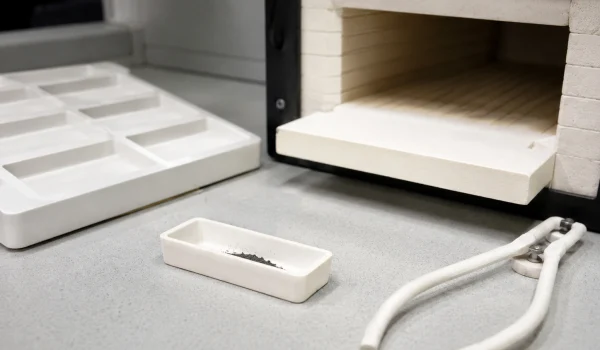
Analysis — Combustion & Elemental Analysis Consumables
Boats hold powder samples for carbon-sulfur / elemental analysis and thermal-analysis prep.
- Hold powder samples for carbon-sulfur, elemental, and thermal analysis.
- Drawing-based sizes matched to your analyzer’s loading arrangement.
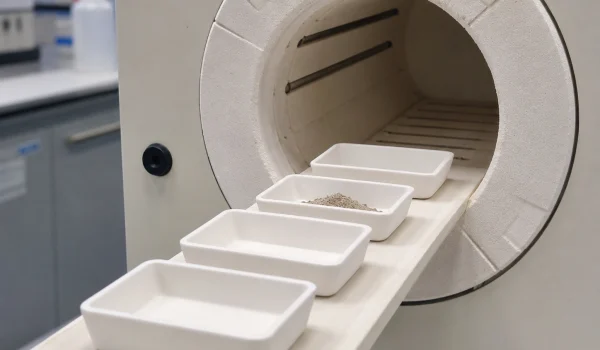
Furnace & Lab — Tube / Muffle Furnace & Sample Handling
Boats carry powders and small parts in tube, muffle, and box furnaces for heating, drying, and sample processing.
- Flat, low-warpage bottoms for stable multi-layer loading
- Standard and custom sizes to your furnace envelope
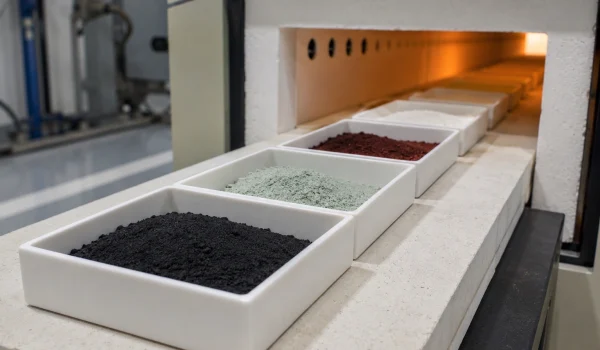
Calcination — Powder Calcination & Catalyst / Battery Materials
Hold powders during calcination, precursor decomposition, and batch heating.
- Consistent dimensions reduce spillage on long runs
- Reaction, sticking, penetration and impurity transfer against the product acceptance criteria.
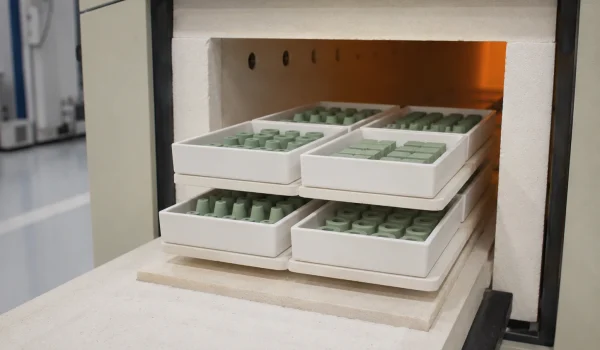
Powder Metallurgy — Debinding & Pre-Sintering
Hold green parts and compacts during debinding and pre-sintering.
- Supports slow debinding without binder-residue staining
- Residue interaction, support condition and cleaning results in the qualified process.
⭐ Match the boat to the sample and thermal process
| Workflow | Information that affects selection | Qualification focus |
|---|---|---|
| Combustion analysis, ash testing and loss-on-ignition | Method, sample mass, furnace or analyzer, blank/tare procedure, gas and introduction sequence | Fit and handling, blank or tare stability, contamination and method performance |
| Tube, box or muffle furnace processing | Usable bore or chamber, qualified uniform zone, support, charge distribution and handling tools | Clearance, load support, charge contact and retained dimensional condition |
| Powder, catalyst or battery-material calcination | Exact composition and additives, atmosphere, sample depth, dwell and allowed impurity transfer | Reaction, sticking, penetration, contamination and product acceptance—not nominal purity alone |
| Powder-metallurgy debinding or pre-sintering | Binder system, decomposition products, gas flow, support, residue and cleaning requirements | Residue interaction, support condition and the validated process; no blanket residue-free claim |
For salts, fluxes, melts, coatings or contamination-sensitive charges, assess chemical interaction explicitly. If reaction, unacceptable transfer, thermal gradients or hot distortion cannot be controlled, compare another grade, geometry or material against that same duty. No universal ranking makes alumina, quartz or zirconia best for every process.
Custom alumina boats: define the part, then the process
Drawing-based geometry, material and finishing options align the boat with the charge space, support and handling task.
Customization Options
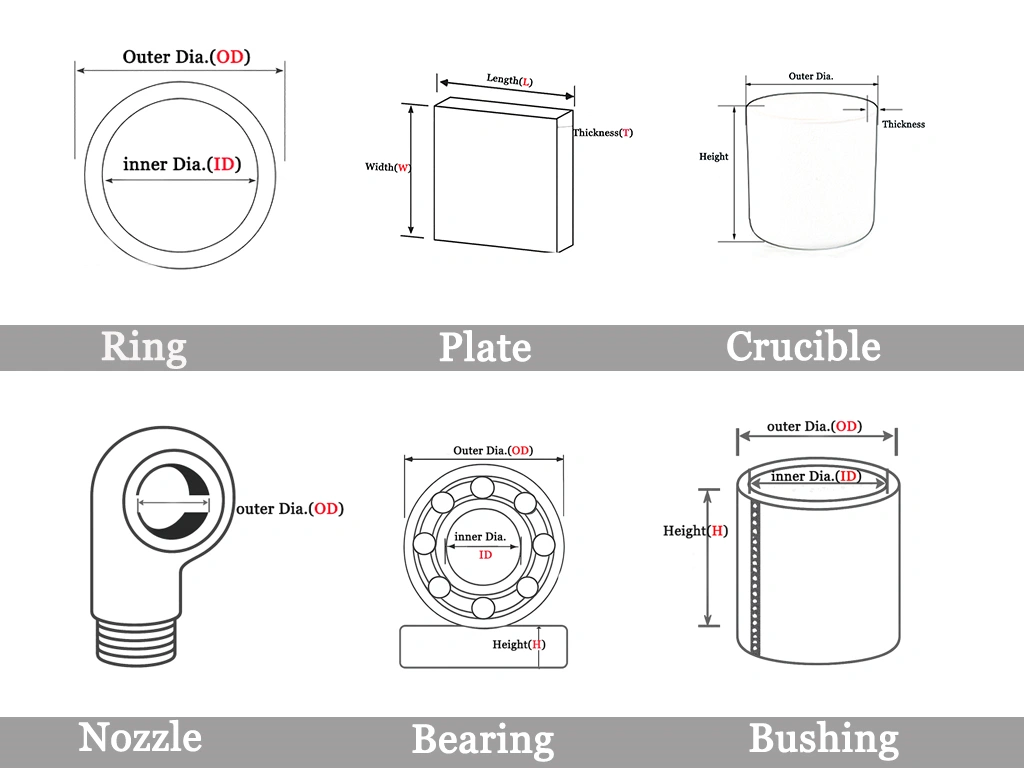
Non-standard length, width and depth; wall/base thickness, bottom profile, rim, lips, grooves, ribs or multiple cavities; identify critical support surfaces.
Hole position, diameter and edge details; cover seat, clearance, venting and lifting access. Specify the boat and cover as separate supplied components.
Exact grade; as-fired, machined or ground areas, specified roughness and cleaning needs. Define any glaze or coating and its contact conditions for separate review.
Assign tolerances to the critical drawing features. CNC machining or grinding can be assessed for the controlled surfaces, with datums and inspection access agreed for the part.
From first enquiry to repeat supply
Identify the required boat route and the starting information in the enquiry section below.
agree material, geometry, finish, critical limits and documentation. Separate part price, tooling, samples, packing and delivery terms where applicable.
evaluate a sample or agreed trial quantity for fit, support, charge contact and method performance. Define acceptance before routine use.
retain the accepted drawing revision, part identity, material and inspection requirements; review changes before treating revised parts as equivalent.
ADCERAX – Professional Alumina Ceramic Boat Factory
In-house forming, sintering, CNC machining and inspection, from prototype samples to volume runs.

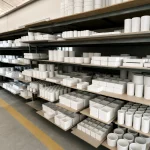
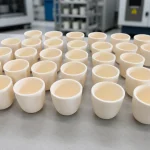
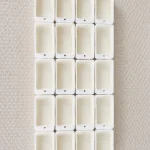
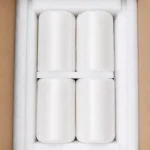
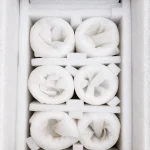
ADCERAX alumina boats are made at the Liling production base of our parent company, HUNAN ATCERA CO., LTD., in Hunan, China, with forming, sintering, machining, inspection and export packing handled under one quality system.
- ISO 9001:2015 certified production base in Liling, Hunan
- Prototype orders from 3–5 pieces, typically delivered in 1–4 weeks
- Production coordinated by a lead with 20 years in advanced ceramics
- Factory visits and audits on request; mutual NDA before you share drawings
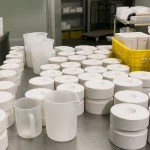
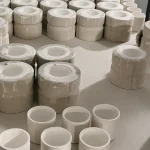
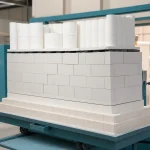

| Manufacturing Capabilities Overview | |||
|---|---|---|---|
| Capability Item | Typical Value / Description | ||
| Material Grades | 95–99.9% Al₂O₃; compare grade-specific material temperature guides in the material table. | ||
| Forming | Dry pressing, isostatic pressing and slip casting | ||
| Forming & Shaping | Dry pressing, isostatic pressing, casting, and machining for custom shapes: rectangular, round, deep-profile, hole-type, and reinforced designs. | ||
| Sintering | Sintering up to 1900°C | ||
| Machining | CNC trimming and grinding for specified features; tolerances and inspection datums agreed on the selected drawing. | ||
| Inspection | Dimensional and visual inspection to the agreed plan; define warpage, crack/edge criteria and any required density or thermal-cycle test scope. | ||
| Order size | Samples to volume runs; standard sizes shipped from stock when available | ||
FAQs About Alumina Boat
There is no single universal figure: the usable temperature is no-load, grade- and condition-dependent. As a typical no-load reference by purity, alumina boats are specified around 1400 C (95%), 1680 C (99%) and 1730C (99.7%). The real limit for your part depends on load, atmosphere, hold time and geometry, and running below the reference limit gives margin for dimensional stability. Share your temperature, atmosphere and loading so a suitable grade can be confirmed.
Yes. ADCERAX supplies extended shapes such as long combustion boats and furnace boats for tube and box furnaces. For non-standard dimensions, an alumina ceramic boat can be made to your internal furnace space and loading pattern - share the length, width, wall and furnace bore for a feasibility review.
Alumina boats are used to hold powders, granules, small parts and pressed samples during calcination, sintering, heat treatment, ash testing and combustion or elemental analysis. Suitability for a specific melt, salt or coating chemistry depends on the material, temperature and atmosphere, so share your sample type and process and we will confirm whether an alumina boat, or a different material, is the right fit rather than assuming it for every chemistry.
Where charge volume is high, ADCERAX can design deeper boat containers, and where more atmosphere control is needed, lidded or covered boats. Note that a ceramic lid provides a cover, not a guaranteed air-tight seal; the achievable fit and any sealing requirement are reviewed per drawing and duty. Share the volume, atmosphere and handling needs so a suitable depth and lid arrangement can be confirmed.
For an accurate quote, share the overall dimensions, wall thickness, operating temperature, atmosphere, sample type, annual usage and whether the design is standard or custom. ADCERAX then reviews feasibility and proposes options by grade and geometry, with availability and lead time confirmed per order rather than quoted as fixed stock or price.
Higher-purity grades (95%-99.7%) generally show better corrosion resistance, lower creep and more stable dimensions during thermal cycling. 96% alumina suits general heating, while 99.7% alumina is preferred for battery materials, catalysts and analytical workflows that need minimal contamination. These are typical, grade-dependent tendencies; the right grade for your process is confirmed by temperature, atmosphere and contamination limits.
Rectangular boats suit powder calcination, batch preheating and long-part loading. Round or oval boats improve radial heat flow and suit uniform heating of pellets or tablets. Combustion boats are shallow, elongated profiles used for ash testing, combustion analysis and airflow-dependent reactions. The best profile depends on your sample, furnace and loading pattern.
Yes. Dimensions, wall thickness, lips, slots, grooves, multi-cavity layouts, vent patterns and bottom profiles can be tailored to pusher, tube, box and multi-layer firing systems, which helps consistent loading and heat distribution. Share a drawing or the furnace geometry for a feasibility review.
Compared with quartz, alumina withstands higher temperature, resists alkali and acid corrosion and avoids devitrification. Compared with zirconia, zirconia tolerates higher thermal shock and mechanical load, while alumina is a common general-purpose choice for many high-temperature workflows. The right material depends on thermal-shock severity, chemical environment and duty, so the choice is confirmed against your process rather than assumed.
ADCERAX is a China-based manufacturer of alumina boats, supplying standard and custom sizes to drawing for repeat and larger-volume programs. Rather than fixed stock or price promises, we review your size, purity, temperature and quantity and confirm feasibility, availability and lead time per order, which suits consumable reorder and backup-source programs. Send your specification or a sample for a quote.
Convert the charge mass to an initial working volume using the powder's bulk density under the intended loading condition. Then allow for bed height, headspace and any expansion or gas release during processing. These details help select the useful cavity; external dimensions establish furnace fit.
Yes. Retained pieces and marked photographs can help reconstruct the profile and critical interfaces. Record whether the damage appeared during heating, cooling or handling so the review can address geometry, support and operating conditions together. Use the enquiry section to send the available information.
Request an alumina boat quotation
To quote a custom alumina boat, send what you have:
- Boat type: combustion / rectangular / deep / ash / with-hole
- Dimensions: length, width, height, wall thickness
- Alumina purity: 95% / 96% / 99% / 99.5% / 99.7% / 99.9%
- Working temperature and furnace or analyzer type
- Quantity and target lead time
- Drawing, photo, or old-part sample
Alumina boats serve furnace, combustion-analysis, and laboratory workflows. Send your details and our engineers will review the fit before quoting.
*Our team will answer your inquiries within 24 hours.
*Your information will be kept strictly confidential.
info@adcerax.com
Tel:+86-0731-84428843
WhatsApp:+86 19311583352
Within 24 hours