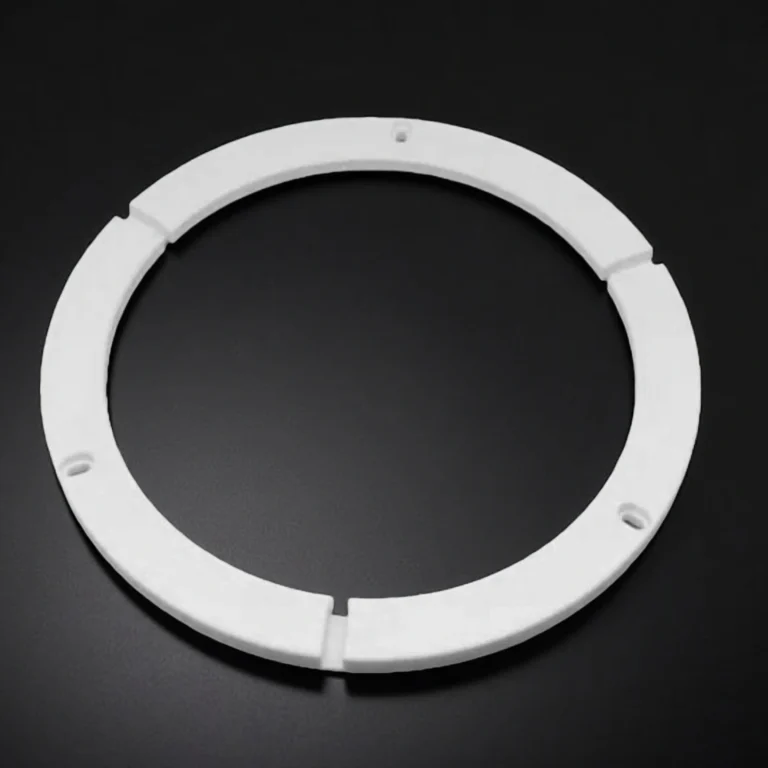
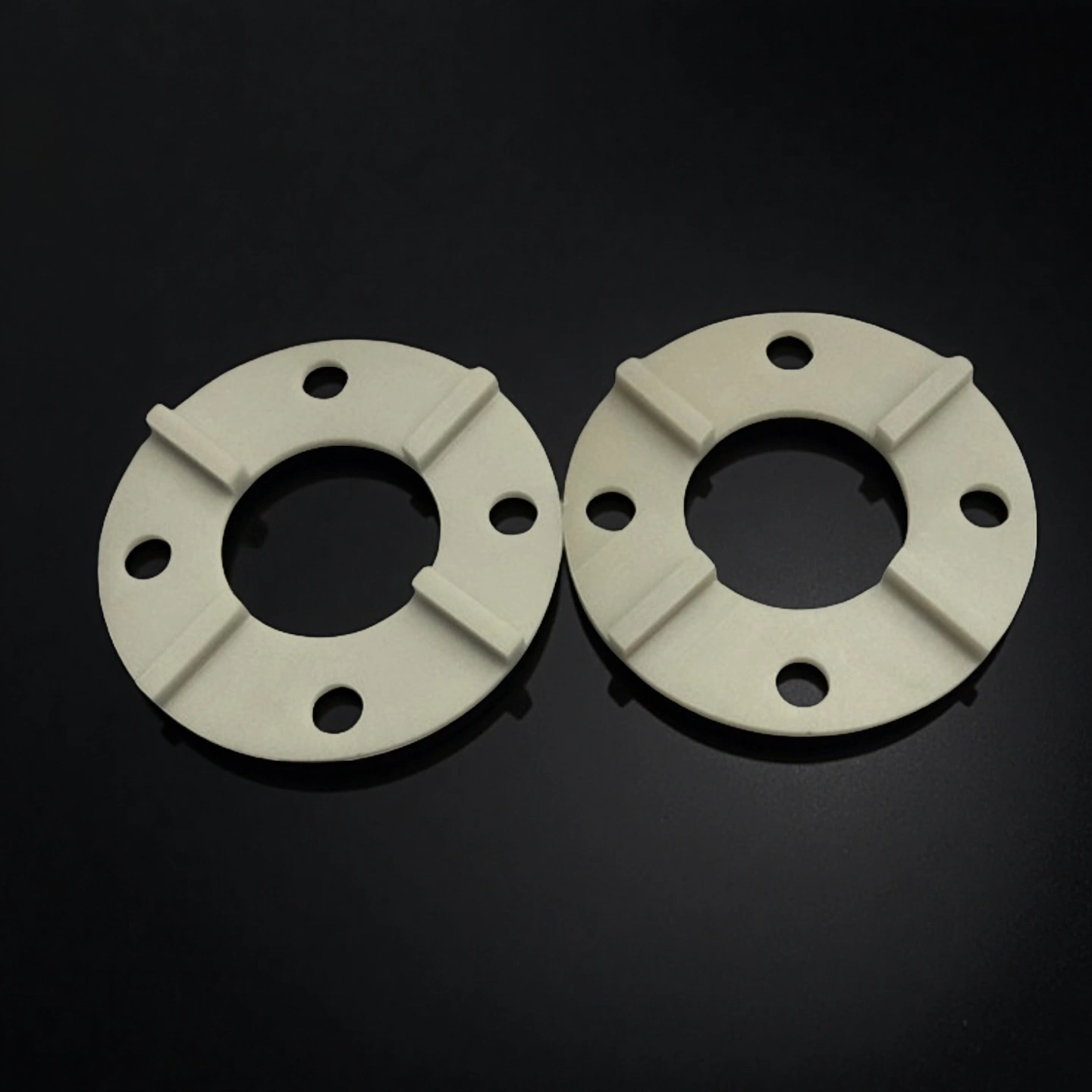
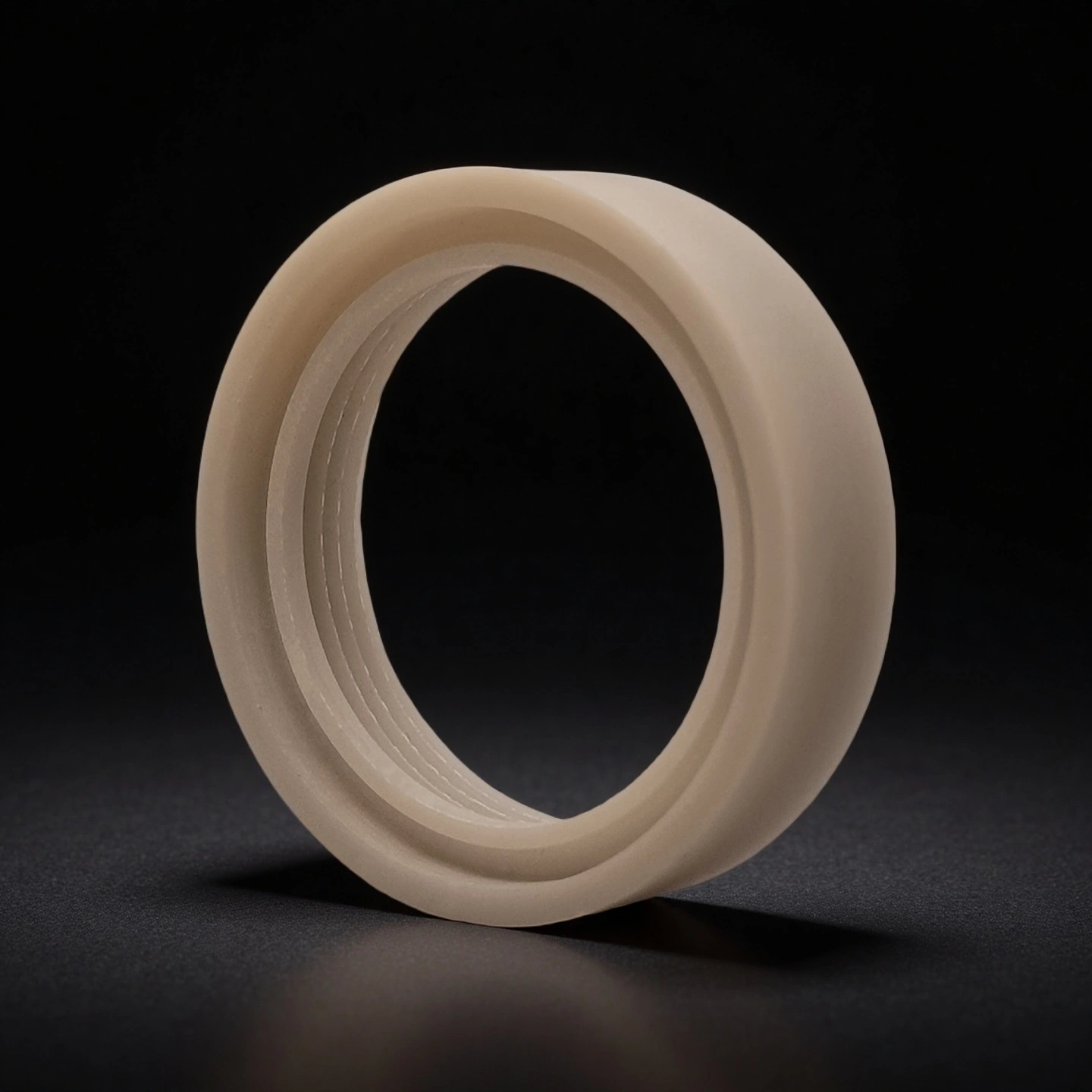
Custom Aluminum Nitride Ring for Thermal Management and Electrical Insulation

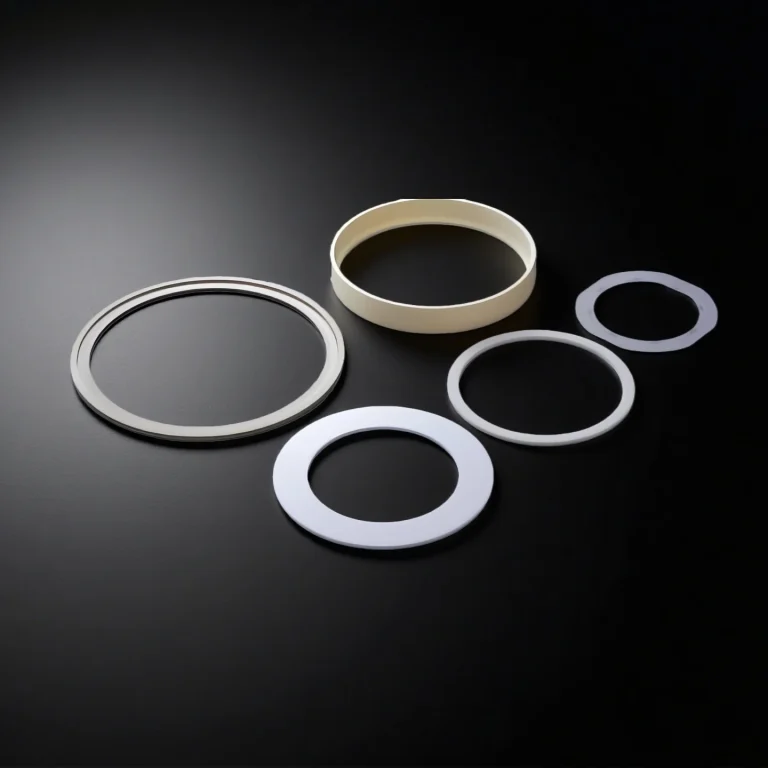
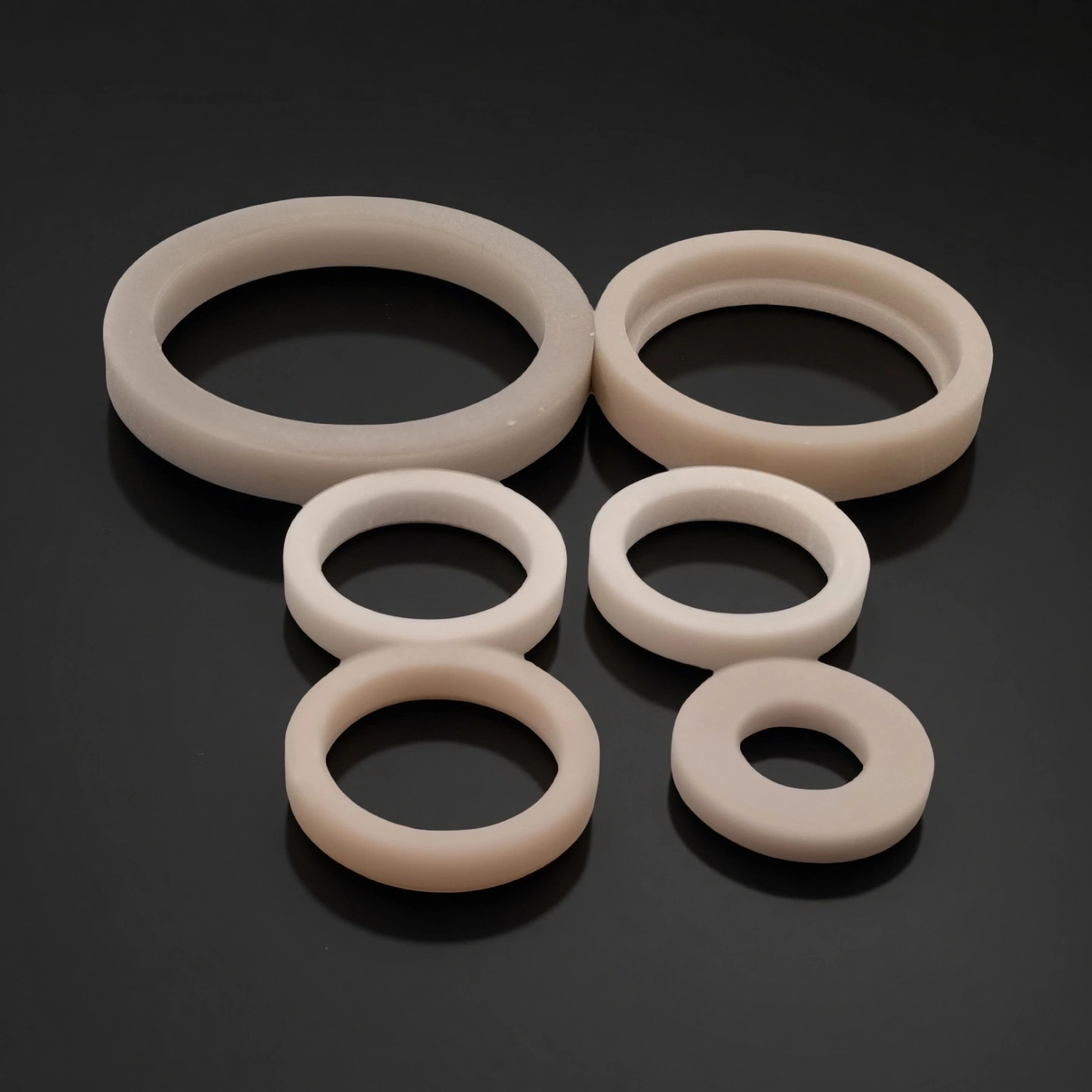
We supply Aluminum Nitride Rings in a range of outer and inner diameters, thicknesses, and tolerances to match power modules, vacuum chambers, RF assemblies, and optical devices. Standard sizes and fully custom machined AlN rings are available according to your drawings or samples.

Catalogue No. AT-ALN-H001
Material Aluminum Nitride
Density ≥3.25 g/cm³
Tolerance Accuracy ±0.02–0.05 mm
Dielectric Strength  10–12 kV/mm
24H Standard Dispatch
Small Batch Support OEM
Factory Direct
Expert Engineering Support

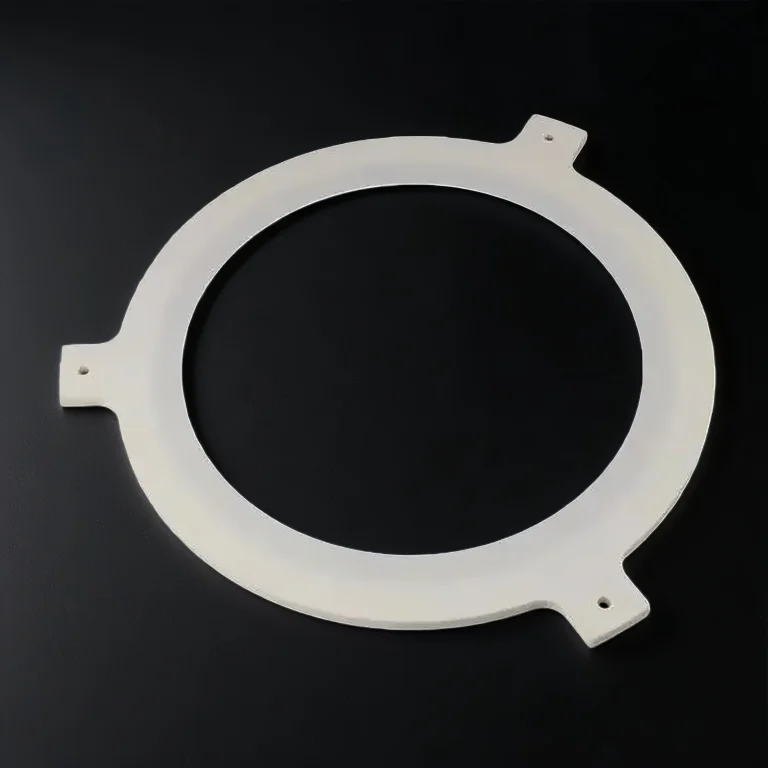
Aluminum Nitride Ring is a precision-machined ceramic ring made from high-thermal-conductivity Aluminum Nitride (AlN). It functions as a thermal and electrical insulating spacer commonly used in power electronics, inverter modules, RF and microwave assemblies, vacuum chambers, high-power LED systems, and laser or photonics packages.

Aluminum Nitride Ring Advantages

  • High Thermal Conductivity in Ring Geometry
    The Aluminum Nitride Ring structure allows efficient radial heat spreading around power modules, LED packages, and laser cavities.

  • Electrical Insulation with High Dielectric Strength
    Each AlN ceramic ring combines thermal conduction with strong electrical insulation, suitable for high-voltage and high-frequency assemblies.

  • Tight Dimensional Tolerances for Precise Fit
    Precision grinding and machining enable outer and inner diameter tolerances down to ±0.05–0.1 mm, supporting accurate alignment and sealing in complex housings.

  • High-Purity AlN for Stable Performance
    High-purity Aluminum Nitride ceramic provides stable thermal properties, low outgassing, and consistent performance in vacuum and high-temperature environments.

  • Flexible Thickness and Surface Finish Options
    Aluminum Nitride Rings can be supplied in thin-wall or robust designs, with raw, lapped, or polished surfaces based on mounting and interface requirements.


AlN Ceramic Ring Properties

Property Content Unit Unit ALN-170 ALN-200 ALN-230
Basic Properties Color gray light yellow light yellow
Density g/cm³ 3.2-3.3 3.2-3.3 3.2-3.3
Surface Roughness μm 0.2-0.75 0.2-0.75 0.2-0.8
Camber length ‰ ≤3‰ ≤3‰ ≤3‰
Hardness HV 1100 1100 1100
Thermal Properties Max Operating Temperature °C 1100 1100 1100
Thermal Conductivity W/m·K 170-190 190-220 220-230
Coefficient of Thermal Expansion 10⁻⁶/K(20-400°c) 4-5 4-5 4-5
Coefficient of Thermal Expansion 10⁻⁶/K(400-800°c) 5-6 5-6 5-6
Mechanical Properties Flexural Strength MPa 300-400 350-450 400-500
Tensile Strength MPa 200-300 250-350 280-380
Compressive Strength MPa 2000-3000 2200-3200 2500-3500
Electrical properties Dielectric Constant at 1MHz 8-9 8-9 8-9
Dielectric strength KV/mm ≥15 ≥15 ≥15
Volume resistivity 20℃ Ω.cm ≥1014 ≥1014 ≥1014


Aluminum Nitride Ring Specifications

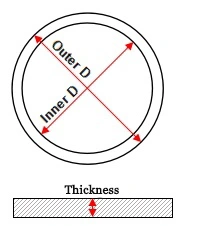
size for ring


Item Outer Diameter (mm) Inner Diameter (mm) Thickness (mm)
AT-ALN-H001 10.0  6.0  2.0 
AT-ALN-H002 15.0  10.0  2.5 
AT-ALN-H003 20.0  15.0  2.5 
AT-ALN-H004 25.0  21.0  2.0 
AT-ALN-H005 28.0  23.0  2.5 
AT-ALN-H006 31.0  26.0  2.5 
AT-ALN-H007 35.0  31.0  2.0 
AT-ALN-H008 48.0  40.0  4.0 
AT-ALN-H009 50.0  46.0  2.0 
AT-ALN-H010 50.0  45.0  2.5 
AT-ALN-H011 50.0  42.0  4.0 
AT-ALN-H012 50.0  40.0  5.0 
AT-ALN-H013 51.0  40.0  5.5 
AT-ALN-H014 55.5  39.5  8.0 
AT-ALN-H015 60.0  54.0  3.0 
AT-ALN-H016 65.0  45.0  10.0 
AT-ALN-H017 68.0  48.0  20.0 
AT-ALN-H018 90.0  86.0  2.0 
AT-ALN-H019 100.0  95.0  2.5 
AT-ALN-H020 10-450 6-410 2-20


Aluminum Nitride Ceramic Ring Packaging

  • Each ring or small set of rings is first wrapped in clean cushioning material to avoid chipping of the edges.
  • Rings are then placed in compartmented inner boxes or trays, separating individual parts to prevent mutual contact.
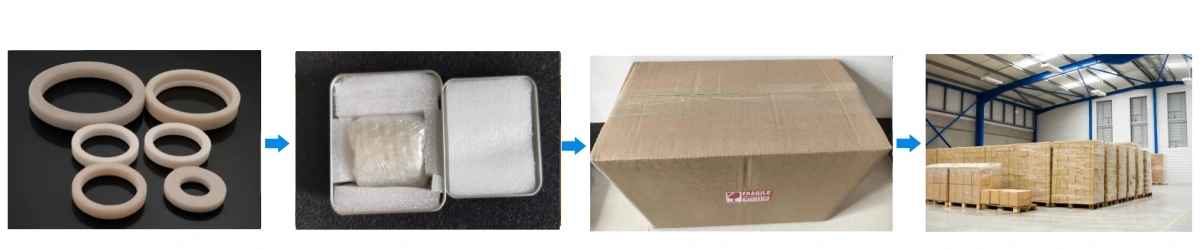

Aluminum Nitride Ceramic Ring Packaging


Aluminum Nitride Rings Applications

  • Power Electronics and Inverter Modules

    ✅Key Advantages

    Aluminum Nitride Rings are used around IGBT modules, rectifier bridges, and inverter packages as thermal and insulating spacers, balancing heat flow from the device into the heat sink while maintaining electrical clearance.

    ✅ Problem Solved

    A power converter manufacturer had modules running at case temperatures exceeding 95°C under full load. After implementing a custom Aluminum Nitride Ring with 160–170 W/m·K thermal conductivity between the module and the housing interface, the average case temperature dropped by about 8–10°C under the same cooling conditions. This reduction helped extend expected module life by an estimated 20–30% based on their internal reliability models, and kept operating temperatures within the warranty target range.

  • High-Power LED, Laser, and Photonics Systems

    ✅Key Advantages

    In LED arrays, laser cavities, and photonics packages, an AlN ceramic ring acts as a mechanical locator and thermal spreader around the active optical area, improving both temperature uniformity and alignment accuracy.

    ✅ Problem Solved

    An optical module builder reported that a previous alumina spacer led to a temperature difference of more than 15°C between the center emitter and the outer emitters in a high-power LED ring. By replacing the spacer with a high-purity Aluminum Nitride Ring, the temperature difference was reduced to around 6–7°C during continuous operation. This improvement stabilized optical output, reduced drift in beam profile, and lowered the number of temperature-related calibration adjustments needed per production lot.

  • Vacuum Chambers and High-Temperature Equipment

    ✅Key Advantages

    Aluminum Nitride Rings are used in vacuum coating systems, high-temperature chambers, and thermal analysis equipment as insulating and spacing rings around feedthroughs, electrodes, and observation windows.

    ✅ Problem Solved

    A vacuum equipment OEM experienced intermittent dielectric breakdown around a metal feedthrough at test voltages above 8 kV in a coating chamber. After redesigning the interface with a precision-matched AlN ceramic ring with dielectric strength around 10–12 kV/mm, the breakdown events stopped in endurance tests exceeding 500 hours. The redesigned interface also enabled them to reduce the number of insulating layers, simplifying assembly and inspection.

Aluminum Nitride Ring Usage Guide

  • Installation

    1. Check Dimensions Before Assembly
    Verify the outer diameter, inner diameter, and thickness of the Aluminum Nitride Ring against the drawing and the mating components. A dry fit test helps detect interference areas or tight spots.
    2. Support and Contact Surfaces
    Ensure that support surfaces contacting the AlN ring are clean, flat, and free from burrs. This helps distribute load and reduce local stress.
    3. Controlled Tightening
    When clamping the ring between metal parts, use even torque and avoid point loads from single screws without washers or support pads.

  • In-Service Use

    1. Avoid Rapid Mechanical Shock
    Although AlN has good mechanical strength, sudden impact from tools, dropped parts, or misaligned fixtures can chip edges.
    2. Manage Thermal Gradients
    For large Aluminum Nitride Rings or thick sections, avoid extremely fast temperature changes across the ring, especially if metal parts expand at different rates.
    3. Monitor Hot Spots
    If the ring is part of a heat path, periodically check for hot spots on the assembly during early prototype and ramp-up phases.

  • Storage

    1. Store AlN rings in dry, clean, and dust-controlled cabinets or containers.
    2. Keep the rings in their original partitioned packaging when possible to avoid unintentional contact.
    3. Avoid stacking heavy metal parts directly on top of the rings.

  • Cleaning

    1. Use soft brushes or lint-free cloth to remove loose dust or particles from the Aluminum Nitride Ring.
    2. If needed, clean with suitable solvents that do not leave conductive or corrosive residues, then dry completely before assembly.
    3. Avoid aggressive mechanical cleaning methods like grinding or high-pressure blasting on finished precision surfaces.

  • Typical Misuse and How to Avoid It

    1. Over-Tightening the Assembly
    – Problem: Excessive torque on bolts or clamps can create high local stress and cause cracking at the inner or outer edge of the ring.
    – Solution: Follow torque guidelines, use load-spreading washers, and design flat contact areas for the Aluminum Nitride Ring.

    2. Ignoring Thermal Expansion Mismatch
    – Problem: A rigid stack of dissimilar materials with very different thermal expansion coefficients can introduce stress into the AlN ring during heat-up and cool-down.
    – Solution: Use compliant layers where needed, avoid over-constrained designs, and validate thermal cycles during testing.

    3. Contaminated Contact Surfaces
    – Problem: Dust or metallic particles trapped between the ring and mating surfaces can cause point loading or local dielectric issues.
    – Solution: Clean all surfaces before assembly and adopt basic cleanliness practices in the assembly area.

Frequently Asked Questions about Aluminum Nitride Ring

  1. Q: What is an Aluminum Nitride Ring used for in power electronics?
    A: An Aluminum Nitride Ring is typically used as a thermal and insulating spacer around power modules, inverters, and rectifiers. It helps spread heat away from sensitive components while maintaining the required electrical clearance between metal parts.
  2. Q: How does an Aluminum Nitride Ring compare with an alumina ring?
    A: Compared with alumina, an Aluminum Nitride Ring offers significantly higher thermal conductivity, so it can remove heat more efficiently from power devices or optical modules. This allows engineers to keep junction temperatures lower or run at higher power density in the same footprint.
  3. Q: Can Aluminum Nitride Rings be customized according to my drawing?
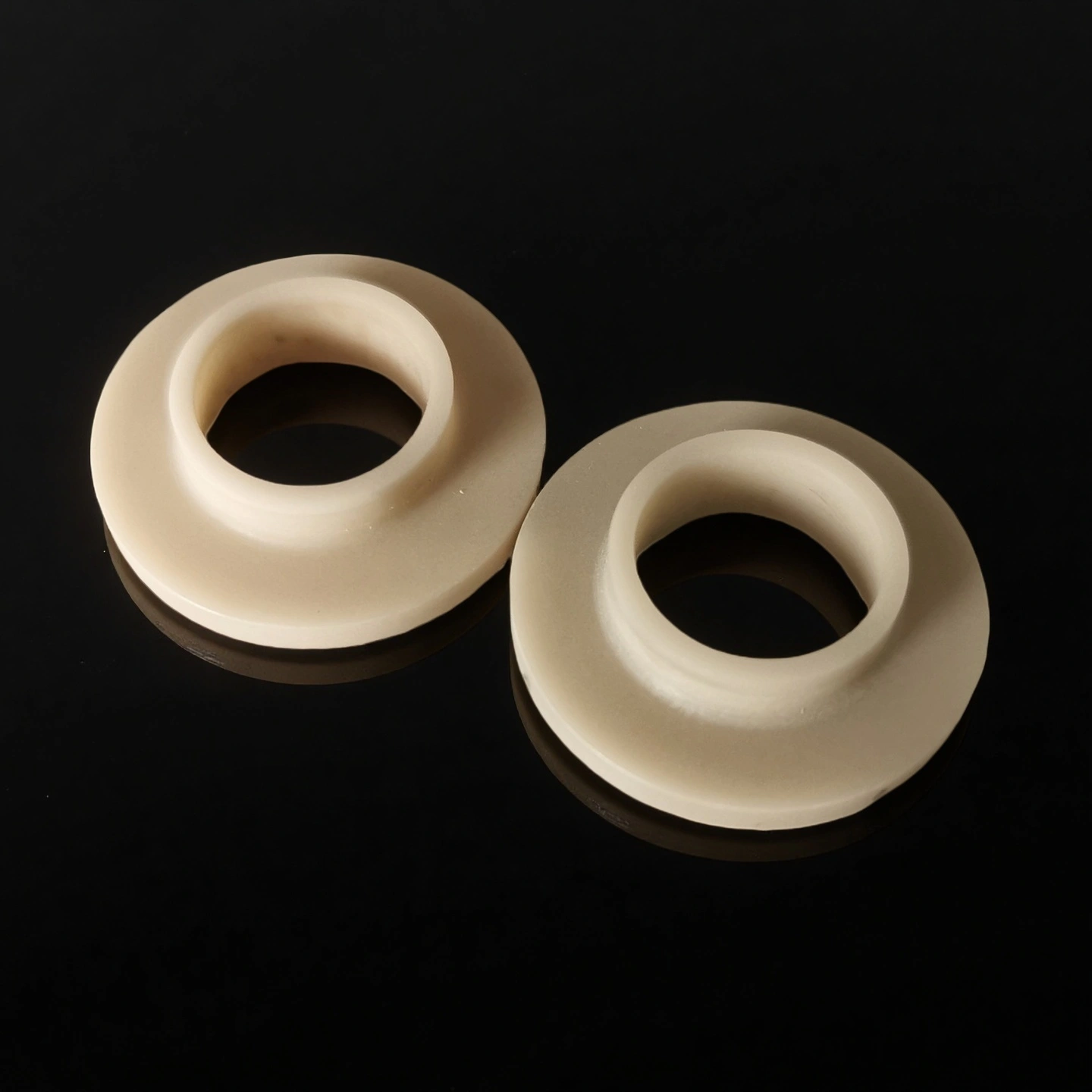
    A: Yes. The Aluminum Nitride Ring can be produced as a fully custom AlN ceramic ring, with specific outer and inner diameters, thickness, stepped features, holes, and surface finishes according to your CAD drawing.
  4. Q: What tolerances can be achieved on an AlN ceramic ring?
    A: For many sizes, outer and inner diameters can be controlled to around ±0.05–0.1 mm, and thickness can be ground to similar tolerance ranges. The exact tolerance depends on ring size and machining complexity.
  5. Q: Is an Aluminum Nitride Ring suitable for vacuum and high-voltage applications?
    A: Yes. High-purity AlN provides low outgassing for vacuum chambers and good dielectric strength for high-voltage interfaces, which makes the Aluminum Nitride Ring suitable for vacuum coating systems, feedthroughs, and insulating flanges.
  6. Q: What is the typical operating temperature range of an Aluminum Nitride Ring?
    A: In many designs, an Aluminum Nitride Ring can operate up to about 900–1000°C in air and up to around 1600–1700°C in inert or controlled atmospheres, as long as mechanical and thermal design limits are respected.
  7. Q: Can I use an Aluminum Nitride Ring as a direct replacement for a metal spacer?
    A: If a metal spacer currently provides both mechanical support and electrical conduction, the Aluminum Nitride Ring cannot act as a direct electrical conductor. However, if you need a thermally conductive but electrically insulating spacer, an AlN ring is a good replacement and may improve thermal behavior compared with some metals plus insulating layers.

Aluminum Nitride Ring Reviews

  • ⭐️⭐️⭐️⭐️⭐️
    We have customized aluminium nitride rings for our inverter platform to isolate and cool a new IGBT package. The fit and tolerances matched our drawings, and the thermal test results were consistent across batches, which simplified our qualification work with the OEM.
    -- Michael R., Power Module Engineer, E-Power Drives GmbH
  • ⭐️⭐️⭐️⭐️⭐️
    Our vacuum chambers require insulating rings around high-voltage feedthroughs. The AlN ceramic rings we purchased from ADCERAX have shown stable performance in long-term tests. The pricing is competitive for precision parts, and the engineering support during the drawing phase helped finalize our design faster.
    --Sara L., Procurement Manager, Northwave Vacuum Systems
  • ⭐️⭐️⭐️⭐️⭐️
    For a laser ring assembly, we needed a thin AlN ceramic ring with tight flatness and a polished surface on one side. The delivered Aluminum Nitride Rings met our surface and flatness requirements, and the parts dropped into our existing fixtures without modification.
    -- Kenji S., Senior Optical Designer, PhotonAxis Technologies
  • ⭐️⭐️⭐️⭐️⭐️
    We run several series of power converters and order mixed sizes of Aluminum Nitride Rings each year. The ability to source both standard AlN rings and custom machined ring spacers from one ADCERAX supplier simplifies our planning and keeps line-changeover downtime under control.
    -- David M., Operations Director, Industrial Motion Controls Inc.
customize size

Customize Aluminum Nitride Ring

Custom Aluminum Nitride Rings can be produced in a wide range of diameters, thicknesses, and surface finishes to match specific mechanical, thermal, or electrical interface requirements. Below is a clear list of parameters that can be fully specified for AlN ring customization.

1. Outer Diameter (OD):
Typical range from 5 mm up to about 120 mm, with OD tolerance down to ±0.05–0.1 mm depending on size.

2. Inner Diameter (ID):
Custom inner bores for screws, electrodes, optical paths, or coolant channels, including stepped or multi-level IDs.

3. Thickness /Ring Height:
Thin rings for compact modules or thicker rings for mechanical stiffness; thickness tolerance can be engineered to match stack-up requirements.

4. Cross-Section & Features:
Flat rings, stepped rings, chamfered edges, keyways, or partial cut-outs to interface with housings and locating pins.

5. Surface Finish:

  • As-fired surface for non-critical faces
  • Ground faces for precise contact
  • Single-side or double-side polished AlN ring surfaces for better thermal contact or optical alignment zones

6. Holes and Slots:
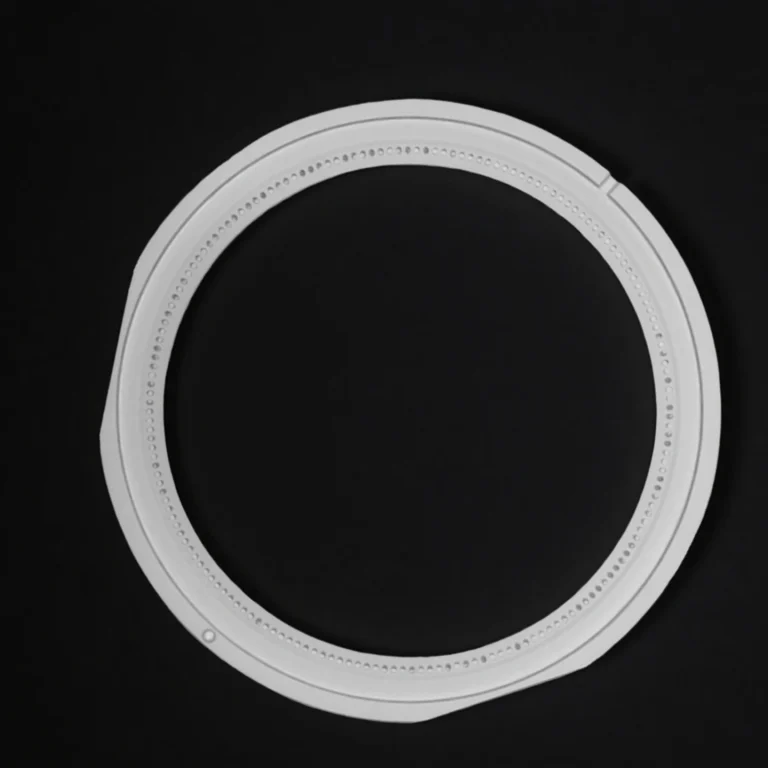
Through-holes, countersinks, or slots around the Aluminum Nitride Ring for fasteners, alignment, or fluid paths.

7. Material Grade:
Standard high-thermal-conductivity AlN ceramic, or specific grades requested for particular dielectric or mechanical requirements.

Related Products

ADCERAX - Your Trusted Advanced Ceramics Manufacturing Partner

Direct factory manufacturing with comprehensive ceramic materials expertise and global supply capabilities

Direct Factory Manufacturing

China-based ceramic materials production facility with state-of-the-art equipment

Engineering Team

Experienced professionals in advanced ceramics applications and custom design

Quality Control

Strict quality control standards for technical ceramics manufacturing and quality management

Global Supply Chain

Serving customers worldwide with technical ceramics and rapid response

24/7 Technical Support

Round-the-clock support for ceramic components inquiries and technical assistance

500+ Satisfied Customers

Trusted by global customers for advanced ceramic materials and precision components

Get in touch with us

Our team will be happy to respond to you in less than 24 hours.

Adcerax's factory

Quick Quotation

*Our team will answer your inquiries within 24 hours.

*Your information will be kept strictly confidential.

Ready to Solve Your Engineering Challenge?

Partner with ADCERAX for reliable, high-performance advanced ceramic solutions. Our engineers are ready to discuss your project.

E-mail

info@adcerax.com

Phone

+(86) 0731-74427743 | WhatsApp: +(86) 19311583352

Response Time

Within 24 hours

Quick Quote

The more details you provide, the faster we can quote.

*We respond within 24 hours. All inquiries are confidential.

Download Catalog

Get Your Custom Sulution

The more details you provide, the faster we can respond.

customize size

*We respond within 24 hours. All inquiries are confidential.

Download Catalog