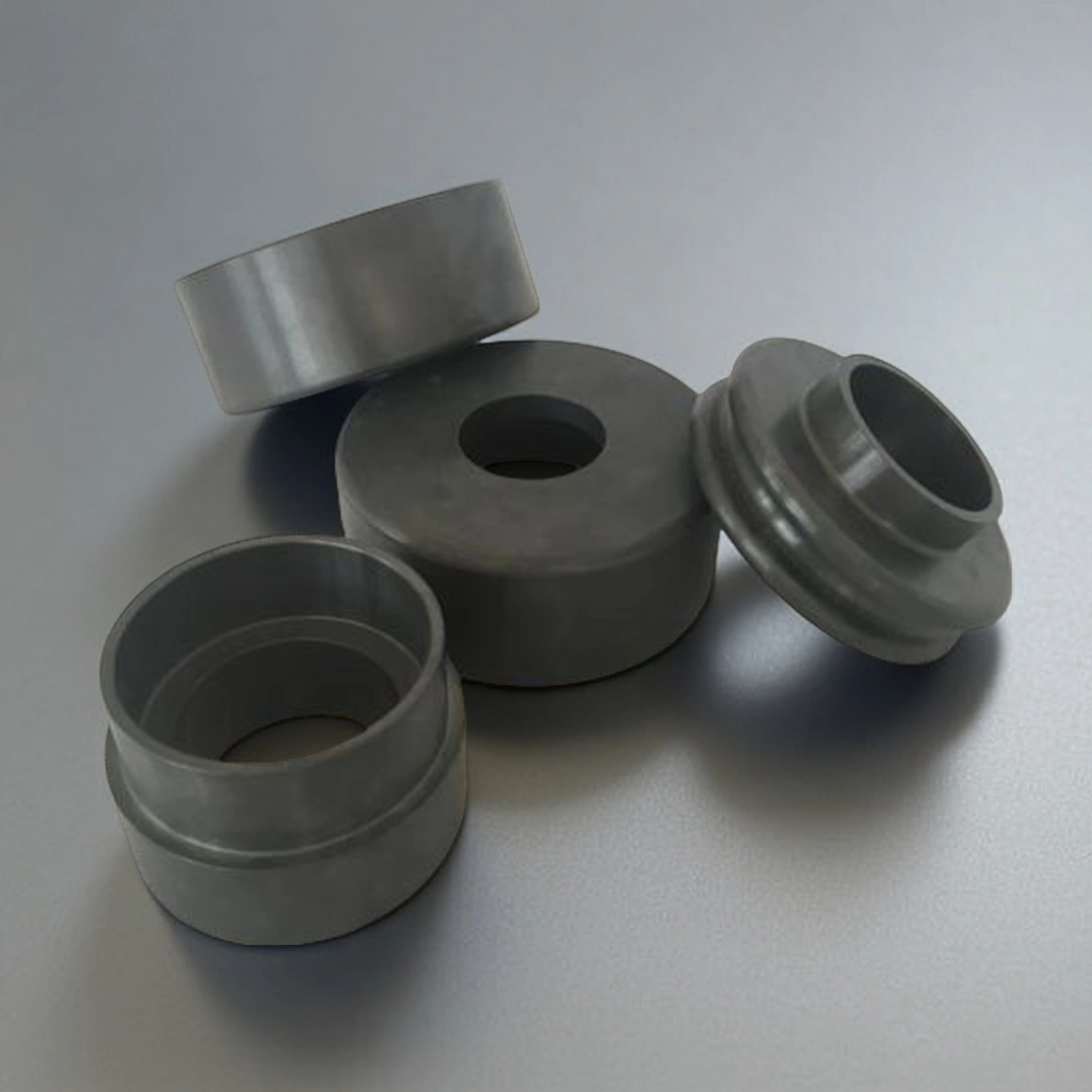
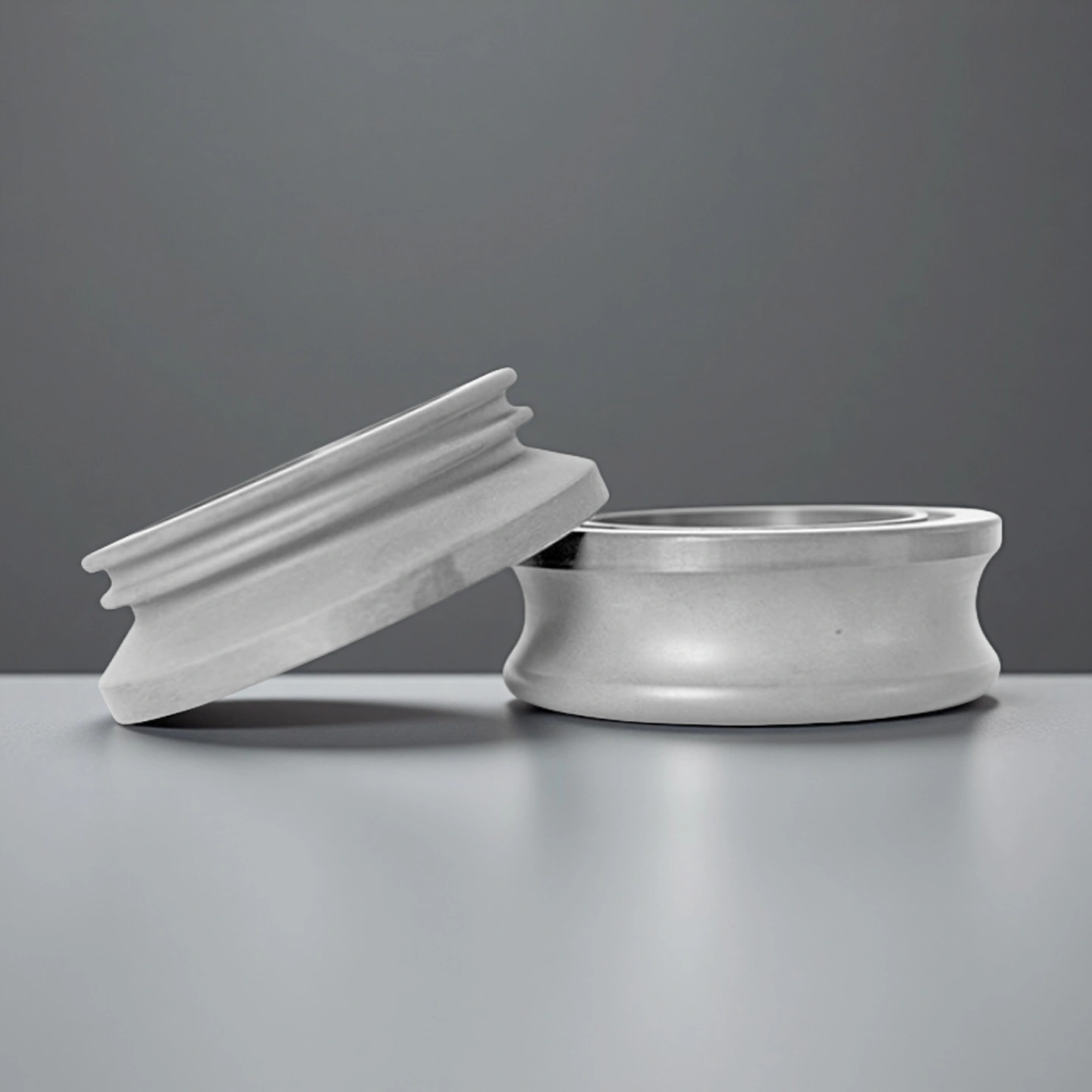
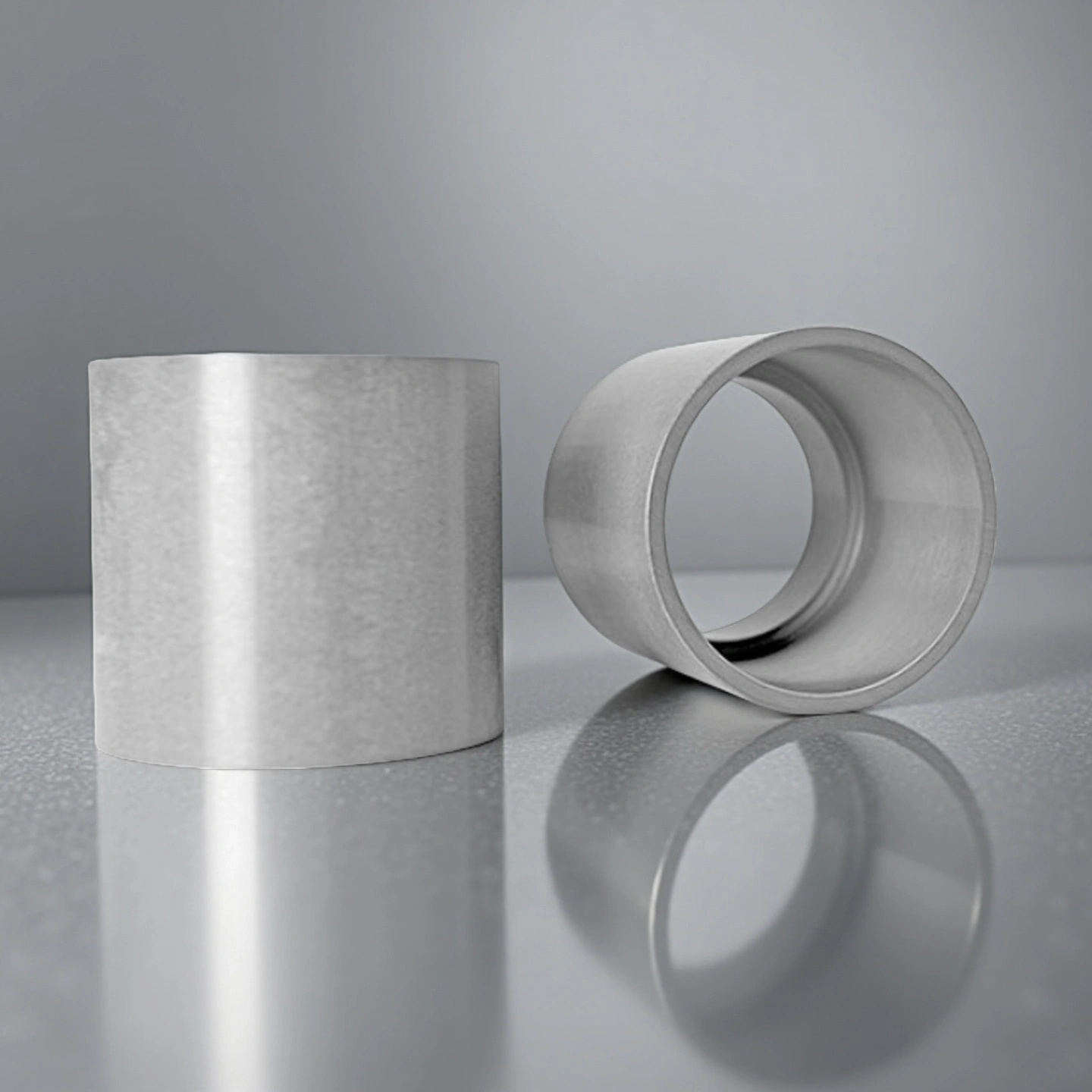
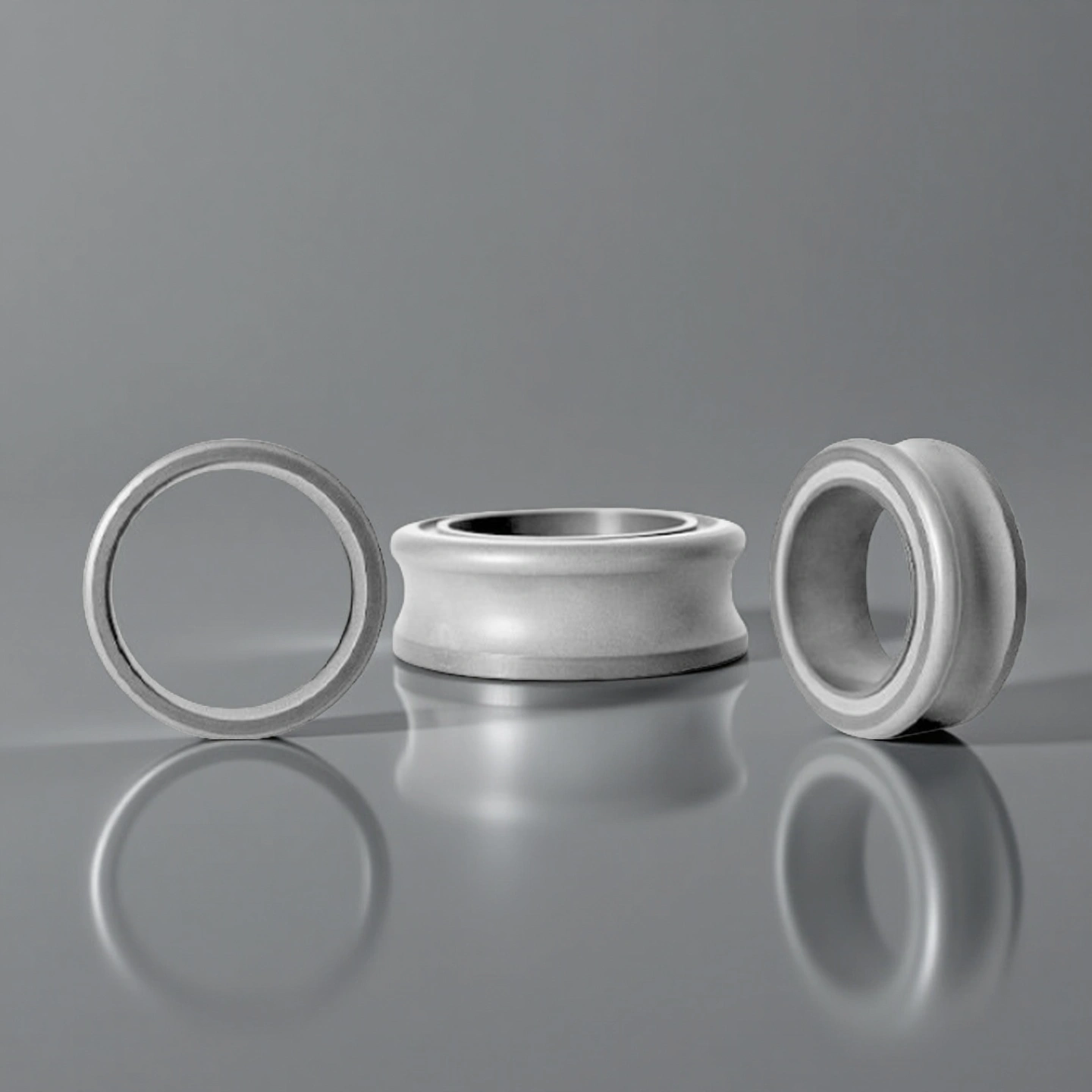
Silicon Nitride Insulation Ring for Pumps, Seals & Vacuum Systems

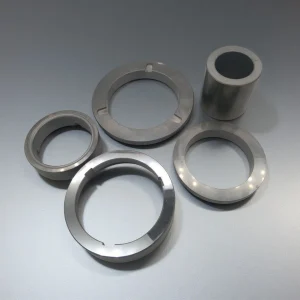
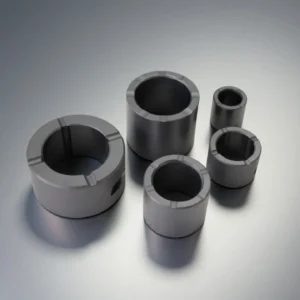
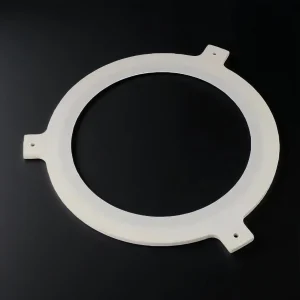
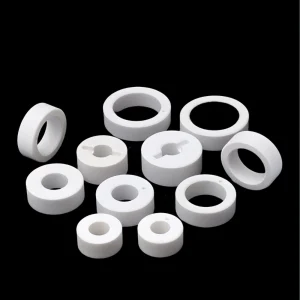
Silicon nitride insulation ring for mechanical seals, pumps, vacuum hardware, and motor ends; custom ID/OD, grooves, keyways, and selective polishing are available to match assembly drawings. OD 15–120 mm typical, thin-wall styles available; tolerances, chamfers, and flatness per drawing. The silicon nitride insulation ring supports batch-level consistency controls for OEM and MRO programs.

Catalogue No. AT-SIN-JY1001
Material Silicon Nitride
Dielectric strength ≥15–20 kV/mm
Coefficient of thermal expansion, 25–800 °C ~2.8–3.2 × 10⁻⁶/K
Flexural strength 600–1000 MPa
24H Standard Dispatch
Small Batch Support OEM
Factory Direct
Expert Engineering Support

Silicon nitride insulation ring is a precision Si₃N₄ ceramic spacer used to electrically isolate mating parts while keeping tight dimensional control under temperature, load, and media exposure. It is commonly installed in mechanical seal chambers, pump/valve assemblies, vacuum flanges and feedthroughs, and motor or spindle end covers to block stray currents, stabilize sealing gaps, and reduce leak-related rework.

Silicon Nitride Insulation Ring Benefits

1. Electrical isolation under load
High dielectric strength (≥15–20 kV/mm per ASTM D149/IEC 60243) and stable volume resistivity (≥10¹² Ω·cm) maintain insulation in humid or chemically active environments. The silicon nitride insulation ring effectively prevents leakage currents and bearing pitting caused by stray voltages, ensuring long-term reliability for pumps and vacuum assemblies.


2. Dimensional stability
With a coefficient of thermal expansion of only 2.8–3.2 × 10⁻⁶/K (ASTM E228), the ring keeps alignment accuracy across wide temperature ranges. Excellent thermal shock resistance allows repeated heating and cooling cycles without warping or cracking, protecting fit tolerances in high-speed rotating systems.


3. Wear & corrosion resistance in seal chambers
The dense Si₃N₄ microstructure resists abrasion from slurry, vapour, and metallic contact surfaces. In field tests, wear loss is less than 0.05 mm after 1,000 hours of pump operation, reducing maintenance intervals and leakage incidents in chemical and water-treatment lines.


4. Machinable features for assembly
Precision grinding and CNC finishing enable IDs/ODs, grooves, and keyways to meet ±0.02–0.10 mm tolerance and flatness ≤0.05 mm. These controlled geometries improve first-time assembly rates by over 20 % compared with conventionally cast spacers, supporting consistent sealing performance in OEM production.


5. Surface options
Functional faces can be lapped or polished to Ra 0.4–0.8 µm, achieving uniform compression and stable sealing gaps. Optional selective polishing or raw-ground surfaces allow engineers to balance friction control and adhesive bonding needs depending on the sealing media and torque environment.

Si₃N₄ Insulation Ring Properties

Si3N4 Type Gas pressure sintering Si3N4 Hot pressing sintering Si3N4 High thermal conductivity Si3N4
Density (g/cm3) 3.2 3.3 3.25
Flexture strength (MPa) 700 900 600~800
Young Modulus (GPa) 300 300 300~320
Poisson's ratio 0.25 0.28 0.25
Compressive strength (MPa) 2500 3000 2500
Hardness (GPa) 15 16 15
Fracture toughness (MPa*m1/2) 5~7 6~8 6~7
Maximum working temperature (℃) 1100 1300 1100
Thermal conductivity (W/m*K) 20 25 80~100
Thermal expansion coefficient (/℃) 3*10-6 3.1*10-6 3*10-6
Thermal shock resistance (ΔT ℃) 550 800 /


Slicon Nitride Insulating Ring Specifications

Si3N4 Insulation Ring
Item No. Diameter(mm) Height (mm)
AT-SIN-JY1001 Customize


Silicon Nitride Isolation Ring Packaging

  • Each silicon nitride ring is individually packed in anti-static foam trays and sealed in PE bags to prevent contamination. Bulk orders are shipped in reinforced wooden crates with shock-absorbing materials.
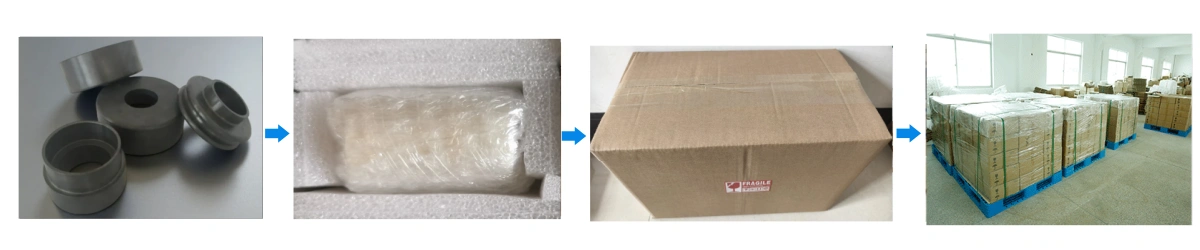

Silicon Nitride Isolation Ring Packaging

Silicon Nitride Ceramic Insulation Ring Applications

  • Mechanical Seals & Pumps

    ✅Key Advantages

    1. Electrical isolation of rotating sets: reduces current paths that cause bearing pitting and seal face damage.
    2. Low-CTE fit in hot fluids: keeps gap control with ΔT across seal chamber.
    3. Wear-resistant faces: supports stable leakage rates during duty cycles.

    ✅ Problem Solved

    A process pump OEM replaced polymer spacers with a silicon nitride insulation ring in hot caustic service. Using a ring with dielectric strength ≥15 kV/mm and CTE ~3.0×10⁻⁶/K, the line reported fewer reworks after restart and a measurable drop in seal leakage events across a quarter. Dimensional reports showed face flatness ≤0.03 mm and runout ≤0.05 mm, improving first-time assembly pass rates. Test references: ASTM D149 / IEC 60243 for dielectric, ASTM E228 for CTE.

  • Vacuum Equipment & Feedthroughs

    ✅Key Advantages

    1. Electrical separation at flanges: stable insulation under low-outgassing conditions.
    2. Surface finish control: lapped faces for uniform compression on gasketed joints.
    3. Thermal stability during bakeout: geometry holds through temperature cycles.

    ✅ Problem Solved

    A vacuum integrator adopted Si₃N₄ insulating spacers on a feedthrough cluster. With polished faces Ra ≤0.8 µm and flatness ≤0.03 mm, clamp torque distribution improved and retorque frequency declined in maintenance logs. Bakeout cycles did not affect ID/OD fit, verified via CMM sampling.

  • Motors/Spindles End Insulation

    ✅Key Advantages

    1. Mitigates shaft-to-bearing currents: dielectric path across end ring components.
    2. Stable geometry under speed & heat: low CTE helps keep air-gap and fit.
    3. Machined features for alignment: concentricity supports balance.

    ✅ Problem Solved

    A machine tool spindle service center introduced Si₃N₄ insulation rings with concentricity ≤0.03–0.05 mm and dielectric ≥15 kV/mm. Bearing pitting incidents reduced in warranty returns, and mean time between services increased over two maintenance cycles.

Silicon Nitride Insulation Ring Usage Instructions

  • Installation

    1. Dimensional verification
    Measure ID/OD and face flatness per drawing before installation. Dry-fit the shaft or housing to confirm clearance and concentricity. Record deviations greater than ±0.02 mm for inspection review.
    2. Surface preparation
    Clean all mating metal surfaces with lint-free cloth and solvent to remove oil, dust, or oxidation. Eliminate burrs or machining ridges that may create stress points and microcracks in the ceramic ring.
    3. Torque application
    Apply specified torque gradually and evenly in a star or diagonal sequence for flanges or end covers. After torqueing, re-check axial runout and flatness; misalignment beyond 0.05 mm can lead to premature seal wear or current leakage.

  • Operation

    1. Temperature and load conditions
    Operate within the assembly’s rated temperature and pressure window. The silicon nitride insulation ring withstands up to 900 °C in air and 1000 °C in inert atmospheres, but rapid thermal shocks exceeding 300 K should be avoided.
    2. Monitoring after start-up
    During the first 24–72 hours after retrofit or maintenance, monitor bearing currents, seal leakage, and noise level. Stable readings indicate proper electrical isolation and mechanical alignment.
    3. Inspection interval
    For continuous-duty systems, inspect ring integrity and fastener torque every 3–6 months, or during scheduled MRO shutdowns.

  • Storage

    1. Environmental control
    Store in a dry, temperature-stable environment (15–30 °C). Avoid moisture exposure that may degrade surface resistance over long storage periods.
    2. Packaging retention
    Keep products in original anti-static packaging with foam cushioning. Avoid stacking heavy components directly on the ring to prevent edge chipping or face abrasion.

  • Cleaning

    1. Use non-abrasive wipes and neutral or alcohol-based solvents compatible with assembly materials.
    2. Avoid alkaline or acidic detergents that leave conductive residues.
    3. After cleaning, dry completely at room temperature or with filtered compressed air before assembly to maintain dielectric performance.

  • Common Misuse & Fix

    1. Over-torque causing face distortion
    Issue: Excessive torque bends the flange or compresses the ring unevenly, leading to seal leakage or reduced insulation.
    Fix: Follow the torque chart for each bolt size; tighten incrementally in a cross pattern; re-measure flatness and runout after tightening.
    Uncontrolled thermal shock

    2. Issue: Rapid heating or cooling (ΔT > 300 K) can generate tensile stress cracks.
    Fix: Pre-warm the ceramic gradually before full operation; during shutdown, allow slow cooling or controlled venting; never quench hot components.
    Assembly with metal burrs or uneven faces

    3. Issue: Sharp burrs on the mating part can scratch the ceramic surface, concentrating stress and reducing service life.
    Fix: Deburr, lap, and clean the contact surfaces before assembly; verify Ra ≤ 1.6 µm; perform post-assembly concentricity checks (≤ 0.05 mm).

Silicon Nitride Ceramic Insulation Ring FAQ

  1. Q: How does the silicon nitride insulation Ring function in mechanical seals?
    A: A silicon nitride insulation ring is a precision-engineered Si₃N₄ ceramic spacer that electrically isolates metal components in rotating assemblies. It prevents stray currents from traveling along the shaft or seal faces, reducing bearing pitting and extending seal life in pumps and vacuum systems.
  2. Q: What dielectric performance can the silicon nitride insulation ring achieve?
    A: Typical dielectric strength is ≥15–20 kV/mm (tested per ASTM D149 / IEC 60243) and volume resistivity ≥10¹² Ω·cm, allowing stable insulation under high humidity or conductive process fluids. These parameters make it suitable for both AC and DC insulation applications in industrial systems.
  3. Q: How does a silicon nitride insulation ring compare to alumina or zirconia insulation rings?
    A: Silicon nitride combines higher fracture toughness (6–8 MPa·m½) and lower CTE (~3.0×10⁻⁶/K), resulting in better thermal shock resistance and dimensional stability. Alumina and zirconia provide good insulation but may crack under repeated heat cycles, making Si₃N₄ preferable for high-speed or cyclic thermal environments.
  4. Q: What temperature range can a silicon nitride insulating ring withstand?
    A: The insulation ring performs continuously up to 900 °C in air and 1000–1100 °C in inert or vacuum atmospheres. Short-term exposure to higher peaks is possible if thermal gradients are controlled (<300 K difference across the part).
  5. Q: How should the Si₃N₄ insulation ring be stored and handled?
    A: Store in a dry, temperature-stable environment (15–30 °C). Avoid stacking or metal-to-ceramic contact that may chip edges. Handle with nitrile or lint-free gloves to prevent surface contamination that could affect dielectric performance.

Silicon Nitride Insulation Ring Reviews

  • ⭐️⭐️⭐️⭐️⭐️
    We switched to a silicon nitride insulation ring in a hot caustic loop. Flatness and runout were within our spec, and post-maintenance leak checks passed on the first attempt.
    --Elena Cruz — Reliability Engineer, FlowChem Pumps (USA)
  • ⭐️⭐️⭐️⭐️⭐️
    ADCERAX supported a drawing change for the Si₃N₄ insulating spacer. The price was aligned with our MRO budget and the dimensional report matched our inspection points.
    -- Martin Vogt — Purchasing Lead, NordVac Systems (Germany)
  • ⭐️⭐️⭐️⭐️⭐️
    The electrical isolation ring with polished faces stabilized the seal gap. Retorque intervals were extended, and we saw fewer callbacks.
    -- Sung-ho Park — Service Manager, HanKuk Rotating Equipment (Korea)
  • ⭐️⭐️⭐️⭐️⭐️
    After replacing polymer washers with silicon nitride insulating rings, bearing pitting complaints dropped across two service cycles.
    -- Isabella Romano — Plant Maintenance, AquaProcess Iberia (Spain)
customize size

Custom Silicon Nitride Insulation Ring

Customization covers geometry, tolerances, and surface finish to match diverse seal chambers, vacuum assemblies, and motor insulation designs. Both drawings and physical samples are accepted for evaluation and feasibility review. What You Can Specify:

  • Outer/Inner Diameters & Thickness
    Typical OD range 15–120 mm; wall thickness 2–10 mm depending on application. Dimensional tolerances commonly held within ±0.02–0.10 mm through precision CNC and CMM validation. Oversized rings for mechanical seals or vacuum flanges can be segmented for easier fitting.

  • Flatness & Runout
    Functional faces can reach flatness ≤0.02–0.05 mm and concentricity ≤0.03–0.05 mm. These parameters maintain uniform sealing pressure and correct shaft alignment under temperature gradients, improving long-term assembly stability.

  • Edge Details
    Chamfers (0.2–1 mm × 45°) and radii (0.3–1.0 mm) are adjustable per mating parts. Deburring and smooth transitions reduce local stress concentration and prevent crack initiation during torque or thermal loading.

  • Grooves /Keyways /Slots
    Custom slots, recesses, and alignment keys can be added for anti-rotation and positioning purposes. Each feature’s width and depth follow drawing specification with ±0.02 mm control, ensuring compatibility with O-rings or shaft keys.

  • Surface Finish (Faces/ID/OD)
    Surfaces may be supplied as raw-ground, fine-lapped, or polished. Functional sealing faces typically achieve Ra 0.4–0.8 µm, while secondary surfaces Ra 1.0–1.6 µm. This flexibility helps balance cost, friction behaviour, and electrical insulation performance.

Related Products

ADCERAX - Your Trusted Advanced Ceramics Manufacturing Partner

Direct factory manufacturing with comprehensive ceramic materials expertise and global supply capabilities

Direct Factory Manufacturing

China-based ceramic materials production facility with state-of-the-art equipment

Engineering Team

Experienced professionals in advanced ceramics applications and custom design

Quality Control

Strict quality control standards for technical ceramics manufacturing and quality management

Global Supply Chain

Serving customers worldwide with technical ceramics and rapid response

24/7 Technical Support

Round-the-clock support for ceramic components inquiries and technical assistance

500+ Satisfied Customers

Trusted by global customers for advanced ceramic materials and precision components

Get in touch with us

Our team will be happy to respond to you in less than 24 hours.

Adcerax's factory

Quick Quotation

*Our team will answer your inquiries within 24 hours.

*Your information will be kept strictly confidential.

Ready to Solve Your Engineering Challenge?

Partner with ADCERAX for reliable, high-performance advanced ceramic solutions. Our engineers are ready to discuss your project.

E-mail

info@adcerax.com

Phone

+(86) 0731-74427743 | WhatsApp: +(86) 19311583352

Response Time

Within 24 hours

Quick Quote

The more details you provide, the faster we can quote.

*We respond within 24 hours. All inquiries are confidential.

Download Catalog

Get Your Custom Sulution

The more details you provide, the faster we can respond.

customize size

*We respond within 24 hours. All inquiries are confidential.

Download Catalog