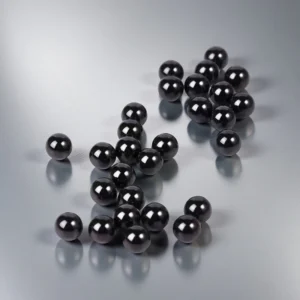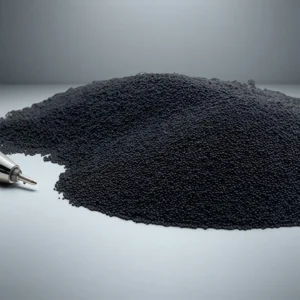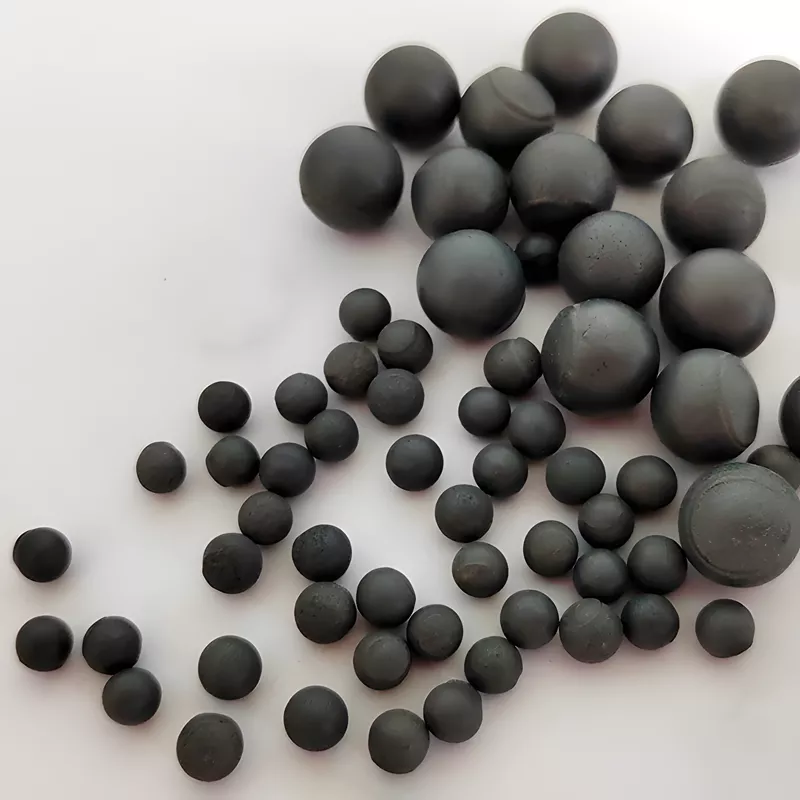
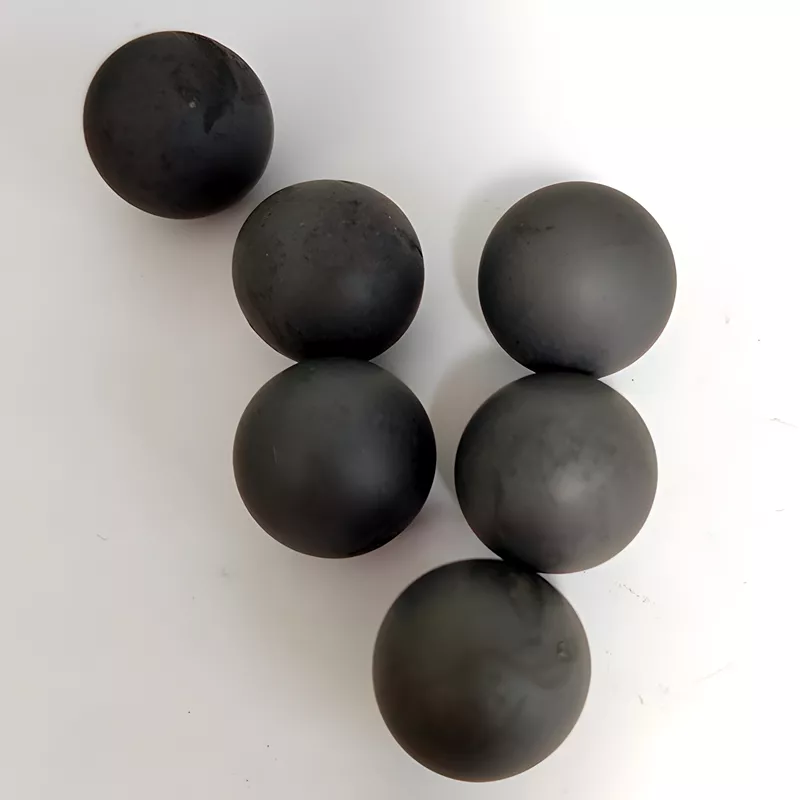
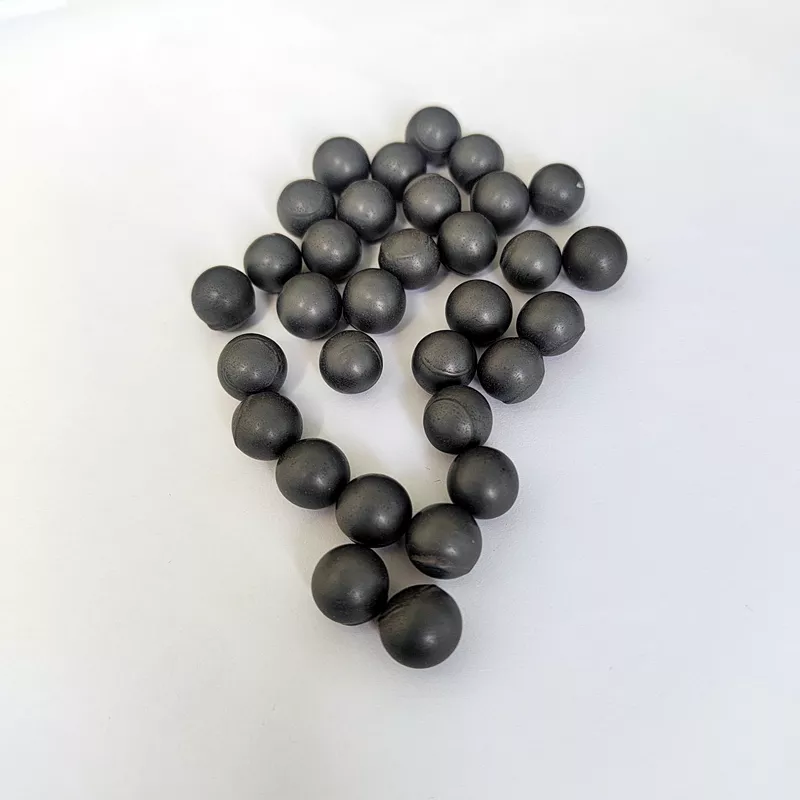
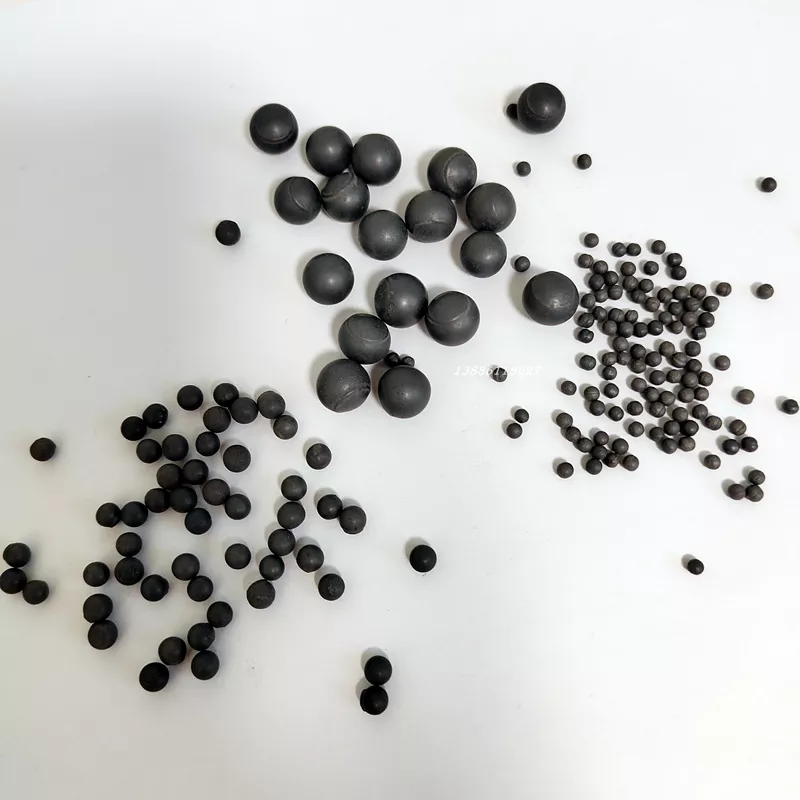
Impact-Stable Silicon Carbide Grinding Media Balls for High-Load Material Processing

Silicon Carbide Grinding Media Balls deliver performance advantages driven by controlled microstructure, predictable wear behavior, and reliable chemical stability across long-duration milling cycles. These characteristics support production environments where powder uniformity, material purity, and milling efficiency rely on quantifiable process control. The following features summarize the engineering attributes that enable consistent results in industries such as powder metallurgy, battery materials, and ceramic powder manufacturing.

Catalogue No. AT-SIC-Q1001
Material Silicon Carbide (SSiC / RBSiC)
Hardness Mohs ~9.5 / Vickers 22–25 GPa
Porosity Level <0.1% closed-cell microstructure
Thermal Stability Continuous 1,200–1,400°C
24H Standard Dispatch
Small Batch Support OEM
Factory Direct
Expert Engineering Support

ADCERAX® Silicon Carbide Grinding Media Balls are engineered for demanding industrial milling environments where stable hardness, chemical inertness, and consistent impact behavior directly influence powder quality. Their dense SSiC and RBSiC microstructures support reliable energy transfer during extended grinding cycles, allowing manufacturers to maintain predictable particle-size evolution across different process conditions. These characteristics make the media well suited for sectors such as powder metallurgy, lithium battery materials, and advanced ceramics, where controlled contamination levels and long operational stability are essential for repeatable production performance.

High-Performance Engineering Features of Silicon Carbide Grinding Media Balls

  • Dense SSiC/RBSiC Matrix
    The media maintain a porosity level below 0.1%, allowing stable impact transfer during repeated milling collisions. This dense structure supports uniform load distribution, enabling consistent grinding efficiency under high-cycle milling conditions.
  • Strength Under Load
    Flexural strength values between 350–450 MPa allow the media to withstand repeated impact events without premature fracture. This mechanical stability reduces unplanned media loss and supports equipment uptime in demanding milling environments.
  • Spherical Geometry Preservation
    Roundness deviation contained within ≤0.10 mm helps maintain uniform collision forces across the milling chamber. This contributes to reliable PSD evolution, especially during high-energy planetary or attrition milling.
  • High Thermal Endurance
    Continuous service temperature capability up to 1,200–1,400°C enables stable operation in thermally intensive processes. This prevents phase instability and supports controlled heat transfer during temperature-sensitive milling tasks.
  • Low Wear Rate Performance
    Typical mass loss of ≤0.01–0.03% per 24-hour milling cycle minimizes contamination and supports long media service life. The stable wear curve allows more accurate forecasting of consumption rates and operational cost.

Technical Specifications of Silicon Carbide Grinding Media Balls

ADCERAX® Silicon Carbide Grinding Media Balls exhibit stable mechanical strength, controlled microstructure, and predictable chemical and thermal behavior suitable for high-intensity milling environments across powder metallurgy, battery materials, and advanced ceramic processing.

Property Specification
Material System SSiC or RBSiC
Porosity <0.1% closed-cell
Density Range 3.10–3.20 g/cm³
Grain Size 0.5–2 μm
Mohs Hardness ~9.5
Vickers Hardness 22–25 GPa
Flexural Strength 350–450 MPa
Compressive Strength 2000–2500 MPa
Wear Rate ≤0.01–0.03% mass loss per 24 h
Thermal Conductivity 90–120 W/m·K
Maximum Service Temperature 1200–1400°C
Chemical Resistance Inert to acids/alkalis/solvents
Electrical Conductivity Semiconducting SiC range
Microstructure Type High-density sintered matrix

Dimensions of Silicon Carbide Grinding Media Balls

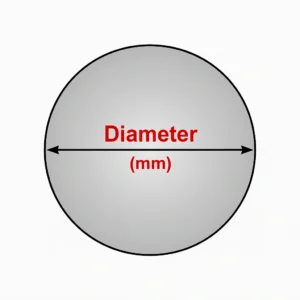
size for beads

Silicon Carbide Grinding Media Balls
Model No. Diameter(mm)
AT-SIC-Q1001 0.5-0.7
AT-SIC-Q1002 0.8
AT-SIC-Q1003 1
AT-SIC-Q1005 2
AT-SIC-Q1010 5
AT-SIC-Q1017 8.5
AT-SIC-Q1020 10
AT-SIC-Q1021 11
AT-SIC-Q1023 12
AT-SIC-Q1025 13
AT-SIC-Q1027 14
AT-SIC-Q1029 15
AT-SIC-Q1032 16
AT-SIC-Q1034 17
AT-SIC-Q1036 18
AT-SIC-Q1038 19
AT-SIC-Q1041 20
AT-SIC-Q1043 22
AT-SIC-Q1046 25
AT-SIC-Q1048 26
AT-SIC-Q1050 27
AT-SIC-Q1051 28
AT-SIC-Q1053 29
AT-SIC-Q1054 30
AT-SIC-Q1057 32
AT-SIC-Q1061 38
AT-SIC-Q1063 40
AT-SIC-Q1065 42
AT-SIC-Q1070 50
AT-SIC-Q1074 60
AT-SIC-Q1076 70
AT-SIC-Q1077 75
AT-SIC-Q1084 90
AT-SIC-Q1085 100

Packaging & Logistics Assurance for Silicon Carbide Grinding Media Balls

Silicon Carbide Grinding Media Balls are packed through a controlled multi-stage process to protect their density stability and surface integrity during global transport. Bulk media are first sealed in moisture-shielded inner bags before being transferred into reinforced metal drums or wooden crates for enhanced mechanical protection. Final palletization ensures secure stacking strength, enabling safe handling from factory dispatch to overseas industrial facilities.

ADCERAX® Packaging of Silicon Carbide Grinding Media Balls

ADCERAX® Silicon Carbide Grinding Media Balls Address Critical Milling Challenges in Industrial Powder Processing

The performance of Silicon Carbide Grinding Media Balls becomes decisive in industries where powder homogeneity, impurity control, and energy-efficient milling directly affect downstream yield. ADCERAX® focuses on applications where material hardness, microstructural purity, and stable impact distribution resolve quantifiable production bottlenecks. The following application-specific scenarios illustrate how engineered SiC media support measurable improvements in milling reliability and powder consistency.

  • Silicon Carbide Grinding Media Balls in Hardmetal Carbide Powder Refining

    ✅Key Advantages

    1. Controlled Binder-Safe Impact Behavior

    ADCERAX® media maintain a dense microstructure with <0.1% closed porosity, preventing oxygen entrapment during WC or TiC grinding. This stabilizes binder chemistry across long milling cycles by eliminating micro-void–induced oxidation spikes.

    2. Ultra-Low Wear Influence on PSD Stability

    A verified wear rate of ≤0.03% per 24 h supports predictable particle-size evolution during extended refining campaigns. This prevents the PSD drift commonly triggered by alumina media shedding or steel abrasion artifacts.

    3. High-Load Fracture Consistency at Elevated Stress

    Flexural strength in the 350–450 MPa range allows the balls to withstand repeated high-energy impacts without forming micro-cracks. This ensures uniform energy transfer across WC/CrC feedstocks that demand aggressive breakage forces.

    ✅ ️Problem Solved

    Hardmetal plants refining WC-Co blends often report inconsistent powder purity due to metallic shedding from steel media and elevated alumina residue from oxide balls. These effects typically create measurable variation in binder distribution and contribute to PSD deviation during long mill cycles. In several benchmarking runs, operators observed micro-fracture accumulation in conventional media after extended processing, which disrupted impact uniformity and complicated sintering curve reproducibility. By adopting ADCERAX® Silicon Carbide Grinding Media Balls, production lines achieved stable PSD development and significantly reduced contamination drift, supported by the media’s low wear rate and dense microstructure. This enabled more repeatable carbide powder refinement across multiple campaign cycles.

  • Silicon Carbide Grinding Media Balls for High-Purity Battery Cathode/Anode Powder Conditioning

    ✅Key Advantages

    1. Ion-Leaching Stability for Sensitive Cathode Systems

    ADCERAX® SiC media exhibit inert chemical behavior with negligible Fe/Cr/Ni release, preventing composition shifts in NMC, NCA, or LFP powders. This stability supports consistent electrochemical properties by maintaining strict impurity thresholds across repeated milling batches.

    2. Viscous-Slurry Friction Control

    The optimized surface finish with Ra engineered for controlled shear interaction minimizes abrasive shedding under high-viscosity slurry loads. This prevents irregular milling energy transfer that can cause PSD divergence in dense electrode formulations.

    3. Temperature-Consistent Mechanical Endurance

    Mechanical integrity is retained up to 1,400°C, enabling uniform milling force distribution even in thermally assisted refinement stages. This supports multi-step wet and dry processing without structural degradation that typically affects oxide-based media.

    ✅ ️Problem Solved

    Lithium-ion cathode and anode manufacturers frequently record PSD instability when oxide media degrade or react with aggressive slurry additives, causing measurable batch-to-batch variability. These shifts complicate coating uniformity and extend optimization loops needed to stabilize electrode rheology. During high-viscosity operations, traditional media often show accelerated wear, increasing contamination risk and reducing control over morphology evolution. ADCERAX® Silicon Carbide Grinding Media Balls maintain a consistent wear profile and eliminate reactive ion transfer, resulting in more stable PSD curves across multi-stage milling sequences. Plants using SiC media reported significantly reduced variability in powder conditioning outcomes, supporting tighter process windows for high-purity electrode materials.

  • Silicon Carbide Grinding Media Balls in Advanced Ceramic Oxide and Non-Oxide Powder Preparation

    ✅Key Advantages

    1. Phase-Pure Milling for Sensitive Ceramic Systems

    ADCERAX® SiC media maintain impurity transfer at negligible levels, preventing phase drift during refinement of alumina, zirconia, and silicon nitride powders. This is essential for applications requiring strict compositional control before high-temperature densification.

    2. Nano-Scale Particle Integrity Control

    Wear rates of ≤0.03% ensure minimal foreign-particle introduction as powders shift toward nano-scale topologies. This preserves morphology uniformity and protects against defects that propagate into final sintered structures.

    3. High-Hardness Compatibility Under Intensive Load

    The inherent Mohs hardness of ~9.5 ensures that collision forces are absorbed without premature fatigue in high-hardness ceramic milling. This supports repeatable milling kinetics even in multi-hour or multi-day ceramic powder campaigns.

    ✅ ️Problem Solved

    Producers of advanced ceramic powders often struggle with residue accumulation from conventional media, which disrupts phase balance and complicates sintering outcomes. Slight contamination can shift densification behavior, affect translucency, or reduce mechanical consistency in final ceramic components. As refinement approaches nano-scale, the sensitivity to micro-contaminants increases, and fatigue in less robust media accelerates these deviations. ADCERAX® Silicon Carbide Grinding Media Balls provide a chemically inert, mechanically stable solution that maintains consistent morphology and phase purity throughout demanding milling schedules. This enables ceramic powder producers to achieve more predictable sintering response and improved part-to-part material uniformity.

ADCERAX® Silicon Carbide Grinding Media Balls User Guide for Stable, Safe, and Predictable Milling Performance

The proper use of Silicon Carbide Grinding Media Balls directly influences milling efficiency, powder purity, and overall operational stability across wet and dry grinding systems. This guide summarizes key handling, preparation, and operational considerations that help users maintain consistent milling outcomes while preserving media integrity through repeated process cycles. Each section provides practical, engineering-oriented instructions designed for high-value powder processing environments.

  • Pre-Operation Preparation

    1. Media Conditioning Before Loading
    Media should be rinsed with process-compatible solvents to remove airborne particulates prior to use. This prevents early contamination during the initial impact cycles of WC-, ceramic-, or battery-material milling. A controlled pre-clean step helps maintain stable powder chemistry from the start of production.
    2. Verification of Media Integrity
    Operators should visually inspect for chips or surface anomalies before charging the mill. Even minor defects can propagate under high-energy milling and disrupt impact uniformity across the chamber. Consistent inspection enhances long-cycle operational reliability.
    3. Pre-Mixing With Bulk Material
    A short pre-mix run at low RPM helps distribute balls evenly, minimizing localized stress during ramp-up. This ensures predictable ball trajectories and reduces the risk of initial energy spikes that affect PSD formation. Controlled warm-up improves downstream stability.

  • Best Practices During Active Milling Operations

    1. Maintaining Balanced Media Load
    A correct fill ratio helps preserve consistent collision behavior and avoids dead-zone formation inside the mill. Overloading restricts movement, while underloading increases fracture risk due to excessive free-fall energy. Keeping the ratio stable supports predictable milling kinetics.
    2. Monitoring Operating Temperature
    Milling temperature should be observed periodically to maintain controlled interaction between slurry, material, and media. Excess heat can accelerate binder oxidation or modify surface morphology of ceramic powders. Stable temperature supports repeatable particle refinement.
    3. Regular Process Window Checks
    Operators should review RPM, viscosity, and slurry turnover rates to keep milling conditions within expected ranges. Deviations in these parameters often signal early wear or process imbalance. Proactive checks improve batch-to-batch consistency.

  • Post-Milling Handling and Media Maintenance

    1. Separation and Initial Cleaning
    After each campaign, the media should be separated promptly and rinsed using compatible solvents or deionized water. This prevents slurry residue from hardening onto the surface and altering surface friction behavior during future runs. Timely cleaning extends usable life.
    2. Drying and Surface Preservation
    Media should be dried in a low-humidity environment to prevent moisture absorption into powder residues. Controlled drying maintains surface uniformity and reduces clumping during the next operational cycle. Proper preservation supports multi-campaign stability.
    3. Inspection Before Storage
    Recording any visual wear trends helps track long-term mechanical behavior. This allows engineering teams to replace media groups systematically instead of reactively. A structured inspection log increases forecasting accuracy for upcoming milling campaigns.

  • Storage, Safety, and Operational Risk Control

    1. Controlled Storage Conditions
    Silicon Carbide Grinding Media Balls should be stored in sealed containers within a dry, temperature-stable area. This prevents humidity-induced powder adhesion and protects surface cleanliness between production cycles. Proper storage contributes to predictable future milling results.
    2. Safe Handling Procedures
    Due to their density, handling should follow weight-distribution safety practices to avoid operator strain. Containers must be secured to prevent accidental rolling or impact. Adhering to these procedures reduces operational risk and protects media integrity.
    3. Inventory Rotation for Process Consistency
    Using a first-in-first-out rotation avoids mixing media with significantly different wear histories. Grouping by usage hours helps maintain uniform impact characteristics across the entire milling load. This enhances process repeatability over long-term production.

Technical FAQs Addressing Core Engineering Challenges with ADCERAX® SiC Bearing Balls

  1. Q1: How do Silicon Carbide Grinding Media Balls control contamination in high-purity powder systems?

    A1: Silicon Carbide Grinding Media Balls use a fully dense SSiC or RBSiC microstructure that prevents ionic transfer during prolonged milling. This eliminates Fe, Cr, or Ni release that normally occurs with steel or oxide media. Their inertness helps maintain precise powder chemistry for battery cathode, carbide, and ceramic systems. As a result, downstream sintering or coating processes stay within their controlled composition windows.

  2. Q2: Why do Silicon Carbide Grinding Media Balls provide more stable PSD evolution during long milling campaigns?

    A2: The extremely low wear rate and controlled grain size of 0.5–2 μm ensure that the media maintain shape throughout extended cycles. This prevents random impact variance that usually shifts PSD curves in long campaigns. Consistent impact energy leads to predictable particle refinement kinetics. Users typically observe tighter PSD clusters and fewer deviations between batches.

  3. Q3: How do Silicon Carbide Grinding Media Balls prevent micro-fracture during high-energy milling?

    A3: Their 350–450 MPa flexural strength provides reliable resistance against repeated high-load collisions common in carbide and ceramic milling. This durability suppresses crack propagation that destabilizes impact flow in oxide or alumina media. Stable integrity supports uniform energy transfer, especially in planetary and attritor mills. This improves process control over multi-hour and multi-day runs.

  4. Q4: What makes Silicon Carbide Grinding Media Balls suitable for viscous slurry milling in battery material processing?

    A4: The engineered surface morphology delivers stable friction behavior under high-viscosity wet conditions. Oxide balls often undergo accelerated abrasion when slurry density increases, but SiC media maintain surface stability. This avoids PSD scatter caused by sudden wear events during slurry thickening. The resulting milling profile stays consistent across multiple coating-material batches.

  5. Q5: How do Silicon Carbide Grinding Media Balls maintain powder purity for advanced ceramic systems?

    A5: Their chemically inert microstructure prevents the surface reactions that commonly introduce cation residues into zirconia, alumina, or silicon nitride powders. This protects phase stability during high-energy grinding. Users experience more consistent densification behavior during sintering. Such purity control is essential for ceramics requiring tight microstructural tolerances.

Engineering Feedback on ADCERAX® Silicon Carbide Grinding Media Balls from Industrial Milling Teams

  • ⭐️⭐️⭐️⭐️⭐️

    “The Silicon Carbide Grinding Media Balls demonstrated exceptionally stable behavior in our WC-Co refining line, especially during extended high-energy campaigns. Their consistent low wear profile gave us predictable PSD evolution without the drift we usually see from oxide media. We also observed zero metallic contamination across multiple batches, which simplified binder adjustment. ADCERAX® provided a dependable milling solution that integrated smoothly with our existing operating window.”
    M. Roberts, Senior Process Engineer, HMG Materials

  • ⭐️⭐️⭐️⭐️⭐️

    “During NMC and LFP conditioning trials, the Silicon Carbide Grinding Media Balls helped maintain tight PSD control despite fluctuating slurry viscosities. The media’s inert interaction with electrolyte-sensitive powders prevented ionic interference that previously forced repeated re-validation cycles. Milling uniformity remained unchanged across all stages, allowing us to shorten development loops for electrode formulations. ADCERAX® delivered measurable improvements to our powder stability studies.”
    L. Martinez, Electrode Characterization Lead, EMRF Lab

  • ⭐️⭐️⭐️⭐️⭐️

    “Our alumina and zirconia preparation lines benefited from the phase-purity safe milling provided by the Silicon Carbide Grinding Media Balls. Even at high hardness and long duty cycles, the media maintained fracture-resistant impact integrity, which prevented foreign-particle introduction during nano-scale refinement. We recorded more consistent sintering responses after switching away from alumina media. ADCERAX® offered a level of stability that aligned well with our process-control objectives.”
    T. Nakamura, Materials Development Engineer, ACPP

  • ⭐️⭐️⭐️⭐️⭐️

    “Integrating the Silicon Carbide Grinding Media Balls into our alloy-powder milling workflow eliminated the variability caused by inconsistent media degradation. Their uniform density profile supported even impact distribution across large-volume batches, which improved repeatability between production cycles. The reduction in contamination events was immediately noticeable, especially in high-purity nickel and cobalt systems. ADCERAX® proved to be a robust fit for our continuous milling operations.”
    J. Thompson, Process Engineering Supervisor, MCP Systems

customize size

Customization Services for SiC Grinding Media Balls

ADCERAX® Silicon Carbide Grinding Media Balls can be tailored through controlled material engineering, microstructure adjustments, and process-specific configuration options to align with diverse powder-processing requirements across carbide, battery, and advanced ceramic systems.

Material-System & Microstructure Customization

Material and microstructural adjustments are enabled to support targeted milling behavior across varied powder chemistries and energy profiles.

  • Material Grade Selection
    Chosen to match energy transfer behavior

  • Density Profile Adjustment
    Tuned for controlled impact momentum

  • Microstructure Optimization
    Configured for predictable wear stability

  • Surface Morphology Control
    Set to maintain consistent friction response

Application-Focused Milling Configuration Options

Operational parameters are refined to suit different mill types, powder hardness levels, and batch-processing strategies.

  • Media Size Arrangement
    Selected to support staged refinement curves

  • Ball Distribution Design
    Structured to control collision uniformity

  • Atmosphere Compatibility Setup
    Prepared to meet specific processing atmospheres

  • Packaging & Handling Scheme
    Defined to preserve media integrity in transit

Related Products

ADCERAX - Your Trusted Advanced Ceramics Manufacturing Partner

Direct factory manufacturing with comprehensive ceramic materials expertise and global supply capabilities

Direct Factory Manufacturing

China-based ceramic materials production facility with state-of-the-art equipment

Engineering Team

Experienced professionals in advanced ceramics applications and custom design

Quality Control

Strict quality control standards for technical ceramics manufacturing and quality management

Global Supply Chain

Serving customers worldwide with technical ceramics and rapid response

24/7 Technical Support

Round-the-clock support for ceramic components inquiries and technical assistance

500+ Satisfied Customers

Trusted by global customers for advanced ceramic materials and precision components

Get in touch with us

Our team will be happy to respond to you in less than 24 hours.

Adcerax's factory

Quick Quotation

*Our team will answer your inquiries within 24 hours.

*Your information will be kept strictly confidential.

Ready to Solve Your Engineering Challenge?

Partner with ADCERAX for reliable, high-performance advanced ceramic solutions. Our engineers are ready to discuss your project.

E-mail

info@adcerax.com

Phone

+(86) 0731-74427743 | WhatsApp: +(86) 19311583352

Response Time

Within 24 hours

Quick Quote

The more details you provide, the faster we can quote.

*We respond within 24 hours. All inquiries are confidential.

Download Catalog

Get Your Custom Sulution

The more details you provide, the faster we can respond.

customize size

*We respond within 24 hours. All inquiries are confidential.

Download Catalog