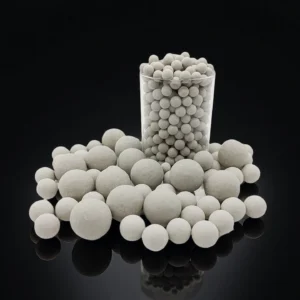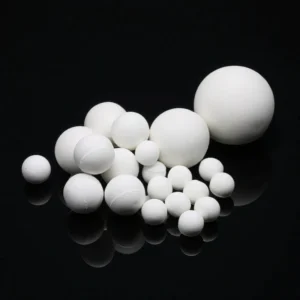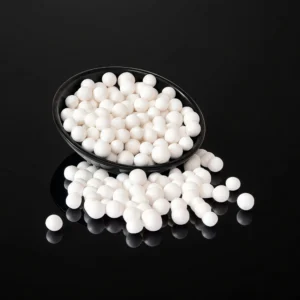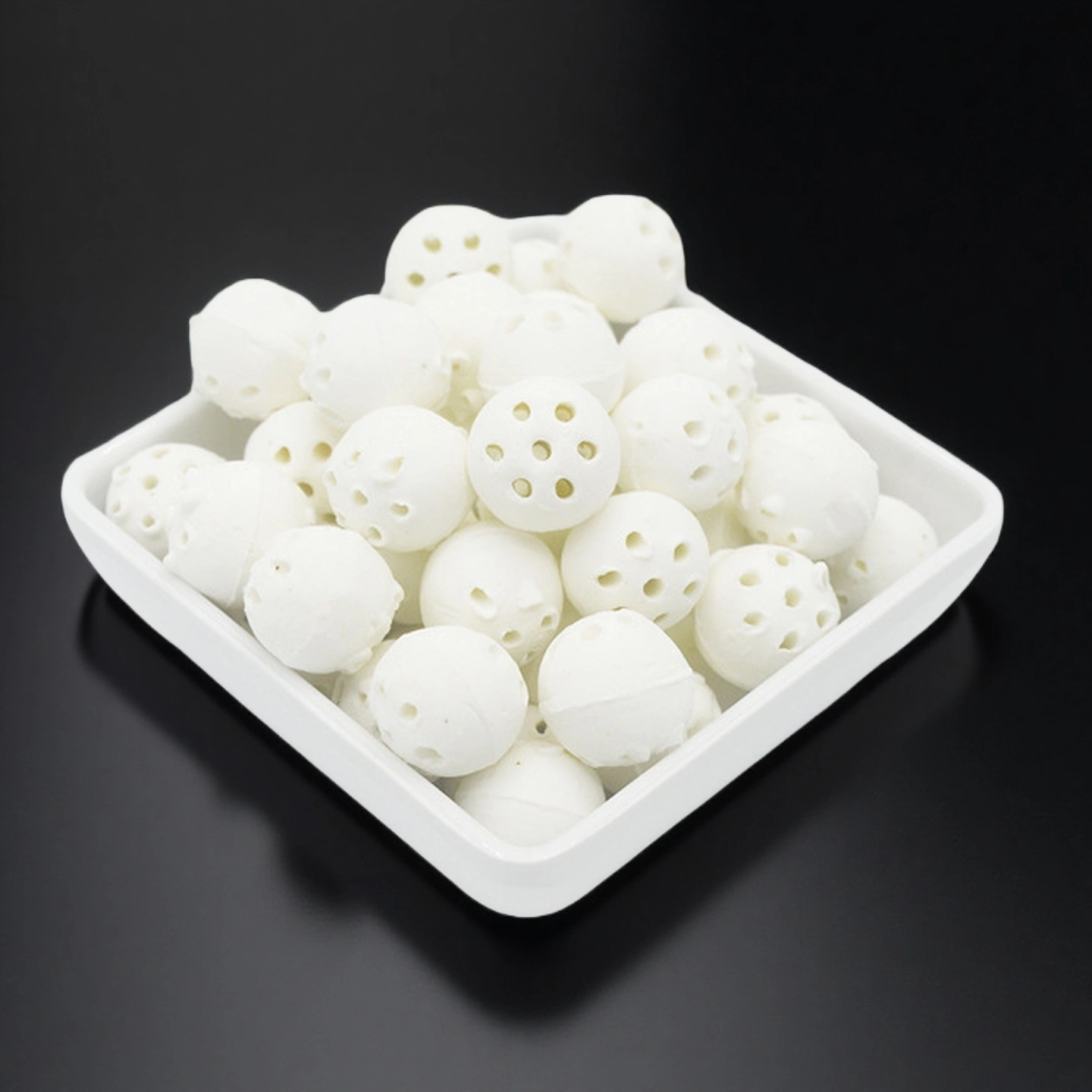
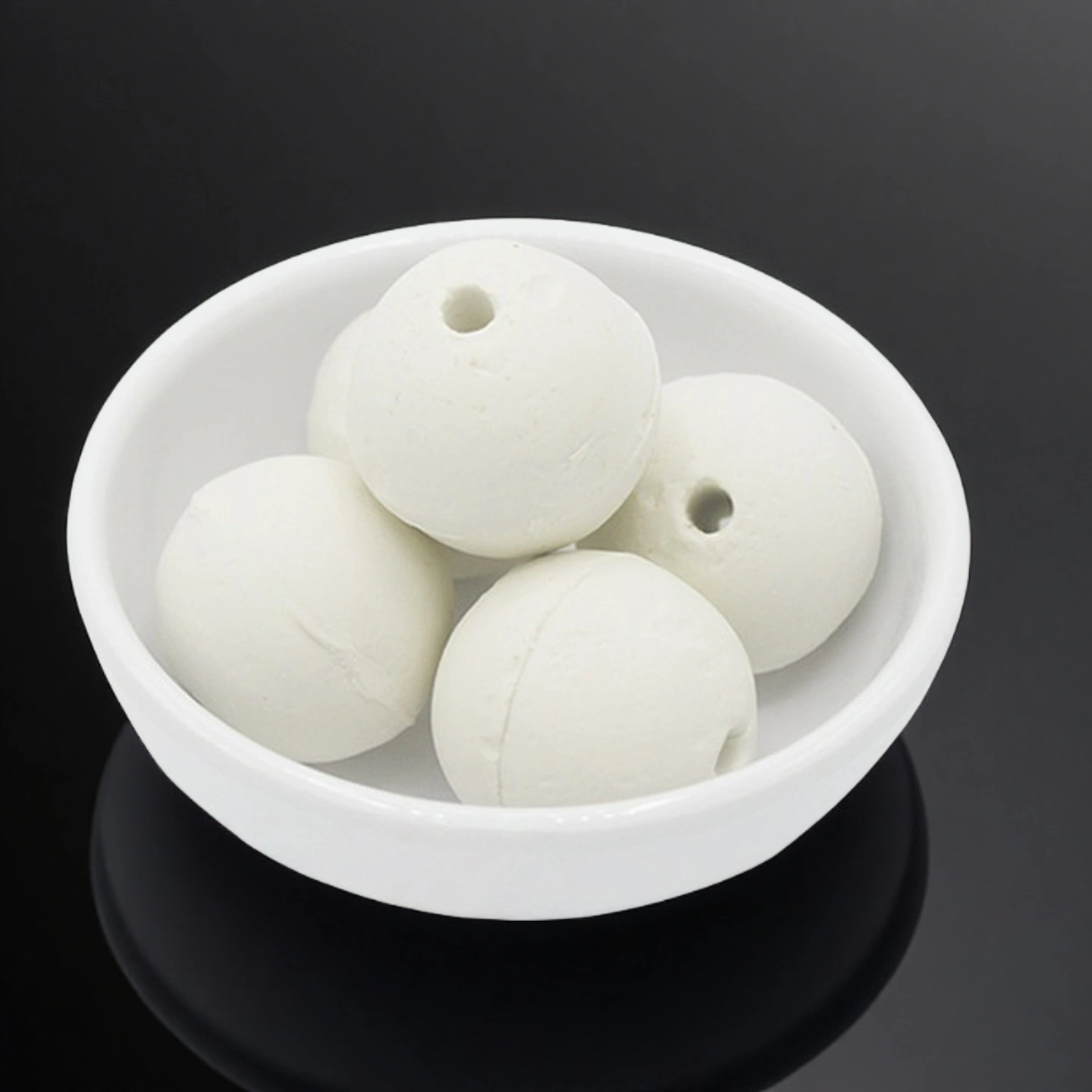
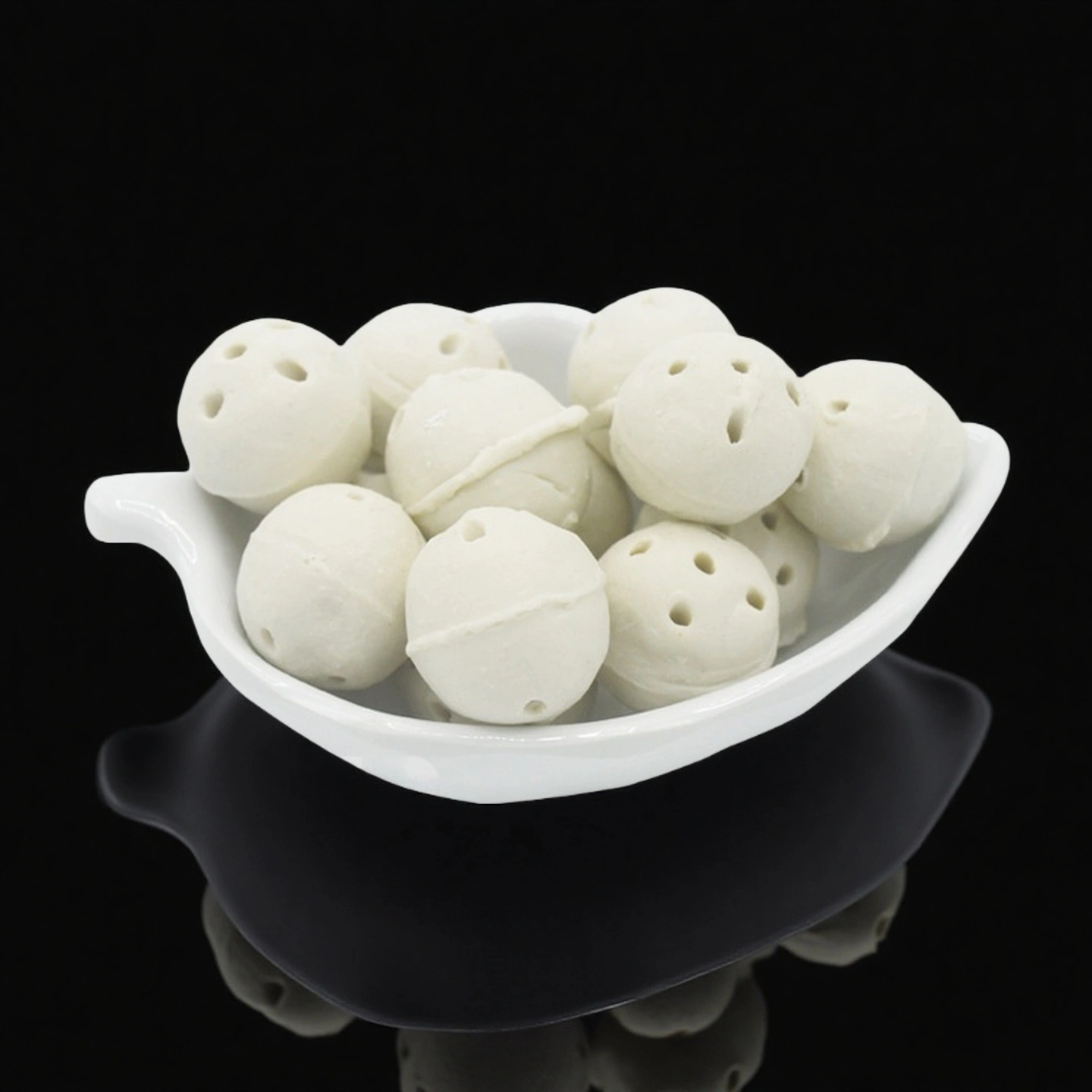
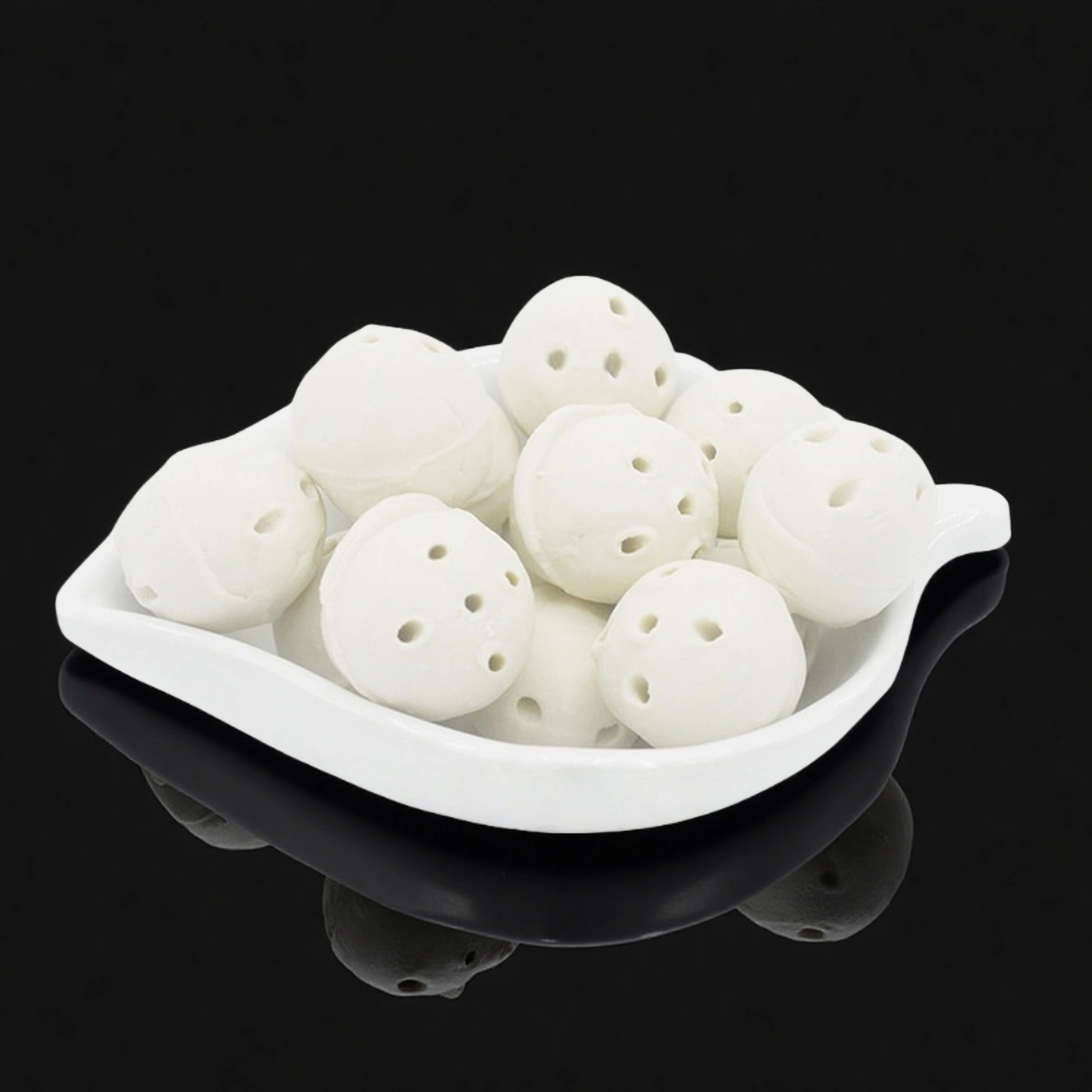
Alumina ceramic multi-bore beads are open-channel support media designed for catalyst and adsorbent beds in fixed-bed hydrotreating, hydrocracking, reforming, shift and gas-treatment reactors. Their spherical multi-channel geometry increases open flow area, helping reduce bed pressure drop and improve fluid distribution while maintaining mechanical support and thermal stability.
Key Benefits of Alumina Ceramic Multi-Bore Beads
- Lower pressure-drop potential: Open channels increase voidage and provide more direct flow paths, helping reduce resistance across the support layer.
- Stable bed support: The spherical body and engineered ribs distribute bed loads while preserving open flow area.
- Thermal and chemical stability: Alumina supports high-temperature operation and resistance to many process environments; final compatibility depends on the material grade and process chemistry.
- Configurable geometry: Bead size, hole count, bore diameter, rib thickness and tolerances can be reviewed against the support grid, catalyst size and hydraulic requirements.
How to Select a Multi-Bore Configuration
Hole count is only one part of the support-media design. Bead diameter, bore size, rib thickness, open area, support-grid opening, bed load and operating conditions must be reviewed together.
| Hole Pattern | Hydraulic Tendency | Structural Tendency | Typical Design Objective |
|---|---|---|---|
| 3-Hole | Lower open-area potential | More ceramic between bores | Prioritize mechanical support under higher bed loads |
| 5-Hole | Balanced flow-path potential | Balanced rib structure | Combine bed support with improved flow distribution |
| 7-Hole | Higher open-area potential | Requires closer rib-thickness review | Support pressure-drop-sensitive fixed-bed designs |
| 9-Hole | Maximum open-area potential | Requires mechanical qualification | Prioritize flow capacity where bed loads permit |
| Single Open-Hole | One direct central channel | Simple, robust geometry | Transition layers or special support-grid arrangements |
Engineering note: Do not select the configuration by hole count alone. ADCERAX reviews reactor type, support-layer function, bead size, bore diameter, rib thickness, catalyst or adsorbent size, grid opening, bed load and target hydraulics before quotation.
Multi-Bore Beads vs Solid Support Balls — Which Fits Your Bed Design?
| Decision Factor | Multi-Bore Beads | Solid Support Balls |
|---|---|---|
| Hydraulic behavior | Internal channels can increase open flow area and help reduce flow resistance | Flow passes through the interstitial voids between packed balls |
| Mechanical support | Load capacity depends strongly on hole layout, rib thickness, bead size and material grade | Uninterrupted solid geometry generally provides a simpler load-bearing structure |
| Flow distribution | Multi-channel geometry may support more direct flow paths | Conventional packing provides established interstitial flow paths |
| Design flexibility | Hole count, bore diameter, rib thickness and bead size can be customized | Simpler geometry with fewer design variables |
| Manufacturing complexity | More complex geometry requires closer dimensional and mechanical review | Generally easier to manufacture and specify |
| Typical fit | Hydraulically constrained beds where the mechanical margin has been verified | Heavy-load or conventional support layers that already meet hydraulic targets |
Consider Multi-Bore Beads When
- The existing support layer contributes significantly to bed pressure drop.
- Additional open flow area is required by the process design.
- Bead ribs and hole geometry can be qualified for the expected bed load.
- Reactor calculations or comparative testing confirm a hydraulic benefit.
Consider Solid Support Balls When
- Mechanical or impact loading is the primary design concern.
- The conventional support layer already meets pressure-drop targets.
- Simple geometry and established loading practice are preferred.
- No verified hydraulic advantage has been demonstrated for a multi-bore design.
Engineering note: Multi-bore beads are not a universal drop-in upgrade. ADCERAX reviews bead size, hole geometry, rib thickness, support-grid opening, catalyst or adsorbent size, bed load and operating conditions before recommending either configuration.
Alumina Ceramic Multi-Bore Beads Properties
| Item | Ordinary Porcelain Ball | 23–30% Al₂O₃ Ceramic Ball | Medium-Alumina Ceramic Ball | High-Alumina Ceramic Ball | 99 High-Alumina Ceramic Ball |
| Al₂O₃ + SiO₂ (%) | > 93 | > 92 | > 93 | > 94 | > 99 |
| Al₂O₃ (%) | 17–23 | 23–30 | 40–75 | 85–97 | 99 |
| Fe₂O₃ (%) | < 1 | < 1 | < 1 | < 1 | 0.2 |
| CaO (%) | < 0.5 | < 1.5 | < 1.5 | < 0.5 | 0.2 |
| MgO (%) | < 0.5 | < 1.5 | < 0.5 | < 0.5 | 0.1 |
| K₂O + Na₂O (%) | < 4 | < 4 | < 3.5 | < 4 | > 0.5 |
| TiO₂ (%) | < 0.5 | < 0.5 | < 0.1 | < 0.1 | 0.5 |
| Leachable Fe₂O₃ (free) (%) | < 0.1 | < 0.1 | < 0.005 | < 0.001 | — |
| Water Absorption (%) | < 0.5 | < 0.5 | < 1 | < 2 | 2–5 |
| Particle Density (g/cm³) | 2.3–2.4 | 2.3–2.4 | 2.6–2.9 | 3.4 | 3.2–3.6 |
| Max. Operating Temperature (°C) | 980 | 980 | 1450 | 1580 | 1580 |
| Mohs Hardness | > 6.5 | > 7 | > 7 | > 7.5 | > 7.5 |
| φ6 | > 0.5 | > 0.5 | > 0.5 | > 0.6 | > 1 |
| φ25 | > 6.5 | > 6.5 | > 4.9 | > 55 | > 8 |
| φ38 | > 8.9 | > 8.9 | > 5.5 | > 54 | > 8 |
| φ50 | > 9 | > 9.8 | > 6.5 | > 7.8 | > 15 |
Alumina Multi Hole Beads Specifications
Type 1: open-hole alumina support balls

| Item | Diameter(mm) |
| AT-YM-DK1001 | 6 |
| AT-YM-DK1002 | 8 |
| AT-YM-DK1003 | 10 |
| AT-YM-DK1004 | 13 |
| AT-YM-DK1005 | 15 |
| AT-YM-DK1006 | 19 |
| AT-YM-DK1007 | 25 |
| AT-YM-DK1008 | 38 |
| AT-YM-DK1009 | 50 |
Type 2: alumina ceramic 5 holes bead
| Item | Diameter(mm) |
| AT-YM-DK1001 | 6 |
| AT-YM-DK1002 | 8 |
| AT-YM-DK1003 | 10 |
| AT-YM-DK1004 | 13 |
| AT-YM-DK1005 | 15 |
| AT-YM-DK1006 | 19 |
| AT-YM-DK1007 | 25 |
| AT-YM-DK1008 | 38 |
| AT-YM-DK1009 | 50 |
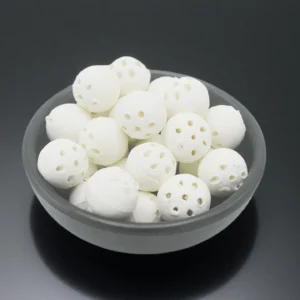
Type 3: alumina ceramic 7 holes bead
| Item | Diameter(mm) |
| AT-YM-DK1001 | 6 |
| AT-YM-DK1002 | 8 |
| AT-YM-DK1003 | 10 |
| AT-YM-DK1004 | 13 |
| AT-YM-DK1005 | 15 |
| AT-YM-DK1006 | 19 |
| AT-YM-DK1007 | 25 |
| AT-YM-DK1008 | 38 |
| AT-YM-DK1009 | 50 |
Recommended Bead Size by Application
| Reactor Type | Bottom Support Layer | Transition Layer | Top Hold-Down |
|---|---|---|---|
| Hydrotreating (small catalyst) | 25-50mm | 13- 19 mm | 6-10mm |
| Hydrocracking | 38- 50 mm | 19- 25 mm | 10-13mm |
| Reforming | 25- 38 mm | 13- 19 mm | 6-10mm |
| CO Shift / Ammonia | 25-38mm | 15- 19 mm | 8-13mm |
| Adsorbent Beds (Mole Sieve) | 19- 25 mm | 10- 15 mm | 6-8mm |
Note: Final sizing depends on catalyst particle size, grid opening, and bed design. Contact engineering for detailed recommendations.
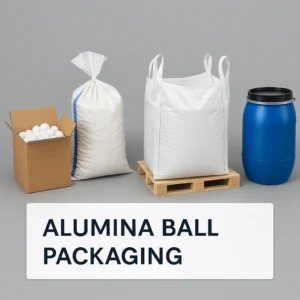
Alumina Ceramic Multi-Bore Beads Packaging
- High alumina grinding beads are packaged in 25 kg heavy-duty plastic bags, which are then placed inside 1-ton jumbo bags with inner waterproof liners. The jumbo bags are palletized and shrink-wrapped for secure, moisture-free international transport.