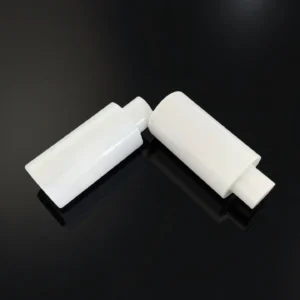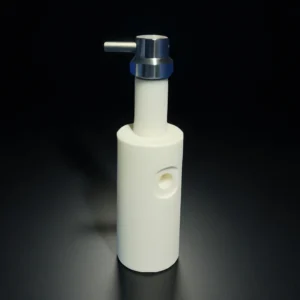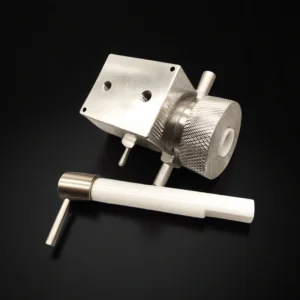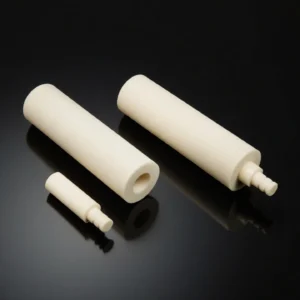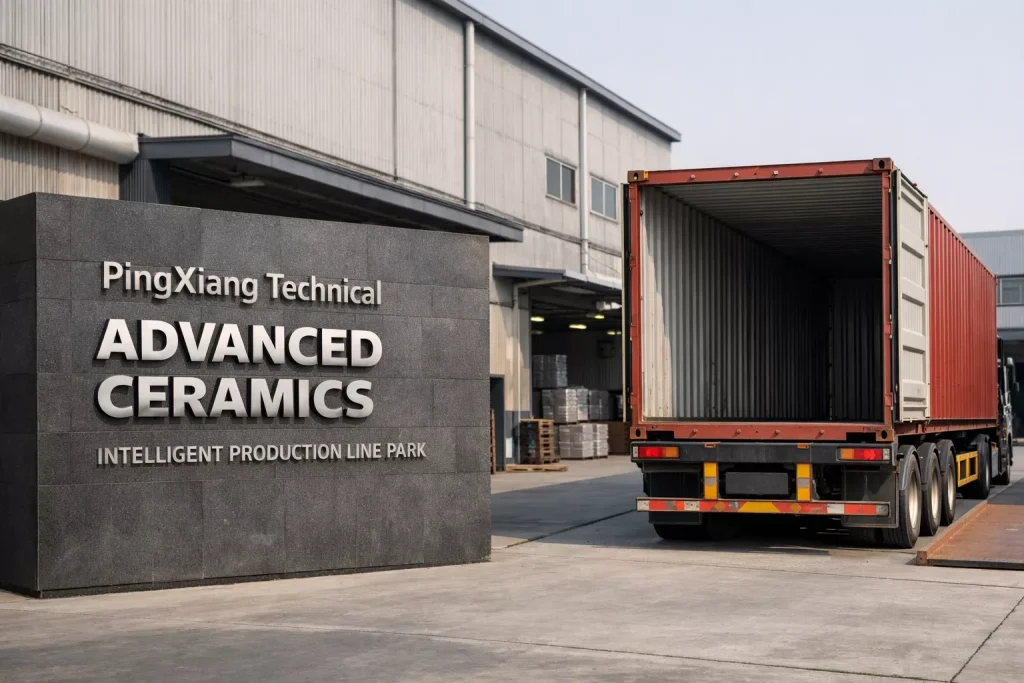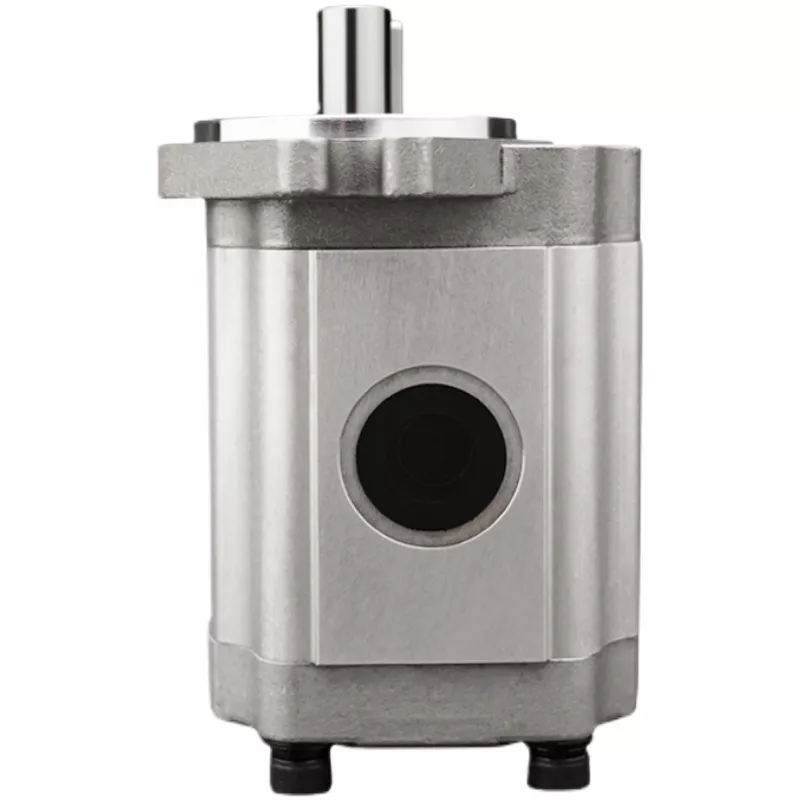
ADCERAX® Silicon Carbide Lined External Gear Pump is engineered for continuous transfer of corrosive fluids, high-viscosity media, and chemically active process streams across demanding industrial environments. Its silicon-carbide-lined chamber, SiC gear sets, and ceramic bearing interfaces maintain structural stability and volumetric accuracy even under thermal cycling, abrasive suspension loading, or aggressive acid-base exposure. This configuration supports long service lifecycles and reliable metering performance, enabling process engineers in chemical production, battery-material synthesis, polymer handling, and waste-acid recovery to operate with greater predictability and reduced system downtime.
Performance Characteristics of Silicon Carbide Lined External Gear Pump
- Reduced Contamination Through Non-Metallic Wetted Parts
SiC surfaces demonstrate 0% measurable metal ion leaching, which is critical for purity-sensitive chemical and pharmaceutical applications.
- Tooth Profile Stability Under Load
SiC gear sets retain >95% dimensional accuracy after long-duration operation with polymer melts exceeding 20,000 mPa·s.
- Superior Abrasion Resistance in Slurry and Crystallizing Streams
SSiC bearings show wear rates below 1/10 that of hardened steel in abrasive slurry environments.
- Consistent Volumetric Displacement
External gear geometry combined with SiC stiffness yields flow pulsation reductions of up to 40% compared to polymer-lined pumps.
- Full SiC Wet-End Protection
Laboratory tests on RBSiC components report >98% structural retention after prolonged exposure to H₂SO₄ and HCl, ensuring predictable performance in continuous circulation loops.
- Stable Performance in Halogenated and HF-Containing Media
Fluoride-bearing electrolytes show material loss under 0.005 mm/year when contacting SSiC surfaces, preventing degradation seen in metal-lined pumps.
- High Hardness and Wear Stability
Sintered silicon carbide bearings maintain hardness above 2,000 HV, sustaining long-term dimensional accuracy under abrasive solvent exposure. In comparison tests, the Horizontal Stainless Steel Canned Motor Pump with Silicon Carbide Bearings outperforms graphite-bearing pumps in lifecycle duration.
- Temperature-Stable Metering Performance
SiC maintains modulus under temperatures up to 250°C (seal-dependent), preventing thermal distortion of the pumping chamber.
Technical Specifications of Silicon Carbide Lined External Gear Pump
Silicon Carbide Lined External Gear Pump is engineered to maintain structural stability, chemical resistance, and metering precision under high-corrosion, high-temperature, and high-viscosity operating conditions. Its material behavior, mechanical response, and chemical compatibility allow reliable performance across demanding chemical, polymer, and environmental systems.
| Property |
Specification |
| SiC Hardness |
>2200 HV |
| Corrosion Rate in Mineral Acids |
<0.01 mm/year |
| Thermal Expansion Coefficient |
4.2×10⁻⁶ /K |
| Maximum Operational Temperature (Seal-Dependent) |
≤250°C |
| Chemical pH Compatibility Range |
0–14 |
| Dimensional Stability Retention After Acid Exposure |
>98% |
| Flow Repeatability Deviation |
<1% |
| Pulsation Reduction vs Polymer-Lined Pumps |
≈40% lower |
| Abrasive Wear Reduction vs Hardened Steel |
≈90% lower |
| Gear Tooth Accuracy Retention in High-Viscosity Media |
>95% |
| Bearing Friction Variance at Elevated Temperatures |
±5% |
Dimensions of Silicon Carbide Lined External Gear Pump

|
Silicon Carbide Lined External Gear Pump |
|
Model no. |
Size |
|
AT-LMH-01 |
Customized |
Packaging Process for the Silicon Carbide Lined External Gear Pump
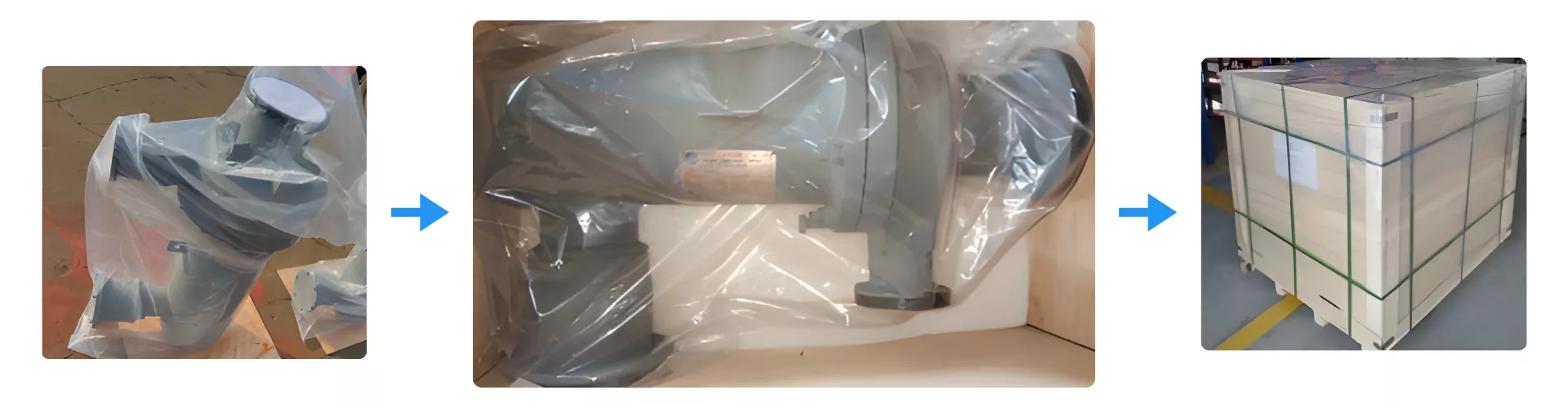
Silicon Carbide Lined External Gear Pump units are first sealed in protective plastic to prevent moisture or particulate intrusion during handling. Each pump is then secured within a reinforced wooden crate to stabilize the assembly and avoid impact-related movement in transit. The final palletized package ensures safe international shipment and maintains structural integrity throughout long-distance logistics.

ADCERAX® Silicon Carbide Lined External Gear Pump Is Engineered for the Real Challenges of Corrosive and High-Acidity Industrial Systems
Silicon Carbide Lined External Gear Pump from ADCERAX® is designed to withstand aggressive chemical environments, extreme acidity, and crystallizing corrosive cycles that rapidly destroy metal-based pumping systems. Its SiC-lined wet-end structure, ceramic gear sets, and dimensional stability enable stable performance where polymer-lined and metallic pumps fail, particularly in petrochemical, electrolyte production, and acid-recovery loops.
-
Silicon Carbide Lined External Gear Pump in High-Acidity Petrochemical Transfer Lines
✅Key Advantages
1. Corrosion-Stable SiC Wet End
Content: In continuous sulfuric and hydrochloric acid service, silicon carbide surfaces in the ADCERAX® Silicon Carbide Lined External Gear Pump exhibit measured corrosion rates below 0.01 mm per year, even under elevated temperature. Compared with 316L stainless steel pumps, field data show a reduction in wall-loss rate by more than 80%, which directly stabilizes long-term metering behavior in nitration and chlorination lines.
2. Metering Accuracy Maintained Over Long Cycles
Content: In high-acidity transfer loops, the pump maintains flow repeatability within 1% deviation over extended operating campaigns, despite changes in temperature and back-pressure. This is achieved through stiff SiC gear sets that preserve tooth clearance and limit slip growth to less than 0.5% across typical petrochemical operating windows.
3. Reduced Contamination of Intermediate Streams
Content: Non-metallic wetted parts prevent iron and nickel ion pickup, with laboratory testing confirming below-detection-level metal leaching into aromatic and acid media. Petrochemical users report a reduction of off-spec batches related to metallic contamination by more than 70% after switching to the silicon carbide lined configuration.
✅ ️Problem Solved
A nitration unit operating with concentrated acid and aromatic feeds experienced frequent pump changes as metal gear pumps suffered severe corrosion and clearance growth within less than one year of service. Flow meters indicated metering drift exceeding 5% over each operating campaign, and periodic iron contamination in intermediates required reprocessing. After installing ADCERAX® Silicon Carbide Lined External Gear Pump on the acid transfer line, corrosion measurements taken during scheduled inspections showed wall-loss trends below 0.01 mm per year, and flow deviation was reduced to approximately 1%. Over three operating years, the site recorded no corrosion-driven pump replacements on this duty and reported a significant drop in quality deviations linked to metallic contamination.
-
Silicon Carbide Lined External Gear Pump for HF-Bearing Electrolyte & Battery Precursor Production
✅Key Advantages
1. HF-Resistant SiC Wetted Geometry
Content: In electrolyte lines containing HF and fluorinated solvents, silicon carbide components in the ADCERAX® Silicon Carbide Lined External Gear Pump show material loss rates below 0.005 mm per year in independent corrosion testing. This performance contrasts with high-alloy metallic pumps, where comparable test conditions often yield more than tenfold higher surface degradation.
2. Stable Dosing for Electrolyte and Additive Blends
Content: The pump sustains dosing repeatability within 1% for electrolyte and additive streams, even when viscosity and temperature vary during formulation. Inline quality checks at battery-material plants have reported a reduction of conductivity and moisture specification deviations by over 50% after transitioning to SiC-lined gear metering stages.
3. Low Particle and Ion Contribution to Critical Fluids
Content: Non-reactive SiC wetted paths generate negligible particulate and ionic load, with particle counts in electrolyte downstream of the pump remaining within ISO 4406 15/12 or better, depending on upstream filtration. Test labs have also measured metal ion concentrations in treated electrolytes staying below typical ppb detection limits when ADCERAX® silicon carbide lined units are used.
✅ ️Problem Solved
A battery electrolyte plant handling HF-bearing LiPF₆ formulations experienced recurring pump failures due to corrosion of metallic wetted parts and swelling of polymer-lined components. Over several quarters, dosing accuracy errors of 3–4% were observed on additive injection lines, and quality investigations identified elevated metal ion and particulate levels correlated with pump wear events. After replacing these units with ADCERAX® Silicon Carbide Lined External Gear Pump, corrosion inspection coupons showed negligible measurable loss, and dosing deviation on critical additives tightened to around 1%. Subsequent production data indicated a marked reduction in electrolyte lots requiring rework and an improvement in downstream cell performance consistency attributed to cleaner and more stable metering.
-
Silicon Carbide Lined External Gear Pump in Waste-Acid Recovery and Alkali Regeneration Systems
✅Key Advantages
1. Abrasion-Resistant SiC for Crystallizing Streams
Content: In sulfuric and hydrochloric acid recovery loops carrying suspended solids and crystallizing salts, silicon carbide gears and linings in the ADCERAX® Silicon Carbide Lined External Gear Pump exhibit abrasion rates up to 90% lower than hardened steel in comparative slurry testing. This allows the pump to maintain internal clearances within design limits over several high-duty campaigns, even when solids concentrations fluctuate significantly.
2. Geometry Retention Under Combined Thermal and Chemical Load
Content: The SiC chamber and gear set maintain more than 98% dimensional retention after prolonged exposure to high-acidity, elevated temperature recirculation. This stability prevents the clearance growth and torque spikes typical in metal pumps, keeping drive loads within a few percent of baseline across multiple regeneration cycles.
3. Consistent Output in Variable-Compositions Loops
Content: In mixed acid and alkali regeneration circuits, the pump sustains volumetric output with flow variation typically held below 2% despite shifts in density, viscosity, and solids content. Such consistency reduces the need for frequent control loop tuning and contributes to more stable pH and concentration profiles in the overall recovery system.
✅ ️Problem Solved
An environmental treatment facility operating a waste-acid recovery plant reported frequent unplanned shutdowns in its recirculation loop due to rapid wear of metallic gear pumps exposed to hot, solids-laden acid. Over a single operating year, clearance-related performance loss triggered multiple emergency replacements, and torque instability alarms became common whenever crystallization increased. After upgrading to ADCERAX® Silicon Carbide Lined External Gear Pump on the main recovery circuit, monitoring showed torque behavior remaining within a narrow band around baseline, and wear measurements on SiC components after extended operation indicated only minor, non-critical surface change. The facility documented a substantial increase in loop uptime, with pump-related stoppages reduced to isolated planned inspections, and a more consistent regeneration profile thanks to stable, predictable recirculation flow.
ADCERAX® Silicon Carbide Lined External Gear Pump User Guide for Safe, Stable, and Predictable Operation
Silicon Carbide Lined External Gear Pump operation requires attention to media characteristics, startup behavior, and system interfaces to ensure long-term stability in corrosive, abrasive, or thermally variable environments. This user guide offers structured, engineering-oriented recommendations that help operators maintain predictable flow performance, protect wetted components, and reduce avoidable downtime across demanding industrial systems.
-
Pre-Operation Checks for Corrosive and High-Viscosity Media
1. Media compatibility verification
Before system startup, ensure the transferred medium aligns with the chemical stability range of SiC-lined chambers and ceramic gear surfaces. This prevents unexpected reactions that may affect chamber integrity during prolonged duty cycles. Confirming compatibility also supports sustained metering accuracy in concentrated acid or solvent environments.
2. System cleanliness confirmation
Inspect inlet lines, strainers, and pre-filters to ensure no particulates larger than the system’s designed tolerance are present. Clean system pathways contribute to consistent torque behavior and minimize premature wear of gear interfaces. Stable inlet conditions also improve volumetric uniformity during the first operating cycle.
3. Thermal balance assessment
Before initiating flow, evaluate temperature gradients between stored media, pump body, and connected piping. Controlled startup avoids thermal shock and maintains dimensional stability across SiC-ceramic interfaces. Establishing thermal equilibrium reduces stress concentration at bearings and minimizes startup oscillations.
-
Operation Guidelines for Maintaining Stable Flow and Metering Accuracy
1. Gradual flow initiation
Begin operation at reduced rotational speed to allow uniform fluid displacement across the chamber. This supports gear engagement stability and reduces cavitation risk in high-viscosity or foaming media. Controlled ramp-up also ensures predictable discharge pressure formation.
2. Monitoring of pressure and torque trends
Observe early-cycle pressure buildup and torque fluctuations to detect any abnormal drag patterns. Ceramic-lined interfaces maintain consistent clearances; however, early monitoring helps identify upstream blockages or downstream restrictions. Stable trends support long-cycle metering accuracy in critical dosing applications.
3. Flow stability validation
Confirm consistent discharge behavior after reaching operational RPM. Continuous evaluation of pulsation, vibration, or noise changes allows early identification of media crystallization or suspended solids accumulation. Validating these indicators strengthens operational predictability in corrosive process environments.
-
Maintenance Practices for Extending Service Lifecycle
1. Scheduled inspection of wetted components
Periodic examination of SiC-lined chambers and ceramic gear surfaces ensures wear patterns remain within expected operational conditions. Such inspections help prevent progressive deterioration from abrasive or high-temperature media. Timely intervention supports long-service stability in heavy-duty lines.
2. Lubrication and bearing condition checks
While ceramic interfaces exhibit minimal friction, supportive bearings may require periodic condition assessment. Monitoring rotational smoothness prevents long-term mechanical drift. Consistent bearing health enhances the pump’s overall operational lifespan.
3. System flushing protocol adherence
After processing aggressive or crystallizing fluids, flushing with compatible neutral media is essential. This avoids residual buildup that may alter torque load profiles in subsequent cycles. Adhering to flushing protocols maintains predictable flow performance across process shifts.
-
Safety and System Integration Recommendations
1. Pressure relief validation
Ensure pressure relief systems are functional and properly calibrated to avoid unexpected peak loads. SiC chambers withstand aggressive media but require controlled system pressure to maintain structural predictability. Verified relief mechanisms help prevent operational interruptions.
2. Isolation valve coordination
Before maintenance or shutdown, confirm that upstream and downstream isolation valves are fully actuated. Proper isolation avoids backflow that may introduce contaminants or shock loads. This practice protects both the pump and connected process equipment.
3. Environmental exposure considerations
Review surrounding environmental factors such as humidity, airborne particulates, or corrosive vapors. Maintaining a clean installation zone supports long-term material stability and prevents secondary contamination. Such conditions help preserve consistent volumetric accuracy across prolonged cycles.