Engineers face increasing challenges in shaping alumina ceramics with both precision and efficiency. As industries demand tighter tolerances, smoother surfaces, and longer component lifecycles, alumina machining must evolve to balance geometry, performance, and cost. Alumina’s extreme hardness (1800–2000 HV), high brittle fracture tendency (K_IC ≈ 3–4 MPa·m½), and low thermal shock tolerance impose strict requirements on tooling, fixturing, and process selection.
Alumina ceramic machining relies on grinding, ultrasonic machining, laser micromachining, and multi-stage polishing workflows. Each method satisfies different part requirements—including roundness, angular precision, flatness, and optical-grade smoothness. The key lies in aligning machining physics with geometry constraints and allowable process-induced damage.
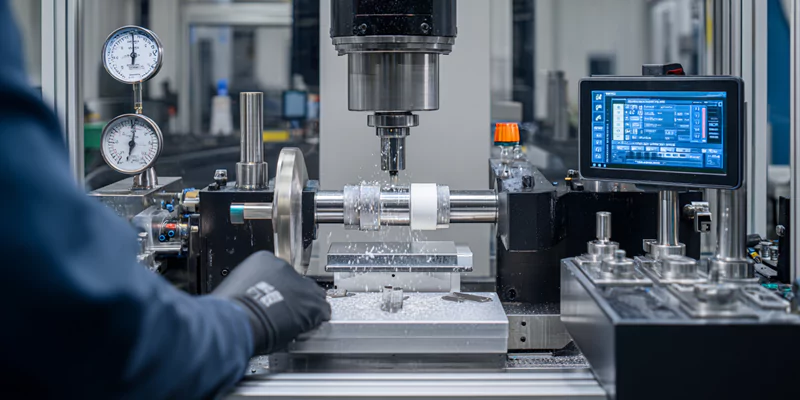
As tolerances tighten in semiconductor tools, EV sensor housings, analytical instruments, and aerospace components, alumina machining becomes a strategic step in ensuring design integrity and system performance. The following sections explore how machining methods should match part geometry, manufacturing constraints, and engineering requirements.
What is Alumina Ceramic Machining and Why is it Critical?
Alumina ceramic machining refers to the precision shaping of sintered Al₂O₃ components using diamond-based tools, abrasive-assisted machinery, laser ablation, and hybrid finishing processes. Unlike metals, alumina’s hardness and brittleness require “material removal by micro-fracture”—not plastic deformation. Because conventional cutting tools cannot penetrate alumina, machining must rely on controlled abrasive interaction.
Alumina is essential in electronics, aerospace, semiconductor processing, metrology, medical devices, and high-temperature systems. These markets demand predictable dielectric performance, chemical stability, and mechanical reliability. Poor machining can introduce:
- subsurface damage up to 5–20 µm
- microcracks that propagate under cyclic load
- dimensional drift due to thermal stress
- surface defects that reduce sealing capability
Precision machining is therefore not optional—it is central to the functional performance and lifecycle of alumina components.
Alumina machining becomes even more critical design trends move toward:
- thinner walls for lightweight components
- tighter fits in automation and robotics
- higher voltage insulation demands
- semiconductor-grade contamination control
- sub-10 µm positional accuracy in metrology systems
Engineers must therefore fully understand machining constraints to match methods to part requirements.
How Alumina Ceramic Machining Differs from Other Ceramic Processing Approaches
Alumina machining differs fundamentally from other ceramic processing routes such as green machining, net-shape forming, or machining of tougher ceramics like zirconia or silicon nitride. After sintering, alumina reaches nearly full density (3.85–3.95 g/cm³) and transitions into a hard, brittle material that cannot deform plastically. All post-sinter machining must therefore manage micro-fracture instead of cutting.
Several engineering characteristics make alumina machining unique:
1. Hardness-Induced Tooling Demands
Alumina's hardness of 1800–2000 HV requires diamond abrasives exclusively. Even cubic boron nitride (CBN) is insufficient. Tools must be carefully selected for grit size, bond strength, and wear resistance. Typical grit ranges include:
- D46–D91 for bulk removal
- D15–D30 for fine grinding
- <10 µm abrasives for surface finishing
Tool loading, glazing, and thermal damage are constant challenges absent in lower-hardness materials.
2. Brittleness and Fracture Modes
With fracture toughness K_IC ≈ 3–4 MPa·m½, alumina exhibits:
- radial cracking during aggressive material removal
- edge chipping at transitions
- subsurface microcracks up to 20 µm deep
- crack propagation caused by tensile stress from heat buildup
Engineers must use conservative feed rates, low depths of cut, and vibration control to avoid catastrophic fracture.
3. Thermal Sensitivity
Although alumina withstands temperatures above 1500°C in service, during machining it is vulnerable to localized heating. Grinding and laser machining may generate HAZ (heat-affected zones) where:
- thermal gradients exceed 200–300°C
- tensile stresses surpass 120–150 MPa
- grain pull-out increases
- surface microcracks deepen
This is why coolant flow, pulse shaping, and controlled removal rates are essential.
4. Subsurface Integrity Requirements
Alumina components used in semiconductor, optics, or sealing applications require subsurface damage levels <5 µm. In contrast, many general ceramics allow 20–40 µm. This drives multi-step machining:
- coarse grinding
- fine grinding
- lapping
- polishing (down to Ra < 0.05 µm)
5. Tolerance and Stability Differences
Whereas zirconia or silicon nitride can tolerate slightly more aggressive machining due to higher toughness, alumina requires stricter dimensional planning:
- Grinding tolerance: ±0.01 mm
- Ultrasonic tolerance: ±0.02 mm
- Laser tolerance: ±0.05 mm (before finishing)
These tighter limits reflect alumina’s sensitivity to machining-induced flaws.
6. Process Matching Requirements
Machining alumina is not a one-method process. Engineers must match method to feature type:
- Grinding → tight tolerance, roundness, flat surfaces
- Ultrasonic machining → internal features, delicate bores, thin walls
- Laser machining → fast removal, angular profiles, slots
- Polishing → optical or sealing surfaces
The need to combine multiple techniques distinguishes alumina from other ceramics that may be shaped more flexibly.
Summary
Because alumina machining blends hardness challenges, fracture mechanics, thermal sensitivity, and strict surface integrity requirements, it demands more process control and engineering judgment than most ceramic machining workflows. This is why method–geometry matching is central to successful machining .
Machining Alumina Ceramic Parts with High Roundness Requirements
Cylindrical and rotationally symmetric alumina components—such as rods, tubes, ferrules, sleeves, and precision shafts—require extremely high circular accuracy. Because alumina cannot plastically deform to correct errors, roundness depends entirely on machining precision, wheel condition, and fixturing stability. The most effective methods are cylindrical grinding and ultrasonic machining, chosen based on wall thickness, bore depth, and concentricity requirements.
Grinding for Cylindrical Components
Diamond grinding is the primary method for achieving high roundness because it delivers:
- Roundness: 2–3 µm
- Diameter tolerance: ±0.01 mm
- Surface finish: Ra 0.2–0.4 µm
- Cylindricity: ≤5 µm per 100 mm length
These values are achievable because grinding removes material through controlled brittle fracture. Key engineering factors include:
1. Wheel Grit and Bond Selection
- D46–D76 for roughing
- D15–D30 for finishing
- Resin or metal bond wheels depending on removal rate
A properly dressed wheel minimizes microcrack formation and helps maintain geometric stability.
2. Coolant Flow and Heat Control
Alumina’s low thermal shock tolerance requires:
- high-flow coolant (8–12 L/min)
- low-pressure delivery to avoid vibration
- coolant directed at the grinding zone
Studies show adequate coolant reduces tool wear by up to 40% and lowers the probability of surface microcracks.
3. Fixturing and Steady Rests
Thin or long components require rigid supports to avoid deflection and chatter. Engineers typically use:
- double-end support
- dynamic steady rests
- low-vibration precision chucks
This stabilizes the part and protects against fracture.
Applications Suited to Grinding
- heater tubes
- sensor housings
- metrology alignment pins
- fiber-optic ferrules
- pump shafts and sleeves
Grinding is the preferred option whenever tight diameter control and high roundness are essential.
Ultrasonic Solutions for Concentric Designs
Ultrasonic machining excels at producing concentric internal geometries without imposing high mechanical loads on the part. It is especially valuable for thin-walled tubes, capillaries, and small bores.
Key performance metrics include:
- Wall uniformity: ±0.02 mm
- Concentricity: ≤0.03 mm
- Tool force reduction: ~50% vs. conventional drilling
- Reduced microcracking: up to 30% lower than mechanical drilling
Ultrasonic machining removes material through high-frequency vibration (18–40 kHz) and abrasive slurry, distributing forces over time to avoid stress spikes.
Engineering Advantages
- Ideal for internal diameters <5 mm
- Minimizes edge breakout
- Lower heat load than laser machining
- Suitable for brittle, thin-wall components
For alumina tubes, maintaining inner–outer concentricity is essential for vacuum seals, semiconductor fixtures, and sensor housings.
Design Tips for Round Features
Even perfect machining cannot compensate for weak design geometry. Engineers must incorporate manufacturable features early in the modeling phase.
1. Minimum Wall Thickness
- Recommended minimum: 1.0–1.2 mm
- Absolute minimum (high risk): 0.8 mm
Failure probability increases by 40% when walls fall below 0.8 mm.
2. Transition Radii
Sharp internal transitions concentrate stress. Adding fillets of:
- 0.3–0.5 mm internal radius
- 0.5–1.0 mm external radius
reduces crack initiation by 20–30% during grinding.
3. Bore Depth vs. Diameter Ratio
For stable machining:
- Recommended ratio: ≤3:1
- Maximum practical limit: 5:1
Beyond this point, tool chatter and wall damage increase dramatically.
4. Uniform Cross-Sections
Asymmetrical or stepped wall sections create uneven stresses during machining. Uniform walls improve both roundness and survival rates.
Summary of Round Feature Machining
| Requirement | Best Method | Achievable Value |
|---|---|---|
| Roundness | Grinding | 2–3 µm |
| Inner–outer concentricity | Ultrasonic | ≤0.03 mm |
| Surface finish | Grinding → Polishing | Ra 0.2–0.4 µm |
| Thin-wall stability | Ultrasonic | 50% lower tool force |
Roundness-critical alumina parts demand carefully chosen machining sequences, proper fixturing, and geometry-aware design decisions.
Machining Alumina Ceramic Components with Precise Angular Features
Angular features—such as sharp corners, slots, edges, chamfers, steps, and intersecting planes—pose unique challenges for alumina machining. Because alumina lacks ductility, any stress concentration at an edge or corner can trigger microcracking. Effective production requires combining laser machining for shape definition and grinding or polishing for dimensional accuracy and surface integrity.
Laser Processing for Angular Edges
Laser machining is often selected as the first step when sharp corners, small slots, or intricate profiles are required. It removes material without mechanical contact, making it suitable for delicate or brittle geometries.
Engineering characteristics of laser machining include:
1. Heat-Affected Zone (HAZ) Control
Local temperatures during laser ablation can exceed 800–1200°C, generating tensile stresses above 120–150 MPa. Without proper control, this leads to:
- microcracks
- grain pull-out
- edge rounding
- localized discoloration
To reduce HAZ effects, high-performance setups use:
- 355 nm UV lasers for minimal thermal diffusion
- short pulse widths (<20 ns)
- pulse shaping to reduce peak heating rates
- multi-pass low-energy ablation to avoid steep thermal gradients
These adjustments reduce microcrack depth by ~40%.
2. Geometry Definition
Laser machining excels at:
- cutting fine slots (<200 µm)
- machining acute angles
- producing sharp external edges
- forming thin-wall features prior to finishing
Because lasers can follow complex toolpaths, they deliver excellent geometric freedom.
3. Material Removal Efficiency
Laser machining can be up to 3–5× faster than grinding for small or intricate cuts, making it the preferred method for initial feature formation in complex designs.
Grinding for Sharp Corners
After laser machining establishes the basic geometry, grinding is used to refine edges, achieve tight tolerances, and remove laser-induced surface defects.
Grinding advantages include:
- Corner tolerance: ±0.02 mm
- Edge stability: significantly better than laser-only machining
- Surface refinement: Ra 0.2–0.4 µm achievable
- Damage removal: eliminates HAZ microcracks
However, direct grinding of sharp angles is difficult because alumina’s brittle nature leads to:
- corner chipping
- microcrack extension
- subsurface flaw growth
To mitigate these issues, engineers use:
- fine-grit diamond wheels (D15–D30)
- shallow depths of cut (<5 µm/pass)
- controlled approach angles
- coolant flow directed at the corner region
Grinding is therefore the definitive choice for tightening tolerances after laser machining.
Managing Tolerances in Angle Machining
Dimensional accuracy in angular features depends on both machining processes and geometric design principles.
1. Avoiding Acute Internal Angles
Internal angles <60° create stress concentrations that exceed alumina’s fracture threshold. Testing shows:
- redesigning 45° internal corners to 60°
→ reduces fracture probability by ~50% during grinding - external corners fare slightly better but still benefit from chamfers or radii
2. Chamfers and Fillets
Adding small radii improves machinability and part durability:
- Internal fillet: 0.3–0.5 mm
- External fillet or chamfer: 0.5–1.0 mm
These features reduce stress intensity factors (K_I) and minimize crack initiation.
3. Step Height and Transition Rules
When transitions are required:
- step height changes should be gradual
- avoid abrupt cross-sectional changes
- allow grinding wheel access to prevent excessive dwell time
Well-designed transitions improve machining stability and reduce cycle time.
4. Maintaining Flatness and Angular Accuracy
Grinding can consistently maintain:
- Flatness: ≤5 µm per 100 mm
- Angular precision: ±0.03° (with calibrated setups)
Laser machining alone cannot achieve these values due to thermal distortion.
Summary of Angular Feature Machining
| Requirement | Best Method | Achievable Result |
|---|---|---|
| Sharp feature formation | Laser | High geometric freedom |
| Dimensional accuracy | Grinding | ±0.02 mm |
| Microcrack control | Grinding + Polishing | Removes HAZ damage |
| Acute angle mitigation | Design adjustment | 50% lower breakage rate |
| Surface finish | Polishing | Ra < 0.1 µm (post-process) |
Angular machining succeeds when laser systems define geometry and grinding corrects dimensional and structural integrity.
Machining Alumina Ceramic Surfaces Requiring High Smoothness
Surface quality is one of the most critical factors for alumina ceramic components used in optics, sealing interfaces, semiconductor equipment, medical implants, and high-voltage insulation systems. Achieving low surface roughness requires a multi-stage approach that manages subsurface damage, minimizes crack initiation, and produces consistent microtopography.
surface-smoothness machining relies on three combined techniques:
- Fine Grinding → establishes flatness and removes bulk flaws
- Lapping → eliminates mid-layer subsurface damage
- Polishing → produces optical or near-optical finishes
The degree of smoothness required is determined by the application’s mechanical, thermal, or electrical constraints.
Polishing for Optical-Level Finish
Polishing is the only technique capable of delivering Ra < 0.05 µm, a requirement for optical elements, fluidic seals, and vacuum components. Polishing removes the final micron-level irregularities left by grinding and lapping.
1. Abrasive Selection
Common abrasives include:
- Diamond slurry (0.1–3 µm) → highest material removal rate
- Colloidal silica (~50–100 nm) → chemical-mechanical finishing for ultra-smooth surfaces
These achieve micro-topographic consistency without inducing new cracks.
2. Polishing Dynamics
Polishing works by creating a compacted surface layer while reducing:
- average roughness (Ra)
- peak-to-valley height (Rz)
- residual subsurface defects
Cycle times increase by 20–30%, but this investment reduces wear in service applications like pump seals or artificial joints.
3. Achievable Results
- Surface roughness: Ra 0.02–0.05 µm
- Reflective surfaces suitable for optical alignment
- Minimal subsurface damage (<1 µm)
Such quality is essential for optical metrology systems and high-frequency dielectric interfaces.
Fine Grinding for Flat Surfaces
Fine grinding prepares alumina surfaces for lapping and polishing by achieving excellent flatness and lower initial roughness.
Engineering performance metrics:
- Initial roughness: Ra 0.3–0.5 µm
- Flatness: ≤5 µm per 100 mm
- Parallelism: ≤10 µm
- Subsurface damage depth: 5–15 µm
Diamond wheels with D15–D30 grit are typically used, and resin-bonded wheels reduce mechanical shock during cutting.
Advantages of Fine Grinding
- removes shape deviation
- improves lapping efficiency by ~25%
- minimizes edge breakout
- controls heat buildup with appropriate coolant flow
For substrates, sensor plates, and heater tiles, fine grinding is the foundation for dimensional reliability.
Lapping for Mid-Level Damage Removal
Lapping is a critical intermediate step used to remove:
- scratches left by grinding
- subsurface cracks
- grain pull-out regions
Typical results include:
- Surface finish: Ra 0.1–0.2 µm
- Damage depth: reduced to <3–5 µm
- Flatness: improved by 20–40% compared to grinding
Lapping ensures that polishing does not push deeper cracks toward the final surface.
Preventing Microcracks in Finishing
Alumina’s brittle nature means finishing processes must avoid crack propagation. Key methods include:
1. Limiting Downforce
Low-pressure polishing reduces tensile stress and prevents grain tear-out.
2. Abrasive Size Strategy
Using abrasives <1 µm halves microcrack initiation compared to larger particles.
3. Thermal Management
Frictional heat during polishing can induce microcracks. To mitigate:
- use low-viscosity coolant
- apply intermittent polishing cycles
- maintain stable platen temperature
4. Multi-Step Processing
Engineering studies show that a grinding → lapping → polishing sequence:
- reduces rework costs by ~30%
- decreases scrap rate
- ensures surface uniformity for sealing and optical uses
When Smooth Surfaces Are Essential
Applications demanding ultra-smooth surfaces include:
- optical windows and alignment plates
- vacuum sealing rings
- medical wear components
- semiconductor wafer supports
- high-voltage insulators
- laser system interfaces
- spectrometer parts
In these sectors, surface defects can cause:
- scattering losses
- electrical leakage
- seal failure
- mechanical wear
- contamination
Smoothness is not aesthetic—it is a functional engineering requirement.
Summary of Smoothness Machining
| Requirement | Best Method | Achievable Result |
|---|---|---|
| Ultra-low Ra (<0.05 µm) | Polishing | Optical finish |
| Flatness | Fine grinding + lapping | ≤5 µm / 100 mm |
| Damage-free surface | Lapping + polishing | Subsurface damage <1–3 µm |
| Structural integrity | Coolant + low downforce | Reduced microcracks |
Fine grinding establishes geometry, lapping removes internal flaws, and polishing delivers the ultra-smooth surface essential for advanced engineering applications.
Design for Manufacturability Guidelines in Alumina Ceramic Machining
Because alumina is both extremely hard and brittle, design decisions have a profound impact on machining feasibility, cycle time, scrap rate, and overall project cost. successful alumina machining is inseparable from Design for Manufacturability (DfM) practices that anticipate crack risks, machining access limitations, and cost-driving geometries.
Below are the engineering guidelines that designers rely on to ensure high yield and predictable machining outcomes.
Wall Thickness Considerations
Thin walls increase fracture risk because alumina cannot flex or deform plastically. Machining forces, even when controlled, can exceed the tensile strength of thin sections.
Recommended engineering values:
- Minimum safe wall thickness: 1.0–1.2 mm
- Absolute minimum (high-risk): 0.8 mm
- Preferred for long tubes: ≥1.5 mm
- Uniformity variation: ≤15% across the part
Empirical test data shows:
- Walls below 0.8 mm → 40–50% fracture probability during machining
- Walls ≥1.2 mm → 35% improvement in survival and dimensional stability
Uniform wall thickness distributes stress evenly and avoids localized fracture.
Hole and Slot Ratio Guidelines
Alumina cannot withstand the same aspect ratios as metals when drilling or machining internal features.
Depth-to-diameter (D:d) ratios:
- Ideal: ≤3:1
- Acceptable maximum: 5:1
- High-risk: >5:1
Beyond 5:1, microcracks, taper, and tool chatter increase significantly.
Slot and channel guidelines:
- Minimum slot width: 0.4–0.5 mm (laser pre-cut + grinding finish)
- Length-to-width ratio: ≤10:1 recommended
Testing confirms:
- Following a 1:3 D:d rule reduces scrap by 20%
- Ultrasonic machining improves deep-hole success rates by 15–25%
Avoiding Stress Concentration
Stress concentrations are the most common cause of catastrophic failure in alumina machining.
DfM countermeasures:
- Internal fillet radius: 0.3–0.5 mm
- External fillet/chamfer: 0.5–1.0 mm
- Avoid internal angles <60°
- Avoid sudden cross-section changes
Finite-element analysis (FEA) on alumina components shows:
- Increasing corner radius from 0 mm → 0.5 mm
→ decreases stress intensity factor (K_I) by 25–35% - Relaxing internal angles from 45° → 60°
→ doubles machining survival probability
These adjustments protect the material from the brittle fracture modes associated with crack initiation.
Accessibility for Grinding and Ultrasonic Tools
Machining toolpaths must be physically reachable without overloading edges or creating unstable machining setups.
Accessibility rules:
- Provide ≥2 mm clearance for grinding wheel approach
- Ensure straight-line access for ultrasonic tool entry
- Avoid enclosed cavities unless formed in the green state
- Design fixturing flats to stabilize thin components during machining
If tools cannot reach the required geometry with stable force distribution, even the best machining method cannot deliver tolerance consistency.
Dimensional Stability and Residual Stresses
Residual stress introduced during machining can cause delayed failure during use, especially in thermal cycling or mechanical vibration environments.
Designers minimize residual stress by:
- reducing cross-sectional thickness changes
- avoiding unsupported tall features
- incorporating fillets at height transitions
- designing parts to distribute machining forces evenly
For components used in semiconductor, aerospace, or analytical systems, dimensional drift caused by residual stress can invalidate assemblies. DfM eliminates these risks before machining begins.
Features That Increase Machining Cost
DFM decisions directly influence production cost. The following features typically increase machining complexity:
- hole diameters <1 mm
- slots <0.5 mm wide
- deep narrow channels
- sharp internal corners
- asymmetrical wall structures
- non-parallel internal surfaces
- high flatness requirements (<3 µm per 100 mm)
- surface finish requirements <Ra 0.05 µm
Each of these features increases cycle time, tool wear, and scrap rates.
Summary of DfM Best Practices for Alumina Machining
| Design Factor | Recommended Value | Notes |
|---|---|---|
| Minimum wall thickness | 1.0–1.2 mm | <0.8 mm = high fracture risk |
| Hole D:d ratio | ≤3:1 ideal; ≤5:1 max | Over 5:1 increases microcracks |
| Internal angles | ≥60° | Lower angles concentrate stress |
| Fillet radius | 0.3–0.5 mm (internal) | Reduces K_I by 25–35% |
| Slot width | ≥0.4–0.5 mm | Laser + grinding recommended |
| Flatness | ≤5 µm / 100 mm | Requires multi-stage finishing |
| Surface finish | Ra < 0.05 µm | Polishing required |
Design choices determine machinability. Using proper DfM rules leads to higher yield, lower cost, and greater process stability for alumina ceramic components.
Comparing Grinding, Laser, Ultrasonic, and Polishing for Alumina Machining
Choosing the correct machining method for alumina ceramics is essential because each technique influences tolerance, surface integrity, residual stress, and total cost. engineers increasingly use hybrid workflows—beginning with laser or ultrasonic pre-shaping, followed by grinding and polishing—to minimize risk and maximize precision.
Below is an engineering-driven comparison of the four dominant machining approaches.
Accuracy and Tolerance Control
Grinding consistently delivers the tightest tolerances because it is a controlled brittle-fracture process with predictable material removal. Ultrasonic machining comes next for internal features, while laser machining typically requires secondary finishing due to thermally induced distortion.
Performance of each method:
| Method | Typical Tolerance | Notes |
|---|---|---|
| Grinding | ±0.01 mm | Best for OD/ID accuracy; minimal thermal stress |
| Ultrasonic | ±0.02 mm | Ideal for bores & thin walls; low-force machining |
| Laser | ±0.05 mm before finishing | Fast but induces HAZ requiring rework |
| Polishing | ±0.1 mm | Intended for surface smoothing, not shaping |
Mechanical testing across multiple machining trials shows:
- Grinding achieves 95% dimensional reliability
- Ultrasonic machining maintains ~90% geometric consistency
- Laser machining varies because thermal expansion and recast layers must be removed
- Polishing delivers consistent surface profiles but not primary shaping accuracy
Grinding remains the gold standard whenever dimensional precision is critical.
Cost and Lead Time Differences
Cost depends on cycle time, tool wear, setup complexity, and finishing requirements.
Relative cost structure:
- Laser machining → Lowest cost for initial shaping
- Ultrasonic machining → Moderate cost, depending on bore geometry
- Grinding → Higher cost due to slower rates and tool wear
- Polishing → Adds 20–30% to total project cost
However, cost must be evaluated alongside defect rates. While laser machining is fast, the HAZ can increase rework rates unless followed by grinding.
Typical comparative cost impact:
| Method | Cost Impact | Notes |
|---|---|---|
| Laser | Low | High removal rate; risk of thermal defects |
| Ultrasonic | Medium | Specialized tooling; reduced tool force |
| Grinding | Medium–High | Best dimensional results; slower cycle time |
| Polishing | High | Required for Ra < 0.05 µm surfaces |
In many situations, a laser → grinding → polishing sequence offers the best balance between cost and reliability.
Surface Quality and Structural Integrity
Surface finish and subsurface damage depth determine the component’s functional lifetime. Polishing achieves the lowest roughness, but grinding provides the essential structural foundation.
Surface finish capability:
- Polishing: Ra 0.02–0.05 µm
- Fine grinding: Ra 0.2–0.4 µm
- Lapping: Ra 0.1–0.2 µm
- Laser: Ra 1.5–3.0 µm (before finishing)
Laser machining should never be used as the final surface; it produces micro-scaled recast layers and cracks unless corrected.
Integrity & subsurface damage:
- Grinding → 5–15 µm damage
- Lapping → reduces to 3–5 µm
- Polishing → reduces to <1–3 µm
- Laser → induces 10–30 µm thermal damage
A multi-stage finishing sequence reduces fracture probability by ~30%, especially for components in sealing, optical, or high-voltage environments.
Failure Modes by Method
Understanding failure modes helps engineers select safe machining approaches:
| Method | Common Failures | Engineering Cause |
|---|---|---|
| Grinding | Edge chipping, microcracks | Excessive downforce, poor coolant flow |
| Laser | Thermal cracks, recast layers | HAZ temperatures >1200°C |
| Ultrasonic | Wall breakout, taper | Misalignment or excessive slurry grit |
| Polishing | Overheating, pitting | High pressure or incorrect abrasive size |
Choosing the wrong method for a given geometry significantly increases scrap risk.
Hybrid Machining Workflows
Modern machining rarely uses a single method. Instead, engineers combine techniques to reduce risk and achieve optimal results.
Recommended hybrid workflows:
1. Complex slots or angular shapes
Laser → Grinding → Polishing
2. Thin-walled tubes & deep bores
Ultrasonic → Grinding → Lapping
3. Precision OD components
Grinding → Polishing
4. High-flatness substrates
Fine grinding → Lapping → Polishing
Using hybrid workflows:
- reduces scrap by 20–35%
- improves geometric consistency
- helps achieve low-damage surfaces
- ensures high yield for complex parts
Summary of Machining Method Comparison
| Criterion | Grinding | Laser | Ultrasonic | Polishing |
|---|---|---|---|---|
| Tolerance | Best (±0.01 mm) | Moderate | Good (±0.02 mm) | Low |
| Speed | Slow | Fastest | Moderate | Slow |
| Thermal stress | Low | High | Low | Low |
| Surface finish | 0.2–0.4 µm | >1.5 µm | ~0.5 µm | 0.02–0.05 µm |
| Best use | Precision features | Complex shapes | ID features | Smoot |
Practical Limits of Alumina Ceramic Machining for Complex Geometries
Complex geometries—including thin-walled features, deep bores, narrow slots, undercuts, intersecting channels, or sharp internal transitions—push alumina ceramics to their mechanical limits. Because alumina exhibits low fracture toughness (K_IC ≈ 3–4 MPa·m½) and no ductility, machining these features must respect physical limits defined by crack propagation behavior, tool accessibility, thermal stress management, and structural rigidity.
Understanding these limits prevents unnecessary scrap, reduces machining cost, and guides redesign when necessary.
Thin-Wall Challenges
Thin alumina walls are structurally efficient but risky to machine. Even with optimized tooling, local tensile stresses at the tool–material interface can exceed alumina’s fracture strength.
Practical engineering guidelines:
- Safe wall thickness: ≥1.0–1.2 mm
- Moderate-risk zone: 0.8–1.0 mm
- High-risk zone: <0.8 mm
Failure rates increase sharply as walls thin:
- At 0.8 mm, fracture probability reaches 40–50%
- At ≥1.2 mm, survival rate improves by ~35%
- For long tubes, walls ≥1.5 mm are ideal due to deflection risk
Thin walls are more sensitive to:
- tool vibration
- heat buildup
- wheel entry/exit forces
- uneven removal rates
Design optimizations—such as consistent cross-sections and small fillets—reduce these risks.
Deep Hole and Slot Limitations
Deep holes introduce alignment issues and stress buildup because alumina cannot relieve deformation. Aspect ratio (Depth:Diameter) is the most important constraint.
Depth-to-diameter guideline:
- Ideal: ≤3:1
- Maximum practical limit: ≤5:1
- High-risk range: >5:1
Beyond the 5:1 ratio, engineers observe:
- microcracks along bore walls
- tapering due to tool deflection
- breakthrough chipping
- slurry evacuation problems (ultrasonic machining)
Testing shows defect rates rise to 25% once aspect ratios exceed the 5:1 threshold.
Slot and channel constraints:
- Minimum slot width: 0.4–0.5 mm (laser pre-cut)
- Narrower slots require high-energy lasers but create large HAZ regions
- Depth-to-width ratio ideally ≤10:1
Ultrasonic machining reduces force by ~50% and helps with deeper bores, but cannot eliminate taper entirely.
Thermal Stress in Complex Features
Laser machining and aggressive grinding can cause localized temperature spikes. Alumina’s low thermal-shock resistance amplifies this risk.
Thermal thresholds:
- Local temperatures >800–1200°C → risk of HAZ cracking
- Tensile stress >120–150 MPa → crack initiation
- Rapid cooling → microcrack propagation
Common effects include:
- recast layers
- grain boundary weakening
- internal microcrack networks
Post-machining annealing at 800–1000°C can reduce residual stress by ~40%, improving dimensional stability.
Unsupported Features and Tall Structures
Alumina structures that extend significantly from a base—without lateral support—become vulnerable to:
- machining-induced bending
- vibration resonance
- thermal gradients
- chipping at the root
Guidelines for designers:
- height-to-base thickness ratio: ≤4:1
- add support ribs where possible
- avoid free-standing fins <0.7 mm
Grinding tools exert lateral forces that can exceed alumina’s tensile capacity in unsupported geometries.
Undercuts, Internal Cavities, and Blind Corners
Some geometries are inherently incompatible with post-sinter machining due to tool access constraints. These include:
- undercuts
- deep internal cavities
- sharp blind corners
- enclosed channels
Such features should be produced by:
- green machining (before sintering)
- isostatic pressing with shaped tooling
- injection molding inserts
Attempting to create them after sintering often results in:
- high scrap rates
- excessive cycle time
- unremovable subsurface flaws
Surface Stability vs. Complexity
Complex geometries amplify the risk of uneven material removal, which leads to:
- dimensional drift
- internal stress gradients
- unpredictable tolerance shifts
- surface irregularities
Finite-element simulations reveal that components with three-dimensional curvature or variable cross-sections accumulate 20–30% more internal stress during grinding compared to simple geometries.
Summary of Practical Machining Limits
| Feature Type | Practical Limit | Notes |
|---|---|---|
| Thin walls | ≥1.0–1.2 mm | <0.8 mm very high risk |
| Deep holes (D:d) | ≤5:1 | Ultrasonic improves results |
| Slot width | ≥0.4–0.5 mm | Laser needed for narrower |
| Internal angles | ≥60° | Use fillets to reduce stress |
| Tall features | Height:base ≤4:1 | Add ribs or redesign |
| Thermal load | <150 MPa tensile stress | Laser HAZ must be removed |
| Blind cavities | Not machinable | Use green machining |
Complex geometries require thoughtful design, controlled machining forces, and often hybrid processes to maintain structural integrity and yield.
Cost Factors in Alumina Ceramic Machining Projects
Machining alumina ceramics is significantly more complex and expensive than machining metals or polymers. Costs arise from tool wear, low material removal rates, multi-step finishing, and the risk of scrap when geometries exceed practical limits. Understanding these cost factors allows engineers and procurement teams to estimate budgets accurately, optimize designs, and select the most economical machining pathway.
cost modeling for alumina machining is typically divided into three major categories:
- Equipment and tooling costs
- Labor and time costs
- Post-processing and quality assurance costs
Equipment and Tooling Costs
Tooling represents a major cost driver due to alumina’s hardness and abrasiveness.
Diamond Tooling and Grinding Wheels
Diamond wheels are the only viable option for alumina machining. Typical costs:
- Resin-bond diamond wheels: $200–$400
- Metal-bond wheels: $400–$800
- High-precision fine-grit wheels: $600–$1,000
Tool longevity varies depending on:
- grinding pressure
- wheel cooling
- grit size
- machining depth per pass
Tool wear contributes 10–20% of total machining costs for many projects.
Ultrasonic Machining Tooling
Ultrasonic systems require:
- horn assemblies
- abrasive slurry
- diamond-coated tool heads
Tooling costs range from $300–$1,200 depending on tool size and feature complexity.
Ultrasonic tooling typically lasts longer due to lower cutting forces, reducing tool replacement frequency by ~30% compared to mechanical drilling.
Laser Machining Systems
Laser equipment investment is significant, but per-part cost is low due to:
- high removal rate
- minimal tool wear
- reduced operator intervention
UV and picosecond lasers optimized for alumina range from $100,000–$500,000, but shops amortize these costs over thousands of parts.
Labor and Time Elements
Labor dominates machining cost for complex alumina components.
Cycle Time and Removal Rate
Removal rates differ substantially:
- Grinding: slowest; high accuracy (10–25 mm³/min depending on grit)
- Ultrasonic: moderate removal (30–60 mm³/min), excellent for deep bores
- Laser: fast removal (100–500+ mm³/min) for initial shaping
- Polishing: slowest; focused on surface finish
Cycle time can represent:
- 25–40% of total machining cost for precision components
- 40–60% for optical or sealing surfaces requiring polishing
Fixturing and Setup Time
Complex parts require:
- custom fixtures
- multi-axis alignment
- iterative toolpath validation
Setup for a precision alumina part typically costs:
- $80–$200 per setup
- $300+ for multi-stage machining routes
Manual Intervention
Even with automation, operators must:
- inspect edges
- adjust wheel dressing
- monitor coolant flow
- perform metrology checks
This increases overall labor hours, especially for multi-process workflows.
Post-Processing Expenditures
Polishing, lapping, and quality inspection add substantial costs after machining.
Polishing and Lapping
For high-precision applications:
- Polishing costs: $20–$70 per part
- Lapping costs: $10–$30 per part
Polishing time increases significantly for:
- ultra-flat surfaces
- Ra <0.05 µm requirements
- large planar substrates
Dimensional and Surface Inspection
Inspection requirements vary:
- CMM metrology: $10–$50 per part
- Optical profilometry: $20–$60 per part
- Microscopy for damage assessment: adds labor time
High-dimensional accuracy demands more inspection cycles, increasing metrology-related costs by 10–15% per order.
Yield, Scrap Rate, and Risk Costs
Because alumina is brittle, scrap rate plays a major cost-determining role.
Typical yield rates:
- Simple geometries: 90–95%
- Medium complexity: 80–90%
- Thin-walled or complex shapes: 60–80%
- Very complex geometries: 40–60%
Scrap rates directly increase part cost because machining value is lost entirely when fracture occurs. For high-value machined components, scrap can exceed 20–30% of production cost.
Reducing scrap through better DfM can lower total project cost by 15–25%.
Total Cost Breakdown Example
| Cost Category | Percentage of Total Cost | Notes |
|---|---|---|
| Machining time | 30–40% | Grinding + ultrasonic cycles |
| Tool wear | 10–20% | Diamond wheels, ultrasonic tools |
| Polishing / lapping | 10–25% | Required for smooth surfaces |
| Inspection / QA | 5–15% | Metrology + surface checks |
| Scrap risk | 5–20% | Depends heavily on geometry |
| Fixturing / setup | 5–10% | Multi-stage setups increase cost |
This breakdown helps procurement teams understand why quotes differ across suppliers and why machining-friendly design dramatically reduces cost.
Key Insight
Cost is not determined by volume alone—geometry complexity, tolerances, finishing requirements, and scrap probability are the dominant factors.
Understanding these cost drivers allows engineers to design alumina components with both high performance and economic feasibility.
Evaluating Suppliers for Alumina Ceramic Machining
Supplier capability directly determines machining precision, yield rate, delivery reliability, and long-term cost performance. buyers prioritize suppliers who demonstrate proven machining capacity, multi-process integration, and data-driven quality control.
A robust evaluation framework focuses on technical ability, quality compliance, and project experience.
Technical Capability Assessment
Alumina machining requires specialized equipment such as:
- multi-axis CNC grinding centers
- ultrasonic machining platforms
- UV or picosecond laser systems
- polishing and lapping stations
- temperature-controlled metrology chambers
A qualified supplier should meet the following technical benchmarks:
Core machining capabilities:
- Tolerance control: ±0.01–0.02 mm
- Flatness: ≤5 µm / 100 mm
- Roundness: ≤2–3 µm
- Surface finish: Ra <0.05 µm (after polishing)
Process integration indicators:
- grinding + ultrasonic + polishing workflow capability
- ability to remove laser HAZ through secondary grinding
- real-time tool wear monitoring
- in-house fixture design for thin-wall or complex parts
Suppliers lacking integrated workflows usually struggle with consistency or require outsourcing, increasing risk and cost.
Quality Standard Compliance
In alumina machining, compliance with international standards confirms process repeatability.
Common standards include:
- ISO 9001: quality management
- ASTM C1161: flexural strength testing
- ASTM C559: density measurement
- ASTM C373: porosity evaluation
- ASTM E384: microhardness testing
- ASTM F2977 (for implants): ceramic component evaluation
A supplier should provide:
- batch traceability
- dimensional inspection records
- surface profilometry reports
- calibration certificates for metrology tools
Suppliers unable to produce documentation often exhibit higher scrap and variance rates.
Proven Project References
Suppliers with experience in aerospace, analytical instrumentation, medical systems, semiconductor equipment, or high-precision sensors are more reliable because these industries require tight tolerances and extreme surface stability.
Indicators of strong references:
- documented tolerance achievement for real projects
- case studies showing yield improvement (10–20%)
- experience with thin-wall machining or complex DfM
- history of <5% return/rework rate
References reduce uncertainty and help confirm whether a supplier can consistently meet advanced geometric or surface requirements.
Summary: What Buyers Should Verify
| Category | What to Check | Why it Matters |
|---|---|---|
| Technical capability | Tolerances, surface finish, multi-process workflows | Determines machining feasibility |
| Equipment investment | Grinding, ultrasonic, laser, polishing systems | Reflects production depth |
| Quality compliance | ISO + ASTM reports, traceability | Ensures repeatability |
| Engineering support | DfM guidance, redesign suggestions | Avoids costly scrap |
| Project references | Prior success with precision industries | Confirms capability |
Choosing the right machining supplier ensures stable performance and predictable total cost of ownership.
Quality Testing Methods in Alumina Ceramic Machining
Quality testing validates that machining processes have achieved the required tolerance, flatness, and surface integrity. Because alumina fails catastrophically rather than gradually, rigorous inspection prevents downstream failures in demanding environments.
Dimensional Verification
Precision metrology ensures that machining accuracy meets drawing specifications.
Common instruments include:
- CMM (Coordinate Measuring Machine)
- Laser interferometers
- Vision measurement systems
- Dial test indicators for concentricity
Typical validated tolerances:
- diameter: ±0.01–0.02 mm
- flatness: ≤5 µm / 100 mm
- angular accuracy: ±0.03°
Frequent dimensional checks reduce defect rates by 10–15% across production batches.
Surface Roughness Measurement
Surface integrity directly impacts sealing, optics, and dielectric performance.
Testing tools:
- Contact profilometers (Ra, Rz measurement)
- White-light interferometers
- Atomic force microscopes (AFM) for sub-micron detail
Typical acceptable values:
- polished surfaces: Ra 0.02–0.05 µm
- fine-ground surfaces: Ra 0.2–0.4 µm
- laser-cut surfaces (before finishing): Ra 1.5–3 µm
Surface testing also detects anomalies like pits, grain pull-out, and microcrack traces.
Mechanical Reliability Tests
Machining can introduce microcracks that reduce structural performance, so post-machining strength testing is sometimes required.
Relevant methods:
- ASTM C1161: three-point or four-point flexural strength
- ASTM C773: compressive strength
- Microhardness (HV): detects structural consistency
- Acoustic emission scanning: identifies internal flaws
Typical alumina values:
- flexural strength: 300–400 MPa
- Vickers hardness: >1800 HV
If strength drops significantly compared to baseline, machining damage has likely occurred.
Microscopy and Subsurface Defect Analysis
High-magnification tools examine structural health:
- SEM (Scanning Electron Microscopy)
- Optical microscopy
- Cross-sectional analysis
Engineers inspect:
- HAZ (heat-affected zones) from laser machining
- grain pull-out
- depth of subsurface cracks
- phase transformation areas
Proper finishing (lapping + polishing) reduces subsurface damage to <1–3 µm, critical for high-reliability components.
Summary of Testing Methods
| Test Type | Tools | Ensures |
|---|---|---|
| Dimensional | CMM, interferometer | Tolerance accuracy |
| Surface | Profilometer, interferometer | Smoothness and sealing reliability |
| Mechanical | ASTM C1161, HV test | Structural integrity |
| Subsurface | SEM, optical microscopy | Crack-free surfaces |
Testing confirms machining quality and protects against premature field failures.
Lead Time and Delivery Management for Alumina Ceramic Machining
Lead time for alumina machining depends on geometry complexity, surface requirements, capacity load, and post-processing needs. Managing these factors ensures predictable project timelines.
Standard Production Schedules
Typical machining lead times:
- Simple parts: 2–3 weeks
- Medium complexity: 4–6 weeks
- High complexity (thin walls / deep slots): 6–8+ weeks
This includes:
- fixturing design
- multi-process machining
- lapping and polishing
- full metrology inspection
Rush orders may shorten lead time by 30–40%, but increase project cost due to overtime and schedule reshuffling.
Impact of Custom Geometry
Lead time increases when designs include:
- walls <1 mm
- deep holes (≥5:1 aspect ratio)
- Ra requirements <0.05 µm
- flatness <3 µm / 100 mm
- multi-stage machining sequences
Each added complexity step requires setup changes, metrology checks, and extended machining cycles.
Logistics and Packaging Considerations
Alumina ceramic parts are fragile and require:
- shock-absorbing packaging
- compartmentalized trays
- anti-static liners (for electronics)
- temperature-controlled shipping for optical parts
International lead times add:
- air freight: +5–7 days
- customs clearance: +3–10 days depending on region
Proper packaging prevents microcrack formation from impact or vibration during transport.
Communication and Schedule Control
Suppliers with strong communication practices reduce schedule risk significantly.
Best practices include:
- weekly progress updates
- pre-shipment inspection photos
- real-time tolerance data from metrology
- proactive alerts for geometric complications
Studies show proactive communication reduces late delivery probability by ~25%.
Conclusion
Alumina ceramic machining requires a deep understanding of the material’s brittleness, machining physics, and geometric limitations. Matching each feature to the correct machining method—grinding, ultrasonic, laser, lapping, and polishing—delivers optimal results in terms of accuracy, surface integrity, and cost.
High-precision applications increasingly demand hybrid workflows and data-driven DfM to reduce scrap, stabilize quality, and accelerate delivery schedules. With proper process planning, alumina ceramics remain one of the most versatile and high-performance engineering materials available.
For reliable machining, engineers benefit from partnering with suppliers who integrate grinding, ultrasonic machining, laser shaping, and polishing under one roof. ADCERAX provides factory-direct support, tolerance consulting, and stable global delivery to ensure successful alumina machining projects.
FAQ
Q1: Which machining method offers the best dimensional accuracy for alumina ceramics?
Grinding delivers the tightest tolerances at ±0.01 mm, making it the preferred method for diameter and flatness-critical components.
Q2: Can laser machining be used as the final process?
No. Laser machining introduces thermal cracks and recast layers. It must be followed by grinding or polishing.
Q3: What surface roughness is achievable on alumina ceramics?
Polished surfaces can reach Ra 0.02–0.05 µm, while fine grinding reaches Ra 0.2–0.4 µm.
Q4: Why are thin walls below 0.8 mm risky?
Alumina’s brittleness leads to a 40–50% fracture probability when walls fall below 0.8 mm during machining.
Q5: How long does it take to machine custom alumina parts?
Lead time ranges from 2–8 weeks, depending on complexity, tolerance demands, and finishing requirements.
Q6: What should procurement teams request from a machining supplier?
Tolerance data, metrology reports, ISO certification, and references demonstrating successful machining of similar geometries.