Selecting reliable ceramic components presents a significant engineering challenge.
A 2 hole alumina ceramic tube is a dual-channel ceramic component designed for insulation, thermocouple protection, and fluid guidance. Engineers evaluate it based on purity, strength, and application fit.
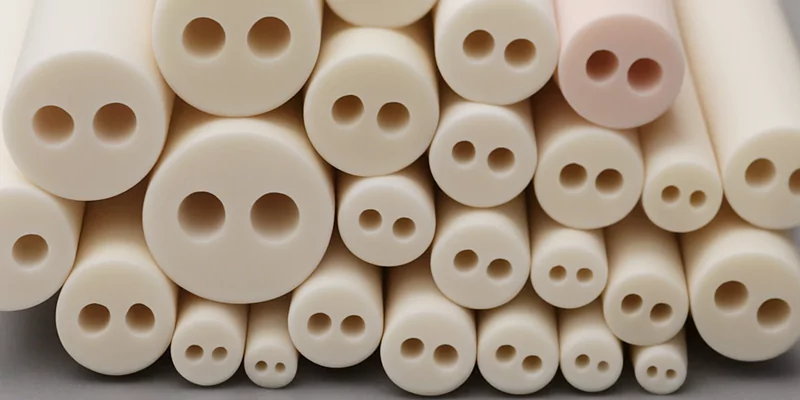
Engineers often need to balance multiple performance factors when selecting materials. Thermal resistance, electrical insulation, and chemical stability must all be considered in parallel. By understanding how these tubes perform under different stresses, engineers can make informed decisions that ensure safety and long-term reliability.
What Is a 2 Hole Alumina Ceramic Tube and Its Role in Engineering?
A dual-channel insulator made from high-purity aluminum oxide, a 2 hole alumina ceramic tube provides separation and protection for conductors or sensors under demanding electrical, thermal, or chemical conditions. Understanding this definition forms the basis for evaluating its structure, properties, and engineering applications.
Structural Features of Double Bore Design
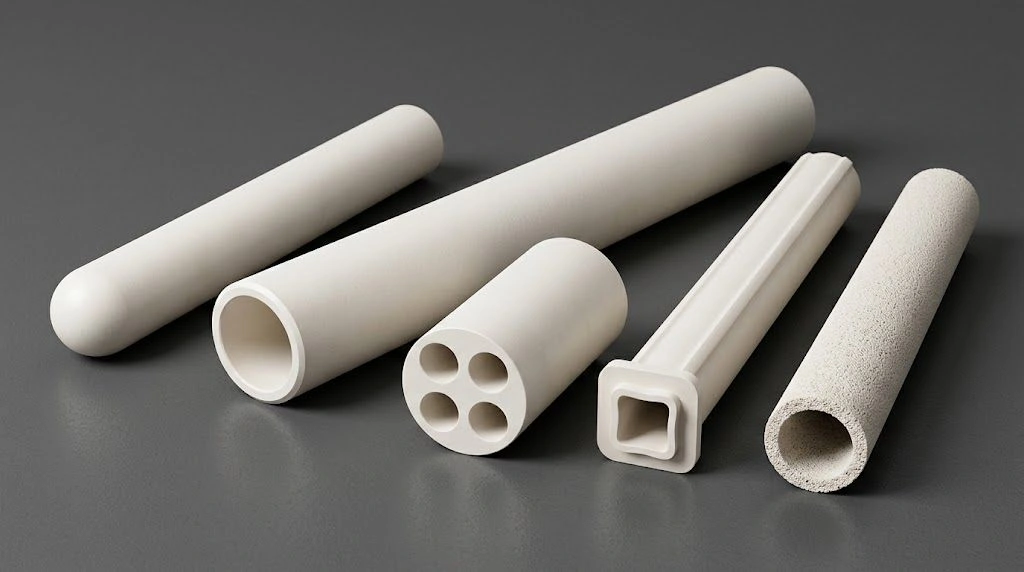
A dual-bore tube integrates two parallel channels within a single ceramic body. This reduces the number of separate insulators needed and increases efficiency. Engineers prefer this design for reducing alignment errors.
The structure also helps distribute stress evenly across the ceramic body. By minimizing weak points, it extends the component’s lifespan. This is particularly important in high-temperature or high-voltage conditions.
In practice, engineers emphasize:
- Design compactness for easier system assembly
- Stress distribution that prolongs component lifespan
- Ease of integration with existing hardware
Why Dual Channels Enhance Insulation and Stability
Dual channels provide strict separation between conductors. This separation is vital in preventing arcing and ensuring safe operation. Engineers value this characteristic for predictable insulation performance.
Stable channel walls prevent deformation under mechanical or thermal stress. Consistency under stress contributes to reduced system failures. In industries with continuous operation, this reliability is essential.
For insulation performance, the most relevant elements include:
- Separation integrity to prevent arcing
- Wall stability against thermal cycling
- Voltage resistance under repeated loading
Typical Dimensions and Purity Grades
Common tube diameters range from a few millimeters up to several centimeters. Purity levels vary between 95–99.8%, with higher purity correlating to better dielectric strength. These specifications guide engineers in selecting the right grade.
Material purity directly affects electrical performance. High-purity alumina minimizes ionic conductivity, preventing current leakage. Dimensions affect thermal resistance and handling.
When evaluating these tubes, engineers often focus on:
- Purity range linked to dielectric stability
- Dimensional precision for consistent fit
- Alignment between specifications and use case
Why Engineers Consider Double Bore Alumina Tubes for Critical Systems
Engineers in demanding industries seek materials that meet rigorous safety and performance requirements. Double bore alumina tubes are often considered the preferred choice in critical systems. Their ability to combine durability with stability explains their wide adoption.
Importance of High Purity in Harsh Environments
High-purity alumina ensures stable dielectric performance in extreme conditions. It minimizes ionic mobility1, reducing leakage current risk. Engineers trust this behavior in environments like furnaces.
Without high purity, systems face premature insulation breakdown. This creates maintenance costs and operational hazards. Choosing high-purity tubes avoids these risks.
Engineers typically highlight:
- Ionic stability in harsh atmospheres
- Heat resistance above 1500 °C
- System safety during continuous operation
Reliability in Long-Term Operations
Industrial systems often run continuously for thousands of hours. Alumina tubes retain structural strength over long durations. Their creep resistance and hardness reduce the chance of sudden failures.
Reliability lowers lifecycle costs. By reducing replacements, downtime is minimized. The resulting stability supports long-term investment planning.
For operational durability, engineers value:
- Lifetime stability under prolonged service
- Creep resistance across thousands of cycles
- Lower maintenance and downtime risks
Integration into Industrial Standards
Many industries require compliance with ASTM or ISO standards. Double bore tubes meet specifications for dielectric strength and mechanical testing. This conformity supports easier certification.
Integration into standards allows interchangeability. Engineers can replace or upgrade parts without complex redesign. System reliability improves when standardized components are used.
Evaluations typically consider:
- Compliance with ASTM dielectric benchmarks
- Compatibility with dimensional standards
- Ease of achieving certification approvals
Evaluating 2 Hole Alumina Tubes for Electrical Insulation
Electrical systems require strong insulation materials to ensure safety and stability. Alumina’s dielectric properties make it a strong candidate. Two-hole designs extend these benefits by adding structural security.
Dielectric Properties and Voltage Resistance
Alumina exhibits dielectric strength values above 10 kV/mm at 25 °C. This performance allows use in high-voltage equipment. Engineers rely on these numbers for safe design margins.
Purity improves dielectric reliability under thermal load. Higher purity alumina provides stability up to 1600 °C. Voltage breakdown resistance remains consistent through cycles.
| Property | Typical Value | Context |
|---|---|---|
| Dielectric Strength | 10–12 kV/mm | Measured at 25 °C |
| Max Continuous Use Temp | 1500–1600 °C | Depends on purity |
| Purity Range | 95–99.8% | Influences leakage resistance |
Preventing Leakage Currents in High-Power Systems
Leakage currents damage sensitive components. Dual channels separate conductors, reducing the risk of contact. Engineers rely on predictable barriers.
Repeated tests confirm alumina’s low ionic conduction. Consistency minimizes system instability. Proper design reduces electrical failures.
In insulation assessment, attention is usually on:
- Barrier effectiveness against leakage
- Leakage prevention across operating cycles
- System endurance in demanding conditions
Long-Term Durability Under Repeated Stress
High-voltage components endure stress from switching and heating cycles. Alumina maintains dielectric consistency over many cycles. This property builds confidence in lifetime performance.
Durability lowers operational costs. Maintenance frequency decreases. System uptime improves.
Durability assessment often highlights:
- Dielectric cycle stability over repeated stress
- Fatigue resistance in power environments
- Reduced maintenance through long-term endurance
Assessing Two Hole Alumina Tubes in Thermocouple Protection
Process industries demand accurate temperature measurement. Alumina tubes protect thermocouples and ensure precise readings. Their inert surfaces minimize contamination.
Shielding Sensors From High Temperature Exposure
Alumina resists degradation up to 1600 °C. Thermocouples inside remain shielded. The result is longer sensor life.
Thermal stability reduces drift. Engineers gain consistent readings. Furnaces run efficiently without recalibration.
When examining thermal shielding, engineers stress:
- Endurance above 1500 °C for long runs
- Sensor longevity despite furnace cycles
- Measurement stability across thermal shifts
Ensuring Accurate Readings in Industrial Furnaces
Accuracy depends on preventing contamination. Alumina’s inert surface ensures stable thermocouple wires. Measurement remains precise under chemical exposure.
In furnaces, accuracy is critical for product quality. Errors increase waste and costs. Engineers trust alumina for predictable data.
Accuracy discussions focus on:
- Reading stability in reactive environments
- Signal integrity through long exposures
- Process reliability with reduced errors
Minimizing Contamination Risks in Measurement Environments
Contamination alters signals. Alumina surfaces resist oxide buildup. Sensors remain unaffected.
In environments with molten metals, this protection is critical. Reliability improves with less maintenance. Engineers confirm calibration holds longer.
Risk reduction relies on:
- Surface inertness against corrosive buildup
- Environmental protection in molten atmospheres
- Calibration retention across service life
Why 2 Bore Alumina Ceramic Tubes Are Essential for High-Temperature Fluid Guidance
Fluid systems require stable conduits. Alumina tubes resist corrosion and maintain mechanical strength under flow. Two bores allow efficient design.
Chemical Inertness Against Corrosive Gases and Liquids
Alumina resists acids, alkalis, and gases. This protection prevents contamination of fluids. Engineers value its chemical stability.
Industrial reactors demand materials that survive harsh flow. Alumina tubes deliver consistent results. Service life extends under aggressive exposure.
Key highlights for chemical inertness include:
- Resistance to acidic and alkaline conditions
- Stable protection against hot gases
- Maintained fluid purity in harsh flows
Mechanical Strength Under Continuous Flow Conditions
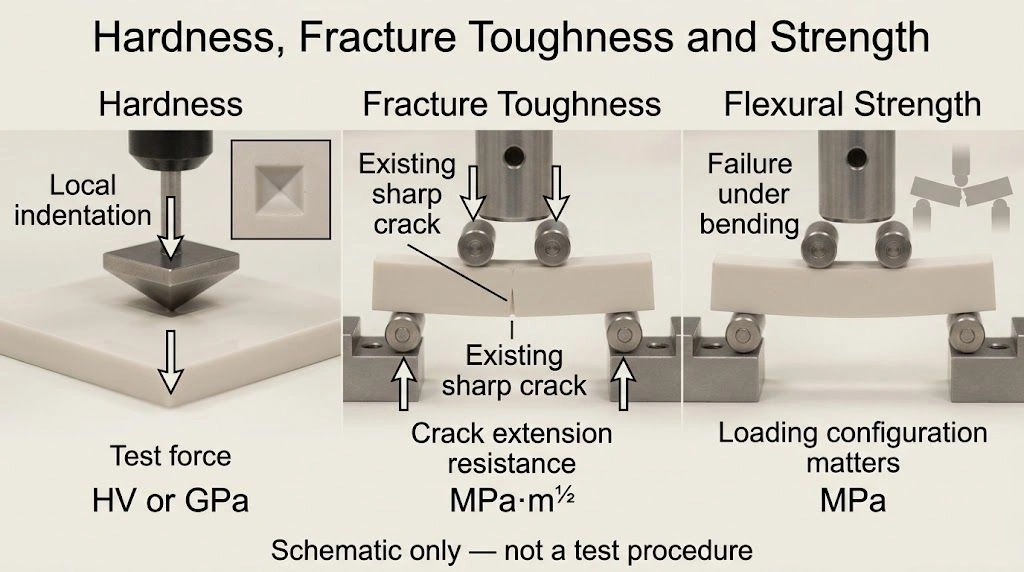
Flow systems create continuous stress. Alumina’s flexural strength averages 300–400 MPa. Tubes resist cracking under repeated flow.
Strength supports safe operation. Engineers trust consistent performance. Long-term projects rely on dependable parts.
Strength evaluations typically highlight:
- Flexural resistance in constant flow systems
- Stress tolerance at high operating pressures
- Mechanical stability during extended operation
Design Considerations for Safe Integration in Piping Systems
Piping integration demands careful planning. Alumina’s thermal expansion differs from metals. Sealing systems must account for this mismatch.
Engineers design compliant seals. Proper integration avoids leakage. Structural stress remains controlled.
Integration practices emphasize:
- Joint compatibility for hybrid assemblies
- Sealing design for long-term performance
- Safety assurance under thermal cycling
Comparing 2 Hole Alumina Tubes to Multi-Bore Alternatives
When evaluating alumina tubes, engineers often compare dual-channel and multi-channel designs. Both offer different benefits, but alignment with application requirements is the deciding factor. By examining insulation, thermocouple protection, and fluid guidance, engineers can better understand where each design performs best.
Insulation Performance in Different Bore Configurations
Dual-bore tubes provide stronger separation between conductors, which improves dielectric stability. Multi-bore tubes allow more wiring but reduce the ceramic wall thickness. This reduction often decreases insulation reliability under high voltage.
Engineers in electrical systems typically value robust insulation over channel density. For high-voltage safety, dual-bore tubes are more predictable. This preference is reinforced by lower risk of breakdown under thermal cycling.
Key differences in insulation include:
- Dielectric stability maintained in dual-bore tubes
- Reduced wall thickness in multi-bore lowers resistance
- Predictability of insulation performance favors dual-bore
Thermocouple Protection Trade-Offs
In thermocouple applications, dual-bore tubes provide clear separation of sensor leads. This separation ensures accurate readings and protects against cross-interference. Multi-bore tubes allow multiple sensors, but proximity increases signal distortion risks.
Engineers prioritize stability in measurement over density of channels. Reliability of readings directly influences process quality. When precise data is critical, dual-bore tubes are chosen more frequently.
Evaluation shows:
- Signal integrity supported by separated bores
- Multi-bore increases risk of lead interference
- Measurement reliability stronger in dual-bore designs
Fluid Guidance Boundaries Across Bore Types
In high-temperature fluid systems, alumina tubes must maintain strength and resist corrosion. Dual-bore tubes ensure structural stability by balancing flow with thicker walls. Multi-bore tubes provide parallel channels but compromise wall integrity under pressure.
Engineers working with aggressive fluids prefer dual-bore tubes for long-term durability. Multi-bore designs are considered only when parallel flows are essential. Safety and longevity remain central in decision-making.
Fluid guidance evaluations highlight:
- Structural stability of dual-bore under flow stress
- Multi-bore compromises durability with thinner walls
- Safe long-term use better achieved with dual-bore
Recognizing the Technical Limitations of Double Bore Alumina Tubes
Even though dual-bore alumina tubes are reliable, engineers must also recognize their limits. Performance in insulation, thermocouple protection, and fluid guidance can be challenged by specific operational stresses. Identifying these boundaries ensures safe deployment.
Insulation Limits Under Thermal Shock
Electrical insulation degrades when alumina faces rapid thermal changes. Temperature gradients above 200 °C per minute can cause cracks. These failures compromise dielectric strength and lead to unsafe conditions.
Controlled heating cycles are critical in high-voltage systems. By limiting thermal shocks, engineers preserve tube reliability. Safe practices ensure insulation performance remains intact.
Insulation risks emphasize:
- Cracking under extreme thermal gradients
- Dielectric breakdown when walls are stressed
- Reliability dependent on controlled heating
Thermocouple Protection Challenges in Harsh Conditions
Thermocouple leads require stable shielding, but extreme environments can stress dual-bore tubes. Rapid cycling and aggressive furnace atmospheres increase surface wear. Contaminants may still penetrate microcracks, reducing accuracy.
Engineers mitigate this risk by using protective coatings or multi-layer assemblies. These measures extend service life but add complexity. Careful selection of conditions reduces exposure to failure.
Limitations in thermocouple protection include:
- Surface degradation from aggressive gases
- Microcracks leading to contamination risks
- Accuracy loss in uncontrolled environments
Fluid Guidance Constraints in High-Stress Systems
While strong, alumina tubes are brittle compared to metals. High-pressure or rapidly pulsing flows stress the material. Repeated pressure cycling may initiate cracks that spread through the dual channels.
Engineers compensate by restricting use to moderate pressures. For extreme flows, metal-ceramic hybrids or thicker-walled designs are preferred. Safe fluid guidance depends on respecting these design boundaries.
Fluid guidance limits include:
- Brittleness under high-pressure conditions
- Crack initiation from repeated flow cycles
- Better alternatives required for pulsing or extreme systems
Conclusion
Engineers evaluate 2 hole alumina ceramic tubes by balancing insulation, durability, and limitation factors.
Navigating material selection requires reliable partners. Leverage ADCERAX engineering support and factory-direct supply for customized alumina ceramic tubes. Contact info@adcerax.com for technical consultation.
FAQ (Frequently Asked Questions)
Q1: What dielectric strength can 2 hole alumina ceramic tubes achieve?
Most high-purity grades reach dielectric strengths above 10 kV/mm at 25 °C, making them suitable for high-voltage insulation.
Q2: How do 2 hole alumina ceramic tubes support thermocouple protection?
They shield thermocouple wires from heat and chemical attack, ensuring accurate readings and extending sensor lifespan in industrial furnaces.
Q3: What are the mechanical limits of 2 hole alumina ceramic tubes under continuous flow?
They typically provide flexural strength of 300–400 MPa, resisting cracking under high-temperature and high-pressure fluid systems.
Q4: How do 2 hole alumina ceramic tubes compare with zirconia alternatives?
Alumina offers higher dielectric strength and lower cost, while zirconia provides greater fracture toughness for shock-prone applications.
References:
-
Learn how ionic mobility impacts dielectric performance and why minimizing it is crucial for reliable electronic components. ↩