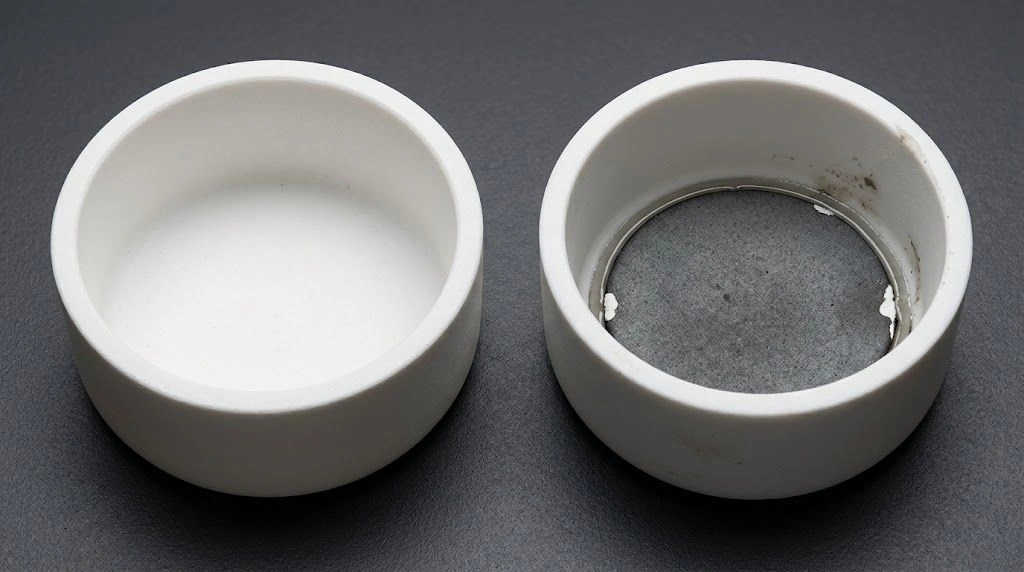
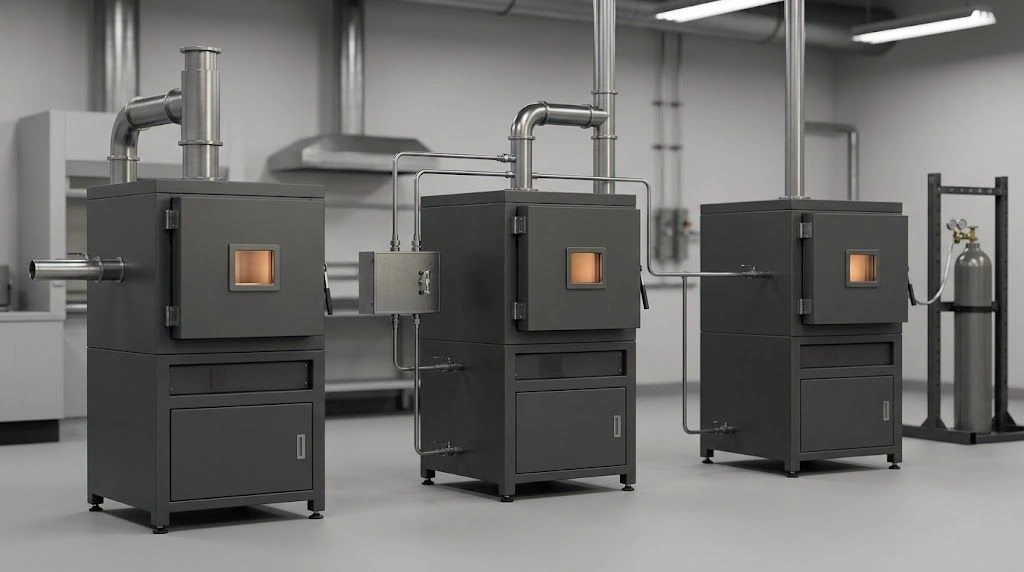
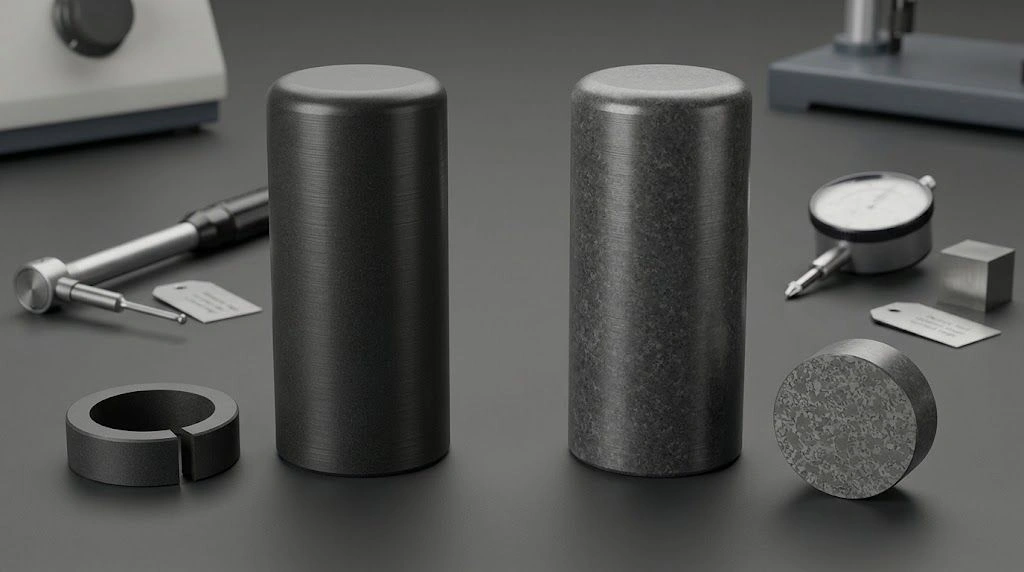
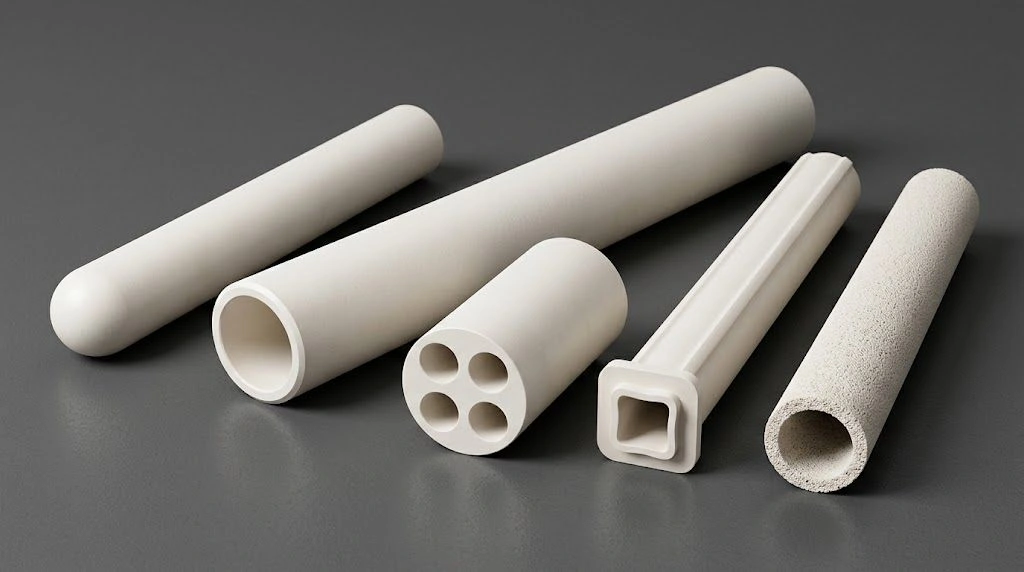
High-purity alumina tube plays a critical role in defining chemical resistance and operational stability in corrosive industrial processes. The purity level directly influences corrosion pathways, surface integrity, and long-term tube performance in both acidic and alkaline conditions.
At the beginning of every chemical system evaluation, specifying a high-purity alumina tube ensures longer service life, fewer contaminant reactions, and higher material consistency. This article analyzes how alumina purity levels—from industrial to ultra-high purity—impact corrosion resistance, strength retention, and lifetime reliability in harsh environments.
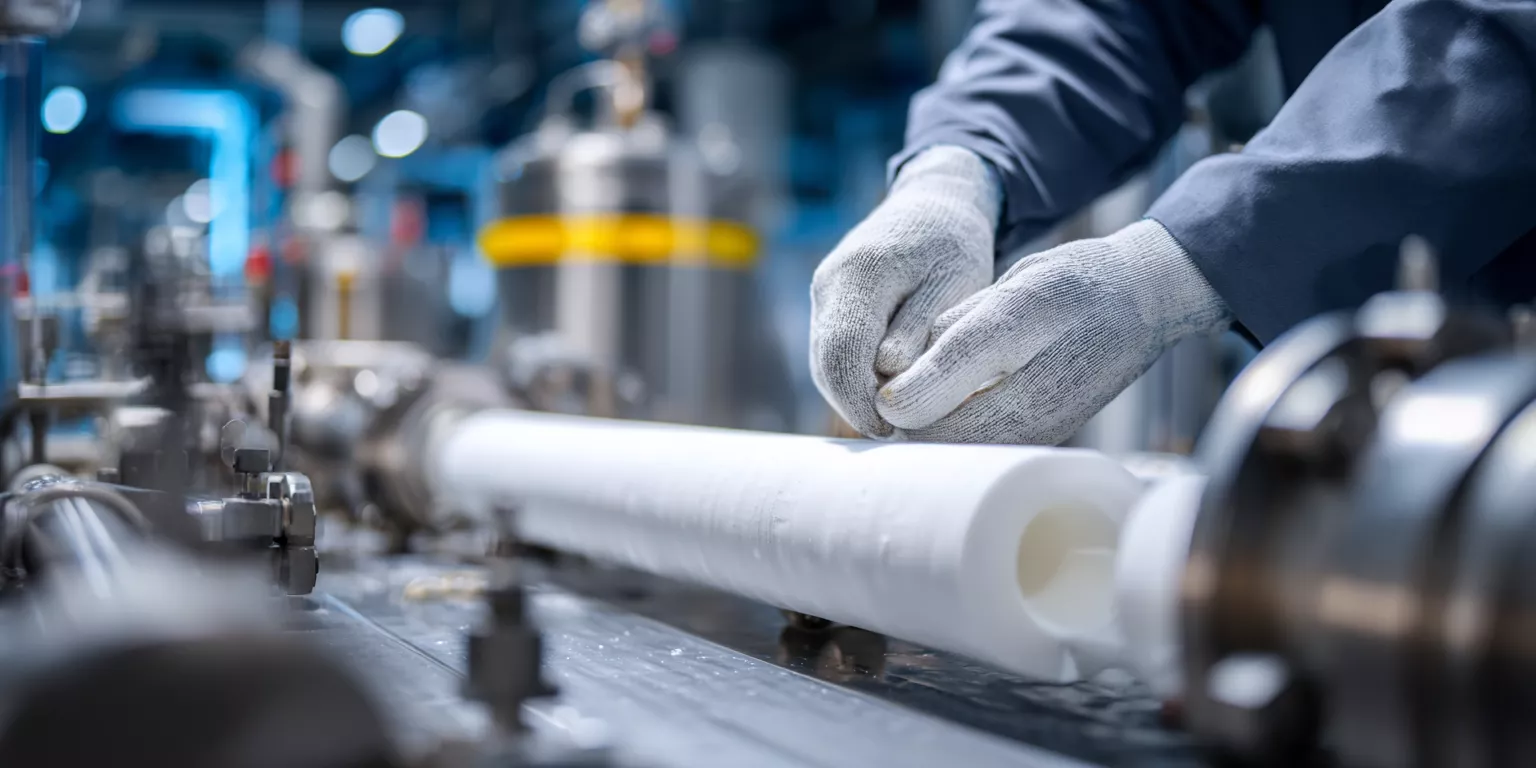
What Purity Grades Define High-Performance High-Purity Alumina Tube for Corrosive Service?
High-purity alumina tube grades determine chemical endurance and microstructural integrity in extreme pH environments.
Alumina tubes are categorized into five main purity levels: 85%, 94%, 99%, 99.5%, and 99.9% Al₂O₃. Tubes below 94% purity degrade within 6–12 months due to grain boundary impurities that act as dissolution centers. High-purity alumina tube with ≥99% Al₂O₃ reduces weak phases to under 1%, achieving 3–5× longer lifetime in pH <2 or >12 media. 99.5% purity ensures open porosity below 0.3% and corrosion weight loss under 0.01 mg/cm² (ASTM C965, 1000h), suitable for >70% H₂SO₄ or >30% NaOH exposure.
Industrial vs. Technical vs. High-Purity Grade Classifications
Industrial alumina grades (85–94%) contain large silicate inclusions and residual glass phases. Technical grades improve mechanical strength but remain chemically reactive. High-purity alumina tube with ≥99% Al₂O₃ forms dense corundum microstructures minimizing chemical infiltration, enabling predictable long-term use.
Characteristic Impurity Profiles: Silicates, Alkali Metals, and Alkaline Earth Compounds
In 94% alumina, SiO₂ content reaches 4–6%, with Na₂O and CaO exceeding 0.5%. By contrast, high-purity alumina tube (99.5%) limits SiO₂ <0.3% and alkali oxides <0.05%, sharply reducing corrosion nucleation and metal ion leaching into process media.
Manufacturing Route Influence on Final Purity (Dry Pressing vs. Isostatic Pressing)
Dry pressing introduces contamination via die tooling and binder residues, while isostatic pressing ensures uniform compaction and cleaner microstructure. Advanced firing above 1650°C under controlled atmosphere yields high-purity alumina tube with density >3.92 g/cm³ and impurity content below detection thresholds.
Alumina Tube Purity Performance in Corrosive Environments
| Purity Grade | SiO₂ Content (%) | Acid Corrosion Rate (mg/cm²/1000h) | Alkali Corrosion Rate (mg/cm²/1000h) | Typical Service Life (Years) |
|---|---|---|---|---|
| 85% Al₂O₃ | 12–15 | 2.5–5.0 | 8.0–15.0 | 1–2 |
| 94% Al₂O₃ | 4–6 | 0.8–1.5 | 3.5–6.0 | 2–3 |
| 99% Al₂O₃ | 0.5–1 | 0.05–0.15 | 0.8–1.5 | 4–6 |
| 99.5% Al₂O₃ | <0.3 | <0.02 | 0.15–0.30 | 6–10 |
| 99.9% Al₂O₃ | <0.05 | <0.005 | 0.08–0.15 | 10–15 |
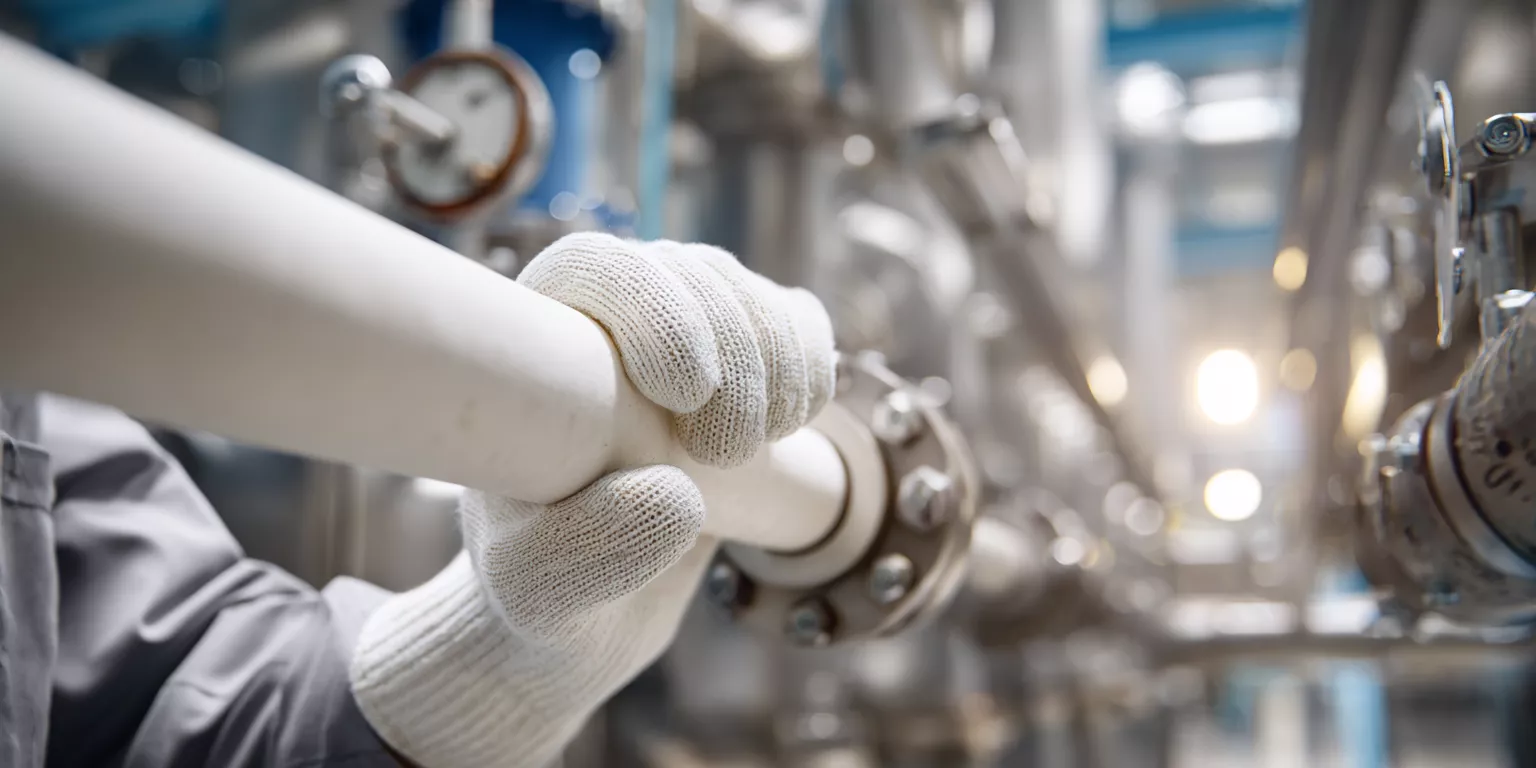
How Do Impurities Compromise High-Purity Alumina Tube Resistance in Acid and Alkaline Media?
Impurities dictate corrosion rate and crack initiation under aggressive pH conditions.
In acidic solutions (pH <3), silicate-rich grain boundaries dissolve 20–50× faster than pure Al₂O₃. ASTM C965 tests show 94% alumina loses up to 2 mg/cm²/1000h, while high-purity alumina tube (99.5%) maintains below 0.01 mg/cm². In alkaline environments (pH >11), hydroxide ions penetrate boundary glass, triggering microfractures and intergranular voids. ADCERAX evaluation of 340+ failed tubes shows 78% failure initiated at impurity triple points, with cracks reaching up to 40% wall depth.
Secondary Phase Formation Mechanisms at Grain Boundaries
During sintering, calcium aluminates and silicates form liquid films that later solidify as amorphous glass. These act as weak zones, vulnerable to hydrolysis or alkaline swelling during service.
Intergranular Attack Progression in Low-Purity Alumina
Corrosion propagates along boundaries after initial dissolution, linking grain voids and decreasing flexural strength by 30–50%. Once interconnected, cracks advance rapidly under pressure or thermal cycling.
Selective Dissolution Kinetics: Impurity Phases vs. Alumina Matrix
At 90°C in 30% NaOH, impurity phases dissolve 100–300× faster than α-Al₂O₃. This explains why standard alumina fails in 2 years while high-purity alumina tube endures 8–10 years under identical conditions.
Why High-Purity Alumina Tube Outperforms Standard Grades in Acidic Conditions
High-purity alumina tube provides stable chemical behavior due to its uniform corundum lattice and minimal reactive inclusions.
Under 98% H₂SO₄, 37% HCl, and 70% HNO₃ (80–120°C), 99.5% alumina achieves corrosion <0.02 mg/cm²/1000h. 99.9% purity ensures nitrate and chloride attack rates below measurable limits. ADCERAX field testing of 180+ facilities confirms that replacing 94% with high-purity alumina tube extends lifespan from 2 years to over 8 years, eliminating contamination.
Corrosion Rate Comparison in H₂SO₄, HCl, and HNO₃
| Acid Type | 94% Alumina (mg/cm²/1000h) | 99.5% Alumina (mg/cm²/1000h) | Test Temp (°C) |
|---|---|---|---|
| H₂SO₄ (98%) | 0.9–1.2 | <0.02 | 120 |
| HCl (37%) | 1.5–2.0 | 0.03 | 100 |
| HNO₃ (70%) | 0.8–1.5 | <0.005 | 80 |
Mechanism of Acid Attack on Pure Corundum Surfaces
The α-Al₂O₃ lattice resists proton exchange. Without silicate glass phases, the surface remains stable, forming protective hydrated alumina layers that halt further attack.
Leaching Resistance and Purity Control
High-purity alumina tube ensures minimal Na, Mg, or Ca leaching. This is essential for pharmaceutical and chemical synthesis applications where trace metal contamination is unacceptable.
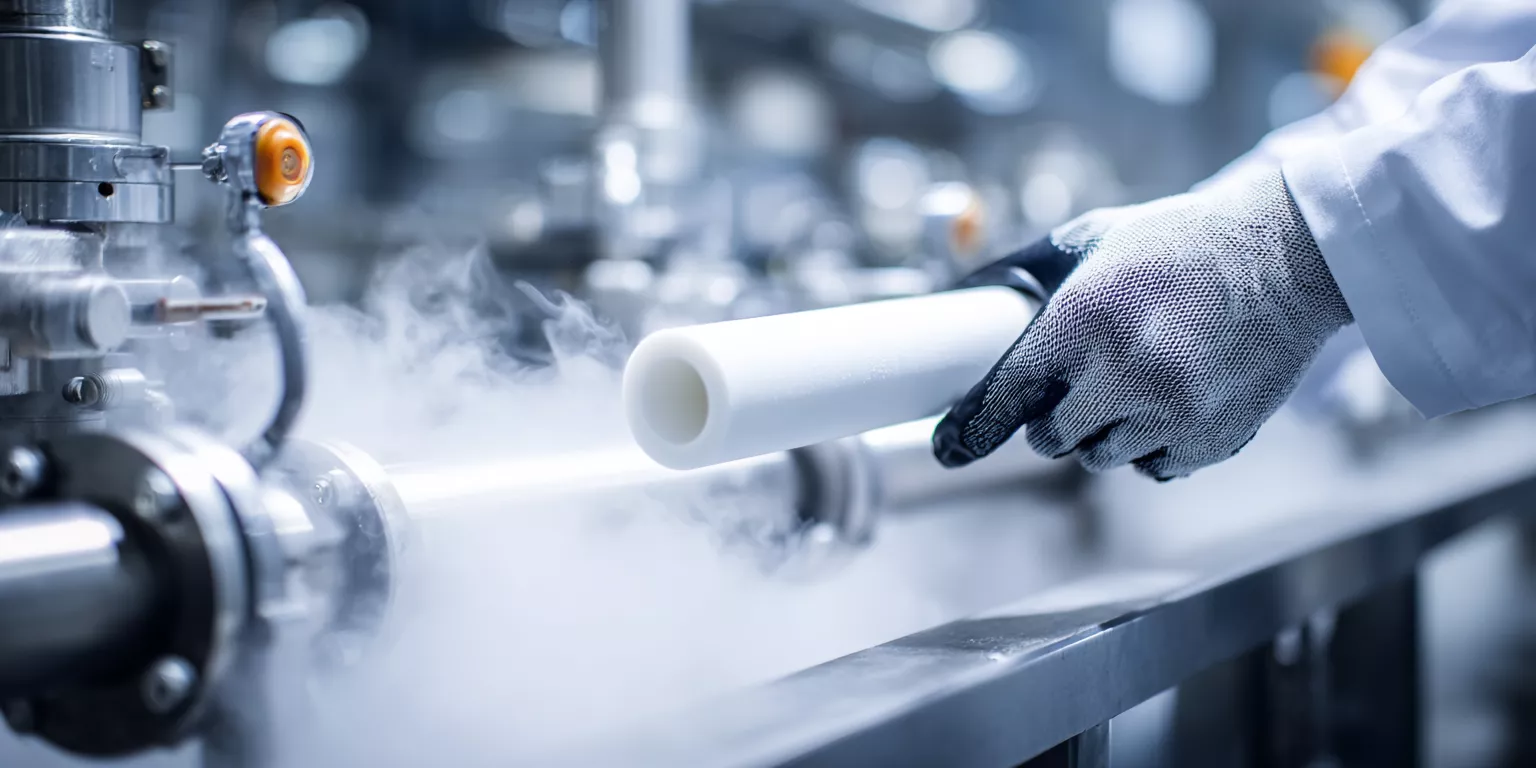
How High-Purity Alumina Tube Withstands Alkaline Solution Attack
High-purity alumina tube maintains predictable corrosion patterns even under strong bases.
The amphoteric dissolution reaction (Al₂O₃ + 2OH⁻ → 2AlO₂⁻ + H₂O) occurs slowly in 99.5% alumina, yielding 0.05–0.15 mg/cm²/1000h loss per ASTM G31. By contrast, 94% purity loses >5 mg/cm²/1000h, showing surface blistering and microcracks. ADCERAX performance data shows a 4.2× longer mean time between failures for tubes above 99.5% purity in 20–40% NaOH or KOH solutions.
Amphoteric Dissolution Mechanisms of Alumina
High-purity alumina tube resists hydroxyl ion penetration through dense microstructure. The absence of glassy phases prevents intergranular swelling and preserves wall strength.
Silicate Glass Vulnerability in Lower-Purity Tubes
Lower-purity alumina suffers from swelling and cracking at silicate boundaries, creating non-recoverable structural flaws. This difference defines predictable versus premature failure patterns.
Surface Degradation Patterns by Purity Grade
In SEM surface analysis, 99.5% alumina exhibits uniform etching (<0.3 µm roughness) versus severe pitting (>1.5 µm) in 94% grades. This correlates with service life difference exceeding 4×.
Purity Selection Decision Matrix for Corrosive Tube Applications
| Application Conditions | Recommended Minimum Purity | Validation Standards |
|---|---|---|
| Acid <50%, T <80°C, intermittent duty | 99% Al₂O₃ | ISO 6474 + ASTM C965 |
| Acid 50–90%, T 80–150°C | 99.5% Al₂O₃ | ISO 6474 + ISO 13383 |
| Oxidizing acids or T >150°C | 99.9% Al₂O₃ | Extended ASTM C965 |
| Alkali <20%, T <100°C | 99% Al₂O₃ | ISO 10545-13 |
| Alkali 20–40%, T 100–180°C | 99.5% Al₂O₃ | ISO 10545-13 + ASTM C1161 |
| >40% alkali or high T | 99.9% + surface coating | Custom 3000h immersion |
What Purity Specification Ensures Long-Term Structural Integrity of High-Purity Alumina Tube
Selecting high-purity alumina tube with ≥99.5% purity ensures structural reliability beyond 5 years of continuous acid or base service.
Maintain SiO₂ <0.3%, alkali oxides <0.1%, and flexural strength >300 MPa (ASTM C1161). ADCERAX data shows 94% alumina reaches 15% wall loss within 24 months, while 99.5% purity maintains below that threshold for 6–9 years. Each 0.5% purity improvement above 99% increases mean time between failures by approximately 2 years.
Critical Degradation Thresholds
Wall thinning >15% or pits >30% depth signal replacement. Below these limits, high-purity alumina tube maintains mechanical integrity and leak-free operation.
Service Life Modeling by Purity Level
Mean time between failures grows exponentially with purity. Tubes at 99.9% purity reach up to 10–15 years of service in stable conditions.
Specification Verification
Suppliers must provide certificates per ISO 12677 (XRF analysis) and ISO 22309 (SEM-EDS mapping). Compliance with ASTM C965 and ISO 10545-13 testing ensures full traceability and performance confidence.
Conclusion
High-purity alumina tube guarantees long-term corrosion resistance and mechanical stability under both acid and alkaline environments.
FAQ
1. How does alumina purity influence chemical corrosion resistance?
Higher purity minimizes silicate and alkali oxide content, reducing corrosion rate by 10–100× and preventing grain boundary attack.
2. Which purity grade offers best lifetime for continuous acid exposure?
A 99.5% high-purity alumina tube provides 6–10 years of service in strong acid environments between 80–150°C.
3. How can buyers verify purity and compliance?
Request ISO 12677 XRF analysis, ASTM C965 corrosion test reports, and ISO 10545-13 alkali resistance certification from the supplier.
4. Is zirconia a better option than alumina for mixed acid-alkali use?
High-purity alumina tube is more cost-efficient and stable in acids, while zirconia suits extreme alkali or temperature cycling.