Rapid temperature fluctuations and corrosive molten alloys expose thermocouples to severe thermal and chemical degradation. Alumina tubes act as protective barriers that maintain measurement stability, extend service life, and reduce downtime in foundry environments.
High-purity alumina ceramics provide exceptional resistance to metal attack, thermal shock, and oxidation. Their crystalline stability and closed porosity prevent molten infiltration, ensuring long-term accuracy for Type S and Type K thermocouples used in aluminum and steel casting.
Consistent temperature control determines casting quality and process efficiency. Understanding how alumina tubes mitigate thermal and chemical failure mechanisms helps engineers improve productivity and reduce annual maintenance costs.
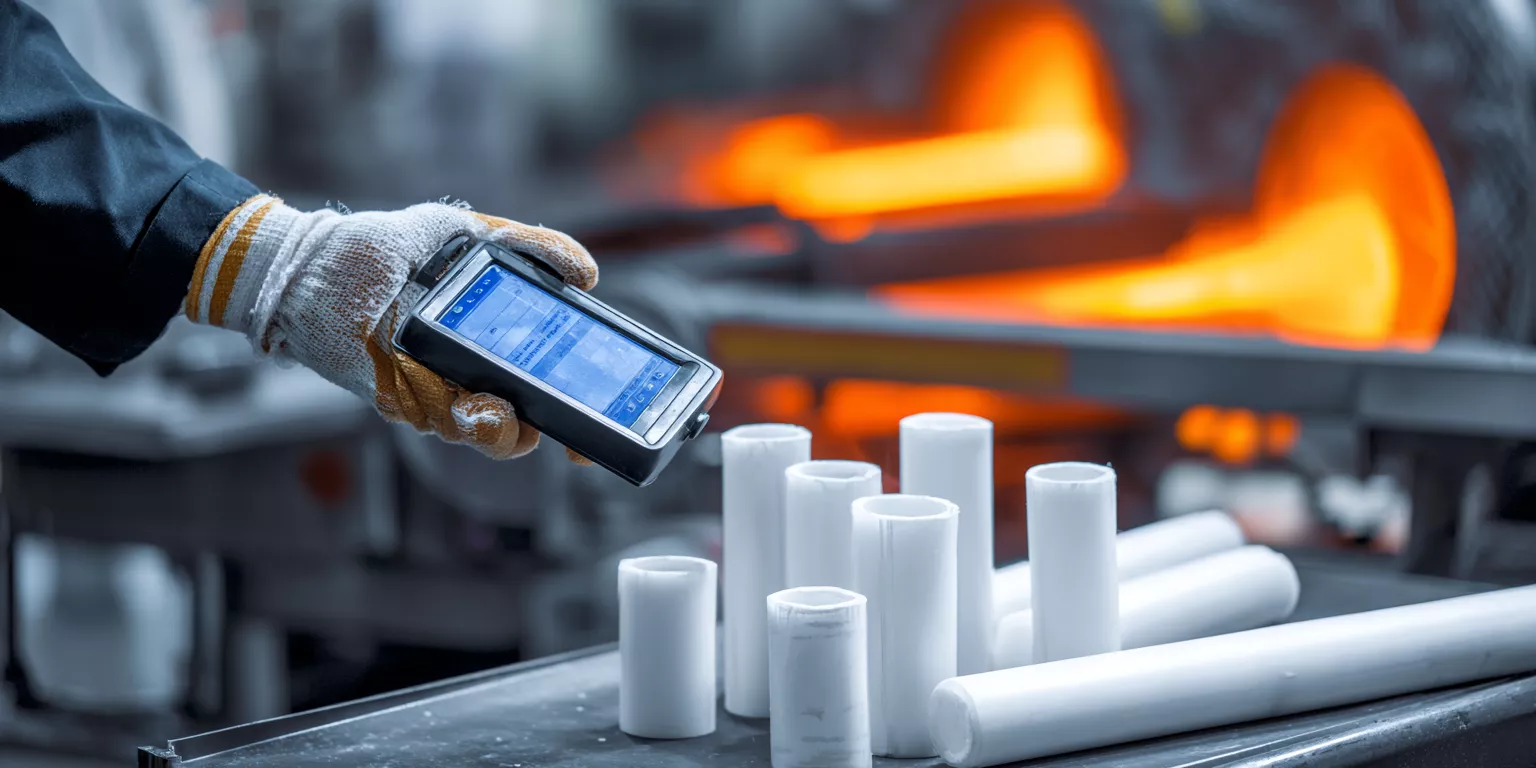
What Causes Thermocouple Failure in Molten Aluminum and Steel Casting Operations?
Sudden immersion in molten metal subjects unprotected thermocouples to combined electrical, mechanical, and chemical failure modes.
Thermocouples1 exposed directly to molten aluminum or steel experience failure within minutes. Wetting, oxidation, and rapid heating cause short-circuits and fracture. These mechanisms lead to expensive downtime and scrap losses across industrial furnaces.
Failures originate from three primary mechanisms. Direct metal wetting forms conductive bridges between wires. Thermal gradients exceeding 400°C/s induce stresses beyond 120 MPa, cracking the sensor sheath. Chemical erosion occurs as magnesium, zinc, and iron diffuse along grain boundaries, degrading wire insulation. Across 650 ADCERAX field cases, unprotected thermocouples caused $15,000–45,000 annual losses per furnace, mainly due to 2–4 hours of downtime per event.
Direct metal wetting mechanisms and electrical junction degradation pathways
Molten aluminum and steel alloys contain elements that adhere to exposed thermocouple junctions. Once contact occurs, metallic bonding forms conductive bridges that short the thermoelectric circuit. Repeated wetting causes corrosion pits, lowering insulation resistance. These micro-defects propagate until the sensor output drifts beyond ±2 °C, forcing unscheduled replacement.
Thermal gradient-induced stress calculations for rapid immersion scenarios
Thermal gradients up to 600 °C/s2 during immersion generate tensile stresses exceeding 300 MPa3 near the tube surface.
Finite-element models show cracks initiating at flaws where stress concentration exceeds alumina’s 350–400 MPa strength. Controlled preheating reduces this gradient to below 150 °C/mm, keeping stresses within safe margins for continuous operation.
Economic impact quantification across casting operation types
Each failure causes both direct material losses and indirect production delays. In high-volume aluminum die-casting, the resulting scrap rate increase of 3–8% raises total operational cost per shift. Annual downtime savings from proper tube protection average 55–65%, validating alumina tube adoption in temperature-critical environments.
Why Does High-Purity Alumina Microstructure Resist Thermal Shock in Foundry Environments?
Thermal shock in molten metal immersion results from instantaneous surface heating. High-purity alumina’s crystal stability prevents fracture during such transients.
Alumina tubes containing ≥99.5% Al₂O₃ exhibit fine, uniform α-phase grains that distribute stress evenly. This structure allows direct immersion into 750–800 °C aluminum without cracking.
High-purity alumina shows low thermal expansion (7.8–8.2 × 10⁻⁶ / °C) and strong lattice bonding. Controlled sintering between 1650–1750 °C yields grain sizes of 15–25 μm and density > 98.5% theoretical. As a result, alumina achieves a thermal shock parameter4 R = 420–580 W/m, twice that of lower-purity grades. ADCERAX field data confirms 4–6× improved survival under ASTM C1525 thermal cycling.
Alpha-phase crystal structure properties enabling dimensional stability
The α-Al₂O₃ hexagonal lattice5 (a = 4.759 Å, c = 12.991 Å) creates directional ionic bonds. These prevent distortion during sudden heating, maintaining sensor alignment. Dimensional stability ensures repeatable temperature readings even after hundreds of casting cycles.
Grain boundary engineering through controlled sintering parameters
Uniform grain growth achieved through precise sintering eliminates weak triple junctions. Grain boundary junctions near 120° geometry distribute stresses uniformly. Tubes fired at 1700 °C ± 15 °C show 3× higher survival in rapid immersion testing than those sintered with ±25 °C variation.
Thermal expansion coefficient impact on stress generation during quenching
Low α-values reduce differential strain between tube interior and exterior surfaces. During quenching from 1200 °C to ambient, thermal stress remains < 100 MPa, below fracture limits. This property ensures mechanical integrity even after repeated rapid temperature changes.

How Does Hermetic Sealing Prevent Molten Metal Infiltration Into Thermocouple Assemblies?
Molten metal infiltration occurs when open porosity allows capillary penetration. Hermetically sintered alumina eliminates this risk.
High-density tubes (<0.1% porosity, 3.94–3.98 g/cm³ density) create gas-tight barriers verified through ASTM E499 helium leak testing (<1 × 10⁻⁷ mbar·L/s). They prevent liquid and vapor metal ingress that short-circuits thermocouple wires.
Hermetic alumina tubes resist three infiltration modes—liquid, vapor, and gas phase. Capillary theory predicts that porosity > 0.05% allows molten alloy entry under 0.1–0.5 bar pressure. Hermetic tubes surpass 3,200–4,800 hours MTBF, compared to < 1,400 hours for cemented or open-end designs.
Closed porosity achievement through solid-state sintering mechanisms
Solid-state diffusion during 1750 °C sintering fuses powder particles into a continuous matrix. Closed pores shrink and seal as densification proceeds. Achieved densities > 98.5% of theoretical prevent interconnected pathways for molten infiltration.
Capillary pressure requirements for liquid metal penetration prevention
According to the Washburn equation6, pores > 1 μm enable capillary wetting7 by molten aluminum. Maintaining pore radius < 0.1 μm and total porosity < 0.05% blocks metal infiltration at operating pressures typical of foundry furnaces.
Helium leak detection protocols ensuring production quality consistency
Helium mass spectrometry ensures manufacturing consistency at 1 × 10⁻⁹ mbar·L/s sensitivity. ADCERAX data shows tubes within specification exhibit zero infiltration failures after 2,000 hours immersion. Exceeding limits by 10× causes early breakdown within 800 hours.
How Do Alumina Tubes Outperform Mullite in High-Temperature Aluminum Foundry Service?
Material choice directly impacts thermocouple reliability and maintenance cost. Alumina surpasses mullite under long-term molten metal exposure.
Alumina tubes withstand 200–300 thermal cycles (up to 1650 °C) compared to 50–80 for mullite, extending service life by 3–4×. Despite 40–50% higher unit cost, lifetime cost-per-hour decreases by 60–75%.
At 2050 °C melting point, alumina maintains chemical stability with molten aluminum alloys. Mullite, containing SiO₂, softens > 1600 °C and reacts with Mg to form spinel phases that degrade surfaces. ADCERAX production data reports alumina tubes lasting ~3000 hours versus ~1000 for mullite, a 3.2:1 service life ratio.
Comparative material properties analysis for foundry temperature regimes
| Property | Alumina (99.5%) | Mullite (3Al₂O₃·2SiO₂) |
|---|---|---|
| Melting Point (°C) | 2050 | 1840 |
| Thermal Expansion (×10⁻⁶/°C) | 8.0 | 5.5 |
| Thermal Conductivity (W/m·K) | 25–30 | 4–6 |
| Chemical Reactivity with Al | Minimal | High |
| Typical Service Life (hrs) | 2800–3400 | 800–1200 |
Service life documentation across production casting environments
In 15-ton holding furnaces operating 5500 hours per year, alumina tubes require replacement 5× in 3 years versus 17× for mullite. Planned replacement intervals reduce unplanned downtime by > 70%. Field studies confirm consistent alumina performance across multiple foundries.
Total cost of ownership calculations including downtime valuation
| Parameter | Alumina Tube System | Mullite Tube System |
|---|---|---|
| Tube Unit Cost | $800 | $550 |
| Average Operating Hours per Tube | 2750 | 970 |
| Total 3-Year Cost (4 sensors) | $18,500 | $28,400 |
| Downtime Losses per Year | < $12,000 | > $30,000 |
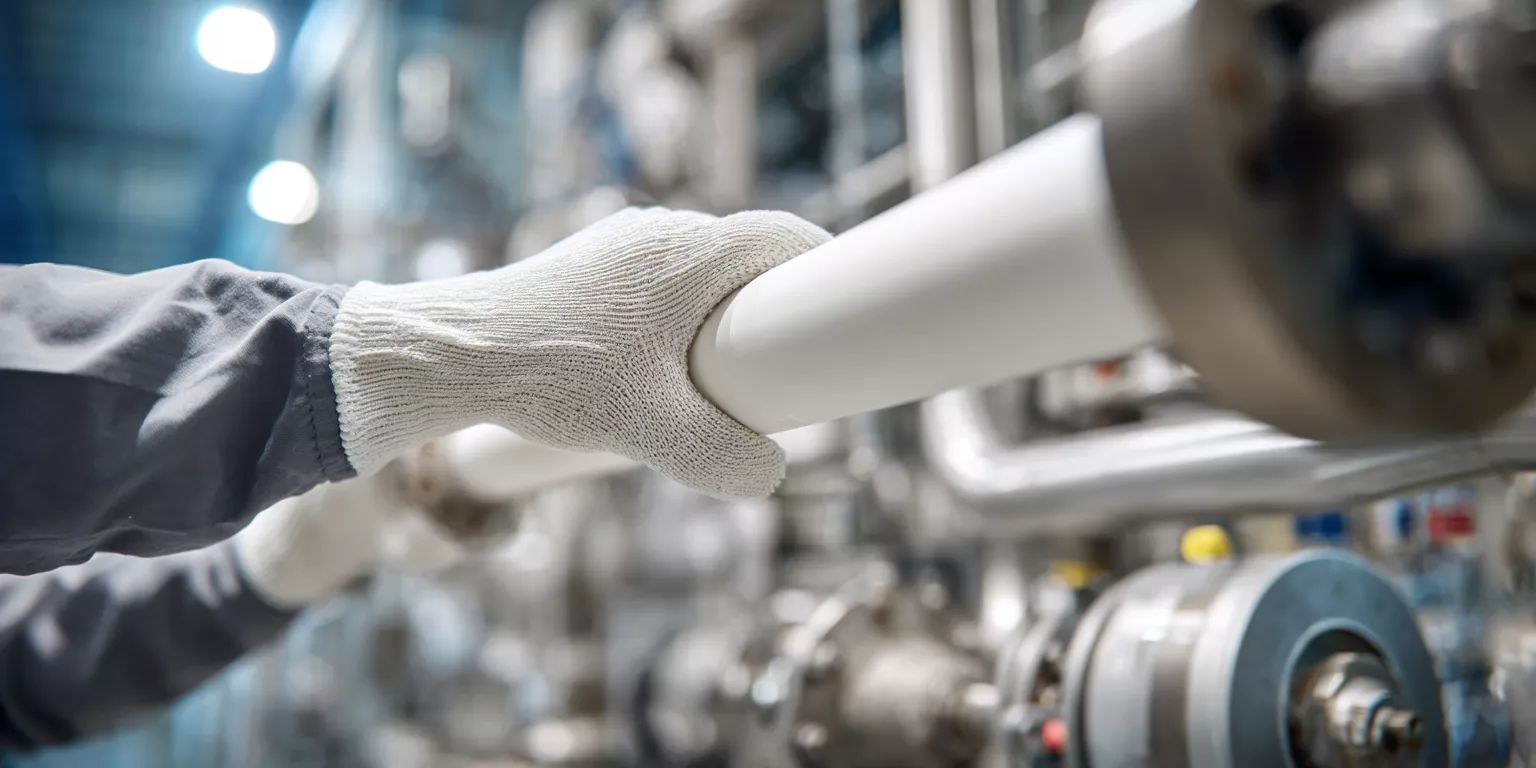
What Maintenance Protocols Maximize Alumina Protection Tube Service Life in Continuous Casting?
Systematic maintenance doubles protection tube lifespan and prevents costly process interruptions.
Regular inspection, controlled heating, and non-destructive testing maintain tube integrity. Preventing rapid thermal gradients is essential to avoid fracture.
ADCERAX recommends 400–600 hour inspection intervals, staged preheating below 150 °C/mm gradient, and ultrasonic crack detection. Field implementation extends tube service life 60–120% beyond baseline 3000 hours.
Pre-installation quality verification procedures and acceptance criteria
Before installation, tubes undergo 10× visual checks for > 0.5 mm cracks, straightness < 1 mm/m, and wall thickness mapping per ASTM E797. Defective tubes fail 3–4× sooner in service. Dimensional precision ensures stable mounting under thermal cycling.
Staged preheating temperature profiles preventing thermal shock initiation
A three-stage protocol—ambient to 300 °C (20 min), 300–600 °C (25 min), 600–operating temp (30 min)—limits stress to < 110 MPa. This sequence ensures survival margins > 3× beyond immediate immersion methods, validated under ASTM C1161 testing.
Non-destructive testing methods for subsurface crack detection
Ultrasonic inspection using 5–10 MHz transducers per ASTM E1065 detects subsurface flaws before failure. Combined with visual staining and pitting analysis, this approach predicts end-of-life accurately, supporting predictive maintenance scheduling.
Thermocouple Protection Performance by Foundry Application
| Foundry Type | Operating Temperature (°C) | Thermal Cycles/Shift | Alumina Tube MTBF (hrs) | Mullite Tube MTBF (hrs) | Service Life Ratio |
|---|---|---|---|---|---|
| Aluminum Die-Casting | 750–780 | 12–15 | 2800–3400 | 800–1200 | 3.2:1 |
| Steel Continuous Casting | 1550–1650 | 2–4 | 2200–2900 | 600–900 | 3.5:1 |
| Zinc Alloy Casting | 420–480 | 18–25 | 3500–4200 | 1100–1600 | 3.0:1 |
| Investment Casting (Steel) | 1480–1580 | 5–8 | 2400–3100 | 700–1100 | 3.3:1 |
Tube Selection Decision Matrix
| Operating Condition | Recommended Specification |
|---|---|
| Temp > 1400 °C & Thermocouple = Platinum (R/S/B) | ≥ 99.7% Al₂O₃, < 100 ppm SiO₂, closed-end construction |
| Thermal cycling > 15 cycles/shift & Immersion depth > 600 mm | Wall ≥ 3.5 mm, staged preheat protocol, support collars every 500 mm |
| Molten metal = Al alloys with Mg > 3% | ≥ 99.5% purity, hermetic seal < 1 × 10⁻⁷ mbar·L/s, quarterly inspection |
Conclusion
High-purity alumina tubes protect thermocouples by resisting molten metal attack, minimizing thermal stress, and maintaining long-term dimensional stability.
Navigating thermocouple protection challenges in molten metal environments requires engineered ceramic solutions. Leverage ADCERAX’s factory-direct alumina tube manufacturing, precision sintering control, and rapid global support to enhance foundry reliability and reduce downtime across aluminum and steel casting operations.
FAQ
1. How do alumina tubes improve thermocouple accuracy in molten aluminum?
They isolate the sensor junction from conductive metal, preventing electrical shorts. Stable α-phase alumina maintains consistent readings within ±2 °C across thousands of immersion cycles.
2. What is the cost advantage of alumina tubes compared with mullite?
Despite higher purchase price, alumina’s 3× longer lifespan reduces annual cost by over 50%. Fewer failures also cut downtime and scrap rates significantly.
3. How should foundries maintain alumina protection tubes?
Inspect every 400–600 hours, apply three-stage preheating, and use ultrasonic crack testing for predictive maintenance. These steps extend service life up to 120%.
4. Why choose alumina over other ceramics for molten metal thermocouples?
Alumina offers the highest thermal shock resistance and chemical stability among oxide ceramics, outperforming mullite or silicon carbide in continuous immersion applications.
References:
-
Understanding best practices can help prevent failures and improve efficiency in industrial applications. ↩
-
Understanding the effects of such thermal gradients can help in material selection and engineering applications. ↩
-
Exploring this topic can provide insights into material failure and design considerations in engineering. ↩
-
Understanding the thermal shock parameter can help you appreciate its significance in material performance under extreme conditions. ↩
-
Exploring this link will provide insights into the unique properties and applications of α-Al₂O₃, enhancing your understanding of its significance. ↩
-
Understanding the Washburn equation is crucial for grasping how molten aluminum interacts with porous materials. ↩
-
Exploring capillary wetting will provide insights into its role in metal infiltration and foundry efficiency. ↩