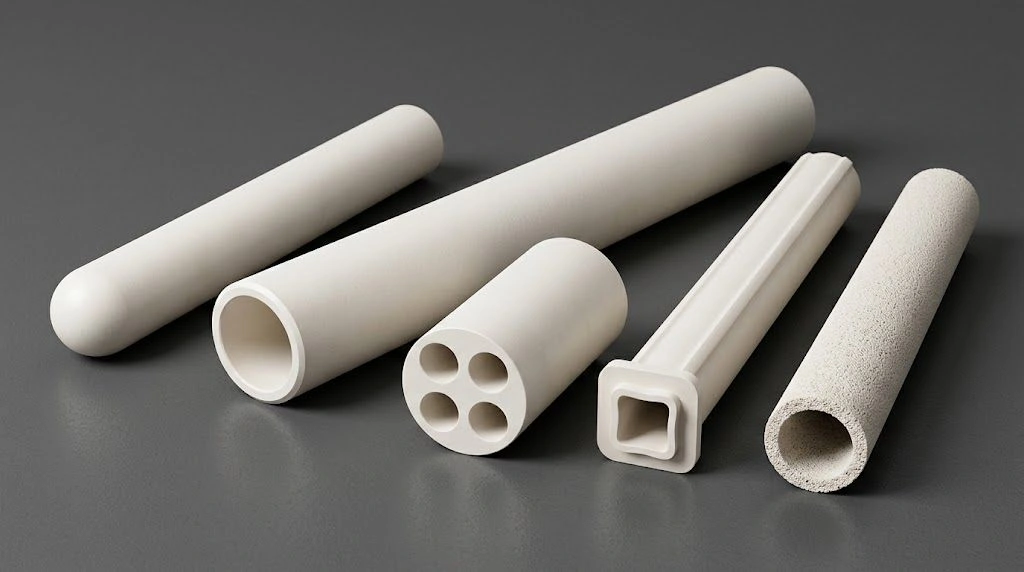
Recrystallized Alumina Tubes for Thermocouple provide the most reliable protection in rapid thermal cycling environments where standard ceramics often fail. Their performance depends on grain size distribution, which controls stress dissipation and fracture propagation under extreme temperature gradients. Understanding this link between microstructure and thermal shock survival allows engineers to specify tubes that extend thermocouple lifespan in high-temperature systems.
Thermal shock endurance in Recrystallized Alumina Tubes for Thermocouple is defined by the balance between differential expansion stress, fracture energy absorption, and grain boundary geometry. ADCERAX process data demonstrate how controlled grain size (80–150 μm) and uniformity (CV <20%) directly improve survival to 500+ cycles under ASTM C1525 conditions.
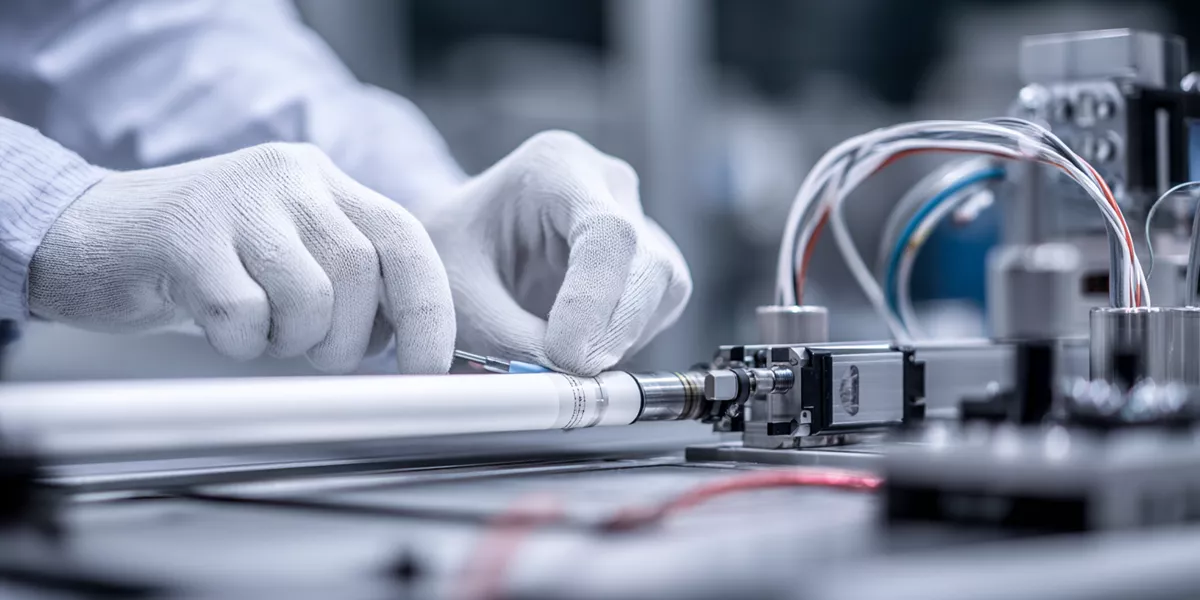
Defining Thermal Shock Resistance in Recrystallized Alumina Tubes for Thermocouple
Thermal shock resistance measures the ability of Recrystallized Alumina Tubes for Thermocouple to withstand temperature changes from 1500°C to 300°C without catastrophic cracking. Rapid cooling creates steep gradients that generate stresses up to 740 MPa in fine-grain ceramics, while recrystallized structures survive due to their energy-dissipating grain boundaries.
Thermal Stress Generation Mechanisms from Differential Expansion in Tube Walls
During furnace operation, temperature gradients between inner and outer walls cause differential expansion. For Recrystallized Alumina Tubes for Thermocouple, the coefficient of thermal expansion (8.0 × 10⁻⁶/°C) and elastic modulus (370 GPa) determine the stress distribution. At a 500°C gradient, stress approaches 740 MPa—well above fine-grain fracture limits—highlighting the necessity of coarse-grain designs.
Crack Initiation Sites and Stress Concentration Factors in Ceramic Tubes
Crack initiation starts at microscopic surface defects where stress concentrations multiply applied loads. Recrystallized Alumina Tubes for Thermocouple minimize these zones through fine surface finish and optimized porosity, limiting failure risk. The microstructure redirects stress into less harmful intergranular paths, preventing abrupt fracture propagation.
Propagation Path Differences Between Transgranular and Intergranular Fracture Modes
In fine-grain ceramics, cracks move directly through crystal planes, but in recrystallized alumina, cracks deflect along grain boundaries. This deflection increases the effective fracture path length by 40–80%, dissipating energy and improving thermal shock endurance.
Recrystallized Alumina Tubes for Thermocouple: Processing and Grain Development
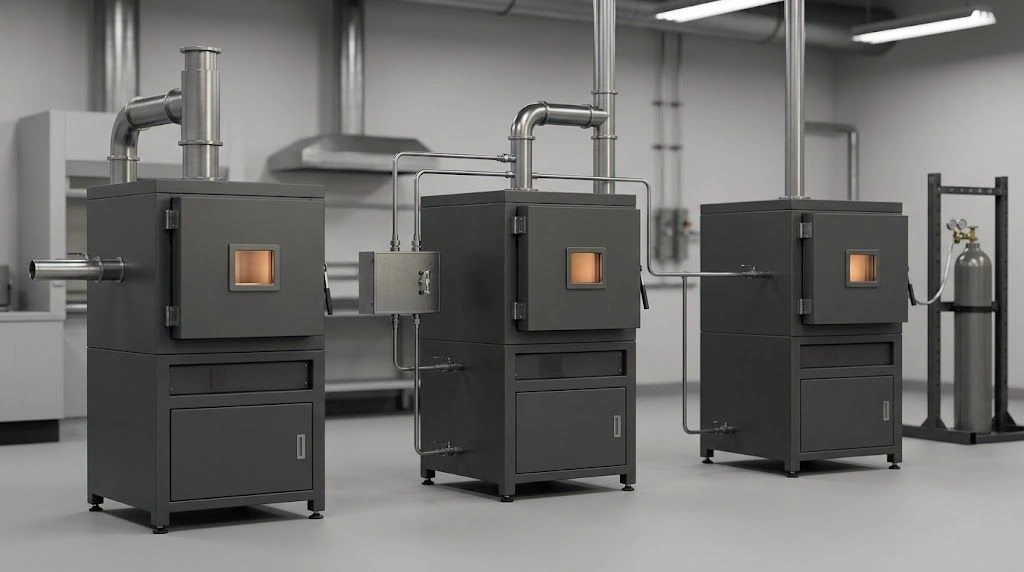
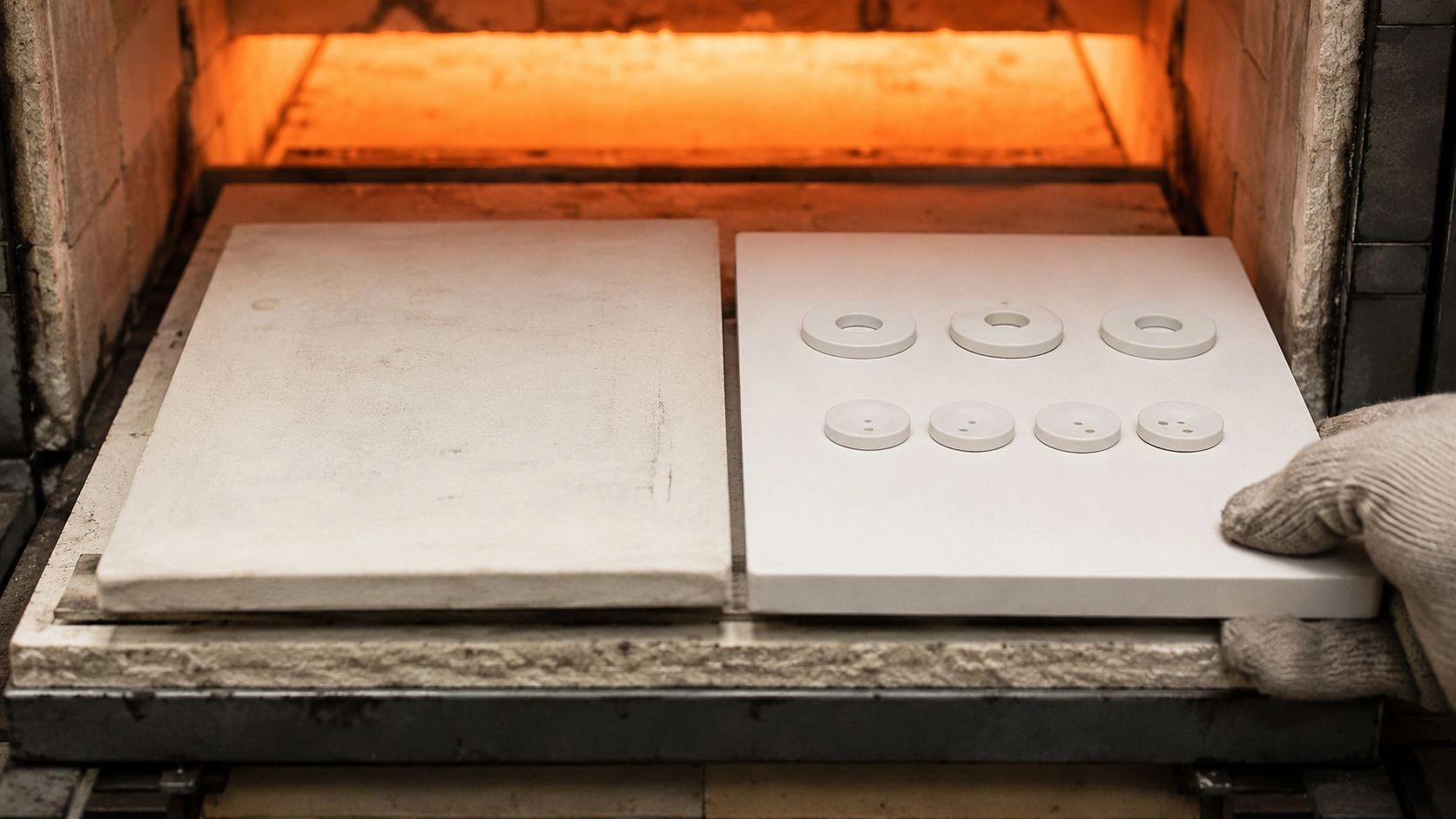
The microstructure of Recrystallized Alumina Tubes for Thermocouple forms during high-temperature sintering near 2000°C. Precise control of furnace conditions, hold times, and raw material purity ensures consistent large-grain growth and minimized internal stress.
High-Temperature Sintering Mechanisms Enabling Large Grain Formation
At 1950–2050°C, alumina particles undergo solid-state diffusion, merging into dense, defect-free grains. Recrystallized Alumina Tubes for Thermocouple use controlled oxidizing atmospheres to avoid reduction reactions, yielding strong, high-purity microstructures ideal for thermal cycling.
Temperature and Time Dependencies of Grain Growth Kinetics in Alumina
Grain growth1 follows temperature-activated kinetics. At 1900°C, growth rates are under 1 μm/hour; at 2050°C, they exceed 10 μm/hour. Maintaining sintering at 2000°C for 6–8 hours produces uniform grains (100–150 μm) optimized for long service life in Recrystallized Alumina Tubes for Thermocouple.
Manufacturing Process Control Requirements for Microstructural Uniformity
Uniform heating (<150°C/hour), peak temperature accuracy (±10°C), and cooling rate (<80°C/hour) are essential to avoid uneven grain structures. ADCERAX testing on 25,000+ tubes shows this control reduces batch variation to <8%, guaranteeing predictable performance.
Table: Key Sintering Parameters for Recrystallized Alumina Tubes for Thermocouple
| Parameter | Typical Value | Performance Impact |
|---|---|---|
| Sintering Temperature (°C) | 1950–2050 | Enables recrystallization |
| Hold Time (hours) | 6–8 | Stabilizes grain growth |
| Heating Rate (°C/hour) | <150 | Prevents thermal cracking |
| Cooling Rate (°C/hour) | <80 | Avoids quench microfractures |
| Temperature Uniformity (°C) | ±10 | Ensures consistent microstructure |

Grain Size Mechanics in Recrystallized Alumina Tubes for Thermocouple
The performance of Recrystallized Alumina Tubes for Thermocouple depends on whether fine or coarse grains dominate. Fine-grain structures offer strength; coarse-grain structures deliver thermal resilience.
Hall-Petch Strengthening Effects and Room-Temperature Mechanical Properties
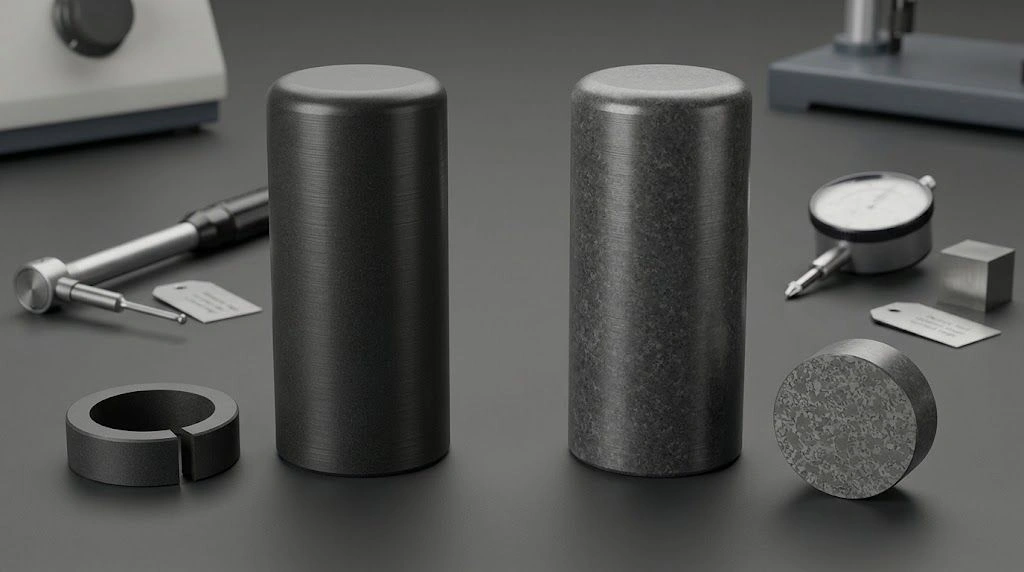
Fine-grain alumina (5–15 μm) achieves 380–420 MPa flexural strength due to Hall-Petch strengthening2. However, cracks propagate easily through aligned crystallographic planes under thermal stress, limiting survival in cyclic applications3.
Crack Deflection Energy Dissipation Mechanisms at Grain Boundaries
Coarse-grain Recrystallized Alumina Tubes for Thermocouple redirect cracks along tortuous paths. ADCERAX testing shows fracture energy absorption of 180–250 J/m²—double that of fine-grain alumina—correlating directly with increased shock cycle resistance.
Trade-offs Between Thermal Shock Resistance and Sustained Load Performance
Coarse-grain materials excel in thermal shock but show reduced mechanical endurance under long-term loading. Engineers must match grain size to the dominant operational stress type to achieve optimal performance.
Table: Fine vs. Coarse Grain Structure Comparison in Recrystallized Alumina Tubes for Thermocouple
| Property | Fine-Grain | Coarse-Grain |
|---|---|---|
| Grain Size (μm) | 5–15 | 80–150 |
| Flexural Strength (MPa) | 380–420 | 280–320 |
| Fracture Energy (J/m²) | 90–130 | 180–250 |
| Thermal Shock Cycles | 150–250 | 450–600 |
| Crack Path Mode | Transgranular | Intergranular |
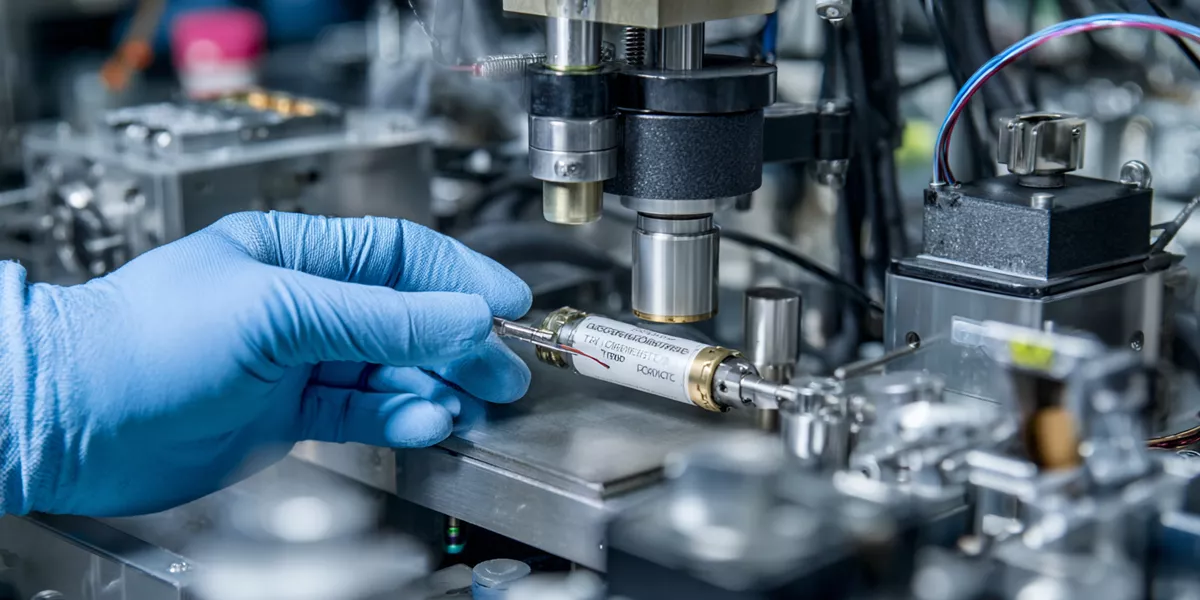
Optimal Grain Size Distribution in Recrystallized Alumina Tubes for Thermocouple
To achieve superior performance, Recrystallized Alumina Tubes for Thermocouple require uniform grain distributions with minimal variation. Average size between 100–130 μm and CV <20% ensures high reliability.
Target Grain Size Parameters and Distribution Uniformity Criteria
Uniform microstructure guarantees consistent expansion and stress response. ADCERAX studies confirm tubes with CV <20% survive 480–580 cycles, while CV >30% lowers performance by over 25%.
Single-Stage Versus Engineered Bimodal Distribution Approaches
Most manufacturers favor single-stage recrystallization at 2000°C for 6–8 hours. This method produces 100–130 μm grains with 20–25 μm deviation, ideal for Recrystallized Alumina Tubes for Thermocouple. Bimodal structures, though viable, risk uneven stress fields.
Statistical Process Control Methods for Manufacturing Consistency
Regular ASTM E112 grain size verification ensures quality consistency. ADCERAX maintains Cpk >1.33 across production lots, confirming microstructural stability and predictable shock resistance.
Table: Relationship Between Grain Uniformity and Thermal Shock Performance
| Metric | Target Range | Shock Cycle Count | Variation Rate |
|---|---|---|---|
| Average Grain Size (μm) | 100–130 | 480–580 | <8% |
| Standard Deviation (μm) | 20–25 | 460–540 | <10% |
| CV (%) | <20 | >480 cycles | <10% |
| CV >30% | >40 | 350–520 | >25% |
Practical Implications: Specifying Recrystallized Alumina Tubes for Thermocouple in Industry
Application-based selection of Recrystallized Alumina Tubes for Thermocouple ensures the best match between cost and performance. Engineers should define microstructure specifications based on thermal cycling intensity and stress conditions.
Application-Based Grain Structure Selection Criteria and Guidelines
For severe cycling (>100 cycles/year, ΔT >600°C), specify coarse-grain tubes (100–150 μm). For moderate cycling, 80–120 μm structures suffice. Continuous high-temperature but low-cycling operations perform better with fine-grain sintered alumina.
Specification Language for Verifiable Microstructural Requirements
A robust specification example:
"Recrystallized Alumina Tubes for Thermocouple, 99.7% purity minimum, 100–140 μm average grain size per ASTM E112, thermal shock tested to ≥400 cycles per ASTM C1525."
Supplier Qualification and Manufacturing Process Capability Assessment
Qualified suppliers maintain stable processing, thermal control, and quality verification. ADCERAX process capability (Cpk >1.33) and batch-level testing ensure reliability. Field data across 580+ installations show correct grain structure reduces thermal shock failures by 85%.
Table: Selection Framework for Recrystallized Alumina Tubes for Thermocouple
| Application Type | Thermal Cycling Rate | Recommended Grain Size | Qualification | Expected Life |
|---|---|---|---|---|
| Severe cycling (>100/year) | ΔT >600°C | 100–150 μm | ASTM C1525 ≥400 cycles | 5–7 years |
| Moderate cycling | 300–600°C | 80–120 μm | ASTM C1525 ≥300 cycles | 3–5 years |
| Continuous high-temp | <20 cycles/year | 5–15 μm | ASTM C1161 ≥380 MPa | ≥3 years |
Conclusion
Recrystallized Alumina Tubes for Thermocouple achieve exceptional thermal shock survival through optimized grain size and microstructural uniformity.
FAQ
1. What is the best grain size range for Recrystallized Alumina Tubes for Thermocouple?
The ideal range is 100–150 μm with coefficient of variation under 20%, providing stable thermal shock resistance and consistent fracture behavior.
2. How does manufacturing temperature influence tube reliability?
Higher sintering temperatures (2000–2050°C) promote uniform large-grain growth, improving thermal shock life by 2–3× over fine-grain structures.
3. What testing standards validate Recrystallized Alumina Tubes for Thermocouple?
ASTM E112 verifies grain size, ASTM C1525 confirms thermal shock performance, and ASTM C1161 measures flexural strength at room temperature.
4. Why are Recrystallized Alumina Tubes for Thermocouple preferred over sintered tubes?
They provide longer service life under repeated heating and cooling cycles, maintaining structural integrity where sintered alumina often fails prematurely.
References:
-
Understanding grain growth is crucial for optimizing material properties in various applications. ↩
-
Learn how Hall-Petch strengthening enhances the flexural strength of alumina and why it's crucial for advanced ceramic applications. ↩
-
Learn how cyclic applications impact the durability and performance of alumina ceramics, especially under repeated thermal or mechanical stress. ↩