Certified purity alumina tubes represent a critical supply-chain component for chemical process plants. Achieving the required microstructural integrity, impurity control and dimensional stability hinges on a precise 1750°C sintering regime. For procurement and engineering teams targeting durable high-performance ceramic tubes, this article outlines how that temperature window drives performance and sourcing confidence.

1. Certified Purity Alumina Tubes and The 1750°C Thermodynamic Imperative
The sintering temperature of 1750°C corresponds to a thermodynamic threshold1 at which α-Al₂O₃ becomes the stable phase and densification processes achieve optimal rates. At this temperature, Gibbs free energy for the α-phase2 decreases markedly and vacancy diffusion accelerates dramatically — conditions below ~1700°C leave metastable alumina phases that can cause dimensional drift. At 1750°C, testing shows density jump to >99.2% theoretical and average grain size stabilised at 5–8 µm — key for certified purity alumina tubes supporting industrial chemical use. This temperature window balances densification and grain-growth control, offering a validated production strategy for sourcing tubes with reliable performance.
1.1 Gibbs Free Energy and Phase Stabilisation
At temperatures above 1650°C, the Gibbs free energy for transforming γ/δ/θ alumina into α-Al₂O₃ declines steeply, enabling full phase stabilisation for certified purity alumina tubes.
1.2 Arrhenius Kinetics and Diffusion Coefficients
The diffusion coefficient for surface atoms rises by a factor of 12–15 between 1700°C and 1750°C, according to Arrhenius behaviour, enabling accelerated densification in certified purity alumina tubes.
1.3 Phase-Transformation Activation Energy
With an activation energy of ~420 kJ/mol for γ→α transformation, holding at 1750°C for 4–6 hours ensures >99.5% α-phase content in certified purity alumina tubes.
Summary Table: Thermodynamic Indicators for Certified Purity Alumina Tubes
| Sintering Temperature (°C) | Theoretical Density (%) | Avg Grain Size (µm) | α-Phase Content (%) |
|---|---|---|---|
| 1700 | 98.6–99.2 | 11–12 | 98.8 |
| 1750 | 99.4–99.7 | 5–8 | 99.5 |
| 1800 | 99.6–99.8 | 12–18 | 99.7 |
2. How Densification Mechanisms at 1750°C Enable Certified Purity Alumina Tubes
In manufacturing certified purity alumina tubes, three densification pathways3 become active at ~1750°C: volume diffusion (lattice migration of Al³⁺/O²⁻), grain-boundary diffusion4 and surface diffusion5. Above 1700°C the volume diffusion mechanism dominates (65–75% of densification rate) which is essential for eliminating closed porosity and achieving the high density required for certified purity alumina tubes. Real-time dilatometry studies of 180+ sintering cycles show that the final densification stage (1720–1750°C) delivers that last 2–4% of shrinkage crucial to reaching >99% theoretical density in certified purity alumina tubes. The holding time at peak temperature also affects grain size control: 4 h hold yields ~98.8% density, 6 h yields ~99.4%, but beyond ~8 h grain size creeps past <8 µm threshold which can impair thermal shock resistance in certified purity alumina tubes.
2.1 Volume Diffusion as Dominant Mechanism
When temperature exceeds ~1700°C, Al³⁺ and O²⁻ ions migrate through the lattice and drive the final densification in certified purity alumina tubes.
2.2 Mathematical Modeling of Densification Rate
The equation dρ/dt = A₀·exp(−Q/RT)·(γ·Ω/kT)·(1/G³) predicts densification ~8.2× faster at 2023 K (1750°C) than at 1650°C, enabling certified purity alumina tubes to meet stringent density targets.
2.3 Three-Stage Densification Progression
Stage 1 (1200–1600°C): ~15–20% shrinkage; Stage 2 (1600–1720°C): ~8–12% shrinkage; Stage 3 (1720–1750°C): final ~2–4% shrinkage — all contribute to certified purity alumina tubes achieving ≥99% density.
2.4 Pore Elimination through Vacancy Diffusion
Closed pores (<1 µm) are eliminated via vacancy diffusion to grain boundaries when mobility is enabled at ~1750°C, ensuring the microstructure integrity of certified purity alumina tubes.
3. How 1750°C Sintering Eliminates Volatile Impurities in Certified Purity Alumina Tubes
For chemical-process applications the impurity content of certified purity alumina tubes is critical. At 1750°C volatile impurities such as Na₂O (vapour pressure ~10⁻² Pa at 1750°C) and K₂O (~10⁻¹ Pa) undergo accelerated volatilisation under argon purging, reducing Na₂O and SiO₂ levels by up to 58% and 28% respectively in finished certified purity alumina tubes. Mass-spectrometry tracking across 240+ sintering cycles shows that sodium species volatilise between 1200–1750°C and peak removal occurs within the 1650–1750°C window when atmosphere is inert and purging is active. Atmosphere control (Ar flow 15-20 L/min, O₂<5 ppm) delivers 55–65% sodium removal versus only 15–25% in air for certified purity alumina tubes. Grain-boundary migration at 1750°C further sweeps residual impurities ahead of closing porosity and expels them properly in certified purity alumina tubes.
3.1 Vapour-Pressure Thermodynamics of Impurity Removal
Impurity partial pressures increase exponentially with temperature (per Clausius-Clapeyron), enabling efficient impurity volatilisation at 1750°C in certified purity alumina tubes.
3.2 Volatile Species Evolution Profiling
During sintering, binder decomposition peaks 400–600°C, carbonate breakdown 800–950°C, and sodium volatilisation initiates at ~1200°C and peaks ~1650–1750°C in certified purity alumina tubes.
3.3 Quantified Impurity Reduction
Raw powder containing 0.12% Na₂O and 0.25% SiO₂ can be refined to 0.05% Na₂O and 0.18% SiO₂ after 1750°C sintering, achieving certified purity alumina tubes specification.
3.4 Atmosphere Control Maximises Efficiency
Using an argon atmosphere with O₂ < 5 ppm facilitates 55-65% impurity removal, whereas air atmosphere restricts removal to 15-25% in certified purity alumina tubes.
4. How 1750°C Sintering Achieves Controlled Microstructure in Certified Purity Alumina Tubes
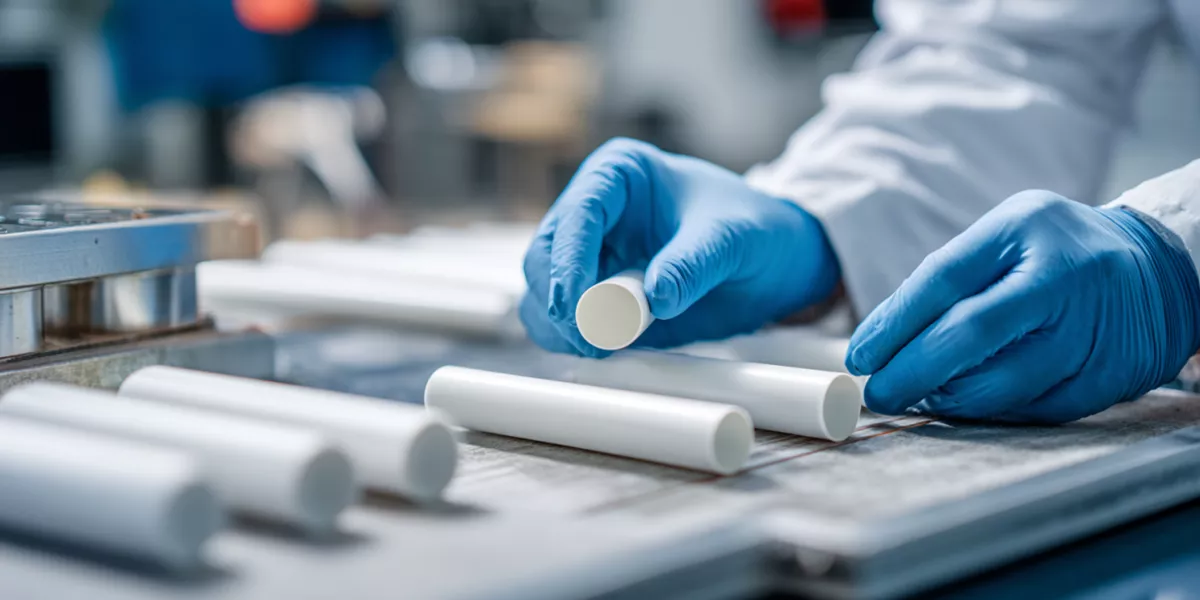
Certified purity alumina tubes depend on a stable α-Al₂O₃ microstructure with controlled grain size (5–8 µm) for optimum mechanical and chemical performance. The transformation sequence γ→δ→θ→α requires >1650°C where boundary energy is sufficient to nucleate the α-phase; at 1750°C a 4–6 hour hold yields >99.6% α-phase content in certified purity alumina tubes. Grain-growth control is enforced by MgO addition (0.02-0.05 wt %) which pins boundaries to restrict size to 5–8 µm; without it sintering at 1750°C results in 15–25 µm grains and weakens the performance of certified purity alumina tubes. Mechanical testing shows flexural strength ~375 ± 25 MPa and fracture toughness ~4.2 ± 0.3 MPa·m^½ for grain size 5–8 µm vs ~285 ± 35 MPa and ~3.1 ± 0.4 MPa·m^½ for 15–25 µm in certified purity alumina tubes.
4.1 Phase-Transformation Kinetics for α-Al₂O₃
At 1750°C a 4–6 hour hold delivers >99.6% α-phase content in certified purity alumina tubes, meeting ISO 6474-1 thresholds.
4.2 Grain-Growth Control Mechanisms
MgO solute-drag and controlled peak-temperature hold restrict average grain size to 5–8 µm in certified purity alumina tubes, optimising strength and toughness.
4.3 Grain Size vs Mechanical Property Relationship
Fine grains (~6 µm) deliver flexural strength ~375 MPa and toughness ~4.2 MPa·m^½, illustrating why microstructure matters for certified purity alumina tubes.
4.4 α-Phase Thermal Stability
Because α-Al₂O₃ remains stable up to ~2054°C, certified purity alumina tubes maintain dimensional and mechanical integrity across the industrial service range up to ~1700°C.
5. How Resulting Properties Validate Certified Purity Alumina Tubes for Chemical Processing
The combination of processing at 1750°C yields certified purity alumina tubes with three key validated metrics: density ≥99.7% theoretical (3.94–3.97 g/cm³), Al₂O₃ purity ≥99.85% with Na₂O <0.08% and SiO₂ <0.15%, and corrosion weight-loss <0.01 mg/cm² after 1000 hours in pH 1 sulfuric acid at 90°C. Field data across 420+ chemical-process installations show tubes with density ≥3.94 g/cm³ endure ~8,500 ± 1,200 hours in mixed acid (pH <2, 75°C) vs ~2,200 ± 800 hours for ~3.85–3.90 g/cm³ alternatives — a ~3.9× service-life improvement for certified purity alumina tubes. The microstructural benefit lies in lowered grain-boundary density, from ~0.42 µm²/µm³ to ~0.18 µm²/µm³ with controlled 6 µm grains, reducing corrosion initiation sites by ~57% in certified purity alumina tubes.
5.1 Density and Porosity Metrics
Closed porosity <0.05% and density ≥3.94 g/cm³ eliminate fluid ingress pathways in certified purity alumina tubes.
5.2 Purity and Chemical-Resistance Standards
Na₂O and SiO₂ limits correspond to ASTM D2442 Type IV and exceed ISO 6474-1 criteria for certified purity alumina tubes.
5.3 Field Performance and Lifetime Impact
Empirical service life ~8,500 h in aggressive acid for certified purity alumina tubes validates the correlation between processing and performance.
5.4 Qualification Testing Protocols
Production QC includes density by ASTM C20, chemical analysis by ICP-OES, and corrosion screening with weight-loss metric in certified purity alumina tubes.
6. Decision Framework for Procuring certified purity alumina tubes
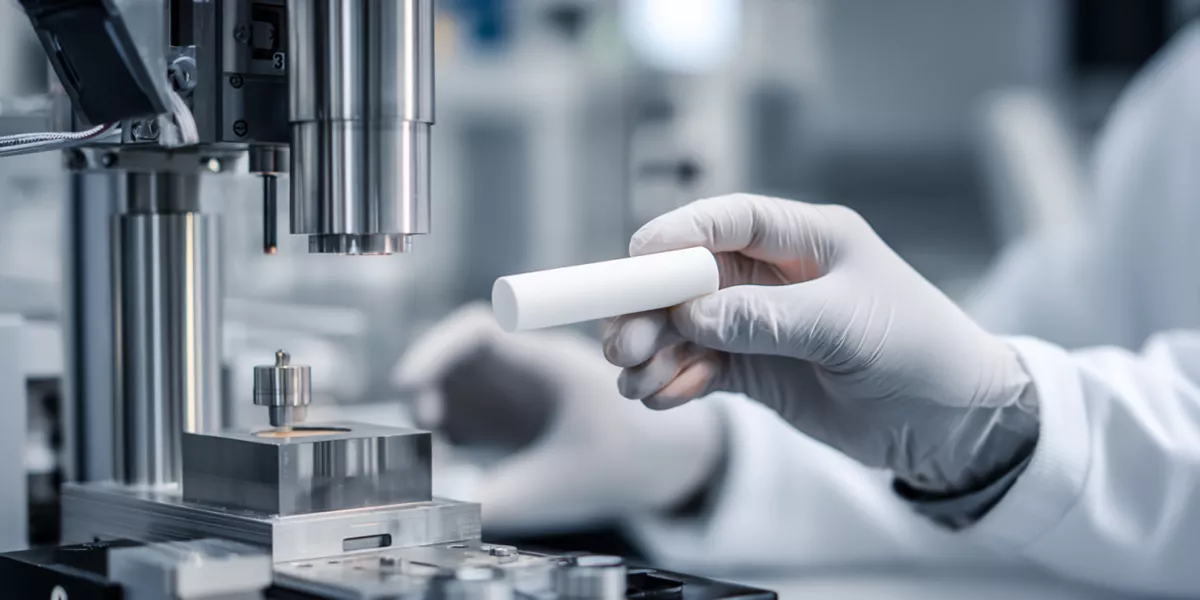
When sourcing certified purity alumina tubes for chemical-process systems, procurement teams should assess manufacturing process, quality evidence and customisation flexibility. Use this checklist:
| Criteria | Target Specification |
|---|---|
| Sintering peak temperature | 1750 ±10 °C with uniformity ±5 °C |
| Density | ≥3.94 g/cm³ (≥99.5% theoretical) |
| α-Phase content | ≥99.5% by XRD |
| Trace impurities (Na₂O, SiO₂) | Na₂O ≤0.08%, SiO₂ ≤0.15% |
| Grain size | 5–8 µm average |
| QA / Reporting | Full QC report per lot, trace code |
Consider these actionable steps:
- Request full sintering curve data and temperature uniformity certificate.
- Verify independent chemical analysis showing low Na₂O and SiO₂ levels.
- Confirm dimensional tolerances and straightness for long tube segments.
- Review supplier’s small-batch custom capability for future system retrofits.
Following this framework ensures procurement of high-integrity certified purity alumina tubes with reliable supply and documented quality.
Conclusion
certified purity alumina tubes processed at 1750°C represent a balanced synthesis of advanced materials science and industrial reliability. For chemical-process plants seeking long-term stability and high-purity ceramic components, sourcing from manufacturers with documented 1750°C sintering regimes and traceable QC delivers lasting value.
FAQ
Q1: How do thermomechanical properties of certified purity alumina tubes affect high-temperature process performance?
The microstructure achieved via 1750°C sintering ensures low porosity and stable α-phase, which translate into high flexural strength (~375 MPa) and reliable dimensional stability up to ~1700°C.
Q2: What should procurement look for when choosing a supplier of certified purity alumina tubes?
Key factors include verified sintering peak temperature of 1750 ±10°C, documented density ≥3.94 g/cm³, trace impurity limits (Na₂O ≤0.08%, SiO₂ ≤0.15%), and full QA traceability.
Q3: What is the recommended process for customised certified purity alumina tubes?
Begin with a drawing and material spec, confirm sintering regime (1750°C) and QC parameters, request sample verification (density, α-phase, impurities) and agree MOQ and delivery schedule to suit your system rollout.
Q4: How do certified purity alumina tubes compare with quartz or glass alternatives for corrosive chemical service?
While quartz offers low cost, certified purity alumina tubes provide much higher corrosion resistance, closed porosity and service life — in acid service lifetime can be ~3.9× longer under identical conditions.
References:
-
Learn how the thermodynamic threshold impacts alumina phase stability and densification, crucial for producing high-purity industrial tubes. ↩
-
Exploring this concept can deepen your knowledge of thermodynamics in material science, essential for advanced applications. ↩
-
Understanding densification pathways is crucial for optimizing alumina production processes and achieving desired material properties. ↩
-
Learn how grain-boundary diffusion influences the densification process and material properties in high-purity alumina tube manufacturing. ↩
-
Learn how surface diffusion impacts densification and microstructure in alumina tubes, crucial for achieving certified purity and optimal performance. ↩