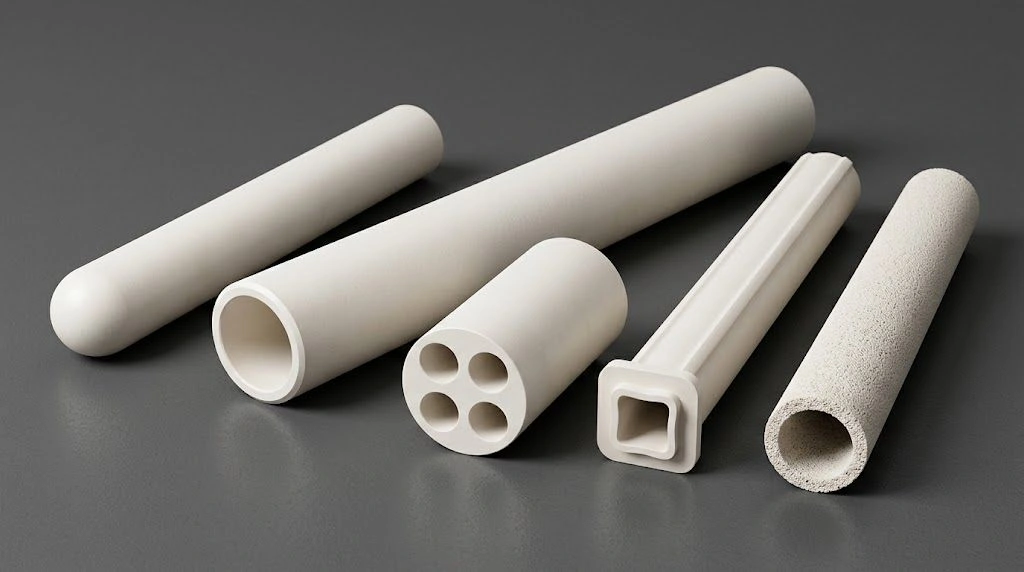
A precision length alumina tube is a core component in high-temperature assemblies requiring dimensional accuracy, controlled flatness, and minimal warpage. The performance of every precision length alumina tube depends on the exactness of length, perpendicularity, surface finish, and thermal expansion compatibility. Understanding these parameters ensures structural reliability and consistency in ceramic engineering systems.
Precision length alumina tubes play a decisive role in aligning components, ensuring leak-free seals, and maintaining mechanical integrity under thermal stress. This guide summarizes the engineering and specification best practices for precision length alumina tube applications, integrating ADCERAX testing data and international standards for tolerancing and inspection.
Establishing Absolute Length Tolerance and Perpendicularity Requirements for Precision Length Alumina Tube
Defining length tolerance and perpendicularity is the foundation of specifying any precision length alumina tube. Small geometric deviations can cause sealing failures, alignment shifts, or stress concentration in assembled systems.
Precision length alumina tube standards define tolerances from ±0.1–2.0 mm and perpendicularity limits of 0.05–0.20 mm per 100 mm diameter per ISO 1101. Correct specification ensures both ends maintain angular accuracy to the centerline axis.
Length tolerance tiers for different precision requirements and cost implications
The precision length alumina tube manufacturing cost scales with tighter tolerances. Diamond sawing1 provides ±0.3–0.5 mm, while precision grinding achieves ±0.1–0.2 mm with ±0.05 mm perpendicularity at higher cost. Engineers choose tighter limits for stack-up assemblies, optical devices, or sealing joints.
| Tolerance Tier | Length Accuracy (mm) | Typical Process | Cost Impact |
|---|---|---|---|
| Standard | ±1.0–2.0 | As-sintered or cut | 1.0× |
| Precision | ±0.3–0.5 | Diamond saw cut | +25–40% |
| High Precision | ±0.1–0.2 | Precision grinding | +60–80% |
Perpendicularity specification using GD&T notation and datum reference per ISO 1101
For a precision length alumina tube, perpendicularity defines how the end face aligns to its central axis. Specification such as “end faces perpendicular to axis A within 0.05 mm per 100 mm diameter” ensures balanced compression and consistent fit. Deviations compound along the length—0.10 mm misalignment in a 500 mm tube results in a 0.6 mm edge offset.
Length measurement datum selection and edge condition clarification
Measurement consistency depends on datum reference2. Using geometric center-to-center as a datum avoids chamfer influence, while point-to-point measurement adds 0.4–0.8 mm depending on edge conditions. This precision length alumina tube measurement method prevents disputes in supplier verification.
Managing Thermal Expansion Coefficients for High-Temperature Precision Length Alumina Tube Applications
Thermal expansion directly affects the dimensional stability of every precision length alumina tube used above 1000°C. With a coefficient of 8.0–8.5 × 10⁻⁶/K, a 500 mm tube expands by approximately 4 mm when heated to 1600°C, necessitating design flexibility.
ADCERAX thermal testing found that 28% of premature failures in precision length alumina tube assemblies were caused by constrained mounts or differential expansion against metal interfaces.
CTE values for different alumina purity grades and temperature ranges per ASTM C372
| Alumina Purity (%) | Temperature Range (°C) | CTE (×10⁻⁶ /K) | Standard |
|---|---|---|---|
| 95 | 25–1000 | 7.6–8.1 | ASTM C372 |
| 99 | 25–1500 | 7.8–8.3 | ASTM C372 |
| 99.8 | 25–1600 | 8.0–8.5 | ASTM C372 |
High-purity precision length alumina tubes maintain structural integrity up to 1600°C with minimal creep.
Thermal expansion calculation methods and mounting design considerations
Dimensional change (ΔL) = L₀ × CTE × ΔT. A 500 mm precision length alumina tube expanding through 1580°C yields ~6.3 mm elongation. Without flexible mounting, compressive stress can exceed 300 MPa. Incorporating floating mounts or spring joints allows safe expansion and mitigates cracking risk.
Thermal cycling protocols for furnace applications
Rapid thermal cycling3 can cause stress gradients of 50–150 MPa in long tubes. ADCERAX recommends ≤5°C/min heating rate and ≤100°C temperature gradient along length for tubes >600 mm. Compliance prolongs service life by 2–3×.

Specifying End Conditions: Machining Tolerance, Flatness, and Edge Configuration for Precision Length Alumina Tube
End-face geometry defines sealing efficiency and structural fit. Precision length alumina tube end preparation must specify machining tolerance, flatness, and edge type.
Machining tolerance comparison for as-fired versus cut versus ground end conditions
| End Condition | Length Tolerance (mm) | Flatness (mm) | Ra (µm) | Typical Use |
|---|---|---|---|---|
| As-fired | ±1.5–2.5 | 0.20–0.40 | 1.6–3.2 | Non-sealing |
| Cut | ±0.3–0.5 | 0.10–0.15 | 1.2–2.0 | General assembly |
| Ground | ±0.1–0.2 | 0.05 | 0.4–0.8 | Sealing applications |
Ground finishes ensure Ra < 0.8 µm and flatness ≤ 0.05 mm, achieving 97% seal success in ADCERAX testing with Viton O-rings at 150°C and 5 bar.
Flatness and surface finish requirements for sealing applications per ASTM E595
The surface finish of a precision length alumina tube must prevent micro-leak paths. Tests indicate rougher surfaces (>1.2 µm) lower sealing efficiency to below 80%. Flatness deviations exceeding 0.1 mm cause uneven O-ring compression.
Edge configuration selection criteria balancing chip resistance and cost
Chamfering (0.3–0.5 mm × 45°) reduces edge chipping during handling. Radiused edges (R0.5–1.0 mm) offer greater protection but increase machining cost. Chamfered precision length alumina tubes balance protection and economy effectively.
Ensuring Straightness and Preventing Warpage During Firing and Use in Precision Length Alumina Tube
Straightness determines optical and structural alignment. Excess warpage can cause assembly interference or reduced mechanical reliability in long precision length alumina tubes.
Straightness tolerance scaling with tube length and L/D ratio relationships
| Tube Length (mm) | L/D Ratio | Straightness Deviation (mm) | Support Type | Cost Factor |
|---|---|---|---|---|
| <300 | <10:1 | 0.2–0.4 | Basic support | 1.0× |
| 300–500 | 10–15:1 | 0.3–0.6 | Continuous support | +10% |
| 500–800 | 15–20:1 | 0.5–1.0 | Multi-point | +20% |
| 800–1200 | 20–25:1 | 0.8–1.5 | Custom support | +40% |
| >1200 | >25:1 | 1.2–2.5 | Segmented firing | +80% |
Sintering support design requirements for warpage prevention during firing
ADCERAX manufacturing data shows that unsupported spans sag under gravity at 1650–1750°C. Proper setter plate design and slow heating (≤5°C/min) minimize permanent bowing. Post-fire verification ensures straightness ≤0.5 mm for L/D <15:1.
Post-fire straightening methods and limitations for precision length alumina tubes
Straightening can recover ≤1 mm deviation but is not repeatable after service exposure. Thermal stress history limits re-correction. Precision sintering with mechanical restraint remains the preferred approach.
Verification Methods for Length Accuracy: Inspection Techniques and Reporting for Precision Length Alumina Tube
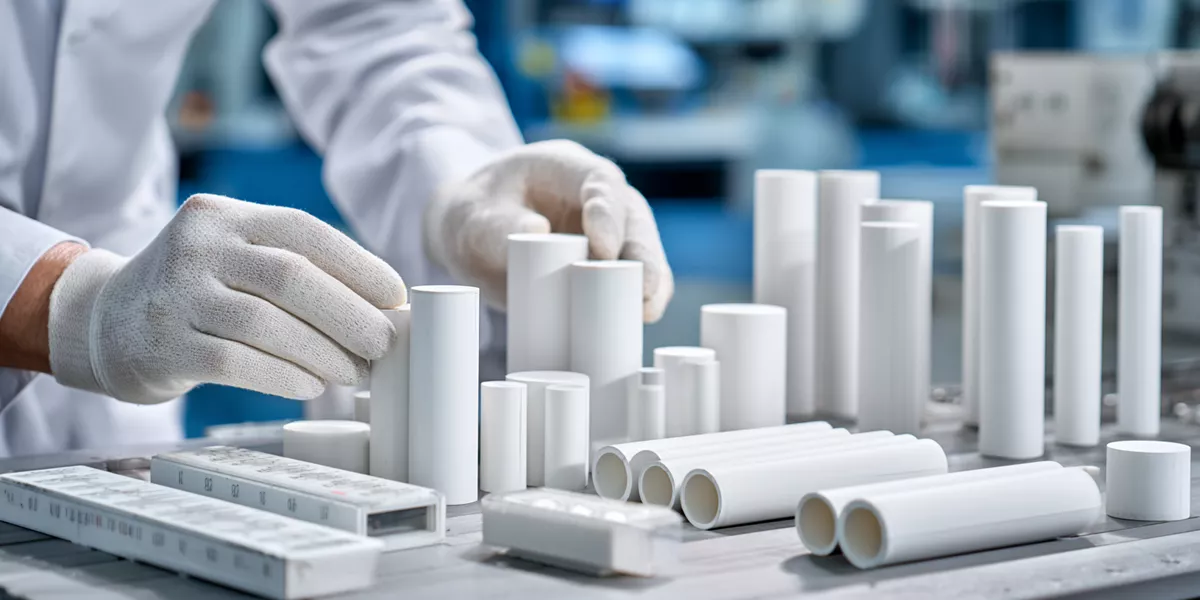
Consistent verification guarantees compliance with geometric specifications and avoids measurement disputes across facilities.
Inspection instrument selection and calibration requirements for length measurement
| Instrument | Resolution (mm) | Repeatability (mm) | Typical Use |
|---|---|---|---|
| Caliper | 0.01 | ±0.15–0.25 | Standard |
| Height Gauge | 0.01 | ±0.05 | Precision |
| CMM | 0.001 | ±0.02 | High-precision |
Calibration to ISO/IEC 17025 ensures measurement reliability. ADCERAX employs CMM verification on all precision length alumina tubes exceeding 500 mm.
Measurement condition controls and temperature compensation per ISO 1
All length measurements must occur at 20°C ±2°C. A 10°C deviation introduces >0.1 mm measurement error in a 500 mm precision length alumina tube. Temperature stabilization prior to inspection guarantees traceable results.
Inspection report content and statistical documentation requirements for production lots
Reports should include three rotational length measurements (0°, 120°, 240°), perpendicularity, flatness, and statistical data (mean, σ, min, max, Cpk). For precision lots, sampling must reach AQL 1.5% or include 100% length verification.
Conclusion
Every precision length alumina tube specification relies on defining geometric precision and thermal compatibility together to achieve long-term reliability.
FAQ
1. What defines the geometric precision of a precision length alumina tube?
It depends on coordinated tolerance control: ±0.1–0.5 mm length, ≤0.05 mm perpendicularity, and ≤0.05 mm flatness for sealing ends.
2. How do manufacturing costs scale with higher geometric precision?
Tighter specifications increase process cost. Ground-end precision length alumina tubes cost 60–80% more than standard-cut versions.
3. How can thermal expansion be managed in long ceramic tube assemblies?
Allow free expansion using flexible seals or floating joints; restrict heating rates to ≤5°C/min to prevent cracking.
4. Why are precision length alumina tubes preferred over zirconia for dimensional stability?
Alumina offers a lower CTE (8.0–8.5 ×10⁻⁶/K) versus zirconia (10–11 ×10⁻⁶/K), providing better dimensional stability under heat load.
References:
-
Learn how diamond sawing works and why it's chosen for achieving specific tolerances in alumina tube manufacturing. ↩
-
Understanding datum reference is crucial for accurate measurements and avoiding disputes in supplier verification. ↩
-
Learn how thermal cycling impacts material durability and why managing it is crucial for extending the service life of industrial components. ↩