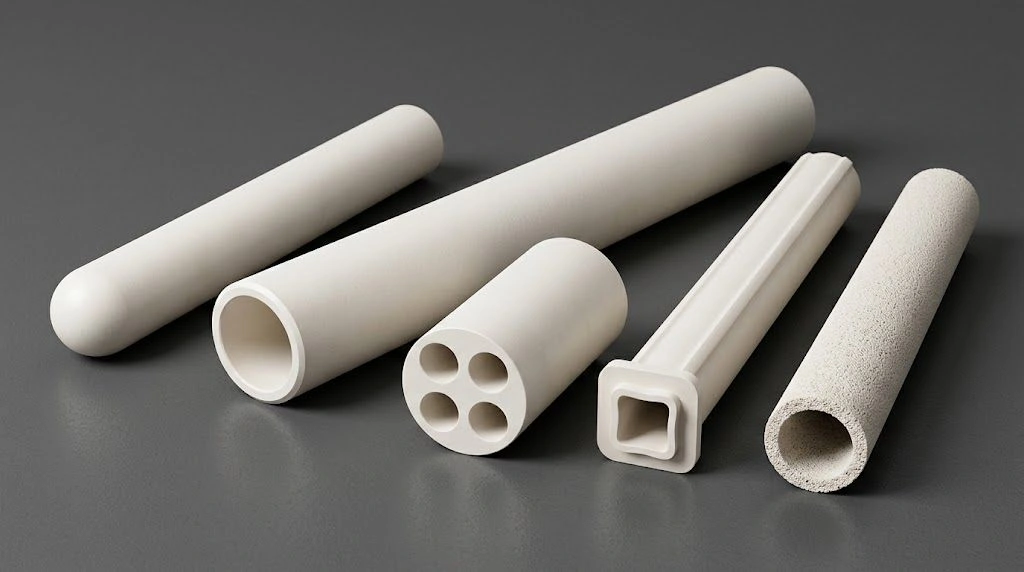
High-purity alumina tube performance is the foundation of stable vacuum furnace operation. At the beginning of any design, engineers must evaluate how a high-purity alumina tube maintains vacuum integrity under extreme temperature and pressure conditions. The material’s purity, density, and microstructure determine its capability to sustain ultra-high vacuum environments critical for sintering, degassing, and metallurgical processes.
A high-purity alumina tube must maintain stable vacuum levels from 10⁻⁶ to 10⁻⁹ mbar while operating up to 1750 °C. Its vacuum endurance depends on thermodynamic behavior, permeability, and microstructural integrity defined by ASTM and ISO standards. The following sections describe how these factors influence furnace system reliability and vacuum stability.
How Do Vacuum Thermodynamics Affect High-Purity Alumina Tube Performance?
Vacuum thermodynamics determine the effectiveness of a high-purity alumina tube in maintaining stable vacuum pressure. The material must handle the transition between viscous and molecular flow regimes while minimizing surface outgassing and gas permeation.
At 1400–1750 °C, the Knudsen number1 governs the gas behavior in a high-purity alumina tube. When Kn > 0.5, molecular flow dominates, and surface interactions exceed gas collisions. Tubes with ≥99.5% Al₂O₃ and density ≥ 3.90 g/cm³ sustain outgassing rates < 1×10⁻⁹ mbar·L/(s·cm²) after 24 h bakeout, enabling vacuum levels below 10⁻⁸ mbar during furnace operation.
Knudsen number transitions between viscous and molecular flow regimes
As the mean free path approaches tube diameter, flow transitions to molecular mode. At this stage, wall interactions dominate, making surface chemistry and impurity removal key to vacuum stability.
Temperature-dependent outgassing kinetics from alumina grain boundaries
Residual gas species such as H₂O and CO₂ desorb more rapidly at high temperature. With impurity contents Fe₂O₃ < 0.01% and SiO₂ < 0.15%, high-purity alumina tubes reduce desorption 50–100×, improving vacuum efficiency.
Vacuum conductance calculations for cylindrical ceramic geometries
A 50 mm ID × 1000 mm length tube yields ≈ 7.3 L/s conductance, which defines the gas throughput capacity. The pumping system must balance outgassing and conductance to achieve desired pressure.
Summary Table – Thermodynamic Parameters for High-Purity Alumina Tube
| Parameter | Typical Value | Effect | Control Method |
|---|---|---|---|
| Temperature (°C) | 1400–1750 | Increases desorption rate | Extended bakeout |
| Density (g/cm³) | ≥3.90 | Reduces gas diffusion | Hot isostatic pressing |
| Outgassing Rate | <1×10⁻⁹ mbar·L/(s·cm²) | Stabilizes vacuum | High-purity grain boundaries |
| Knudsen Range | 0.1–1.0 | Defines flow regime | Tube geometry optimization |
What Pressure Benchmarks Define Ultra-High Vacuum Requirements for High-Purity Alumina Tubes?
Ultra-high vacuum (UHV) furnaces rely on high-purity alumina tubes to achieve pressures ≤1×10⁻⁹ mbar. Leak rates must stay below 1×10⁻¹⁰ std·cc/sec to sustain long-term performance at 1650 °C.
At 10⁻⁶ mbar, contamination occurs in seconds, but at 10⁻⁹ mbar it takes ~3200 seconds to form a surface monolayer. High-purity alumina tubes with ≥99.8% Al₂O₃ and ≥3.95 g/cm³ density maintain 2000+ hours of stable furnace operation with pressure drift < 5×10⁻¹⁰ mbar/hour.
Molecular density differences between HV and UHV pressure regimes
Gas density decreases 1000× from HV to UHV, lowering contamination risk. This requires nearly theoretical density in high-purity alumina tubes for impermeability.
Monolayer formation time calculations for contamination kinetics
At 10⁻⁶ mbar, a clean surface contaminates in 3 seconds; at 10⁻⁹ mbar, it extends to 53 minutes. This time difference illustrates why UHV furnaces require extremely pure tubes.
Material stability thresholds across vacuum pressure ranges
Below 10⁻⁹ mbar, oxygen partial pressure drops beneath Al₂O₃ stability limits, demanding superior purity and dense microstructure to prevent reduction or structural degradation.
Comparison Table – Pressure Benchmarks for High-Purity Alumina Tube
| Vacuum Regime | Pressure (mbar) | Leak Rate (std·cc/sec) | Minimum Purity | Density (g/cm³) |
|---|---|---|---|---|
| High Vacuum | 10⁻⁶–10⁻⁸ | <1×10⁻⁹ | 99.5% | ≥3.90 |
| Ultra-High Vacuum | 10⁻⁸–10⁻¹⁰ | <5×10⁻¹¹ | 99.8% | ≥3.95 |
| Extreme UHV | <10⁻¹⁰ | <1×10⁻¹¹ | 99.9% | ≥3.97 |
How Does Microstructure Control Gas Permeability in High-Purity Alumina Tubes?
Microstructure defines how gas permeates a high-purity alumina tube wall. Porosity, boundary glass phases, and density all influence leak rate and vacuum performance.
High-purity alumina tubes with >99.7% Al₂O₃ content and closed porosity > 95% achieve helium leak rates <3×10⁻¹¹ std·cc/sec. Grain boundary chemistry, not size, is the dominant factor in permeability control.
Temperature-dependent activation energies for gas permeation through alumina
Hydrogen diffusion activation energy2 ranges 150–250 kJ/mol. At 1600 °C, diffusion increases 100–1000×, making dense structures essential for vacuum retention.
Grain boundary glass phase impact on diffusion pathway kinetics
Reducing SiO₂–CaO glassy content from 2.5 to 0.5 vol% lowers leak rates 15×. This shows the necessity of chemical purity and controlled sintering conditions.
Manufacturing process correlation with achieved porosity morphology
Hot isostatic pressing yields >3.95 g/cm³ density, while extrusion typically achieves 3.75–3.85 g/cm³. Higher density directly correlates with vacuum stability and leak resistance.
Microstructural Parameters Affecting Gas Permeation in High-Purity Alumina Tube
| Parameter | Target Value | Leak Rate Impact | Testing Method |
|---|---|---|---|
| Al₂O₃ Purity | ≥99.8% | Lowers outgassing | XRF (ASTM C1109) |
| Closed Porosity (%) | >95 | Blocks gas paths | Porosimetry |
| Grain Boundary Glass (vol%) | <0.8 | Reduces diffusion | SEM-EDS |
| Density (g/cm³) | ≥3.95 | Enhances impermeability | Archimedes (ASTM C373) |
What ASTM and ISO Standards Validate High-Purity Alumina Tube Vacuum Performance?
A high-purity alumina tube must comply with ASTM F73, E499, E595 and ISO 3585 to ensure reliable vacuum performance under cyclic heating conditions.
ASTM F73 gas transmission rate measurement methodologies
Defines hydrogen permeability thresholds ≤1×10⁻¹² cm³(STP)·cm/(cm²·s·Pa), providing predictive indicators for long-term vacuum reliability.
ISO 3585 hermetic sealing validation including thermal cycling protocols
Mandates ≤1×10⁻⁹ mbar·L/sec helium leak rate after 50 thermal cycles, verifying sealing performance at elevated temperatures.
ASTM E595 outgassing characterization for vacuum material compatibility
Requires TML < 0.5% and CVCM < 0.05%, ensuring minimal volatile release during high-vacuum furnace operation.
Standard Compliance Overview for High-Purity Alumina Tube
| Standard | Objective | Acceptance Limit | Key Function |
|---|---|---|---|
| ASTM F73 | Gas Transmission | <1×10⁻¹² cm³ (STP)… | Measure permeability |
| ISO 3585 | Hermetic Seal Durability | <1×10⁻⁹ mbar·L/sec | Validate thermal sealing |
| ASTM E499 | Helium Leak Testing | <1×10⁻¹⁰ std·cc/sec | Ensure UHV integrity |
| ASTM E595 | Outgassing Evaluation | TML < 0.5%, CVCM < 0.05% | Prevent contamination |
How Do Sintering Furnace Applications Achieve ≤1×10⁻⁸ mbar·L/sec Leak Rates with High-Purity Alumina Tubes?
Reaching ultra-low leak rates demands the integration of material quality, joint design, and conditioning protocols for each high-purity alumina tube assembly.
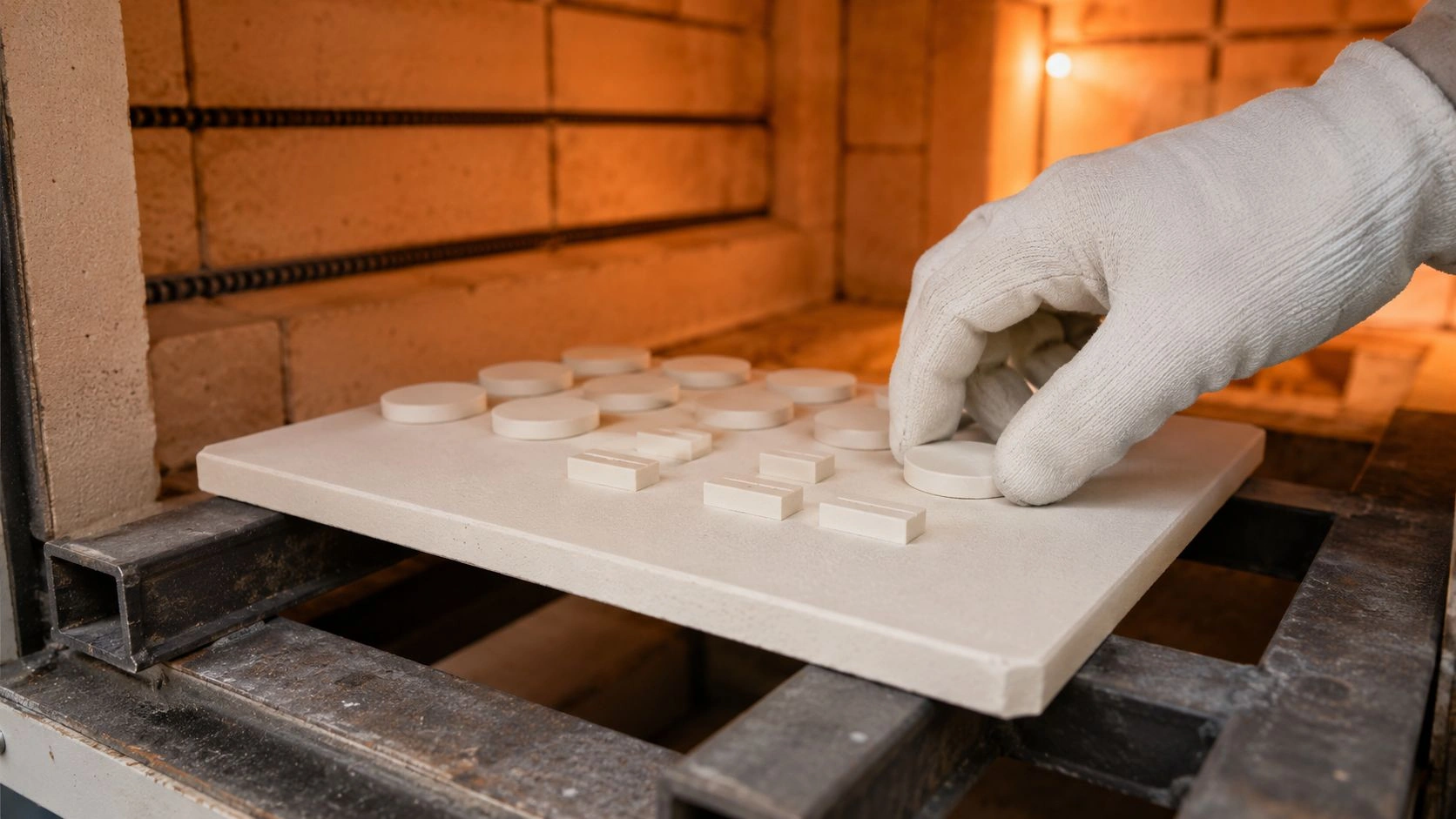
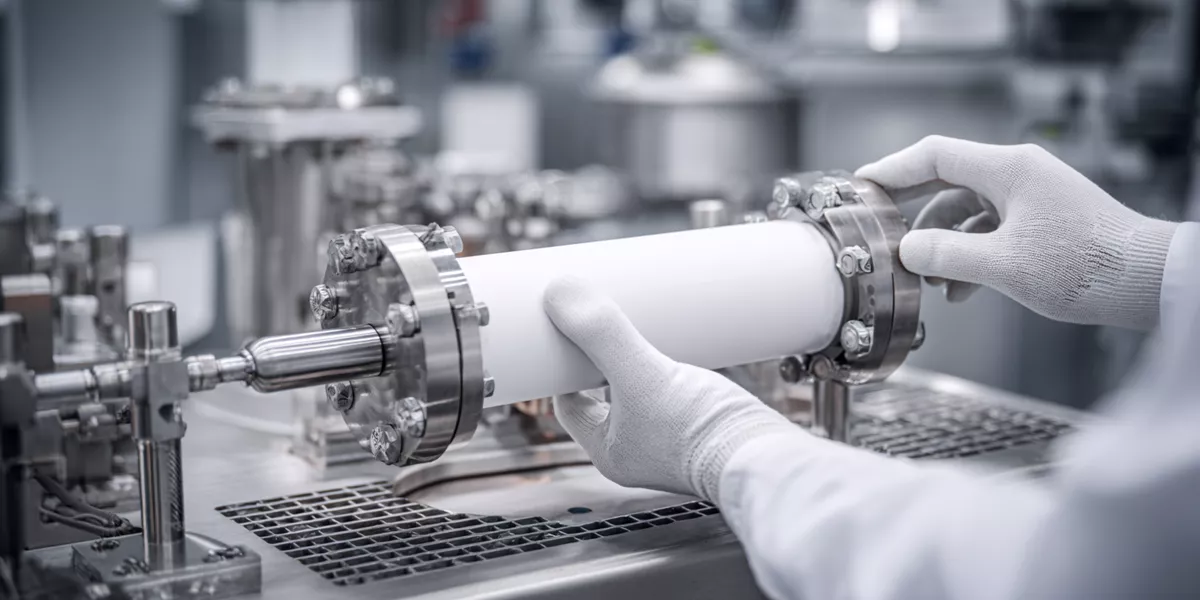
High-purity alumina tubes ≥99.7% Al₂O₃ and ≥3.92 g/cm³ density pass helium tests < 5×10⁻¹¹ std·cc/sec. Cleanroom installation and controlled bakeout (1200–1400 °C, 12–24 h) reduce outgassing to < 1×10⁻⁹ mbar·L/(s·cm²).
Material specification integration with fabrication quality control
XRF (ASTM C1109)3 verifies composition, while ultrasonic inspection4 detects internal voids. Density control within ±0.02 g/cm³ ensures uniform performance.
Ceramic-to-metal seal design for thermal expansion compatibility
Compliant gaskets accommodate expansion mismatch (α Al₂O₃ = 8.0×10⁻⁶ /°C, α SS = 17.3×10⁻⁶ /°C) to maintain 20–40 MPa seal stress and prevent microcracks.
Systematic bakeout protocols for outgassing rate minimization
Extended bakeout removes adsorbed gases, enhancing surface cleanliness and ensuring vacuum reproducibility across cycles.
Integrated Process Requirements for High-Purity Alumina Tube Installation
| Step | Target Metric | Verification Method | Effect |
|---|---|---|---|
| Purity | ≥99.7% | XRF (ASTM C1109) | Outgassing reduction |
| Density | ≥3.92 g/cm³ | Archimedes (ASTM C373) | Leak prevention |
| Leak Rate | <5×10⁻¹¹ std·cc/sec | Helium Test (ASTM E499) | UHV assurance |
| Bakeout | 1200–1400 °C / 24 h | RGA Measurement | Surface stability |
| Seal Design | 20–40 MPa stress | Finite Element Check | Crack resistance |
Conclusion
High-purity alumina tubes with ≥99.7% purity and ≤5×10⁻¹¹ std·cc/sec leak rate guarantee vacuum integrity up to 10⁻⁹ mbar in high-temperature furnace environments.
FAQ
1. How does high-purity alumina tube density affect vacuum stability?
Higher density (≥3.90 g/cm³) lowers open porosity, reducing permeability by 60–70% and improving vacuum hold times.
2. What influences cost in high-purity alumina tube selection?
Purity, leak testing certification, and manufacturing process—especially HIP treatment—define cost tiers for vacuum-rated components.
3. What steps ensure consistent leak performance during furnace use?
Helium testing, controlled bakeout, and cleanroom assembly ensure steady ≤1×10⁻⁸ mbar leak rates.
4. How does a high-purity alumina tube compare with quartz or zirconia?
Alumina withstands >1750 °C and offers better mechanical strength than quartz, while zirconia is denser but costlier and more expansion-sensitive.
References:
-
Understanding the Knudsen number is crucial for grasping gas behavior in various applications, especially in high-temperature environments. ↩
-
Understanding this concept is crucial for optimizing material properties and enhancing performance in various applications. ↩
-
Understanding XRF (ASTM C1109) can enhance your knowledge of material testing and quality assurance. ↩
-
Exploring ultrasonic inspection techniques can provide insights into advanced non-destructive testing methods. ↩