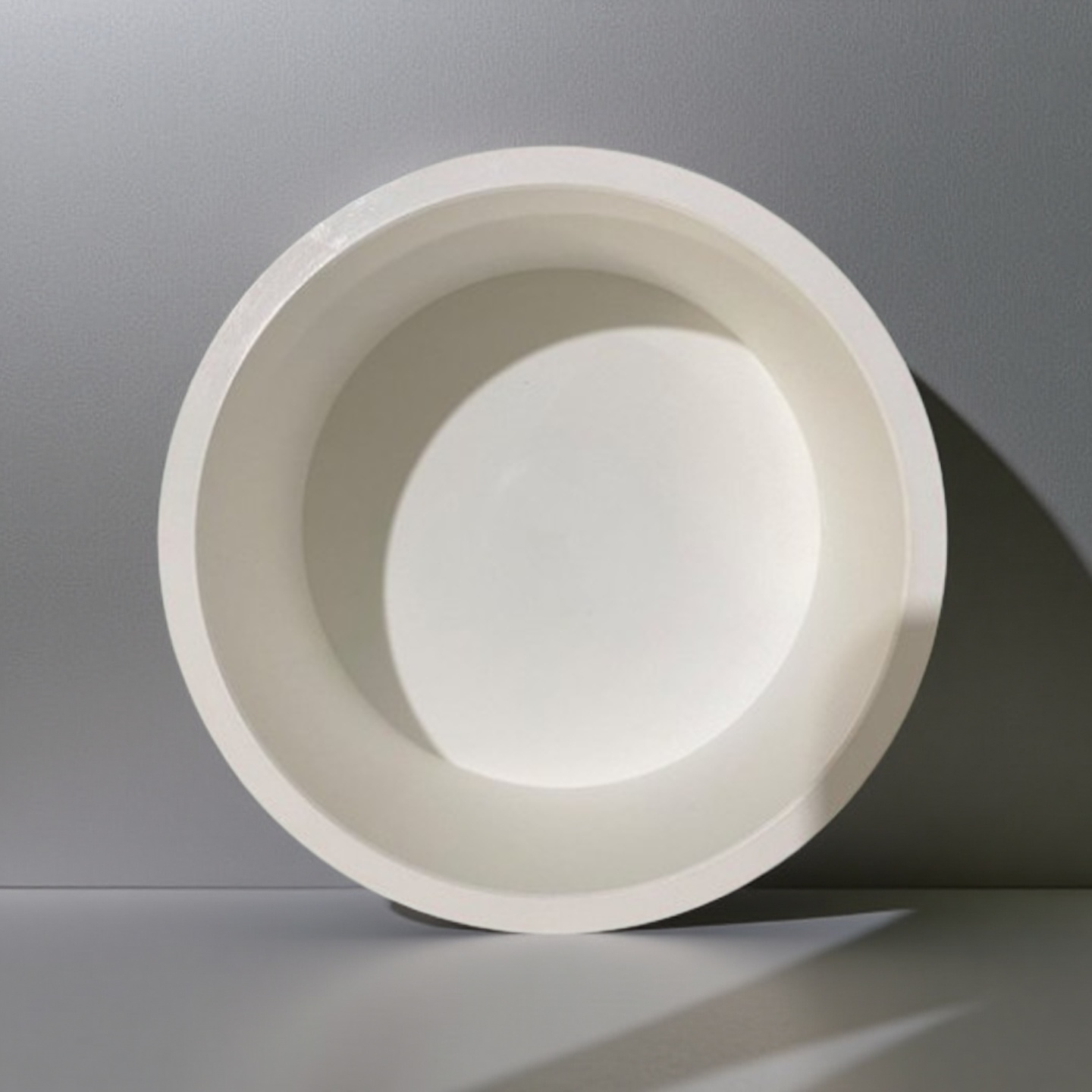
Custom High-Purity Boron Nitride Crucible Liner – Non-Wetting, Anti-Contamination

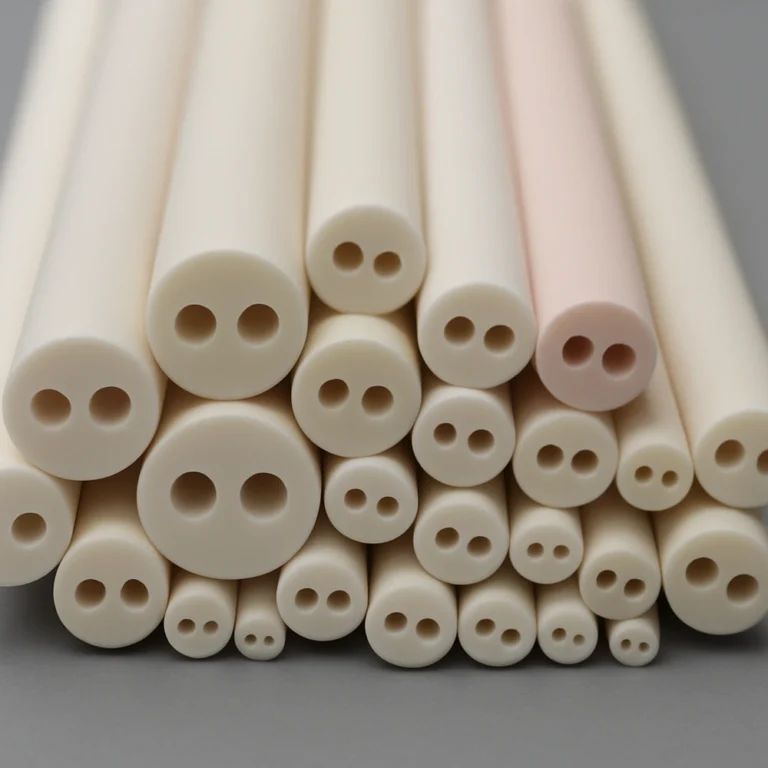
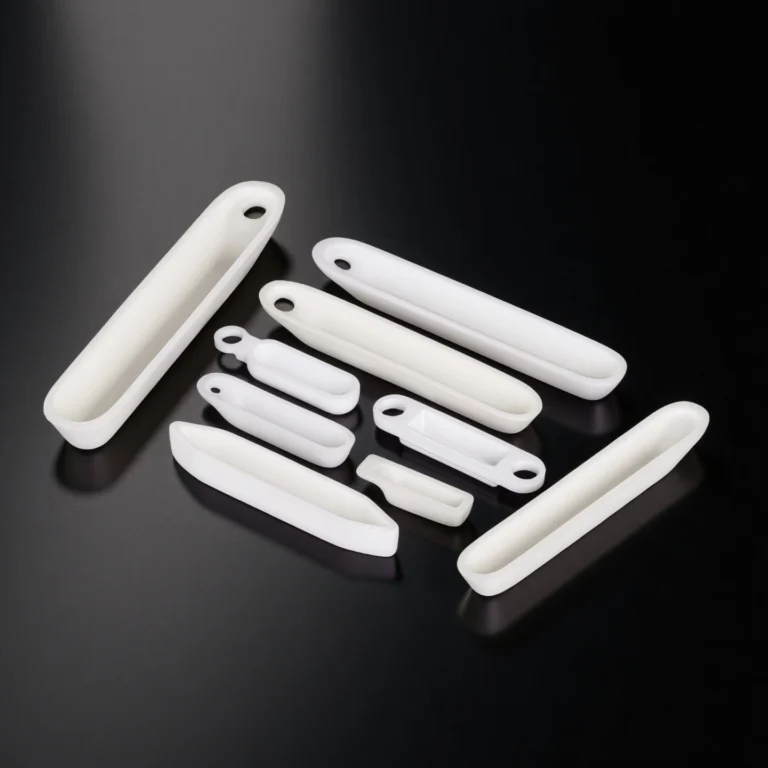
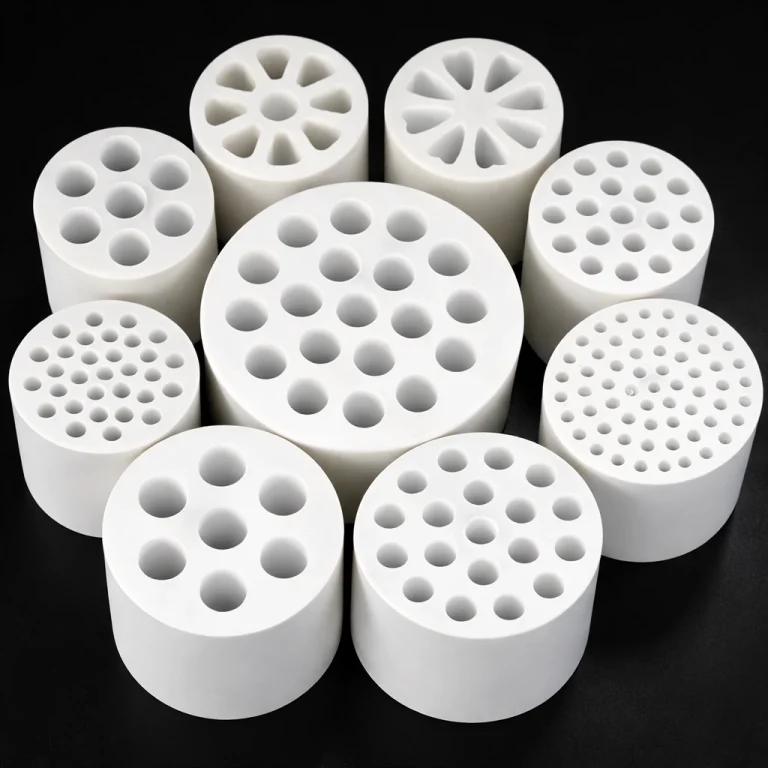
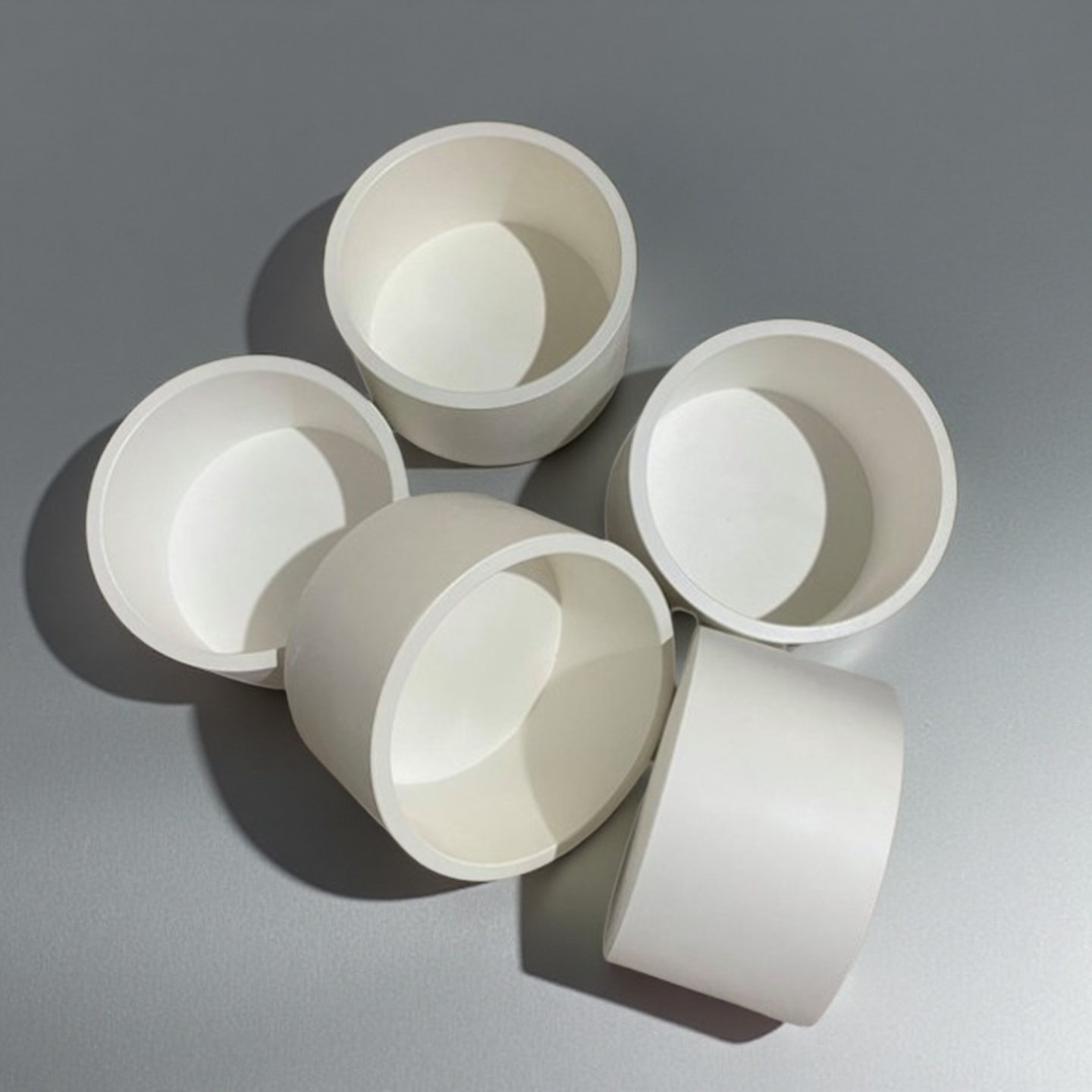
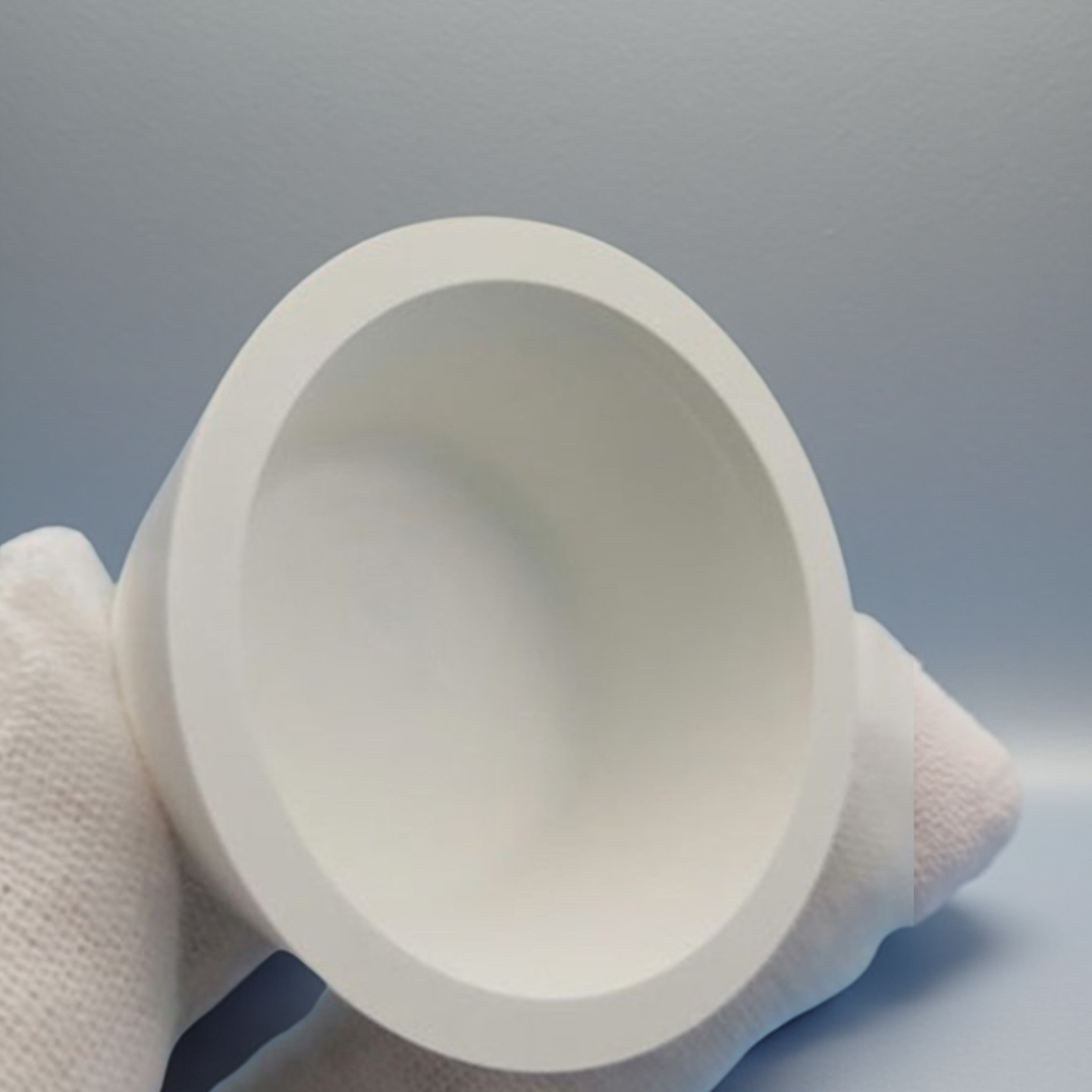
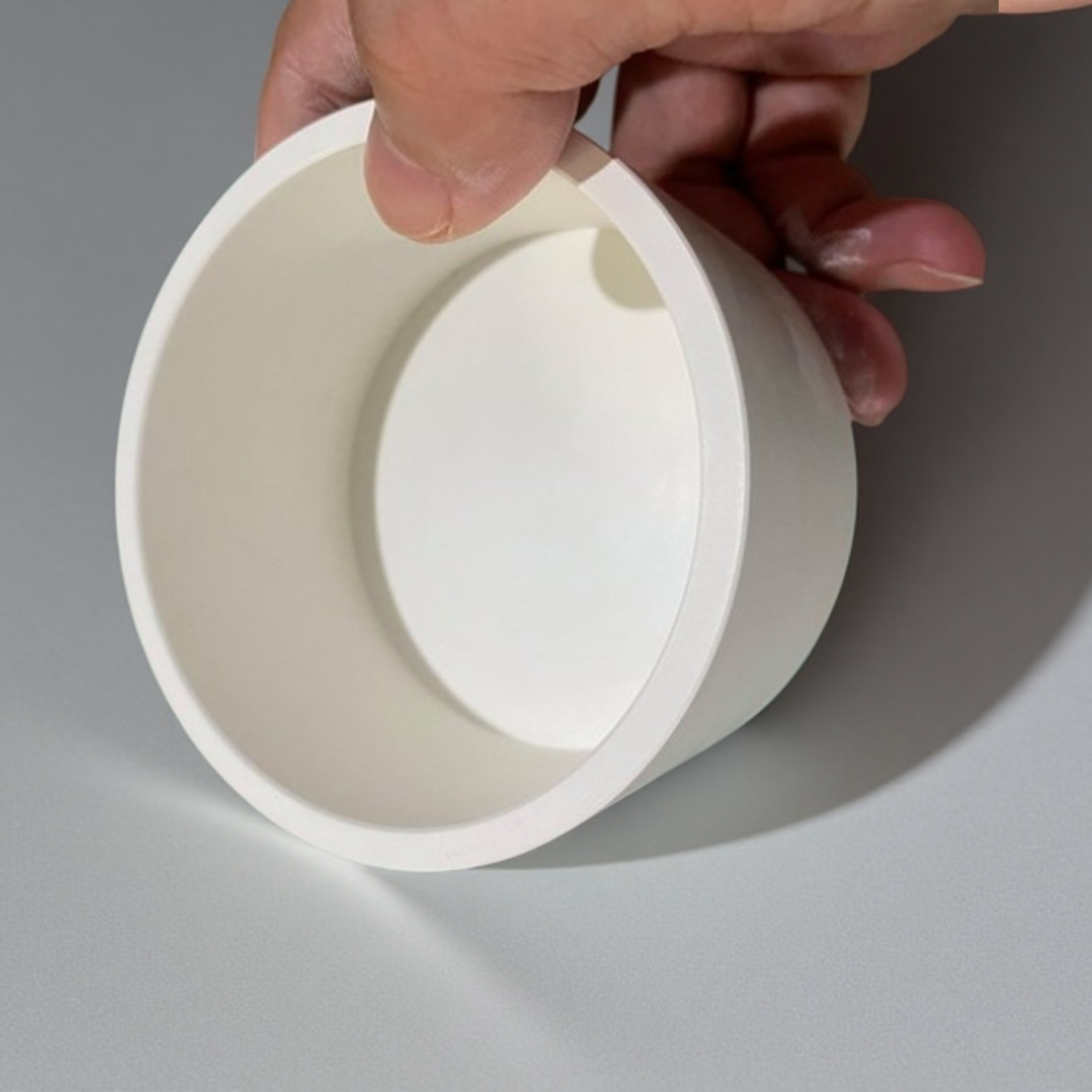
Boron nitride crucible liners are available in cylindrical, conical and stepped profiles with inner diameters from 20 mm to 300 mm. They serve as protective inserts for graphite crucibles in titanium melting, powder metallurgy furnaces and laboratory alloy casting. Custom machining based on drawings or samples is supported.

Catalogue No. AT-BN-GG6001
Material Boron Nitride
Max Working Temperature 1800 °C (vacuum/inert gas)
Bulk Density 1.85–1.95 g/cm³
Dimensions/Sizes Download PDF
24H Standard Dispatch
Small Batch Support OEM
Factory Direct
Expert Engineering Support

Boron nitride crucible liner is a protective insert placed inside graphite or ceramic crucibles during high-temperature metal processing. It forms a non-reactive barrier between the molten metal and the crucible wall, preventing chemical reactions, carbon contamination, and metal adhesion. Because hexagonal boron nitride does not wet with molten titanium, nickel alloys, precious metals, or silicon, it allows the melt to stay clean and enables easier removal after solidification.


Boron Nitride Crucible Liner Benefits

  • Non-wetting to molten titanium, nickel and silver, allowing complete pour-out and easy demolding
  • Prevents carbon contamination and reaction between graphite crucible and reactive molten metal
  • Stable under 1600–1800 °C in vacuum or argon furnaces, resistant to thermal cracking
  • Machinable with precision tolerances of ±0.1–0.2 mm to match existing crucible geometry
  • Extends graphite crucible lifespan by 2–3 cycles, reducing operating costs


Crucible Liner Boron Nitride Properties

Property Unit Pyrolytic Boron Nitride Hot Pressed Boron Nitride
Purity 99.99% 99.50%
Density g/cm3 2.15-2.19 1.96-2
Hardness HV0.5 651 62
Volume resistivity Ohm*cm 2*1014 1.2*1014
Dielectric strength kV/mm 55 76
Maximum working temperature 1000 (air), 2300 (vacuum) 900 (air), 1850 (vacuum)
Bending strength MPa 173 (A direction) 310
Thermal conductivity W/m*K 60 (A direction) 55
Tensile strength MPa 112 (A direction) 110
Thermal expansion coefficient /℃ 6*10-7 1.8*10-6
Compressive strength MPa 154 (A direction) 120


Crucible Liner Boron Nitride Specifications

Item No. Diameter (mm) Thickness (mm) Purity
AT-BN-GG6001 Customize


Boron Nitride Crucible Liner Packaging

  • Each BN liner is individually wrapped in soft foam or EPE padding to protect edges
  • Placed in firm cardboard or plywood box with fixed positioning to prevent movement
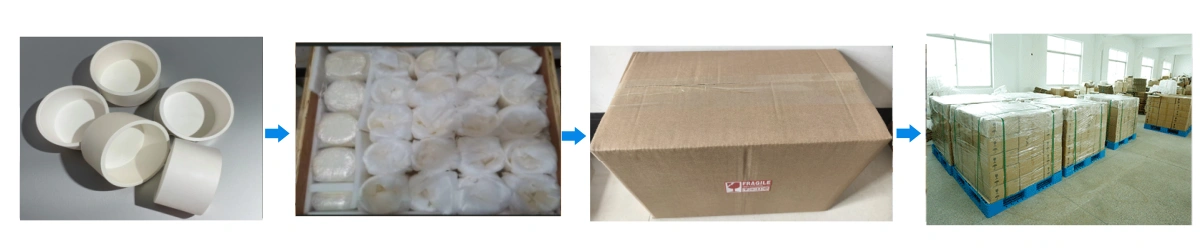
Boron Nitride Crucible Liner Packaging

Boron Nitride Crucible Liner Applications

  • Vacuum Induction Melting of Titanium Alloys

    ✅Key Advantages

    1. Carbon pickup reduced from >0.04% to <0.01% by isolating titanium melt from graphite crucible
    2. Withstands 1600–1750 °C repeatedly without cracking under vacuum pressure cycles
    3. Maintains melt surface stability and prevents reaction with furnace atmosphere

    ✅ Problem Solved

    A titanium casting plant reported carbon contamination caused by direct use of graphite crucible, after replacing with boron nitride liners, oxygen and carbon impurities dropped by over 60%. The furnace could run 3 more cycles before crucible replacement, reducing per-batch material scrap and stabilizing alloy composition.

  • Metal Powder Atomization for Additive Manufacturing

    ✅Key Advantages

    1. Keeps molten metal free from carbon or oxide inclusions during gas atomization
    2. Non-wetting surface enables full metal flow and improves powder sphericity (+5–8%)
    3. Reduces residue inside crucible, lowering cleaning and turnaround time

    ✅ Problem Solved

    A nickel-based alloy powder manufacturer experienced particle contamination from crucible erosion. Using BN liners eliminated contact reaction, increased powder purity from 99.3% to 99.7% and cut cleaning time from 4 hours to less than 1 hour per cycle.

  • Precious Metal Melting in Laboratory & Small Furnaces

    ✅Key Advantages

    1. Silver and gold remain non-reactive to BN, allowing clean demolding and full recovery
    2. Protects graphite crucible from silver diffusion and thermal erosion
    3. Enables repeated use without slag adherence, reducing per-use cost

    ✅ Problem Solved

    A jewellery research lab reported gold residue sticking to graphite crucibles, losing 1–2 g per melt. Using BN liners eliminated adhesion, saved material loss and shortened equipment downtime.

Boron Nitride Crucible Liner Usage Guide

  • Installation

    1. Inspect the graphite or ceramic crucible to ensure the inner surface is clean, smooth and free from cracks or debris before placing the BN liner.
    2. Gently lower the boron nitride liner into the crucible by hand; avoid using metal tools or hammering during positioning.
    3. If a stepped or flanged design is used, ensure the liner sits fully in contact with the seating surface—no gaps, tilting or stress points.
    4. For larger liners, it is recommended to preheat them to 100–150 °C to reduce moisture absorption before mounting.

  • Operation

    1. Follow a gradual heating schedule to prevent thermal shock—recommended ramp speed ≤ 200–250 °C per minute up to 800 °C.
    2. Always operate under vacuum, argon or nitrogen atmosphere. Direct exposure to oxygen above 800 °C can oxidize or weaken the liner surface.
    3. When adding solid metal, preheat the feedstock or add slowly to prevent impact damage or cold spots.
    4. Do not scrape the inner wall with sharp tools during melting or pouring.
    5. After each melt, allow the liner to cool naturally inside the furnace. Avoid quenching or forced air cooling.

  • Storage

    1. Store liners in a dry, dust-free cabinet. Relative humidity should be below 60% to prevent moisture absorption.
    2. For long-term storage, keep liners sealed in plastic bags with desiccant packs.
    3. Avoid stacking liners directly on top of each other—use foam or cloth layers to protect the edge and rim.

  • Cleaning & Maintenance

    1. Remove residual metal only after the liner has fully cooled, using a soft plastic scraper or compressed dry air.
    2. If metal adheres to the surface, gentle sandpaper (≥ 800 grit) can be used; avoid deep grinding that may alter wall thickness.
    3. Do not immerse BN liners in water, acid, alkali or ultrasonic cleaning tanks.
    4. If fine powder or oxidation film appears, use dry alcohol wipes or vacuum cleaning only.

  • Mistakes to Avoid

    Risky Practice Possible Result
    Heating > 300 °C/min or uneven heating Thermal shock, radial cracks
    Direct flame or oxy-fuel torch contact Local oxidation and surface degradation
    Adding cold metal ingots in large pieces Impact cracks or deformation
    Reusing liners with deep cracks or inner wall erosion Alloy contamination or crucible leakage
    Pouring molten metal at too low a temperature Incomplete flow, slag inclusion, blocked outlet
    Storing without moisture protection BN absorbs moisture → micro-cracks during next heating

Crucible Liner Boron Nitride FAQ

  1. Q: What is the main purpose of using a boron nitride crucible liner instead of a pure graphite crucible?
    A: A boron nitride liner creates a non-reactive barrier between molten metal and graphite, preventing carbon contamination, alloy carburization and metal adhesion. It is especially important when melting titanium, nickel-based, zirconium or precious metals that react easily with carbon at high temperatures.

  2. Q: Can boron nitride crucible liners be reused, and how many cycles are typical?
    A: Yes. In vacuum titanium melting, a liner can usually be reused for 3–6 melting cycles, depending on alloy type, heating speed and wall thickness. If cracks or surface erosion appear deeper than 0.5 mm, reuse is not recommended.
  3. Q: What furnace conditions are required for BN crucible liners? Can they be used in air?
    A: BN liners should be used under vacuum, argon or nitrogen atmospheres. Direct exposure to air above 800 °C causes BN oxidation. For long-term stability, furnace pressure should be ≤10⁻² Pa for vacuum or ≤0.1 MPa for inert gas protection.
  4. Q: What are the typical tolerances and machining capabilities for custom BN liners?
    A: Inner and outer diameters can be controlled to ±0.1 mm, flatness within 0.05 mm, and concentricity ≤0.1 mm for small liners. For large liners (>200 mm OD), ±0.2 mm is standard due to material brittleness.
  5. Q: How does a BN crucible liner affect alloy purity during melting?
    A: By isolating molten metal from graphite or metal crucible walls, BN liners reduce carbon absorption from 0.03% to <0.01% in titanium alloys and decrease inclusions formed from reactions with the crucible.
  6. Q: Can BN liners be used for induction heating or only resistance furnaces?
    A: BN itself is electrically insulating, but it can be used inside induction furnaces when placed inside a graphite crucible that absorbs induction heating. The liner does not interfere with the electromagnetic field.
  7. Q: What is the typical service life cost comparison vs. graphite crucibles?
    A: While BN liners cost more upfront, they extend graphite crucible life from 2–3 cycles to 5–7 cycles and reduce scrap metal from contamination, resulting in 20–35% lower total cost per melt for titanium or nickel alloy producers.

Customer Reviews about Boron Nitride Crucible Liner

  • ⭐️⭐️⭐️⭐️⭐️
    We use boron nitride crucible liners for titanium melting. Purity is consistent and dimensions match our graphite crucibles precisely. ADCERAX provided drawings review before production.
    Martin Keller – Process Engineer, AeroMetall GmbH, Germany
  • ⭐️⭐️⭐️⭐️⭐️
    Our atomization furnace requires customized BN liners. Delivery was on time, and the cost was lower than European suppliers. No carbon pickup detected in test batches.
    Sophia Lee – Purchasing Manager, KM Powder Metals, South Korea
  • ⭐️⭐️⭐️⭐️⭐️
    The BN crucible liner prevented gold from sticking to graphite and improved material recovery. Easy to clean and no cracking after multiple cycles.
    David Chen – R&D Laboratory, SilverTech Jewellery Lab, USA
  • ⭐️⭐️⭐️⭐️⭐️
    We switched to crucible liner boron nitride to reduce graphite contamination in Ni-based alloys. Surface quality of cast parts has clearly improved.
    Luca Romano – Production Director, AlloyCast Italy
customize size

Boron Nitride Crucible Line Customized

Most industrial users require custom sizes for their furnace design. Liners can be produced from drawings, CAD models or sample pieces. What You Can Specify:

1. Dimensions & Tolerances

  • Inner diameter (ID): 20–300 mm|Outer diameter (OD): 30–350 mm
  • Height/depth: up to 400 mm in one piece, larger sizes possible using segmented structures
  • Wall thickness: 3–20 mm, depending on crucible capacity and thermal load
  • Machining tolerance: typically ±0.1 mm, ±0.05 mm available for small parts or precision melting setups

2. Structure & Shape Options

  • Cylindrical, conical, flat-bottom, rounded-bottom, sloped-bottom
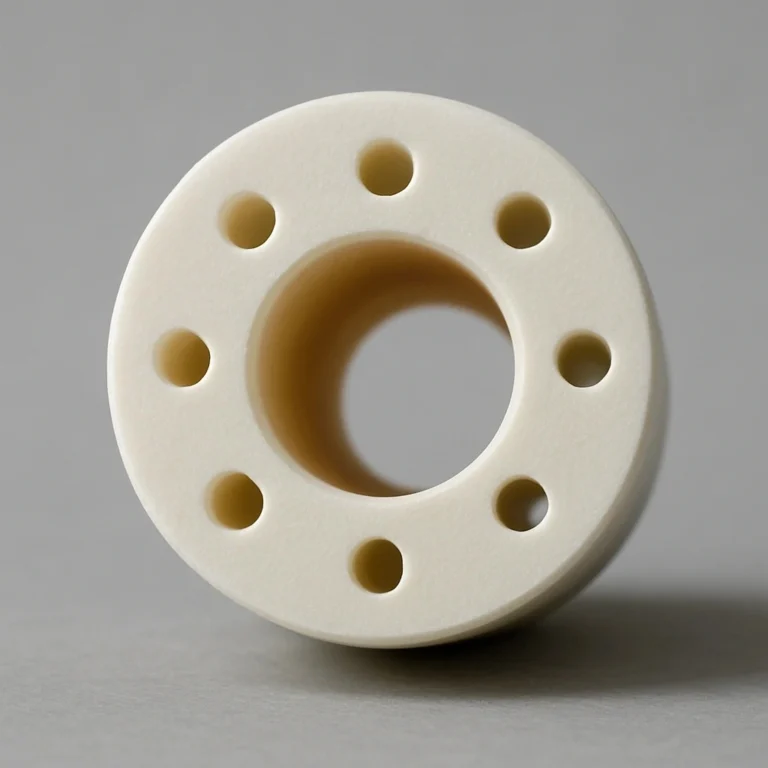
  • Stepped, shoulder-type, or flange designs for a tight fit inside graphite crucibles
  • Split or two-piece structures for large crucibles or easier replacement

3. End Form Variations

  • Open-end or fully closed-end bottom
  • Flanged or stepped-edge for positioning
  • Chamfered edges, top-ring reinforced, or rebate groove for stability

4. Surface Finish Choices

  • Raw machined surface
  • Fine-ground or polished inner wall to reduce metal adhesion
  • Sandblasted matte surface to increase contact friction with graphite
  • BN-coated graphite composite (liner and graphite bonded as one assembly)

5. Assembly & Fitting Methods

  • Insert-fit or slip-fit inside graphite or ceramic crucibles
  • Light press-fit for stable positioning
  • Bonded assembly using high-temperature BN adhesive or graphite adhesive
  • Optional mechanical locking or seat groove positioning

6. Functional Add-ons (Optional Features)

  • Pouring lip or casting spout for controlled melt flow
  • Overflow notches, vent grooves, drainage holes
  • Thermocouple or observation hole openings
  • Alignment grooves or positioning pins for multi-layer hot zone assemblies

Related Products

ADCERAX - Your Trusted Advanced Ceramics Manufacturing Partner

Direct factory manufacturing with comprehensive ceramic materials expertise and global supply capabilities

Direct Factory Manufacturing

China-based ceramic materials production facility with state-of-the-art equipment

Engineering Team

Experienced professionals in advanced ceramics applications and custom design

Quality Control

Strict quality control standards for technical ceramics manufacturing and quality management

Global Supply Chain

Serving customers worldwide with technical ceramics and rapid response

24/7 Technical Support

Round-the-clock support for ceramic components inquiries and technical assistance

500+ Satisfied Customers

Trusted by global customers for advanced ceramic materials and precision components

Get in touch with us

Our team will be happy to respond to you in less than 24 hours.

Adcerax's factory

Quick Quotation

*Our team will answer your inquiries within 24 hours.

*Your information will be kept strictly confidential.

Ready to Solve Your Engineering Challenge?

Partner with ADCERAX for reliable, high-performance advanced ceramic solutions. Our engineers are ready to discuss your project.

E-mail

info@adcerax.com

Phone

+(86) 0731-74427743 | WhatsApp: +(86) 19311583352

Response Time

Within 24 hours

Quick Quote

The more details you provide, the faster we can quote.

*We respond within 24 hours. All inquiries are confidential.

Download Catalog

Get Your Custom Sulution

The more details you provide, the faster we can respond.

customize size

*We respond within 24 hours. All inquiries are confidential.

Download Catalog