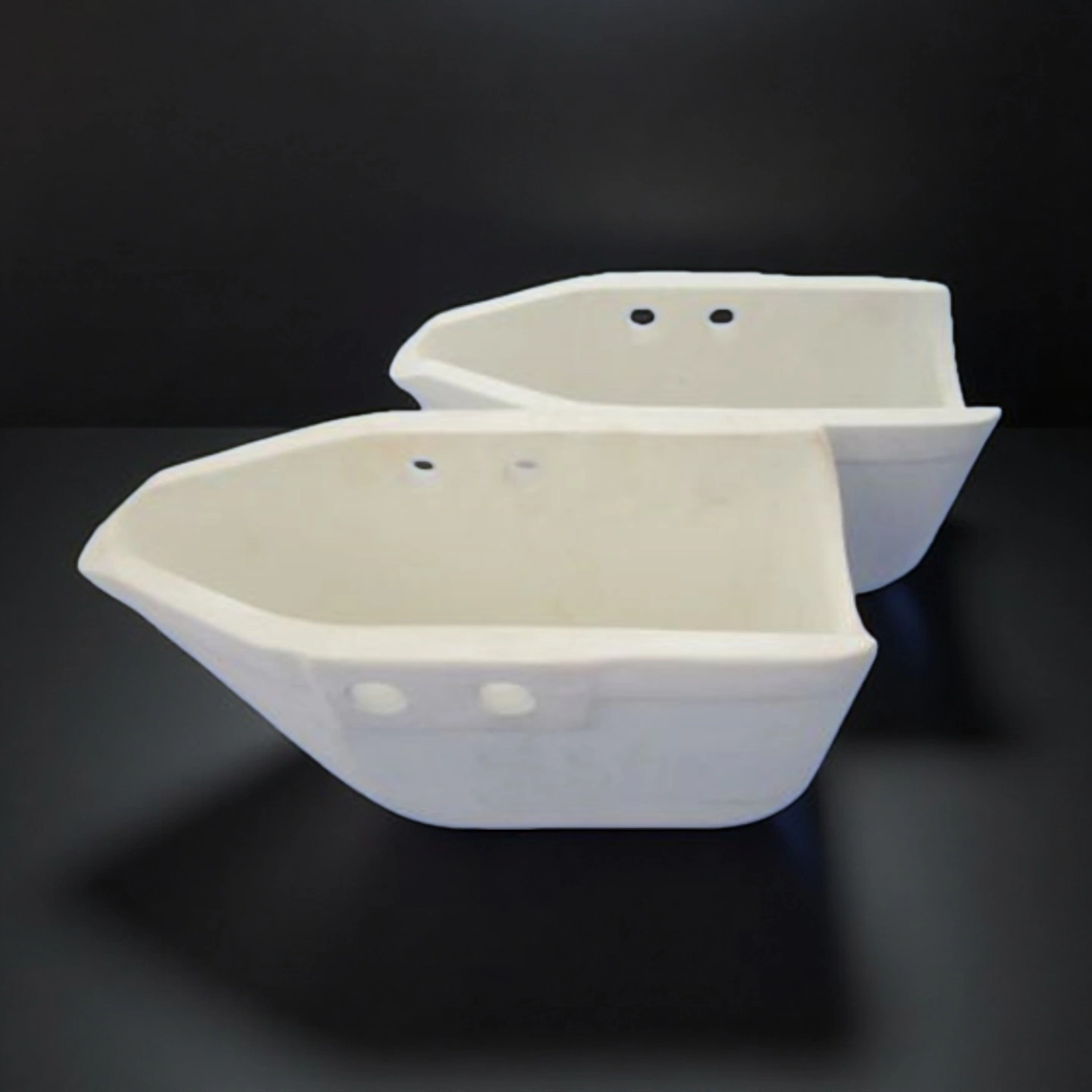
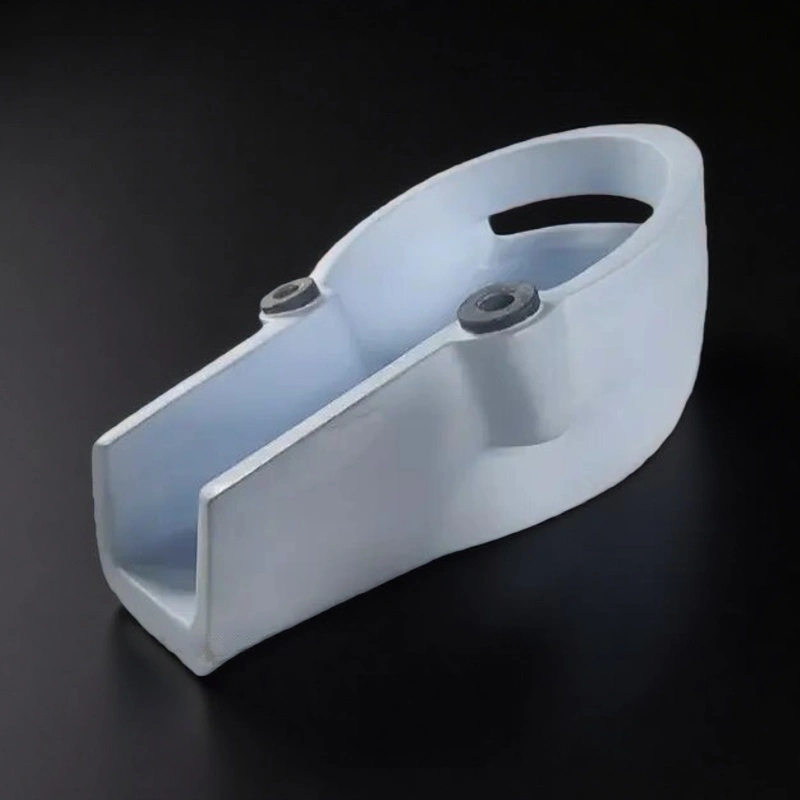
Aluminum Titanate Pouring Ladle for Molten Aluminum Transfer in Gravity Casting

We supply aluminum titanate pouring ladles in typical capacities from 2 kg to 6 kg molten aluminum per pour, with options for customized bowl geometry, lip angle and handle interface. Standard and non-standard aluminum titanate pouring ladles can be produced directly to customer drawings to match existing shanks, robots or auto-pour units.

Catalogue No. AT-TSL-LS1001
Material Al2O3+TiO₂
Continuous service temperature ~900–1000 °C
Coefficient of thermal expansion 0–1×10⁻⁶ K⁻¹ (20–600 °C)
Thermal conductivity <2 W/m·K (RT–1000 °C)
24H Standard Dispatch
Small Batch Support OEM
Factory Direct
Expert Engineering Support

Aluminum titanate pouring ladles are ceramic ladles engineered for molten aluminum transfer and controlled pouring in foundry environments. The ladles combine low thermal expansion, low thermal conductivity and low wettability to aluminum, which helps reduce thermal shock failures and metal contamination while keeping pouring temperature more stable.

Aluminum Titanate Pouring Ladles Benefits

  • Stable pouring geometry
    Bowl depth, lip profile and spout design are tailored to give repeatable metal stream height and flow direction, helping to stabilize manual or automated pouring cycles.

  • Reduced aluminum adhesion
    Aluminum titanate shows low wettability to molten aluminum, which helps lower build-up on the ladle surface and keeps the metal contact area cleaner during its service life.

  • Improved thermal shock behavior
    The combination of low thermal expansion and low modulus of elasticity allows the ladle to withstand rapid immersion into molten aluminum and repeated heating–cooling cycles with minimized cracking risk.

  • Better temperature control
    Low thermal conductivity reduces heat loss during transfer, which supports more consistent metal temperature at the moment of pouring and can reduce superheat requirements.

  • Compatibility with non-ferrous alloys
    Aluminum titanate is suitable for aluminum and selected non-ferrous alloys, allowing foundries with mixed production to standardize on one ladle material in many cells.

Aluminum Titanate Pouring Ladle Properties

Parameter Typical Value Description
Coefficient of Thermal Expansion (CTE) 0.5–1.5 ×10⁻⁶ /K Extremely low expansion that maintains dimensional stability under molten aluminum temperatures.
Thermal Shock Resistance Very high Withstands rapid temperature fluctuations without cracking during casting cycles.
Density 2.8–3.0 g/cm³ Medium-density ceramic structure suitable for molten aluminum system components.
Thermal Conductivity 1.5–3.0 W/m·K Helps reduce heat loss along riser tubes, spouts and transfer components.
Maximum Service Temperature 900–1100°C Suitable for typical molten-aluminum environments and transfer systems.
Flexural Strength (MOR) 10–25 MPa Provides sufficient strength for handling, installation and operational load.
Elastic Modulus 20–40 GPa Lower stiffness contributes to excellent thermal shock tolerance.
Porosity 12–25% Supports insulation and limits internal thermal stress accumulation.
Chemical Compatibility Non-wetting to molten aluminum Prevents adhesion, oxide buildup and contamination in casting processes.
Dimensional Stability Stable through long cycles Maintains geometry during prolonged molten-aluminum exposure and thermal cycling.


Aluminum Titanate Pouring Ladle Specifications

Item No. Diameter (mm) Thickness (mm) Purity
AT-TSL-LS1001 Customize


Aluminum Titanate Ceramic Pouring Ladle Packaging

  • Each aluminum titanate pouring ladle is wrapped in shock-absorbing material to protect the ceramic bowl and lip.
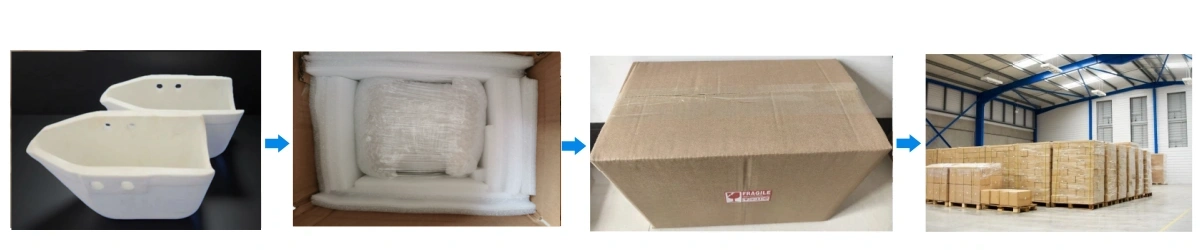
Aluminum Titanate Ceramic Pouring Ladle Packaging

Application Scenarios of Aluminum Titanate Pouring Ladles

  • Automotive Aluminum Foundries – Aluminum Titanate Pouring Ladle in Engine and Chassis Casting

    ✅Key Advantages

    1. Dimensional stability for auto-pour systems
    Aluminum titanate pouring ladles keep lip geometry and capacity stable through many thermal cycles, supporting consistent metal dosing in automated pouring cells.

    2. Reduced scrap from inclusions
    Low wettability to molten aluminum helps limit build-up and particle release from the ladle surface, which can contribute to lower inclusion-related scrap rates.

    3. Controlled temperature drop between furnace and mold
    Low thermal conductivity helps limit temperature loss by several degrees Celsius during transfer, improving process control and reducing overheating requirements.

    ✅ Problem Solved

    In an automotive aluminum foundry producing cylinder head castings, switching from a steel-lined ladle to an aluminum titanate pouring ladle reduced metal adhesion and surface build-up on the ladle. Over several months of monitoring, the plant observed a reduction in inclusion-related scrap on critical sections and a more stable pouring temperature window, enabling tighter process limits without increasing superheat. The foundry also reported fewer ladle-related stoppages due to cracking or surface repair.

  • General Non-Ferrous Foundries – Aluminum Titanate Pouring Ladle for Pumps, Housings and Valves

    ✅Key Advantages

    1. Flexible capacities for mixed production batches
    Aluminum titanate pouring ladles can be sized to match typical shot weights for pump bodies, motor housings and valve components, allowing one ladle design to cover multiple job types.

    2. Lower maintenance on pouring tools
    The ceramic ladle body does not require frequent recoating to achieve non-wetting behavior, which simplifies maintenance routines in jobbing foundries.

    3. Compatibility with several non-ferrous alloys
    The material is suitable for molten aluminum and selected non-ferrous alloys, supporting foundries that switch alloys during the week or across production shifts.

    ✅ Problem Solved

    A general non-ferrous foundry producing industrial housings and valve bodies previously needed frequent recoating of metal ladles to maintain non-wetting behavior. After introducing aluminum titanate pouring ladles, recoating frequency was reduced and cleaning work on ladle interiors decreased. The foundry reported more stable pouring conditions over longer campaign lengths and lower variation in metal surface condition at the point of pouring.

  • Cast Houses & Equipment OEMs – Aluminum Titanate Pouring Ladle for Billet Casting and Auto-Pour Units

    ✅  Key Advantages

    1. Integration into OEM auto-pour designs
    Aluminum titanate pouring ladles can be machined to match OEM robot grippers and pouring mechanisms, becoming a standard component in casting cell designs.

    2. Extended life under repetitive thermal cycles
    Low expansion and thermal shock resistance support longer service life where ladles cycle between ambient conditions and molten metal temperatures many times per shift.

    3. Support for consistent billet and slab quality
    Stable ladle geometry helps maintain repeatable flow patterns into billet molds or tundishes, contributing to more uniform product quality.

    ✅  Problem Solved

    An equipment OEM supplying automated aluminum casting cells integrated a dedicated aluminum titanate pouring ladle geometry into its standard pouring robot package. After field operation in a cast house producing billets, the OEM documented fewer unplanned ladle changes and reduced pouring variability compared with previous metallic designs. This allowed the cast house to run longer campaigns between ladle replacements and improved overall line availability.


Aluminum Titanate Pouring Ladle – Usage Guide

To achieve stable performance from an aluminum titanate pouring ladle, installation, operation and maintenance should follow some basic rules.

  • Installation

    1. Inspect the aluminum titanate pouring ladle visually before installation and check for visible cracks, chips or impact damage on the bowl and lip.
    2. Mount the ladle securely in the shank, manipulator or robot gripper so that clamping forces are distributed over designed contact surfaces, avoiding concentrated loads on thin ceramic sections.
    3. Verify alignment between the ladle lip and the mold, launder or pouring cup to ensure a smooth metal stream without splashing.

  • Operation

    1. Pre-heat the ladle according to the foundry’s standard procedure if required by the process; some aluminum titanate ladles can enter service with minimal pre-heating, but local practice should be followed.
    2. Avoid sudden contact between the cold ladle and full-temperature molten aluminum; bring the ladle gradually into service for the first few cycles.
    3. Keep the metal level within the ladle inside the specified capacity range to prevent overfilling, which can increase thermal stress and spill risk.
    4. Maintain a consistent pouring angle and stroke so that the lip geometry performs as designed and the metal stream remains stable.

  • Storage

    1. Store idle aluminum titanate pouring ladles in a dry area, protected from impact and contact with steel tools or scrap.
    2. Avoid stacking ladles directly on the ceramic surfaces; use soft pads, wooden supports or dedicated racks.
    3. Do not expose stored ladles to water or liquids that can freeze inside surface pores in cold environments.

  • Cleaning

    1. Remove residual solidified aluminum mechanically with non-aggressive tools that do not gouge the ceramic surface.
    2. Avoid thermal shock cleaning methods such as sudden quenching with water.
    3. If release agents or coatings are used, apply them according to the supplier’s instructions and avoid thick, uneven layers that can spall and contaminate the melt.

  • Common Misuse and How to Correct It

    1. Problem: Cracks at the lip after a short period of use
    Possible cause: Sudden immersion of a cold ladle into full-temperature metal or impact on the lip during handling.
    Corrective action: Introduce a controlled warm-up routine, check handling practices and avoid striking the lip against furnace rims or molds.

    2. Problem: Excessive metal build-up inside the bowl
    Possible cause: Operation outside the designed metal temperature range or use of incompatible coatings.
    Corrective action: Verify melt temperature, review coating products and cleaning methods, and adjust process if aluminum titanate’s non-wettability is being masked by residues.

    3. Problem: Ladle does not fit correctly in the existing shank or robot gripper
    Possible cause: Dimensional mismatch between supplied ladle interface and local hardware.
    Corrective action: Provide updated drawings or a sample hardware interface for adjustment; refine the interface dimensions in the next batch.

Aluminum Titanate Ceramic Pouring Ladle – FAQ

  1. Q: Why choose an aluminum titanate pouring ladle instead of a steel ladle?
    A: Compared with steel ladles, an aluminum titanate pouring ladle offers lower thermal expansion, better thermal shock behavior and lower wettability to molten aluminum, which can reduce build-up, improve temperature stability and extend service life.
  2. Q: What temperature range can an aluminum titanate pouring ladle handle?
    A: Typical aluminum titanate ladles are suitable for continuous operation with molten aluminum around 700–750 °C, based on materials with continuous service temperatures close to 900–1000 °C.
  3. Q: Can an aluminum titanate pouring ladle be used for alloys other than aluminum?
    A: Yes, an aluminum titanate pouring ladle can be used with some non-ferrous alloys such as certain copper-base or zinc-base alloys, provided their operating temperatures and chemical interactions are compatible with aluminum titanate ceramics.
  4. Q: What typical capacities are available for aluminum titanate pouring ladles?
    A: Common designs cover capacities from around 2 kg to 6 kg molten aluminum per pour for hand or robot pouring, and larger capacities can be developed according to project requirements.
  5. Q: How long does an aluminum titanate pouring ladle usually last in production?
    A: Service life depends on thermal cycling, handling and alloy type, but aluminum titanate pouring ladles are generally selected for longer life than comparable metallic or lower-grade refractory designs in the same application.
  6. Q: Can the geometry of an aluminum titanate pouring ladle be customized?
    A: Yes, the bowl shape, capacity, lip design and handle interface of an aluminum titanate pouring ladle can be customized to match existing shanks, robots or auto-pour units.

Customer Reviews – Aluminum Titanate Pouring Ladle

  • ⭐️⭐️⭐️⭐️⭐️
    We introduced aluminum titanate pouring ladles on one of our cylinder head lines and saw more stable stream behavior during automated pouring. The reduced metal build-up inside the ladle has helped us keep aluminum inclusion levels under better control.
    -- Mark H., Casting Process Engineer, AutoCast GmbH
  • ⭐️⭐️⭐️⭐️⭐️
    Working with ADCERAX as a direct factory supplier for aluminum titanate pouring ladles simplified our sourcing. The drawings were aligned with our auto-pour equipment, and the delivered ladles matched the requested tolerances without additional adjustment.
    -- Sarah L., Purchasing Manager, ADCERAX Advanced Ceramics Customer (EU Foundry Group)
  • ⭐️⭐️⭐️⭐️⭐️
    After switching to aluminum titanate pouring ladles for our pump and housing castings, maintenance on pouring tools dropped. We no longer need to recoat ladles every few shifts, and the metal surface condition at the mold is more consistent.
    -- Diego M., Foundry Manager, NorteMetal Castings
  • ⭐️⭐️⭐️⭐️⭐️
    We integrated a customized aluminum titanate pouring ladle design into one of our standard casting cells. Our customers report fewer ladle changes and appreciate having a ceramic ladle geometry that is matched to the robot and the mold layout from the start.
    -- Kenji S., Engineering Director, Foundry Equipment OEM
customize size

Custom Aluminum Titanate Pouring Ladles Supplier

Aluminum titanate pouring ladles can be configured according to existing pouring equipment, robot grippers and foundry layouts, allowing the ladle body and connection details to fit directly into current lines.

1. Capacity and bowl geometry

  • Nominal metal capacity per pour (e.g., 2 kg, 3.5 kg, 6 kg molten aluminum)
  • Bowl diameter, depth and wall thickness distribution
  • Lip radius, spout length and outlet angle

2. Overall dimensions and interfaces

  • Overall length and center of gravity position
  • Handle interface type (fork, pin, flange, clamp surface)
  • Robot or manipulator gripping faces and tolerances

3. Shape and cross-section

  • Standard ladle shape or asymmetric bowl for specific molds
  • Offset lip or side-pour configuration
  • Additional reinforcing ribs or support surfaces on the ceramic body

4. Surface and feature details

  • As-sintered or machined contact surfaces
  • Drain features and metal return grooves
  • Identification marks or engraved reference lines for positioning

Related Products

ADCERAX - Your Trusted Advanced Ceramics Manufacturing Partner

Direct factory manufacturing with comprehensive ceramic materials expertise and global supply capabilities

Direct Factory Manufacturing

China-based ceramic materials production facility with state-of-the-art equipment

Engineering Team

Experienced professionals in advanced ceramics applications and custom design

Quality Control

Strict quality control standards for technical ceramics manufacturing and quality management

Global Supply Chain

Serving customers worldwide with technical ceramics and rapid response

24/7 Technical Support

Round-the-clock support for ceramic components inquiries and technical assistance

500+ Satisfied Customers

Trusted by global customers for advanced ceramic materials and precision components

Get in touch with us

Our team will be happy to respond to you in less than 24 hours.

Adcerax's factory

Quick Quotation

*Our team will answer your inquiries within 24 hours.

*Your information will be kept strictly confidential.

Ready to Solve Your Engineering Challenge?

Partner with ADCERAX for reliable, high-performance advanced ceramic solutions. Our engineers are ready to discuss your project.

E-mail

info@adcerax.com

Phone

+(86) 0731-74427743 | WhatsApp: +(86) 19311583352

Response Time

Within 24 hours

Quick Quote

The more details you provide, the faster we can quote.

*We respond within 24 hours. All inquiries are confidential.

Download Catalog

Get Your Custom Sulution

The more details you provide, the faster we can respond.

customize size

*We respond within 24 hours. All inquiries are confidential.

Download Catalog