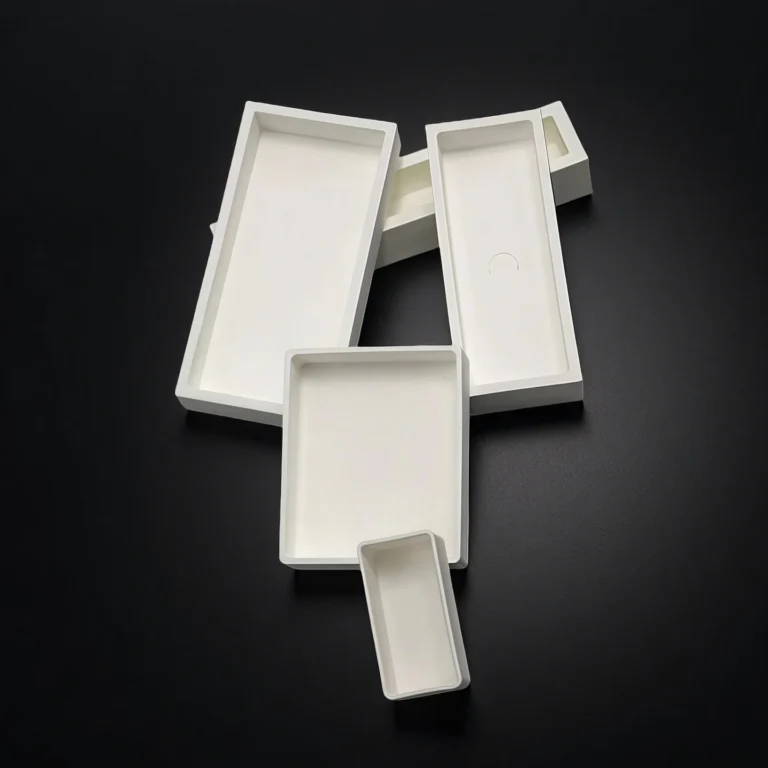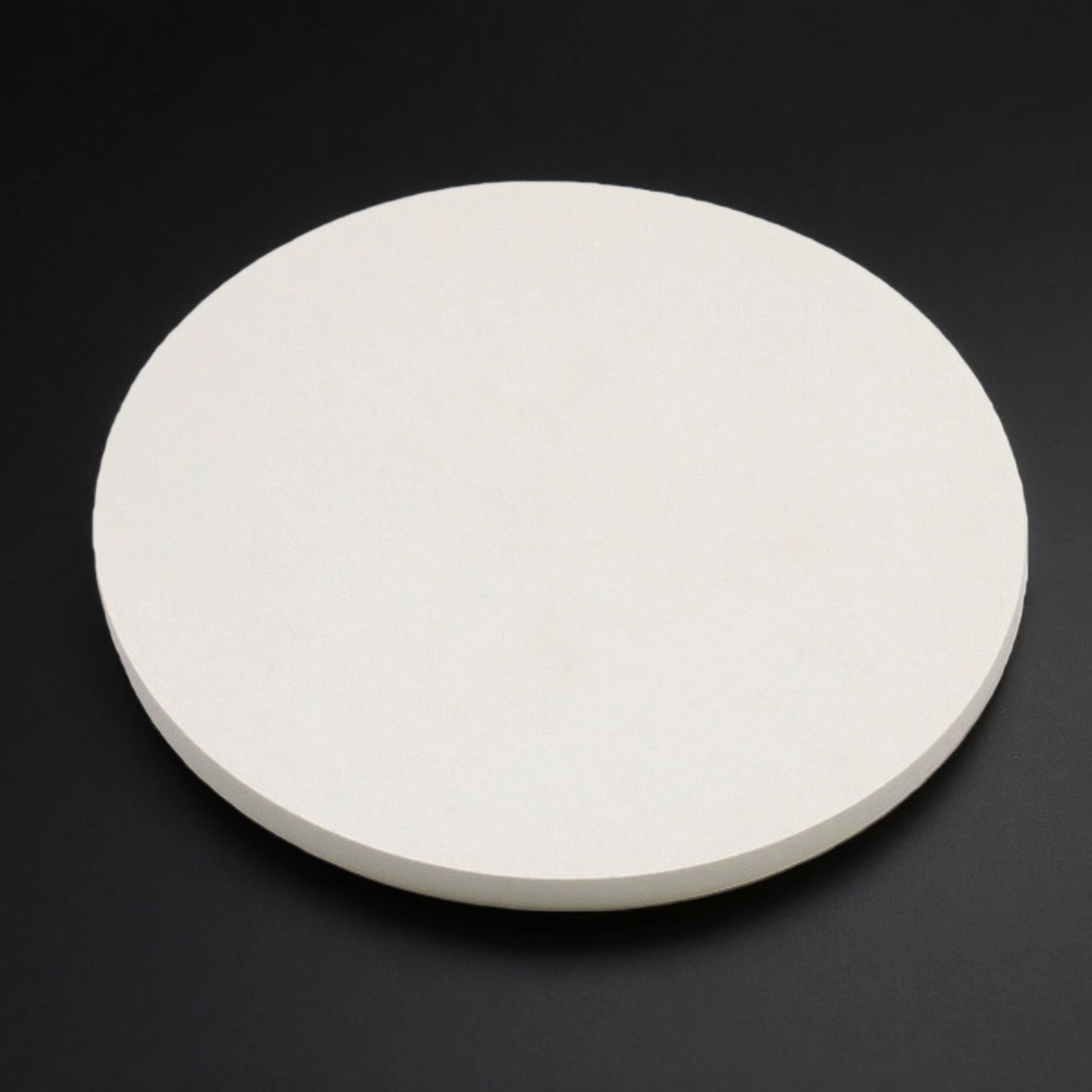
Custom Yttrium Oxide Sputtering Target – Y₂O₃ Discs, Plates and Step Targets for Vacuum Coating Systems

Yttrium Oxide Sputtering Targets from ADCERAX are dense Y₂O₃ ceramic targets supplied in standard round and rectangular formats, with high purity grades for optical coatings, dielectric thin films and R&D sputtering systems. Standard Y₂O₃ sputtering targets are available from 2″–6″ diameter and matched rectangular plates, with typical thicknesses from 3–10 mm and custom machining to your cathode size.

Catalogue No. AT-Y2O3-BC01
Material ≥99.5% Y2O3
Maximum Working Temperature 2200°C
Dimensional Tolerance ±0.1mm (ID/OD)
Bulk density Approx. 3.5 g/cm³
24H Standard Dispatch
Small Batch Support OEM
Factory Direct
Expert Engineering Support

A Yttrium Oxide Sputtering Target is a dense ceramic body made from high-purity Y₂O₃, engineered to be mounted in RF or DC sputtering systems as the source material for depositing Yttrium Oxide thin films on substrates. During sputtering, energetic ions strike the Y₂O₃ target and eject atoms that form controlled dielectric or optical coatings, for example high-index layers in precision optics, high-k gate dielectrics, or functional films in photonics and R&D applications.

Yttrium Oxide Sputtering Target Benefits

  • High purity dielectric ceramic
    Yttrium Oxide sputtering targets with 99.9–99.99% purity support low-defect dielectric and optical films, helping to control leakage current and optical absorption in the final coating.

  • Dense microstructure for stable sputtering
    Targets engineered toward the 5.01 g/cm³ theoretical density of Y₂O₃ reduce porosity and improve erosion uniformity, which supports consistent film thickness and composition across production runs.

  • Controlled dielectric and optical performance
    Y₂O₃ thin films can reach a dielectric constant around 14–18 and refractive index near 1.7–2.0, making the material suitable as a high-k dielectric and high-index optical layer in multi-layer stacks.

  • Flexible target geometries for different cathodes
    Yttrium Oxide sputtering targets can be made as discs, plates, column targets and step targets, matching round or rectangular cathodes on optical coaters, load-lock systems and R&D tools.

  • Bonded and unbonded configurations
    Y₂O₃ ceramics can be supplied unbonded for customer assembly, or indium-bonded to Cu or Mo backing plates to enable higher power densities and improved thermal control in RF or DC magnetron sputtering.


Yttrium Oxide Sputtering Target Properties

Category Property Value
Chemical & Physical Main Composition 99% Y₂O₃
Color White
Density 4.9 g/cm³
Hardness (Mohs) 6
Mechanical Flexural Strength 130 MPa
Compressive Strength 508 MPa
Thermal Thermal Expansion Coefficient (25°C → 400°C) 7.2 × 10⁻⁶ /°C
Long-Term Service Temperature 800°C
Thermal Conductivity (25°C) 1.71 W/m·K
Electrical Dielectric Strength (5 mm) 10 kV/mm
Volume Resistivity > 10¹³ Ω·cm
Dielectric Loss (25°C @ MHz) Not specified
Dielectric Constant (25°C @ MHz) Not specified


Yttrium Oxide Ceramic Sputtering Target Specifications

Item No. Diameter (mm) Thickness (mm) Purity
AT-Y2O3-BC01 Customize


Yttrium Oxide Sputtering Target Packaging

  • Each Y₂O₃ sputtering target is wrapped in clean, non-abrasive film and placed in a dedicated holder or cavity tray to minimize particle generation during transport.
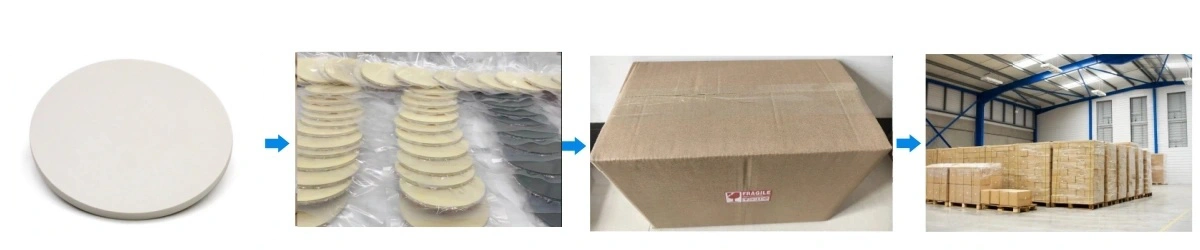
Yttrium Oxide Sputtering Target Packaging

Yttrium Oxide Sputtering Target Applications

  • Yttrium Oxide Sputtering Target for Optical Coating and Photonics

    ✅Key Advantages

    1. High index dielectric layer design: Y₂O₃ thin films provide a refractive index typically in the 1.7–2.0 range, enabling compact multilayer AR and HR stacks compared to lower-index oxides.

    2. Wide transparency window: Films sputtered from Yttrium Oxide targets show optical transparency from near-UV to IR, covering roughly 0.2–8 µm, which supports broadband optical coatings for laser and sensing systems.

    3. Stable film properties under thermal load: The high melting point, around 2,410–2,430 °C and ceramic stability of Y₂O₃ help maintain coating integrity on optics exposed to repeated thermal cycles or high laser power.

    ✅ Problem Solved

    A European optical coating company upgrading to higher laser power found that conventional oxide stacks were reaching their damage threshold quickly. By adding a Y₂O₃ layer sputtered from high-purity Yttrium Oxide targets with refractive index around 1.8–1.9 and dielectric constant near 14–18, they reduced localized field intensity in the stack and improved laser damage performance, lowering rework rates and helping to stabilize on-time delivery in a sputtering target market that already exceeds USD 6 billion worldwide.

  • Yttrium Oxide Sputtering Target for High-k Dielectric and Thin-Film Electronics

    ✅Key Advantages

    1. High dielectric constant: Y₂O₃ films grown from Yttrium Oxide sputtering targets can reach a dielectric constant of about 14–18, allowing thinner layers to achieve the same capacitance compared with low-k oxides.

    2. Large band gap and low absorption: With a band gap around 5.8 eV and low optical absorption, Y₂O₃ enables high-k dielectric layers that also maintain good optical and electrical insulation in transistor and capacitor structures.

    3. Compatibility with sputtering processes: Target properties are suited to RF sputtering at moderate power densities (commonly up to ~20 W/in² for bonded targets), enabling integration into existing PVD lines without major hardware changes.

    ✅ Problem Solved

    An electronics producer needed to increase capacitance density without enlarging device area. By replacing part of the SiO₂ stack with Y₂O₃ sputtered from 99.99% targets, the design team used the higher dielectric constant to raise capacitance while keeping leakage within limits, avoiding mask redesign. This solution was implemented within the wider sputtering target market that is projected to grow from about USD 6.2 billion in 2025 to roughly USD 8.6 billion by 2035, driven by thin-film electronics and semiconductor demand.

  • Yttrium Oxide Sputtering Target for Vacuum Coating Job Shops and R&D Labs

    ✅  Key Advantages

    1. Flexible batch sizes for mixed workloads: Job shops and laboratories can specify small batches of Y₂O₃ sputtering targets (from single 2" discs up to multi-piece orders) to support diverse projects without committing to large inventories.

    2. Stable erosion behaviour for repeated setups: Targets produced with controlled density and bonding show consistent erosion tracks, simplifying recipe transfer between batches and reducing time spent re-qualifying PVD recipes for small production or R&D lots.

    3. Documented material data for research work: Published datasets on refractive index (≈1.7–2.1), dielectric constant and band gap support researchers in modeling Y₂O₃ films, making it easier to integrate ADCERAX Yttrium Oxide sputtering targets into academic and industrial studies.

    ✅  Problem Solved

    A vacuum coating job shop serving optical and electronic prototypes previously avoided rare-earth targets due to inconsistent lead times and limited technical data. By switching to a documented Y₂O₃ sputtering target supply, with COA for purity and density plus references to published thin-film properties, the team reduced recipe setup iterations and could keep one standard Y₂O₃ target format in stock while addressing several customer projects per quarter, improving target utilization and reducing per-project material cost.


Y₂O₃ Sputtering Target Usage Guide

  • Installation

    1. Inspect the Y₂O₃ sputtering target visually for edge chips and bonding defects before installation.
    2. Clean the backing plate and cathode surface with approved solvents and non-fibrous wipes to remove particles.
    3. Align mounting holes and tighten hardware in a cross pattern to avoid bending the bonded assembly.
    4. Confirm that cooling channels and thermal interface areas are clean and free of debris.

  • Operation

    1. Start sputtering with a gradual power ramp to condition the Yttrium Oxide target, especially for new or freshly resurfaced targets.
    2. For bonded assemblies, keep power density within the limits recommended for similar Y₂O₃ targets(commonly around ≤20 W/in² for many RF systems, depending on cooling and gun design)
    3. Monitor plasma stability and adjust gas flow and pressure based on your established recipe for Y₂O₃ films.
    4. Record erosion pattern and thickness uniformity during early runs to confirm that the target seats are correct.

  • Storage

    1. Store Y₂O₃ sputtering targets in their original packaging or clean, dry cabinets to avoid dust deposition.
    2. Avoid storing bonded targets in locations with high humidity or large temperature swings, which can affect bonding over long periods.
    3. Keep labels and batch data with the target to track which coatings were produced from each lot.

  • Cleaning

    1. Do not use aggressive mechanical tools on the ceramic surface.
    2. Remove loose particles with filtered dry air or nitrogen; if necessary, gently wipe with lint-free wipes moistened with appropriate solvents.
    3. Ensure surfaces are completely dry before re-installation to avoid trapping solvents under clamps or at interfaces.

  • Common misuse and troubleshooting

    1. Issue: Target cracks during initial power-up

    Likely cause: power ramp is too fast or cooling is uneven.
    Action: reduce initial power, extend conditioning time, verify cooling water flow and contact with the backing plate.

    2. Issue: Non-uniform erosion track

    Likely cause: misalignment of the Y₂O₃ target on the cathode or poor contact.
    Action: re-seat the target, check bolt torque uniformity, clean mating surfaces and confirm magnetron condition.

    3. Issue: Unexpected film refractive index or dielectric constant

    Likely cause: deviations in oxygen partial pressure or substrate temperature rather than target material only.
    Action: adjust O₂/Ar ratio and temperature based on published Y₂O₃ thin-film studies, while keeping the same target batch to isolate process variables.

FAQ – Yttrium Oxide Ceramic Sputtering Target

  1. Q: What purity levels are typical for a Yttrium Oxide sputtering target?
    A: Yttrium Oxide sputtering targets are commonly supplied at 99.9% and 99.99% purity, which are suitable for optical coatings, dielectric layers and electronic thin films.
  2. Q: Which sputtering modes are compatible with a Y₂O₃ sputtering target?
    A: Y₂O₃ sputtering targets are typically used with RF or RF-reactive sputtering, and can also be integrated into DC magnetron systems depending on power supply and cathode configuration.
  3. Q: Can a Y₂O₃ sputtering target be supplied with a backing plate?
    A: Yes, Yttrium Oxide sputtering targets are often indium-bonded to Cu or Mo backing plates, improving heat transfer and allowing higher power densities in production systems.
  4. Q: What film properties can be expected from a Yttrium Oxide sputtering target?
    A: Sputtered Y₂O₃ films can reach refractive indices around 1.7–2.1, dielectric constants near 14–18, and wide optical transparency from near-UV to IR, depending on process conditions.
  5. Q: What size range is common for Yttrium Oxide sputtering targets?
    A: Many suppliers offer Y₂O₃ sputtering targets as 1"–6" round discs and larger custom shapes, with thicknesses typically between 3–10 mm.
  6. Q: Is a Y₂O₃ sputtering target suitable for high-power sputtering?
    A: Yttrium Oxide sputtering targets can support moderate power densities; data from commercial sources indicate maximum power densities around 20 W/in² for certain bonded targets, provided cooling and mounting are adequate.

Yttrium Oxide Ceramic Sputtering Target Reviews

  • ⭐️⭐️⭐️⭐️⭐️
    We switched to ADCERAX Yttrium Oxide sputtering targets for several high-index layers. The 99.99% Y₂O₃ targets integrated smoothly into our RF sputtering tools, and film index and thickness uniformity stayed within our tolerance window across multiple batches.
    -- Elena Fischer, Process Engineer, OptiWave Coatings GmbH
  • ⭐️⭐️⭐️⭐️⭐️
    As a regional distributor we need dependable stock. ADCERAX Yttrium Oxide sputtering targets arrive with clear batch data and consistent dimensions, which simplifies our inventory and supports repeat orders from smaller PVD customers.
    -- Michael Turner, Purchasing Manager, ThinFilm Materials Distribution LLC
  • ⭐️⭐️⭐️⭐️⭐️
    Our laboratory required non-standard Y₂O₃ sputtering target sizes for legacy chambers. The custom machined Yttrium Oxide targets matched our cathodes, and the films showed the expected refractive index and dielectric behavior for our optical experiments.
    -- Dr. Satomi K., Senior Researcher, Advanced Optics Lab
  • ⭐️⭐️⭐️⭐️⭐️
    For a mix of coating projects, ADCERAX Yttrium Oxide sputtering targets offered a practical combination of purity, density and lead time, allowing us to keep Y₂O₃ in our target set without tying up excessive capital in stock.
    -- Luis Herrera, Operations Director, Precision Vacuum Services Inc.
customize size

Custom Yttrium Oxide Sputtering Target

Yttrium Oxide sputtering targets from ADCERAX can be specified to match different sputtering systems and film design requirements, with flexible options for dimensions, purity and bonding.

1. Target geometry

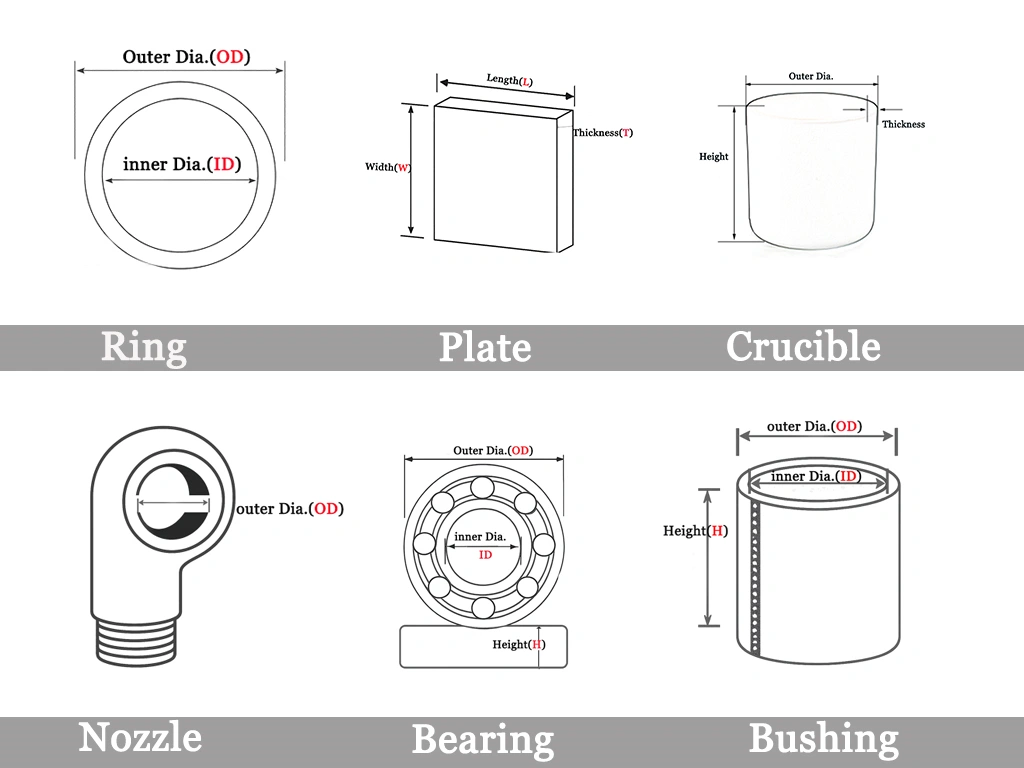
  • Round discs: 1″–8″ diameter
  • Rectangular plates for inline coaters
  • Step targets and column targets for specific cathodes

2. Dimensions and tolerances

  • Diameter or length/width to drawing
  • Typical thickness range: 3–10 mm
  • Dimensional tolerance down to ±0.1–0.2 mm for critical fits

3. Purity grade

  • 99.9% Y₂O₃ (REO) for general optical and protective films
  • 99.99% Y₂O₃ for demanding dielectric and photonic applications

4. Target density level

  • Relative density targets aligned with application needs, approaching the 5.01 g/cm³ theoretical density for improved sputter stability.

5. Backing plate and bonding

  • Backing plate options: Oxygen-free copper (Cu), Mo or Ti
  • Bonding options: indium bonding or elastomer bonding suitable for RF sputter sources and specific power densities

6. Surface condition

  • As-sintered surface for standard applications
  • Ground and lapped surface for improved contact and erosion profile

Related Products

ADCERAX - Your Trusted Advanced Ceramics Manufacturing Partner

Direct factory manufacturing with comprehensive ceramic materials expertise and global supply capabilities

Direct Factory Manufacturing

China-based ceramic materials production facility with state-of-the-art equipment

Engineering Team

Experienced professionals in advanced ceramics applications and custom design

Quality Control

Strict quality control standards for technical ceramics manufacturing and quality management

Global Supply Chain

Serving customers worldwide with technical ceramics and rapid response

24/7 Technical Support

Round-the-clock support for ceramic components inquiries and technical assistance

500+ Satisfied Customers

Trusted by global customers for advanced ceramic materials and precision components

Get in touch with us

Our team will be happy to respond to you in less than 24 hours.

Adcerax's factory

Quick Quotation

*Our team will answer your inquiries within 24 hours.

*Your information will be kept strictly confidential.

Ready to Solve Your Engineering Challenge?

Partner with ADCERAX for reliable, high-performance advanced ceramic solutions. Our engineers are ready to discuss your project.

E-mail

info@adcerax.com

Phone

+(86) 0731-74427743 | WhatsApp: +(86) 19311583352

Response Time

Within 24 hours

Quick Quote

The more details you provide, the faster we can quote.

*We respond within 24 hours. All inquiries are confidential.

Download Catalog

Get Your Custom Sulution

The more details you provide, the faster we can respond.

customize size

*We respond within 24 hours. All inquiries are confidential.

Download Catalog