Flint Glass Mortar and Pestle Set with Pour Spout for Compounding and QC Labs

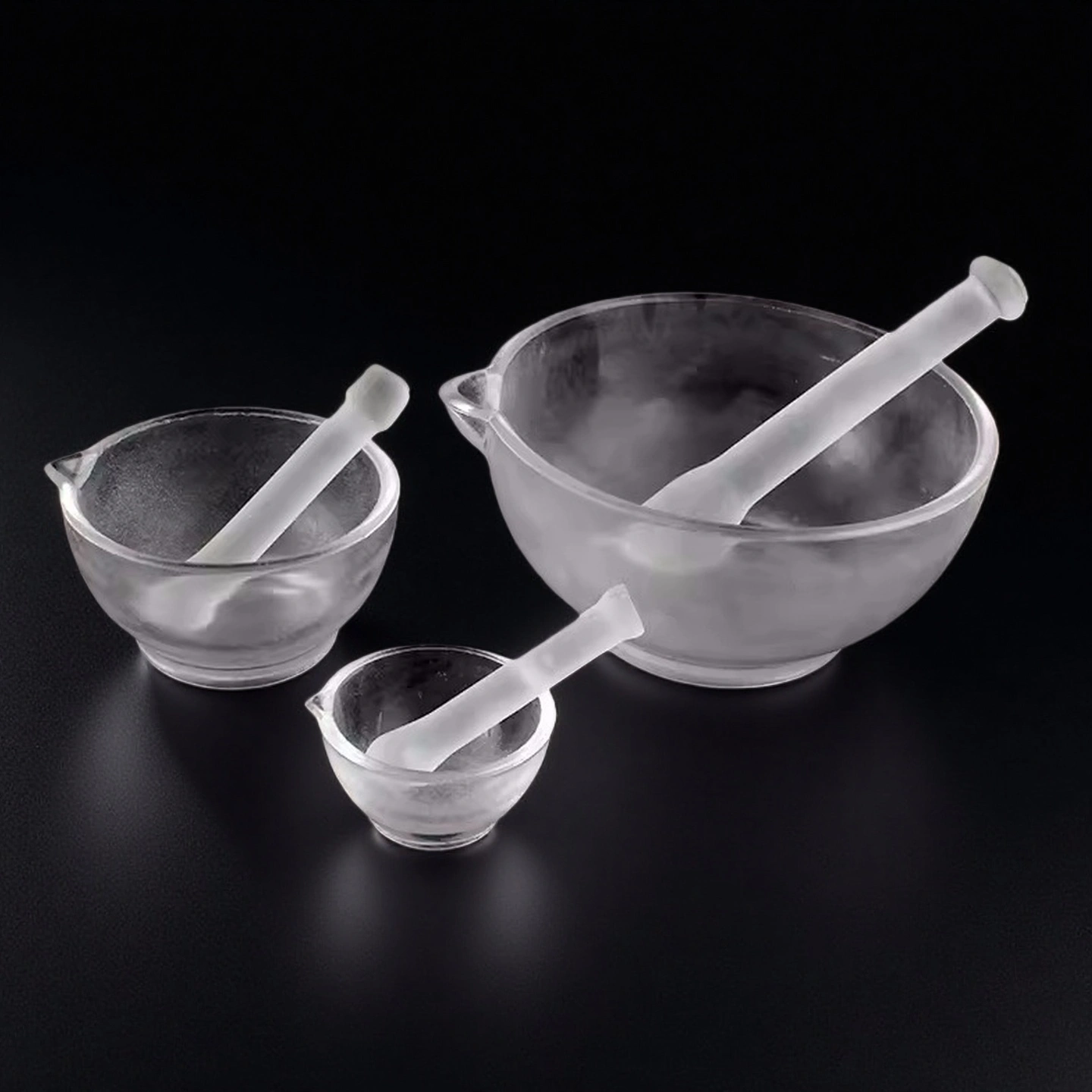
This glass mortar and pestle range covers common reference capacities from approximately 30 mL to 240 mL, with options for different diameters, heights and pestle lengths. ADCERAX can supply standard glass mortar and pestle sets and customize dimensions, grinding surface and pouring lip style based on customer drawings or kit requirements.

Catalogue No. AT-BL-YB1001
Material Glass
Reference Capacity per Mortar Approx. 30–240 mL (1–8 oz)
Use Temperature Profile Ambient to mild heating;
no rapid temperature change
Energy spread ~0.4 eV
24H Standard Dispatch
Small Batch Support OEM
Factory Direct
Expert Engineering Support

A glass mortar and pestle is a clear, heavy glass grinding set used to manually crush, mix and homogenize soft solids, pastes and liquids in labs, pharmacies and teaching rooms. The smooth, non-porous glass and transparent walls let users see the sample during grinding and make cleaning and contamination checks easier.

Glass Mortar and Pestle Benefits

  • Clear view of the sample
    The glass mortar and pestle provides full visual access during grinding and mixing, which helps operators track dispersion, color and texture changes in real time for analytical and formulation work.

  • Optimized for wet and paste mixing
    The glass mortar and pestle is well suited to creams, ointments, suspensions and soft powders, making it a practical tool for pharmacy compounding, cosmetic formulation and general laboratory sample preparation.

  • Heavy molded base with pouring lip
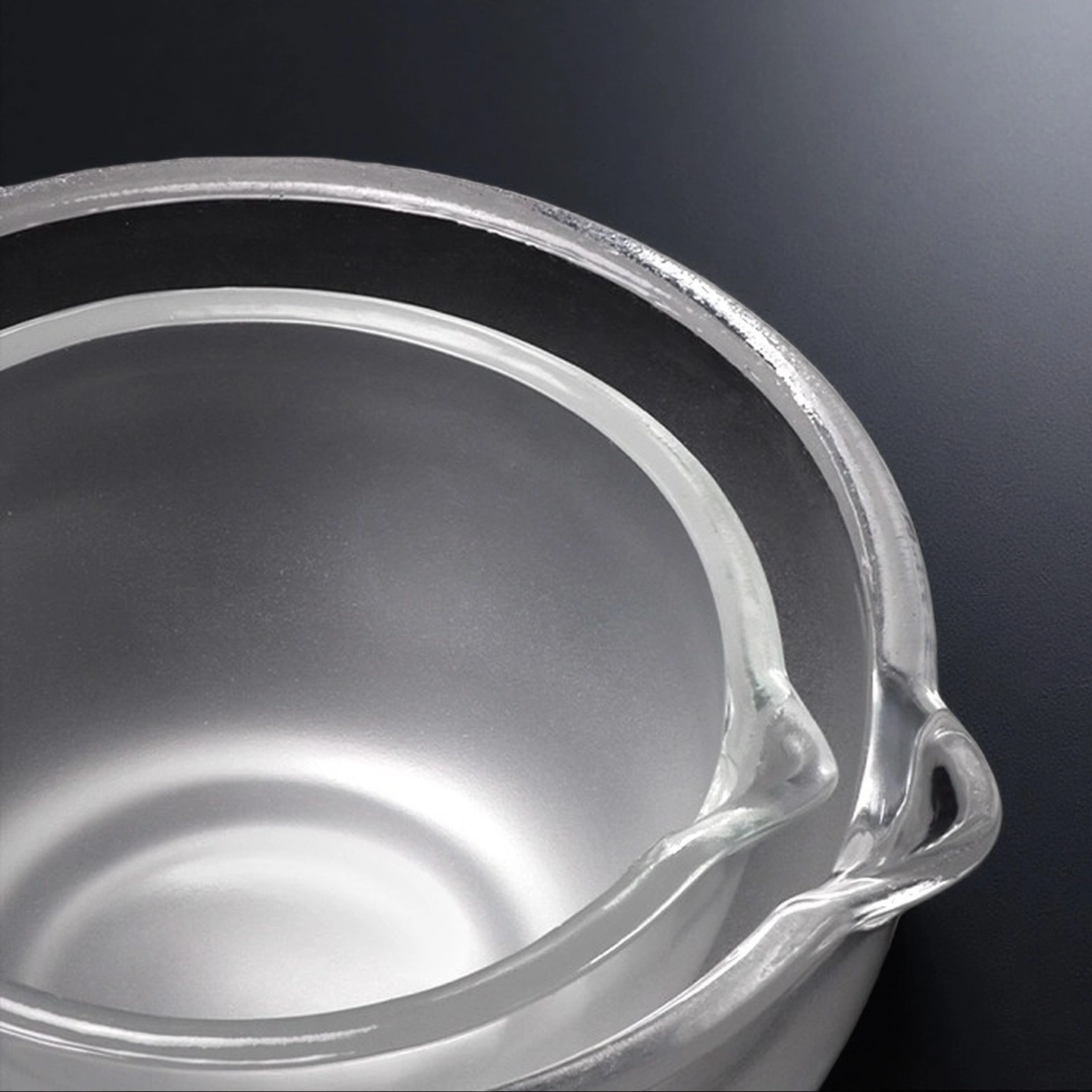
    Many glass mortar and pestle designs use a heavy molded base and an integrated pouring lip so that the ground material can be transferred to beakers, vials or weighing boats with controlled flow.

  • Frosted contact surfaces for consistent grinding
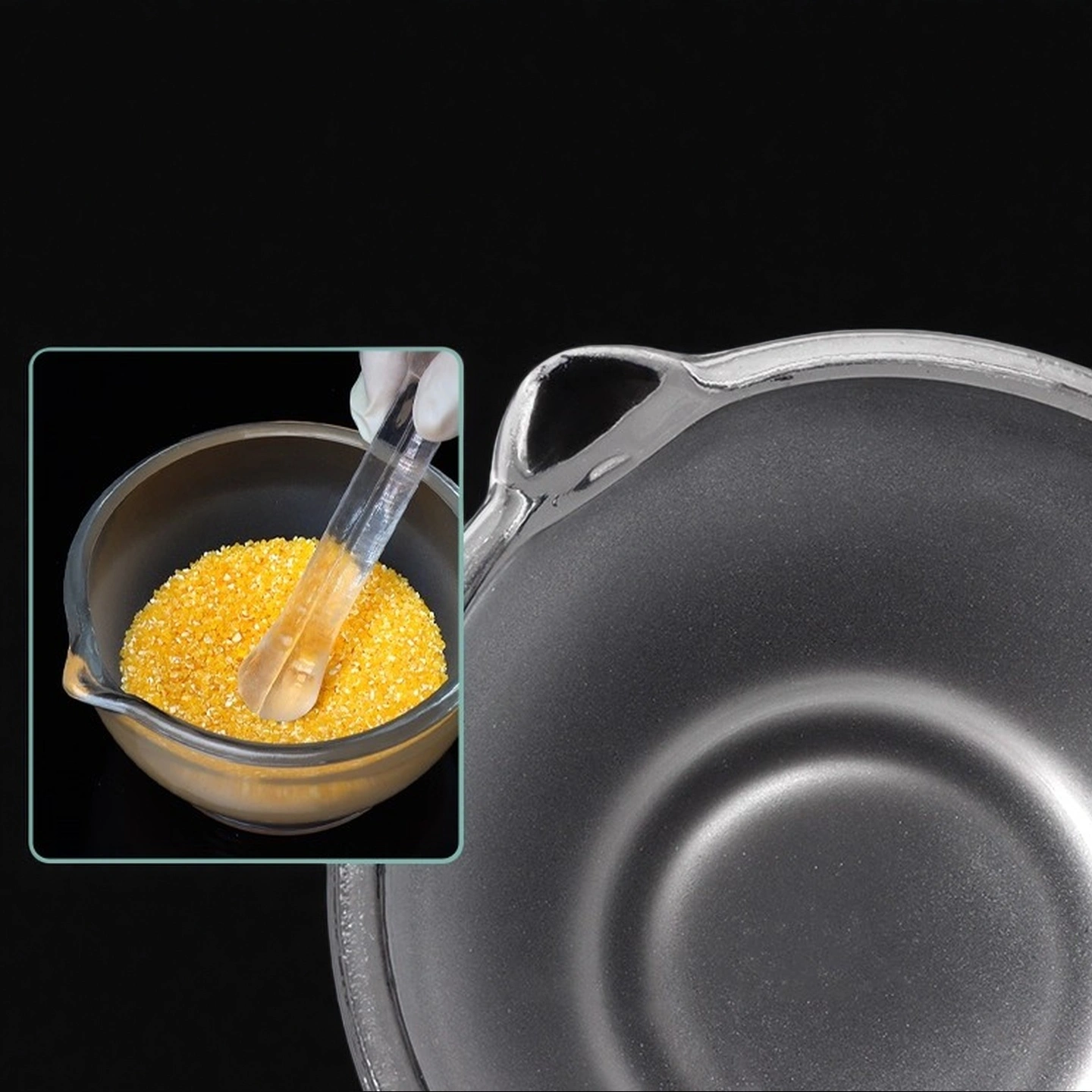
    The working surfaces of the glass mortar and pestle are typically frosted to improve friction and help achieve more uniform particle size reduction on soft solids and semi-solids.

  • Easy to clean and inspect
    The non-porous glass surface of the glass mortar and pestle is compatible with standard laboratory cleaning, alcohol wiping and visual inspection for residues, reducing cross-contamination risks between batches.

Glass Mortar and Pestle Properties

Parameter Typical Specification / Option Description
Reference Capacity 30 / 60 / 120 / 240 mL (or 1 / 2 / 4 / 8 oz) Nominal working volume of the mortar bowl.
Mortar Inner Diameter Approx. 50–120 mm Determines usable grinding area and batch size.
Mortar Height Approx. 35–80 mm Affects depth of the bowl and mixing behavior.
Material Type Clear heavy flint glass / laboratory glass Non-porous, transparent grinding and mixing surface.
Grinding Surface Finish Frosted interior mortar base and pestle tip Increases friction for more effective grinding.
Pestle Overall Length Approx. 100–180 mm Sized for comfortable hand grip and control during grinding.
Recommended Use Temperature Ambient to mild warming, no rapid temperature shock For typical room-temperature grinding of soft materials.
Chemical Compatibility Suitable for many aqueous, alcoholic and solvent media General laboratory use; not recommended for HF or strong alkali.


Glass Mortar and Pestle Specifications

Glass Mortar and Pestle
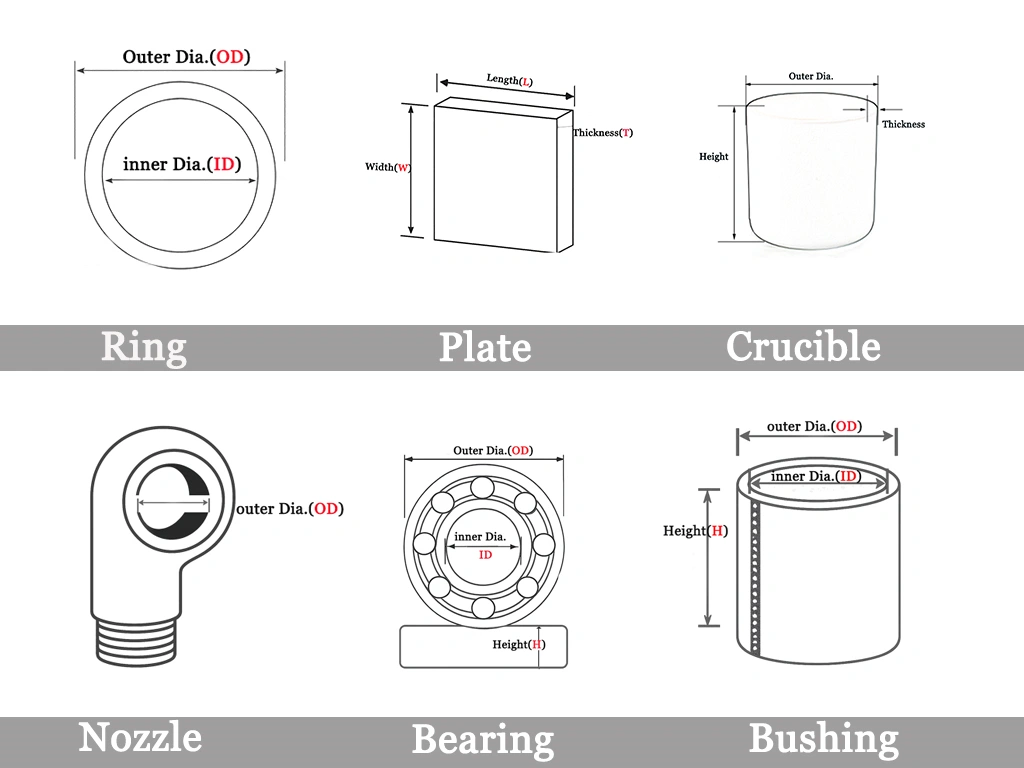
Item Inner Diameter(mm) Botton Diameter(mm) Height(mm) Rod Length (mm)
AT-BL-YB1001 60 45 43 80
AT-BL-YB1002 75 63 52 91
AT-BL-YB1003 90 75 64 115
AT-BL-YB1004 120 90 76 135
AT-BL-YB1005 150 105 80 150
AT-BL-YB1006 180 132 100 180


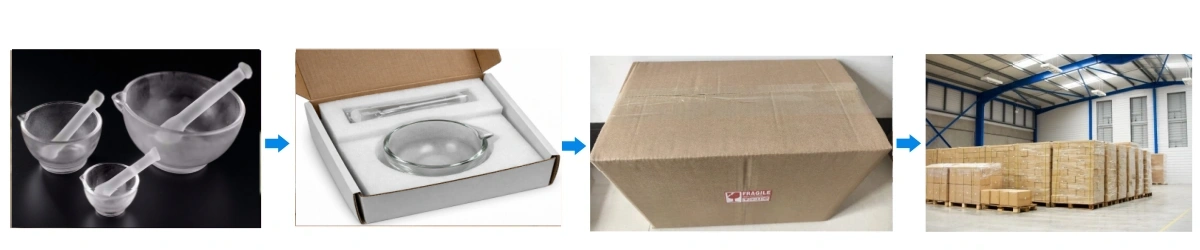
Glass Mortar and Pestle Packaging

  • Each glass mortar and pestle set is wrapped with protective inner materials around the bowl and pestle to minimize direct glass-to-glass contact during transport.

Glass Mortar and Pestle Pacxkaging

Application Scenarios — Glass Mortar and Pestle

  • Glass Mortar and Pestle for Analytical and QC Laboratories

    ✅Key Advantages

    1. Controlled sample preparation for wet chemistry
    The glass mortar and pestle supports repeatable grinding and mixing of small batches of soft solids and pastes before titration, spectrophotometry or chromatography.

    2. Visual inspection of homogenization
    Clear walls on the glass mortar and pestle allow QC staff to see color and texture uniformity during manual mixing, reducing rework on small lots or complaint samples.

    3. Low risk of material carryover
    The smooth glass surface of the glass mortar and pestle can be cleaned and checked visually, which helps laboratories keep cross-contamination under control in multi-product environments.

    ✅ Problem Solved

    A QC lab handling complaint samples for creams and suspensions often needs to prepare 20–40 small aliquots per day. When they switched from opaque bowls to glass mortar and pestle sets, technicians could see agglomerates and incomplete mixing directly, so they adjusted grinding time and solvent addition before analysis. This reduced repeat preparations and sample rejection on the same day, shortening resolution time for each batch and lowering overall manual rework in the front-end sample preparation step.

  • Glass Mortar and Pestle for Pharmacy Compounding and Formulation

    ✅Key Advantages

    1. Suitable for creams, ointments and pastes
    The glass mortar and pestle works well for blending soft bases with active ingredients and colorants, where smooth texture and uniform distribution are priorities.

    2. Easy sterilization and cleaning between formulas
    The glass surface on the glass mortar and pestle can be washed with water, detergents and alcohol, which simplifies cleaning protocols between different prescriptions.

    3. Clear transfer of compounded product
    The pouring lip on the glass mortar and pestle helps transfer compounded material into jars and tubes with less residue on the wall, which is useful when working with high-value ingredients.

    ✅ Problem Solved

    A compounding pharmacy preparing small batches of dermatology creams reported that opaque mortars made it difficult to see streaks or color inconsistencies during levigation. By introducing glass mortar and pestle sets with frosted interiors, staff could check for streaks against the clear wall and extend the mixing step when needed. This led to visibly more uniform finished creams, fewer patient complaints about texture variations and better documentation of each batch’s preparation process.

  • Glass Mortar and Pestle for Education and Training Laboratories

    ✅Key Advantages

    1. Demonstrates basic grinding and mixing principles
    The transparent glass mortar and pestle lets students see how particles and liquids move during grinding, helping instructors teach sample preparation and mixing techniques more effectively.

    2. Supports multi-course use with clear wear inspection
    In teaching labs, the glass mortar and pestle can be inspected for chips or cracks between semesters, supporting safe reuse in chemistry, biology and environmental science sessions.

    3. Integrates easily into starter kits
    The glass mortar and pestle, available in standard capacities, fits neatly into pre-packed teaching kits that combine basic glassware, spatulas and measuring tools.

    ✅ Problem Solved

    A university that runs introductory chemistry labs for hundreds of students each semester needed a standard grinding tool that could also serve as a teaching aid. By adopting a single family of glass mortar and pestle sets with consistent capacities, the department simplified kit packing, reduced mismatched equipment across lab sections and enabled instructors to visually explain grinding, mixing and sample transfer in front of the class. Students quickly understood the impact of pressure and motion during grinding because they could see the process clearly through the glass mortar.

Use Guide — Glass Mortar and Pestle

  • Installation and Setup

    1. Inspect each glass mortar and pestle for chips or cracks on arrival; do not use damaged sets.
    2. Place the glass mortar on a stable, non-slip bench mat or paper to prevent sliding.
    3. Ensure the pestle head matches the mortar size so that contact is even over the grinding surface.

  • Using the Glass Mortar and Pestle

    1. Add an appropriate amount of material into the center of the glass mortar; do not overfill, leaving space for movement.
    2. Hold the mortar firmly and rotate the pestle with steady circular pressure instead of pounding, which protects the glass mortar and pestle from impact damage.
    3. For wet grinding, add small portions of liquid gradually to achieve a uniform paste.
    4. When mixing multiple components, start with the smallest quantity ingredient and incorporate it into the bulk phase gradually.

  • Storage

    1. After cleaning and drying, store the glass mortar and pestle in a padded compartment, rack or box that prevents glass-to-glass contact.
    2. Avoid stacking heavy items directly on top of the glass mortar and pestle sets in cabinets or drawers.

  • Cleaning

    1. Rinse the glass mortar and pestle immediately after use to prevent residues from hardening on the surface.
    2. Use appropriate detergents and non-abrasive brushes or cloths; avoid harsh mechanical scrubbing that may change the grinding surface.
    3. For stubborn residues or oils, use suitable solvents or alcohol-based cleaners that are compatible with glass and the processed materials.

  • Precautions

    1. Do not expose the glass mortar and pestle to sudden temperature changes, such as rinsing hot glassware with cold water or moving rapidly from a warm oven to a cold bench.
    2. Do not use the glass mortar and pestle for very hard, abrasive materials that require more robust grinding tools (such as agate or ceramic mortars).
    3. Replace the glass mortar and pestle if the grinding surfaces become chipped, heavily scratched or show visible internal cracks.

  • Common Misuse Points and How to Handle Them

    1. Issue: Glass mortar and pestle cracks after hot washing followed by a cold rinse
    – Cause: Thermal shock due to rapid temperature change.
    – Handling: Allow the glass mortar and pestle to cool gradually before rinsing; keep washing and rinsing within a moderate temperature range.

    2. Issue: Sample remains streaky or uneven after grinding
    – Cause: Overloading the glass mortar, insufficient grinding time or inadequate liquid for wet mixes.
    – Handling: Reduce batch size, extend grinding time with steady circular motion and add liquid in small increments until the texture becomes uniform.

    3. Issue: Residue remains on frosted surfaces after normal washing
    – Cause: Dried or strongly adherent materials on the glass mortar and pestle.
    – Handling: Soak in appropriate solvent or detergent solution, then brush lightly and rinse; for future batches, rinse the glass mortar and pestle immediately after use.

FAQ — Glass Mortar and Pestle

  1. Q: What is a glass mortar and pestle used for in the laboratory?
    A: A glass mortar and pestle is used for manual grinding and mixing of soft solids, pastes and suspensions before analysis or formulation, especially when visual control of the sample is important.
  2. Q: When should I choose a glass mortar and pestle instead of a porcelain mortar?
    A: Choose a glass mortar and pestle when you work mainly with creams, gels, liquids or soft powders and need a smooth, non-porous, visually clear surface for mixing and cleaning.
  3. Q: Are glass mortar and pestle sets suitable for high-temperature grinding?
    A: Standard flint glass mortar and pestle sets are intended for ambient or mildly warmed materials and should not be exposed to direct flame or strong temperature gradients, even though laboratory glassware in general can tolerate elevated temperatures when used correctly.
  4. Q: Can I use a glass mortar and pestle for hard, abrasive powders?
    A: For hard, abrasive or crystalline materials, a glass mortar and pestle may not give sufficient wear resistance, and alternative materials such as agate or ceramic mortars are usually recommended.
  5. Q: How should I clean a glass mortar and pestle between samples?
    A: Rinse the glass mortar and pestle immediately after use, wash with suitable detergents, use alcohol or solvents if needed, and dry thoroughly before reuse to prevent contamination.
  6. Q: Is the frosted surface of a glass mortar and pestle easy to damage?
    A: The frosted surface on the glass mortar and pestle is durable under normal grinding and cleaning, but aggressive abrasive pads or metal tools can change the texture and should be avoided.

Customer Reviews — Glass Mortar and Pestle

  • ⭐️⭐️⭐️⭐️⭐️
    We added ADCERAX glass mortar and pestle sets to our compounding catalog last year. The clear bowls and consistent sizes make re-ordering simple, and the feedback from pharmacies on texture and cleaning has been positive.
    -- Emma R., Purchasing Manager, Meditech Compounding Supplies
  • ⭐️⭐️⭐️⭐️⭐️
    The wear-resistant ceramic balls have a low breakage rate, high grinding efficiency, and do not affect the whiteness of the material
    -- David L., Lab Supervisor, Northshore Analytical Services
  • ⭐️⭐️⭐️⭐️⭐️
    We needed a compact, durable glass mortar and pestle for student chemistry kits. ADCERAX worked with our drawings to adjust capacity and packaging, so each kit now includes matching mortars, pestles and spatulas in a single shipment.
    -- Maria S., Owner, EduLab Teaching Kits
  • ⭐️⭐️⭐️⭐️⭐️
    For small cream and gel prototypes, the glass mortar and pestle is still my preferred tool. The clear surface makes it easy to see uniformity, and cleaning between formulations is straightforward.
    -- Kenji T., R&D Chemist, K-Formulation Lab
customize size

Custom Glass Mortar and Pestle

For buyers who need kit-specific or branded sets, ADCERAX can customize glass mortar and pestle dimensions and features so that each set matches the space constraints of the bench, teaching kit or compounding workflow while keeping the glass mortar and pestle as the core grinding tool.

  • Reference capacity and bowl profile
    – 30 /60/120/227 mL or other capacities; shallow or deep profile according to mixing volume.

  • Outer and inner diameters
    – Bowl opening diameter, base diameter and height to fit existing shelves, trays or balance pans, with practical machining tolerances suitable for glass.

  • Pestle design
    – Pestle length, handle shape and head diameter for operator grip and grinding area; optional heavier head for more pressure on soft solids.

  • Pouring lip and rim geometry
    – No lip, single pouring lip or wider pour spout depending on how the glass mortar and pestle is used to charge beakers and vials.

  • Grinding surface finish
    – Standard frosted working area; optional variation in roughness for finer or coarser grinding on glass mortar and pestle contact surfaces.

Related Products

ADCERAX - Your Trusted Advanced Ceramics Manufacturing Partner

Direct factory manufacturing with comprehensive ceramic materials expertise and global supply capabilities

Direct Factory Manufacturing

China-based ceramic materials production facility with state-of-the-art equipment

Engineering Team

Experienced professionals in advanced ceramics applications and custom design

Quality Control

Strict quality control standards for technical ceramics manufacturing and quality management

Global Supply Chain

Serving customers worldwide with technical ceramics and rapid response

24/7 Technical Support

Round-the-clock support for ceramic components inquiries and technical assistance

500+ Satisfied Customers

Trusted by global customers for advanced ceramic materials and precision components

Get in touch with us

Our team will be happy to respond to you in less than 24 hours.

Adcerax's factory

Quick Quotation

*Our team will answer your inquiries within 24 hours.

*Your information will be kept strictly confidential.

Ready to Solve Your Engineering Challenge?

Partner with ADCERAX for reliable, high-performance advanced ceramic solutions. Our engineers are ready to discuss your project.

E-mail

info@adcerax.com

Phone

+(86) 0731-74427743 | WhatsApp: +(86) 19311583352

Response Time

Within 24 hours

Quick Quote

The more details you provide, the faster we can quote.

*We respond within 24 hours. All inquiries are confidential.

Download Catalog

Get Your Custom Sulution

The more details you provide, the faster we can respond.

customize size

*We respond within 24 hours. All inquiries are confidential.

Download Catalog