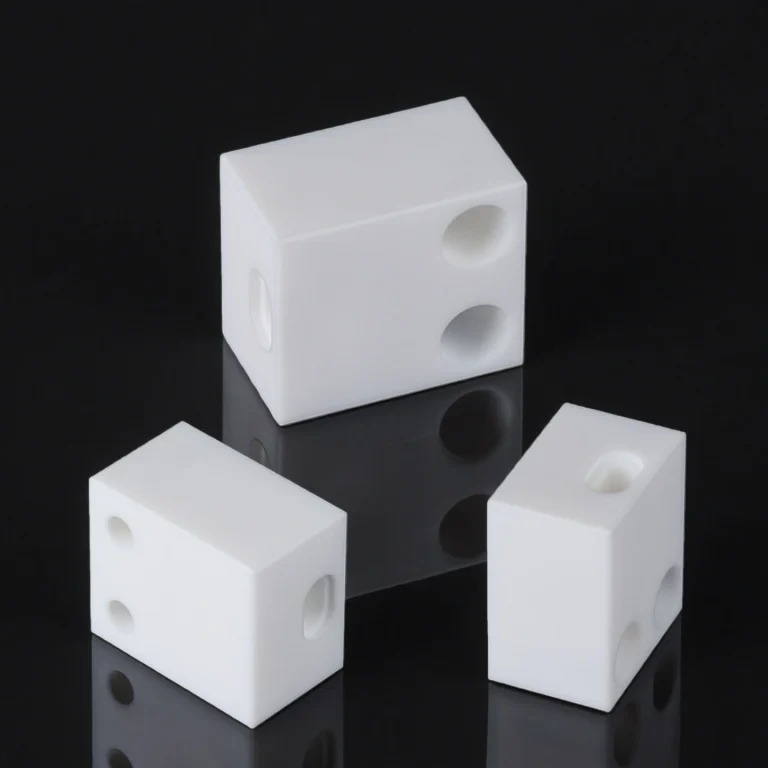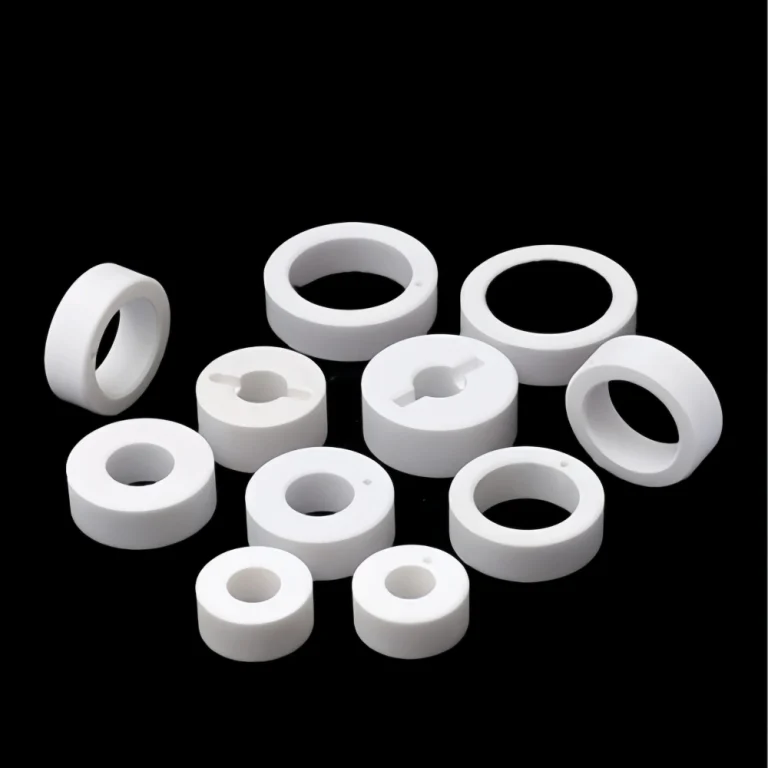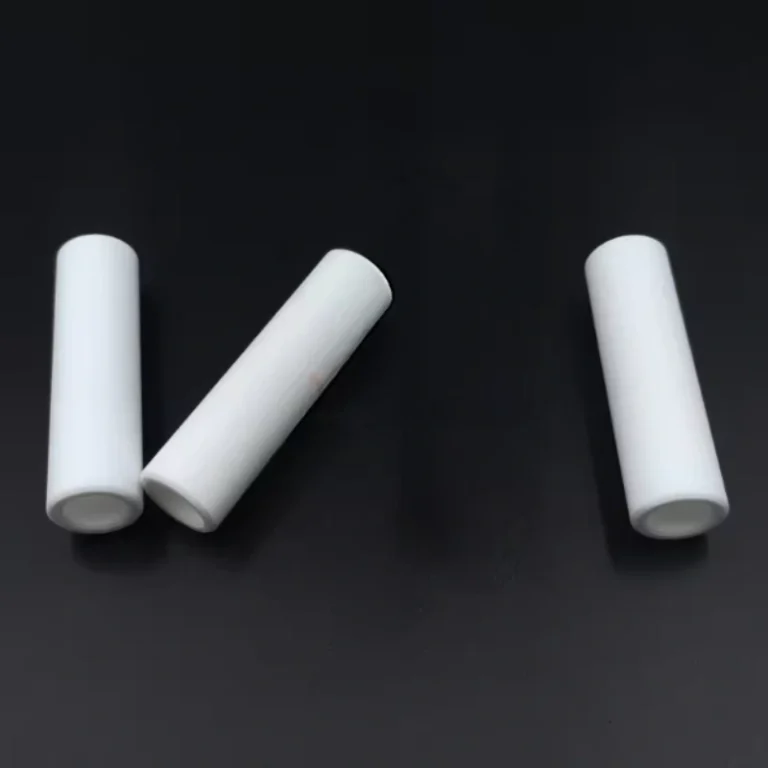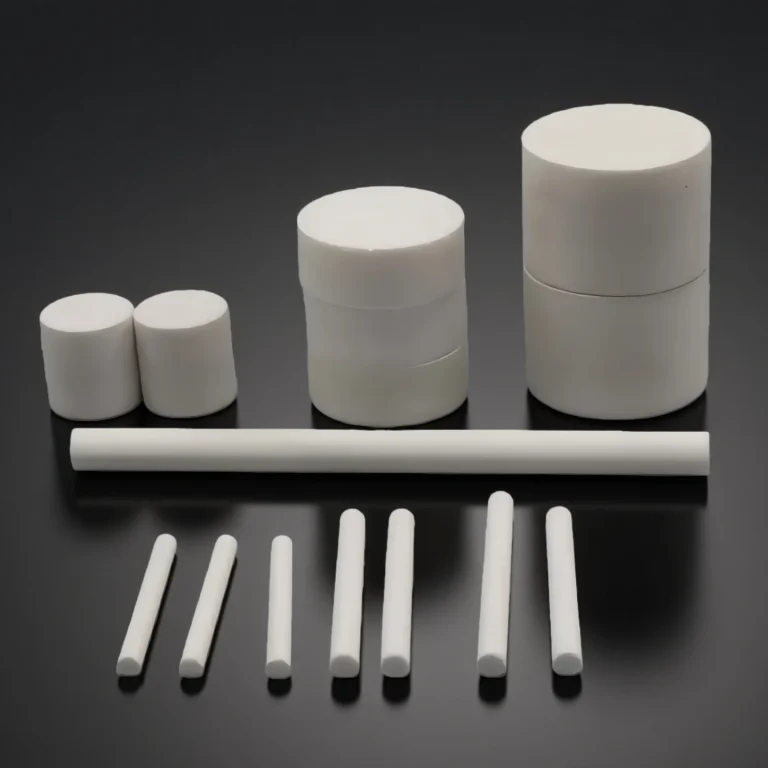
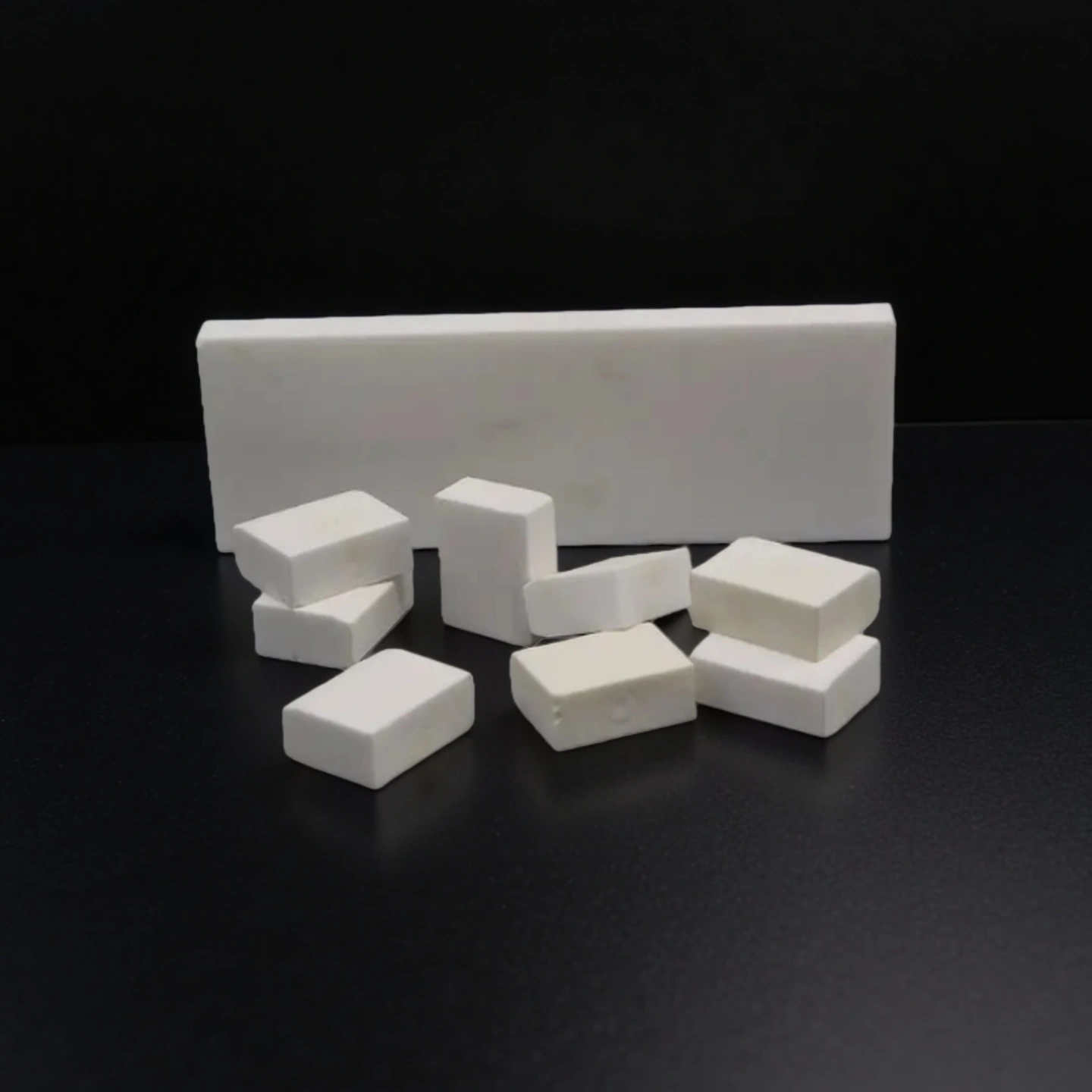
Custom Machinable Glass Ceramic Plate (Sheet) with Tapped Holes, Slots, and Complex Profiles

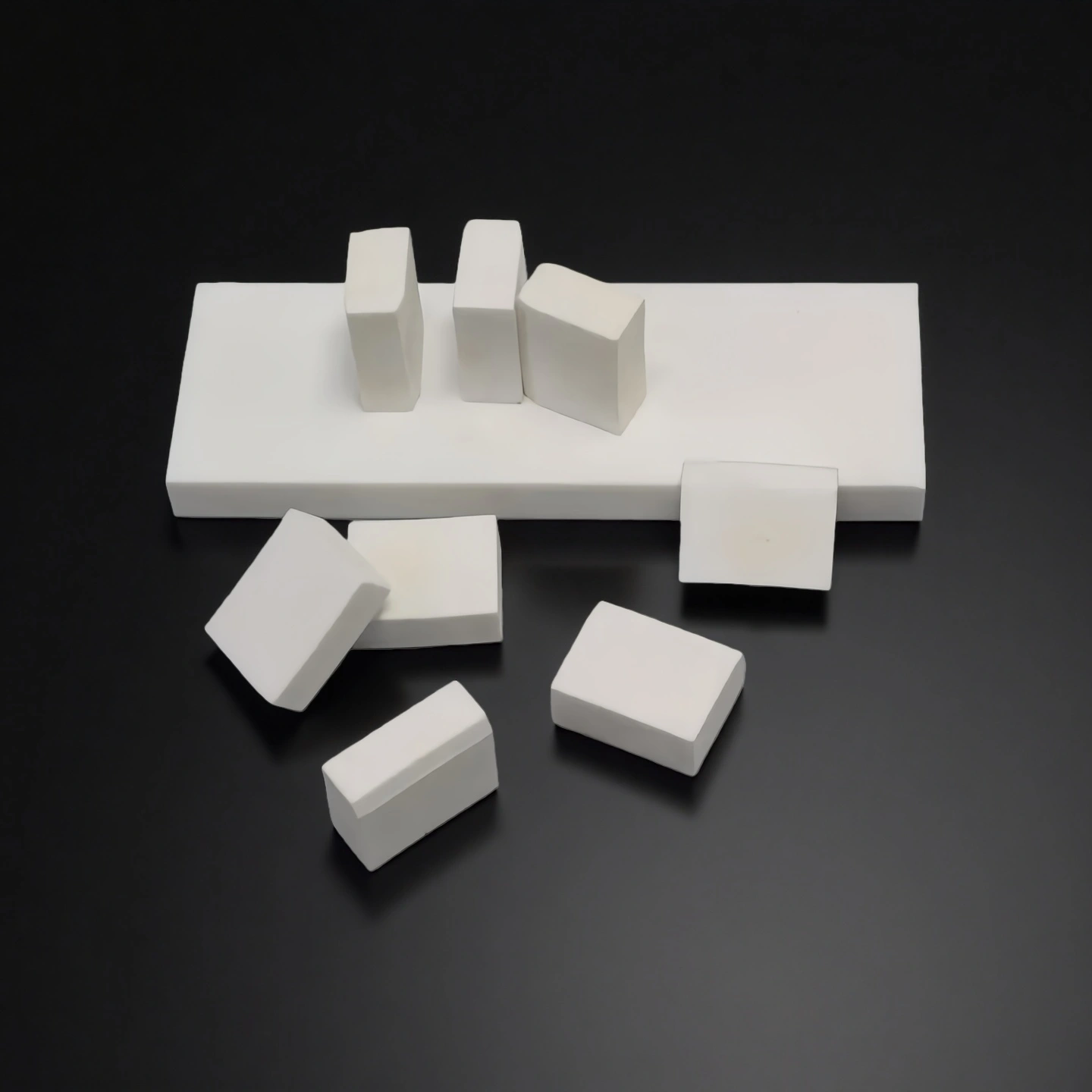
ADCERAX supplies machinable glass ceramic plate blanks for in-house machining and also supports custom CNC machining from your drawing, including complex profiles and multi-feature plates for fixture or instrument assemblies.

Catalogue No. AT-KJG-TC1001
Density 2.52 g/cm³
CTE (25–300°C) 9.0 ×10⁻⁶ /K
Max Operating Temperature (Under Load) 800°C
Thermal Conductivity (25°C) 1.46 W/m·K
24H Standard Dispatch
Small Batch Support OEM
Factory Direct
Expert Engineering Support

A Machinable Glass Ceramic Plate is a flat stock sheet of machinable glass-ceramic used as a blank for CNC machining into electrical insulators, spacers, thermal breaks, and precision fixture components.

Machinable Glass Ceramic Sheet Benefits

  • Precision-fit machining for multi-feature plates: A machinable glass ceramic plate supports tight, repeatable machining for hole patterns, slots, pockets, and datum surfaces, with published guidance indicating tolerance potential down to ±0.013 mm on suitable dimensions and setups.

  • Temperature capability for insulating structures: A machinable glass ceramic plate is specified for high-temperature insulation fixtures where geometry must remain stable, with typical published limits of 800°C continuous under load and 1000°C peak under no-load conditions.

  • High-voltage dielectric performance for compact layouts: A machinable glass ceramic plate is used when electrical isolation must be maintained in limited space, supported by published dielectric strength figures of 45 kV/mm (AC) and 129 kV/mm (DC) under stated test conditions.

  • Thermal break behaviour from low conductivity: A machinable glass ceramic plate helps reduce heat transfer through a structure compared with many dense ceramics, with a published thermal conductivity of 1.46 W/m·K at 25°C, which is useful for thermal isolation interfaces.

  • Dense, non-porous microstructure for clean assemblies: A machinable glass ceramic plate is produced as a zero-porosity material, which supports vacuum-compatible and contamination-controlled builds when the part is properly cleaned, handled, and prepared for the application.

Machinable Glass Ceramic Sheet Properties

Machinable Glass Ceramic Physical Properties
Property Typical value Notes
Purity ≥ 99.9 % Some grades can reach 99.99 %
Density 2.5–2.6 g/cm³ Archimedes method
Open porosity ≤ 0.07 % Effectively non-porous
Water absorption 0 % No measurable uptake
Colour White Clean, uniform appearance
Hardness (Mohs) 4–5 (up to 6–7) Depending on grade
Machinable Glass Ceramic Thermal Properties
Property Typical value Notes
Coefficient of thermal expansion (CTE) 72 × 10⁻⁷ /°C Average from −50 to 200 °C
CTE 25–300 °C 90 × 10⁻⁷ /°C For design over mid-range temperatures
CTE 25–600 °C 112 × 10⁻⁷ /°C
CTE 25–800 °C 123 × 10⁻⁷ /°C
Thermal conductivity 1.7 W/m·K At 25 °C
Continuous use temperature ~800 °C Long-term service
Short-term maximum temperature ~1000 °C Depends on load and atmosphere
Machinable Glass Ceramic Mechanical Properties
Property Typical value Notes
Young’s modulus ≈ 65 GPa Room temperature
Flexural strength ≥ 100 MPa Three-point bending
Compressive strength ≥ 500 MPa Room temperature
Impact resistance ≥ 2.56 kJ/m² Indicative value for brittle fracture
Poisson’s ratio ≈ 0.29
Shear modulus ≈ 25 GPa Derived from E and ν
Machinable Glass Ceramic Electrical Properties
Property Typical value Notes
Dielectric constant (1 kHz) 6–7 25 °C
Dielectric loss (tan δ, 1 kHz) 1–4 × 10⁻³ 25 °C
Dielectric strength > 40 kV/mm Sample thickness 1 mm
Volume resistivity @ 25 °C ≈ 1.0 × 10¹⁶ Ω·cm High insulation level
Volume resistivity @ 200 °C ≈ 1.5 × 10¹² Ω·cm
Volume resistivity @ 500 °C ≈ 1.1 × 10⁹ Ω·cm


Machinable Glass Ceramic Plate Specifications

Type 1: Square Machinable Glass Ceramic Plate
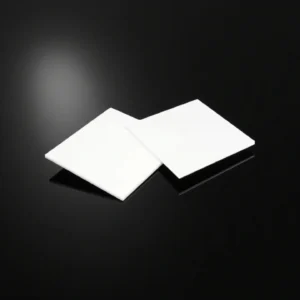
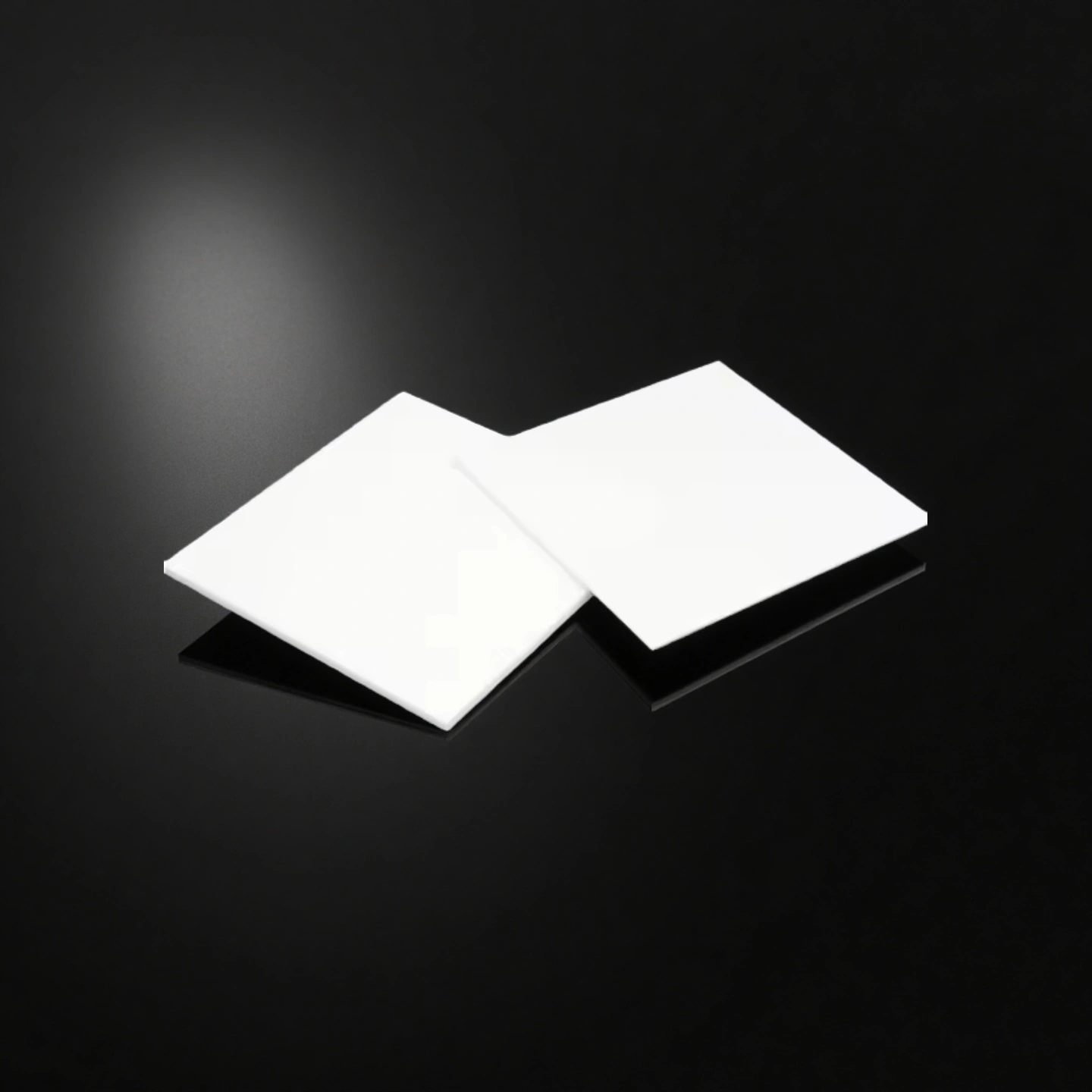
Machinable glass ceramic plate with holes and slots for vacuum fixture assembly

Square Machinable Glass Ceramic Plate
Item Length *Width *Hight (mm) Thickness (mm)
AT-KJG-TC1001 50*50 5
AT-KJG-TC1002 50*50 10
AT-KJG-TC1003 100*50 5
AT-KJG-TC1004 100*50 10
AT-KJG-TC1005 100*100 3
AT-KJG-TC1006 100*100 5
AT-KJG-TC1007 100*100 10
AT-KJG-TC1008 90*140 5
AT-KJG-TC1009 95*145 8
AT-KJG-TC1010 150*150 10
AT-KJG-TC1011 160*160 12
AT-KJG-TC1012 122*290 15
AT-KJG-TC1013 110*275 18
AT-KJG-TC1014 200*100 5
AT-KJG-TC1015 200*100 10
AT-KJG-TC1016 300*200 50
AT-KJG-TC1017 50-450 custom 5-50 custom


Type 2: Round Machinable Glass Ceramic Plate
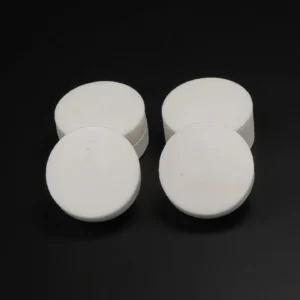
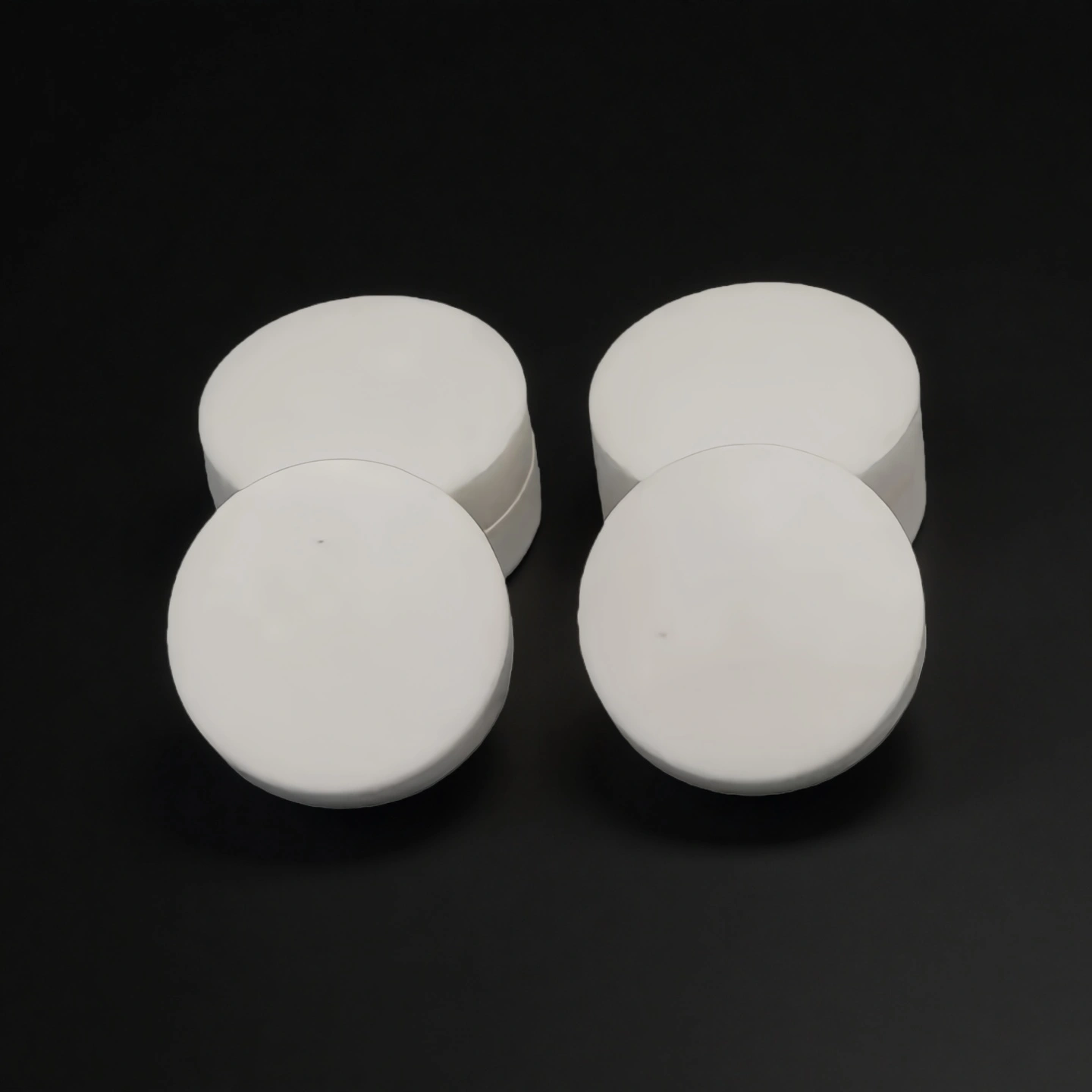
Machinable glass ceramic plate finished surface for precision mounting interface

Round Machinable Glass Ceramic Plate
Item Diameter (mm) Thickness (mm)
AT-KJG-TC1020 10 5
AT-KJG-TC1021 20 8
AT-KJG-TC1022 25 9.5
AT-KJG-TC1023 30 12
AT-KJG-TC1024 50 20
AT-KJG-TC1025 70 20
AT-KJG-TC1026 100 20
AT-KJG-TC1027 10-300 5-50

Machinable Glass Ceramic Plate Packaging

  • Individual part protection to avoid edge chipping during transport
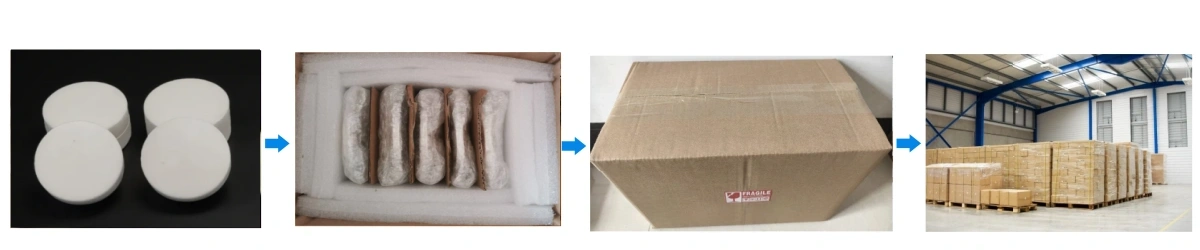
Machinable Glass Ceramic Plate Packaging

Machinable Glass Ceramic Plate — Application Scenarios

  • Vacuum Equipment & Scientific Instruments

    ✅Key Advantages

    1. Vacuum-ready material behaviour: Zero porosity and published vacuum suitability when properly baked out.

    2. Stable insulation at temperature: Supports 800°C continuous operation under load for thermal isolation structures.

    3. Precision fit capability: Published guidance supports dimensional control to ±0.013 mm for suitable features.

    ✅ Problem Solved

    A vacuum instrumentation builder replaced an aluminum support plate that caused heat leak and electrical noise near a high-voltage region. A machinable glass ceramic plate version reduced heat transfer using the published low thermal conductivity value (1.46 W/m·K at 25°C) while keeping electrical isolation supported by published dielectric strength (45 kV/mm AC). Tight-fit alignment features were held using the published tolerance guidance (±0.013 mm), reducing rework during assembly. The team also specified an edge rule and packaging controls to reduce chip-related rejects during installation.

  • Laser Assemblies & Opto-Mechanical Mounting

    ✅Key Advantages

    1. Thermal break function: Published 1.46 W/m·K thermal conductivity helps limit heat transfer between subassemblies.

    2. Finish options for interfaces: Published finished surface guidance <0.5 µm and polished options down to 0.013 µm for controlled contact surfaces.

    3. Electrical insulation margin: Published 45 kV/mm AC dielectric strength supports high-voltage spacing in compact layouts (per test conditions).

    ✅ Problem Solved

    An opto-mechanical integrator needed an insulating mount plate that would not creep like high-temperature plastics near warm zones. The machinable glass ceramic plate supported continuous use at 800°C under load (material rating) and reduced heat flow using the published conductivity (1.46 W/m·K). The mounting face was specified with a fine finished surface target guided by published finish capability (<0.5 µm), improving interface consistency. Electrical isolation performance aligned with published dielectric strength values, reducing the need for oversized clearances.

  • High-Temperature Electrical Insulation Fixtures & Thermal Breaks

    ✅Key Advantages

    1. High-temperature rating: 800°C continuous under load; 1000°C peak under no load.

    2. Dimensional stability: Published CTE 9.0 ×10⁻⁶/K (25–300°C) supports predictable fits in mixed-material assemblies.

    3. High-voltage performance: Published 129 kV/mm DC dielectric strength (per stated thickness/test conditions) for compact insulator designs.

    ✅ Problem Solved

    A thermal processing fixture required an insulating plate that maintained geometry and electrical separation across repeated heat cycles. The machinable glass ceramic plate was selected for the published continuous operating rating (800°C under load) and predictable expansion behavior (published CTE 9.0 ×10⁻⁶/K, 25–300°C). The design used DC dielectric strength guidance (129 kV/mm) to size the insulation path without unnecessary bulk. A defined chamfer and handling rule reduced edge damage during fixture swaps, improving yield across repeated installs.

Machinable Glass Ceramic Sheet — Use Guide

  • Installation

    1. Confirm datum surfaces and orientation marks before mounting.
    2. Use flat, clean contact surfaces; avoid point loads near edges and thin webs.
    3. If using fasteners, use controlled torque and consider washers/spreaders to distribute load.
    4. Keep clearance around sharp internal corners; avoid forcing parts into interference fits.

  • Operation

    1. Ramp temperature based on your system’s thermal profile; avoid rapid temperature shock when the plate has thin features.
    2. Keep electrical clearance consistent with your voltage and environment; treat dielectric strength values as guidance tied to test conditions.
    3. For vacuum use, follow your chamber’s preparation practice (clean handling, controlled bakeout, and contamination control).

  • Storage

    1. Store plates flat with separators; avoid stacking without protective layers.
    2. Keep away from impacts and vibration that can create micro-chips on edges.
    3. Label by revision to prevent mixing similar parts with different tolerances.

  • Cleaning

    1. Remove machining dust with non-shedding wipes and controlled air; avoid abrasive rubbing on functional faces.
    2. For precision interfaces, use a cleaning method consistent with your assembly cleanliness class and inspection plan.

  • Common Misuse Points + Fix

    1. Edge chipping during assembly → Add chamfer/radius on drawing, use edge-protected handling trays, and avoid tool contact near edges.
    2. Thread damage or pull-out → Specify thread engagement depth, use controlled torque, and consider inserts or redesign if frequent service cycles are expected.
    3. Cracking after thermal events → Review ramp/soak transitions, reduce sharp internal corners, and avoid clamping schemes that restrain thermal expansion.

FAQ — Machinable Glass Ceramic Plate

  1. Q: What makes a machinable glass ceramic plate different from alumina or glass?
    A: A machinable glass ceramic plate can be CNC-machined with standard metalworking tools into complex features, while still providing electrical insulation and high-temperature stability.
  2. Q: Will thin walls or narrow ribs chip or crack during machining?
    A: Thin sections are possible, but edge rules, corner radii, toolpath strategy, and handling controls are typically required to reduce chipping risk on machinable glass ceramic plate features.
  3. Q: How should I specify threads in a machinable glass ceramic plate (tapped holes)?
    A: Specify thread standard, engagement depth, and tolerance; for repeated assembly cycles, define torque limits and consider design changes to reduce thread wear in machinable glass ceramic plate parts.
  4. Q: Is a machinable glass ceramic plate suitable for vacuum use and bakeout?
    A: It is commonly selected for vacuum assemblies because it is dense and non-porous; you should state your vacuum level, bakeout temperature, and cleanliness expectations so the machinable glass ceramic plate can be prepared accordingly.
  5. Q: How does temperature cycling affect fit and alignment?
    A: Specify operating temperature range and mating materials; the assembly should account for thermal expansion mismatch so the machinable glass ceramic plate does not get clamped into stress during heat cycles.

Customer Reviews about Machinable Glass Ceramic Plate

  • ⭐️⭐️⭐️⭐️⭐️
    We moved our spacer plates to a machinable glass ceramic plate design and got consistent fit on the first build. ADCERAX supplier response was fast, and pricing was stable across repeat orders.
    -- Michael R., Purchasing Manager | Northfield Vacuum Systems
  • ⭐️⭐️⭐️⭐️⭐️
    The machinable glass ceramic plate parts arrived protected and matched our inspection datums. ADCERAX factory supported a drawing review that reduced edge-chip risk on thin features.
    -- Sophie L., Supply Chain Lead | Helios Photonics Integration
  • ⭐️⭐️⭐️⭐️⭐️
    We used machinable glass ceramic plate blanks for in-house machining and later switched to finished parts for higher throughput. Hole location and flatness matched our assembly needs.
    -- Daniel K., Mechanical Engineer | Aster Scientific Instruments
  • ⭐️⭐️⭐️⭐️⭐️
    Our fixture needed an insulating plate that stayed stable near hot zones. The machinable glass ceramic plate solution reduced rework and kept alignment consistent across multiple rebuilds.
    -- Emma T., Project Engineer | Orion Thermal Fixtures
customize size

Custom Machinable Glass Ceramic Plate Services

If your assembly needs controlled fit, controlled edges, or multi-feature geometry, ADCERAX can machine the machinable glass ceramic plate to your drawing and inspection method.

  • Size & datums: L/W/T, datum A/B/C setup, and measurement reference surfaces for inspection.

  • Geometry controls: flatness/parallelism/perpendicularity, plus critical mating faces and functional contact zones.

  • Holes & patterns: through/blind holes, counterbore/countersink, stepped holes, and position tolerance for patterns.

  • Threads: tapped holes, thread depth, thread engagement length, and thread standard/class noted on the drawing.

  • Machined features: slots, pockets, grooves, ribs, reliefs, and weight-reduction cavities with corner radii rules.

  • Edges & break rules: chamfers/radii, edge-break size, deburr standard, and anti-chip “no sharp edge” notes.

  • Surface finish: as-machined / fine-finished / polished, with Ra target and “no tool marks” areas defined.

  • Cleanliness & handling: dry clean/particle control notes, vacuum-use preparation, and protected packaging for thin edges.

Related Products

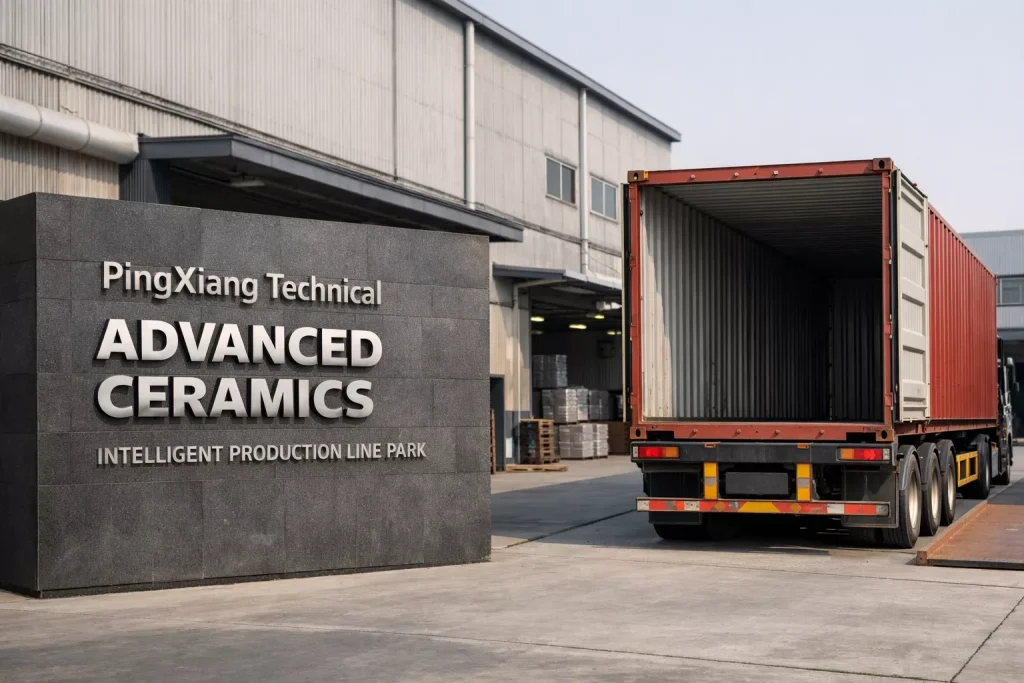
ADCERAX - Your Trusted Advanced Ceramics Manufacturing Partner

Direct factory manufacturing with comprehensive ceramic materials expertise and global supply capabilities

Direct Factory Manufacturing

China-based ceramic materials production facility with state-of-the-art equipment

Engineering Team

Experienced professionals in advanced ceramics applications and custom design

Quality Control

Strict quality control standards for technical ceramics manufacturing and quality management

Global Supply Chain

Serving customers worldwide with technical ceramics and rapid response

24/7 Technical Support

Round-the-clock support for ceramic components inquiries and technical assistance

500+ Satisfied Customers

Trusted by global customers for advanced ceramic materials and precision components

Get in touch with us

Our team will be happy to respond to you in less than 24 hours.

Adcerax's factory

Quick Quotation

*Our team will answer your inquiries within 24 hours.

*Your information will be kept strictly confidential.

Ready to Solve Your Engineering Challenge?

Partner with ADCERAX for reliable, high-performance advanced ceramic solutions. Our engineers are ready to discuss your project.

E-mail

info@adcerax.com

Phone

+(86) 0731-74427743 | WhatsApp: +(86) 19311583352

Response Time

Within 24 hours

Quick Quote

The more details you provide, the faster we can quote.

*We respond within 24 hours. All inquiries are confidential.

Download Catalog

Get Your Custom Sulution

The more details you provide, the faster we can respond.

customize size

*We respond within 24 hours. All inquiries are confidential.

Download Catalog