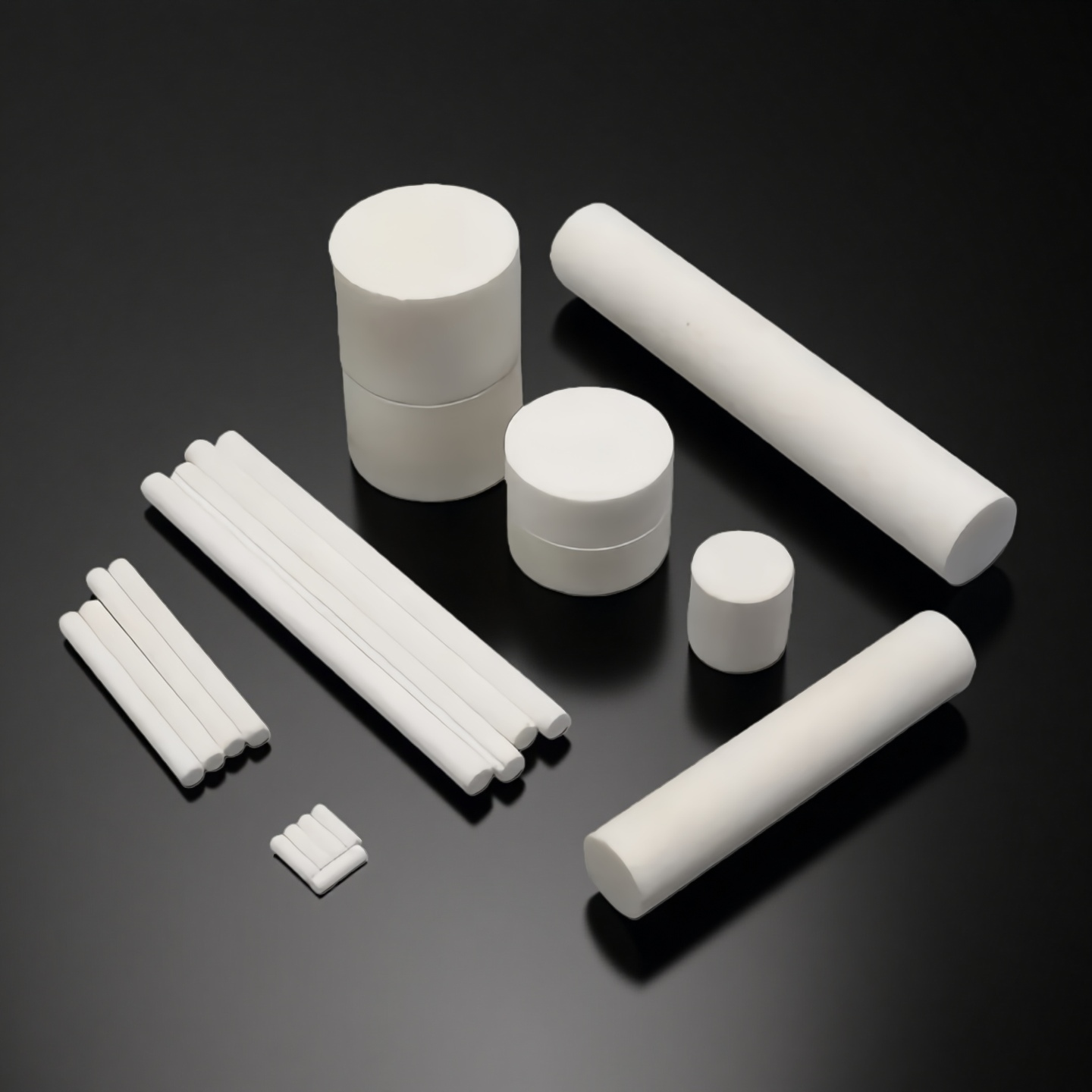
Electrical Insulating Machinable Glass Ceramic Rod / Bar with High Dielectric Strength

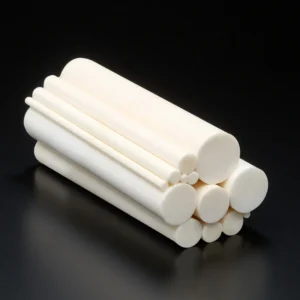
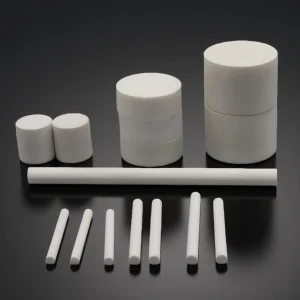
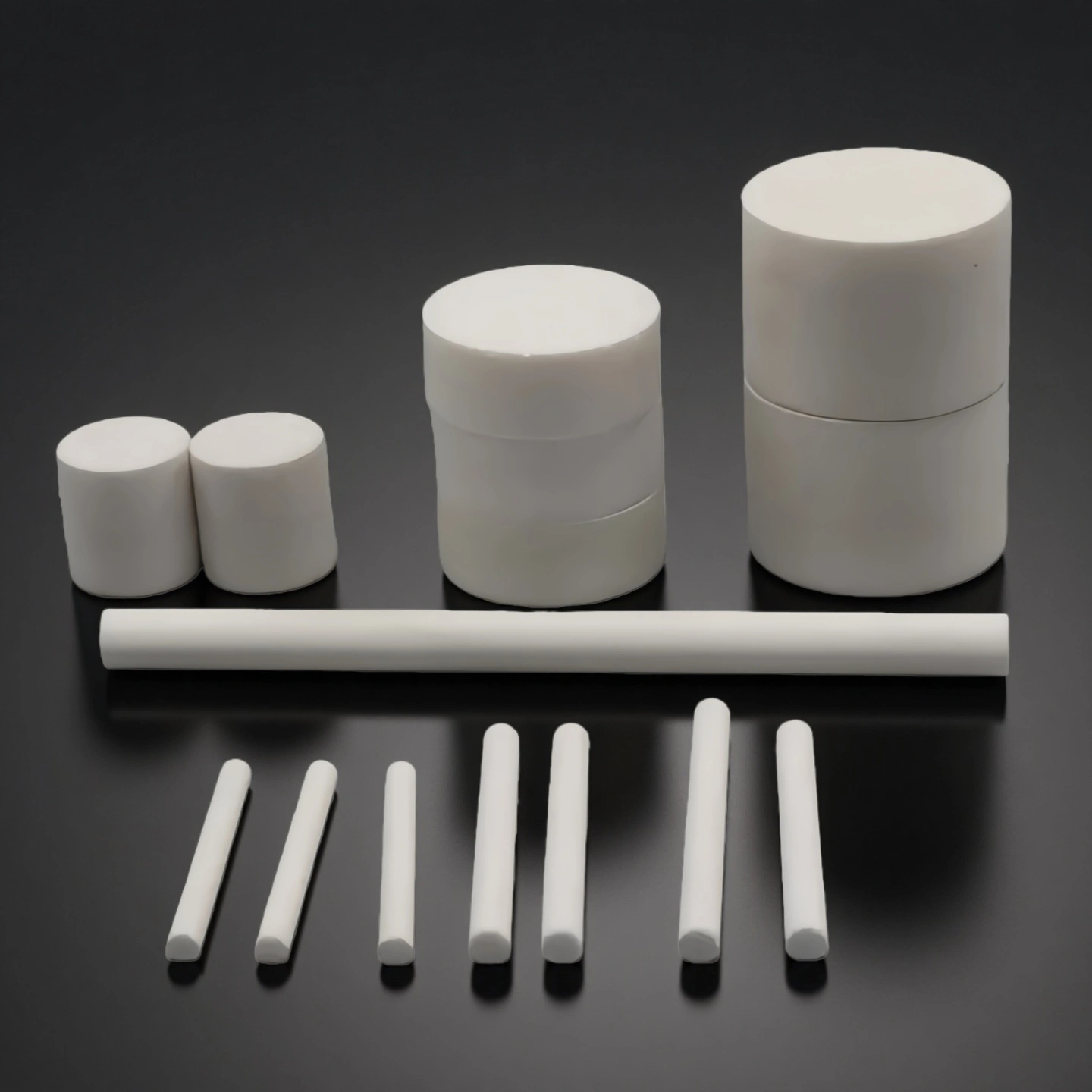
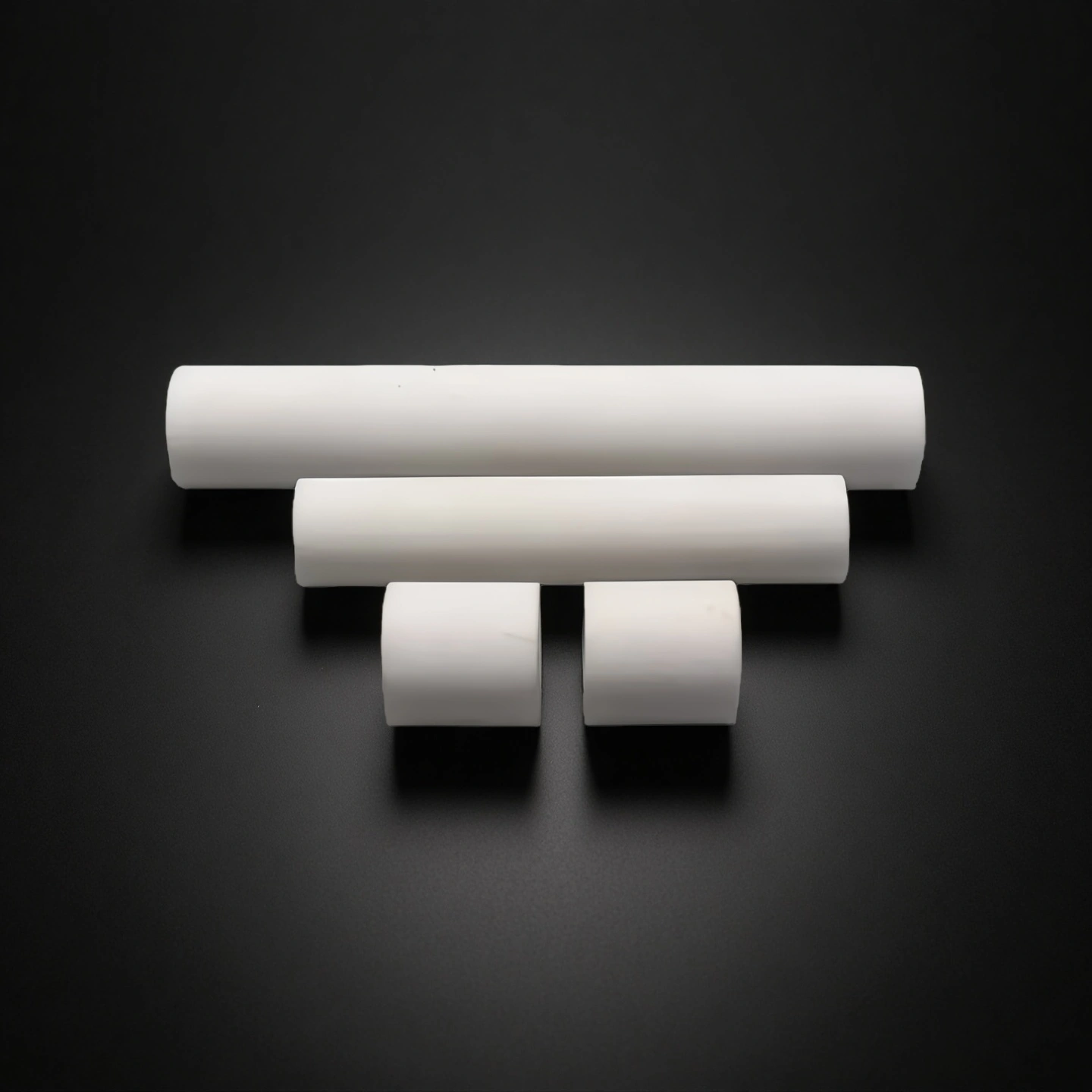
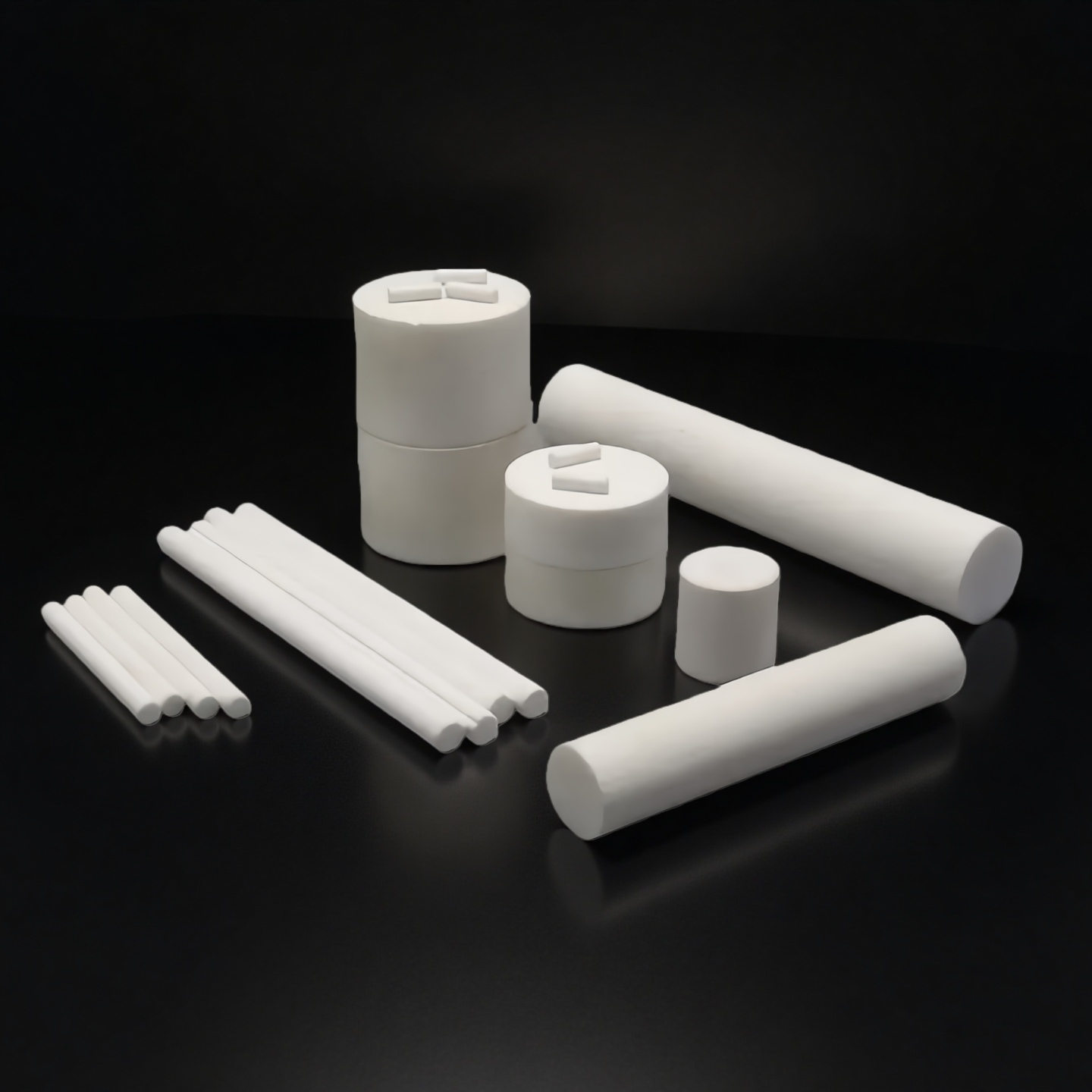
Machinable glass ceramic rod from ADCERAX is supplied as cylindrical bar stock in standard diameters such as Ø10, 15, 20, 25, 30, 40 and 50 mm, with typical lengths 100–300 mm, and can be customized on request. The machinable glass ceramic rod can be turned, drilled and milled into high-temperature, electrically insulating components for vacuum, furnace, RF and laser systems.

Catalogue No. AT-KJG-TC2001
Continuous Operating Temperature ~800 °C
Coefficient of Thermal Expansion (25–300 °C) ~9–10 × 10⁻⁶ /K
Dielectric Strength (room temperature, AC) ~40 kV/mm
Thermal Conductivity (25°C) 1.46 W/m·K
24H Standard Dispatch
Small Batch Support OEM
Factory Direct
Expert Engineering Support

A machinable glass ceramic rod is a cylindrical bar of glass-ceramic that can be turned, milled and drilled with standard metalworking tools. It combines high-temperature and electrical insulating properties with easy machining, so it is widely used as bar stock for custom supports and insulators in vacuum, high-voltage and lab equipment.

Machinable Glass Ceramic Rod Benefits

  • Direct Machinability from Rod Stock
    Machinable glass ceramic rods can be cut and turned with conventional carbide tools, allowing tight tolerances and complex geometries without post-firing or sintering.

  • High-Temperature and Electrical Insulation in One Material
    Each machinable glass ceramic rod combines continuous service up to around 800 °C with high dielectric strength, supporting compact high-voltage and heater assemblies in a single part.

  • Low Outgassing and Zero Porosity
    The dense, non-porous microstructure helps machinable glass ceramic rods meet vacuum and UHV cleanliness requirements after proper bake-out.

  • Stable Thermal Expansion Matching Metals
    Rods provide thermal expansion close to common steels and sealing glasses, reducing stress at metal–ceramic joints and improving alignment stability.

  • Dimensional Stability for Precision Fixtures
    Machinable glass ceramic rods maintain straightness and geometry under thermal cycling, supporting precision jigs, optical mounts and RF fixtures.


Machinable Glass Ceramic Rod Properties

Machinable Glass Ceramic Physical Properties
Property Typical value Notes
Purity ≥ 99.9 % Some grades can reach 99.99 %
Density 2.5–2.6 g/cm³ Archimedes method
Open porosity ≤ 0.07 % Effectively non-porous
Water absorption 0 % No measurable uptake
Colour White Clean, uniform appearance
Hardness (Mohs) 4–5 (up to 6–7) Depending on grade
Machinable Glass Ceramic Thermal Properties
Property Typical value Notes
Coefficient of thermal expansion (CTE) 72 × 10⁻⁷ /°C Average from −50 to 200 °C
CTE 25–300 °C 90 × 10⁻⁷ /°C For design over mid-range temperatures
CTE 25–600 °C 112 × 10⁻⁷ /°C
CTE 25–800 °C 123 × 10⁻⁷ /°C
Thermal conductivity 1.7 W/m·K At 25 °C
Continuous use temperature ~800 °C Long-term service
Short-term maximum temperature ~1000 °C Depends on load and atmosphere
Machinable Glass Ceramic Mechanical Properties
Property Typical value Notes
Young’s modulus ≈ 65 GPa Room temperature
Flexural strength ≥ 100 MPa Three-point bending
Compressive strength ≥ 500 MPa Room temperature
Impact resistance ≥ 2.56 kJ/m² Indicative value for brittle fracture
Poisson’s ratio ≈ 0.29
Shear modulus ≈ 25 GPa Derived from E and ν
Machinable Glass Ceramic Electrical Properties
Property Typical value Notes
Dielectric constant (1 kHz) 6–7 25 °C
Dielectric loss (tan δ, 1 kHz) 1–4 × 10⁻³ 25 °C
Dielectric strength > 40 kV/mm Sample thickness 1 mm
Volume resistivity @ 25 °C ≈ 1.0 × 10¹⁶ Ω·cm High insulation level
Volume resistivity @ 200 °C ≈ 1.5 × 10¹² Ω·cm
Volume resistivity @ 500 °C ≈ 1.1 × 10⁹ Ω·cm


Machinable Glass Ceramic Bar Specifications

Machinable Glass Ceramic Rod
Item Diameter (mm) Width (mm)
AT-KJG-TC2001 0.5 60
AT-KJG-TC2002 1 100
AT-KJG-TC2003 2 120
AT-KJG-TC2004 5 200
AT-KJG-TC2005 10 100
AT-KJG-TC2006 15 100
AT-KJG-TC2007 20 100
AT-KJG-TC2008 25 100
AT-KJG-TC2009 30 100
AT-KJG-TC2010 35 100
AT-KJG-TC2011 40 100
AT-KJG-TC2012 45 100
AT-KJG-TC2013 50 100
AT-KJG-TC2014 55 100
AT-KJG-TC2015 60 100
AT-KJG-TC2016 65 100
AT-KJG-TC2017 70 100
AT-KJG-TC2018 75 100
AT-KJG-TC2019 80 100
AT-KJG-TC2020 85 100
AT-KJG-TC2021 90 100
AT-KJG-TC2022 95 100
AT-KJG-TC2023 100 100
AT-KJG-TC2024 105 100
AT-KJG-TC2025 110 100
AT-KJG-TC2026 115 100
AT-KJG-TC2027 120 100
AT-KJG-TC2028 0.5-200 (Custom) 10-300 (Custom)


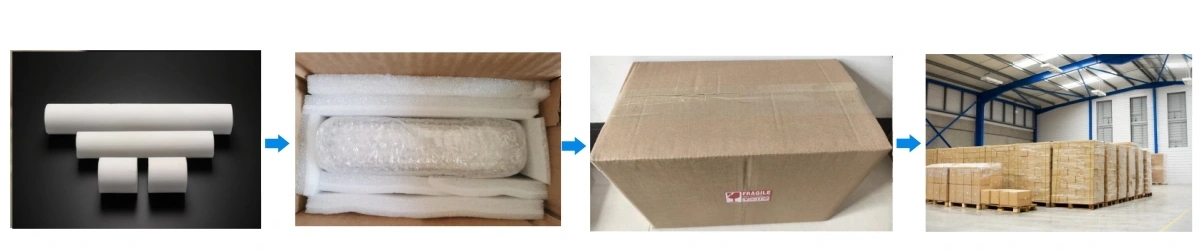
Machinable Glass Ceramic Bar Packaging

  • Each machinable glass ceramic rod is first wrapped in soft film or foam sleeves to prevent chipping of edges and ends.

Machinable Glass Ceramic Bar Packaging

Application Scenarios – Machinable Glass Ceramic Rod

  • Machinable Glass Ceramic Rod in Vacuum and UHV Equipment

    ✅Key Advantages

    1. Thermally Stable Vacuum Support Rod
    Machinable glass ceramic rods maintain stiffness and geometry in vacuum systems up to about 800 °C continuous temperature.

    2. Low Outgassing Insulating Components
    After proper bake-out, machinable glass ceramic rods show very low outgassing and zero open porosity, helping protect UHV base pressure.

    3. CTE Compatible with Metal Structures
    The thermal expansion around 9–10 × 10⁻⁶ /K helps match stainless-steel or alloy structures, reducing stress in brazed or clamped assemblies.

    ✅ Problem Solved

    A vacuum system OEM previously used alumina rods that required diamond grinding and long subcontract lead times. By switching to machinable glass ceramic rods, the customer machined coil supports and electrode standoffs in-house, keeping the same 800 °C operating envelope but reducing lead time by about 3–4 weeks per project and cutting fixture scrap by roughly 20 % because small design changes could be implemented directly on rod stock.

  • Machinable Glass Ceramic Rod in High-Voltage and RF Assemblies

    ✅Key Advantages

    1. Compact High-Voltage Insulator Rod
    Dielectric strength around 40 kV/mm allows short insulating paths in power supplies and feedthroughs, reducing assembly size.

    2. Frequency-Stable Electrical Performance
    Machinable glass ceramic rods provide stable dielectric behaviour from low frequencies up to RF ranges, improving test repeatability.

    3. Machinable Geometry for Complex Routing
    Rods can be drilled and slotted so that leads, coax or busbars follow controlled clearances with defined creepage distances.

    ✅ Problem Solved

    An RF power supply builder used polymer insulators that distorted near 200–250 °C in a compact enclosure. Replacing them with machinable glass ceramic rods kept dimensional drift negligible at elevated temperature, cutting rework on assembled units by an estimated 10–15 % and allowing higher power density without redesigning the enclosure footprint.

  • Machinable Glass Ceramic Rod in Lab Furnace and Optical /Laser Equipment

    ✅Key Advantages

    1. Rigid High-Temperature Support Rod
    Machinable glass ceramic rods carry heater coils or sample holders in small furnaces and hot zones without significant creep.

    2. Non-magnetic, Optics-Friendly Hardware
    Rods are non-magnetic and light-coloured, which helps avoid magnetic interference and allows easier visual alignment in laser benches.

    3. Fine Machining for Alignment Features
    Through-holes, threaded inserts and shoulders can be machined into the rods to hold optics, apertures or sensors at defined offsets.

    ✅ Problem Solved

    A laser equipment OEM previously sourced custom alumina posts with long grinding lead times. Switching to machinable glass ceramic rods allowed the company to machine alignment posts and cavity spacers internally with ±0.05 mm tolerances, shortening proto build cycles from 6–8 weeks to about 3–4 weeks and lowering prototype hardware cost per build by roughly 25–30 %.

Use Guide — Machinable Glass Ceramic Rod

  • Installation

    1. Check that each machinable glass ceramic rod is free of visible cracks or chips before installation.
    2. When clamping rods in fixtures, use broad, well-supported contact surfaces and avoid point loading or sharp metal edges.
    3. During assembly with metals, allow for thermal expansion by using sliding fits or compliant clamps where temperature cycles are expected.

  • Use

    1. Keep bending loads as low as possible; machinable glass ceramic rods are strong in compression but more sensitive in bending and impact.
    2. For high-temperature service, ramp temperature at a moderate rate and avoid very steep thermal shocks, especially when the rod is constrained by metal parts.
    3. In electrical designs, follow standard creepage and clearance rules, using the rod geometry to support defined distances.

  • Storage

    1. Store rods horizontally on padded shelves or in divided boxes, with spacers to prevent rods from touching each other.
    2. Avoid stacking heavy items on top of boxed rods to prevent hidden micro-cracks.
    3. Keep storage areas dry and clean to reduce contamination before machining or assembly.

  • Cleaning

    1. Before machining, wipe rods with a clean, lint-free cloth to remove dust.
    2. Before vacuum or high-voltage use, clean finished components with an appropriate solvent (for example, alcohol) and dry in a clean oven according to your process.
    3. Avoid aggressive mechanical cleaning methods such as sandblasting that can introduce surface micro-cracks.

  • Common Misuse Points and How to Address Them

    1. Over-tightening Metal Clamps on the Rod
    – Problem: Excessive clamping force or sharp edges can cause cracks during heating or vibration.
    – Handling: Use smooth clamp surfaces, torque the fasteners gradually, and add thin mica or metal shims where needed to spread the load.

    2. Machining with Incorrect Tools or Feed Rates
    – Problem: Using very dull tools or aggressive feeds can chip edges and shorten tool and part life.
    – Handling: Use sharp carbide tools, moderate cutting speeds and small depth of cut; avoid dry machining with overheated tools.

    3. Rapid Thermal Shock in Constrained Assemblies
    – Problem: Fast heating or cooling of rods locked inside rigid metal frames may create high internal stresses.
    – Handling: Apply controlled ramp rates, especially above a few hundred degrees Celsius, and consider expansion slots or compliant supports.

FAQ – Machinable Glass Ceramic Rod

  1. Q: How hot can a machinable glass ceramic rod operate?
    A: Typical machinable glass ceramic rods are used continuously up to around 800 °C, with short peak no-load temperatures near 1000 °C when properly supported and used within material limits.
  2. Q: Can machinable glass ceramic rods replace alumina ceramic rods?
    A: Machinable glass ceramic rods can often replace alumina rods when the required temperature is within the 800 °C range and when easier machining and shorter lead time are more important than maximum strength.
  3. Q: What tolerances can be achieved on a machined machinable glass ceramic rod?
    A: With suitable tooling and process control, turned machinable glass ceramic rods can typically reach OD and length tolerances around ±0.05–0.10 mm, with finer values after precision grinding.
  4. Q: What tolerances can be achieved on a machined machinable glass ceramic rod?
    A: With suitable tooling and process control, turned machinable glass ceramic rods can typically reach OD and length tolerances around ±0.05–0.10 mm, with finer values after precision grinding.
  5. Q: How do machinable glass ceramic rods behave in high-voltage applications?
    A: Machinable glass ceramic rods provide high dielectric strength and stable insulation at elevated temperature, making them suitable for compact standoffs, feedthrough supports and RF fixtures.
  6. Q: Can ADCERAX supply custom-length machinable glass ceramic rods?
    A: ADCERAX can cut machinable glass ceramic rod stock to customer-specified lengths and also provide rods with drilled holes, chamfers and other details according to drawings.

Machinable Glass-ceramic Rod Reviews

  • ⭐️⭐️⭐️⭐️⭐️
    We use ADCERAX machinable glass ceramic rods for vacuum coil supports and feedthrough insulators. Having rod stock in standard diameters with the option for custom machining has reduced our prototype lead times and simplified our supplier list.
    -- Michael R., Engineering Manager, NovaVac Systems (Germany)
  • ⭐️⭐️⭐️⭐️⭐️
    The machinable glass ceramic rod from ADCERAX holds tight tolerances on turned insulator parts and behaves predictably under high voltage. Pricing is competitive for OEM quantities, and the factory provides clear dimensional reports.
    -- Laura S., Purchasing Specialist, Precision RF Components Ltd. (UK)
  • ⭐️⭐️⭐️⭐️⭐️
    Our team machines small alignment posts and spacers from ADCERAX machinable glass ceramic rods. The material cuts cleanly on our standard CNC lathes, and the rods stay straight after multiple thermal cycles in the laser cavity.
    -- Kenji T., Senior Mechanical Engineer, LaserTech Instruments (Japan)
  • ⭐️⭐️⭐️⭐️⭐️
    We purchase machinable glass ceramic rod stock in several diameters and then machine custom insulators for different customers. The rods from ADCERAX arrive well packed, with consistent material behaviour from batch to batch, which keeps our scrap rate low.
    -- Victor P., Owner, Ceramic Machining Job Shop (USA)
customize size

Custom Machinable Glass Ceramic Rod

ADCERAX provides custom machinable glass ceramic rod configurations based on customer drawings or co-engineered sketches. Custom machinable glass ceramic rod supply can combine fixed diameters with tailored lengths, end features and machined details to reduce on-site processing.

  • Outer Diameter Range
    – Standard diameters: Ø10–50 mm
    – Special diameters outside this range on evaluation

  • Rod Length
    – Standard lengths: 100 mm, 150 mm, 200 mm, 300 mm
    – Custom cut lengths up to approx. 300–400 mm per rod

  • Dimensional Tolerances
    – OD tolerance typically down to ±0.05–0.10 mm after machining
    – Length tolerance typically down to ±0.1 mm
    – Tighter tolerances on request after technical review

  • End Details
    – Square-cut ends for further machining
    – Chamfered ends for easier assembly
    – Centre-drilled ends for shafts, pins or electrical leads

  • Axial Features
    – Through-holes or blind holes along the rod
    – Cross-holes for pinning or wiring
    – Locating grooves or flats for alignment

  • Surface Finish
    – As-machined finish suitable for general fixtures
    – Fine ground or lapped surfaces for precision fits

  • Material Supply Mode
    – Raw machinable glass ceramic rod stock for customer machining
    – Near-net-shape pre-machined rods according to your drawing

Related Products

ADCERAX - Your Trusted Advanced Ceramics Manufacturing Partner

Direct factory manufacturing with comprehensive ceramic materials expertise and global supply capabilities

Direct Factory Manufacturing

China-based ceramic materials production facility with state-of-the-art equipment

Engineering Team

Experienced professionals in advanced ceramics applications and custom design

Quality Control

Strict quality control standards for technical ceramics manufacturing and quality management

Global Supply Chain

Serving customers worldwide with technical ceramics and rapid response

24/7 Technical Support

Round-the-clock support for ceramic components inquiries and technical assistance

500+ Satisfied Customers

Trusted by global customers for advanced ceramic materials and precision components

Get in touch with us

Our team will be happy to respond to you in less than 24 hours.

Adcerax's factory

Quick Quotation

*Our team will answer your inquiries within 24 hours.

*Your information will be kept strictly confidential.

Ready to Solve Your Engineering Challenge?

Partner with ADCERAX for reliable, high-performance advanced ceramic solutions. Our engineers are ready to discuss your project.

E-mail

info@adcerax.com

Phone

+(86) 0731-74427743 | WhatsApp: +(86) 19311583352

Response Time

Within 24 hours

Quick Quote

The more details you provide, the faster we can quote.

*We respond within 24 hours. All inquiries are confidential.

Download Catalog

Get Your Custom Sulution

The more details you provide, the faster we can respond.

customize size

*We respond within 24 hours. All inquiries are confidential.

Download Catalog