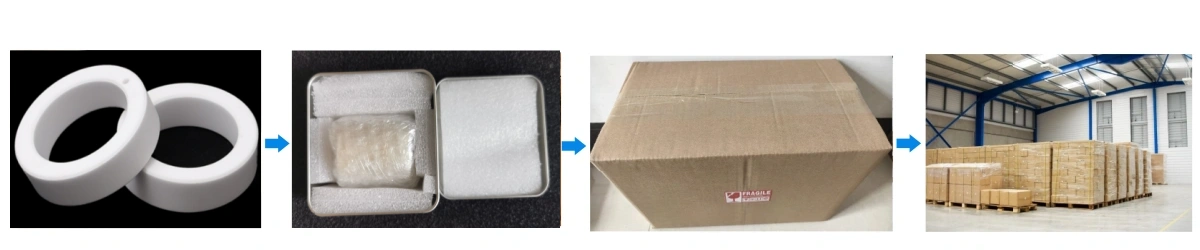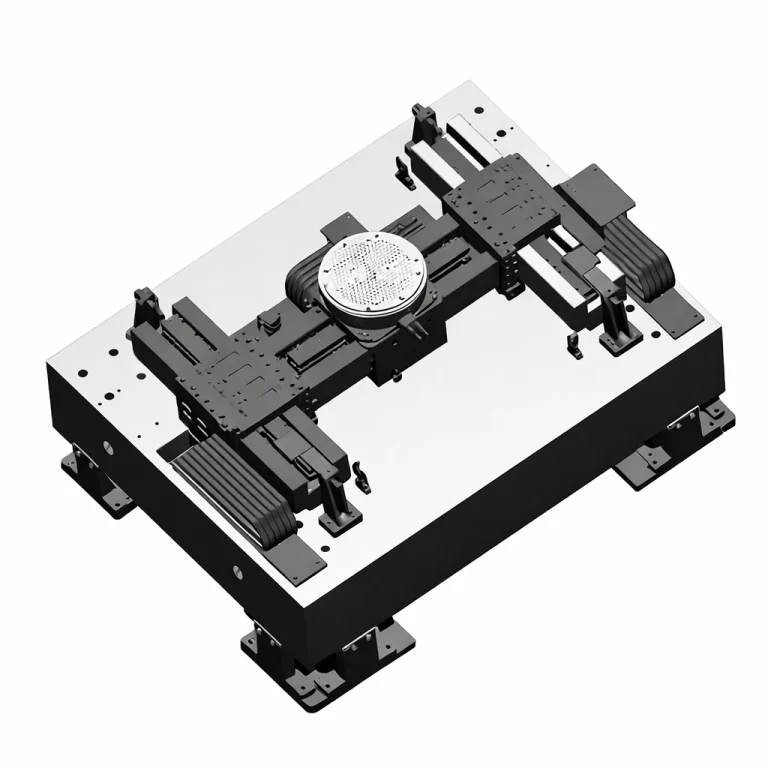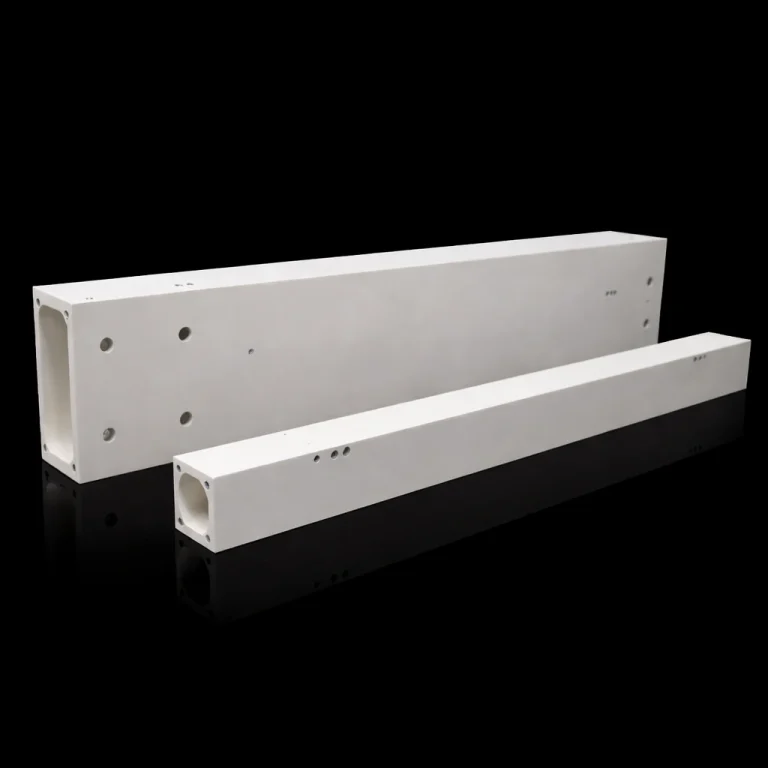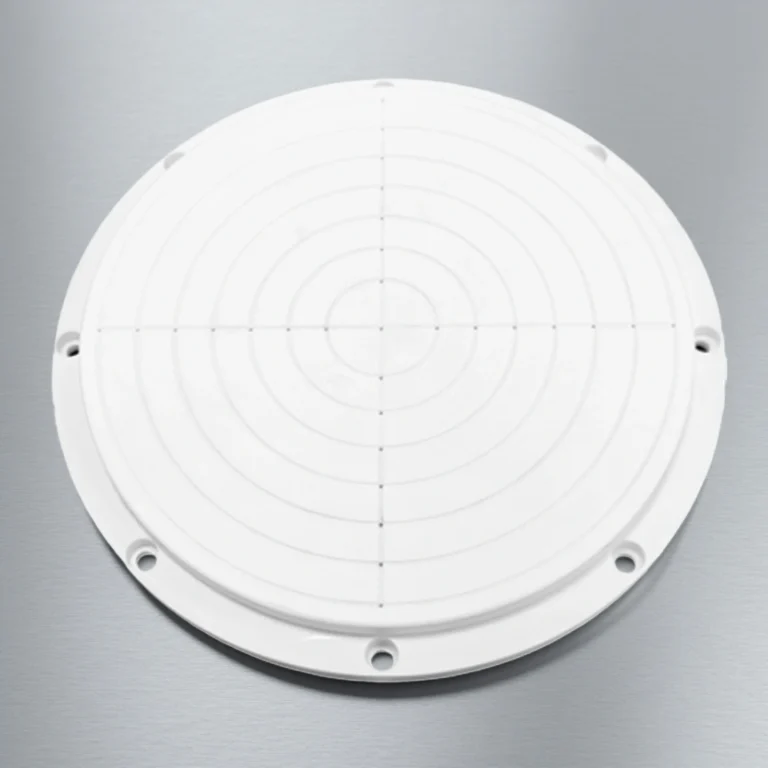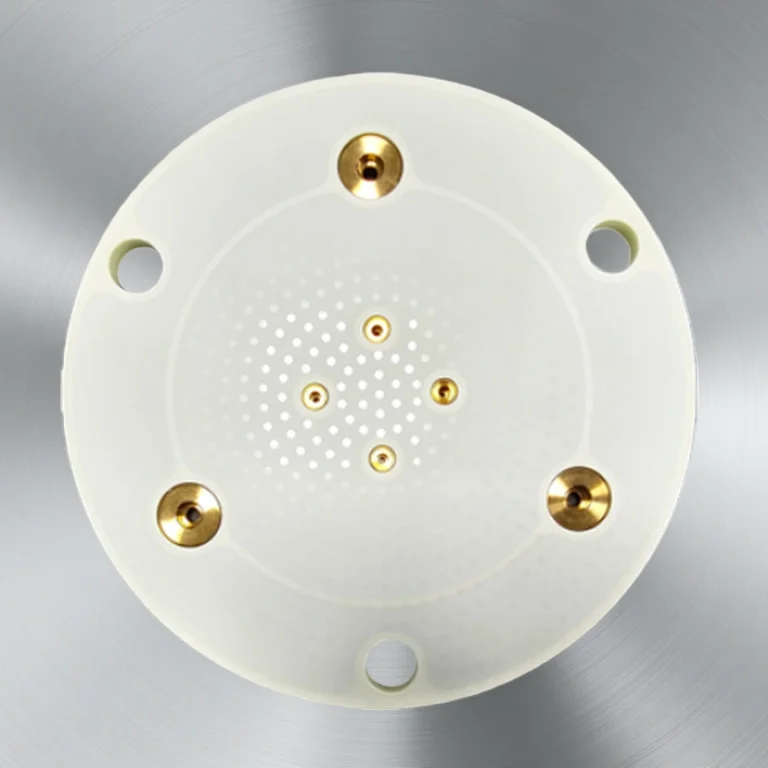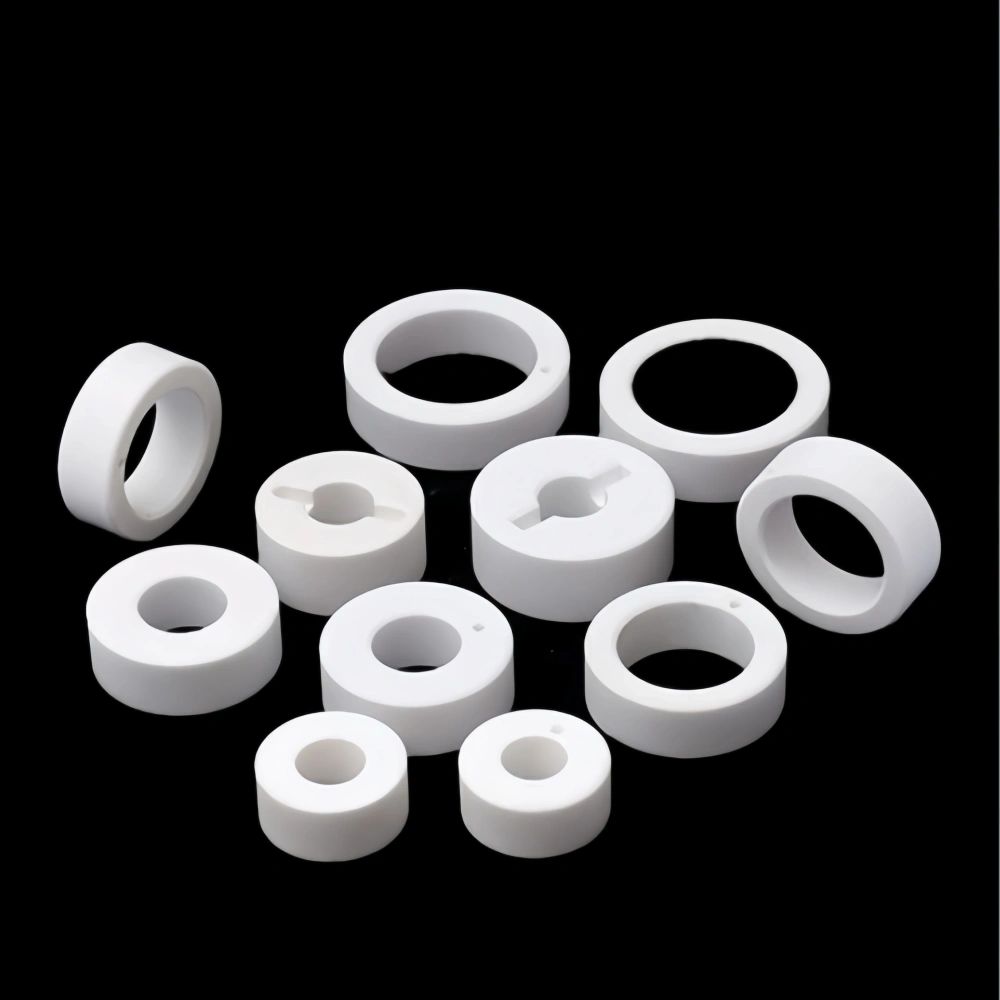
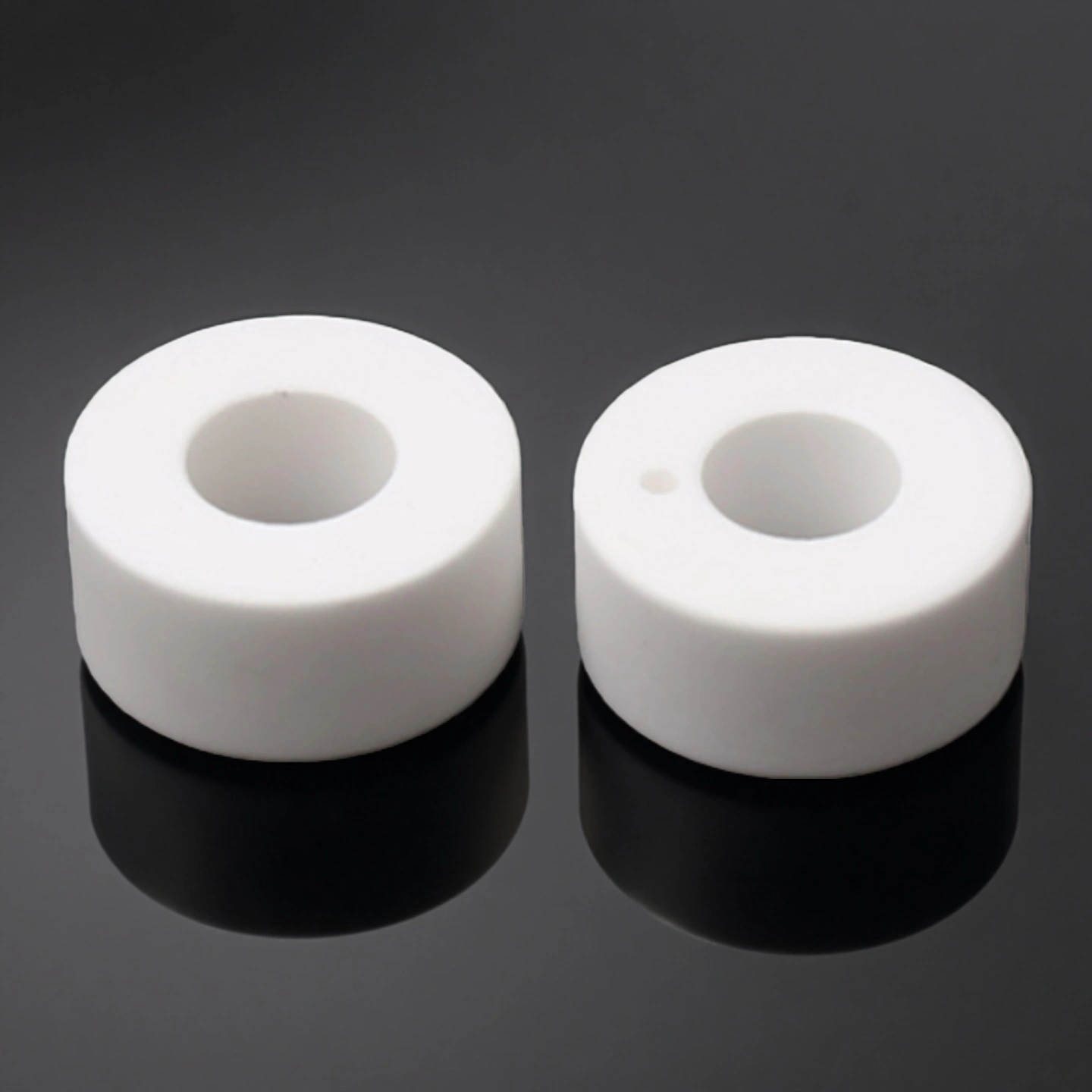
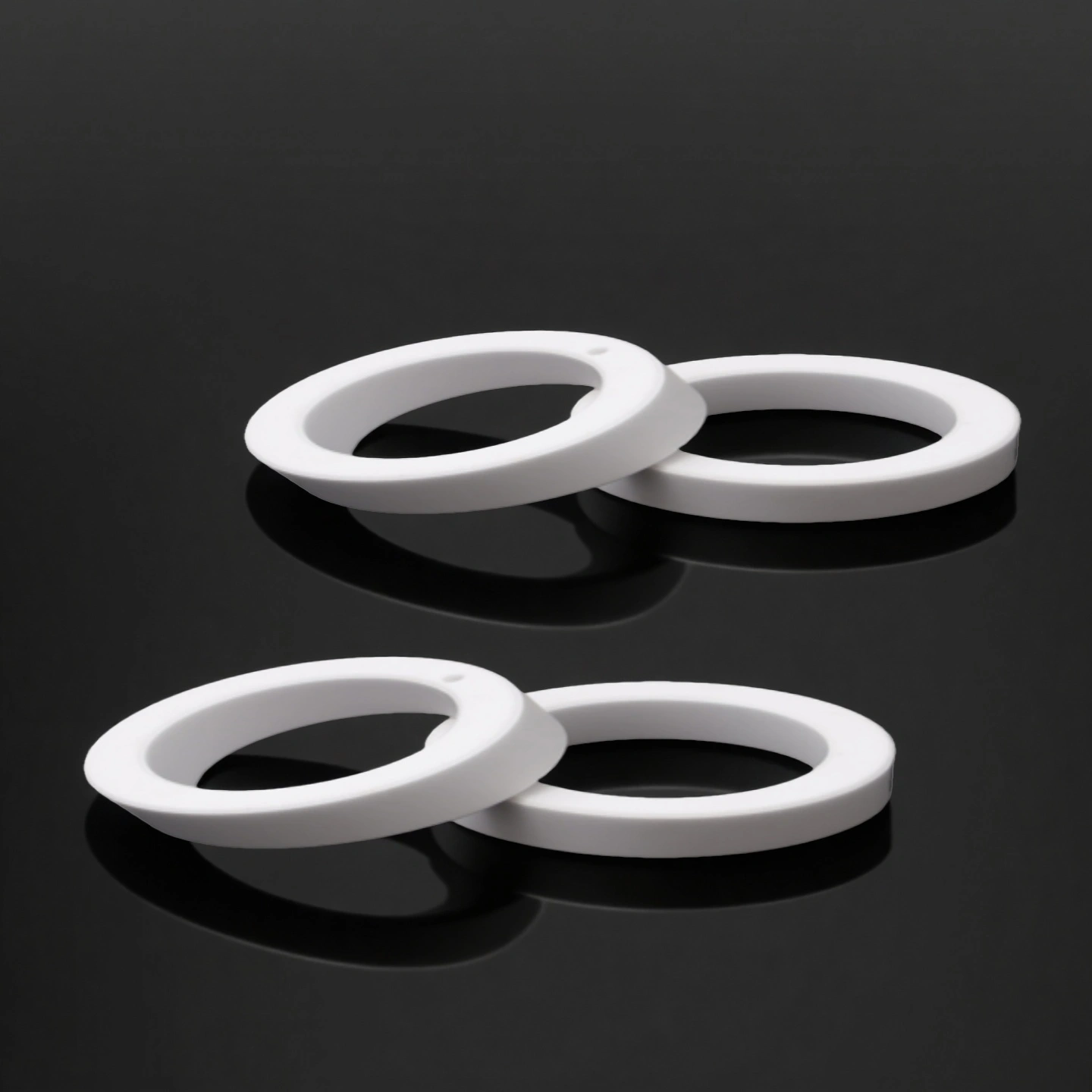
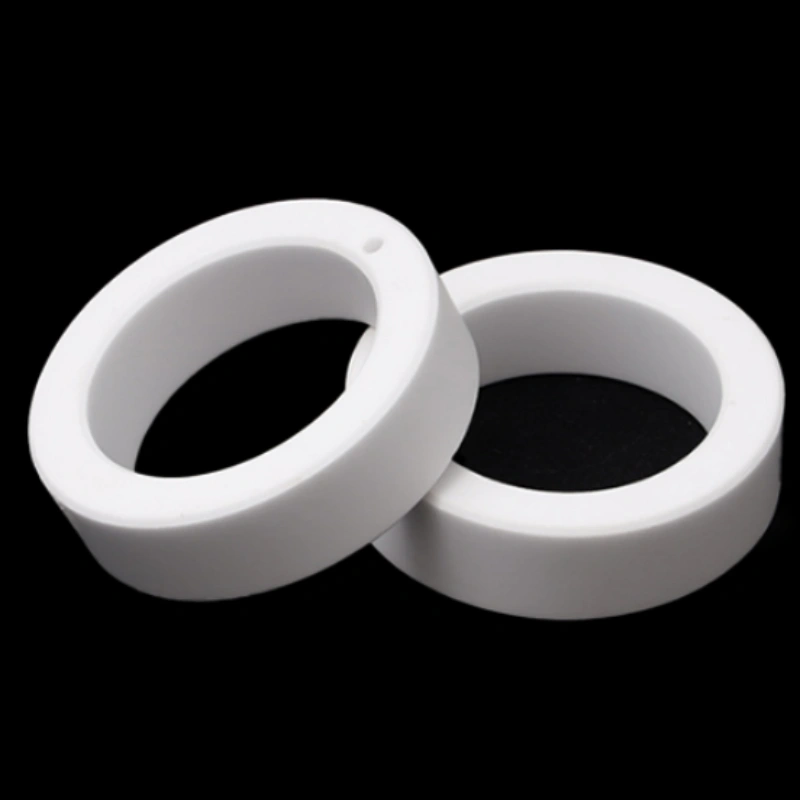
A machinable glass ceramic ring is a ring-shaped precision component made from a mica-reinforced glass-ceramic that can be machined with standard carbide tools into accurate OD/ID and detailed features. It is typically used as an electrical insulating spacer, thermal break, or alignment ring in assemblies where metals must be separated and stable spacing is required.
Machinable Glass Ceramic Ring Benefits
1. Ring geometry keeps stack-ups stable in clamped assemblies
- The continuous circular contact face helps distribute load more evenly than segmented spacers, reducing tilt in multi-layer stacks.
- OD/ID-based centring supports consistent axial alignment when parts are reassembled during maintenance or test cycles.
2. Feature-rich ring machining supports real-world interfaces without full ceramic grinding
- Practical ring features include counterbores, bolt circles, slots, relief grooves, pockets, and stepped shoulders for fixture integration.
- Engineers can iterate interface details (step height, groove width, seating land) without redesigning the whole assembly around a different material.
3. Clean, non-porous structure suits vacuum and insulation builds where trapped porosity is a concern
- The material structure is commonly specified when designers want an insulating ring that is easier to keep clean and less prone to hidden void-related issues.
- Flat faces and controlled contact lands help reduce particle generation from poor seating or uneven clamp contact.
4. Defined edges and contact faces reduce chipping risk during installation and repeated assembly
- Specifying chamfers or edge radii on a machinable glass ceramic ring protects corners from tool slips, clamp misalignment, and handling impact.
- Controlled face finish on seating areas helps avoid micro-damage that can start cracks at sharp transitions.
5. Repeatable OD/ID concentricity supports alignment-critical and centred interfaces
- Concentric OD/ID geometry helps maintain coaxial alignment in centered mounts, ring seats, and fixture nests.
- This improves repeatability in assemblies where runout, centering, or consistent radial clearance affects performance (e.g., electrode spacing, optical mounts, vacuum tooling).
Machinable Glass Ceramic Ring Properties
| Machinable Glass Ceramic Physical Properties | ||
| Property | Typical value | Notes |
| Purity | ≥ 99.9 % | Some grades can reach 99.99 % |
| Density | 2.5–2.6 g/cm³ | Archimedes method |
| Open porosity | ≤ 0.07 % | Effectively non-porous |
| Water absorption | 0 % | No measurable uptake |
| Colour | White | Clean, uniform appearance |
| Hardness (Mohs) | 4–5 (up to 6–7) | Depending on grade |
| Machinable Glass Ceramic Thermal Properties | ||
| Property | Typical value | Notes |
| Coefficient of thermal expansion (CTE) | 72 × 10⁻⁷ /°C | Average from −50 to 200 °C |
| CTE 25–300 °C | 90 × 10⁻⁷ /°C | For design over mid-range temperatures |
| CTE 25–600 °C | 112 × 10⁻⁷ /°C | |
| CTE 25–800 °C | 123 × 10⁻⁷ /°C | |
| Thermal conductivity | 1.7 W/m·K | At 25 °C |
| Continuous use temperature | ~800 °C | Long-term service |
| Short-term maximum temperature | ~1000 °C | Depends on load and atmosphere |
| Machinable Glass Ceramic Mechanical Properties | ||
| Property | Typical value | Notes |
| Young’s modulus | ≈ 65 GPa | Room temperature |
| Flexural strength | ≥ 100 MPa | Three-point bending |
| Compressive strength | ≥ 500 MPa | Room temperature |
| Impact resistance | ≥ 2.56 kJ/m² | Indicative value for brittle fracture |
| Poisson’s ratio | ≈ 0.29 | |
| Shear modulus | ≈ 25 GPa | Derived from E and ν |
| Machinable Glass Ceramic Electrical Properties | ||
| Property | Typical value | Notes |
| Dielectric constant (1 kHz) | 6–7 | 25 °C |
| Dielectric loss (tan δ, 1 kHz) | 1–4 × 10⁻³ | 25 °C |
| Dielectric strength | > 40 kV/mm | Sample thickness 1 mm |
| Volume resistivity @ 25 °C | ≈ 1.0 × 10¹⁶ Ω·cm | High insulation level |
| Volume resistivity @ 200 °C | ≈ 1.5 × 10¹² Ω·cm | |
| Volume resistivity @ 500 °C | ≈ 1.1 × 10⁹ Ω·cm | |
Machinable Glass Ceramic Ring Specifications
| Machinable Glass Ceramic Ring | |||
| Item | Outer Diameter (mm) | Thickness (mm) | Height (mm) |
| AT-KJG-TC4001 | 10 | 2 | 2 |
| AT-KJG-TC4002 | 10 | 2 | 3 |
| AT-KJG-TC4003 | 10 | 2 | 4 |
| AT-KJG-TC4004 | 10 | 2 | 5 |
| AT-KJG-TC4005 | 12 | 2.5 | 4 |
| AT-KJG-TC4006 | 12 | 2.5 | 4.5 |
| AT-KJG-TC4007 | 12 | 2.5 | 5 |
| AT-KJG-TC4008 | 12 | 2.5 | 5.5 |
| AT-KJG-TC4009 | 16 | 4 | 3 |
| AT-KJG-TC4010 | 16 | 4.5 | 3.5 |
| AT-KJG-TC4011 | 16 | 5 | 10 |
| AT-KJG-TC4012 | 16 | 6 | 15 |
| AT-KJG-TC4013 | 10-100 | 2-20 | 2-70 |
Machinable Glass Ceramic Ring Packaging
- Individual protective wrap to prevent face scratches and edge contact