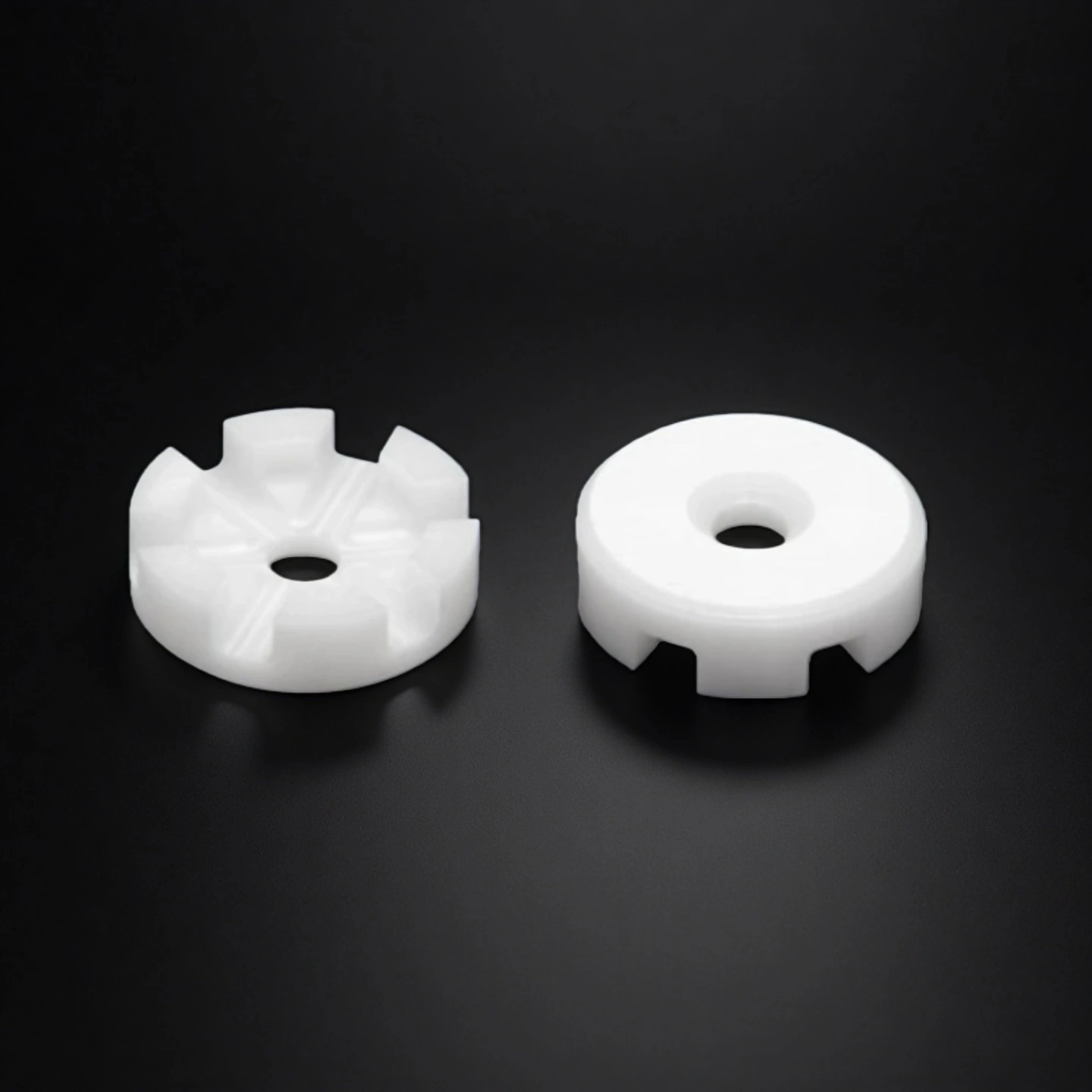
Custom Machinable Glass Ceramic Parts – CNC-Machined Complex Shapes and Cavities

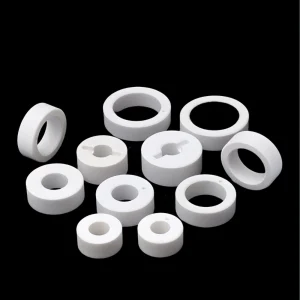
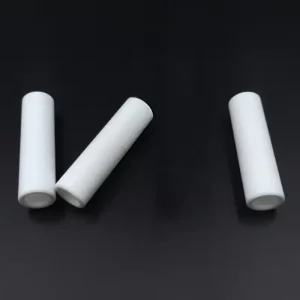
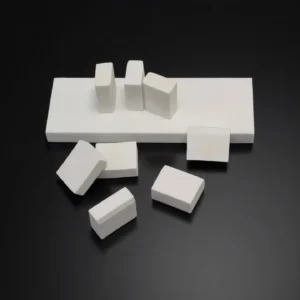
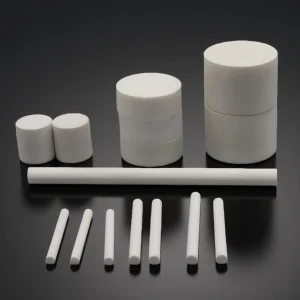
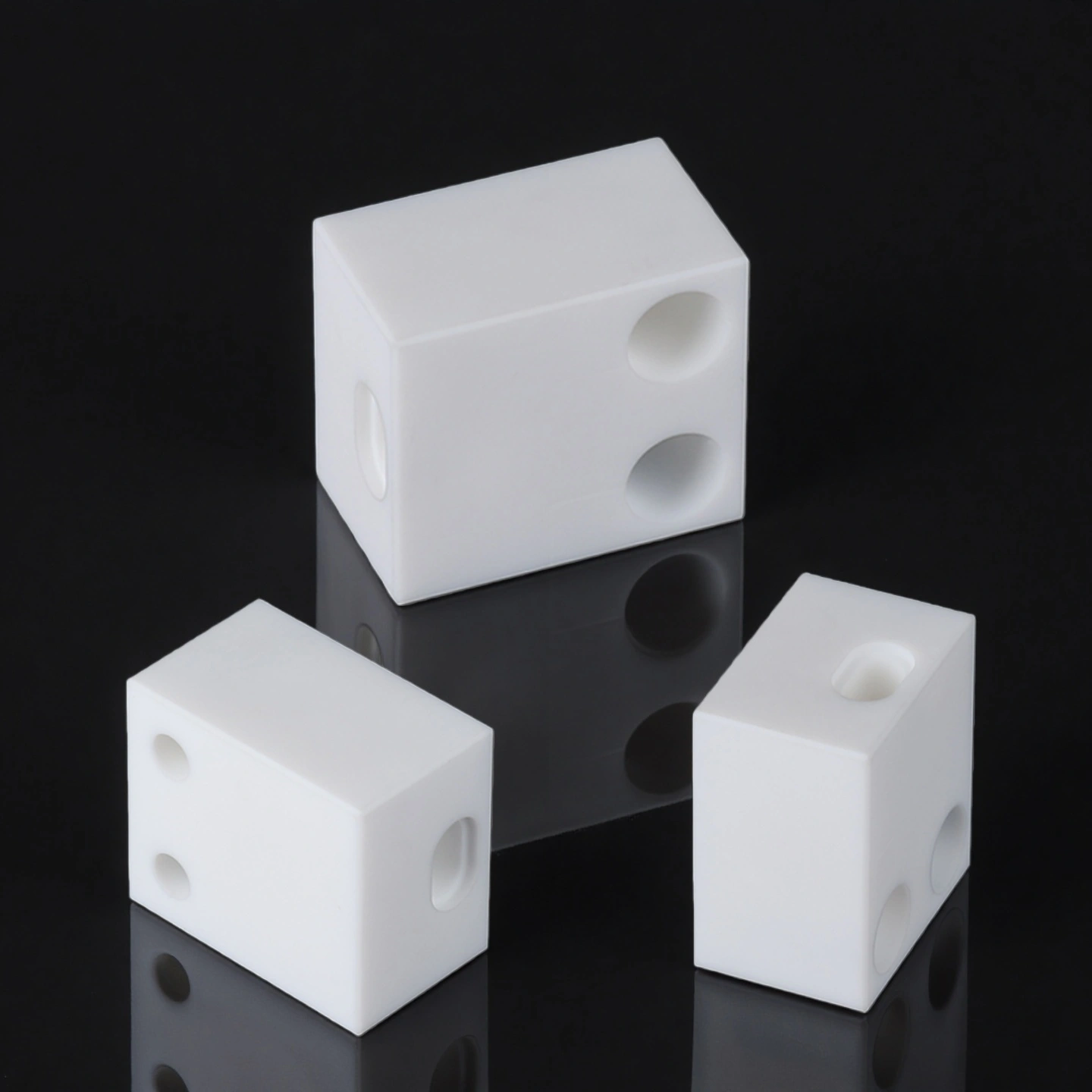
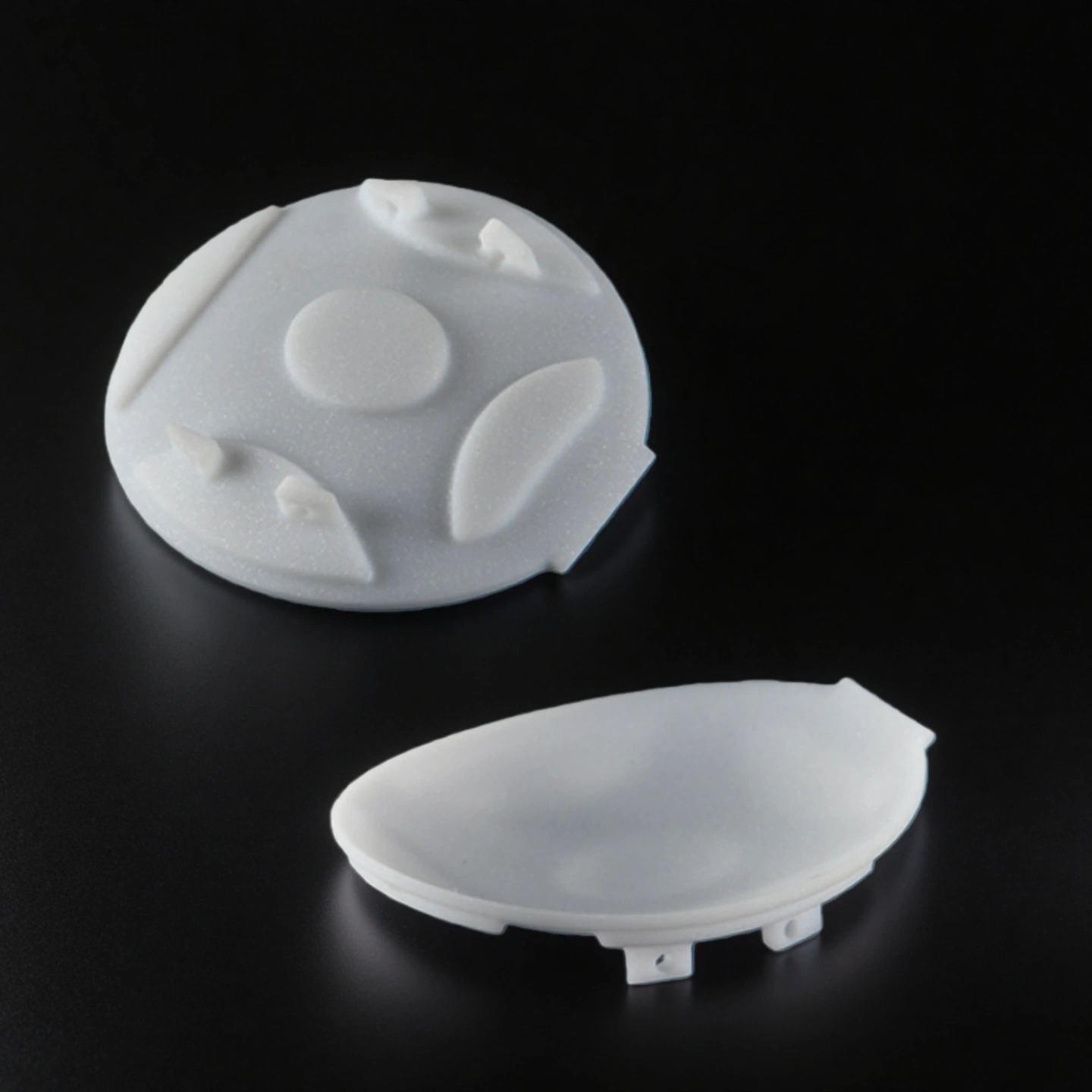
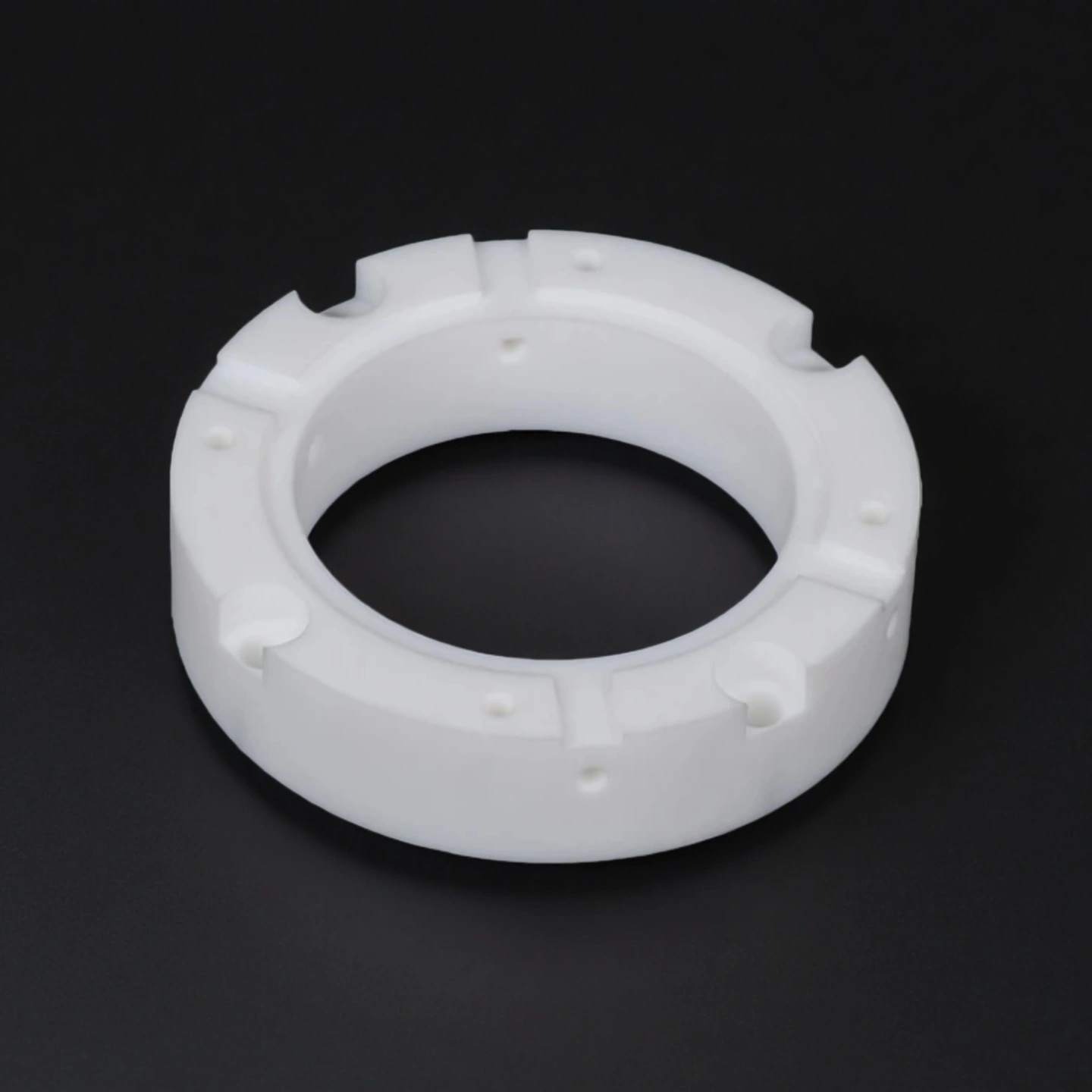
Typical machinable glass ceramic parts from ADCERAX cover thicknesses from thin plates for shields and spacers to robust blocks with pockets, steps and through-holes, and can be customised with slots, threads and controlled edges so that machinable glass ceramic parts drop into existing assemblies without redesign.

Catalogue No. AT-KJG-TC9001
Density 2.52 g/cm³
CTE (25–300°C) 9.0 ×10⁻⁶ /K
Max Operating Temperature (Under Load) 800°C
Thermal Conductivity (25°C) 1.46 W/m·K
24H Standard Dispatch
Small Batch Support OEM
Factory Direct
Expert Engineering Support

Machinable glass ceramic parts are precision components made from a glass–ceramic material that can be cut, drilled, milled and turned with conventional metalworking tools while still behaving like a technical ceramic in service.

Machinable Glass Ceramic Parts Benefits

  • Conventional machining of complex geometries
    Machinable glass ceramic parts can be turned, milled, drilled and tapped with standard metalworking tools, allowing deep pockets, undercuts and multi-level fixtures that are difficult or costly in fully sintered ceramics.

  • Stable at high temperature with matched expansion
    The material works continuously around 800 °C with peak excursions to about 1000 °C under no load, and its thermal expansion matches many metals and sealing glasses, which helps reduce stress at interfaces.

  • High-temperature electrical insulation
    Machinable glass ceramic parts provide strong dielectric performance at elevated temperature and across a wide frequency range, making them suitable for high-voltage standoffs, coil supports and insulated mounts.

  • Low porosity and low outgassing for vacuum
    When properly baked, machinable glass ceramic exhibits zero or near-zero open porosity and very low outgassing, which supports use in high and ultra-high vacuum chambers and pumping lines.

  • Dimensional stability without post-firing
    Parts are machined in the final state so there is no shrinkage from post-sintering; this allows consistent tolerances on mating features and repeatable interchange of machinable glass ceramic parts in long-term production.


Machinable Glass Ceramic Parts Properties

Machinable Glass Ceramic Physical Properties
Property Typical value Notes
Purity ≥ 99.9 % Some grades can reach 99.99 %
Density 2.5–2.6 g/cm³ Archimedes method
Open porosity ≤ 0.07 % Effectively non-porous
Water absorption 0 % No measurable uptake
Colour White Clean, uniform appearance
Hardness (Mohs) 4–5 (up to 6–7) Depending on grade
Machinable Glass Ceramic Thermal Properties
Property Typical value Notes
Coefficient of thermal expansion (CTE) 72 × 10⁻⁷ /°C Average from −50 to 200 °C
CTE 25–300 °C 90 × 10⁻⁷ /°C For design over mid-range temperatures
CTE 25–600 °C 112 × 10⁻⁷ /°C
CTE 25–800 °C 123 × 10⁻⁷ /°C
Thermal conductivity 1.7 W/m·K At 25 °C
Continuous use temperature ~800 °C Long-term service
Short-term maximum temperature ~1000 °C Depends on load and atmosphere
Machinable Glass Ceramic Mechanical Properties
Property Typical value Notes
Young’s modulus ≈ 65 GPa Room temperature
Flexural strength ≥ 100 MPa Three-point bending
Compressive strength ≥ 500 MPa Room temperature
Impact resistance ≥ 2.56 kJ/m² Indicative value for brittle fracture
Poisson’s ratio ≈ 0.29
Shear modulus ≈ 25 GPa Derived from E and ν
Machinable Glass Ceramic Electrical Properties
Property Typical value Notes
Dielectric constant (1 kHz) 6–7 25 °C
Dielectric loss (tan δ, 1 kHz) 1–4 × 10⁻³ 25 °C
Dielectric strength > 40 kV/mm Sample thickness 1 mm
Volume resistivity @ 25 °C ≈ 1.0 × 10¹⁶ Ω·cm High insulation level
Volume resistivity @ 200 °C ≈ 1.5 × 10¹² Ω·cm
Volume resistivity @ 500 °C ≈ 1.1 × 10⁹ Ω·cm


Machinable Glass Ceramic Parts Specifications

Machinable Glass Ceramic Parts
Item No. Diameter (mm) Thickness (mm)
AT-KJG-TC9001 Customize


Machinable Glass Ceramic Parts Packaging

  • Each machinable glass ceramic part or matched set is separated in foam or soft-lined compartments to prevent edge chipping and surface contact during transport.


Machinable Glass Ceramic Parts Packaging

Machinable Glass Ceramic Parts – Application Scenarios

  • Vacuum and Analytical Equipment Components

    ✅Key Advantages

    1. High-temperature vacuum insulation
    Machinable glass ceramic parts provide structural insulation in chambers and feedthrough regions where components see up to around 800 °C and must maintain low outgassing under vacuum or controlled atmosphere.

    2. Stable geometry without post-firing
    Because the material is used in its final state, machined features on vacuum flanges, spacer blocks and carriers maintain dimensional stability during bake-out and repeated thermal cycles within the recommended temperature window.

    3. Electrical isolation at voltage
    Machinable glass ceramic parts can act as insulator standoffs, coil supports and barrier plates in vacuum assemblies, with dielectric strength on the order of tens of kilovolts per millimetre.

    ✅ Problem Solved

    A vacuum system builder needs insulating support blocks for internal hardware operating at high voltage and elevated temperature. Metal supports create leakage paths, and polymer supports cannot survive bake-out near 200–250 °C. By switching to machinable glass ceramic parts with dielectric strength around 45 kV/mm and continuous use temperature near 800 °C, the builder can run higher bake temperatures and higher bias voltages without redesigning the chamber, while keeping machining lead time closer to that for metal parts.

  • Photonics, Laser and Optical Assemblies

    ✅Key Advantages

    1. Precision mounts with controlled expansion
    Machinable glass ceramic parts used as spacers, carriers and mounting plates offer thermal expansion close to many sealing glasses and metals, which helps maintain alignment in optical benches and laser cavities.

    2. Complex features from CNC machining
    Tapped holes, slots, pockets and recesses for mirrors, lenses and fibre ferrules can be machined directly into the ceramic without mould tools or post-sintering, supporting iterative development and low-volume series assemblies.

    3. Electrical and thermal isolation in one part
    A single machinable glass ceramic part can act as both a mechanical mount and an insulating barrier near high-voltage drivers or elevated temperature zones within photonics modules.

    ✅ Problem Solved

    An OEM laser system requires a combined mechanical and electrical interface block between a high-power laser head and a cooled metal chassis. Previous metal blocks needed multiple additional insulators and shims to separate live conductors from ground. By redesigning the interface as a single machinable glass ceramic part with integrated mounting faces, countersinks and clearances, the assembly reduces part count, improves creepage distance and maintains alignment through thermal cycles driven by laser duty cycles.

  • Thermal Processing Jigs and Fixtures

    ✅Key Advantages

    1. Structural support at elevated temperature
    Machinable glass ceramic parts can hold components, carriers or sensors in position in ovens and furnaces operating up to approximately 800 °C, providing rigid support where polymers and most engineering plastics are not usable.

    2. Low thermal conductivity for local isolation
    The relatively low thermal conductivity of machinable glass ceramic helps build localized heat breaks in fixture arms and supports, limiting heat flow into bearings, frames or measurement hardware.

    3. Geometry tailored to process flow
    Slots, recesses and guiding surfaces can be machined into the ceramic to support parts in a repeatable orientation, which improves consistency in thermal cycles and process quality.

    ✅ Problem Solved

    A manufacturer of sensor housings needs repeatable fixturing for a thermal cure step around 500–600 °C. Metal fixtures cause temperature gradients and unwanted heat leakage into handling hardware, while refractory bricks cannot be shaped accurately. By using machinable glass ceramic parts with machined nests and stops, the OEM can achieve consistent part positioning, better temperature uniformity and reduced rework, while keeping fixture weight and adjustment effort manageable.

Machinable Glass Ceramic Parts – Use Guide

  • Installation

    1. Verify that mating metal parts are deburred and free from sharp burrs or raised edges to avoid point loading on machinable glass ceramic parts.
    2. Use flat washers or load-spreading pads where bolts clamp directly onto ceramic surfaces.
    3. Avoid overtightening fasteners; set torque levels appropriate for brittle materials and, where possible, test on sample parts before final assembly.

  • Use

    1. Keep operating temperatures within the proven range for machinable glass ceramic parts, typically up to 800 °C for continuous use and peak temperatures near 1000 °C without mechanical load.
    2. Limit rapid temperature changes; preheat assemblies gradually and avoid exposing only one side of a thick part to sudden heating or cooling.
    3. In vacuum and controlled atmospheres, follow an agreed bake-out schedule so that outgassing is minimized before the ceramic is placed near sensitive detectors or optics.

  • Storage

    1. Store machinable glass ceramic parts in padded trays or boxes with separators between parts to reduce the chance of chipping.
    2. Keep parts in a dry, clean area away from abrasive dust or loose metal chips.
    3. Maintain labels and drawing references with each batch so that orientation and critical faces remain traceable for installation.

  • Cleaning

    Before vacuum or optical use, clean machinable glass ceramic parts with suitable solvents or detergents and deionized water, then dry completely; avoid leaving lint or particles on sealing or alignment surfaces.
    For high-vacuum service, complete a controlled bake-out step after cleaning to remove residual moisture and surface volatiles.

  • Precautions and Typical Misuse Scenarios

    1. Issue: Cracking after rapid thermal cycling
    Symptom: A machinable glass ceramic part develops cracks or chips after repeated rapid heating and cooling.
    Likely cause: Thermal gradients exceed the material’s shock resistance.
    Mitigation: Reduce ramp rates, increase soak time for uniform temperature and redesign to reduce thick-to-thin transitions and sharp internal corners.

    2. Issue: Edge chipping during assembly
    Symptom: Small chips appear on edges or hole entrances when machined parts are installed.
    Likely cause: Hard contact with metal tooling or over-tightened fasteners.
    Mitigation: Use alignment pins or soft jaw tooling during installation and apply torque in steps while monitoring for movement or sound changes.

    3. Issue: Unexpected tracking or arcing at high voltage
    Symptom: Localized discharge paths across the surface of machinable glass ceramic parts under high voltage.
    Likely cause: Surface contamination films, inadequate creepage distance or unintended sharp points.
    Mitigation: Improve cleaning, round sharp edges in high-field regions and increase spacing or add shields along the path between conductors.

 Machinable Glass Ceramic Parts FAQ

  1. Q: What is the maximum operating temperature of machinable glass ceramic parts?
    A: Machinable glass ceramic parts based on Macor-type materials typically operate continuously around 800 °C, with short-term peak temperatures up to about 1000 °C when not under mechanical load.
  2. Q: Can machinable glass ceramic parts be used in high or ultra-high vacuum systems?
    A: Yes, machinable glass ceramic parts are widely used as supports and insulators in vacuum equipment because the material has zero or near-zero open porosity and, when baked properly, shows very low outgassing.
  3. Q: How do machinable glass ceramic parts compare with fully sintered alumina components?
    A: Machinable glass ceramic parts are easier to machine into complex 3D shapes and do not require post-sinter shrinkage allowances, but fully sintered alumina generally offers higher hardness and better wear resistance; the choice depends on whether geometry flexibility or wear resistance is more important.
  4. Q: What part sizes are practical for machinable glass ceramic machining?
    A: Standard slab and rod sizes cover a range from small blanks for compact parts up to larger plates and blocks that can be machined into sizeable fixtures; practical limits depend on available stock dimensions and the stiffness required in the final machinable glass ceramic part.
  5. Q: What information should be included on drawings for machinable glass ceramic parts?
    A: Drawings for machinable glass ceramic parts should define all critical dimensions and tolerances, reference faces, hole details, thread specifications, surface finish on sealing or optical areas, and any special notes on temperature, atmosphere or electrical isolation requirements.

Machinable Glass Ceramic Parts Reviews

  • ⭐️⭐️⭐️⭐️⭐️
    We use ADCERAX machinable glass ceramic parts as insulating blocks and spacers in several vacuum platforms. The parts match our drawings, the dimensions are consistent from batch to batch and the material behaves predictably during bake-out.
    --Michael R., Operations Manager, North Coast Vacuum Systems
  • ⭐️⭐️⭐️⭐️⭐️
    Our team relies on custom machinable glass ceramic components for laser cavity mounts and alignment fixtures. The ability to integrate threaded holes and pockets in one part has reduced assembly steps without compromising stability at temperature.
    -- Laura S., Engineering Director, OptiBeam Technologies
  • ⭐️⭐️⭐️⭐️⭐️
    ADCERAX is now our preferred factory supplier for machined glass ceramic parts. Pricing is competitive for European projects, but more important for us is that the tolerances and inspection reports line up with our high-mix production needs.
    -- Daniel K., Purchasing Manager, EuroTherm Process Equipment GmbH
  • ⭐️⭐️⭐️⭐️⭐️
    We worked with ADCERAX on a set of custom machinable glass ceramic parts for a new analytical instrument. The engineering support on edge details and wall thickness helped us avoid cracking in early prototypes and accelerated our design release.
    -- Kei W., Senior Mechanical Engineer, Advanced Instrumentation Labs
customize size

Custom Machinable Glass Ceramic Parts

Machinable glass ceramic parts from ADCERAX are supplied strictly to drawing or co-engineered models, allowing you to specify geometry, tolerances and surface conditions that suit your vacuum, thermal or electrical application.

1. Overall geometry

  • Maximum overall length, width and height envelope for blocks, plates, rings and 3D shapes
  • Wall thicknesses for pockets, cavities and thin ribs

2. Dimensions and tolerances

  • Outer and inner diameters, slot widths, shoulder steps and flatness requirements
  • General tolerances in the ±0.05–0.10 mm range, with tighter tolerances on critical features possible based on design and machining strategy; published data for Macor shows achievable machining tolerances down to about 0.013 mm on selected dimensions.

3. Holes and internal features

  • Through-holes and blind holes, counterbores and countersinks
  • Threaded holes (metric/UNC/UNF) where geometry and wall thickness allow
  • Radial grooves, slots, keyways and reliefs for mechanical interfaces

4. Cross-section and external shape

  • Rectangular, circular, ring, L-shaped, stepped, dovetail or custom profiles
  • Chamfers, radii and edge breaks to control stress concentration and handling safety

5. Surface finish and edge quality

  • As-machined surfaces for general structural areas
  • Ground or lapped faces on sealing or alignment surfaces
  • Fine facing or polishing on selected surfaces where a smoother finish is required; Macor-type materials can be polished to sub-micron roughness when needed

6. Functional details

  • Seating pads, datum faces and reference edges for alignment
  • Windows or open areas in fixtures to manage gas flow and heat transfer
  • Simple engraved identifiers or part codes on nonfunctional faces

Related Products

ADCERAX - Your Trusted Advanced Ceramics Manufacturing Partner

Direct factory manufacturing with comprehensive ceramic materials expertise and global supply capabilities

Direct Factory Manufacturing

China-based ceramic materials production facility with state-of-the-art equipment

Engineering Team

Experienced professionals in advanced ceramics applications and custom design

Quality Control

Strict quality control standards for technical ceramics manufacturing and quality management

Global Supply Chain

Serving customers worldwide with technical ceramics and rapid response

24/7 Technical Support

Round-the-clock support for ceramic components inquiries and technical assistance

500+ Satisfied Customers

Trusted by global customers for advanced ceramic materials and precision components

Get in touch with us

Our team will be happy to respond to you in less than 24 hours.

Adcerax's factory

Quick Quotation

*Our team will answer your inquiries within 24 hours.

*Your information will be kept strictly confidential.

Ready to Solve Your Engineering Challenge?

Partner with ADCERAX for reliable, high-performance advanced ceramic solutions. Our engineers are ready to discuss your project.

E-mail

info@adcerax.com

Phone

+(86) 0731-74427743 | WhatsApp: +(86) 19311583352

Response Time

Within 24 hours

Quick Quote

The more details you provide, the faster we can quote.

*We respond within 24 hours. All inquiries are confidential.

Download Catalog

Get Your Custom Sulution

The more details you provide, the faster we can respond.

customize size

*We respond within 24 hours. All inquiries are confidential.

Download Catalog