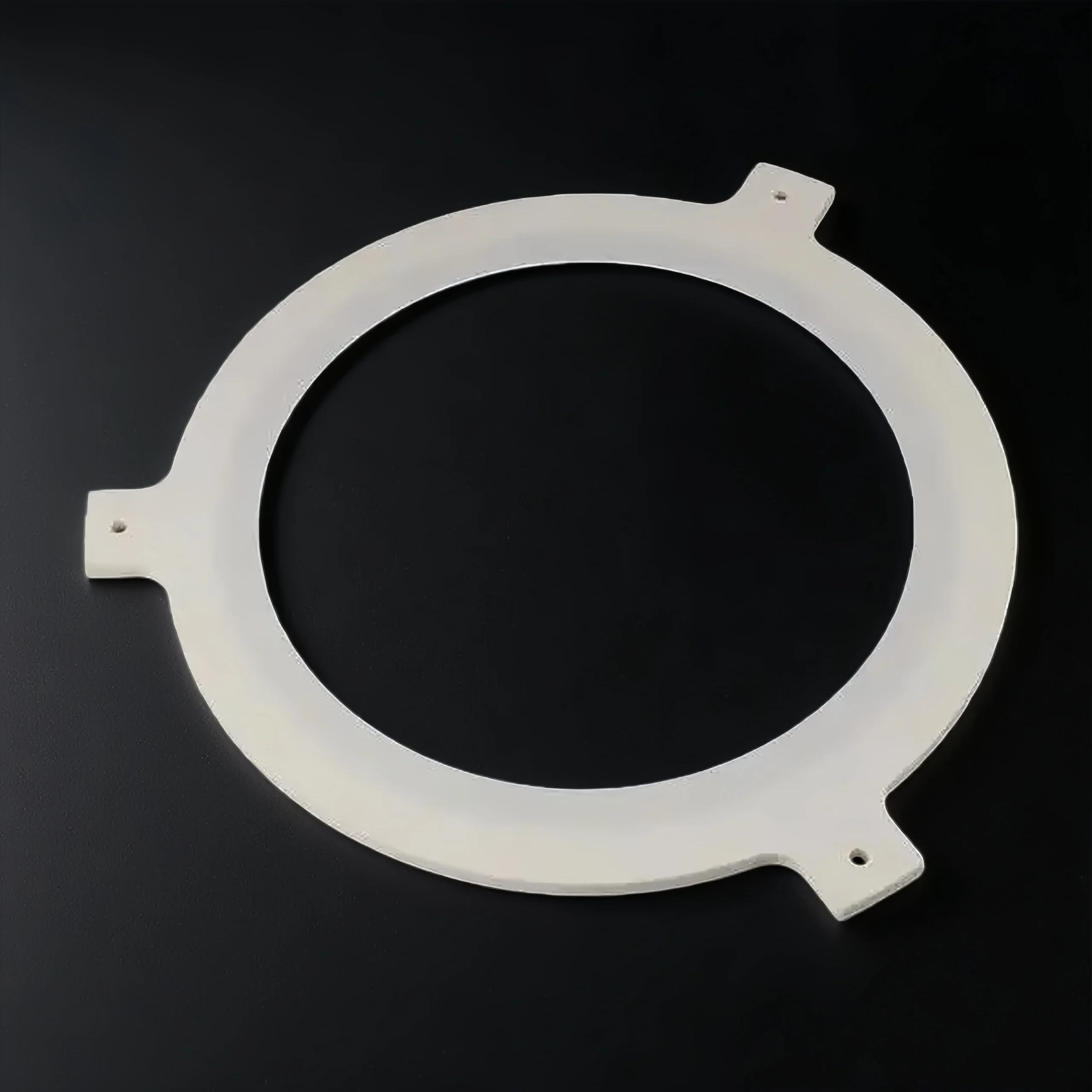
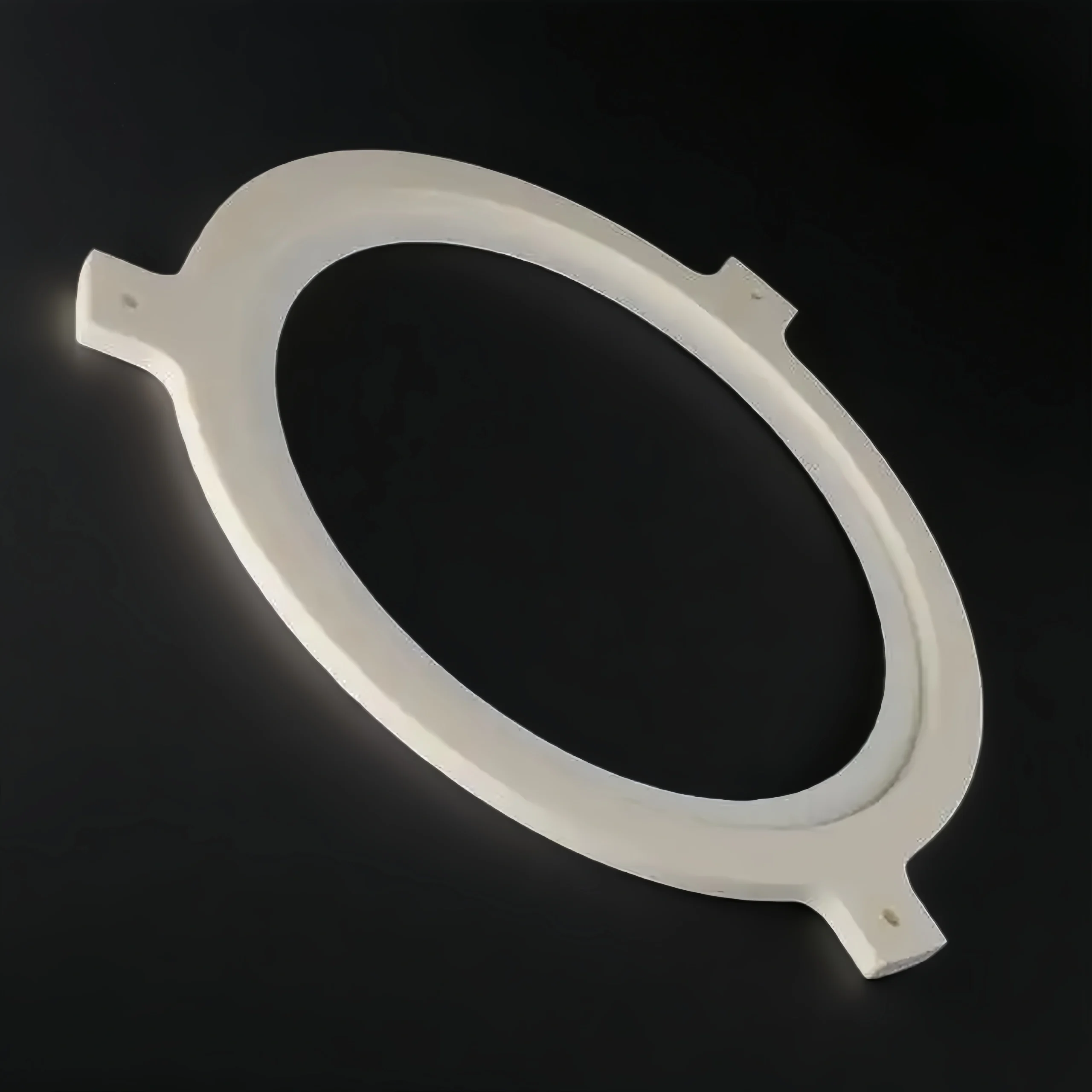
High Purity Alumina Ceramic Insulating Ring

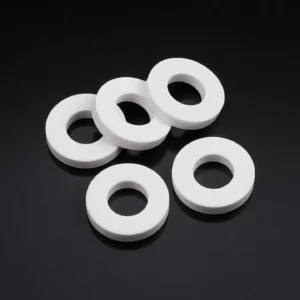
ADCERAX supplies custom high purity alumina ceramic insulating rings for equipment assemblies where electrical isolation, controlled spacing and stable contact faces are important. These Al₂O₃ rings can be reviewed by OD, ID, thickness, flatness, parallelism, edge design, grooves, slots and surface finish to match your drawing and installation stack-up.

Catalogue No. AT-HP-JY01
Material Al₂O₃
Purity  99%-99.99%
Bulk Density ~3.9 g/cc
Max Use Temperature (non-loading) 1600–1800°C
Engineering RFQ Review
Small-Batch Custom Support
Factory-Direct Manufacturing
Drawing & Process Review

High Purity Alumina Insulating Ring for Electrical Isolation and Spacing

A high purity alumina ceramic insulating ring is a dense Al₂O₃ ring used to separate conductive parts, maintain controlled spacing and provide stable electrical insulation in demanding equipment assemblies. Compared with polymer, metal or lower-grade ceramic spacers, high purity alumina offers stronger heat resistance, better dimensional stability and cleaner ceramic contact in vacuum, plasma, coating and high-temperature environments.

ADCERAX can review standard-friendly and drawing-based insulating rings according to OD, ID, thickness, alumina grade, contact face requirement, groove layout, edge detail and installation condition. For replacement projects, the existing ring drawing, failure mode and assembly stack-up help confirm whether the part should focus on insulation distance, contact-face flatness, edge protection or thermal stability.

Why Use High Purity Alumina for Ceramic Insulating Rings?

Stable Electrical Isolation

High purity alumina provides strong electrical insulation for assemblies where metal-to-metal contact, current leakage or unstable isolation paths must be avoided. It is suitable for insulating ring, spacer ring and ceramic standoff functions in controlled equipment designs.

Controlled Stack-Up Height

A ground or lapped alumina ring can help maintain a repeatable spacing gap between metal parts. This is important when the assembly depends on stable clamp height, contact geometry or rebuild repeatability.

Heat and Vacuum Compatibility

Dense alumina ceramic can be used near high-temperature zones and in selected vacuum or coating equipment where polymer parts may deform, outgas or lose dimensional stability. Final suitability should be reviewed according to temperature, atmosphere and load condition.

Machinable Interface Features

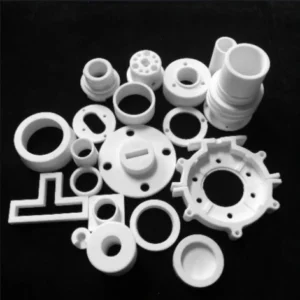
OD, ID, thickness, chamfer, radius, grooves, reliefs, holes and functional faces can be reviewed from the drawing. This allows the insulating ring to match the real fixture stack-up instead of forcing the assembly to adapt to a generic washer.

Reduced Edge and Contact-Face Risk

Protected edges and defined contact surfaces help reduce chipping, rocking, uneven clamp loading and assembly rework. This is especially important for ceramic rings that are repeatedly installed, cleaned or replaced during equipment maintenance.


High-Purity Alumina Insulating Ring Properties

Property Unit 96% Al₂O₃ 99% Al₂O₃ 99.5% Al₂O₃ 99.6% Al₂O₃ 99.7% Al₂O₃ 99.8% Al₂O₃ 99.9% Al₂O₃ 99.99% Al₂O₃
Alumina content % 96 99 99.5 99.6 99.7 99.8 99.9 99.99
Density g/cm³ 3.6-3.75 3.83 3.89 3.91 3.92 3.93 3.94 3.98
Color white Ivory Ivory Ivory Ivory Ivory Ivory Ivory
Water absorption % 0 0 0 0 0 0 0
Young’s modulus (Elastic modulus) GPa 300 350 375 356 357 358 359 362
Shear modulus GPa 152
Bulk modulus GPa 228
Poisson’s ratio 0.22
Compressive strength MPa 1910 2210 2600 2552 2554 2556 2558 2570
Flexural strength MPa 260 300 379 312 313 314 315 320
Fracture toughness MPa·m¹ᐟ² 4
Hardness GPa 14.5 17 17 23 24 25 26 30
Thermal conductivity W/m·K 22 24 35 32–37 33–38 34–39 35–40 36–42
Thermal shock resistance ΔT °C 222 223 224 225 228
Maximum use temperature (no load) °C 1450 1680 ≤1750 1755 1760 1765 1770 1800
Coefficient of thermal expansion 10⁻⁶/°C 7.6 7.6 8.4
Volume resistivity Ω·cm >1×10¹⁴ >1×10¹⁴ >1×10¹⁴ >1×10¹⁴ >1×10¹⁴ >1×10¹⁴ >1×10¹⁴ >1×10¹⁴
Dielectric constant (relative permittivity) 9.2 9.5 9.8 9.83 9.84 9.85 9.86 9.92
Dielectric strength kV/mm 15 19 16.9 23.2 23.4 23.6 23.8 24
Dissipation factor (loss factor @ 1 kHz) 0.0002

The values below are material reference data for alumina ceramic grades. Final material selection should be reviewed according to drawing geometry, operating temperature, insulation requirement, surface finish and assembly load condition.

Custom Size Options for Alumina Ceramic Insulating Rings

Alumina Insulating Ring
Item No. Diameter (mm) Thickness (mm)
AT-HP-JY01 Customize


High-Purity Alumina Insulating Ring Packaging

  • Each alumina ceramic insulating ring is individually protected to reduce edge impact, surface scratches and ceramic-to-ceramic contact. Foam positioning, face protection and reinforced packaging can be used for thin or precision-finished rings.
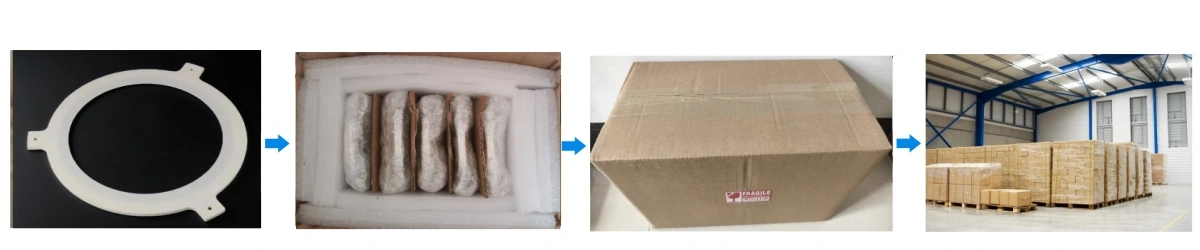

High-Purity Alumina Insulating Ring Packaging

High Purity Alumina Ceramic Insulating Ring Applications

High purity alumina ceramic insulating rings are used when an assembly needs electrical isolation, repeatable spacing and stable ceramic contact under heat, vacuum, plasma or coating conditions. The correct ring design depends on the voltage path, clamping structure, temperature exposure, mating surface quality and whether the part is replaced during routine maintenance.

  • Vacuum Chamber and Fixture Assemblies

    High purity alumina insulating rings can be used as ceramic spacer rings, isolation rings or support rings between metal parts in vacuum chambers and fixture stacks. Controlled OD, ID and thickness help maintain alignment, while ground or lapped faces can support repeatable contact during rebuilds.

    Main concerns to confirm: insulation distance, contact-face flatness, edge chipping risk, vacuum cleanliness and clamp load distribution.

  • Plasma Surface Treatment Equipment

    In plasma surface treatment systems, alumina insulating rings can help separate conductive parts and maintain a stable standoff distance. Chamfered edges, protected contact faces and defined groove geometry can reduce installation damage and contamination buildup around the interface.

    Main concerns to confirm: voltage condition, plasma exposure, cleaning cycle, edge detail and whether the ring is handled frequently during maintenance.

  • PVD and Industrial Coating Fixtures

    Alumina ceramic insulating rings can be used in coating fixtures, shielding assemblies and insulated support positions where polymer spacers may not provide enough heat stability. Drawing-based features such as grooves, reliefs and orientation notches help match the part to the fixture layout.

    Main concerns to confirm: coating atmosphere, thermal cycling, face finish, groove design and replacement frequency.

  • High-Temperature Electrical Assemblies

    For hot-zone or furnace-adjacent electrical assemblies, high purity alumina rings can provide insulation and spacing where metal washers or polymer insulators are unsuitable. The design should be reviewed for thermal expansion mismatch, loading direction and temperature ramp rate.

    Main concerns to confirm: maximum temperature, mechanical load, thermal shock risk, mating material and assembly preload.

User Guide — High Purity Alumina Ceramic Insulating Ring

  • Installation

    1. Confirm OD/ID/thickness against drawing callouts before installation.
    2. Inspect edges and contact faces for chips, hairline cracks, or handling marks.
    3. Clean mating metal surfaces; remove burrs that can create point loads on ceramic.
    4. Apply clamp load evenly using a cross-pattern sequence if bolted.
    5. Avoid metal-on-ceramic sliding during alignment; use controlled positioning.

  • Operation

    1. Keep the ring away from impact, side loading, and prying forces during service.
    2. Minimize contamination buildup at interfaces; contamination can create leakage paths.
    3. If the ring sits near a heat source, ramp processes to reduce thermal shock risk.

  • Storage

    1. Store in original packaging; keep rings separated to avoid edge-to-edge contact.
    2. Keep dry and clean; avoid exposure to abrasive dust that can scratch contact faces.

  • Cleaning

    1. Use non-abrasive wipes and compatible solvents for your process environment.
    2. Do not sand or grind sealing/contact faces unless defined in your maintenance procedure.
    3. Re-check contact faces after cleaning if the ring is reused.

  • Common misuse points

    1. Misuse: forcing the ring into a tight fit causes edge chipping.
    Fix: adjust fit tolerance or add chamfer/radius; use alignment tooling, not prying.

    2. Misuse: uneven bolt tightening creates point loads and cracking.
    Fix: torque in steps with a cross pattern; define a maximum clamp load in the assembly SOP.

    3. Misuse: installing with debris on the interface causes leakage paths or rocking.
    Fix: clean and inspect mating faces; define cleanliness checkpoints during rebuild.

High Purity Alumina Ceramic Insulating Ring FAQ

  1. What is a high purity alumina ceramic insulating ring used for?
    A high purity alumina ceramic insulating ring is used to electrically isolate metal parts, maintain a controlled spacer gap and support stable ceramic-to-metal contact in vacuum, plasma, coating, high-temperature and high-voltage assemblies.
  2. What dimensions should I provide for a custom alumina ceramic insulating ring?
    Please provide OD, ID, thickness, tolerance, flatness, parallelism, edge detail, groove layout, hole position, surface finish and the installation method. If the part replaces an existing ring, a drawing or used sample is helpful.
  3. Can alumina insulating rings be used in vacuum or plasma equipment?
    Yes, dense high purity alumina is often selected for vacuum, plasma and coating equipment because it provides electrical insulation, heat resistance and dimensional stability. Final suitability should be reviewed according to voltage, atmosphere, temperature and cleaning method.
  4. What causes cracking in alumina ceramic insulating rings?
    Common causes include uneven clamping, tight interference fit, sharp metal burrs, side loading, impact during installation and sudden thermal shock. Chamfers, proper clearance, clean mating faces and controlled tightening can reduce cracking risk.
  5. Can ADCERAX make grooves, slots or lapped faces on the ring?
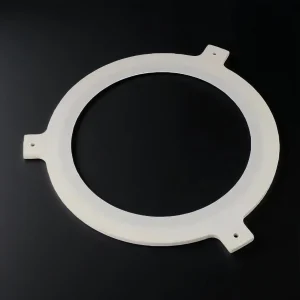
    Yes. Grooves, slots, holes, reliefs, anti-rotation features, chamfers, radius edges and ground or lapped faces can be reviewed according to the drawing and functional contact surfaces.
  6. How should I choose the alumina purity grade?
    The alumina grade should be selected according to insulation requirement, temperature, cleanliness expectation, mechanical stress and budget. For critical vacuum, plasma or high-temperature assemblies, higher-purity alumina may be reviewed together with surface finish and dimensional requirements.
customize size

Custom High Purity Alumina Ceramic Insulating Ring

  • OD / ID /Thickness – target values and tolerance bands for each dimension based on your drawing.

  • Flatness / Parallelism – requirements for both contact faces to control stack height and clamp load distribution.

  • Concentricity /Roundness /Run-out – limits between OD, ID and datum surfaces for stable alignment in housings or pilots.

  • Edge details – chamfer, radius, protected edge geometry, corner-break size, and any deburring requirements at specific locations.

  • Grooves / Slots /Reliefs – anti-rotation keys, venting grooves, contamination-relief pockets, or clearance reliefs for bolt heads.

  • Functional holes/notches – small bores, orientation notches, or location tabs that interface with your fixture or sensor hardware.

  • Sealing-face preparation – ground, lapped, or defined Ra range on specific faces that act as sealing or electrical contact surfaces.

  • Area-specific surface finish – different finish grades for functional zones versus non-critical outside surfaces.

  • Geometry type – simple spacer ring, isolation ring with step, flanged insulating ring, or multi-level profile to match your stack-up.

  • Material grade information – purity class, density target, and any reference to your internal material code for the alumina ring.

Related Products

ADCERAX - Your Trusted Advanced Ceramics Manufacturing Partner

Direct factory manufacturing with comprehensive ceramic materials expertise and global supply capabilities

China-Based Manufacturer

ADCERAX supplies ceramic components for overseas OEMs, equipment builders, and labs.

Custom Drawing Support

We review drawings, dimensions, materials, and application conditions before quotation.

Ceramic Process Control

Forming, sintering, machining, grinding, and finishing are arranged by part requirements.

Pre-Shipment Inspection

Dimensional checks, visual inspection, and packaging review help reduce procurement risk.

Get in Touch with Us

Our team will be happy to respond to you in less than 24 hours.

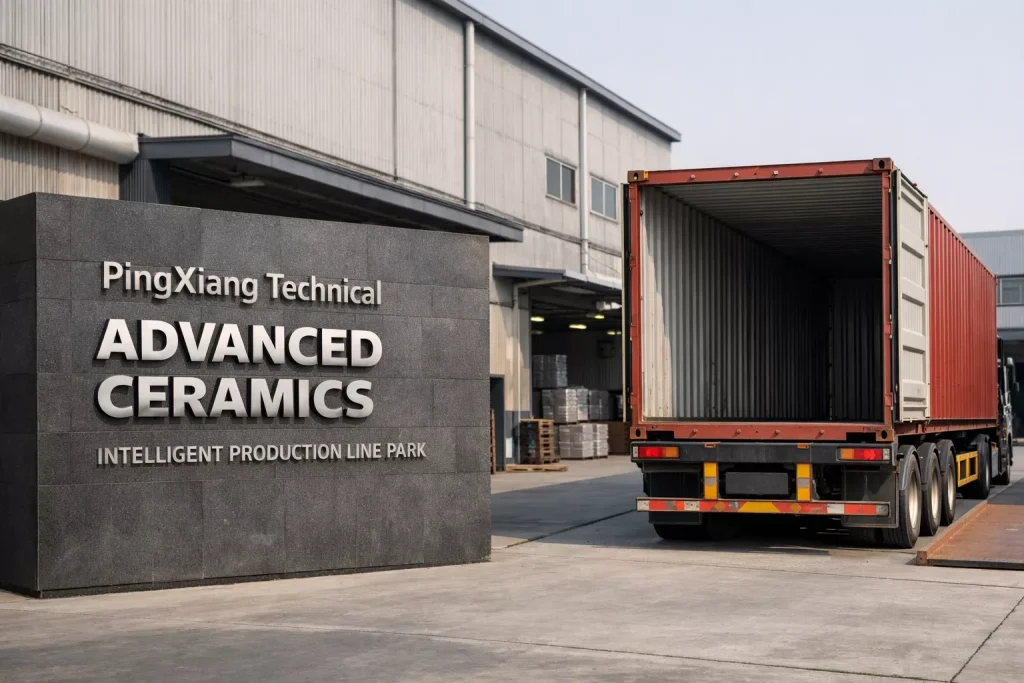
Pingxiang Factory — Silicon carbide, silicon nitride, high-temperature ceramics

Quick Quotation

*Our team will answer your inquiries within 24 hours.

*Your information will be kept strictly confidential.

Ready to Solve Your Engineering Challenge?

Partner with ADCERAX for reliable, high-performance advanced ceramic solutions. Our engineers are ready to discuss your project.

E-mail

info@adcerax.com

Phone

+(86) 0731-74427743 | WhatsApp: +(86) 19311583352

Response Time

Within 24 hours

Quick Quote

The more details you provide, the faster we can quote.

*We respond within 24 hours. All inquiries are confidential.

Get Your Custom Solution

The more details you provide, the faster we can respond.

customize size

*We respond within 24 hours. All inquiries are confidential.

Download Catalog