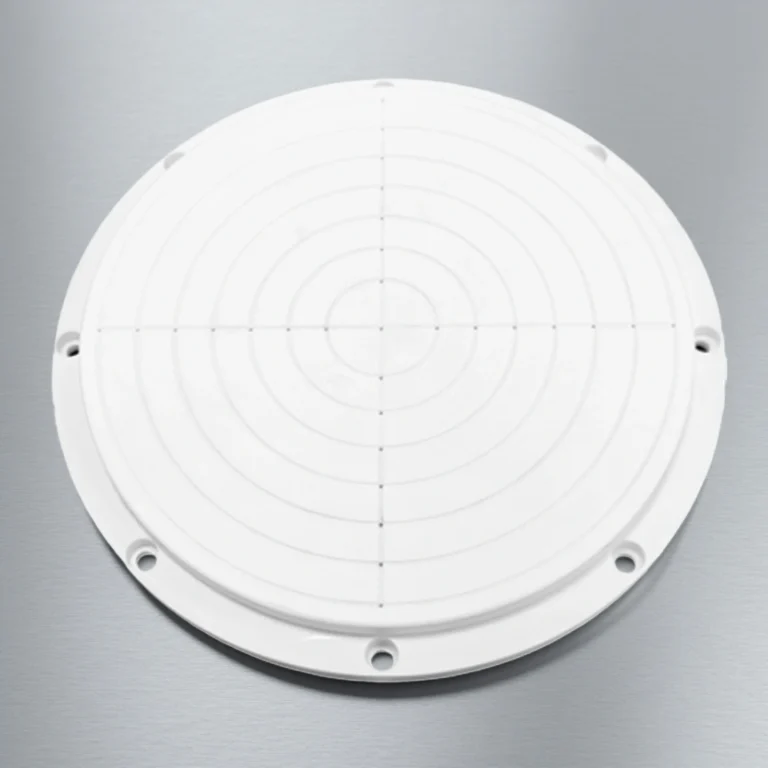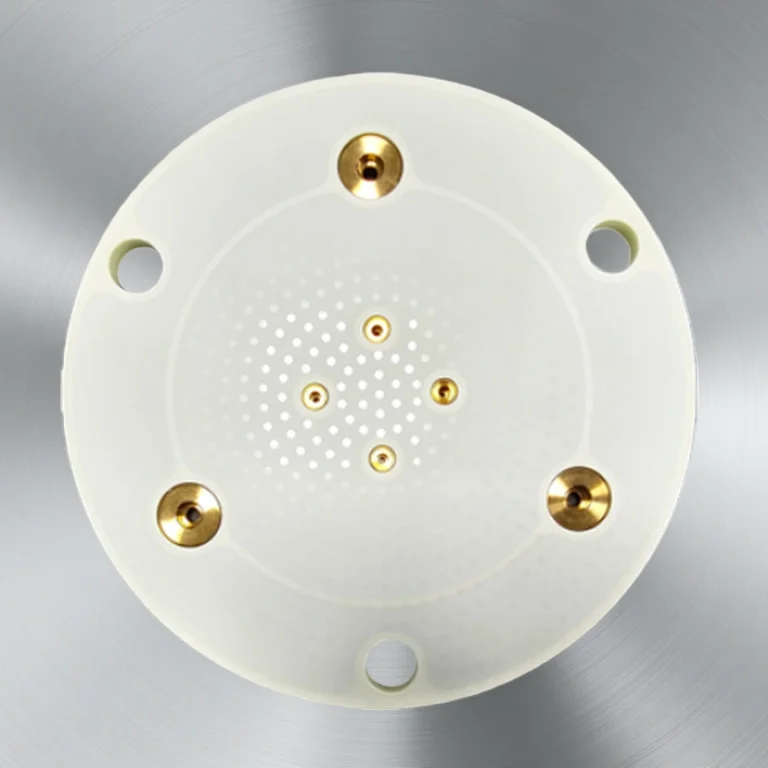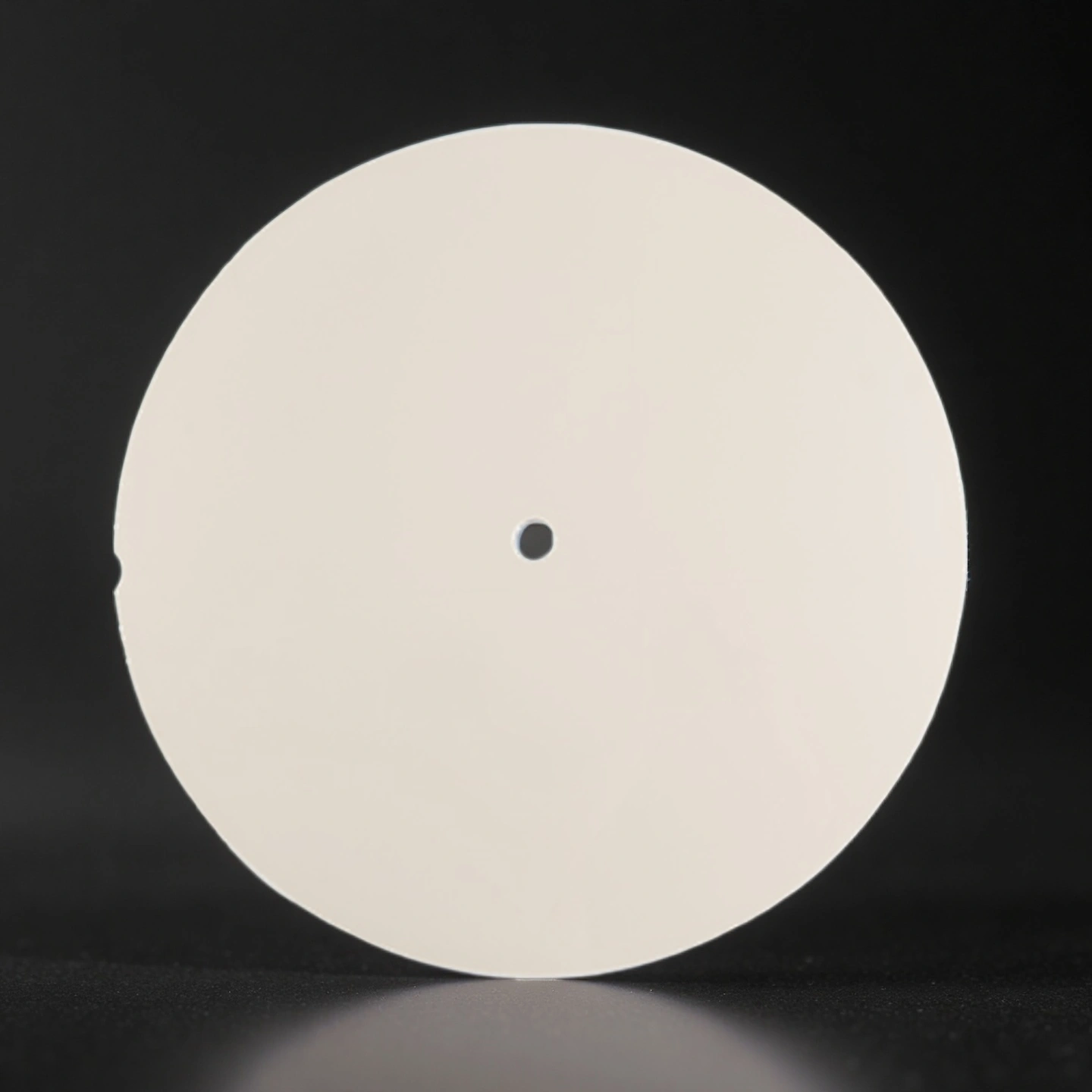
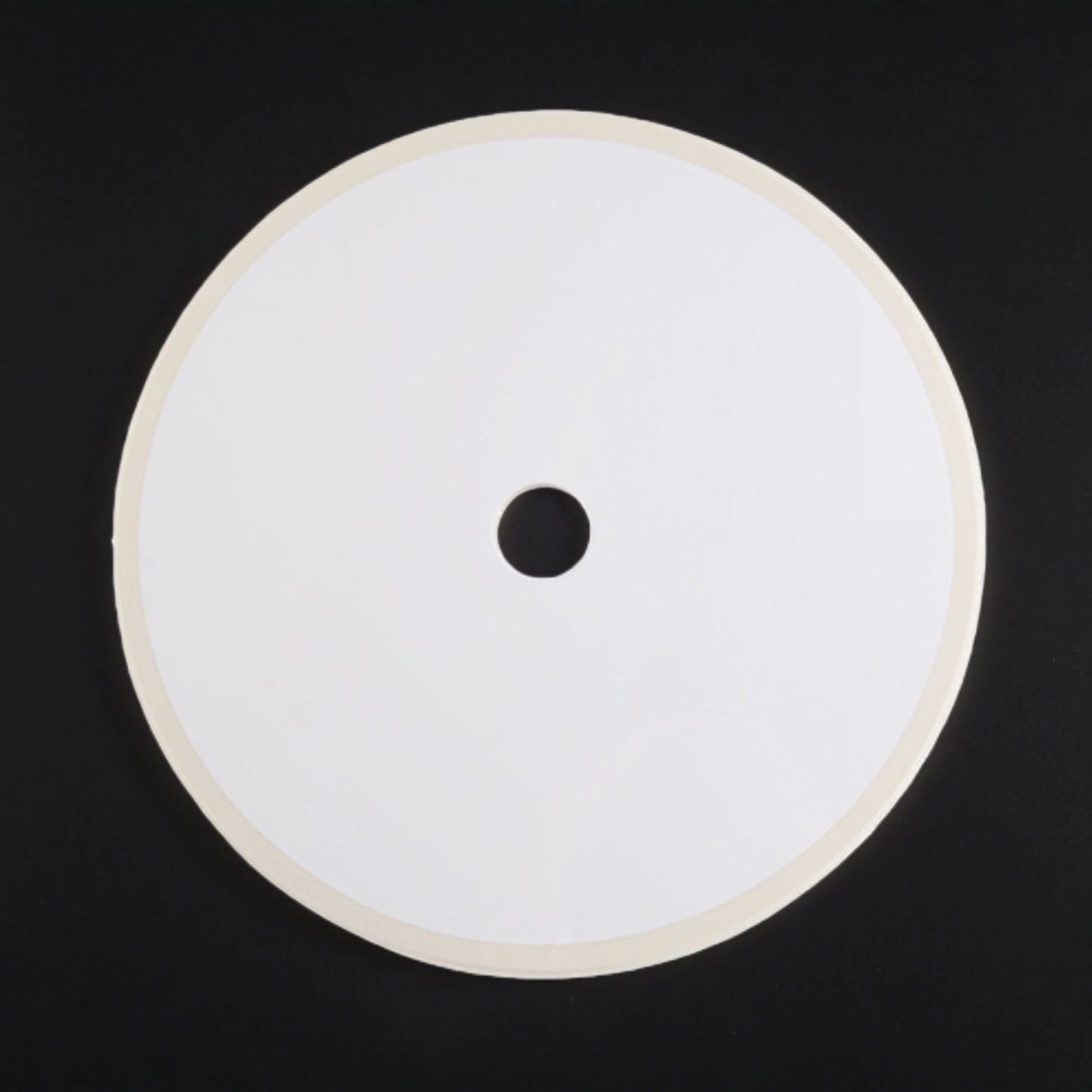
A High Purity Alumina Ceramic Window is a precision dielectric component made from high-purity Al₂O₃ ceramic, used in vacuum and plasma equipment to transmit RF or microwave energy into a chamber while mechanically and vacuum-sealing the process space.
High Purity Alumina Ceramic Window Benefits
-
Sealing-face controlled geometry
Each High Purity Alumina Ceramic Window is machined with defined flatness and Ra values on the sealing band so it can seat directly against metal or elastomer seals without local rocking, reducing the risk of vacuum leaks and minimizing rework during chamber assembly. -
Edge condition designed for plasma tools
The window perimeter is finished with specified chamfer or radius dimensions, limiting stress concentration and chipping at clamp points and handling areas, which helps maintain usable lifetime across repeated vent, clean, and re-install cycles in plasma equipment. -
Thickness strategy for energy coupling
Window thickness and thickness variation are controlled within drawing limits so the dielectric path length remains consistent across the active area, supporting predictable RF or microwave coupling behavior and avoiding unplanned shifts in power delivery after replacement. -
Batch-to-batch dielectric consistency approach
High Purity Alumina Ceramic Windows are produced from controlled alumina grades with documented density and dielectric properties, allowing buyers to align their specifications with measured ranges and reducing variation in impedance and matching conditions between production lots. -
Plasma-exposed surface options
The plasma-facing side of the High Purity Alumina Ceramic Window can be supplied as-fired, ground, or polished according to the customer’s cleaning method and film-deposition behavior, helping balance contamination control, coating adhesion, and ease of maintenance for different tools.
High Purity Alumina Ceramic Window Properties
| Property | Unit | 96% Al₂O₃ | 99% Al₂O₃ | 99.5% Al₂O₃ | 99.6% Al₂O₃ | 99.7% Al₂O₃ | 99.8% Al₂O₃ | 99.9% Al₂O₃ | 99.99% Al₂O₃ |
| Alumina content | % | 96 | 99 | 99.5 | 99.6 | 99.7 | 99.8 | 99.9 | 99.99 |
| Density | g/cm³ | 3.6-3.75 | 3.83 | 3.89 | 3.91 | 3.92 | 3.93 | 3.94 | 3.98 |
| Color | – | white | Ivory | Ivory | Ivory | Ivory | Ivory | Ivory | Ivory |
| Water absorption | % | 0 | 0 | – | 0 | 0 | 0 | 0 | 0 |
| Young’s modulus (Elastic modulus) | GPa | 300 | 350 | 375 | 356 | 357 | 358 | 359 | 362 |
| Shear modulus | GPa | – | – | 152 | – | – | – | – | – |
| Bulk modulus | GPa | – | – | 228 | – | – | – | – | – |
| Poisson’s ratio | – | – | – | 0.22 | – | – | – | – | – |
| Compressive strength | MPa | 1910 | 2210 | 2500 | 2552 | 2554 | 2556 | 2558 | 2570 |
| Flexural strength | MPa | 260 | 300 | 340 | 345 | 346 | 347 | 348 | 365 |
| Fracture toughness | MPa·m¹ᐟ² | – | – | 4 | – | – | – | – | – |
| Hardness | GPa | 14.5 | 17 | 17 | 23 | 24 | 25 | 26 | 30 |
| Thermal conductivity | W/m·K | 20 | 31 | 31 | 31-33 | 31-33 | 31-33 | 31-35 | 31-35 |
| Thermal shock resistance ΔT | °C | – | – | – | 222 | 223 | 224 | 225 | 228 |
| Maximum use temperature (no load) | °C | 1450 | 1680 | ≤1750 | 1755 | 1760 | 1765 | 1770 | 1800 |
| Coefficient of thermal expansion | 10⁻⁶/°C | 7.6 | 7.6 | 7.6 | 7.6 | 7.5 | 7.5 | 7.4 | 7.4 |
| Volume resistivity | Ω·cm | >1×10¹⁴ | >1×10¹⁴ | >1×10¹⁴ | >1×10¹⁴ | >1×10¹⁴ | >1×10¹⁴ | >1×10¹⁴ | >1×10¹⁴ |
| Dielectric constant (relative permittivity) | – | 9.2 | 9.5 | 9.8 | 9.83 | 9.84 | 9.85 | 9.86 | 9.92 |
| Dielectric strength | kV/mm | 15 | 19 | 16.9 | 23.2 | 23.4 | 23.6 | 23.8 | 24 |
| Dissipation factor (loss factor @ 1 kHz) | – | – | – | 0.0002 | – | – | – | – | – |
High Purity Alumina Ceramic Window Specifications
| High Purity Alumina Ceramic Window | ||
| Item No. | Diameter (mm) | Thickness (mm) |
| AT-HP-Q01 | Customize | |
High Purity Alumina Window Packaging
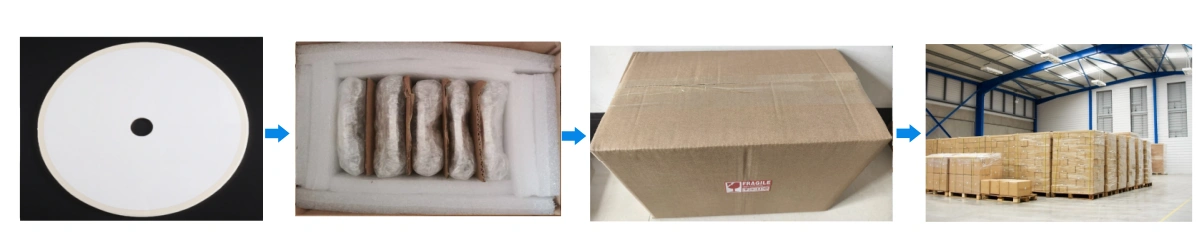
- Individual protective wrap for each ceramic window to prevent edge contact during transit
- Foam cavity support to avoid point loads on thin sections and sealing faces