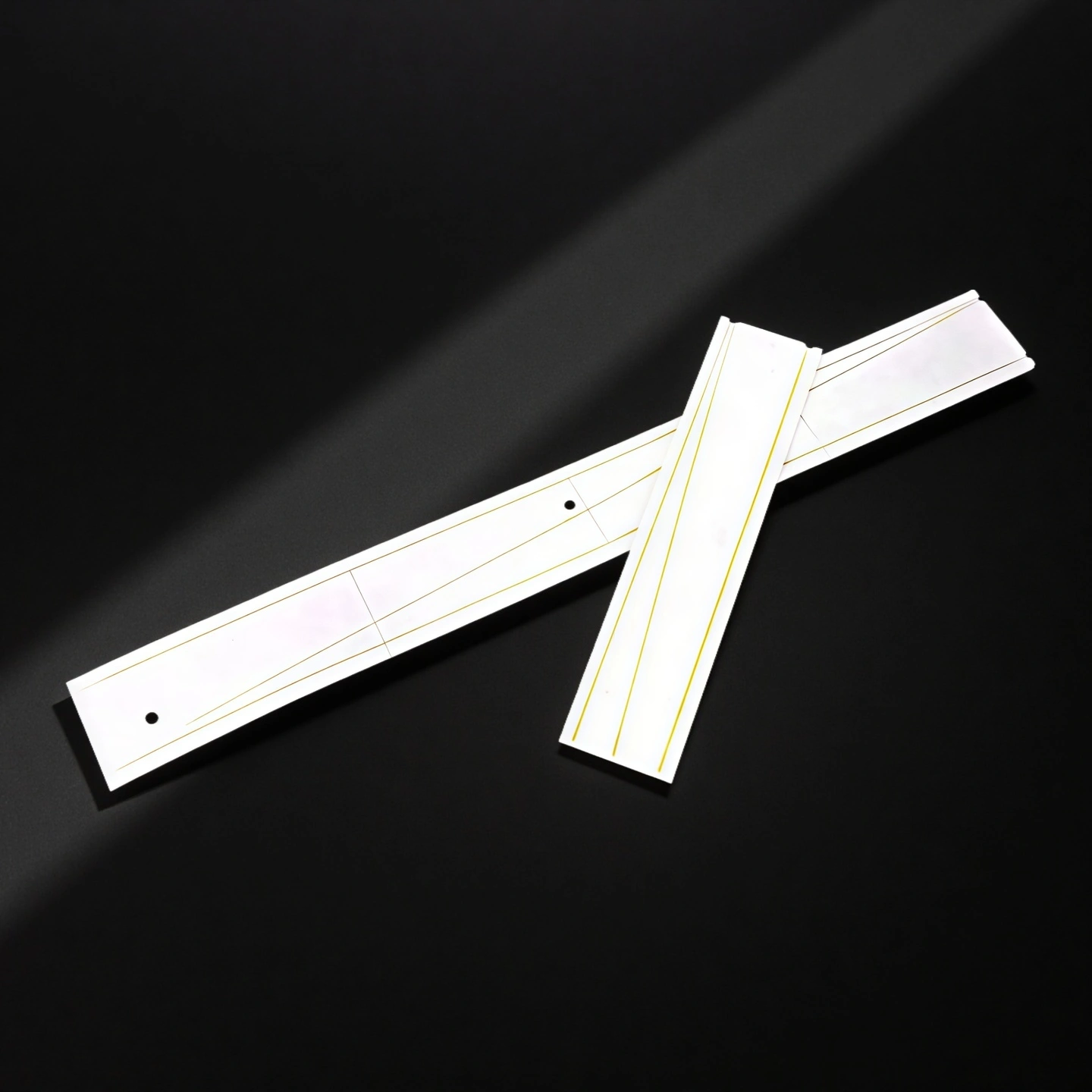
High Purity Alumina Ceramic Slotted Plate for Powder Metallurgy Sintering Fixtures

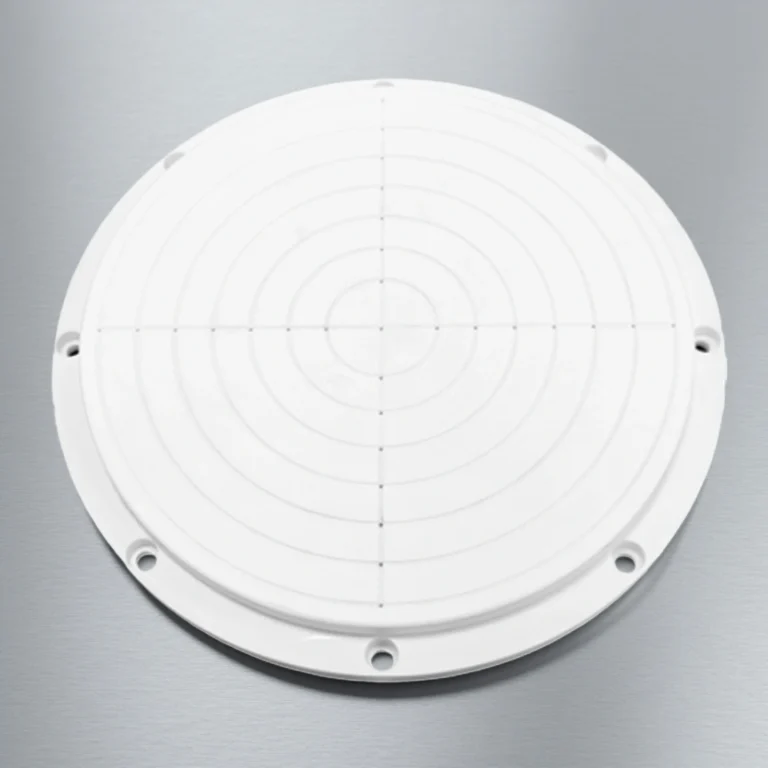
ADCERAX supplies high purity alumina ceramic slotted plates in common rectangular formats and produces custom slot layouts (slot width, pitch, depth, and edge radii) for both pilot batches and production fixture standardization.

Catalogue No. AT-HP-C01
Material Al₂O₃
Purity  99%-99.99%
Bulk density 3.91 g/cm³ (typical)
Max use temperature 1600-1800°C
24H Standard Dispatch
Small Batch Support OEM
Factory Direct
Expert Engineering Support

A High Purity Alumina Ceramic Slotted Plate is a flat fixture plate made from high-purity alumina (typically ≥99.6–99.8% Al₂O₃) with precisely machined slots running through its surface, used to support, separate and position parts during high-temperature processes such as debinding, sintering, calcination and heat treatment.

High Purity Alumina Slotted Plate Benefits

  • Slot geometry as a controlled feature
    Slot width, depth and pitch are machined to drawing so each pocket repeats the same position for every cycle. This allows engineers to treat the High Purity Alumina Ceramic Slotted Plate as a defined process parameter rather than a rough support, improving loading repeatability and dimensional consistency of sintered parts.

  • Edge integrity around slots
    Slot edges can be supplied with fine chamfers or radii to reduce chip initiation during loading, unloading and cleaning. This lowers particle generation around the slots and helps maintain usable slot geometry over many thermal cycles, especially on plates that carry dense loads.

  • Layout-driven handling speed
    Slot patterns are designed to match the customer’s part footprint and handling tools, whether for manual loading or simple pick-and-place systems. By fixing the number of parts per row and per plate, the layout shortens operator decision time, simplifies work instructions and makes cycle-by-cycle loading time more predictable.

  • Thermal-cycle-friendly geometry
    Slot orientation, spacing and remaining web thickness can be arranged to limit stress concentrations on large plates during heating and cooling. This helps the High Purity Alumina Ceramic Slotted Plate maintain flatness and reduces the risk of distortion or cracking when it is used near the upper end of the alumina temperature range.

  • Low-impurity option for process cleanliness
    High purity alumina bodies with controlled impurity levels and closed porosity can be selected when the fixture is used close to sensitive surfaces or reactive atmospheres. In these cases the slotted plate not only carries the parts, but also supports cleanliness targets by minimising potential contaminant sources from the fixture itself.

High Purity Alumina Slotted Plate Properties

Property Unit 99.5% Al₂O₃ 99.6% Al₂O₃ 99.7% Al₂O₃ 99.8% Al₂O₃ 99.9% Al₂O₃ 99.99% Al₂O₃
Alumina content % 99.5 99.6 99.7 99.8 99.9 99.99
Density g/cm³ 3.89 3.91 3.92 3.93 3.94 3.98
Open porosity % 0
Color Ivory Ivory Ivory Ivory Ivory Ivory
Water absorption % 0 0 0 0 0
Young’s modulus (Elastic modulus) GPa 375 356 357 358 359 362
Shear modulus GPa 152
Bulk modulus GPa 228
Poisson’s ratio 0.22
Compressive strength MPa 2600 2552 2554 2556 2558 2570
Flexural strength MPa 379 312 313 314 315 320
Fracture toughness MPa·m¹ᐟ² 4
Hardness GPa 14.1 (≈1440 kg/mm²) 23 24 25 26 30
Thermal conductivity W/m·K 35 32–37 33–38 34–39 35–40 36–42
Thermal shock resistance ΔT °C 222 223 224 225 228
Maximum use temperature (no load) °C ≤1750 1755 1760 1765 1770 1800
Coefficient of thermal expansion 10⁻⁶/°C 8.4
Specific heat J/kg·K 880
Volume resistivity Ω·cm >1×10¹⁴ >1×10¹⁴ >1×10¹⁴ >1×10¹⁴ >1×10¹⁴ >1×10¹⁴
Dielectric constant (relative permittivity) 9.8 9.83 9.84 9.85 9.86 9.92
Dielectric strength kV/mm 16.9 23.2 23.4 23.6 23.8 24
Dissipation factor (loss factor @ 1 kHz) 0.0002


High Purity Alumina Slotted Plate Specifications

High Purity Alumina Slotted Plate
Item No. Diameter (mm) Thickness (mm)
AT-HP-C01 Customize


High Purity Alumina Ceramic Slotted Plate Packaging

  • Each plate is separated with clean soft interleaves to protect slot edges and ground faces.
  • Corner protectors are added to reduce edge impacts during transit and internal handling.
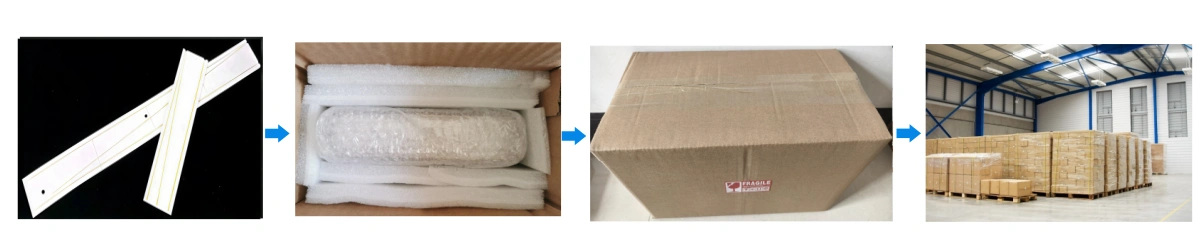
High Purity Alumina Ceramic Slotted Plate Packaging

Application Scenarios — High Purity Alumina Ceramic Slotted Plate

  • Powder Metallurgy / MIM-CIM Sintering Fixtures

    ✅Key Advantages

    1. Slot-controlled spacing: define slot pitch to keep parts separated and reduce contact marks during high-density loading.

    2. Cleaner chemistry option: example low Na₂O (0.008%) supports impurity-sensitive firing runs.

    3. High-temperature headroom (no load): typical max use temperature up to 1750°C for material comparison.

    ✅ Problem Solved

    A MIM producer standardized one slotted plate drawing across multiple furnaces to stabilize loading patterns. Their internal downtime model referenced published downtime-cost ranges in large plants to justify planned fixture replacement before failure. Siemens reports $2.3M per hour for unplanned downtime in large automotive plants; even a short disruption can represent major exposure in high-throughput environments. After defining critical slot features and adding edge radii, the plate changeover became faster and slot-edge chipping events during loading dropped in their maintenance logs. The result was fewer emergency swaps and more predictable spare-part consumption planning.

  • Industrial Heat Treatment & Continuous Furnace Loading (Non-semiconductor)

    ✅Key Advantages

    1. Faster repeatable loading: slot layout can be aligned to standard work instructions and handling tools for consistent placement.

    2. Batch-to-batch geometry control: typical ceramic machining tolerance targets are often specified at 0.01–0.05 mm where needed.

    3. Flat datum concept: specify datum faces and verify only functional surfaces to keep fixtures interchangeable across shifts.

    ✅ Problem Solved

    A heat-treat operation treated slotted plates as a planned consumable because emergency fixture failure risks line stoppages. Siemens estimates the cost of unplanned downtime in large automotive manufacturing at $2.3M per hour, highlighting why many operations prefer controlled replacement cycles over reactive swaps. By locking the slot layout and inspection points, the buyer reduced the mismatch between “old plate vs. new plate” during replacement. This minimized rework of handling routines and avoided repeated re-qualification of loading patterns after each new batch of plates.

  • Advanced Materials Calcination & High-Temperature Processing Lines

    ✅Key Advantages

    1. Layout supports gas exchange: slots can be designed as vent/spacing features for process flow paths during thermal steps.

    2. Low-impurity reference data: example composition lists Na₂O at 0.008%, useful when buyers need impurity visibility.

    3. Material data transparency: density 3.91 g/cm³ and max use temperature 1750°C (no load) are published as typical values.

    ✅ Problem Solved

    A materials line ran multiple product recipes and needed a fixture plate that could be re-used across campaigns without unpredictable geometry drift. They standardized one slotted plate family, defined which slot features were critical, and added a surface-finish requirement on contact faces to reduce handling damage. Published typical alumina data helped them align internal specs (density and “no-load” temperature limits) with their process envelope before issuing the RFQ. This reduced back-and-forth engineering changes and shortened the time from drawing release to first validated production run.

Use Guide — High Purity Alumina Ceramic Slotted Plate

  • Installation

    1. Verify orientation (top/bottom datum face) and slot direction per your drawing or SOP.
    2. Place the plate on clean, flat supports; avoid point-loading at corners on large plates.
    3. Keep clearance between plate edges and furnace hardware to prevent mechanical constraint during thermal expansion.
    4. If stacking is used, define spacer contact points and keep slot edges from rubbing adjacent plates.

  • Operation

    1. Load parts using consistent tooling; avoid metal hooks contacting slot edges.
    2. Distribute parts symmetrically to prevent local hot spots and uneven mechanical loading.
    3. For debinding/calcination, keep slots unobstructed to maintain the intended venting/spacing behaviour.
    4. Record cycle count per plate if your line uses preventive replacement intervals.

  • Storage

    1. Store horizontally on a flat shelf with full support under the plate area.
    2. Keep plates separated; do not allow slot edges to touch other ceramics or metal fixtures.
    3. Control dust and grit—small particles can cause edge chipping during handling.

  • Cleaning

    1. Use non-metallic brushes and clean compressed air where allowed by your cleanliness rules.
    2. Avoid aggressive scraping inside slots; use soft tools that cannot chip edges.
    3. If wet cleaning is used, dry fully before storage to prevent residue buildup in slots.

  • Handling notes

    1. Do not lift large plates by a single corner; use two-hand support or a dedicated carrier.
    2. Do not strike slot edges to “unstick” parts; remove parts using the designed extraction tooling.
    3. Do not tighten fixtures against the plate edges; mechanical constraint can trigger cracking during heating.

  • common user questions + fixes

    1. Issue: slot-edge chipping during loading
    Fix: specify slot-edge chamfer/radius and use non-metal contact tools; avoid sliding parts across slot edges.

    2. Issue: inconsistent part spacing across operators
    Fix: add a simple loading jig aligned to the slot pitch; define a slot-to-part mapping in the work instruction.

    3. Issue: plate damage after cleaning
    Fix: switch from hard scraping to soft tools; define a cleaning method that avoids point force inside the slot.

FAQ — High Purity Alumina Ceramic Slotted Plate

  1. Q: How do I choose the alumina purity grade for a High Purity Alumina Ceramic Slotted Plate?
    A: For most heat-treatment and general sintering fixtures, 99.6–99.8% alumina slotted plates provide a good balance of strength, thermal conductivity and cost. 99.9–99.99% alumina is preferred when you run impurity-sensitive materials or processes where trace sodium and silica must be minimised. The decision is usually based on the required maximum temperature, allowable contamination level, and budget per fixture.
  2. Q: What dimensional tolerances are realistic on a High Purity Alumina Ceramic Slotted Plate?
    A: For machined plates, overall length and width are commonly held in the ±0.05–0.10 mm range on medium-size parts, with thickness in ±0.05 mm when grinding is specified. Slot width and slot pitch in the active loading zone are often held tighter, around ±0.02–0.05 mm, while non-critical edges and cut-outs can be looser to control cost.
  3. Q: What is the typical service life of a High Purity Alumina Ceramic Slotted Plate in production?
    A: Service life depends on furnace temperature, thermal ramp rate, mechanical loading and handling. In continuous production, a slotted plate can run from a few hundred to several thousand cycles. The most common end-of-life triggers are thermal cracking, edge chipping around slots and cumulative warpage. Tracking cycles per plate and recording failure modes helps establish a realistic replacement interval.

  4. Q: Can a High Purity Alumina Ceramic Slotted Plate be used in both oxidising and inert atmospheres?
    A: Yes. High purity alumina is stable in air, nitrogen and many inert atmospheres across typical sintering and heat-treatment temperatures. When using reducing or carbon-bearing atmospheres, it is important to confirm compatibility with any contaminants or vapours present and to check whether surface reactions or deposit formation could affect slot function over time.
  5. Q: How should I specify edge treatment on a High Purity Alumina Ceramic Slotted Plate?
    A: Edge treatment should be defined separately for outer edges and slot edges. Outer edges may use a standard chamfer to reduce handling damage, while slot entrances often need a smaller chamfer or radius to protect against chipping from loading tools. The drawing should state the chamfer size or radius and whether it is required on all edges or only in the loading zone.

Customer Reviews — High Purity Alumina Ceramic Slotted Plate

  • ⭐️⭐️⭐️⭐️⭐️
    We replaced our flat fixtures with a High Purity Alumina Ceramic Slotted Plate design so operators could load by slot pitch. The repeatability reduced rework after fixture swaps.
    -- Daniel R. — HeatTreat Solutions GmbH — Maintenance Supervisor
  • ⭐️⭐️⭐️⭐️⭐️
    The slotted plate drawing review helped us lock the slot edge detail. After adding a small radius, we saw fewer chips during handling and less cleanup around the slots.
    -- Megan L. — Atlas PM Components — Process Engineer
  • ⭐️⭐️⭐️⭐️⭐️
    As a distributor we needed stable specs and pricing for repeat orders. ADCERAX as a factory supplier supported a consistent drawing package and batch labeling for our customers.
    -- Owen K. — NorthLine Industrial Supply — Category Buyer
  • ⭐️⭐️⭐️⭐️⭐️
    We buy High Purity Alumina Ceramic Slotted Plate sets for multiple projects. The supplier communication around inspection points and tolerances was clear, which reduced approval time.
    -- Hiro T. — Kanto Furnace Tools — Procurement Manager
customize size

Custom — High Purity Alumina Ceramic Slotted Plate

ADCERAX produces High Purity Alumina Ceramic Slotted Plates to drawing, with slot layouts and finishing options selected for your loading method and furnace profile.

  • Overall dimensions
    Length, width and thickness; single-piece plates, paired plates or sets; tolerance bands for each dimension and maximum overall size of the High Purity Alumina Ceramic Slotted Plate.

  • Slot geometry
    Slot width, slot depth, slot pitch, slot count per row, end relief shape and slot orientation relative to the plate datum edges.

  • Slot edge detail
    Sharp edge, micro-chamfer, full chamfer, corner radius at slot entrances and exits, plus any special rounding for manual loading tools.

  • Slot pattern layout
    Straight parallel slots, staggered rows, segmented slots, window or venting-style patterns, mixed slot zones for different part sizes on the same plate.

  • Datum and flatness targets
    Defined top and bottom datum faces, flatness and parallelism limits on those faces, local flatness around slot fields, and reference holes or notches for orientation.

  • Surface finish
    As-fired, ground, lapped or polished surfaces on specified faces; optional roughness targets on contact areas versus non-functional areas.

  • Material grade and purity level
    Selection between 99.5%, 99.6%, 99.7%, 99.8%, 99.9% or 99.99% alumina grades depending on load, temperature and cleanliness requirements.

  • Cleanliness and handling requirements
    Preferred cleaning method before shipment, particle-sensitive handling notes, labelling of non-contact surfaces and any restrictions on marking.

Related Products

ADCERAX - Your Trusted Advanced Ceramics Manufacturing Partner

Direct factory manufacturing with comprehensive ceramic materials expertise and global supply capabilities

Direct Factory Manufacturing

China-based ceramic materials production facility with state-of-the-art equipment

Engineering Team

Experienced professionals in advanced ceramics applications and custom design

Quality Control

Strict quality control standards for technical ceramics manufacturing and quality management

Global Supply Chain

Serving customers worldwide with technical ceramics and rapid response

24/7 Technical Support

Round-the-clock support for ceramic components inquiries and technical assistance

500+ Satisfied Customers

Trusted by global customers for advanced ceramic materials and precision components

Get in touch with us

Our team will be happy to respond to you in less than 24 hours.

Adcerax's factory

Quick Quotation

*Our team will answer your inquiries within 24 hours.

*Your information will be kept strictly confidential.

Ready to Solve Your Engineering Challenge?

Partner with ADCERAX for reliable, high-performance advanced ceramic solutions. Our engineers are ready to discuss your project.

E-mail

info@adcerax.com

Phone

+(86) 0731-74427743 | WhatsApp: +(86) 19311583352

Response Time

Within 24 hours

Quick Quote

The more details you provide, the faster we can quote.

*We respond within 24 hours. All inquiries are confidential.

Download Catalog

Get Your Custom Sulution

The more details you provide, the faster we can respond.

customize size

*We respond within 24 hours. All inquiries are confidential.

Download Catalog