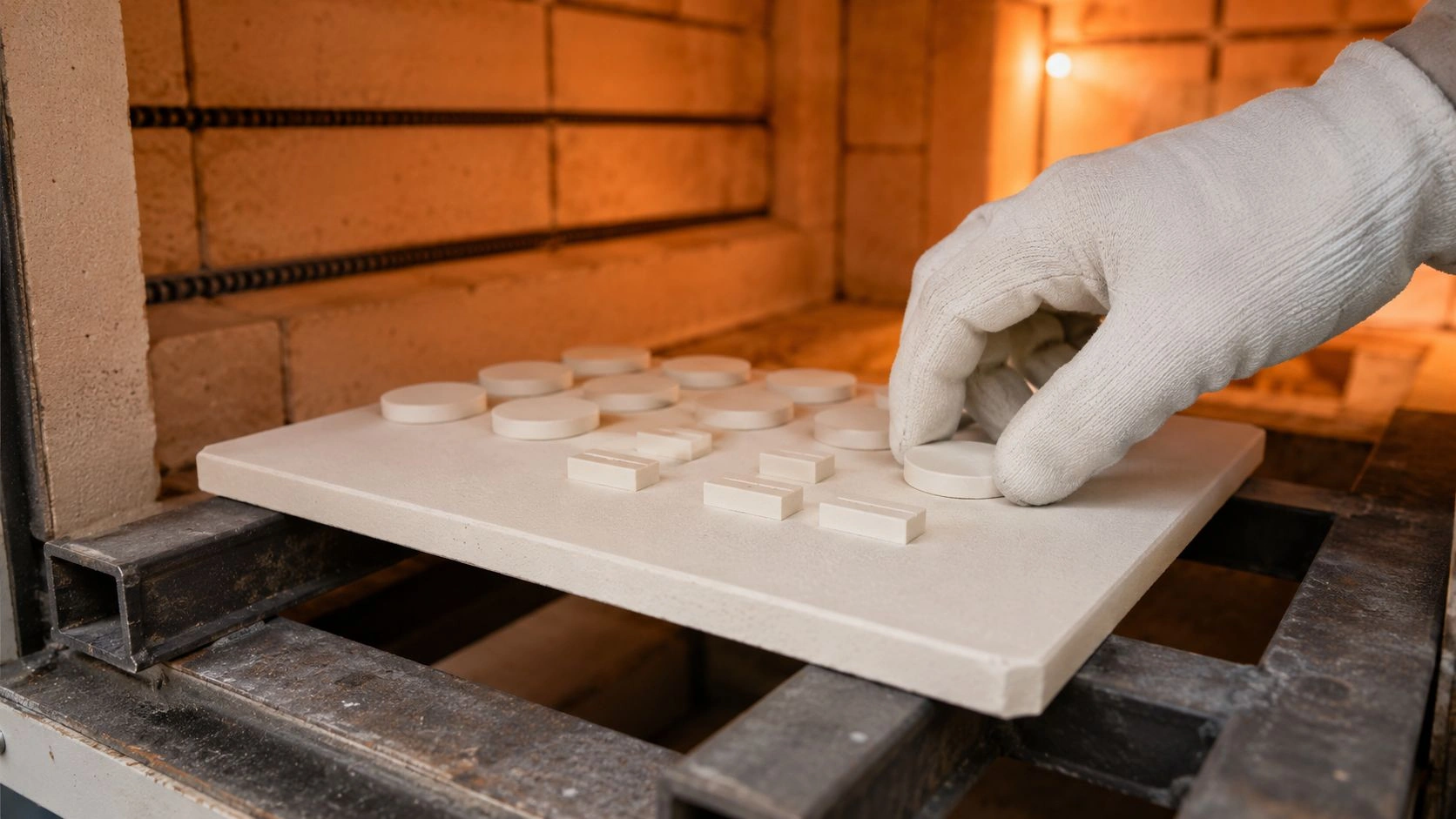
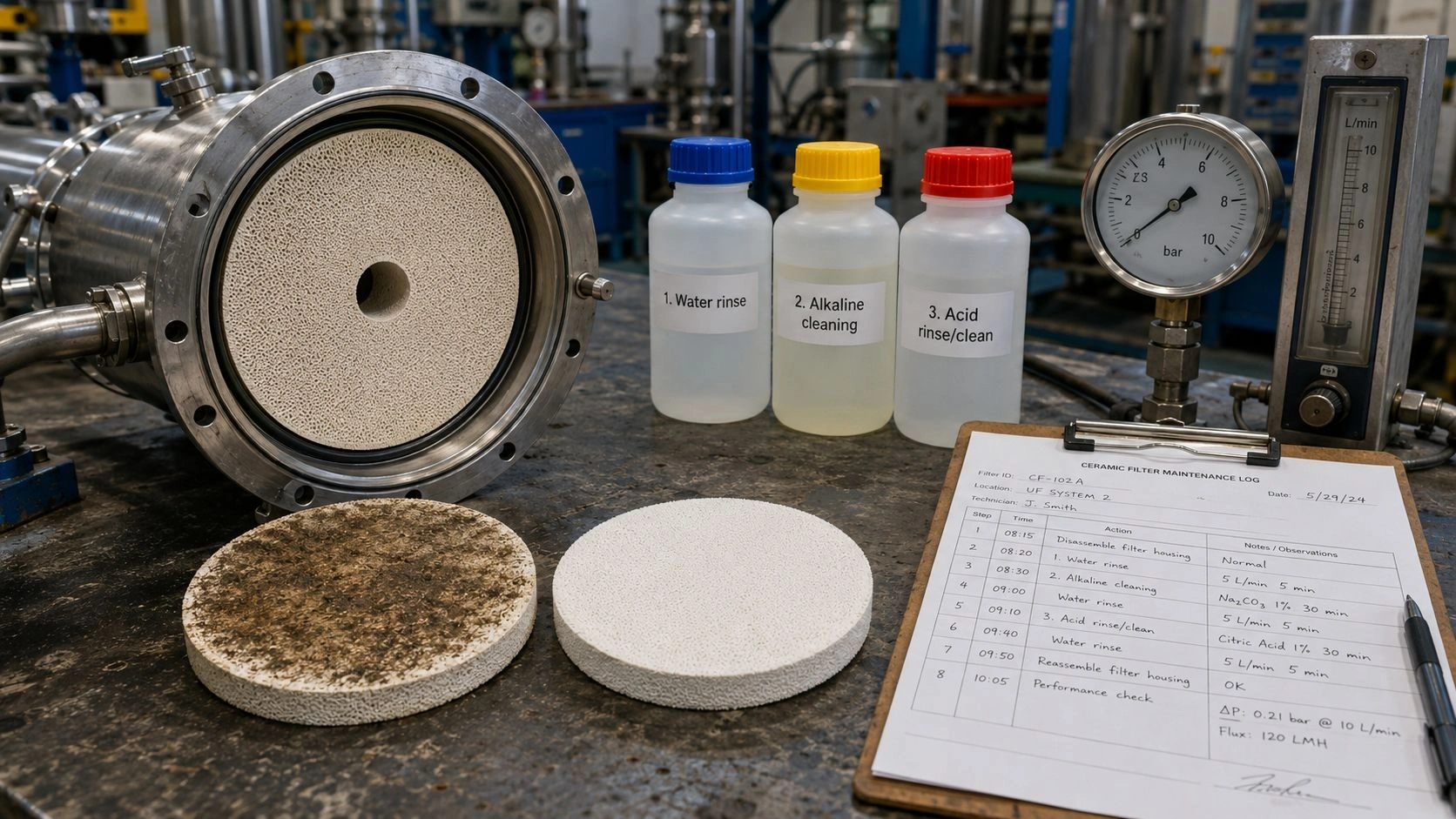
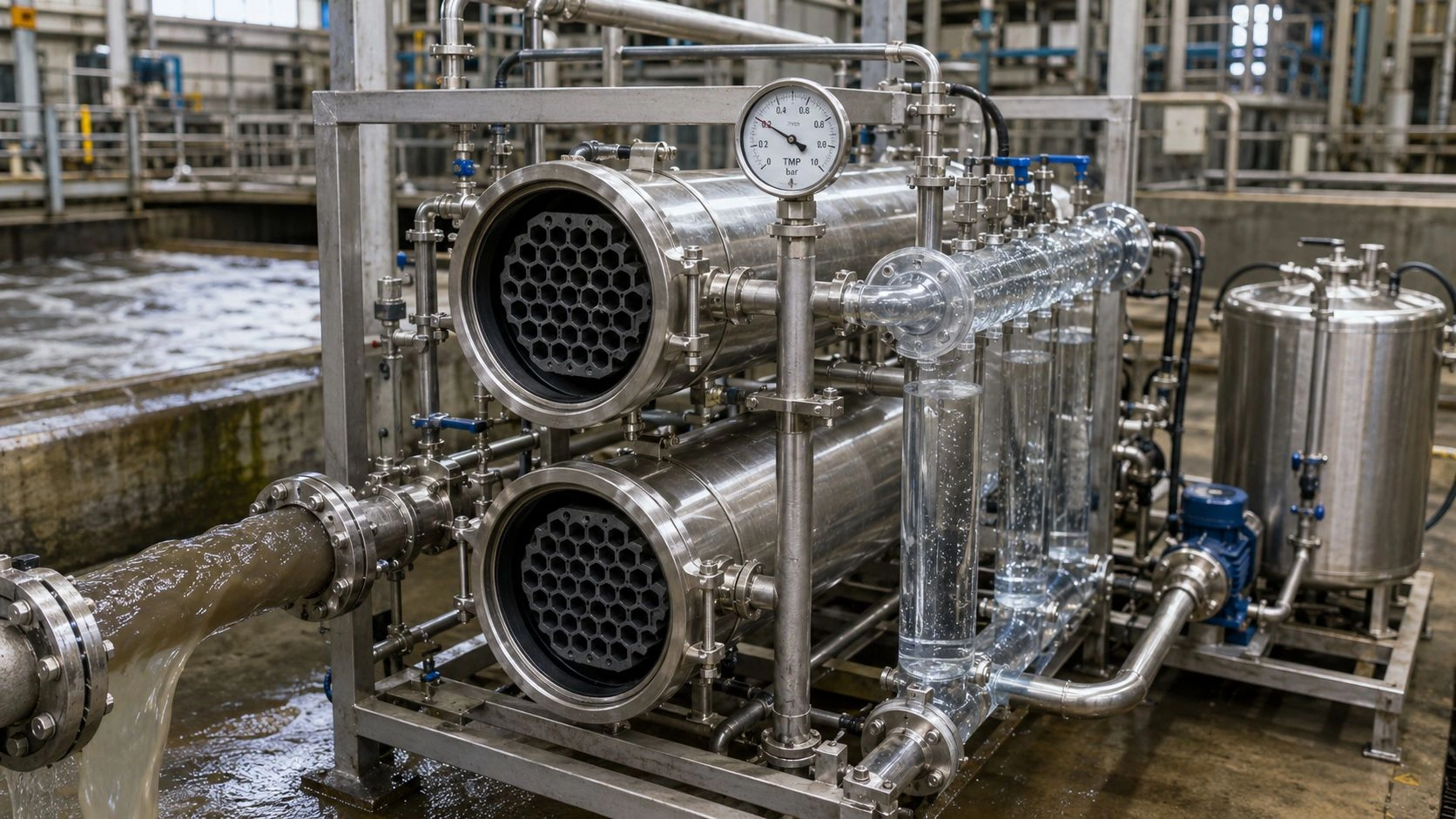
Poor sintering outcomes often originate before firing begins; consequently, unnoticed incompatibility between crucible and furnace quietly undermines dimensional accuracy, surface integrity, and thermal repeatability.
This article focuses on zirconia sintering crucible compatibility in dental furnaces — dimensional clearance, structural interfaces, thermal-field coupling, first-use validation, and RFQ fields. Product family: zirconia ceramic crucible; drawing-based fit RFQ: custom ceramic services.
Consequently, the discussion advances from system-level constraints toward measurable compatibility checkpoints. Each section builds progressively, ensuring that later optimization steps rest on a validated mechanical and thermal foundation.
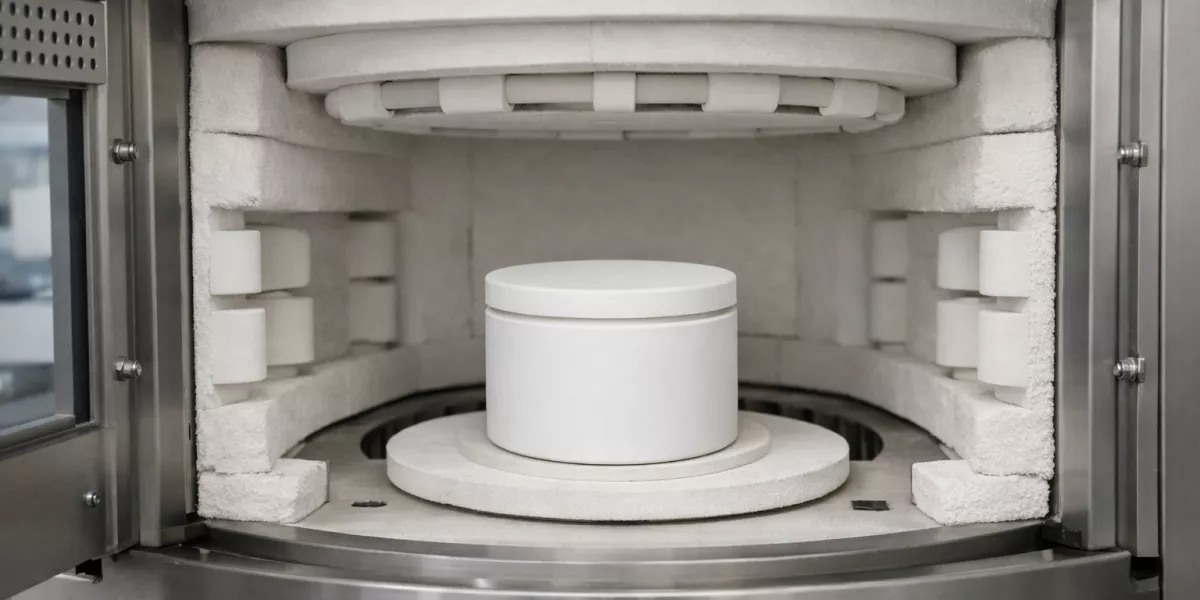
Compatibility is the earliest constraint shaping dental zirconia sintering outcomes; clarifying chamber fit and thermal coupling prevents defects that cycle tuning alone cannot correct. Melting/casting crucible failure is a different task axis — keep this page on dental-furnace fit RFQ.
Compatibility as the First Constraint in Zirconia Sintering
Compatibility is not an accessory-level consideration but a structural prerequisite that governs every subsequent sintering variable. Moreover, when a zirconia sintering crucible fails to align mechanically and thermally with the furnace environment, corrective adjustments in firing profiles rarely restore consistency. Consequently, compatibility should be evaluated before cycle parameters, loading density, or material batch differences are addressed.
Why Crucible Compatibility Shapes Sintering Outcomes
Compatibility directly influences how thermal energy and mechanical restraint interact during densification. In practice, even minor geometric or material mismatches can amplify uneven shrinkage and raise fit risk in multi-unit restorations — furnace-/load-dependent; confirm on buyer furnace RFQ.
Furthermore, application-/literature-typical behavior indicates that incompatible crucibles can introduce asymmetric heat absorption, with local temperature deviations often discussed around a 10–25 °C screening band near contact regions — furnace-/geometry-dependent; confirm on drawing + furnace RFQ. As a result, zirconia bodies experience uneven phase transformation1 rates, increasing the probability of warpage and microcrack initiation.
Ultimately, compatibility governs whether sintering proceeds as a controlled volumetric contraction or as a stress-driven deformation process. Therefore, overlooking this constraint often converts stable furnaces into inconsistent production systems.
System Boundaries Between Furnace Chamber and Crucible
The furnace chamber and the zirconia sintering crucible form a coupled thermal–mechanical system rather than independent components. Specifically, clearance gaps below ~3 mm tend to restrict convective circulation, while spacing above ~10 mm can weaken radiative coupling — RFQ screening only; confirm on drawing + furnace RFQ (not an acceptance hard gate).
Moreover, crucible wall thickness influences thermal inertia; walls often discussed above ~6 mm can add heating lag (sometimes cited around ~90 s per 100 °C ramp) — furnace-/geometry-dependent screening; confirm on drawing + furnace RFQ. Consequently, furnace controllers regulate chamber temperature accurately, yet the actual specimen temperature deviates measurably.
In essence, compatibility requires harmonizing geometric boundaries and material response so that furnace setpoints translate predictably into internal crucible conditions.
Early Failure Patterns Caused by Incompatible Crucibles
Incompatible zirconia sintering crucibles reveal themselves early through repeatable failure signatures. For instance, restorations near crucible walls may show elevated edge lift after densification (drawing-/duty-typical indicator often discussed above ~120 µm) even when central specimens remain more stable — confirm on drawing; not an acceptance SLA.
Additionally, early cycles can roughen contact faces — inspect after first firings rather than treating grain pull-out as a factory % SLA. This degradation increases particulate contamination risk and further destabilizes thermal uniformity.
Therefore, early-cycle anomalies should be interpreted as compatibility warnings rather than isolated processing errors, prompting structural reassessment before volume production proceeds.
Compatibility Indicators Observed During Initial Cycles
| Compatibility Indicator | Measured Range | RFQ screening (confirm drawing+furnace) | Engineering Implication |
|---|---|---|---|
| Wall-to-chamber clearance (mm) | 2–12 screening | 4–8 mm RFQ screening — confirm drawing+furnace | Below range restricts airflow; above range weakens radiative coupling |
| Local temperature deviation (°C) | 5–30 screening | Lower asymmetry preferred — confirm on furnace RFQ | Higher values correlate with asymmetric densification |
| Edge deformation after sintering (µm) | Drawing-/duty-typical indicator | Confirm on drawing — not acceptance SLA | Excess indicates mechanical restraint or thermal imbalance |
| Crucible surface grain loss | Inspect after early firings | Confirm on duty RFQ — not % SLA | Elevated loss predicts early contamination risk |
| Heating lag per 100 °C ramp (s) | Furnace-/geometry-dependent | Confirm on drawing+furnace RFQ | Longer lag alters effective sintering kinetics |
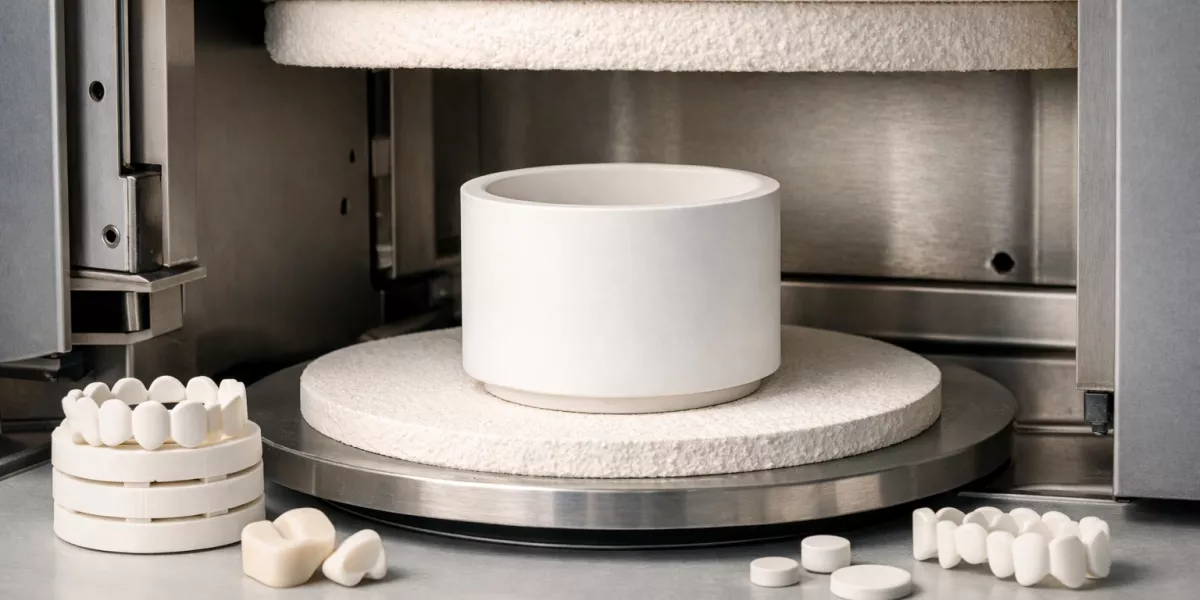
Dimensional alignment governs heat flow and mechanical freedom; geometric matching between crucible and chamber prevents distortion that process tuning cannot reverse.
Dimensional Matching Between Crucible and Furnace Chamber
Dimensional matching represents the most tangible layer of Zirconia Sintering Crucible Compatibility, because geometry dictates both airflow paths and thermal symmetry. Moreover, even when materials and furnace control logic are appropriate, dimensional mismatch alone can destabilize sintering repeatability. Consequently, this section dissects dimensional relationships that silently shape deformation risk across repeated firing cycles.
External Dimensions and Chamber Clearance
External dimensions determine whether the crucible integrates harmoniously with the furnace hot zone or disrupts it mechanically. In practice, radial clearance below ~3 mm tends to restrict convective circulation, while values above ~10 mm can weaken radiative coupling — RFQ screening (recommend awareness of a 4–8 mm window); confirm on drawing + furnace RFQ.
Furthermore, application-/literature-typical behavior suggests insufficient clearance raises contact probability during thermal expansion as crucibles undergo lateral growth — furnace-/load-dependent; confirm on buyer furnace RFQ (not a factory expansion % SLA). As a result, intermittent wall contact introduces asymmetric restraint, which transfers compressive stress into the sintering load.
Ultimately, appropriate clearance preserves both airflow continuity and expansion freedom, thereby stabilizing thermal exposure across all restoration positions within the crucible volume.
Internal Volume and Loading Geometry
Internal volume governs how restorations interact with the crucible during shrinkage rather than merely defining capacity. Specifically, when internal height or diameter is undersized, high packing density can cut isotropic-contraction margin — confirm on chamber + load RFQ (not a >75% acceptance gate).
Moreover, application-typical packing notes that overfilled crucibles can push inter-restoration proximity too tight (often discussed below ~2 mm) — drawing-/duty-typical; confirm on load RFQ. Consequently, crowns at higher stacking levels may show more dimensional deviation than centrally placed specimens — confirm on drawing + load RFQ.
Therefore, internal geometry should be evaluated in relation to loading architecture, ensuring sufficient spatial freedom for uniform shrinkage rather than maximizing throughput at the expense of precision.
Tolerance Accumulation in Repeated Cycles
Dimensional compatibility cannot be assessed from nominal dimensions alone; instead, tolerance accumulation over repeated cycles must be considered. Zirconia sintering crucibles can undergo gradual dimensional drift (drawing-/duty-typical rates sometimes discussed around 0.02–0.05 mm per 50 cycles) depending on wall thickness and furnace profile — confirm on drawing; not an acceptance SLA.
Additionally, furnace chamber tolerances themselves vary with thermal fatigue, leading to cumulative misalignment between originally compatible components. Consequently, a crucible that fits early may later lose clearance margin under high packing density and tight fit — confirm on chamber + load RFQ (not a >40% clearance-loss SLA).
Thus, compatibility assessment should account for long-term dimensional stability rather than single-cycle conformity, especially in high-throughput dental sintering environments.
Dimensional Compatibility Metrics Observed in Dental Furnaces
| Parameter | Measured Range | RFQ screening window | Compatibility Impact |
|---|---|---|---|
| Radial chamber clearance (mm) | 2–12 screening | 4–8 mm RFQ screening — confirm drawing+furnace | Governs airflow and expansion freedom |
| Axial clearance above crucible (mm) | 5–25 screening | Confirm on drawing+furnace RFQ | Influences vertical heat uniformity |
| Internal loading density | Chamber-/load-dependent | Avoid high packing that cuts margin — confirm RFQ | Higher packing increases deformation risk |
| Inter-restoration spacing (mm) | Load-dependent | Keep adequate spacing — confirm on load RFQ | Tight proximity promotes localized overheating |
| Permanent dimensional drift per 50 cycles (mm) | Drawing-/duty-typical indicator | Confirm on drawing — not acceptance SLA | Predicts long-term fit margin loss |
In summary, dimensional matching transforms Zirconia Sintering Crucible Compatibility from a static specification into a dynamic lifecycle consideration.
When external clearance, internal volume, and tolerance drift are balanced together, furnace geometry remains thermally neutral rather than mechanically intrusive.
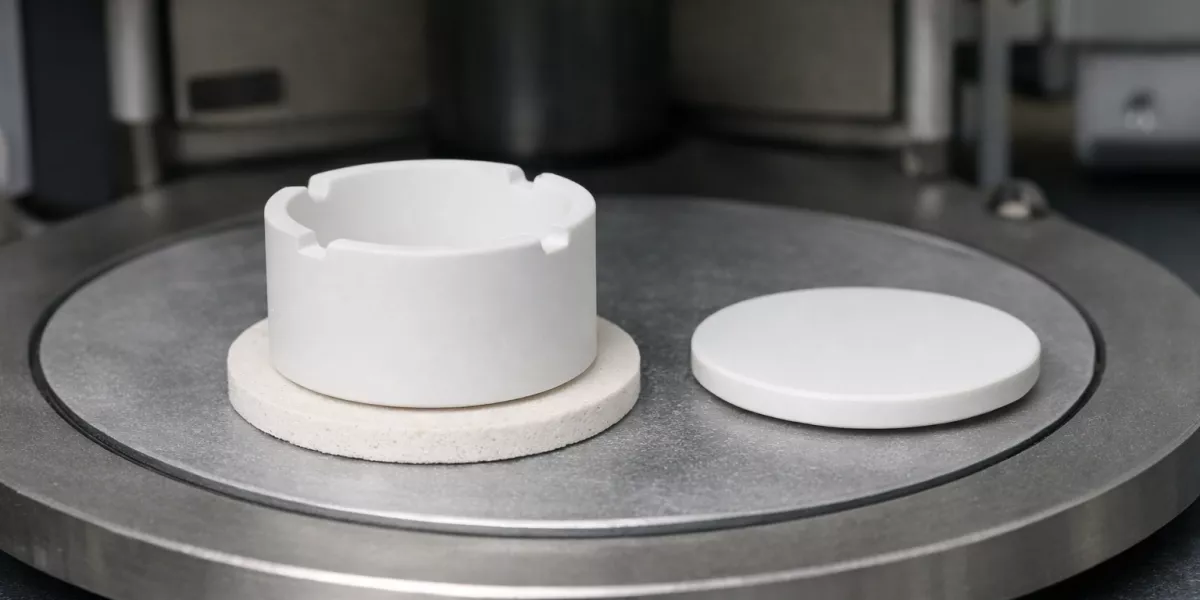
Structural interfaces govern force transfer during densification; contact mechanics must stay compatible across repeated dental firing cycles.
Structural Interfaces Between Crucible and Sintering Accessories
Structural interfaces represent the mechanical layer of Zirconia Sintering Crucible Compatibility, linking crucible geometry with trays, beads, and support elements. Moreover, these interfaces define how load, friction, and restraint evolve as zirconia transitions from porous green state to dense ceramic. Consequently, improper interface design often produces deformation even when thermal conditions appear uniform.
Contact Points and Load Transfer Paths
Contact points2 define where mechanical forces concentrate during sintering shrinkage. Application-/literature-typical notes: restorations on too few stable contact points raise flex under load versus evenly supported layouts — tall/thin wall flex is qualitative; confirm on geometry RFQ (no RT TDS as furnace allowable stress; no bending-multiplier SLA).
Additionally, load transfer paths change dynamically as zirconia undergoes industry-typical linear shrinkage often cited around 18–22% — blank-/grade-/cycle-dependent; confirm on blank TDS (not a crucible-factory SLA). As a result, point contacts near restoration margins can concentrate load during peak densification — confirm on geometry RFQ; do not treat room-temperature TDS strength as furnace allowable stress.
Ultimately, stable compatibility requires distributing load across multiple low-friction contacts so that shrinkage proceeds freely rather than being mechanically redirected.
Beads and Spacers Compatibility Considerations
Beads and spacers act as micro-interfaces that strongly influence Zirconia Sintering Crucible Compatibility. Specifically, large bead diameter variation (drawing-/duty-typical indicator often discussed beyond ~±0.3 mm) can introduce uneven elevation — confirm on drawing; not an acceptance SLA.
Moreover, bead-to-crucible material mismatch can raise interface friction and restrict lateral movement during shrinkage — confirm on accessory + crucible RFQ. Consequently, restorations on incompatible bead systems show higher edge-lift risk after sintering — drawing-/duty-typical; confirm on drawing.
Therefore, bead material, size distribution, and surface finish must be evaluated together with crucible structure rather than treated as interchangeable consumables.
Surface Texture and Frictional Constraints
Surface texture at structural interfaces governs frictional resistance throughout the sintering cycle. Rougher crucible contact faces can impede shrinkage-induced sliding at high temperature — confirm surface finish on drawing + duty RFQ (Ra values are screening indicators, not acceptance gates).
Furthermore, repeated cycles exacerbate this effect as micro-asperities degrade, increasing debris generation and further elevating friction. Consequently, restorations near high-friction zones experience asymmetric constraint and higher warpage variance versus low-friction interfaces — confirm on interface RFQ.
Thus, maintaining controlled surface texture across crucible and accessory interfaces preserves mechanical neutrality and sustains compatibility over extended furnace use.
Structural Interface Compatibility Indicators
| Interface Parameter | Observed Range | RFQ screening (confirm drawing) | Mechanical Implication |
|---|---|---|---|
| Number of effective contact points | Geometry-dependent | Prefer multiple low-friction contacts — confirm RFQ | Too few contacts raise flex risk |
| Bead diameter variation (mm) | Drawing-/duty-typical | Confirm on drawing — not acceptance SLA | Excess variation destabilizes load paths |
| Friction at interface | Material-/finish-dependent | Prefer low-friction contact — confirm RFQ | Higher friction restricts shrinkage freedom |
| Surface roughness Ra (µm) | Finish screening | Confirm finish on drawing+duty | Rough surfaces amplify restraint |
| Edge lift after sintering (µm) | Drawing-/duty-typical indicator | Confirm on drawing — not acceptance SLA | Indicates interface-induced stress |
Overall, structural interfaces convert crucibles from passive containers into active mechanical participants.
When contact geometry, bead compatibility, and surface friction are balanced, Zirconia Sintering Crucible Compatibility supports shrinkage rather than resisting it.
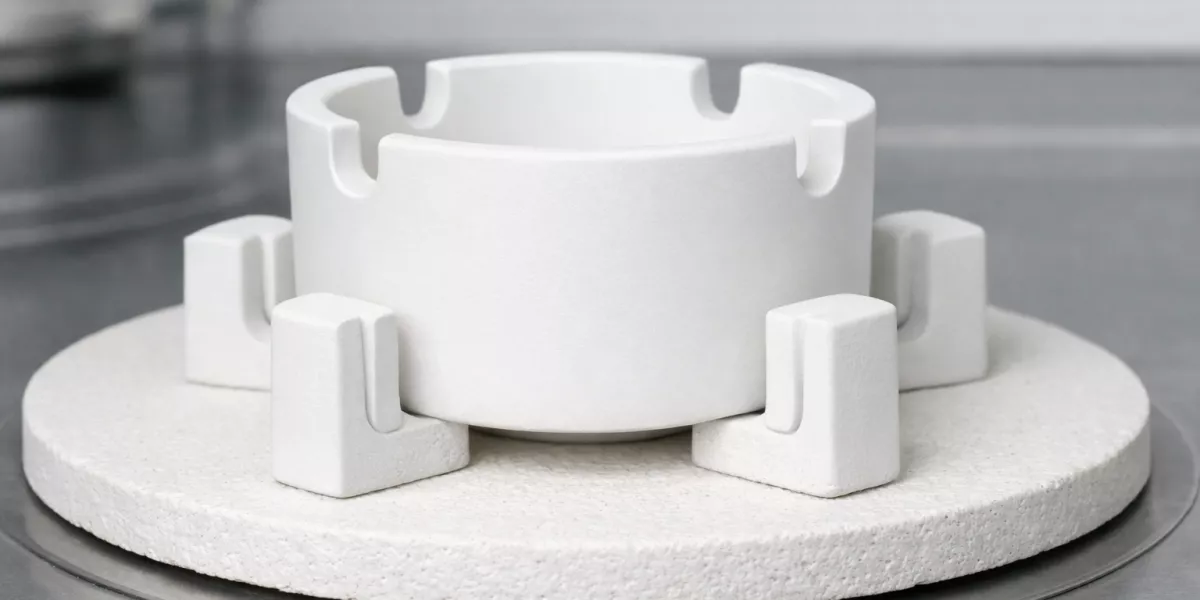
Moreover, thermal coupling determines whether furnace control accuracy translates into uniform densification; therefore, evaluating heat-field interaction is central to sustaining Zirconia Sintering Crucible Compatibility under clinical production conditions.
Thermal Field Coupling Between Crucible and Furnace
Thermal field coupling explains how energy delivered by the furnace is absorbed, redistributed, and released by the zirconia sintering crucible. Additionally, compatibility at this level governs whether restorations experience synchronized phase transformation or uneven thermal histories. Consequently, even precise controllers cannot compensate for mismatched thermal behavior between crucible and chamber.
Heat Absorption and Radiation Balance
Radiative exchange dominates heat transfer above 1,100 °C, making crucible emissivity and geometry decisive. Crucibles with meaningful emissivity differences can shift local heating rates despite identical furnace setpoints — furnace-/geometry-dependent; confirm on buyer furnace RFQ.
Furthermore, thicker walls increase thermal mass and can delay internal temperature rise — furnace-/geometry-dependent screening; confirm on drawing + furnace RFQ. As a result, restorations near the crucible center lag behind those near the wall, creating transient gradients that persist into the densification window.
Ultimately, balanced absorption and radiation ensure that thermal energy reaches all load positions concurrently, preserving synchronized sintering kinetics.
Local Temperature Gradients at Crucible Walls
Temperature gradients3 form preferentially at the crucible–air boundary. In dental-furnace practice, wall-adjacent zones can run hotter than central regions during rapid ramps — application-typical; confirm on buyer furnace RFQ.
Moreover, repeated cycles can intensify this disparity as surface aging alters emissivity — confirm dwell behavior on furnace RFQ. Consequently, restorations positioned within 5 mm of the crucible wall show elevated grain coarsening and reduced translucency consistency.
Therefore, compatibility requires limiting wall-induced gradients through appropriate clearance and wall thickness selection.
Interaction with Heating Element Layout
Heating element geometry influences how the crucible intercepts radiant energy. Furnaces with circumferential elements generate relatively uniform fields, whereas segmented layouts produce directional flux peaks that interact strongly with crucible orientation.
Additionally, crucible-to-element misalignment can raise inter-quadrant temperature variation — confirm orientation on furnace RFQ. As a consequence, restorations located in high-flux sectors densify faster, accumulating differential shrinkage stresses.
Hence, aligning crucible geometry with element layout transforms furnace output into predictable internal thermal fields rather than directional hotspots.
Thermal Coupling Metrics Observed During Sintering
| Thermal Parameter | Measured Range | RFQ screening | Compatibility Effect |
|---|---|---|---|
| Effective emissivity variation | Furnace-/geometry-dependent | Confirm on buyer furnace RFQ | Controls radiative balance |
| Heating lag per 200 °C ramp (s) | Wall-/furnace-dependent | Confirm on drawing+furnace RFQ | Alters densification timing |
| Wall-to-center gradient (°C) | Application-typical screening | Confirm on furnace RFQ | Higher gradients raise warpage risk |
| Dwell gradient persistence (min) | Duty-dependent | Confirm on furnace RFQ | Prolonged gradients increase heterogeneity |
| Orientation-induced variation (°C) | Layout-dependent | Confirm element alignment on RFQ | Indicates element alignment mismatch |
In essence, thermal coupling transforms Zirconia Sintering Crucible Compatibility from geometric fit into energetic coherence.
When radiation balance, gradient control, and element alignment converge, furnace precision becomes materially effective rather than nominal.
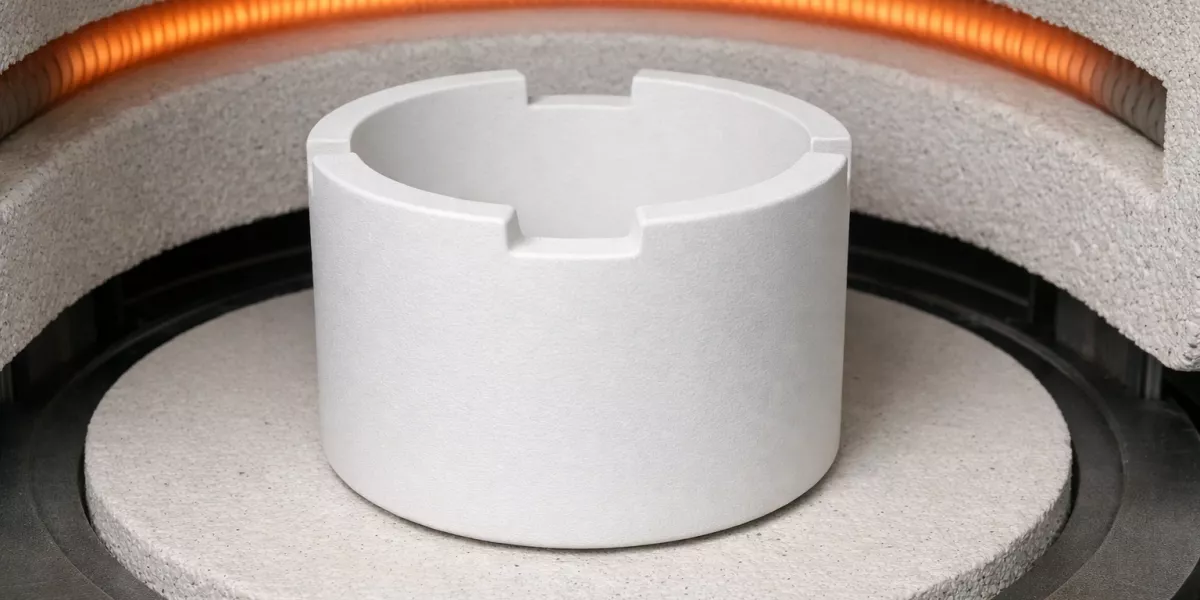
Additionally, furnace architecture varies substantially across designs; therefore, Zirconia Sintering Crucible Compatibility must be evaluated relative to structural differences rather than assumed transferable between systems.
Compatibility Across Different Furnace Brands and Designs
Furnace design diversity introduces hidden variability into Zirconia Sintering Crucible Compatibility, even when nominal chamber sizes appear similar. Moreover, differences in loading orientation, insulation layout, and heating element geometry reshape thermal and mechanical boundaries inside the hot zone. Consequently, compatibility validated in one furnace configuration may degrade when transferred to another design without adjustment.
Variations in Chamber Geometry
Chamber geometry governs how uniformly radiant energy envelops the crucible volume. Cylindrical chambers typically produce rotationally symmetric heat fields, whereas rectangular or elongated chambers generate directional gradients that interact unevenly with crucible walls.
Furthermore, elongated chambers can increase axial temperature nonuniformity under identical ramp conditions — application-typical; confirm on buyer furnace RFQ. As a result, crucibles optimized for compact chambers may experience vertical densification imbalance in taller geometries.
Ultimately, compatibility requires matching crucible proportions to chamber shape so that heat distribution remains isotropic rather than geometry-driven.
Top Loading and Front Loading Furnace Differences
Loading orientation alters how gravitational forces combine with thermal softening during sintering. In top-loading furnaces, vertical load symmetry is preserved; however, front-loading designs introduce horizontal bias during peak temperature dwell.
Moreover, front-loading systems can increase lateral displacement bias for restorations near the loading door — confirm orientation on furnace RFQ. Consequently, crucibles with asymmetric wall thickness exacerbate this effect, amplifying directional shrinkage.
Therefore, crucible compatibility must account for loading orientation to prevent gravity-assisted distortion during the densification window.
Compatibility Risks When Switching Furnace Systems
Switching furnace systems without reassessing crucible compatibility introduces cumulative risk. Even small discrepancies in insulation emissivity or element spacing can shift thermal coupling behavior measurably.
Additionally, crucibles transferred between furnace models often show shorter useful life and higher warpage variance in early cycles — confirm the crucible–furnace pair on RFQ rather than assuming transferability. As a consequence, previously stable processes may exhibit sudden inconsistency despite unchanged firing programs.
Hence, compatibility verification should accompany any furnace transition, treating the crucible–furnace pair as a newly formed system rather than a reused component set.
Cross-Furnace Compatibility Indicators
| Furnace Parameter | Observed Range | RFQ screening | Compatibility Significance |
|---|---|---|---|
| Chamber aspect ratio | Design-dependent | Confirm chamber shape on RFQ | Controls axial heat uniformity |
| Loading orientation bias | Top- vs front-loading dependent | Confirm orientation on furnace RFQ | Higher bias increases directional shrinkage |
| Element-to-crucible distance variation (mm) | Layout-dependent | Confirm on furnace RFQ | Influences radiant flux balance |
| Inter-quadrant temperature spread (°C) | Application-typical screening | Confirm on buyer furnace RFQ | Predicts cross-load densification consistency |
| Crucible service life change after transfer | Pair-dependent | Re-validate pair on RFQ — not % SLA | Indicates compatibility stability |
Overall, furnace design differences redefine the boundary conditions governing Zirconia Sintering Crucible Compatibility.
When chamber geometry, loading orientation, and element layout are jointly considered, crucible performance remains transferable rather than furnace-dependent.
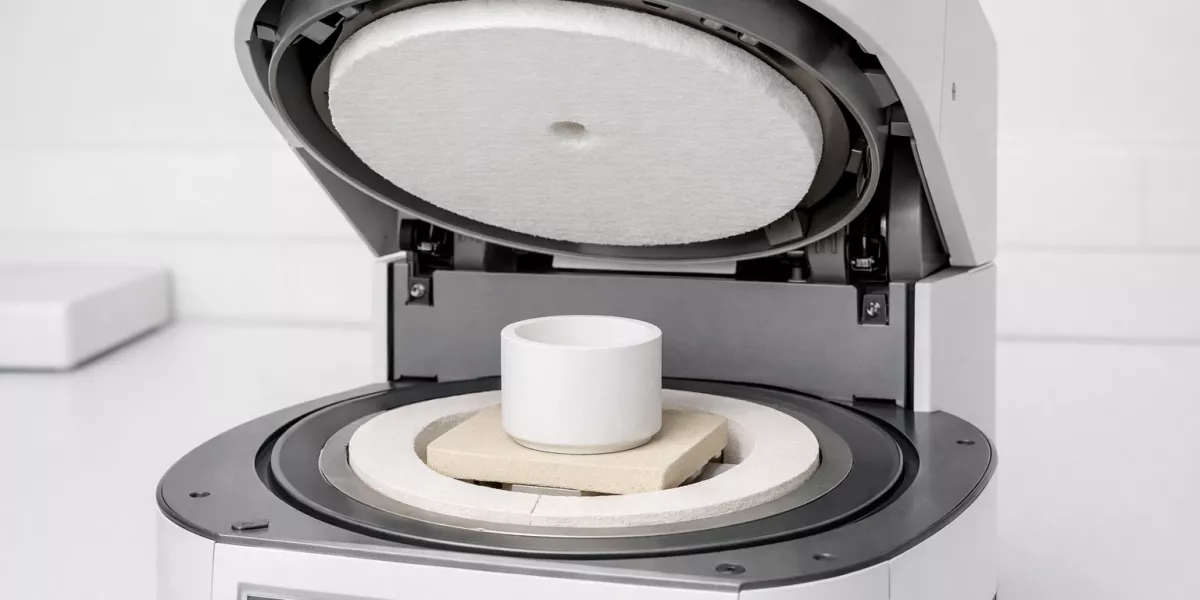
Subsequently, initial validation establishes whether compatibility assumptions hold under real thermal exposure; therefore, first-use evaluation protects Zirconia Sintering Crucible Compatibility before routine clinical firing begins.
First Use Validation Before Routine Sintering
First-use validation converts theoretical compatibility into verified operational stability. Moreover, this stage detects hidden mismatches that dimensional checks and visual inspection cannot reveal. Consequently, controlled validation cycles reduce the probability of early deformation, contamination, or thermal imbalance during high-value production runs.
Dry Runs and Thermal Stabilization
Dry runs allow the crucible–furnace system to equilibrate without imposing shrinkage stress from zirconia restorations. In dental-furnace practice, two to three empty cycles often help stabilize internal radiation balance before loaded runs — confirm protocol on buyer furnace RFQ.
Furthermore, initial firings expose latent expansion interactions (drawing-/duty-typical axial growth indicators) at peak temperature. As a result, wall clearance and support stability can be reassessed under true operating conditions rather than ambient assumptions.
Ultimately, dry runs transform compatibility from static geometry into thermally validated behavior, ensuring that subsequent loading occurs within a stabilized environment.
Visual and Dimensional Checks After Initial Cycles
Post-cycle inspection provides quantitative insight into compatibility integrity. Specifically, dimensional measurement after early firings can reveal permanent distortion — drawing-/duty-typical indicator; confirm on drawing.
Additionally, surface evaluation frequently identifies early grain pull-out or discoloration correlated with localized thermal imbalance — confirm on furnace RFQ. Consequently, these indicators function as predictive markers of future instability rather than cosmetic artifacts.
Therefore, systematic inspection after initial cycles enables corrective adjustment before compatibility degradation propagates into routine production.
Early Validation Metrics for Compatibility Assessment
| Validation Parameter | Observed Range | RFQ screening (not acceptance SLA) | Predictive Value |
|---|---|---|---|
| Empty-cycle overshoot reduction | Protocol-dependent | Confirm dry-run protocol on furnace RFQ | Indicates thermal stabilization |
| Permanent dimensional change (mm) | Drawing-/duty-typical | Confirm on drawing — not acceptance SLA | Distinguishes elastic vs plastic response |
| Surface discoloration area | Inspect after early firings | Confirm on duty RFQ — not % SLA | Reflects localized overheating |
| Clearance change after firing | Furnace-/geometry-dependent | Confirm on drawing+furnace RFQ | Predicts long-term fit stability |
| Temperature repeatability deviation (°C) | Application-typical screening | Confirm on buyer furnace RFQ | Measures cycle-to-cycle consistency |
In summary, first-use validation safeguards Zirconia Sintering Crucible Compatibility before clinical workloads impose irreversible stress.
When dry runs, inspection, and metric-based assessment align, routine sintering proceeds on a verified mechanical and thermal foundation.
Nevertheless, compatibility failures often persist because early judgments rely on simplified assumptions rather than system behavior. Consequently, several recurring misjudgments undermine Zirconia Sintering Crucible Compatibility even in otherwise well-controlled dental furnaces.
Common Misjudgments in Compatibility Assessment
Assuming nominal dimensions guarantee compatibility
Nominal diameter and height matching frequently mask functional mismatch, because thermal expansion alters clearances at peak sintering temperatures — furnace-/geometry-dependent; confirm under thermal load rather than ambient measurement alone. As a result, crucibles that appear dimensionally correct at room temperature may impose asymmetric restraint during firing. Therefore, dimensional conformity should always be evaluated under thermal load rather than static measurement alone.
Treating crucibles as thermally neutral containers
Crucibles are often considered passive holders; however, zirconia walls actively absorb, emit, and store thermal energy. Application-typical notes: crucible thermal mass differences can shift internal heating rates despite identical furnace programs — confirm on buyer furnace RFQ. Consequently, ignoring this interaction leads to unexplained densification variability across identical loads.
Overlooking cumulative deformation across cycles
Early cycles may show acceptable results, encouraging the assumption of sustained compatibility. Yet lifecycle checks can reveal permanent dimensional drift (drawing-/duty-typical rates sometimes discussed around 0.02–0.05 mm per 50 cycles), eventually eroding clearance margins — confirm on drawing. Hence, compatibility assessment should incorporate lifecycle behavior rather than first-cycle performance.
Equating visual cleanliness with functional stability
Smooth surface appearance is frequently misinterpreted as compatibility confirmation. In practice, microstructural degradation beneath visually intact surfaces can elevate friction and particulate release over time — confirm with dimensional and thermal checks, not visual inspection alone. Accordingly, compatibility requires dimensional and thermal verification beyond surface inspection.
Transferring crucibles between furnaces without reassessment
Crucibles validated in one furnace are often reused elsewhere under the assumption of universality. However, furnace-to-furnace variation in element spacing and insulation emissivity can alter wall-to-center gradients — confirm the relocated pair on buyer furnace RFQ. Therefore, crucible relocation should trigger renewed compatibility validation rather than procedural continuity.
Overall, these misjudgments illustrate that compatibility is a dynamic system property rather than a one-time checklist item. Consequently, recognizing and correcting these assumptions preserves Zirconia Sintering Crucible Compatibility before instability manifests during routine production.
Ultimately, compatibility integrates geometric, mechanical, and thermal behavior into a single operational baseline; therefore, recognizing this foundation clarifies why downstream adjustments succeed only after Zirconia Sintering Crucible Compatibility is secured.
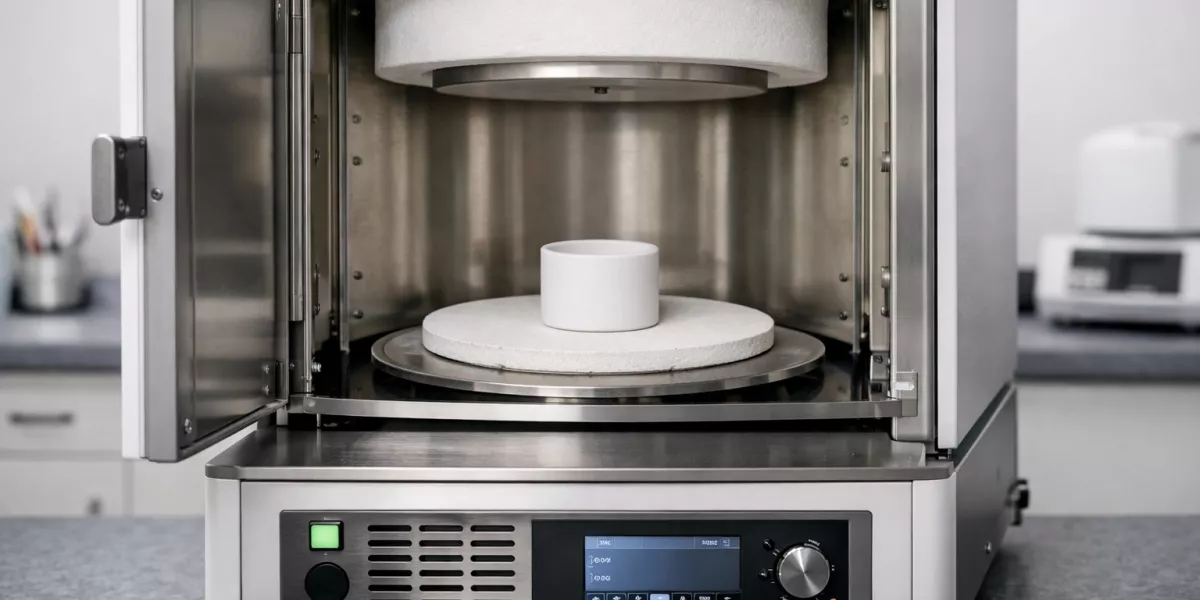
Compatibility as a Foundation for Process Stability
Compatibility establishes the boundary conditions within which all sintering variables operate. When crucible fit, interface mechanics, and thermal coupling align, process parameters act predictably rather than compensating for hidden constraints. Consequently, stable compatibility converts furnace control accuracy into consistent material outcomes instead of reactive troubleshooting.
Dimensional coherence across the operating envelope
Dimensional coherence ensures that clearances remain functional throughout thermal expansion and contraction. Keeping clearance margins functional across the operating envelope preserves airflow symmetry and minimizes gradient formation — confirm lifecycle fit on drawing + furnace RFQ. Accordingly, dimensional coherence sustains predictable heat distribution across repeated cycles.
Mechanical neutrality during shrinkage
Mechanical neutrality allows zirconia to densify without redirected stress. Systems that preserve low-friction interfaces and balanced contact geometry typically show lower warpage variance than constrained setups — confirm on geometry RFQ. Hence, compatibility transforms shrinkage into uniform volumetric change rather than directional distortion.
Thermal repeatability across cycles
Thermal repeatability links furnace setpoints to internal load temperature. When compatibility is established, cycle-to-cycle temperature deviation stays tighter, stabilizing phase-transformation timing and translucency outcomes — confirm repeatability on buyer furnace RFQ. Therefore, compatibility anchors thermal behavior before fine-tuning dwell or ramp profiles.
Lifecycle stability instead of first-cycle success
First-cycle success does not guarantee durability. Compatibility evaluated over time maintains performance as crucible properties evolve — confirm lifecycle behavior on duty RFQ rather than first-cycle success alone. As a result, process stability persists without frequent recalibration.
In essence, compatibility functions as the silent infrastructure supporting every successful firing. When Zirconia Sintering Crucible Compatibility is treated as a foundational system property, subsequent optimization becomes additive rather than corrective.
Conclusion
In the final analysis, zirconia sintering crucible compatibility defines whether dental sintering behaves as a controlled process or a cumulative risk. Lock clearance, wall/geometry, contact interfaces, and thermal coupling on RFQ — then confirm on drawing + blank TDS + buyer furnace. Product family: zirconia ceramic crucible; drawing-based fit: custom ceramic services.
Related reading
- Zirconia sintering crucible use and process control — When process-control / cycle stability dominates after dimensional compatibility is already locked
- Zirconia sintering crucible failure diagnosis — When failure signatures must be diagnosed instead of re-checking chamber fit first
- Evaluating zirconia sintering crucible quality in repeated dental use — When repeated-use quality verification (not first-fit compatibility) gates acceptance
Frequently Asked Questions
How often should compatibility be reassessed during routine use?
Reassessment on a periodic cycle basis (often discussed every 50–100 cycles) is advisable, as cumulative dimensional drift and surface evolution can alter clearance and friction — confirm interval on duty RFQ.
Can compatibility issues appear without visible defects?
Yes. Thermal gradients and mechanical restraint often precede visible deformation by multiple cycles, making early measurement critical.
Does compatibility affect translucency outcomes?
Indirectly, yes. Uneven thermal exposure alters grain growth kinetics, which can produce measurable translucency variation across restorations.
Is compatibility verification necessary after furnace maintenance?
Absolutely. Insulation replacement or element adjustment frequently changes radiant balance, requiring renewed compatibility validation.
References:
-
Phase transformation explains crystallographic changes in zirconia that occur at elevated temperatures and influence shrinkage behavior. ↩
-
Contact points are locations where mechanical load is transferred between ceramic components during sintering. ↩
-
Temperature gradients refer to spatial differences in temperature that affect ceramic densification and grain growth. ↩