
End-to-End Process Chain
Post-sintering shaping, dimensional control, and surface integrity define the transition from
near-net ceramic forms to functional-ready components.
Primary Machining and Shaping
After sintering, bulk geometry and reference features are established using Lathe, Milling Machine, and Machining Center platforms.
Coaxiality, flatness references, and assembly datums are defined at this stage, forming the structural foundation for subsequent precision finishing operations.
Profile and Feature Cutting
Complex outlines and brittle geometries are processed using Laser Cutting Machine and Ceramic Wire Cutting Machine systems.
Low-stress material separation and controlled edge formation are achieved where conventional mechanical cutting would otherwise introduce chipping or microcracks.
Precision Grinding Preparation
Prior to final tolerance control, components are routed through CNC Grinding Machine workflows to stabilize geometry and remove machining allowance.
Grindability consistency and surface readiness are established to support high-precision cylindrical and planar grinding operations.
Precision Finishing Equipment
Final-stage finishing operations enable tight tolerances, controlled surface quality, and reliable
functional interfaces in industrial ceramic components.
Cylindrical Grinding Systems
External Cylindrical Grinder, Internal Cylindrical Grinder, and Centerless Grinder control roundness, concentricity, and diameter stability in rotational ceramic parts.
Applications include shafts, sleeves, bushings, and flow-contact components where rotational accuracy and wear performance govern service reliability.
Planar Surface Control
Surface Grinder platforms generate flatness, parallelism, and stable surface roughness on plates and mating faces.
Controlled planar geometry influences assembly sealing behavior, contact uniformity, and load distribution in mechanical and thermal systems.
Complex Contour Finishing
Ceramic Engraving & Milling Machine equipment supports localized geometry definition and fine feature control on complex ceramic components.
Precision contouring and micro-feature refinement are achieved without compromising bulk structural integrity.
Manufacturing Capability Overview
Our manufacturing capability covers equipment, material systems, and delivery support for advanced ceramic parts. From prototype orders to repeat supply, we provide flexible processing with dedicated equipment and specialized production bases.
Complex Contour Finishing
CNC Lathe / CNC Milling Machine/Machining Center
- Turning, facing, boring; max Ø500mm
- 3/4/5-axis milling; complex contours
- Multi-process integration
Laser Cutting Machine / Wire EDM / Diamond Wire
- Complex profiles; ±0.05mm
- Brittle material separation
Surface Grinder / External Cylindrical Grinder / Internal Cylindrical Grinder / Centerless Grinder
- Flatness ≤0.01mm; Ra ≤0.2μm
- Roundness ≤0.005mm
- Bore finishing; concentricity
- High-volume OD finishing
Lapping Machine / CNC Engraving Machine
- Mirror finish; Ra ≤0.1μm
- Micro-features; marking
Material Processing Coverage
Oxide Ceramics
Materials: Alumina (92–99.99%), Zirconia, ZTA, Magnesia
Base: Liling Base
Carbide Ceramics
Materials: Silicon Carbide (SiC), Boron Carbide (B₄C)
Base: Pingxiang Base
Nitride Ceramics
Materials: Silicon Nitride (Si₃N₄), Aluminum Nitride (AlN), Boron Nitride (BN)
Base: Pingxiang Base
Specialty Materials
Materials: Quartz Ceramic, Machinable Glass Ceramic, Cordierite
Base: Both Bases
Capacity & Lead Time
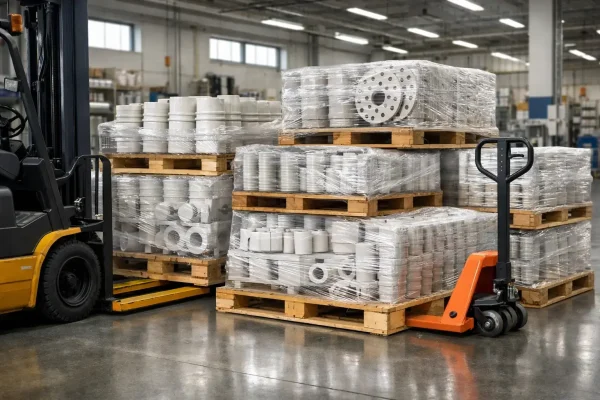
We support sample orders, pilot batches, production volumes, and repeat supply with different lead-time windows based on order scale and process route.
| Order Type | Quantity | Lead Time |
|---|---|---|
| Prototype / Sample | 1-50 pcs | 3-15 days |
| Small Batch | 50-500 pcs | 2-4 weeks |
| Production Order | 500-10,000 pcs | 4-8 weeks |
| Volume / Repeat | 10,000+ pcs | Scheduled delivery |
| Standard Stock Items | Various | 24-hour dispatch |
Manufacturing Bases
Production is managed through two manufacturing bases to support different material
systems and thermal requirements.
Base specialization improves routing efficiency and supports stable delivery for industrial
programs.
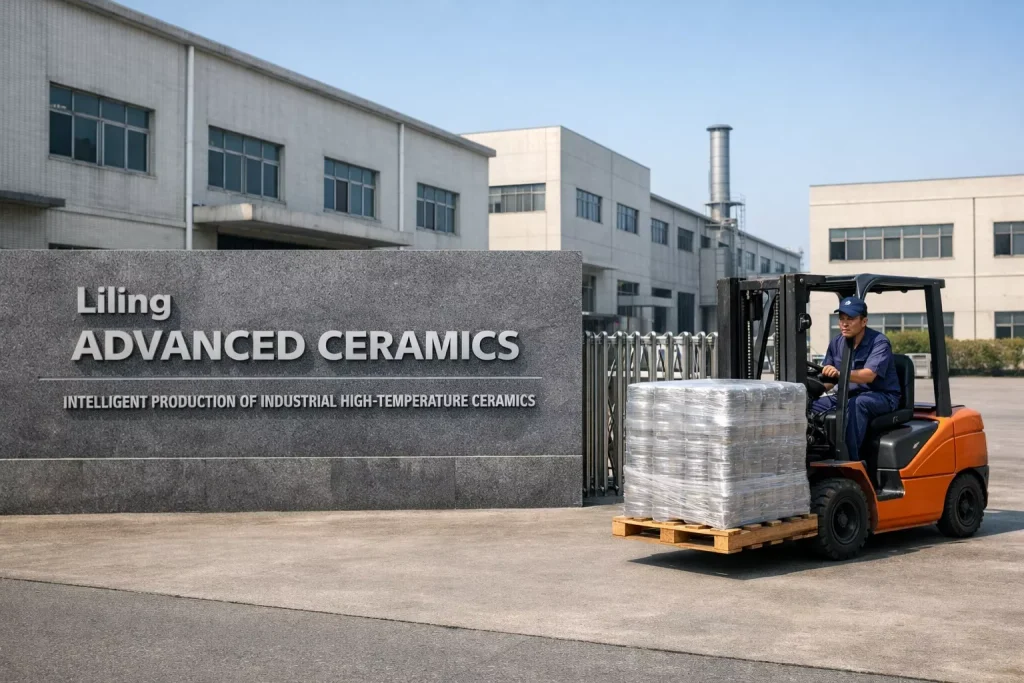
Liling Base
Alumina, zirconia, and specialty ceramic manufacturing routes managed for dimensional stability and repeatability.
Oxide ceramics
Precision parts
Stable supply
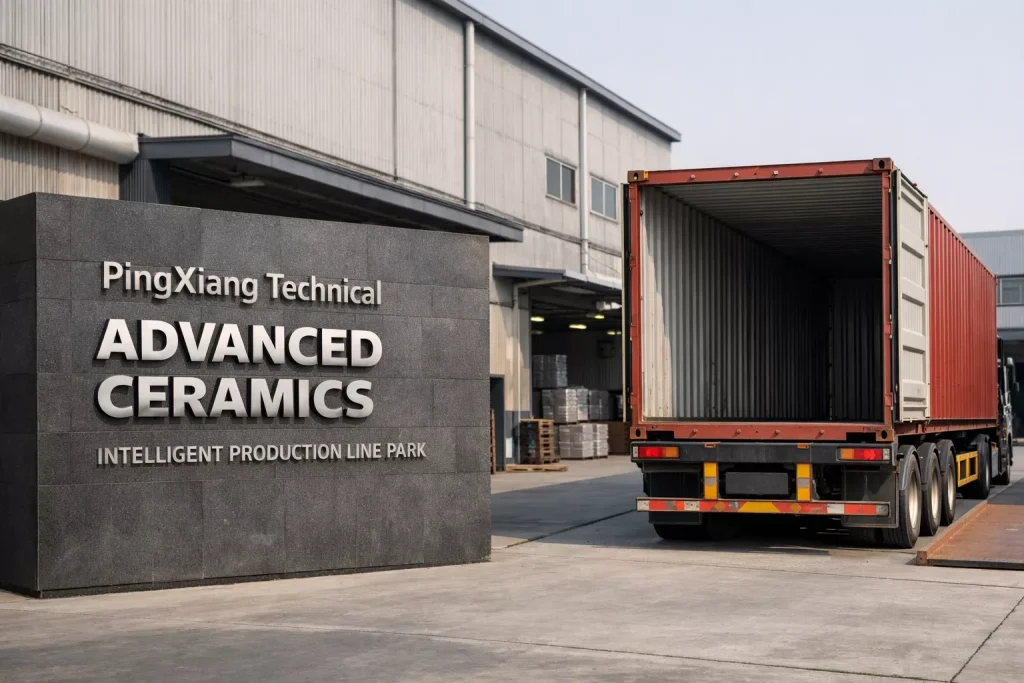
Pingxiang Base
Silicon carbide, silicon nitride, and high-temperature ceramics routed for harsh duty thermal and corrosion environments.
Non-oxide ceramics
High-temperature
Harsh duty
Factory Profile
Manufacturing Capability Overview
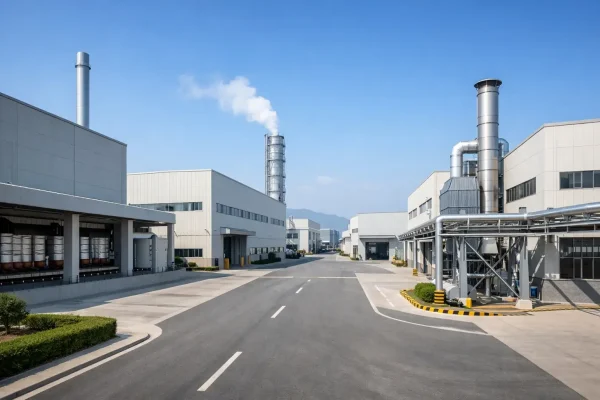
5,600 m²
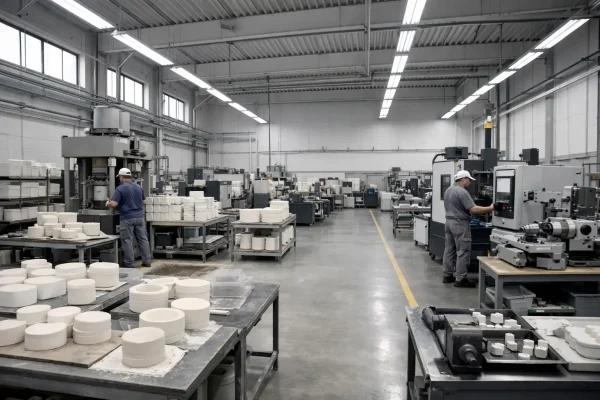
3,100 m²

42 engineers
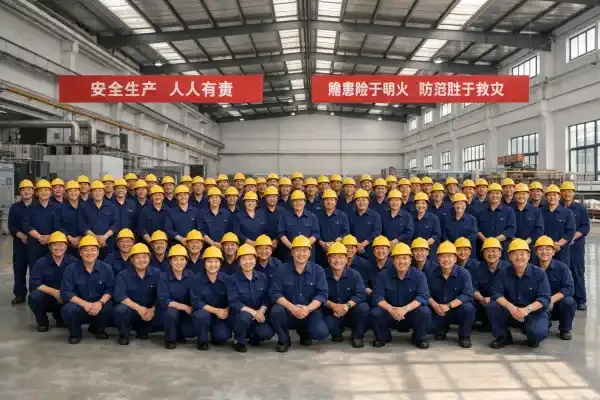
254 employees
3–30 days
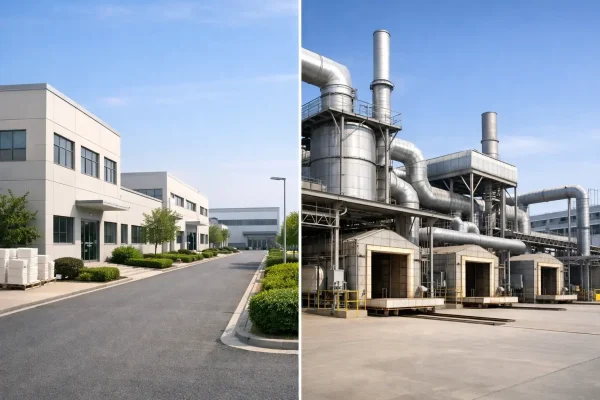
Liling & Pingxiang,
China
Engineering Contact
Drawing review and feasibility feedback are supported for build-to-print ceramic components.
Include CTQ dimensions, service temperature, media/chemistry, and tolerance targets.
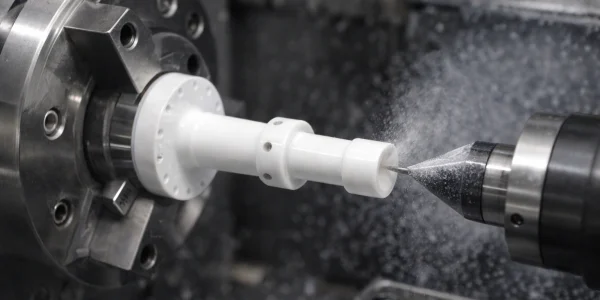
Drawing review and feasibility feedback are supported for build-to-print ceramic components.
