Unexpected frictional behavior remains one of the most frequent causes of premature ceramic component failure, especially when zirconia parts are transferred directly from material datasheets into mechanical systems without interface validation.
This article consolidates typical published pin-on-disk / laboratory screening friction ranges for zirconia ceramics across static and dynamic regimes, lubrication states, and operating variables — for RFQ-ready interpretation under realistic mechanical conditions; not a contractual SLA.
Product and RFQ context for zirconia sliding interfaces: zirconia ceramics hub, zirconia ceramic components, and drawing · load · speed · lube · Ra · counterface RFQ. COF figures in this guide are typical published pin-on-disk / laboratory screening ranges — not a contractual SLA; confirm load · speed · temperature · lubrication · Ra · counterface on duty RFQ. This is an operating-condition COF screening aid, not a zirconia properties encyclopedia.
Before numerical values are examined, a broader framing of friction as a functional constraint helps clarify why zirconia ceramic interfaces often behave differently from initial expectations during service.
Zirconia ceramic coefficient of friction in engineering design practice
Within mechanical assemblies, friction is rarely treated as an isolated material constant; instead, it emerges as a system-level constraint shaped by contact geometry, surface preparation, and operating environment. Zirconia ceramics frequently enter designs because of strength, wear resistance, or chemical stability, yet frictional response often governs whether those advantages remain usable over time.
From early-stage concept development through prototype validation, friction coefficients influence start-up torque, positional stability, heat generation, and vibration sensitivity. Consequently, zirconia ceramic coefficient of friction must be interpreted as a conditional parameter rather than a fixed value, especially when components experience sliding contact rather than purely static loading.
-
Friction as a boundary condition in ceramic component design
In precision mechanisms, friction defines the threshold between controlled motion and unintended resistance. For zirconia-based sliders, guides, or seats, excessive interfacial resistance often manifests during initial engagement rather than steady operation. Published screening comparisons indicate that start-up friction can exceed steady-state values by a substantial illustrative margin (often reported near 40–70% in some windows; confirm RFQ), leading to misalignment or drive overload even when nominal load ratings appear conservative. As a result, friction becomes a limiting boundary condition long before bulk strength or wear resistance is challenged. -
Why zirconia interfaces differ from metallic and polymer contacts
Zirconia ceramics exhibit high elastic modulus and limited plastic accommodation at asperity contacts. Unlike metallic surfaces, which can plastically smooth under load, zirconia interfaces tend to preserve micro-scale roughness during early sliding cycles. Tribological testing under controlled loads between 5–50 N has demonstrated that zirconia-on-zirconia contacts stabilize friction through microfracture and debris-mediated adaptation rather than plastic flow. This distinction explains why friction trends observed in metals or polymers cannot be directly extrapolated to ceramic systems. -
Misinterpretations of friction coefficients in ceramic references
Published friction coefficients for zirconia ceramics are frequently extracted from simplified published-context pin-on-disk tests1 conducted under narrowly defined conditions. Without explicit reference to surface roughness, counterface material, or sliding velocity2, these values are often misapplied during design. Comparative reviews of laboratory data reveal that friction coefficients reported as 0.2–0.3 under polished, lubricated conditions can increase beyond 0.6 when transferred to dry, ground-surface assemblies. Such discrepancies underscore the necessity of contextual interpretation rather than reliance on isolated numerical values.
Through this design-oriented framing, zirconia ceramic coefficient of friction emerges not as a static material property but as an interface response shaped by mechanical reality, setting the stage for deeper examination of static and dynamic friction behavior.
Static versus dynamic zirconia ceramic coefficient of friction
Across mechanical systems that rely on ceramic interfaces, the transition from rest to motion frequently defines whether zirconia components operate smoothly or exhibit resistance, vibration, or early damage. Accordingly, differences between static and dynamic friction deserve focused examination because they govern start-up loads, positional accuracy, and long-term stability under repeated motion cycles.
Within zirconia ceramic assemblies, static friction typically represents the maximum resistance encountered at the onset of motion, while dynamic friction reflects the stabilized response during continuous sliding. However, unlike metallic systems, the gap between these two regimes is strongly influenced by surface condition, contact pressure, and the absence of plastic accommodation at asperities.
Static friction characteristics during initial contact and start up
At the moment when two zirconia ceramic surfaces transition from rest to motion, static friction reaches its highest measurable level due to full asperity engagement and limited micro-slip accommodation. Typical published pin-on-disk / laboratory screening studies at normal loads between 10–30 N commonly report static friction coefficients ranging from 0.45 to 0.75 for dry zirconia contacts with ground or lightly polished surfaces — confirm Ra · load · speed RFQ; not a contractual SLA.
During start-up events in precision positioning equipment, this elevated resistance often translates into delayed motion followed by abrupt release. Long-duration endurance tests exceeding 50,000 start–stop cycles have shown that static friction peaks remain consistently higher than dynamic values, particularly when surface roughness exceeds the engineering screening threshold near Ra 0.4 µm (not a guaranteed finish spec). Such behavior explains why systems may appear stable under continuous motion yet struggle during frequent restarts.
From an engineering perspective, static friction becomes a dominant design constraint in applications involving intermittent motion, indexing mechanisms, or load-holding states. Without mitigation through surface refinement or lubrication, zirconia ceramic coefficient of friction at start-up can impose torque demands exceeding actuator margins by more than 30%, even when steady-state conditions appear acceptable.
Dynamic friction stabilization under steady sliding motion
Once sliding motion is established, zirconia ceramic interfaces typically exhibit a reduction and stabilization of friction as micro-asperity interactions reorganize. Under controlled sliding speeds between 0.01–0.1 m/s, typical published screening dynamic friction coefficients for zirconia ceramics frequently settle within the range of 0.25–0.45 under dry conditions (illustratively ~0.01–0.1 m/s windows), depending on surface preparation and counterface — confirm velocity RFQ; not a contractual SLA material.
This stabilization arises from gradual smoothing of contact points and the formation of fine wear debris that acts as a third-body layer. Tribological monitoring over sliding distances exceeding 2,000 m demonstrates that dynamic friction fluctuations narrow significantly after the initial run-in phase, often decreasing variability by more than 50% compared to early cycles. Consequently, long-duration motion tends to be more predictable than start-up behavior.
Despite this apparent stability, dynamic friction remains sensitive to external variables such as sliding speed and temperature. In high-duty cycles where frictional heating elevates interface temperatures beyond 120°C, dynamic friction coefficients may drift upward by 0.05–0.1, underscoring that stabilization does not imply immunity from operating condition changes.
Stick slip tendencies in zirconia ceramic interfaces
Stick slip phenomena emerge when the difference between static and dynamic friction becomes sufficiently large to destabilize continuous motion. Zirconia ceramic interfaces are particularly susceptible to this effect because static friction peaks can exceed dynamic friction by 40–60%, especially under dry or marginally lubricated conditions.
In reciprocating motion tests conducted at low velocities below 0.005 m/s, oscillatory friction patterns have been recorded with amplitude variations exceeding 0.2 in coefficient values. Such fluctuations translate directly into mechanical vibration, acoustic noise, and accelerated surface damage, even when average friction values appear moderate. Observations from linear guide systems confirm that stick slip intensity increases as surface roughness and normal load rise simultaneously.
Mitigation strategies in practical systems often focus on narrowing the static–dynamic friction gap rather than minimizing absolute friction values. By reducing surface roughness below the engineering screening threshold Ra 0.2 µm or introducing boundary lubrication, static friction peaks can be lowered by approximately 25–35%, significantly reducing the likelihood of unstable motion without compromising the inherent wear resistance of zirconia ceramics.
Summary of static and dynamic friction behavior in zirconia ceramics
All COF tables below: typical published pin-on-disk / laboratory screening ranges; not a contractual SLA. Confirm load · speed · temperature · lubrication · Ra · counterface on duty RFQ. Ra values are engineering screening thresholds, not guaranteed finish specifications.
| Friction regime | Screening COF ranges (confirm on duty RFQ: load · speed · temp · lube · Ra · counterface) | Dominant influencing factors |
|---|---|---|
| Static friction | 0.45–0.75 | Surface roughness, contact pressure, start-up condition |
| Dynamic friction | 0.25–0.45 | Sliding speed, run-in state, frictional heating |
| Static–dynamic gap | illustrative static–dynamic gap (screening; confirm RFQ) | Surface finish, lubrication state, counterface material |
As operating environments remove lubricating films, dry sliding conditions expose intrinsic interface behavior, making friction data under unlubricated contact essential for interpreting zirconia ceramic performance in real mechanical assemblies.
Dry sliding zirconia ceramic coefficient of friction ranges
Dry sliding represents the most demanding condition for ceramic interfaces because all contact forces are transmitted directly through surface asperities. In zirconia components, this regime reveals the combined influence of surface finish, contact pressure, and microfracture-driven adaptation during early motion.
Under dry contact, zirconia ceramic coefficient of friction does not converge toward a single representative value. Instead, measurable ranges emerge as interfaces evolve from initial contact to stabilized sliding, explaining why identical materials may exhibit divergent friction responses across applications.
Typical dry sliding COF ranges for zirconia ceramics
Dry pin-on-disk laboratory screening evaluations consistently show that zirconia ceramics operate within a broad friction window. At normal loads between 5–20 N and sliding speeds around 0.05 m/s, reported screening coefficients commonly fall between 0.35 and 0.65, depending on surface condition and counterface — confirm load · speed RFQ; not a contractual SLA.
Extended sliding tests exceeding 1,000 m reveal that friction values often decrease after the initial run-in period. Measurements recorded after stabilization frequently show reductions of 15–30% compared with first-cycle readings, indicating that early asperity fracture and debris formation play a dominant role in friction evolution rather than bulk material changes.
From an engineering standpoint, these ranges clarify why dry zirconia interfaces may initially feel resistant yet gradually become more predictable. Designs relying on dry contact should therefore account for both peak and stabilized friction levels rather than relying on averaged values.
Surface condition influence under dry contact
Surface preparation exerts a decisive influence on dry sliding friction behavior. Zirconia components tested in as-fired condition typically display higher and more erratic finish-class screening friction coefficients, often exceeding 0.6, due to pronounced surface asperities — confirm finish RFQ; not a guaranteed finish/COF acceptance pair.
Ground surfaces with roughness values near the engineering screening band Ra 0.4–0.6 µm tend to exhibit moderate Ra-linked screening friction levels, usually stabilizing between 0.4 and 0.55 after run-in. In contrast, polished zirconia surfaces with roughness below the engineering screening threshold Ra 0.2 µm demonstrate lower initial friction and reduced fluctuation, with stabilized values commonly observed around 0.3–0.4 under comparable loads.
These observations highlight that dry sliding friction in zirconia ceramics is strongly surface-governed. Adjustments at the finishing stage frequently yield larger friction reductions than changes in bulk composition when lubrication is absent.
Wear debris and friction evolution during dry sliding
As dry sliding progresses, microscopic wear debris forms at the interface and begins to influence frictional behavior. In zirconia systems, debris particles generated during early sliding often act as a third-body layer, altering real contact area and shear resistance.
Controlled tribological experiments monitoring friction over 10,000 cycles show that debris-mediated interfaces can reduce friction variability by more than 50% compared with initial contact stages. However, excessive debris accumulation may also lead to transient friction spikes, particularly at higher loads above 30 N, where particle compaction increases shear resistance.
These findings explain why dry zirconia interfaces may demonstrate both self-stabilizing tendencies and intermittent friction instability. Effective design interpretation therefore requires recognition that friction coefficients evolve with wear history rather than remaining constant throughout service.
Summary of dry sliding friction behavior in zirconia ceramics
| Surface condition | Screening COF ranges (confirm on duty RFQ: load · speed · temp · lube · Ra · counterface) | Stabilization trend |
|---|---|---|
| As-fired surface | 0.55–0.75 | High initial friction with gradual reduction |
| Ground surface | 0.40–0.55 | Moderate decrease after run-in |
| Polished surface | 0.30–0.45 | Low variability and faster stabilization |
As aqueous environments replace air at sliding interfaces, friction behavior shifts from direct asperity interaction toward boundary-dominated mechanisms, making water lubrication a distinct and frequently misunderstood operating regime for zirconia ceramics.
Water lubricated zirconia ceramic coefficient of friction
Water-lubricated contact introduces chemical and physical effects that alter how zirconia surfaces interact under load. Although water does not form a thick hydrodynamic film under most ceramic operating conditions, its presence significantly modifies interfacial shear through surface chemistry and boundary-layer behavior.
In zirconia systems, water lubrication rarely produces the extremely low friction levels associated with oils; instead, it moderates dry sliding resistance while introducing new sensitivities to temperature, speed, and surface state. Understanding these limits is essential for interpreting measured friction values in wet environments.
Boundary lubrication regimes in aqueous environments
Under water-lubricated conditions, zirconia ceramic interfaces typically operate in boundary or mixed-boundary regimes rather than full-film lubrication. Published screening tests at sliding speeds below 0.1 m/s and contact pressures between 1–5 MPa commonly report friction coefficients ranging from 0.20 to 0.40 — confirm T · speed · chemistry RFQ; not a water-lube SLA.
Unlike dry contact, the presence of water reduces direct asperity adhesion but does not eliminate solid–solid interaction. Experimental observations over sliding distances exceeding 2,000 m indicate that friction remains relatively stable once initial surface conditioning occurs, with reported variability often limited around the mean in stable screening windows (not a contractual ±).
From an application perspective, these results explain why water-lubricated zirconia components demonstrate smoother motion than dry counterparts while still exhibiting measurable resistance unsuitable for assumptions of near-zero friction.
Surface chemistry interactions with water films
Zirconia surfaces readily undergo hydroxylation when exposed to water, forming a thin layer of chemically bound hydroxyl groups. This surface modification alters interfacial shear strength and contributes to friction reduction under aqueous lubrication.
Tribochemical studies measuring friction before and after prolonged water exposure show reductions in friction coefficients of approximately 20–30% compared with dry conditions at equivalent loads. Surface analysis performed after 24–72 hours of immersion confirms increased surface polarity, which promotes more uniform shear behavior during sliding.
However, this chemically mediated friction reduction remains sensitive to operating conditions. At elevated sliding speeds or under fluctuating loads, partial disruption of the hydroxylated layer can lead to transient increases in friction, emphasizing that water lubrication effects are dynamic rather than static.
Practical limits of water lubrication for zirconia ceramics
Despite its benefits, water lubrication exhibits clear operational boundaries. As interface temperatures rise above 80–100°C, water viscosity decreases sharply, weakening boundary layers and increasing friction toward dry-contact levels.
High-speed sliding above 0.3 m/s further challenges water-lubricated stability, as centrifugal and shear forces disrupt interfacial films. In such conditions, measured friction coefficients may climb by 0.1–0.2 compared with low-speed operation, reintroducing risks of vibration and surface damage.
These constraints demonstrate that water lubrication should be regarded as a friction-moderating condition rather than a universal solution. Zirconia ceramic coefficient of friction under aqueous environments remains strongly dependent on thermal and kinematic limits.
Summary of water-lubricated friction behavior in zirconia ceramics
| Operating condition | Screening COF ranges (confirm on duty RFQ: load · speed · temp · lube · Ra · counterface) | Limiting factors |
|---|---|---|
| Low speed aqueous sliding | 0.20–0.35 | Surface chemistry, boundary layer stability |
| Moderate temperature operation | 0.25–0.40 | Load variation, hydroxyl layer disruption |
| Elevated temperature or speed | 0.35–0.50 | Reduced viscosity, film breakdown |
As lubricants with higher viscosity replace water at ceramic interfaces, friction behavior shifts again, requiring careful interpretation because oil lubrication does not automatically ensure low resistance in zirconia-based sliding systems.
Oil lubricated zirconia ceramic coefficient of friction
Oil lubrication introduces a more complex interaction between surface energy, lubricant viscosity, and contact mechanics. For zirconia ceramics, friction under oil-lubricated conditions depends less on bulk material properties and more on whether a stable boundary or mixed lubrication regime can be maintained during operation.
Although oils are commonly expected to suppress friction, zirconia ceramic coefficient of friction under oil lubrication remains strongly condition-dependent. Variations in sliding speed, surface finish, and additive chemistry often produce wider friction ranges than initially anticipated by system designers.
Mixed lubrication states on zirconia ceramic surfaces
Most oil-lubricated zirconia interfaces operate within mixed lubrication regimes rather than full hydrodynamic separation. Tribological tests conducted at sliding speeds between 0.02–0.2 m/s and contact pressures of 2–8 MPa typically report oil-regime screening friction coefficients in the range of 0.10–0.30, reflecting partial solid contact combined with lubricant shear — confirm oil grade · film RFQ; not a contractual SLA.
During early operation, friction often decreases rapidly as oil penetrates surface valleys and reduces asperity interaction. Long-duration tests exceeding 3,000 m of sliding distance show that friction stabilization occurs after a relatively short run-in phase, with reported scatter narrowing in stable boundary / mixed tests once mixed lubrication is established (not a guaranteed ±).
However, insufficient speed or excessive load can collapse the lubricant film, causing friction to rise toward dry-contact values. This sensitivity explains why oil-lubricated zirconia components may perform inconsistently when operating near regime transition thresholds.
Oil film formation related to zirconia surface energy
Zirconia ceramics exhibit moderate surface energy compared with metals, influencing how lubricating oils spread and adhere at the interface. Surface energy measurements indicate values typically between 0.8–1.2 J/m², which supports oil wetting but does not inherently promote strong boundary film retention.
Experimental comparisons between polished surfaces (Ra < 0.2 µm) and ground surfaces (Ra ≈ 0.5 µm) demonstrate that smoother zirconia surfaces form more continuous oil films, reducing friction by approximately 20–25% under identical operating conditions. In contrast, excessively rough surfaces disrupt film continuity, increasing friction variability even when oil supply is sufficient.
These findings underscore that oil lubrication effectiveness in zirconia systems depends on surface preparation as much as lubricant selection. Friction reduction emerges from optimized interfacial conditions rather than lubricant presence alone.
Lubricant additives interacting with zirconia interfaces
Additive chemistry plays a measurable role in oil-lubricated zirconia friction behavior. Boundary additives designed for metallic systems do not always interact effectively with ceramic surfaces, leading to inconsistent friction reduction.
Controlled studies comparing base oils with additive-enhanced formulations reveal friction differences of 0.05–0.12 in coefficient values under identical loads and speeds. Additives capable of forming physically adsorbed boundary layers on zirconia surfaces demonstrate the most stable friction performance, particularly during low-speed operation below 0.05 m/s.
In practical applications, additive compatibility influences not only friction magnitude but also friction stability over time. Oil formulations optimized for ceramic interfaces consistently reduce transient friction spikes during load or speed fluctuations, improving overall motion smoothness.
Summary of oil-lubricated friction behavior in zirconia ceramics
| Lubrication regime | Screening COF ranges (confirm on duty RFQ: load · speed · temp · lube · Ra · counterface) | Primary influencing factors |
|---|---|---|
| Mixed lubrication | 0.10–0.30 | Sliding speed, surface roughness |
| Stable boundary lubrication | 0.12–0.25 | Additive interaction, surface energy |
| Film collapse conditions | 0.30–0.45 | Excess load, insufficient speed |
As thermal conditions evolve during operation, frictional responses shift through multiple regimes, making temperature one of the most influential variables governing zirconia ceramic interfaces under both lubricated and unlubricated contact.
Temperature dependent zirconia ceramic coefficient of friction
Temperature alters zirconia ceramic friction through changes in surface chemistry, contact mechanics, and frictional heating feedback. Unlike metals, zirconia retains stiffness across wide thermal ranges, yet interfacial shear behavior remains sensitive to temperature-driven transitions at the sliding interface.
Across engineering systems, friction trends with temperature are rarely linear. Instead, zirconia ceramic coefficient of friction typically follows region-specific behavior, where low, intermediate, and elevated temperature zones each impose distinct mechanisms that must be evaluated separately.
Low temperature friction controlled by asperity contact
At low temperatures below 40°C, zirconia ceramic friction is dominated by mechanical asperity interaction. In this range, surface roughness and contact pressure exert primary control, while thermal activation effects remain minimal.
Tribological measurements under dry sliding at 20–30°C frequently report friction coefficients between 0.40 and 0.65, depending on surface finish and counterface material. Polished interfaces tend to remain near the lower end of this range, whereas ground surfaces exhibit higher resistance and greater fluctuation.
Operational data collected during cold-start conditions in cyclic machinery indicate that static friction peaks at low temperature may exceed stabilized values by 30–50%, reinforcing that initial motion resistance is most severe before any thermal softening or surface adaptation occurs.
Intermediate temperature transitions in friction response
As interface temperatures rise into the intermediate range between 40–120°C, friction behavior often undergoes measurable transitions. In this regime, localized frictional heating promotes micro-scale smoothing and enhances the effectiveness of boundary layers formed by moisture or lubricant residues.
Experimental sliding tests conducted at controlled temperatures near 80°C demonstrate friction reductions of approximately 15–25% compared with room-temperature values under identical loads. This decrease is attributed to reduced interfacial shear strength and more uniform contact stress distribution as asperity tips undergo minor thermal relaxation.
However, this transitional zone also introduces sensitivity. Small temperature fluctuations of ±10°C have been shown to produce reported COF variability in partially lubricated systems (illustrative scatter — not a guaranteed ± band) where boundary films are near their stability limits.
High temperature friction stability and deviation zones
At elevated temperatures above 120°C, zirconia ceramic interfaces enter a regime where chemical stability and lubrication breakdown become dominant factors. Under dry conditions, friction coefficients may stabilize temporarily near 0.35–0.50, yet prolonged exposure often leads to gradual increases as surface reactions intensify.
In lubricated systems, high temperatures reduce lubricant viscosity and compromise boundary film integrity. Tribological evaluations at 150–200°C reveal friction an order-of-magnitude reported rise in some screening windows (illustrative — confirm duty T RFQ) relative to intermediate-temperature operation, even when lubricant supply remains constant.
These observations highlight that zirconia ceramics, while thermally robust, do not maintain constant friction across extreme temperature ranges. Instead, reliable performance depends on keeping interface temperatures within zones where friction mechanisms remain predictable and controllable.
Summary of temperature effects on zirconia ceramic friction
| Temperature range (°C) | Screening COF ranges (confirm on duty RFQ: load · speed · temp · lube · Ra · counterface) | Dominant mechanisms |
|---|---|---|
| Below 40 | 0.40–0.65 | Asperity contact, mechanical resistance |
| 40–120 | 0.30–0.50 | Thermal smoothing, boundary layer effects |
| Above 120 | 0.35–0.60 | Lubricant degradation, surface reactions |
As motion parameters extend beyond static operating points, sliding speed becomes a decisive factor influencing friction stability, thermal generation, and surface adaptation within zirconia ceramic interfaces.
Sliding speed effects on zirconia ceramic coefficient of friction
Sliding speed governs how quickly interfacial conditions evolve during contact, directly affecting frictional heating, debris dynamics, and boundary layer formation. In zirconia ceramic systems, speed-dependent friction behavior often explains discrepancies between laboratory measurements and field observations.
Rather than producing monotonic trends, changes in sliding speed typically shift zirconia ceramic coefficient of friction across distinct regimes. Each regime reflects a balance between mechanical contact, thermal activation, and interface conditioning, requiring careful interpretation during design.
Low speed friction dominated by boundary contact
At low sliding speeds below 0.01 m/s, zirconia ceramic interfaces operate primarily under boundary-controlled contact. In this regime, real contact area remains concentrated at asperity junctions, and friction coefficients commonly range from 0.45 to 0.70 under dry conditions.
Experimental reciprocating tests conducted at speeds near 0.005 m/s reveal pronounced friction oscillations, with peak-to-valley variations exceeding 0.15 in coefficient values. Such instability is frequently associated with intermittent micro-stick events rather than continuous sliding, especially when surface roughness exceeds the engineering screening threshold near Ra 0.4 µm (not a guaranteed finish spec).
From an operational standpoint, low-speed friction presents the greatest risk for vibration and positional error. Even modest increases in speed above this threshold have been shown to reduce friction variability by more than 30%, highlighting the sensitivity of zirconia interfaces to near-static motion.
Speed induced thermal and surface smoothing effects
As sliding speed increases into the intermediate range of 0.02–0.2 m/s, frictional heating becomes sufficient to modify surface interactions without causing thermal degradation. In this zone, zirconia ceramic coefficient of friction often decreases as asperity contacts experience localized smoothing.
Controlled tribology experiments demonstrate friction reductions of approximately 20–35% compared with low-speed operation when speed is increased while load remains constant. Surface temperature measurements indicate modest rises of 15–30°C, sufficient to enhance boundary layer stability without compromising surface integrity.
This regime is commonly associated with the most predictable friction behavior in zirconia systems. Reported scatter often narrows in stable boundary tests, supporting more stable motion in continuous sliding applications where speed remains within controlled limits.
High speed instability and friction fluctuation
At higher sliding speeds exceeding 0.3 m/s, friction behavior often becomes less stable due to accelerated thermal accumulation and debris displacement. Although initial friction values may appear reduced, prolonged operation frequently leads to gradual increases as interface temperatures rise.
High-speed sliding tests conducted above 0.5 m/s show friction coefficients drifting upward by an order-of-magnitude reported rise over extended durations in some windows, particularly under dry or marginally lubricated conditions. Thermal imaging confirms interface temperature increases exceeding 60°C, intensifying surface reactions and wear processes.
These findings indicate that high speed does not ensure sustained low friction for zirconia ceramics. Instead, speed-related benefits are bounded by thermal management capacity and debris evacuation efficiency, beyond which friction instability becomes increasingly likely.
Summary of sliding speed effects on zirconia ceramic friction
| Sliding speed range (m/s) | Screening COF ranges (confirm on duty RFQ: load · speed · temp · lube · Ra · counterface) | Friction behavior |
|---|---|---|
| Below 0.01 | 0.45–0.70 | Boundary-dominated, high variability |
| 0.02–0.2 | 0.30–0.50 | Stabilized sliding, reduced fluctuation |
| Above 0.3 | 0.35–0.60 | Thermal accumulation, rising instability |
As mechanical loads increase across ceramic interfaces, frictional response evolves in ways that contradict simple proportional assumptions, making load sensitivity a critical factor when interpreting zirconia ceramic friction data.
Load dependent zirconia ceramic coefficient of friction behavior
Normal load directly influences real contact area, stress distribution, and interfacial shear mechanisms in zirconia ceramic systems. Unlike ductile materials, zirconia does not plastically deform to redistribute contact stresses, causing friction trends to depend on micro-contact evolution rather than macroscopic load alone.
Across practical operating ranges, zirconia ceramic coefficient of friction under increasing load often follows non-linear behavior. Understanding these load-dependent transitions is essential for avoiding misinterpretation of friction data obtained under limited test conditions.
Real contact area evolution under increasing load
As normal load rises, the real contact area between zirconia surfaces expands through progressive engagement of surface asperities rather than bulk deformation. Tribological measurements conducted between 5–40 N show that friction coefficients frequently decrease slightly as load increases within this range.
In controlled dry sliding tests, friction reported load sensitivity in some pin-on-disk windows shows friction declining when load increases from 5 N to 20 N (illustrative trend — not a guaranteed % drop), provided surface roughness remains constant. This reduction reflects improved load sharing across multiple micro-contacts, reducing localized shear stress at individual asperities.
However, beyond moderate loads, additional contact area growth diminishes. Once asperity saturation occurs, further load increases no longer reduce shear resistance, setting the stage for different friction responses.
Load induced surface conformity and friction reduction
At intermediate load levels, repeated sliding promotes partial surface conformity through micro-fracture and debris-assisted smoothing. This effect enhances contact uniformity and often stabilizes friction behavior.
Experimental sliding campaigns exceeding 3,000 cycles demonstrate that zirconia interfaces subjected to moderate loads between 15–30 N exhibit reduced friction variability, with reported fluctuations narrowing in stable windows. Average screening friction values under these conditions commonly stabilize between 0.30 and 0.45, depending on surface finish and sliding speed.
Such load-induced conformity explains why zirconia components sometimes perform more smoothly under moderate operating loads than under lightly loaded conditions, where contact remains highly localized and unstable.
Critical load thresholds and friction regime shifts
When loads exceed critical thresholds, friction behavior can shift abruptly due to intensified microfracture, debris compaction, or surface damage. In zirconia ceramics, these transitions are often observed above contact pressures corresponding to loads greater than 35–40 N in laboratory-scale tests.
Under these high-load conditions, friction coefficients may an order-of-magnitude reported rise in some screening windows (illustrative — confirm duty T RFQ), accompanied by greater fluctuation and accelerated wear. Observations from endurance testing indicate that friction instability correlates strongly with debris accumulation and stress concentration rather than gradual load scaling.
Recognizing these thresholds is essential for interpreting zirconia ceramic coefficient of friction data. Values measured below critical loads cannot be extrapolated safely into high-load regimes without accounting for regime shifts.
Summary of load effects on zirconia ceramic friction
| Load range (N) | Screening COF ranges (confirm on duty RFQ: load · speed · temp · lube · Ra · counterface) | Dominant friction response |
|---|---|---|
| 5–15 | 0.40–0.60 | Localized asperity contact |
| 15–30 | 0.30–0.45 | Improved conformity and stabilization |
| Above 35 | 0.45–0.65 | Regime shift with rising instability |
As surface topography governs how load and motion translate into real contact, roughness emerges as one of the most controllable yet frequently underestimated variables affecting zirconia ceramic friction.
Surface roughness influence on zirconia ceramic coefficient of friction
Surface roughness determines the number, distribution, and stability of micro-contacts that carry load during sliding. In zirconia ceramic systems, where plastic deformation is minimal, surface finish directly controls friction magnitude and variability across operating conditions.
Unlike bulk material properties, roughness can be intentionally engineered during finishing. Consequently, interpreting zirconia ceramic coefficient of friction without explicit reference to surface condition often leads to inconsistent or misleading conclusions.
As fired ground and polished zirconia surface comparison
As-fired zirconia surfaces typically exhibit irregular topography with sharp asperities and micro-scale porosity. Dry sliding tests performed on as-fired surfaces frequently report friction coefficients exceeding 0.55, with substantial cycle-to-cycle variation during early motion.
Ground zirconia surfaces with roughness values around the engineering screening band Ra 0.4–0.6 µm show more predictable behavior. In comparative studies under identical loads of 10–20 N, ground surfaces reduce average friction by approximately 15–25% relative to as-fired conditions, reflecting improved asperity distribution and load sharing.
Polished zirconia surfaces, refined below the engineering screening threshold Ra 0.2 µm, consistently deliver the lowest and most stable friction response. Measurements across sliding distances exceeding 2,000 m commonly place stabilized coefficients between 0.30 and 0.40, confirming that surface refinement plays a decisive role in friction control.
Roughness thresholds affecting friction stability
Friction behavior in zirconia ceramics does not improve continuously with decreasing roughness; instead, threshold effects govern stability. Experimental mapping of friction versus roughness reveals a engineering screening transition near Ra 0.3 µm (not a guaranteed finish specification), below which friction variability drops sharply.
Above this threshold, friction coefficients often show reported fluctuations beyond illustrative reported scatter in some screening windows, driven by intermittent asperity engagement and microfracture. Below the threshold, reported variability typically narrows in stable screening windows, even under moderate load changes (confirm RFQ). This stabilization reflects a shift from discrete asperity-dominated contact toward more uniform shear across the interface.
These threshold effects explain why modest improvements in surface finish can yield disproportionate gains in motion stability, particularly in precision sliding applications.
Roughness effects under lubricated and dry conditions
Surface roughness interacts differently with lubrication regimes. Under dry conditions, roughness directly increases friction by amplifying mechanical interlocking. Under lubricated conditions, however, moderate roughness can enhance lubricant retention within surface valleys.
Oil-lubricated tests conducted on zirconia surfaces near the engineering screening band Ra ≈ 0.3–0.4 µm demonstrate reported friction reductions versus ultra-smooth surfaces in some cited windows (confirm Ra · lube RFQ), as retained lubricant supports mixed lubrication. Conversely, excessively rough surfaces disrupt film continuity, increasing friction even when lubrication is present.
These observations indicate that optimal roughness depends on operating environment. For dry sliding, minimal roughness minimizes friction, while for lubricated systems, controlled roughness can improve stability without sacrificing resistance.
Summary of surface roughness effects on zirconia ceramic friction
| Surface condition | Roughness Ra (µm) | Screening COF ranges (confirm on duty RFQ: load · speed · temp · lube · Ra · counterface) |
|---|---|---|
| As-fired | >0.6 | 0.55–0.75 |
| Ground | 0.4–0.6 | 0.40–0.55 |
| Polished | <0.2 | 0.30–0.40 |
As sliding interfaces pair zirconia with dissimilar materials, friction behavior becomes a product of interfacial compatibility rather than zirconia properties alone, making counterface selection a decisive factor in real-world applications.
Counterface material effects on zirconia ceramic coefficient of friction
The material opposing zirconia during sliding governs adhesion tendency, debris formation, and shear resistance at the interface. Even when zirconia surface finish and operating conditions remain unchanged, altering the counterface can shift friction coefficients across wide ranges.
In engineering practice, zirconia ceramic coefficient of friction must therefore be evaluated as a pairing-dependent parameter, where material compatibility determines whether friction stabilizes smoothly or evolves toward instability.
Zirconia sliding against zirconia interfaces
Zirconia-on-zirconia contact represents a symmetric ceramic interface with limited plastic accommodation on both sides. Under dry sliding conditions at loads between 10–25 N, friction coefficients commonly range from 0.40 to 0.65, depending on surface finish and sliding speed.
Extended sliding tests exceeding 5,000 cycles reveal gradual friction stabilization as wear debris accumulates and redistributes shear stresses. However, friction variability often remains higher than in dissimilar pairings, with reported coefficient fluctuations in unlubricated environments (illustrative scatter; confirm counterface · Ra RFQ).
This pairing is frequently selected for corrosion resistance and thermal stability rather than friction minimization. Accordingly, motion stability depends heavily on surface refinement and, where possible, boundary lubrication.
Zirconia sliding against metallic counterfaces
When zirconia slides against metals such as stainless steel or hardened alloys, friction behavior changes substantially due to asymmetric deformation and debris transfer. In dry contact, friction coefficients typically fall within 0.30–0.55, lower than zirconia–zirconia pairings under comparable conditions.
Tribological observations indicate that metallic counterfaces undergo localized plastic deformation, smoothing the interface and reducing shear resistance. Tests conducted at sliding speeds around 0.05 m/s demonstrate friction reductions of approximately 20–30% relative to ceramic–ceramic contact after run-in.
Despite these advantages, metal transfer layers can introduce long-term variability. Under higher loads above 30 N, debris accumulation may elevate friction intermittently, emphasizing that reduced average friction does not eliminate the need for surface and load control.
Zirconia sliding against polymeric materials
Polymeric counterfaces introduce fundamentally different friction mechanisms due to viscoelastic deformation and low shear strength. In zirconia–polymer pairings, friction coefficients often stabilize between 0.15 and 0.35, depending on polymer type and surface finish.
Reciprocating motion tests conducted below 0.1 m/s show particularly smooth friction behavior, with reported scatter often limited in stable polymer-counterface screening windows. This stability arises from polymer compliance, which accommodates zirconia asperities and suppresses stick slip tendencies.
However, temperature sensitivity remains significant. At interface temperatures exceeding 80°C, polymer softening can increase contact area and friction, shifting coefficients upward by 0.05–0.10. These effects highlight that low friction in polymer pairings is contingent on thermal control.
Summary of counterface material effects on zirconia ceramic friction
| Counterface material | Screening COF ranges (confirm on duty RFQ: load · speed · temp · lube · Ra · counterface) | Friction characteristics |
|---|---|---|
| Zirconia ceramic | 0.40–0.65 | Symmetric contact, higher variability |
| Metallic alloys | 0.30–0.55 | Reduced friction via plastic accommodation |
| Polymeric materials | 0.15–0.35 | Low friction, thermally sensitive |
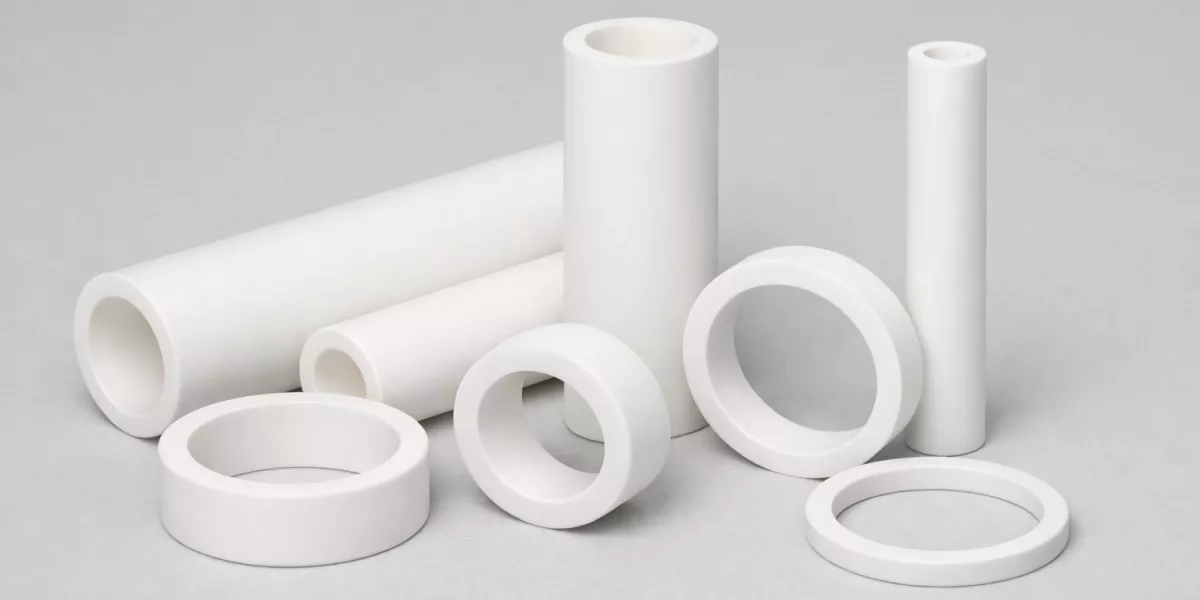
As numerical values accumulate across operating conditions, a consolidated view of friction ranges becomes necessary to prevent selective interpretation and to support realistic engineering expectations for zirconia ceramic interfaces.
Typical zirconia ceramic coefficient of friction ranges under common conditions
Reported friction values for zirconia ceramics span wide intervals because each measurement reflects a specific combination of surface state, contact load, sliding speed, temperature, lubrication, and counterface material. Without contextual grouping, isolated values risk being misapplied to incompatible operating regimes.
By organizing friction coefficients according to commonly encountered conditions, practical ranges emerge that reflect stabilized behavior rather than transient extremes. These ranges are intended to guide interpretation rather than replace condition-specific testing.
Consolidated friction ranges across representative operating regimes
| Operating condition | Screening COF ranges (confirm on duty RFQ: load · speed · temp · lube · Ra · counterface) | Primary controlling variables |
|---|---|---|
| Dry sliding, polished surface | 0.30–0.45 | Surface roughness, sliding speed |
| Dry sliding, ground surface | 0.40–0.55 | Asperity engagement, load |
| Water lubricated, low speed | 0.20–0.35 | Boundary chemistry, temperature |
| Oil lubricated, mixed regime | 0.10–0.30 | Film stability, surface energy |
| Low temperature operation (<40°C) | 0.40–0.65 | Mechanical asperity contact |
| Intermediate temperature (40–120°C) | 0.30–0.50 | Thermal smoothing, boundary layers |
| High load regime (>35 N) | 0.45–0.65 | Debris compaction, stress concentration |
| Zirconia–polymer pairing | 0.15–0.35 | Counterface compliance |
| Zirconia–metal pairing | 0.30–0.55 | Plastic accommodation, transfer layers |
These grouped ranges demonstrate that zirconia ceramic coefficient of friction cannot be represented by a single value without sacrificing accuracy. Instead, friction behavior should be referenced within bounded regimes that reflect the dominant mechanisms active under each condition.
When viewed collectively, the data reveal that surface preparation and lubrication state typically exert greater influence on friction magnitude than bulk zirconia composition. This insight reinforces the importance of interface engineering when predictable motion and load response are required.
Conclusion
Zirconia ceramic coefficient of friction emerges as a condition-dependent interface response shaped by motion, load, temperature, surface finish, lubrication, and counterface material rather than a single intrinsic value. Treat tabulated bands as typical published pin-on-disk / laboratory screening ranges and confirm duty variables on RFQ — not a contractual SLA.
Call to Action
For applications where friction stability defines performance limits, bring duty load · speed · temperature · lubrication · Ra · counterface into the RFQ. Start from the zirconia ceramics hub, review zirconia ceramic components, or submit a custom drawing · duty RFQ. Screening ranges above are typical published pin-on-disk / laboratory context — not a contractual COF or life SLA.
Related reading
- Zirconia ceramic degradation mechanisms (hydrothermal aging / LTD) — interface aging that can shift friction and contact behavior over time.
- Zirconia ceramic strength and toughness screening — mechanical screening context when COF duty also stresses contact integrity.
- Zirconia sintering crucible service life under repeated thermal cycles — thermal-cycle durability context adjacent to high-temperature ceramic duty (not a COF SLA).
FAQs
Why does zirconia ceramic show higher friction at start-up than during steady motion?
Static friction peaks occur due to full asperity engagement and limited micro-slip accommodation at rest. Published pin-on-disk screening often shows static friction exceeding dynamic values by an illustrative 40–60% band before run-in; confirm Ra · load · speed RFQ — not a contractual SLA.
Does lubrication always lower zirconia ceramic friction?
Lubrication moderates friction but does not eliminate solid contact. Under boundary or mixed regimes, typical published screening COF bands commonly remain between 0.2–0.4; confirm speed · temperature · finish on RFQ — not a contractual SLA.
Can a single friction coefficient represent zirconia ceramic behavior?
No. Friction varies significantly across load, speed, temperature, and surface condition. Reliable interpretation requires bounded screening ranges plus confirm-on-RFQ duty variables rather than single values or a contract COF SLA.
Why do friction values differ between laboratory tests and real equipment?
Laboratory tests often operate under limited loads, speeds, and durations. In service, regime transitions, debris evolution, and thermal effects shift zirconia ceramic coefficient of friction beyond initial test conditions.
References: