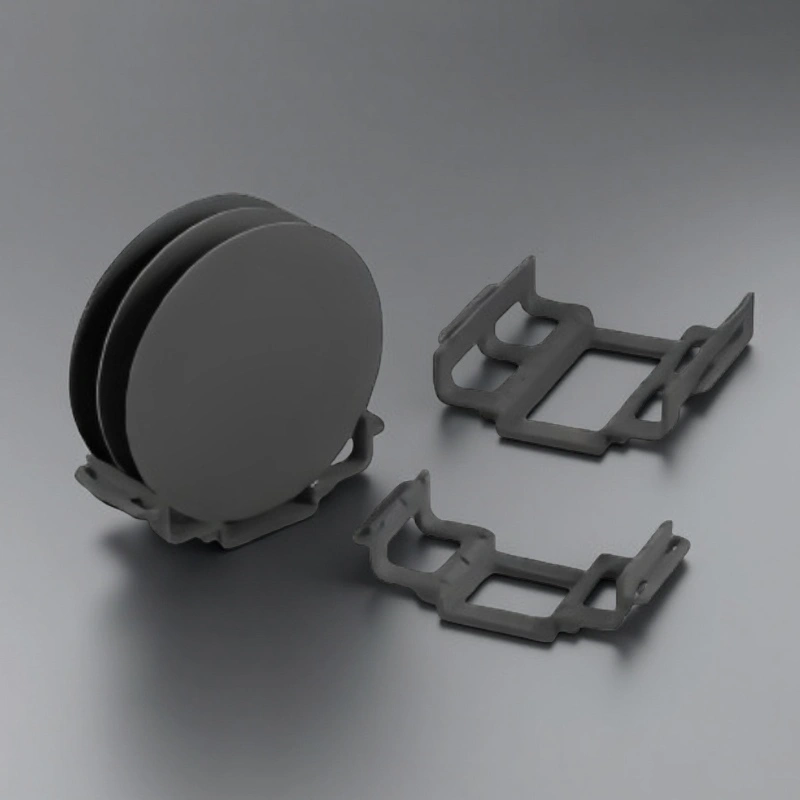
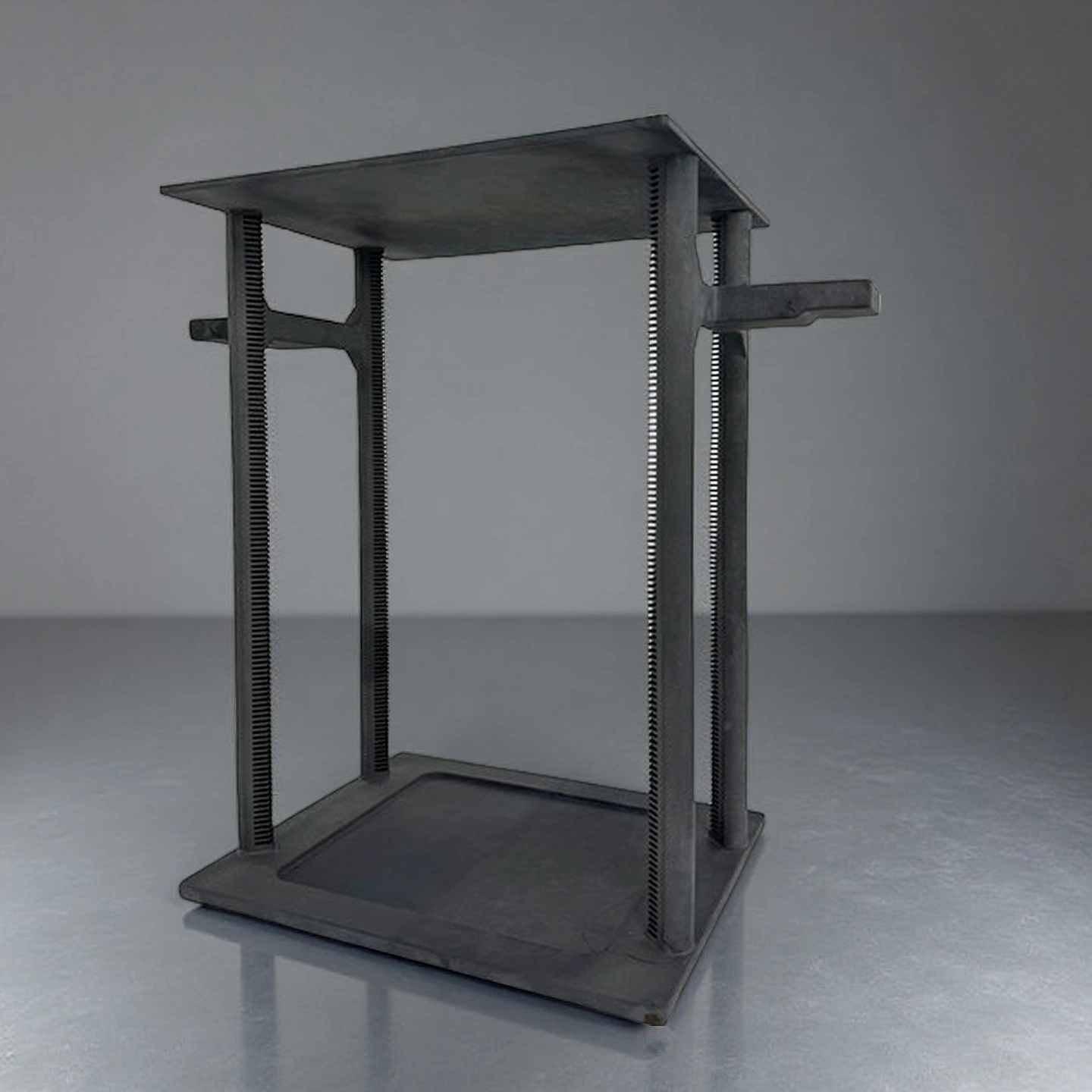
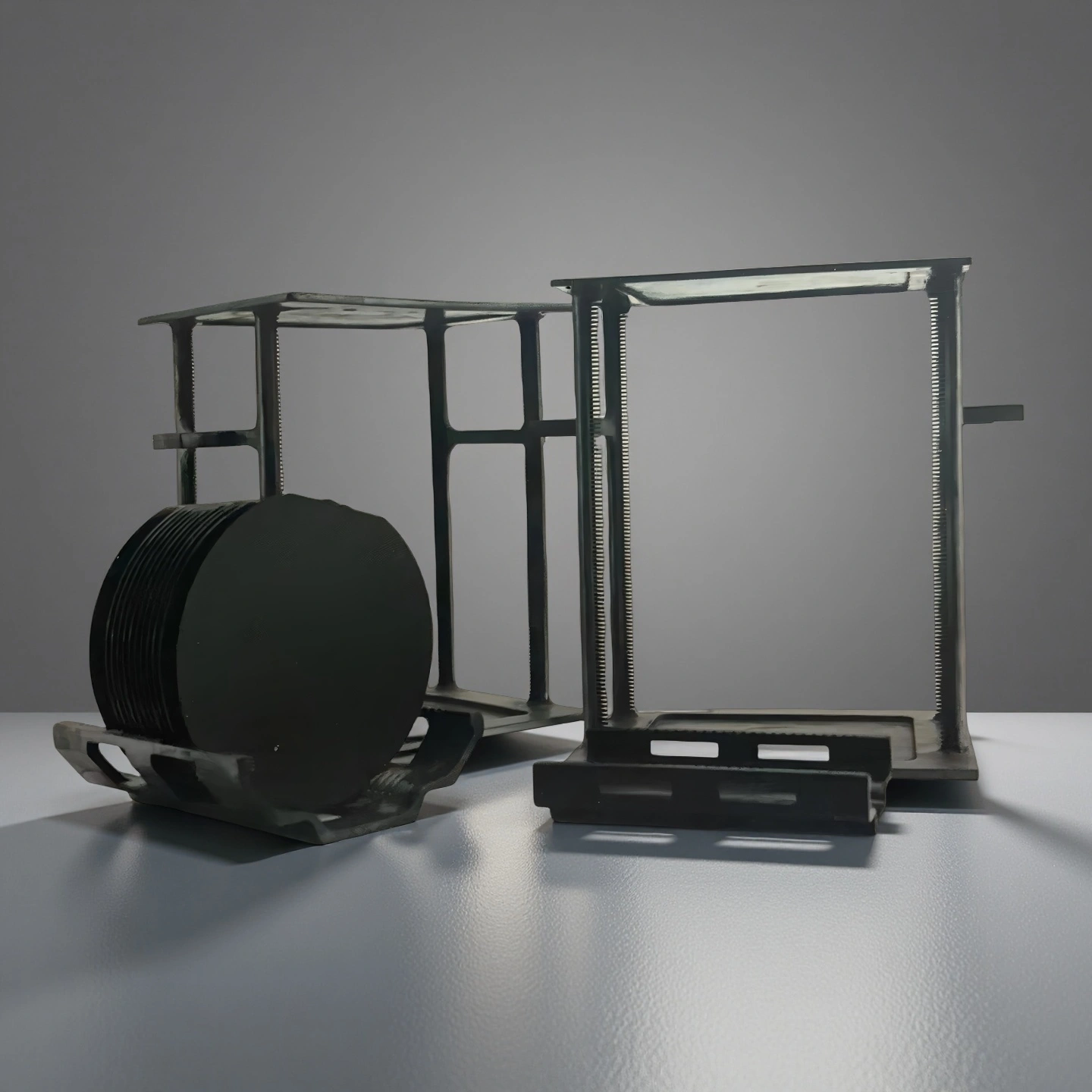
Process-Stable Silicon Carbide Wafer Boat for PV Furnace Operations

The Silicon Carbide Wafer Boat is defined by its structural stability, predictable high-temperature behavior, and consistent slot geometry that supports reliable wafer handling across advanced furnace platforms.

Catalogue No. AT-SIC-J1001
Material RBSiC / SSiC high-density silicon carbide
Max Operating Temperature 1400–1500°C continuous furnace operation
Thermal Expansion Coefficient 4.0–4.5×10⁻⁶/K (RT–1000°C)
Flexural Strength 220–290 MPa (RBSiC) / 350–430 MPa (SSiC)
24H Standard Dispatch
Small Batch Support OEM
Factory Direct
Expert Engineering Support

ADCERAX® Silicon Carbide Wafer Boat supports wafer handling and high-temperature processing in diffusion, oxidation and annealing furnace environments where stable geometry and thermal consistency are critical. Its SiC structure maintains mechanical rigidity and predictable behavior across extended heating cycles, allowing controlled wafer positioning and reliable gas-flow interaction throughout the process chamber. This performance makes the SiC Wafer Carrier Boat suitable for equipment builders and furnace system integrators seeking dependable loading stability and long operating life under demanding thermal conditions.

Precision Material and Thermal Performance Features of the Silicon Carbide Wafer Boat

  • High-Temperature Stability Across Continuous Furnace Cycles


    The structure maintains shape under 1400–1500°C thermal exposure, allowing the sintered sic wafer boat to remain dimensionally stable through extended heat cycles.
    Its low thermal expansion of 4.0–4.5×10⁻⁶/K supports uniform wafer spacing during long oxidation or diffusion runs without drift.
    High flexural strength of 350–430 MPa ensures the carrier endures repeated loading sequences without deformation accumulation.

  • Controlled Surface and Slot Geometry for Consistent Wafer Alignment


    Surface roughness of Ra 0.2–0.6 μm minimizes friction and reduces particle generation during loading and unloading.
    Slot pitch stability within ±0.05–0.10 mm supports accurate wafer placement and repeatable gas-flow interaction during furnace processing.
    Straightness maintained at ≤0.05 mm / 100 mm ensures predictable wafer support over the full carrier length.

  • Chemical and Atmospheric Compatibility for Furnace Process Requirements


    The high purity sic wafer boat remains chemically inert in H₂, N₂, Ar, NH₃, Cl₂, HCl, and SiH₄ atmospheres, supporting clean thermal environments.
    Oxidation resistance validated in O₂-based cycles enables stable performance in dry and wet oxidation steps without surface degradation.
    Low porosity at <0.1–0.5% reduces absorption and prevents micro-crack development during repeated heating and cooling sequences.

Technical Specifications of Silicon Carbide Wafer Boat

ADCERAX® Silicon Carbide Wafer Boat is defined by its stable high-temperature behavior, controlled microstructure, and repeatable material performance that support demanding diffusion, oxidation, and annealing furnace environments.

Property Specification
Material System RBSiC / SSiC high-density silicon carbide
Bulk Density 3.05–3.17 g/cm³
Open Porosity <0.5% (RBSiC) / <0.1% (SSiC)
Flexural Strength 220–290 MPa (RBSiC) / 350–430 MPa (SSiC)
Compressive Strength >2200 MPa
Thermal Conductivity 80–120 W/m·K
Thermal Expansion 4.0–4.5×10⁻⁶/K (RT–1000°C)
Maximum Service Temperature 1450–1600°C depending on grade
Chemical Compatibility Stable in H₂, N₂, Ar, NH₃, NH₃, Cl₂, HCl, SiH₄ atmospheres
Oxidation Resistance Maintains integrity in O₂-based furnace cycles
Surface Roughness Ra 0.2–0.6 μm

Dimensions of Silicon Carbide Wafer Boat

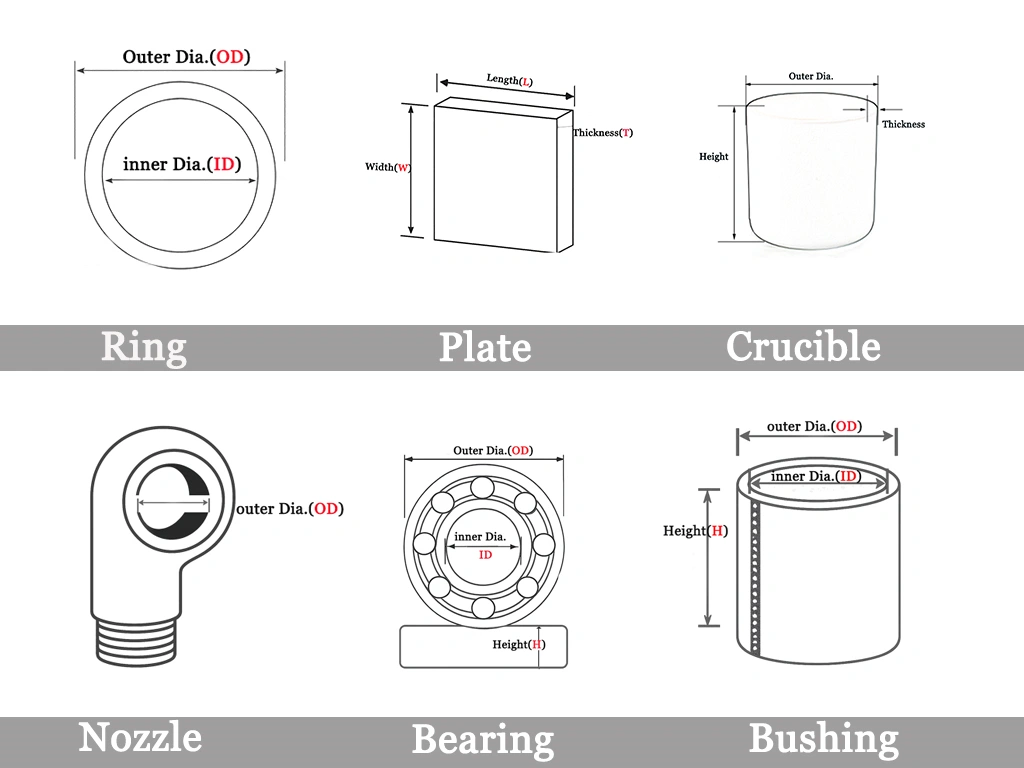
Silicon Carbide Wafer Boat
Item No. Diameter(mm) Height (mm)
AT-SIC-T1001 Customize

Packaging and Shipment Protection for Silicon Carbide Wafer Boat

Silicon Carbide Wafer Boat units are packed in reinforced multi-layer cartons with internal cushioning to prevent vibration and contact damage during transport. Each carton is further secured with strapping and stacked within a protective wooden frame to stabilize the load throughout long-distance handling. The finished pallets are prepared for international shipping, ensuring safe arrival under standard sea or air-freight conditions.
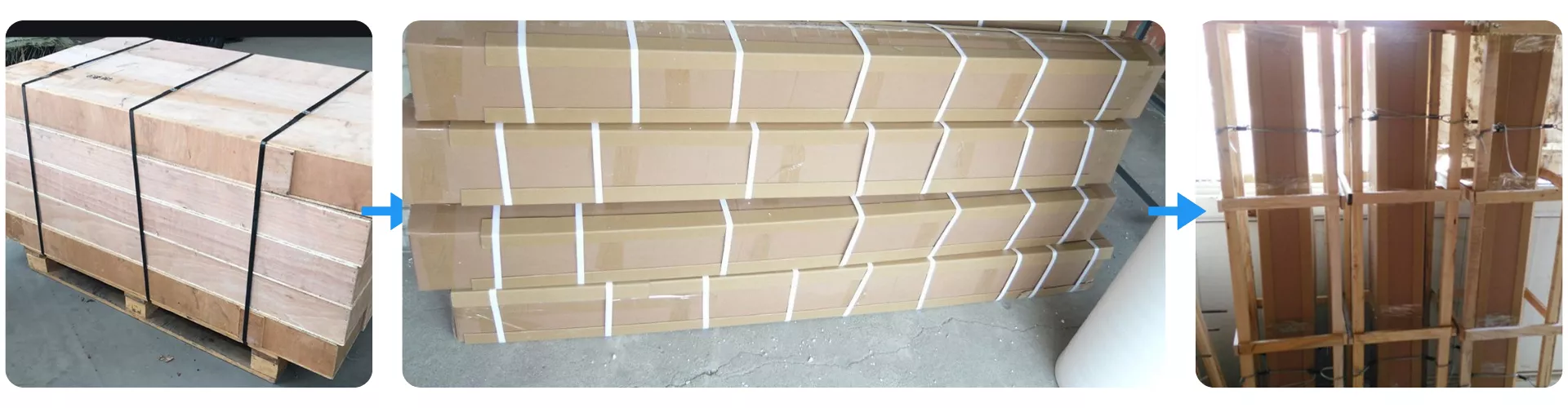
ADCERAX® Packaging of Silicon Carbide Wafer Boat


ADCERAX® Silicon Carbide Wafer Boat Solves Critical Challenges in Photovoltaic Thermal Processing

The Silicon Carbide Wafer Boat enables stable wafer handling, uniform gas–solid interaction, and predictable thermal behavior across high-temperature steps in photovoltaic cell manufacturing, where diffusion, oxidation, and high-throughput annealing demand consistent carrier performance.

  • Silicon Carbide Wafer Boat in Solar Cell Phosphorus Diffusion Furnaces

    ✅Key Advantages

    1. Stable Slot Geometry Under Long Diffusion Cycles
    The carrier maintains slot spacing stability within ±0.05–0.10 mm after repeated high-temperature diffusion runs. This control keeps wafer-to-wafer distance variation typically below 2–3% across a full stack, supporting tighter sheet-resistance distribution.

    2. Reduced Deformation in Extended High-Temperature Exposure
    Flexural strength in the range of 350–430 MPa and low creep behavior limit long-term bowing of the boat body. Even after several hundred diffusion cycles, measured deflection can remain below 0.1 mm along the loaded span, preventing gradual drift in gas-flow channels.

    3. Consistent Thermal Response for Large-Batch Processing
    Thermal conductivity of 80–120 W/m·K supports balanced heat transfer along the carrier, reducing temperature gradients in dense wafer loads. This contributes to sheet-resistance variation reductions where across-batch non-uniformity can be lowered by 10–20% compared with less conductive materials.

    ✅ ️Problem Solved

    A photovoltaic producer operating multi-lane phosphorus diffusion furnaces observed rising sheet-resistance scatter linked to carrier distortion after intensive use. Measurements showed progressive slot opening changes and local bowing that correlated with higher resistance deviation between wafers positioned at the center and edges of the load. After switching to ADCERAX® Silicon Carbide Wafer Boat units, flatness and slot stability remained within controlled limits through extended cycles, and gas-flow distribution across the furnace tube became more repeatable. Over several production campaigns, process data indicated a reduction in sheet-resistance spread on full batches by approximately 15–18%, allowing the line to run with fewer recipe compensations and less reclassification of borderline cells.

  • Silicon Carbide Wafer Boat in Solar Cell Annealing and Surface Passivation Lines

    ✅Key Advantages

    1. High Resistance to Rapid Thermal Cycling
    The carrier structure sustains temperature jumps in the range of 300–400°C per cycle without measurable crack propagation in standard inspection. After several hundred annealing cycles, mechanical integrity testing can still show flexural strength maintained above 90% of initial values, which supports stable wafer handling.

    2. Controlled Transfer of Mechanical Stress to Wafers
    Low thermal expansion of 4.0–4.5×10⁻⁶/K limits mismatch stresses that would otherwise transfer to thin PV wafers during fast ramps. In practice, bow measurements on wafers processed with the Silicon Carbide Wafer Boat have shown curvature variation reductions of 10–15% compared with carriers using higher-expansion materials.

    3. Low-Porosity Body for Clean Annealing Environment
    Open porosity of <0.1–0.5% reduces gas entrapment and minimizes particle release during hydrogen or nitrogen annealing. This helps keep particle counts on wafer surfaces at levels compatible with stable passivation performance, with observed surface defect counts lowered by 10–20% in comparative line checks.

    ✅ ️Problem Solved

    A PV line running hydrogen annealing and surface passivation reported drift in wafer bow and local defects that appeared after multiple fast-ramp cycles. Conventional carriers developed micro-cracks and localized distortion, which gradually introduced stress patterns that could be tracked into passivation performance scatter. After adopting ADCERAX® Silicon Carbide Wafer Boat carriers, thermal cycling tests showed stable carrier geometry and lower transfer of mechanical stress into the wafer stack. Subsequent process monitoring indicated more consistent wafer curvature at the anneal exit and a measurable decrease in passivation-related defect indicators, supporting tighter control of final cell performance.

  • Silicon Carbide Wafer Boat in Solar LPCVD Anti-Reflection Coating Processes

    ✅Key Advantages

    1. Controlled Slot Pitch for Film Thickness Uniformity
    Slot positioning held within ±0.05–0.10 mm supports predictable spacing in the wafer stack across the full carrier length. This stability helps maintain film thickness variation within target limits, where coating non-uniformity on production lots can be reduced by 10–15% compared with carriers showing larger geometric drift.

    2. Thermal Conductivity Supporting Uniform Deposition Conditions
    With thermal conductivity in the 80–120 W/m·K range, the Silicon Carbide Wafer Boat distributes heat more evenly along the loaded wafers. This reduces localized hot or cool regions in the LPCVD tube, contributing to narrower thickness distribution bands and more consistent refractive index across the coated surface.

    3. Chemically Robust Surface in Reactive LPCVD Atmospheres
    The SiC material remains stable in SiH₄ / NH₃ and related process gases used for anti-reflection coatings. Surface stability and low roughness in the Ra 0.2–0.6 μm range minimize micro-particle generation during long coating campaigns, supporting cleaner film growth conditions.

    ✅ ️Problem Solved

    A solar module manufacturer running LPCVD anti-reflection coatings identified recurring thickness gradients from top to bottom of the wafer stack, linked to inconsistent carrier geometry and thermal behavior. Analysis of historical data showed that lots processed after extended carrier use exhibited wider film-thickness spreads and increased variability in optical performance. After implementing ADCERAX® Silicon Carbide Wafer Boat carriers with controlled slot pitch and higher thermal conductivity, coating thickness profiles across batches became more compact, and the difference between wafers at the top and bottom positions was narrowed by around 12–16%. This improvement reduced the number of wafers falling outside the preferred coating window and supported more stable cell efficiency distribution along the line.

ADCERAX® Silicon Carbide Wafer Boat User Guide for Stable, Safe, and Consistent Furnace Operation

The Silicon Carbide Wafer Boat requires proper handling, loading discipline, and maintenance awareness to ensure consistent performance across diffusion, oxidation, annealing, and LPCVD cycles.

  • PWafer Loading Practices for Consistent Furnace Performance

    1. Maintain controlled placement when loading wafers into the boat to protect slot geometry and prevent uneven distribution during thermal cycles. Each loading sequence should be performed with steady alignment to avoid lateral stress on the supporting walls and ensure stable wafer spacing throughout the run. Regular checks of slot surfaces help identify early signs of wear that could affect gas-flow uniformity.
    2. Inspect the contact edges for debris before each loading cycle to maintain clean interface points and minimize micro-scratching on wafer surfaces. Light air-blowing or non-abrasive brushing prevents particle buildup that could transfer contamination into the process tube. Ensuring the carrier is clean at every cycle supports uniform thermal interaction.
    3. Position the carrier on the furnace loading arm or track using the designated support zones to preserve structural balance under high-temperature movement. Off-center loading increases bending stress during transfer and may influence run-to-run repeatability in furnace conditions. Following stable placement practices improves reproducibility of wafer behavior across batches.

  • Pre-Furnace Inspection and Handling Recommendations

    1. Perform a brief geometric check before each run to confirm flatness consistency and detect unusual changes from previous cycles. Any observed deviations should be evaluated promptly to avoid long-term drift during furnace exposure. These checks help maintain predictable wafer alignment.
    2. Handle the boat using both support ends to limit torsional loading on the body, especially after repeated thermal cycling. Avoid applying direct pressure to the slot region to prevent micro-crack formation under local stress. Consistent handling reduces risk of structural fatigue.
    3. Store the boat in a cushioned, upright position to maintain surface protection against accidental abrasion or impact during idle periods. Avoid stacking carriers without separation pads to prevent friction contact and surface damage. Controlled storage contributes to longer service life.

  • In-Process Operating Guidance for Thermal Stability

    1. Allow the boat to enter and exit the furnace under controlled ramp rates appropriate for SiC stability to minimize shock loading. Abrupt transitions between heating and cooling increase fatigue, particularly in high-throughput PV lines. Maintaining moderate transitions supports more predictable cycle performance.
    2. Confirm that furnace loading systems apply uniform mechanical support along the boat’s underside to prevent sagging during periods of maximum thermal load. Uneven support points can generate bending forces that impact wafer spacing. Balanced mechanical contact improves long-term dimensional consistency.
    3. Monitor atmospheric conditions for stable chemical compatibility, ensuring gases such as H₂, O₂, N₂, NH₃ or SiH₄ remain within process boundaries to avoid localized surface reactions. Sudden changes in chemistry can affect surface conditions and reduce cleanliness of wafer contact zones. Consistent gas profiles help preserve surface integrity.

  • Maintenance, Cleaning, and Service-Life Management

    1. Clean the boat using non-abrasive chemical agents compatible with SiC furnace environments, ensuring no residue remains that could transfer into diffusion, oxidation or LPCVD tubes. Rinse with DI water and dry fully before reuse to maintain low particle generation. Proper cleaning preserves slot condition and surface roughness.
    2. Perform periodic dimensional checks using controlled measurement tools to verify slot spacing stability and structural straightness after cumulative cycles. Early identification of drift helps operators prevent process deviations or wafer stack misalignment. Routine inspection supports long-term uniformity of furnace runs.
    3. Replace carriers once thermal-cycle thresholds or visible surface degradation indicate reduced structural capability, preventing impact on wafer curvature, coating uniformity, or doping profiles. Tracking life-cycle data supports predictive maintenance planning. Consistent renewal practices improve overall line stability.

Technical Insights and Operational FAQs for the ADCERAX® Silicon Carbide Wafer Boat

  1. Q1: How does the Silicon Carbide Wafer Boat maintain structural accuracy inside a vertical diffusion furnace sic wafer boat environment?

    The Silicon Carbide Wafer Boat preserves slot spacing stability through low thermal expansion, enabling predictable wafer alignment even during long vertical diffusion sequences. Its high flexural strength helps prevent deformation as the full wafer load is suspended vertically for extended thermal exposure. This stability supports tighter control of sheet-resistance uniformity across the stack. The predictable geometry also reduces the need for furnace-level compensation during recipe tuning.

  2. Q2: What advantages does a high purity sic wafer boat version provide during phosphorus diffusion and oxidation cycles?

    A high purity sic wafer boat has extremely low porosity, reducing particle entrapment that often leads to contamination in high-temperature PV processes. Its clean surface chemistry resists reactions with O₂, N₂, or dopant gases, keeping wafer contact points stable across many cycles. This purity helps maintain consistent thermal transfer along the wafer stack. As a result, process deviations linked to surface contamination decline significantly.

  3. Q3: Why does a sintered sic wafer boat perform better in long-cycle annealing conditions compared to other ceramic carriers?

    A sintered sic wafer boat offers higher density and superior creep resistance, preventing sagging after hundreds of annealing cycles. Its fine microstructure limits crack propagation during repeated temperature jumps, improving long-term dimensional control. This greatly benefits hydrogen and nitrogen annealing where heat-ramp swings can damage weaker materials. The outcome is more stable wafer curvature and fewer line interruptions.

  4. Q4: How does the Silicon Carbide Wafer Boat help reduce wafer bow variation in fast-ramp annealing lines?

    Its low thermal expansion coefficient minimizes stress transfer to wafer edges during rapid heating and cooling. The rigid SiC frame prevents local deformation zones that typically distort thin photovoltaic wafers. This design stabilizes wafer curvature across repeated batches. As a result, downstream passivation or coating steps receive more uniform incoming substrates.

  5. Q5: How does the Silicon Carbide Wafer Boat support uniform gas-flow distribution inside high-capacity PV furnace tubes?

    The carrier’s controlled slot geometry keeps spacing consistent across the entire load, preserving laminar flow patterns inside the tube. This reduces micro-eddies that often cause dopant or coating gradients. Its high thermal conductivity helps maintain a stable temperature field surrounding each wafer. Together, these features improve uniformity in diffusion, oxidation, and LPCVD processes.

Engineering Feedback on the ADCERAX® Silicon Carbide Wafer Boat in Photovoltaic Thermal Processing

  • ⭐️⭐️⭐️⭐️⭐️

    The Silicon Carbide Wafer Boat delivered repeatable stability across long phosphorus diffusion cycles, and our sheet-resistance distribution tightened noticeably after implementation. Its geometry retention under sustained thermal load exceeded our previous carriers, improving overall run consistency. The controlled gas-flow behavior also helped reduce recipe adjustments during peak throughput periods.
    Michael R., Process Engineering Division, SolenTech PV Systems

  • ⭐️⭐️⭐️⭐️⭐️

    Our annealing line benefited from the boat’s resistance to rapid thermal ramping, which reduced wafer bow fluctuations across multiple cycle windows. We observed lower defect counts after integrating it into hydrogen anneal sequences, especially in the high-volume passivation stage. The predictable handling response has supported more reliable furnace scheduling.
    Laura K., Thermal Operations Group, HelioVolt Materials Lab

  • ⭐️⭐️⭐️⭐️⭐️

    In LPCVD coating campaigns, the carrier’s stable slot spacing and uniform heat transfer helped narrow our coating thickness variation across dense wafer stacks. The reduction in top-to-bottom film deviation was measurable within the first weeks of adoption. Its low-porosity surface also contributed to consistently clean deposition conditions.
    Daniel S., Coating Technology Department, SunGrid Energy Equipment

  • ⭐️⭐️⭐️⭐️⭐️

    Our evaluation team noted that the boat maintained rigidity across extended high-temperature exposure, even in demanding oxidation batches. The structural consistency supported smoother loading operations and reduced manual compensations during shift-to-shift transitions. It has become a dependable fixture in our PV furnace integration workflow.
    Emma W., Equipment Integration Unit, Auronix Solar Engineering

customize size

Customization Services for SiC Wafer Boat

ADCERAX®Silicon Carbide Wafer Boat customization services are structured to support equipment builders and photovoltaic furnace integrators requiring geometry-, compatibility-, and process-aligned configurations.

Structural Geometry Adaptation

A tailored carrier configuration is enabled to ensure alignment with furnace loading mechanics and thermal-process requirements.

  • Slot Profile Options
    Adjusted to support controlled wafer positioning.

  • Frame Geometry Variation
    Refined to enhance load distribution stability.

  • Support Rib Layout
    Configured to reinforce long-span dimensional integrity.

Surface and Material Interface Optimization

Surface and interface attributes are optimized to maintain consistency under high-temperature PV diffusion, annealing, and coating conditions.

  • Surface Finish Control
    Managed to reduce unwanted particle generation.

  • Contact Area Refinement
    Modified to maintain predictable wafer interactions.

  • Interface Compatibility Design
    Developed to align with furnace fixtures and handling tools.

Related Products

ADCERAX - Your Trusted Advanced Ceramics Manufacturing Partner

Direct factory manufacturing with comprehensive ceramic materials expertise and global supply capabilities

Direct Factory Manufacturing

China-based ceramic materials production facility with state-of-the-art equipment

Engineering Team

Experienced professionals in advanced ceramics applications and custom design

Quality Control

Strict quality control standards for technical ceramics manufacturing and quality management

Global Supply Chain

Serving customers worldwide with technical ceramics and rapid response

24/7 Technical Support

Round-the-clock support for ceramic components inquiries and technical assistance

500+ Satisfied Customers

Trusted by global customers for advanced ceramic materials and precision components

Get in touch with us

Our team will be happy to respond to you in less than 24 hours.

Adcerax's factory

Quick Quotation

*Our team will answer your inquiries within 24 hours.

*Your information will be kept strictly confidential.

Ready to Solve Your Engineering Challenge?

Partner with ADCERAX for reliable, high-performance advanced ceramic solutions. Our engineers are ready to discuss your project.

E-mail

info@adcerax.com

Phone

+(86) 0731-74427743 | WhatsApp: +(86) 19311583352

Response Time

Within 24 hours

Quick Quote

The more details you provide, the faster we can quote.

*We respond within 24 hours. All inquiries are confidential.

Download Catalog

Get Your Custom Sulution

The more details you provide, the faster we can respond.

customize size

*We respond within 24 hours. All inquiries are confidential.

Download Catalog