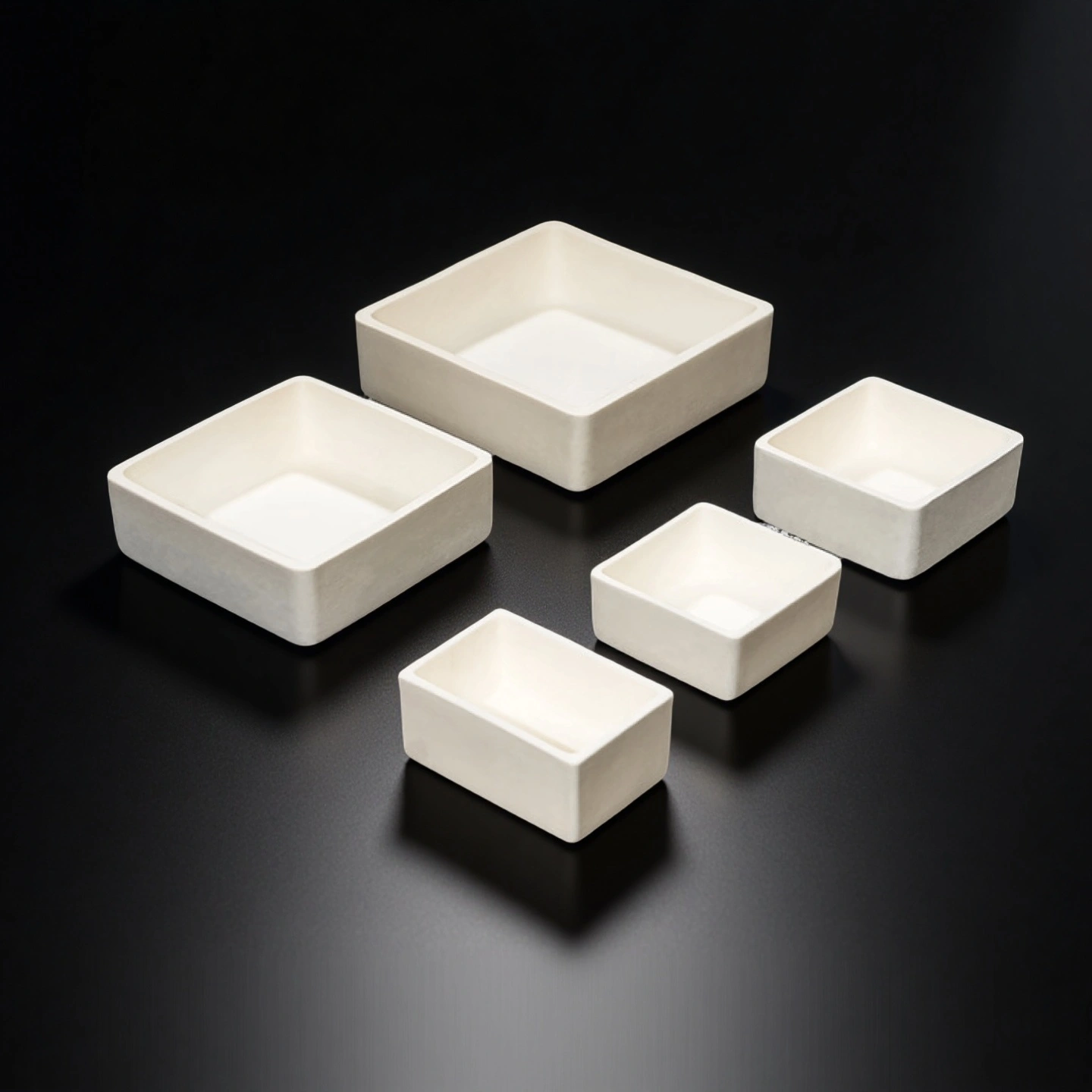
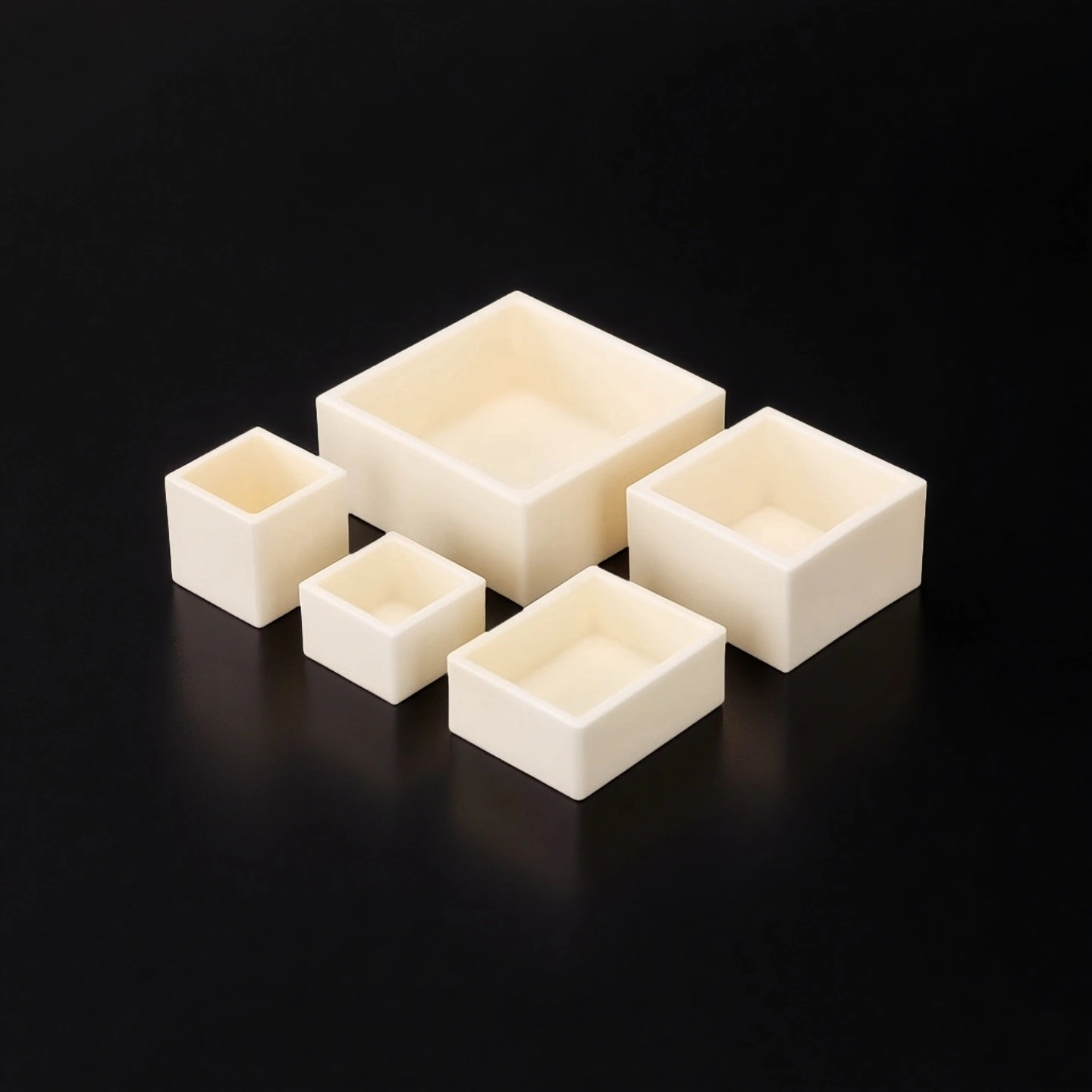
High-Temperature Alumina Rectangular Trays for Calcination & Sintering

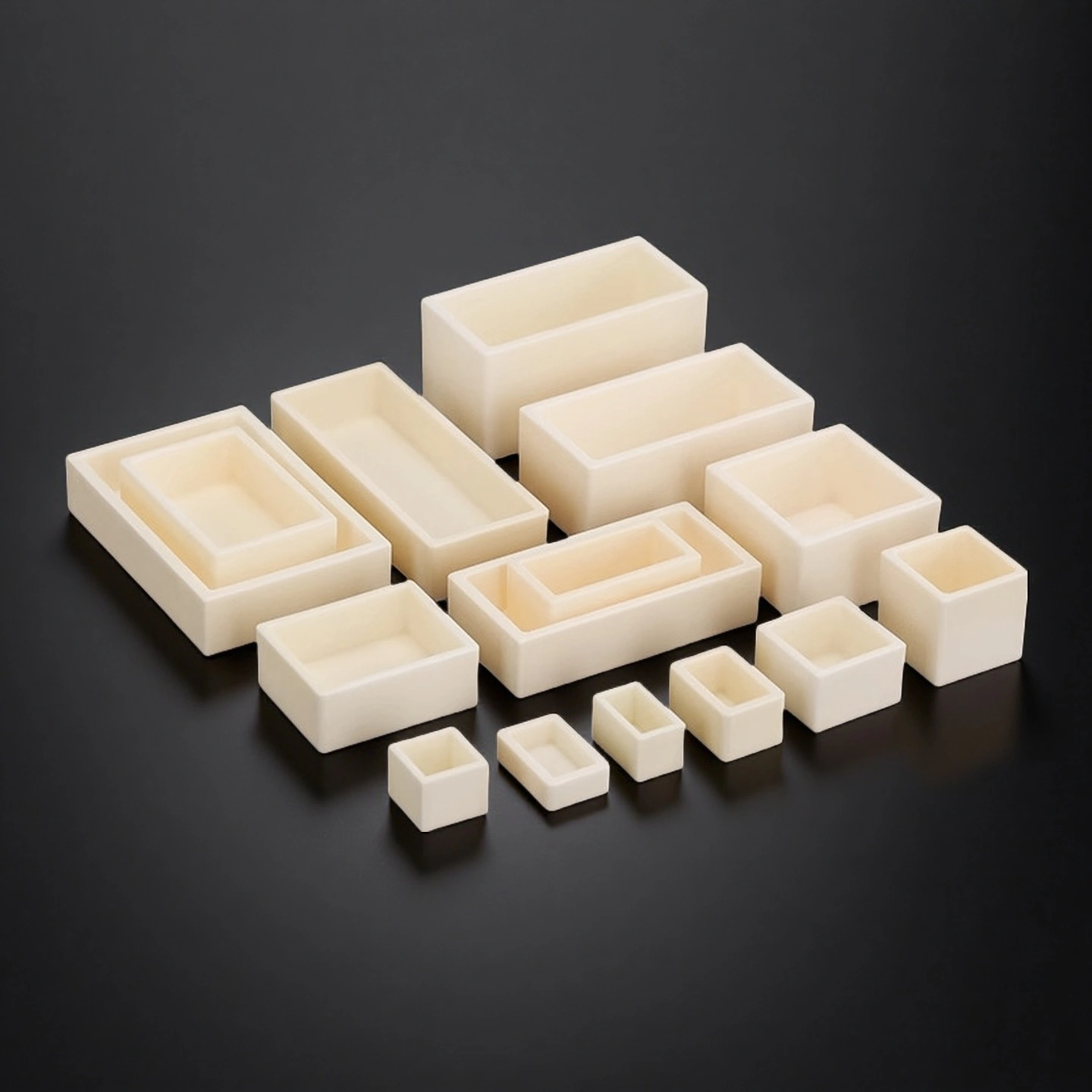
ADCERAX supplies alumina rectangular trays in 96%, 99%, and 99.7% Al2O3 options, supporting both standard sizes and drawing-based customization. Length, width, height, wall thickness, corner radius, rim design, holes, slots, chamfers, and surface finish can be reviewed according to furnace size, loading method, working temperature, atmosphere, and contamination-control requirements.

Catalog No. TE-ASJ-93
Material ≥ 96% Al2O3
Working Temperature ≤1650°C
Wall Thickness Tolerance ±0.2 mm – ±0.5 mm
Dimensions / Sizes Standard sizes available; custom dimensions by drawing
Engineering RFQ Review
Small-Batch Custom Support
Factory-Direct Manufacturing
Drawing & Process Review

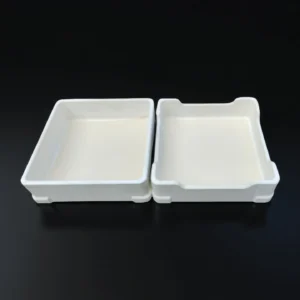
Alumina rectangular trays are rigid, corrosion-resistant ceramic carriers made from high-purity aluminum oxide (Al2O3). They provide a flat, clean surface for calcination, sintering, ashing, drying, powder heat treatment, and sample transfer in muffle furnaces, tube furnaces, industrial furnaces, and ovens. Their rectangular dish geometry fits furnace shelves and helps users spread powders, arrange small parts, and handle materials more efficiently than deep crucibles or irregular containers.

Rectangular Alumina Trays Advantages

  • Large flat surface area — Compared with crucibles, rectangular trays provide broad, level platforms ideal for laying out powders or multiple small parts in a single layer, which improves heating uniformity and helps reduce particle agglomeration.
  • Stacking and loading efficiency — Their rectangular footprint fits furnace shelves more efficiently, allowing trays to be stacked or aligned side by side to improve furnace chamber utilization.
  • Optimized for setters and fixtures — Unlike deep crucibles, rectangular trays can act as setters during sintering, helping components stay flat and supporting repeatable dimensions for powder metallurgy or advanced ceramic parts.

Alumina Rectangular Trays Specifications
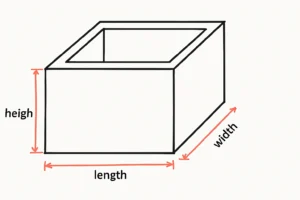
Alumina rectangular tray size diagram

Alumina Rectangular Trays
Item No. Volume length (mm) width (mm) height (mm)
TE-AS-061-2 33 120 30 15
TE-ASJ-77 38 120 30 15
TE-AS-054-3 39 113 30 18
TE-AS-027-3 41 80 40 17
TE-AS-038-4 57.4 100 30 25
TE-ASJ-72 61 100 40 20
TE-ASJ-65 100 120 60 20
TE-AS-061-4 105 120 60 20
TE-AS-029-6 111 95 65 22
TE-AS-062-5 117 120 60 22
TE-AS-062-7 129 120 100 15
TE-ASJ-62 136 120 100 15
TE-ASJ-49 207 100 100 25
TE-AS-054-6 250 115 115 24
TE-AS-069-5 371 200 100 25
TE-ASJ-36 407 200 100 25
TE-AS-070-30 1025 360 120 30

*Note: The table above shows only some standard specifications. For more specifications, please refer to the complete product catalogue or contact us for customization.

When to Choose an Alumina Rectangular Tray

An alumina rectangular tray is suitable when materials need a flat, heat-resistant, and low-contamination loading surface during sintering, calcination, ashing, or drying. Compared with metal trays, deep crucibles, saggars, quartz trays, or zirconia trays, it is often preferred for open loading, easier powder spreading, better furnace space use, and stable performance under repeated high-temperature cycles.

Compared Item When Alumina Rectangular Tray May Be Preferred
Metal tray When oxidation, deformation, electrical conductivity, or metallic contamination is a concern.
Deep crucible When materials need a wider flat loading area instead of deep containment.
Alumina saggar When the process needs open loading, easier handling, or shallow powder spreading.
Quartz tray When higher mechanical strength or longer high-temperature use is required.
Zirconia tray When alumina provides enough performance with better cost control.

Selection Guide for Alumina Rectangular Trays

Choose Alumina Purity by Process Cleanliness

96% alumina is suitable for general furnace loading, drying, and cost-sensitive heat-treatment processes. It offers good high-temperature stability and is often used when the tray mainly works as a durable ceramic carrier.

99% or 99.7% alumina is recommended when the process requires lower contamination, cleaner ashing, or more stable contact with analytical samples, catalysts, battery materials, pigments, functional powders, or high-purity ceramic parts.

Choose Tray Size by Furnace Space and Loading Method

The tray length and width should match the usable furnace chamber or shelf area while leaving enough clearance for handling tools and thermal expansion. For powder processing, the tray should provide enough flat area to spread materials evenly without excessive loading depth.

For small parts or ceramic components, the tray size should allow parts to be separated properly during firing. This helps reduce sticking, uneven heating, and contact marks between parts.

Choose Wall Thickness by Load and Thermal Cycle

Thicker alumina trays provide better support for heavier loads and repeated handling. They are suitable when the tray carries dense powders, multiple parts, or larger batch volumes.

Thinner trays may heat and cool faster, but they are more sensitive to impact, uneven loading, and thermal shock. The final wall thickness should be reviewed according to tray size, loading weight, heating rate, and handling method.

Choose Edge and Corner Design by Handling Risk

Chamfered edges and rounded corners help reduce chipping during handling, packing, and furnace loading. This is especially useful for trays that are frequently moved with tongs or handled in repeated production cycles.

For larger trays or heavier loads, a reinforced rim can be reviewed to improve handling stability. Sharp corners and thin edges should be avoided when the tray will be used under repeated thermal cycling or manual loading.

Choose Holes, Slots, or Grooves by Process Requirement

Holes, slots, or grooves can be added when airflow, gas release, drainage, positioning, or fixture alignment is required. These features are useful for special furnace processes, but they should be reviewed carefully because they may affect tray strength and manufacturing difficulty.

For custom designs, customers should provide drawings, working temperature, furnace atmosphere, loading weight, powder or part type, and any critical tolerance or surface requirement before production.

Alumina Rectangular Tray Packaging

Alumina rectangular trays are packed with individual separation to reduce edge chipping, surface scratching, and collision during international transport. Foam pads, dividers, inner boxes, reinforced cartons, and clear labels can be used according to tray size, quantity, and surface requirements.

For polished, thin-wall, large-size, or custom trays, ADCERAX can add extra edge protection and layer separation. Mixed sizes or different material grades should be labeled clearly to reduce sorting errors after delivery.
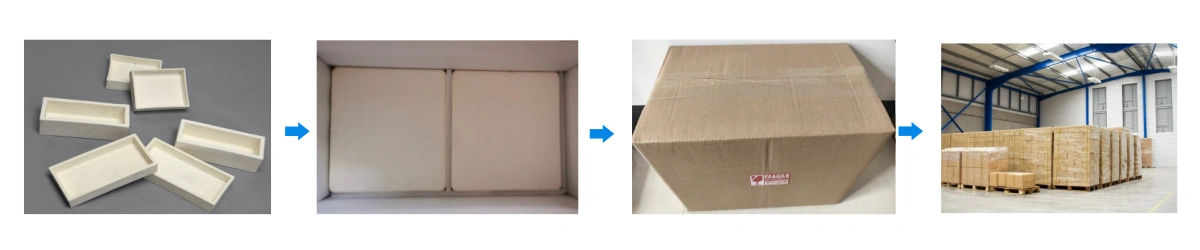

Alumina rectangular tray packaging with protective separation

Alumina Rectangular Tray Applications

Alumina rectangular trays are used in high-temperature processes where materials need a clean, stable, and reusable ceramic loading surface. They are suitable for powders, residues, pellets, small ceramic parts, test samples, and functional materials processed in laboratory furnaces, muffle furnaces, tube furnaces, and batch thermal-treatment systems.

Laboratory Calcination and Ashing

Alumina rectangular trays are commonly used in laboratory calcination and ashing processes to hold powders, residues, ash samples, and small test specimens. Their flat tray shape helps materials spread more evenly than deep containers, while high-purity alumina helps reduce the risk of metallic contamination during analytical and thermal-processing work.

Powder Metallurgy and Sintering

In powder metallurgy and sintering applications, alumina rectangular trays can serve as ceramic setter trays for pressed parts, pellets, and small components. They provide a stable high-temperature support surface and help separate workpieces from metal furnace shelves during repeated heating cycles.

Ceramic Part Firing

Alumina rectangular trays are suitable for firing small ceramic parts, test pieces, insulators, electronic ceramic components, and custom ceramic parts. Tray size, wall thickness, flatness, and loading layout should be selected according to part geometry, firing temperature, shrinkage behavior, and batch arrangement.

Battery Materials and Functional Powder Processing

For battery materials, catalysts, pigments, and functional powders, alumina rectangular trays provide a clean and heat-resistant loading surface during drying, activation, calcination, or thermal treatment. 99% or 99.7% alumina may be selected when lower contamination and cleaner material contact are required.

Furnace Loading and Setter Support

Alumina rectangular trays can also be used as furnace loading trays, setter trays, or support trays in batch thermal-processing systems. Custom holes, slots, reinforced rims, chamfered edges, or special corner structures can be reviewed when airflow, positioning, handling, or loading stability is important.

Alumina Rectangular Tray Usage Instructions

Use

1. Always pre-dry alumina rectangular trays before introducing them into high-temperature furnaces to prevent microcracking from residual moisture.
2. Ramp temperature and cooling rates gradually, and avoid thermal shock caused by rapid insertion or removal.
3. Load powders or components evenly across the flat rectangular surface to maintain balance and reduce localized stress.
4. When using anti-stick coatings or setter layers, apply a thin, uniform coating to avoid uneven contact marks.

Storage

1. After cooling to room temperature, place trays on refractory shelves or ceramic pads, and avoid steel benches that may induce thermal stress.
2. Do not quench trays in water or cool air streams; allow them to cool naturally.
3. Store trays in foam-lined or padded bins to protect edges from accidental chipping during handling and transport.
4. Keep separate storage for clean and used trays to prevent cross-contamination between different materials or chemistries.

Cleaning

1. Remove residues mechanically with soft abrasives, such as a ceramic brush or alumina-compatible media.
2. Avoid HF-containing solutions and strong fluorides, which can aggressively attack Al2O3.
3. For stubborn deposits, apply controlled heating in a clean furnace cycle before reusing the tray.
4. Rinse with deionized water, dry thoroughly at 100–120 °C, and inspect for surface cracks before the next use.

Common Mistakes and Fixes

1. Over-tight furnace schedules may cause thermal shock, so controlled holding times should be added to protect tray life.
2. Incompatible cleaning chemicals may damage the tray surface, so neutral or mildly alkaline detergents should be used after chemical compatibility is reviewed.
3. Overloading trays beyond the designed flatness tolerance may increase stress, so loads should be spread evenly and heavier parts should use reinforced tray versions when needed.
4. Reusing chipped trays in precision work may cause crack propagation, contamination, or yield loss, so cracked or warped trays should be retired.

Alumina Rectangular Trays FAQ

  1. How do I choose the right alumina rectangular tray size?
    The tray size should be selected according to furnace chamber space, loading volume, powder depth, part layout, handling clearance, and thermal expansion allowance. For custom trays, length, width, height, wall thickness, corner radius, and usable loading area should be confirmed before production.
  2. What alumina purity is suitable for rectangular trays?
    96% alumina is suitable for general furnace loading and cost-sensitive thermal processing. 99% or 99.7% alumina is often selected when lower contamination, cleaner ashing, or more stable processing is required for analytical samples, catalysts, battery materials, or functional powders.
  3. Can alumina rectangular trays be used with metal powders?
    Alumina trays can be used with many powders under suitable furnace conditions, but compatibility should be reviewed when metal powders, fluxes, fluorides, strong alkalis, or reactive additives are involved. Temperature, atmosphere, contact time, and powder chemistry should be checked before use.
  4. Why do alumina trays crack during furnace use?
    Cracking may be caused by rapid heating or cooling, residual moisture, uneven loading, point contact, mechanical impact, overloading, or placing hot trays on cold metal surfaces. Gradual temperature ramps, even loading, and proper handling help reduce cracking risk.
  5. Can the tray edges, holes, slots, or surface finish be customized?
    ADCERAX can review drawings for tray length, width, height, wall thickness, rim design, chamfers, corner radius, holes, slots, grooves, and surface finish. Drawings should include critical dimensions, tolerances, operating temperature, atmosphere, and loading method.
  6. What quality details are checked before shipment?
    Inspection can include material grade confirmation, dimensional checks, wall thickness, flatness, edge condition, surface cracks, hole or slot position, quantity, labeling, and packaging condition. For repeat orders, key dimensions can be checked against the approved drawing or previous batch requirements.
customize size

China Alumina Rectangular Trays Customized

ADCERAX is a China alumina rectangular trays manufacturer offering customized solutions for laboratories and industrial furnaces.What You Can Specify:

  • Outer/inner dimensions & capacities (with drawing tolerances on thickness, flatness, and radius/edge chamfer).
  • Wall thickness (thin for fast thermal response; thick for mechanical robustness).
  • End/edge details: reinforced rim, fillets, drain notch.
  • Holes/slots & patterns for airflow or part indexing (CNC-machined or laser-processed depending on thickness).
  • Surface finish: raw kiln-finish, light-polished, or sand-blasted contact face.
  • Material grade: select 96–99.7% Al₂O₃ for low contamination in lab/production.

Send your CAD files or samples, and our engineers will respond with drawings and a quote within 24 hours.

Related Products

ADCERAX - Your Trusted Advanced Ceramics Manufacturing Partner

Direct factory manufacturing with comprehensive ceramic materials expertise and global supply capabilities

China-Based Manufacturer

ADCERAX supplies ceramic components for overseas OEMs, equipment builders, and labs.

Custom Drawing Support

We review drawings, dimensions, materials, and application conditions before quotation.

Ceramic Process Control

Forming, sintering, machining, grinding, and finishing are arranged by part requirements.

Pre-Shipment Inspection

Dimensional checks, visual inspection, and packaging review help reduce procurement risk.

Get in Touch with Us

Our team will be happy to respond to you in less than 24 hours.

Pingxiang Factory — Silicon carbide, silicon nitride, high-temperature ceramics

Quick Quotation

*Our team will answer your inquiries within 24 hours.

*Your information will be kept strictly confidential.

Ready to Solve Your Engineering Challenge?

Partner with ADCERAX for reliable, high-performance advanced ceramic solutions. Our engineers are ready to discuss your project.

E-mail

info@adcerax.com

Phone

+(86) 0731-74427743 | WhatsApp: +(86) 19311583352

Response Time

Within 24 hours

Quick Quote

The more details you provide, the faster we can quote.

*We respond within 24 hours. All inquiries are confidential.

Get Your Custom Solution

The more details you provide, the faster we can respond.

customize size

*We respond within 24 hours. All inquiries are confidential.

Download Catalog