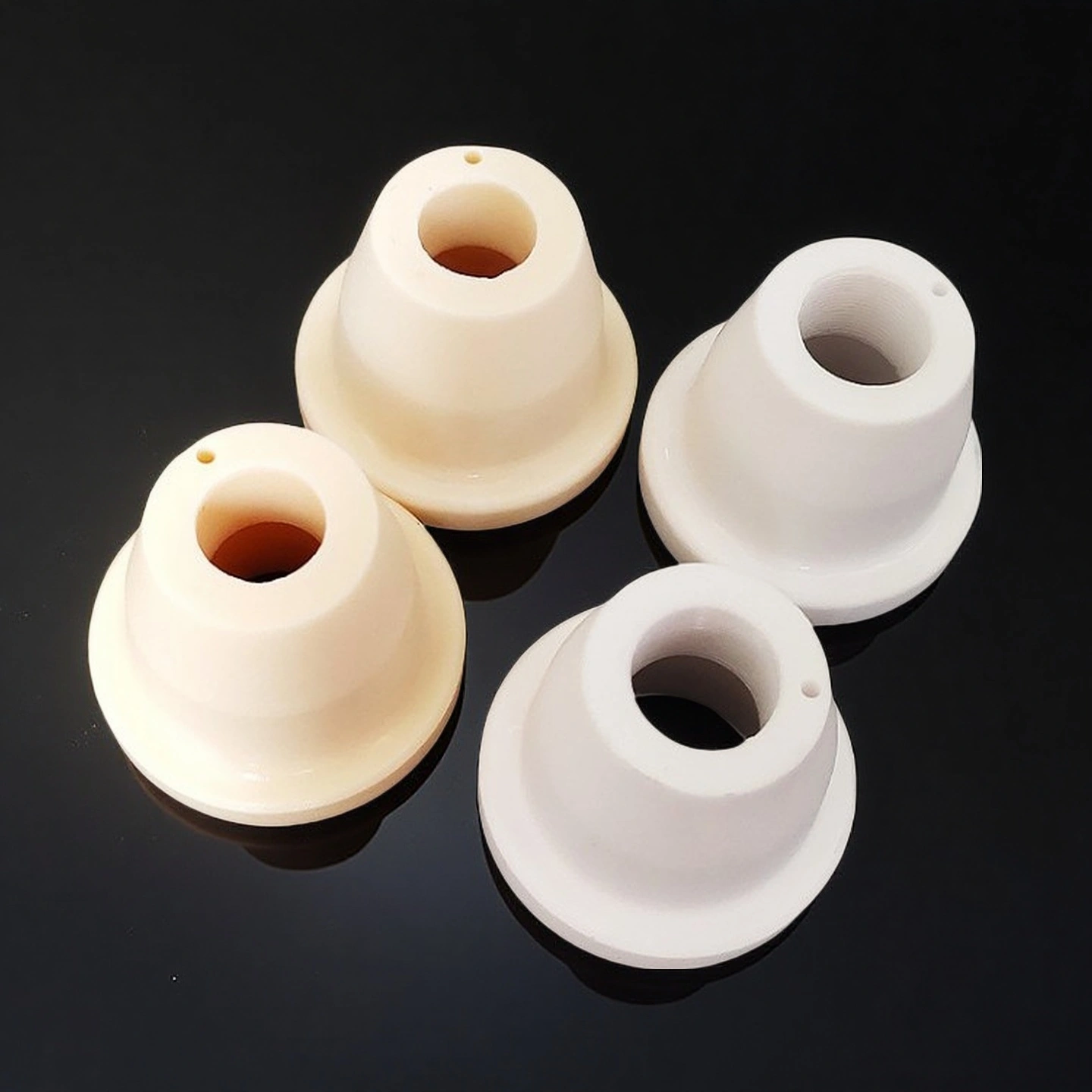
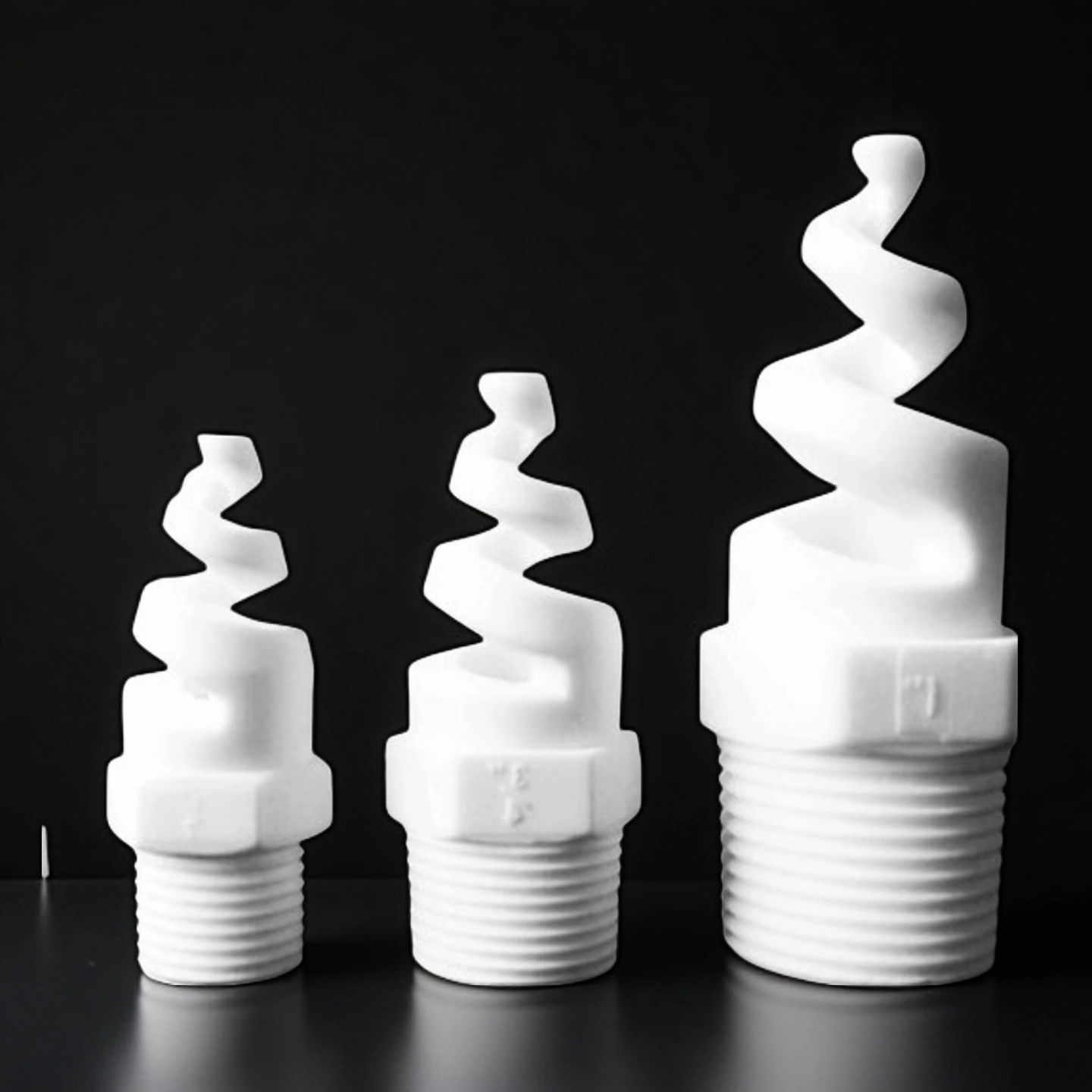
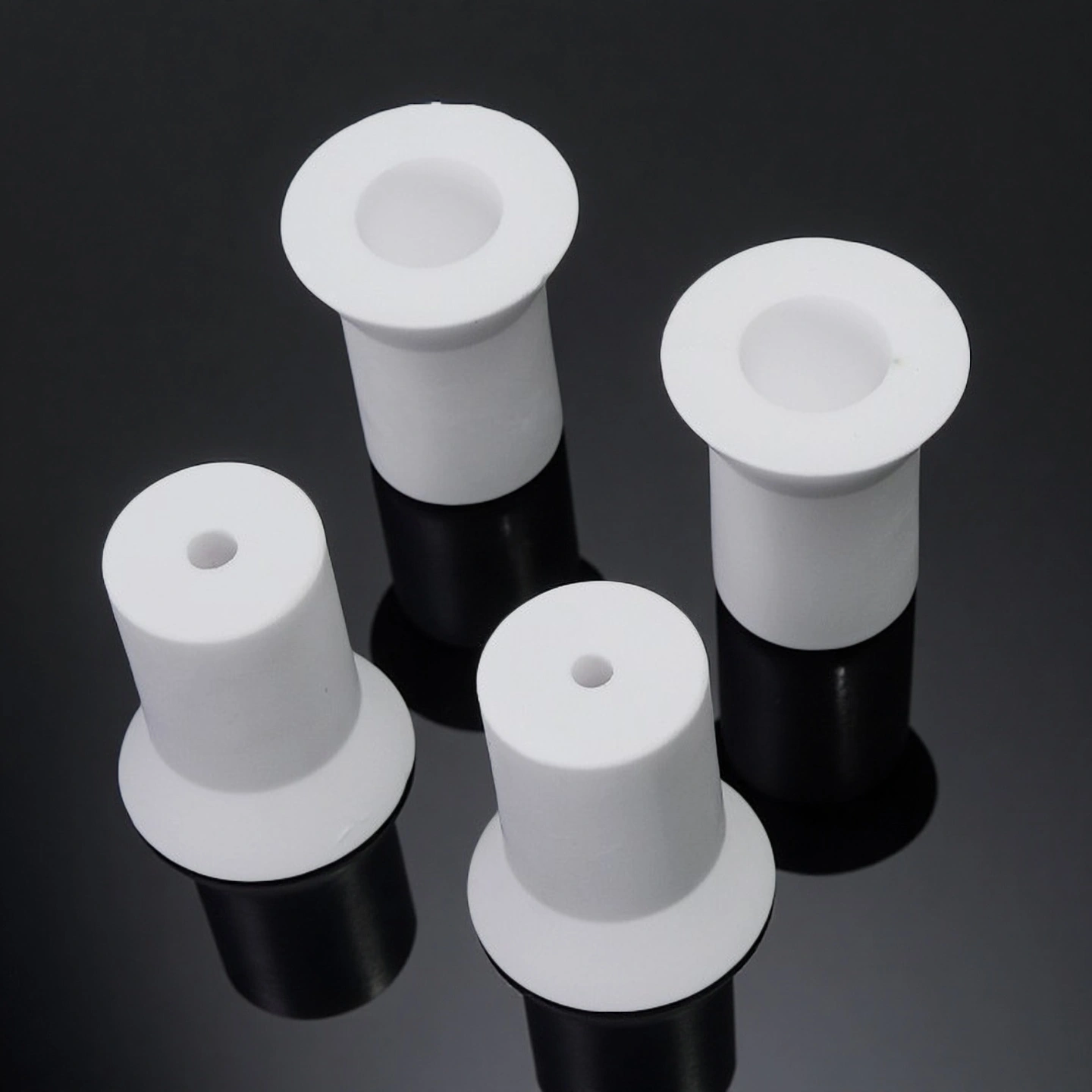
Custom Alumina Ceramic Nozzles for Abrasive Flow, Chemical Spray, Washdown, and High-temperature Fluid-control Systems

Alumina nozzle with polished, wear-resistant bore for consistent atomization and flow control in abrasive, corrosive, or high-temperature lines. Customized sizes, purities, and shapes are all available.

Catalog No. AT-SN-DN8
Material ≥ 96% Al2O3
Orifice tolerance up to ±0.01–0.03 mm (size-dependent)
Surface roughness (bore) Ra ≤0.5 µm (polished option ≤0.2 µm)
Dimensions/Sizes Download PDF
Engineering RFQ Review
Small-Batch Custom Support
Factory-Direct Manufacturing
Drawing & Media Review

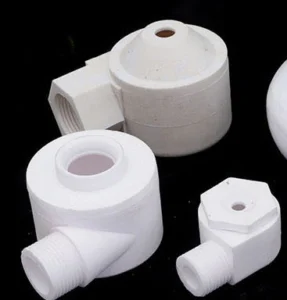
Alumina ceramic nozzles are used to control liquid, gas, or abrasive media flow in spray, jet, blasting, and chemical washdown systems. Their high hardness, corrosion resistance, and stable bore geometry help maintain spray pattern and service life where metal or polymer nozzles may wear, deform, or corrode.

Alumina Ceramic Nozzle Benefits

  • Spray geometry retention — orifice holds shape over long abrasive duty, keeping angle and droplet spectrum stable.

  • Anti-clog bore finish — low-porosity, smooth channel reduces particulate hang-up and pressure spikes.

  • Seat & thread fit — repeatable sealing to manifold/torch heads, lowering leak-induced variability.

  • Thermal stability in cycling — low expansion supports rapid heat/cool cycles without shift in flow.

  • Geometry flexibility — spiral, cone, and TIG cup forms to match fogging, jetting, or shielding needs.

Alumina Ceramic Nozzle Properties

Property Unit 96% Al₂O₃ 99% Al₂O₃ 99.5% Al₂O₃ 99.6% Al₂O₃ 99.7% Al₂O₃ 99.8% Al₂O₃ 99.9% Al₂O₃ 99.99% Al₂O₃
Alumina content % 96 96 99.5 99.6 99.7 99.8 99.9 99.99
Density g/cm³ 3.6-3.75 3.83 3.89 3.91 3.92 3.93 3.94 3.98
Color white Ivory Ivory Ivory Ivory Ivory Ivory Ivory
Water absorption % 0 0 0 0 0 0 0
Young’s modulus (Elastic modulus) GPa 0 0 375 356 357 358 359 362
Shear modulus GPa 152
Bulk modulus GPa 228
Poisson’s ratio 0.22
Compressive strength MPa 1910 2210 2600 2552 2554 2556 2558 2570
Flexural strength MPa 260 300 379 312 313 314 315 320
Fracture toughness MPa·m¹ᐟ² 4
Hardness GPa 14.5 17 17 23 24 25 26 30
Thermal conductivity W/m·K 22 24 35 32–37 33–38 34–39 35–40 36–42
Thermal shock resistance ΔT °C 222 223 224 225 228
Maximum use temperature (no load) °C 1450 1680 ≤1750 1755 1760 1765 1770 1800
Coefficient of thermal expansion 10⁻⁶/°C 7.6 7.6 8.4
Volume resistivity Ω·cm >1×10¹⁴ >1×10¹⁴ >1×10¹⁴ >1×10¹⁴ >1×10¹⁴ >1×10¹⁴ >1×10¹⁴ >1×10¹⁴
Dielectric constant (relative permittivity) 9.2 9.5 9.8 9.83 9.84 9.85 9.86 9.92
Dielectric strength kV/mm 15 19 16.9 23.2 23.4 23.6 23.8 24
Dissipation factor (loss factor @ 1 kHz) 0.0002


Alumina nozzle Size

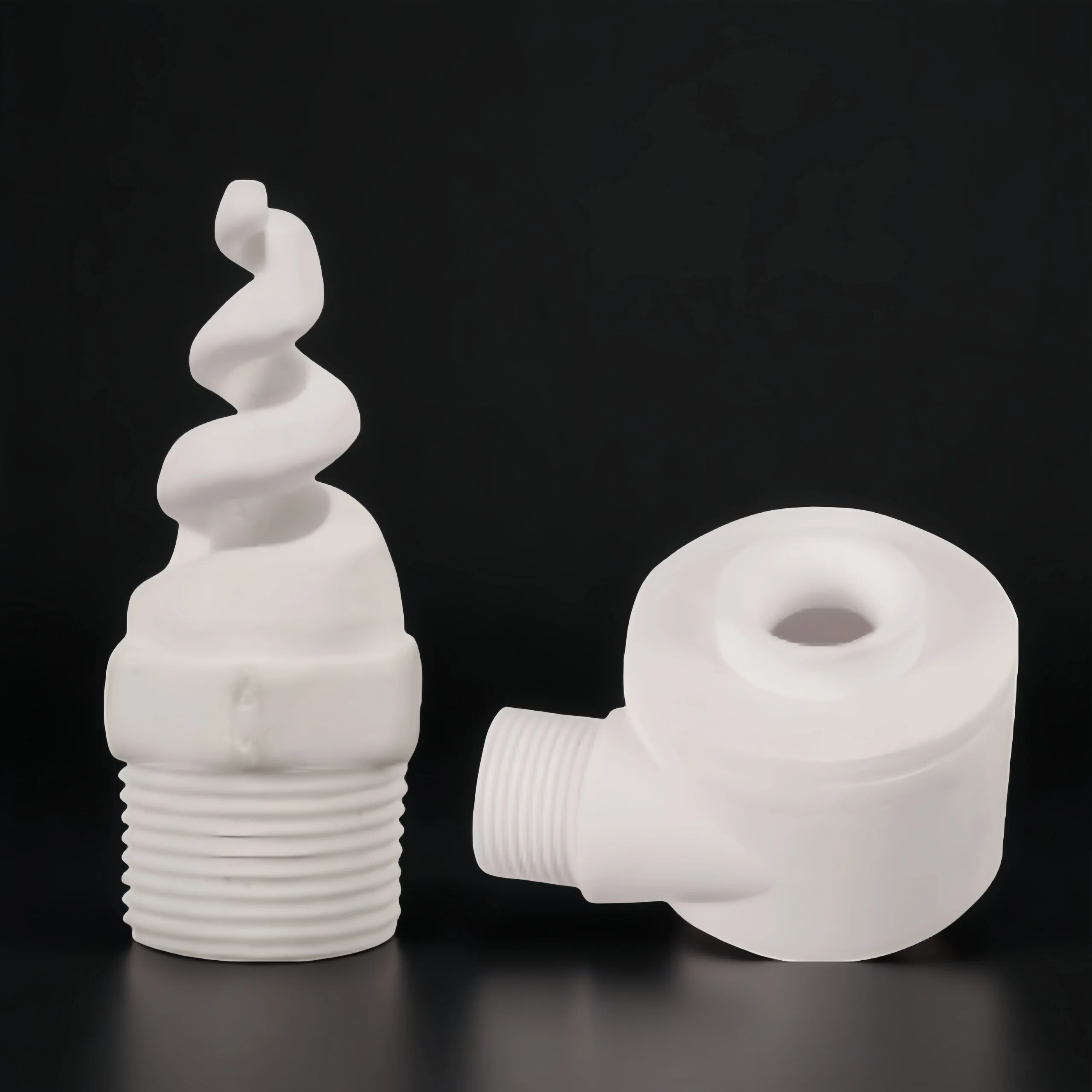
Type 1: Spiral Alumina Nozzle
Angular view of high-purity ceramic alumina nozzle

Spiral Alumina Nozzle
Item No. Hole Diameter  (mm) Jet angle (°) Operating Temperature(℃) Pressure(bar) medium
AT-SN-DN8 8 120 800 0.7 liquid
AT-SN-DN10 10 120 800 0.7 liquid
AT-SN-DN15 15 120 800 0.7 liquid
AT-SN-DN20 20 120 800 0.7 liquid
AT-SN-DN25 25 120 800 0.7 liquid
AT-SN-DN32 32 120 800 0.7 liquid
AT-SN-DN40 40 120 800 0.7 liquid
AT-SN-DN50 50 120 800 0.7 liquid


Type 2: Vortex Alumina Nozzle

vortex alumina nozzle


Vortex Alumina Nozzle
Item No. Hole Diameter  (mm) Jet angle (°) Operating Temperature(℃) Pressure(bar) medium
AT-SN-DN060 15 120 800 0.7 liquid
AT-SN-DN070 20 120 800 0.7 liquid
AT-SN-DN080 25 120 800 0.7 liquid


Alumina Ceramic Nozzle Operating Condition Fit

Operating condition Why alumina can help What to confirm before RFQ
Abrasive slurry or particles Hard ceramic bore reduces wear from particle impact. Particle size, pressure, flow rate, and orifice size.
Chemical spray or washdown Alumina resists many corrosive media better than metals. Chemical type, concentration, pH, and temperature.
Hot gas or liquid jet Ceramic structure keeps better dimensional stability under heat. Working temperature and thermal cycling rate.
Precision fluid jet Polished bore helps maintain flow consistency. Bore tolerance, spray angle, and surface finish.
Custom equipment interface A ceramic nozzle can be machined to fit specific seats or threads. Drawing, thread type, seat design, and sealing method.

Alumina Nozzle Packaging

  • Impact-safe inner trays with cell partitions; foam-lined small boxes
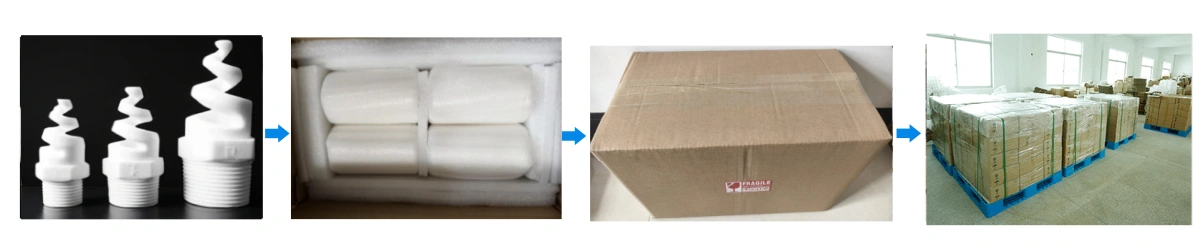
Alumina Nozzle Packaging

Alumina Nozzle Applications

  • Industrial Abrasive Blasting Systems

    ✅Key Advantages

    1. Orifice stability: Maintains jet profile across extended abrasive exposure.
    2. Low clog tendency: Smooth bore reduces fines build-up during pressure cycling.
    3. Seat integrity: Repeatable sealing lowers off-angle spray events.

    ✅ Problem Solved

    A surface-prep line replacing metal tips with alumina nozzles reduced mid-shift change-outs, stabilized jet angle, and decreased rework on coated panels. Dimensional checks of spent nozzles showed minimal orifice growth relative to baseline, aligning with the target spray window and lowering consumable cost per run.

  • Chemical Spray / Scrubbing & Washdown

    ✅Key Advantages

    1. Corrosion endurance: Compatible with common acids/alkalis used in scrubbers.
    2. Consistent atomization: Polished bore supports uniform droplet size distribution.
    3. Temperature cycling: Orifice geometry remains stable during hot-cold washdown.

    ✅ Problem Solved

    A plant switched to alumina nozzles on a scrubber loop and achieved steadier differential pressure and spray coverage through cleaning cycles. Operators reported fewer partial blockages and more predictable washdown times during maintenance windows.

  • General Fluid Spray & Jet Systems

    ✅Key Advantages

    1. Versatile Jet Control: Alumina nozzles accurately direct liquids or gases at specified velocity and angle for consistent spray coverage.
    2. Thermal & Chemical Stability: The ceramic structure resists temperature cycling and aggressive fluids such as acids, alkalis, or fuel vapours.
    3. Extended Lifetime: Hard alumina bore maintains geometry in paint spraying, cleaning, and combustion applications, reducing replacement frequency.

    ✅ Problem Solved

    In an automated coating and cooling system, replacing metal tips with alumina ceramic nozzles maintained uniform spray distribution and reduced clogging under variable pressure. The system’s downtime for nozzle changeovers dropped by 35%, while spray efficiency improved by 18% based on flow monitoring data, ensuring continuous and stable operation in mixed liquid–gas delivery processes.

✅ Alumina Nozzle Selection Guide

Selection factor Engineering risk if wrong Recommended information
Orifice diameter Flow rate may be unstable or clogging risk may increase. Nominal bore size and tolerance.
Spray angle Coverage may be too narrow or too wide. Required spray pattern and target area.
Working pressure Throat erosion or cracking may occur. Normal and peak pressure.
Media type Wear, corrosion, or contamination risk may increase. Liquid, gas, slurry, powder, or chemical media.
Temperature Thermal shock or dimensional change may occur. Continuous and peak temperature.
Mounting interface Leakage or assembly failure may occur. Thread, flange, seat, gasket, or sample photo.

Alumina Nozzle Usage Instructions

  • Installation

    1. Check compatibility before fitting: Ensure seat, thread, and gasket surfaces match drawing specifications. Misalignment can cause leakage or uneven spray patterns.
    2. Torque and alignment: Hand-fit the alumina ceramic nozzle first to avoid chipping, then torque evenly per fixture or manifold specification (avoid overtightening).
    3. Fixture inspection: For systems using multiple alumina spray nozzles, verify spacing uniformity and orientation to maintain consistent flow distribution.
    4. Pre-start check: Run a brief low-pressure test to confirm even discharge and absence of leaks before entering normal operation.

  • Use

    1. Choose the correct orifice: Select based on liquid viscosity, pressure, and desired spray angle. For abrasive or slurry media, smaller orifice and hardened alumina grade (≥ 99%) are recommended.
    2. Pressure control: Ramp pressure gradually to the rated operating point; avoid sudden spikes that can erode the nozzle throat.
    3. Prevent dry running: Never operate spray or blasting systems without liquid flow—dry-firing accelerates wear and thermal shock damage.
    4. Filtration: Always add an upstream filter or strainer when solid content exceeds 100 µm to prevent clogging and flow imbalance.
    5. Flow monitoring: Record baseline flow rates; deviations over 5 % may indicate orifice wear or build-up.

  • Storage

    1. Dry environment: Keep alumina nozzles in ventilated, low-humidity trays; moisture absorption is minimal but condensation can contaminate orifices.
    2. Segregation by size: Avoid stacking small-ID nozzles; store individually in foam or cell trays to protect edges.
    3. Labeling: Use printed ID cards with size, orifice type, and inspection date for quick traceability.
    4. Long-term storage: For seasonal equipment, apply light silicone oil film on threads and seal ports with caps.

  • Cleaning

    1. Routine maintenance: Flush the alumina nozzle with clean water or compatible solvent after every shift or product changeover.
    2. Avoid mechanical scraping: Use only non-metal tools such as nylon or wood picks for bore cleaning; metal objects can chip or score the ceramic surface.
    3. Air drying: After flushing, blow through with dry compressed air to remove moisture and prevent deposits.
    4. Chemical cleaning: For sticky residues, immerse in diluted neutral detergent (< pH 9) at ≤ 60 °C, rinse thoroughly, then dry.
    5. Ultrasonic cleaning: Safe for polished or spiral nozzles; keep time under 5 minutes to prevent cavitation erosion.

  • Cautions / Extend Lifetime

    1. Handle with care: Avoid impact, drop, or vibration; alumina ceramics are hard but brittle.
    2. Protect edges: The orifice rim and thread seat are precision-machined—never use pliers or wrench on ceramic surfaces.
    3. Maintain proper differential pressure: Stay within design limits to avoid accelerated throat erosion and pressure-induced cracking.
    4. Temperature cycling: For hot–cold processes, warm up gradually to reduce thermal shock.
    5. Inspection schedule: Visually check orifice and seat every 200–400 operating hours or per 20,000 L throughput (whichever comes first).
    6. Replacement rule: Replace when orifice growth exceeds 0.05 mm from nominal or spray angle changes beyond ±2°.

FAQ About Alumina Ceramic Nozzles

These questions help engineers and purchasing teams confirm whether alumina ceramic nozzles are suitable for abrasive, chemical, high-temperature, and custom flow-control applications.

  1. Q: What is an alumina nozzle used for?
    A: An alumina ceramic nozzle is used to control liquid, gas, slurry, or abrasive media flow in spray, jet, blasting, and chemical washdown systems. It is often selected when metal or plastic nozzles wear, corrode, or lose bore stability too quickly.
  2. Q: Why choose alumina instead of metal or plastic nozzles?
    A: Alumina offers high hardness, good corrosion resistance, heat resistance, and stable bore geometry. These properties help reduce wear, maintain spray or jet consistency, and extend service life in abrasive or chemically aggressive conditions.
  3. Q: What alumina grades are available for ceramic nozzles?
    A: Alumina nozzles can be reviewed in different alumina grades depending on wear resistance, corrosion exposure, temperature, and dimensional requirements. Common options may include standard industrial alumina and high-purity alumina, but the final grade should be confirmed according to the working medium and operating conditions.
  4. Q: Can ADCERAX make custom alumina nozzles from drawings?
    A: Yes. ADCERAX can review custom alumina nozzle requirements based on drawings, samples, or operating conditions. Orifice diameter, bore length, spray angle, thread type, seat design, surface finish, and mounting interface can be evaluated before quotation.
  5. Q: What information is needed for a quotation?
    A: Please provide the drawing or sample photo, medium type, working pressure, operating temperature, orifice diameter, spray angle, mounting interface, and estimated quantity. These details help our engineering team evaluate material suitability, machining feasibility, and quotation accuracy.

  6. Q: How should alumina nozzles be cleaned and inspected?
    A: Alumina nozzles should be cleaned with a compatible solvent, deionized water, or ultrasonic cleaning when appropriate. During inspection, check the orifice, bore surface, edges, and mounting area for clogging, chips, cracks, wear, or spray-pattern changes. Avoid strong mechanical impact during handling.
customize size

Customize Alumina Nozzle

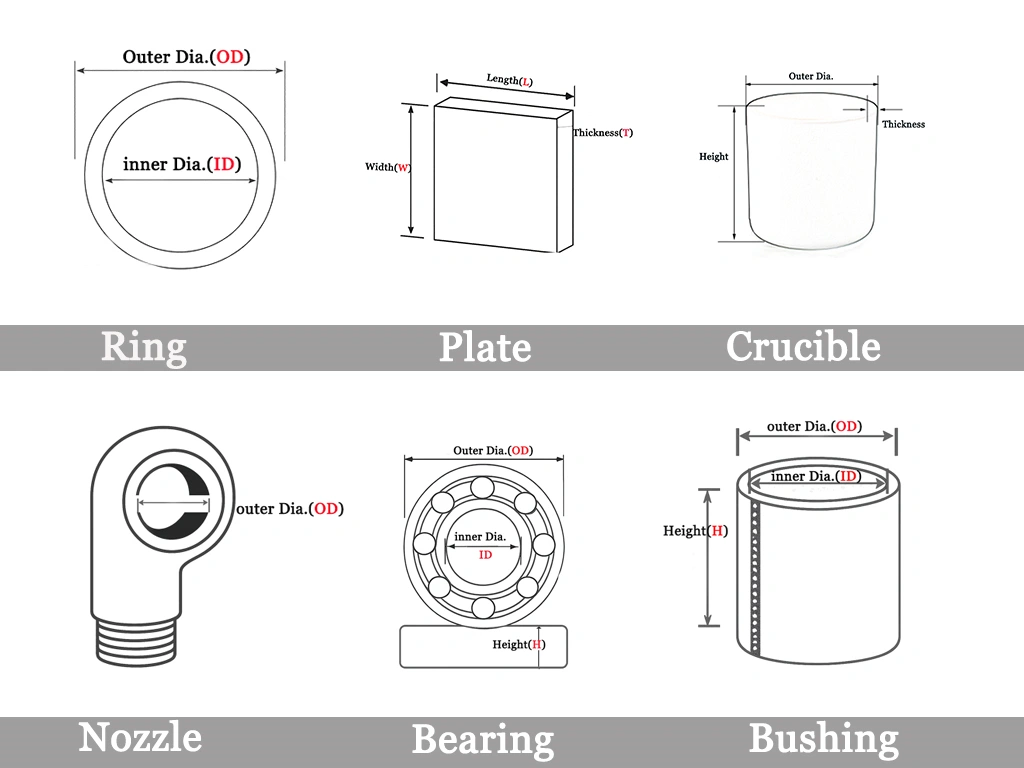
ADCERAX manufactures custom alumina ceramic nozzles based on drawings, samples, or operating conditions. Orifice size, spray angle, thread type, seat design, surface finish, and alumina grade can be reviewed according to media type, pressure, temperature, and installation requirements. We co-design nozzle geometry to your process window, which you can specify:

  • Outer/inner dimensions: OD/ID with target tolerance (e.g., ±0.02–0.10 mm, size-dependent)
  • Orifice style & size: straight, conical, multi-stage, spiral; φ0.8–6.0 mm typical, smaller on request
  • Length & features: up to 100–120 mm typical; countersinks, chamfers, shoulders, key flats
  • Ends/seats: open/closed, sloped seats, OEM-matched torch/manifold interface, gaskets
  • Threads/connections: common pipe threads or custom stub ends for holders
  • Cross-section: round standard; square/rectangular or special cavity by drawing
  • Surface finish: as-fired, ground, polished bore (Ra targets), sandblasted OD for grip
  • Material grade: 96%–99.7% alumina; colour natural white or dyed markers for identification

Related Products

ADCERAX - Your Trusted Advanced Ceramics Manufacturing Partner

Direct factory manufacturing with comprehensive ceramic materials expertise and global supply capabilities

China-Based Manufacturer

ADCERAX supplies ceramic components for overseas OEMs, equipment builders, and labs.

Custom Drawing Support

We review drawings, dimensions, materials, and application conditions before quotation.

Ceramic Process Control

Forming, sintering, machining, grinding, and finishing are arranged by part requirements.

Pre-Shipment Inspection

Dimensional checks, visual inspection, and packaging review help reduce procurement risk.

Get in Touch with Us

Our team will be happy to respond to you in less than 24 hours.

Pingxiang Factory — Silicon carbide, silicon nitride, high-temperature ceramics

Quick Quotation

*Our team will answer your inquiries within 24 hours.

*Your information will be kept strictly confidential.

Ready to Solve Your Engineering Challenge?

Partner with ADCERAX for reliable, high-performance advanced ceramic solutions. Our engineers are ready to discuss your project.

E-mail

info@adcerax.com

Phone

+(86) 0731-74427743 | WhatsApp: +(86) 19311583352

Response Time

Within 24 hours

Quick Quote

The more details you provide, the faster we can quote.

*We respond within 24 hours. All inquiries are confidential.

Get Your Custom Solution

The more details you provide, the faster we can respond.

customize size

*We respond within 24 hours. All inquiries are confidential.

Download Catalog