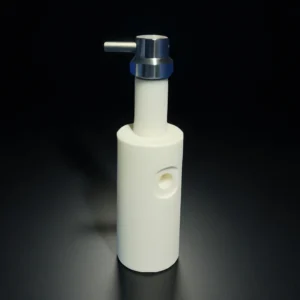
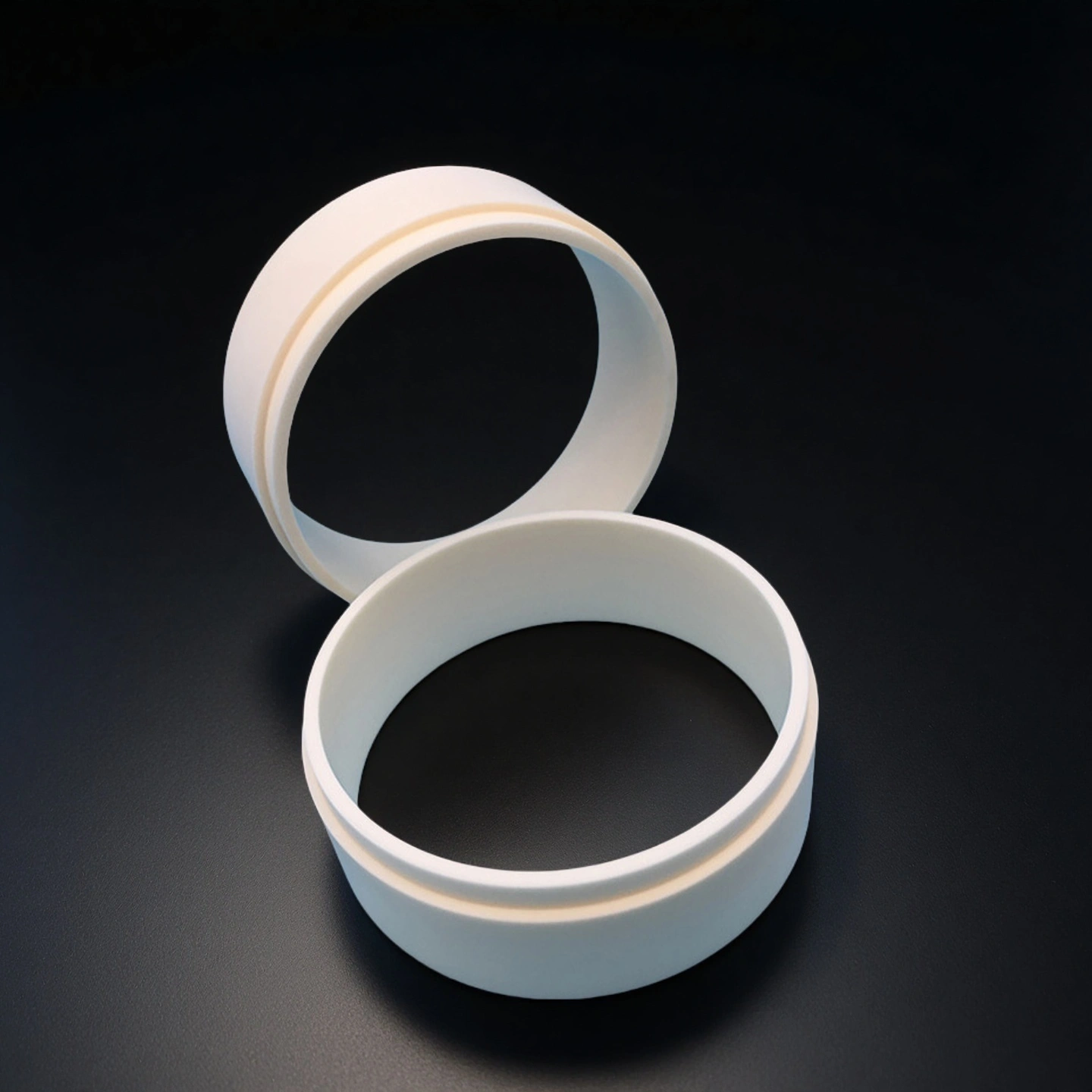
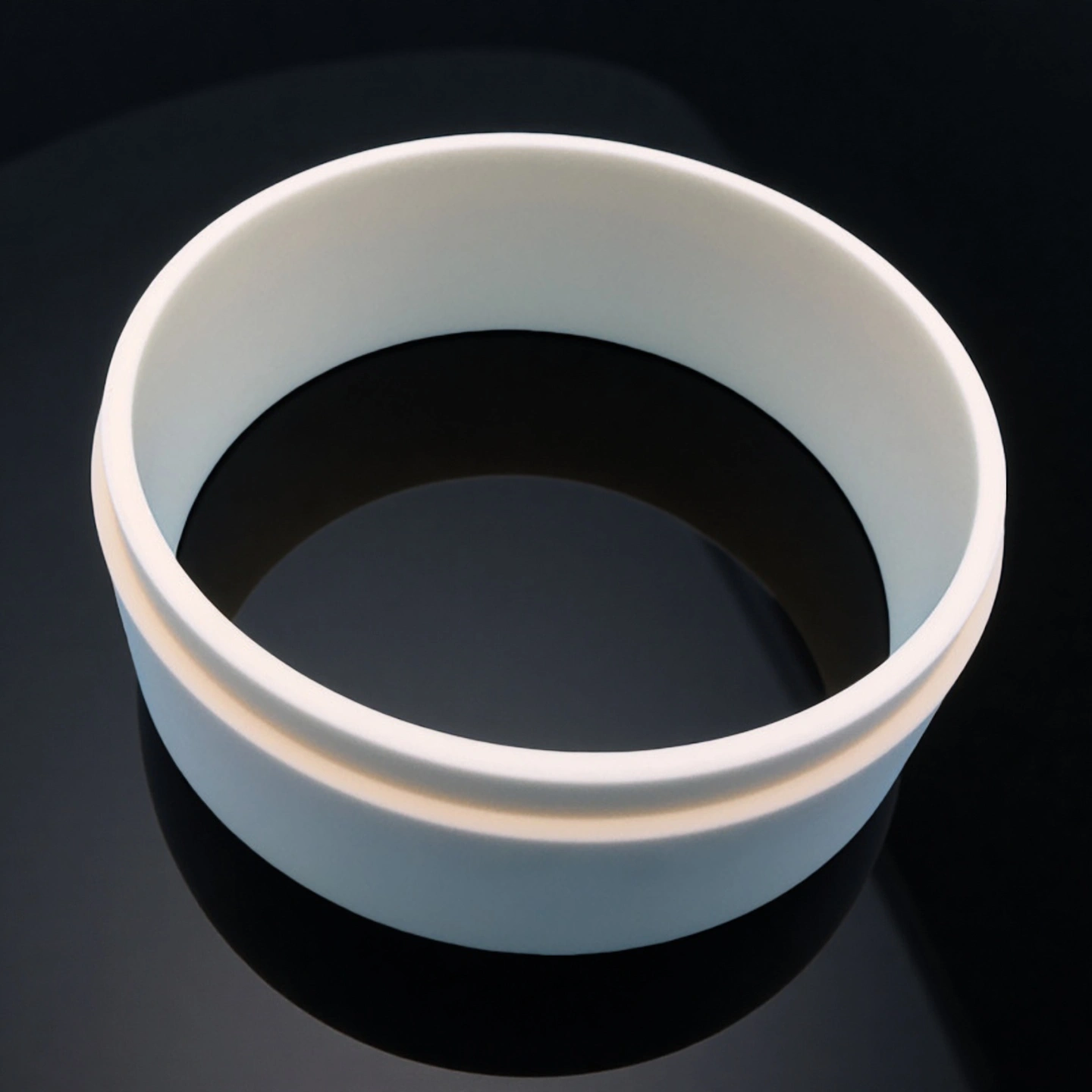
What Is an Alumina Sleeve for Shaft?
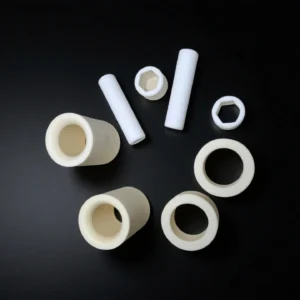
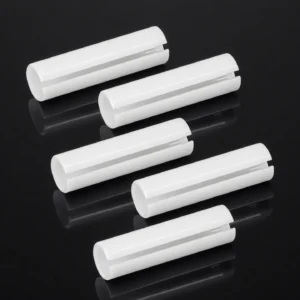
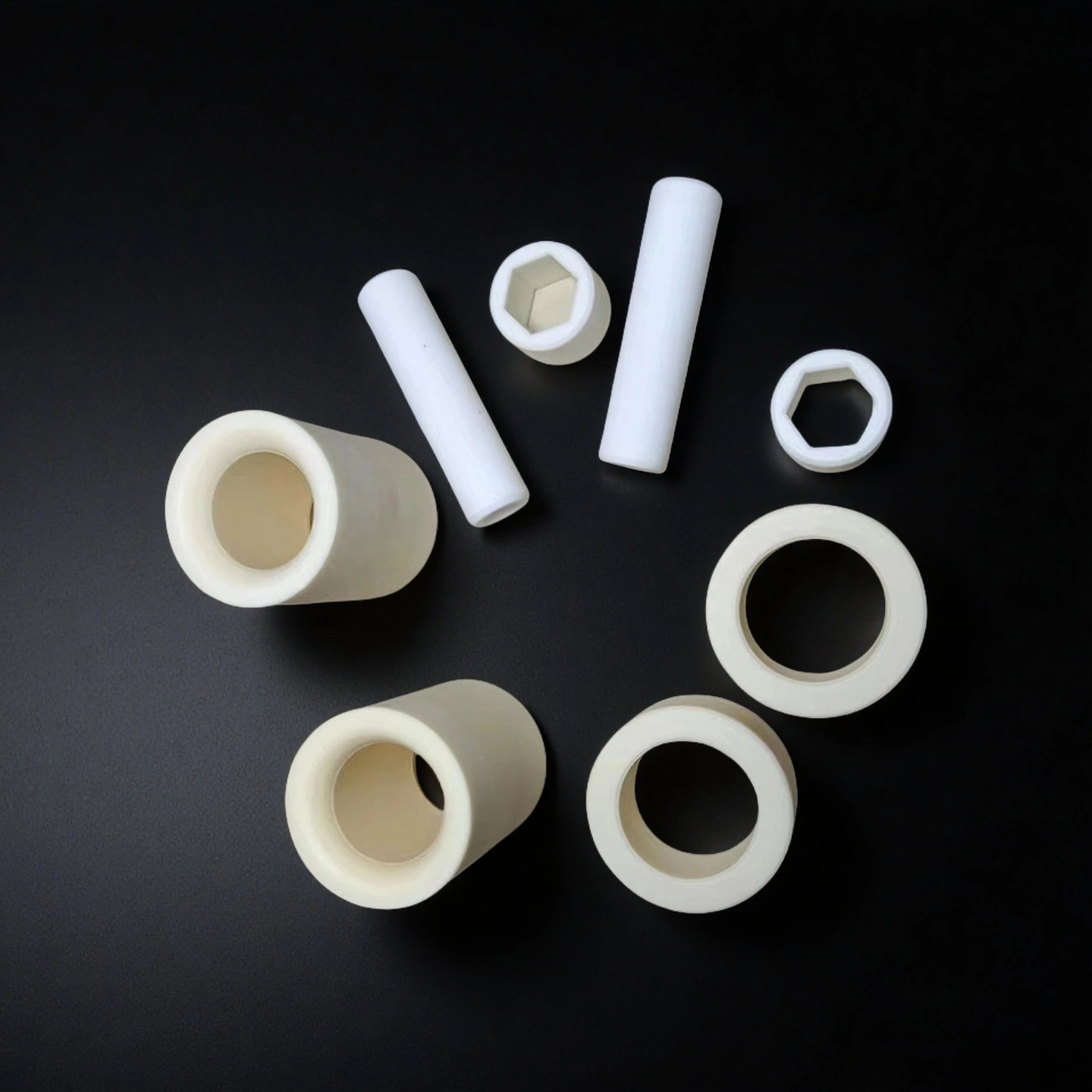
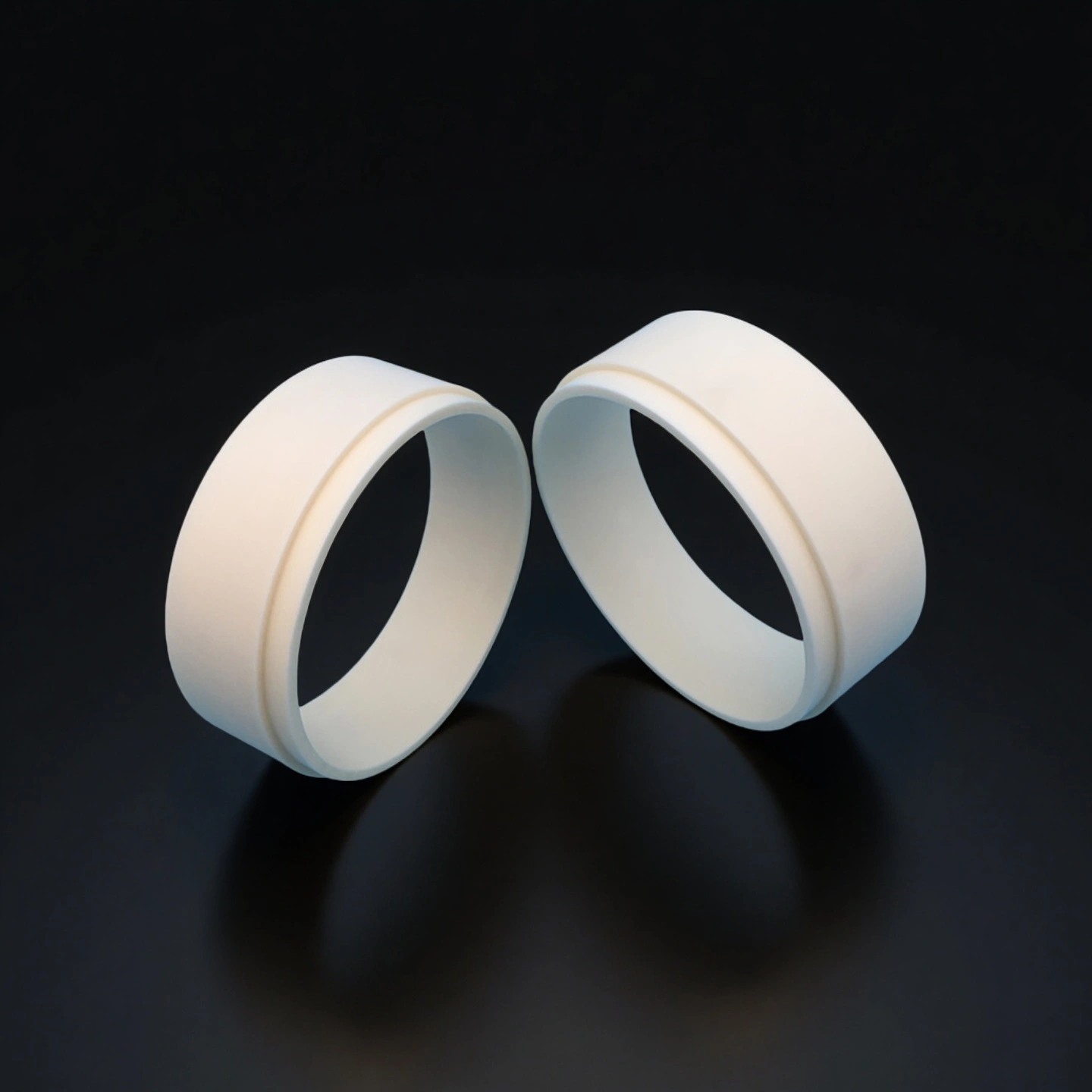
An alumina sleeve for shaft is a precision ceramic protective sleeve fitted over a metal shaft to reduce wear, corrosion and seal-area damage in rotating equipment. It is commonly used in pumps, mixers, mechanical seals and bearing support areas where metal sleeves may be scored by abrasive particles, attacked by chemicals or affected by unstable running clearance.
ADCERAX can review drawing-based alumina shaft sleeves with customized inner diameter, outer diameter, length, wall thickness, chamfer, groove, shoulder and surface finish according to the operating condition.
Why Use Alumina Ceramic Shaft Sleeves?
1. Hard ceramic protection for metal shafts
Alumina provides a hard wear surface between the metal shaft and the surrounding seal, bushing or process medium. This helps reduce scoring, grooving and local wear in pump and rotating equipment assemblies.
2. Corrosion resistance in chemical and water treatment systems
Alumina is suitable for many acidic, alkaline and saline environments where metallic sleeves may pit, rust or lose surface quality. Final material selection should still be reviewed according to the medium and temperature.
3. Stable running clearance near seals and bushings
A ground alumina shaft sleeve can help maintain dimensional stability at the contact area. This supports smoother rotation and helps reduce leakage risk caused by shaft surface damage.
4. Custom geometry for retrofit and OEM projects
ADCERAX can review existing shaft sleeve drawings or samples and adjust ID, OD, length, wall thickness, end chamfer, groove or shoulder structure according to the assembly design.
5. Lower maintenance risk in abrasive service
In slurry, raw water or particle-containing process media, the sleeve can act as a replaceable protective component. This can help reduce the need to repair or replace the main shaft.
Alumina Sleeve for Shaft Properties
| Property | Unit | 96% Al₂O₃ | 99% Al₂O₃ | 99.5% Al₂O₃ | 99.6% Al₂O₃ | 99.7% Al₂O₃ | 99.8% Al₂O₃ | 99.9% Al₂O₃ | 99.99% Al₂O₃ |
| Alumina content | % | 96 | 99 | 99.5 | 99.6 | 99.7 | 99.8 | 99.9 | 99.99 |
| Density | g/cm³ | 3.6-3.75 | 3.83 | 3.89 | 3.91 | 3.92 | 3.93 | 3.94 | 3.98 |
| Color | – | white | Ivory | Ivory | Ivory | Ivory | Ivory | Ivory | Ivory |
| Water absorption | % | 0 | 0 | – | 0 | 0 | 0 | 0 | 0 |
| Young’s modulus (Elastic modulus) | GPa | 300 | 350 | 375 | 356 | 357 | 358 | 359 | 362 |
| Shear modulus | GPa | – | – | 152 | – | – | – | – | – |
| Bulk modulus | GPa | – | – | 228 | – | – | – | – | – |
| Poisson’s ratio | – | – | – | 0.22 | – | – | – | – | – |
| Compressive strength | MPa | 1910 | 2210 | 2500 | 2552 | 2554 | 2556 | 2558 | 2570 |
| Flexural strength | MPa | 260 | 300 | 340 | 345 | 346 | 347 | 348 | 365 |
| Fracture toughness | MPa·m¹ᐟ² | – | – | 4 | – | – | – | – | – |
| Hardness | GPa | 14.5 | 17 | 17 | 23 | 24 | 25 | 26 | 30 |
| Thermal conductivity | W/m·K | 20 | 31 | 31 | 31-33 | 31-33 | 31-33 | 31-35 | 31-35 |
| Thermal shock resistance ΔT | °C | – | – | – | 222 | 223 | 224 | 225 | 228 |
| Maximum use temperature (no load) | °C | 1450 | 1680 | ≤1750 | 1755 | 1760 | 1765 | 1770 | 1800 |
| Coefficient of thermal expansion | 10⁻⁶/°C | 7.6 | 7.6 | 7.6 | 7.6 | 7.5 | 7.5 | 7.4 | 7.4 |
| Volume resistivity | Ω·cm | >1×10¹⁴ | >1×10¹⁴ | >1×10¹⁴ | >1×10¹⁴ | >1×10¹⁴ | >1×10¹⁴ | >1×10¹⁴ | >1×10¹⁴ |
| Dielectric constant (relative permittivity) | – | 9.2 | 9.5 | 9.8 | 9.83 | 9.84 | 9.85 | 9.86 | 9.92 |
| Dielectric strength | kV/mm | 15 | 19 | 16.9 | 23.2 | 23.4 | 23.6 | 23.8 | 24 |
| Dissipation factor (loss factor @ 1 kHz) | – | – | – | 0.0002 | – | – | – | – | – |
Alumina Sleeve for Shaft Specifications
| Alumina Sleeve for Shaft | ||
| Item No. | Diameter (mm) | Thickness (mm) |
| AT-YHL-ZT001 | Customize | |
Common Shaft Sleeve Problems Alumina Can Help Solve
| Problem | How Alumina Sleeve Helps | Review Before Use |
|---|---|---|
| Metal sleeve scoring | A hard ceramic surface helps resist abrasive grooves caused by particles. | Confirm solids content, particle size and shaft speed. |
| Seal-area corrosion | Alumina helps reduce chemical attack in many process media. | Confirm chemical compatibility and temperature. |
| Unstable running clearance | Precision-ground ID and OD can support more predictable fit. | Confirm tolerance stack-up and shaft runout. |
| Frequent shaft repair | A replaceable sleeve can protect the main shaft from direct wear. | Confirm sleeve removal and replacement method. |
| Contamination from metal wear | Alumina can reduce metal particle generation at the contact zone. | Confirm whether ceramic particles or edge chipping would be acceptable. |
| Ceramic cracking after assembly | Proper fit, alignment and edge design reduce local stress. | Confirm interference, chamfer and pressing method. |
Alumina Ceramic Sleeve for Shaft Packaging
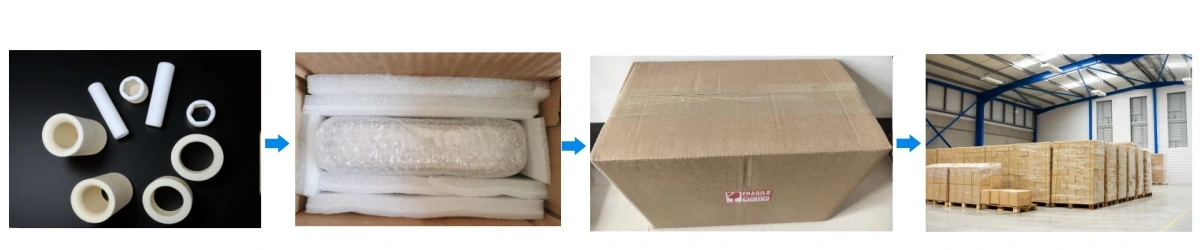
- Each alumina sleeve for the shaft is wrapped individually with soft cushioning material to prevent chipping during transport.