Alumina Ring Gears — What They Are and Where They Fit
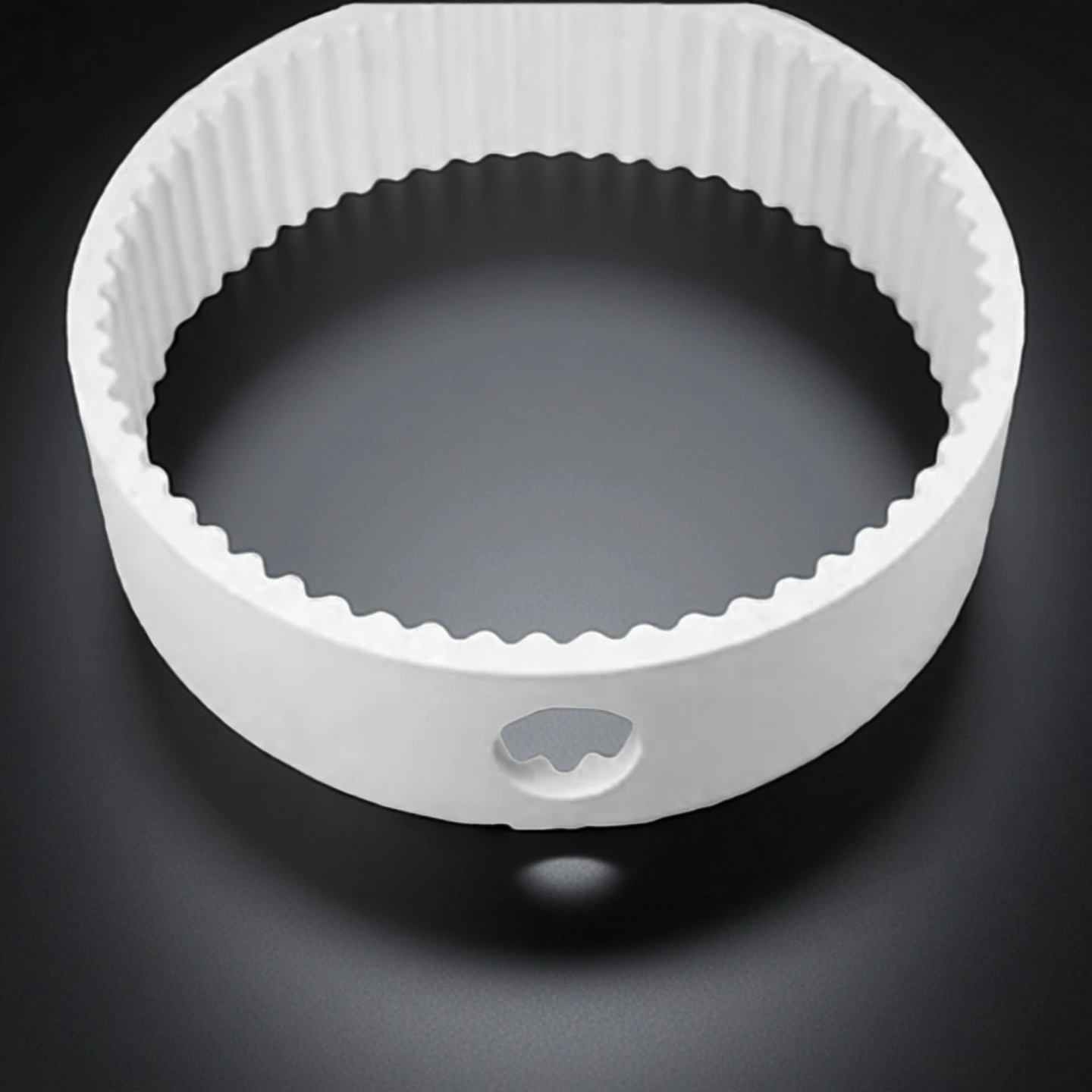
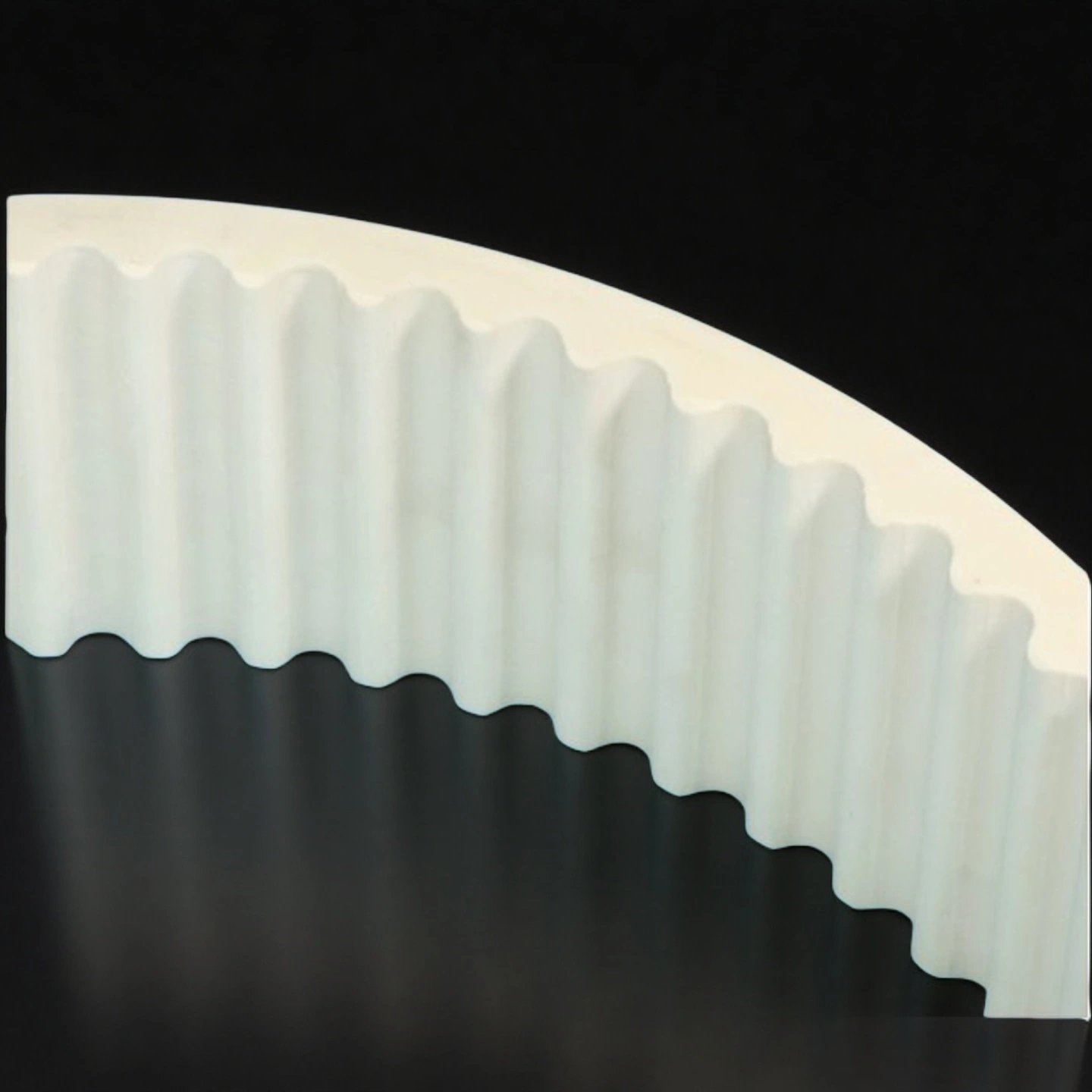
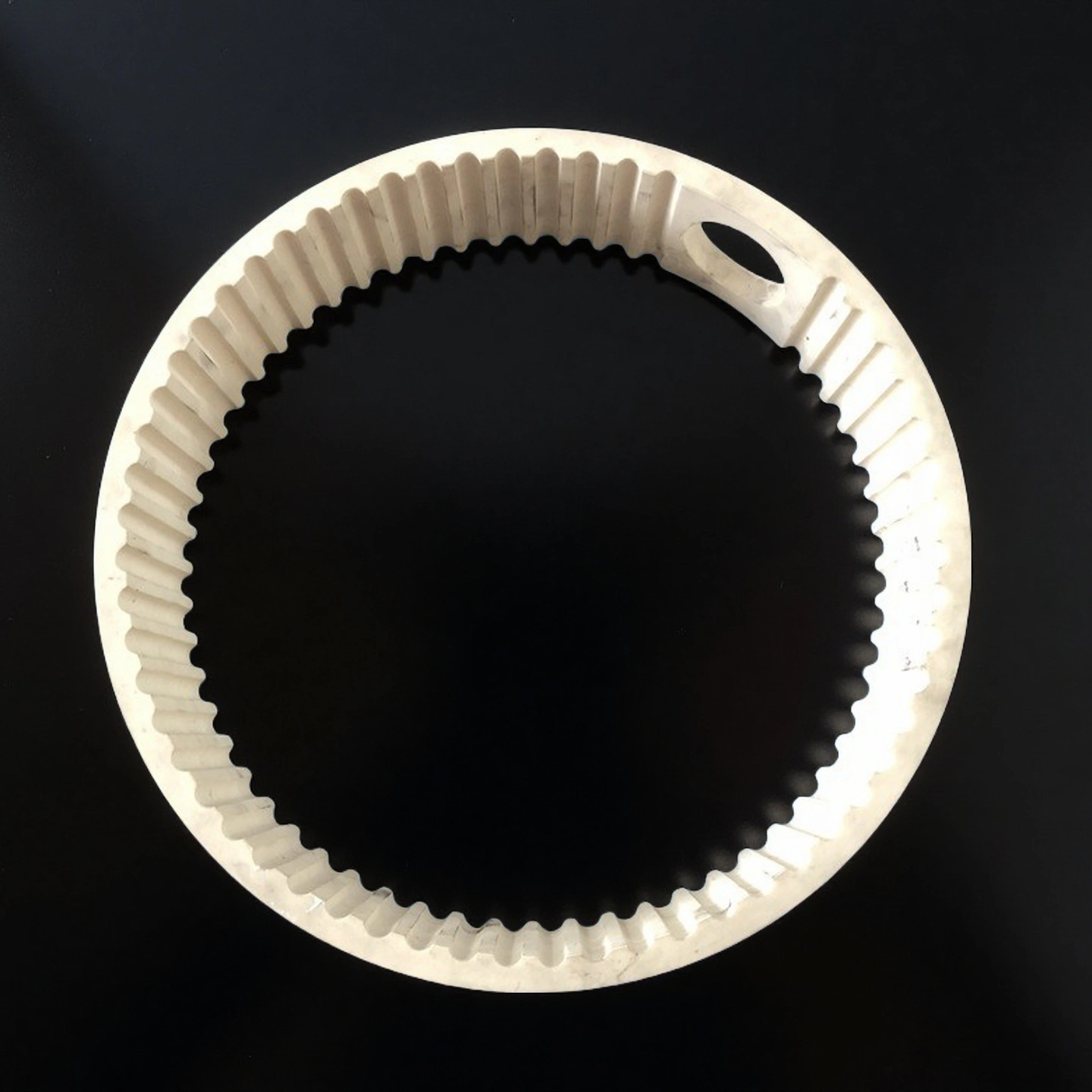
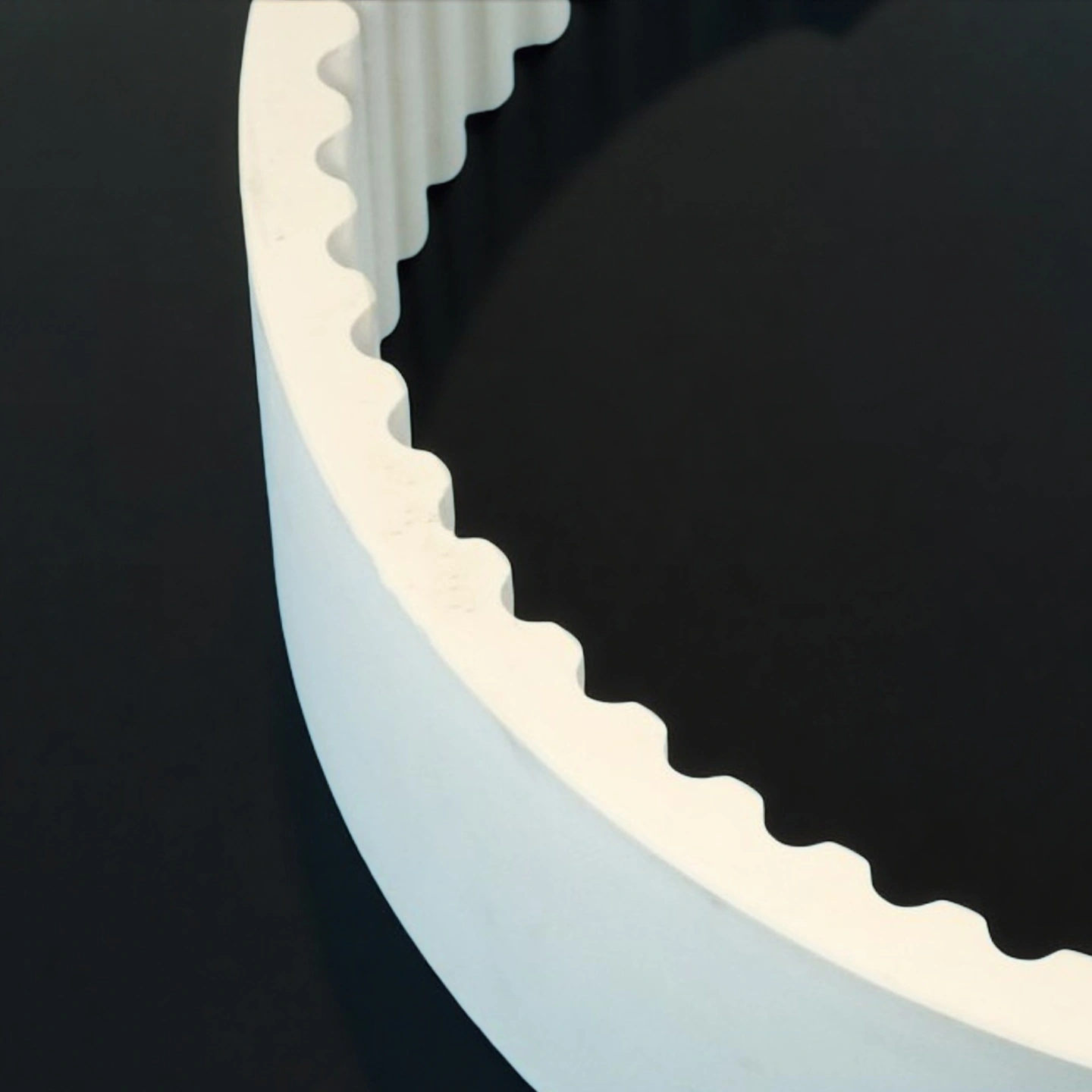
An alumina ring gear is a ceramic gear ring with internal teeth, made from high-purity aluminium oxide. The ring gear transmits torque or indexes motion while providing a hard, wear-resistant contact surface and electrical insulation between the ceramic teeth and adjacent metallic parts.
ADCERAX supplies ring gears for OEM assemblies in dosing pumps, gear-type flow meters, compact actuators and indexing mechanisms where metal gears wear, corrode or create unwanted conductive paths. The ring and mating pinion are selected and specified together, not as a drop-in replacement for an existing gear pair without design review.
Alumina Ring Gear Specifications
| Alumina Ring Gear | ||||||
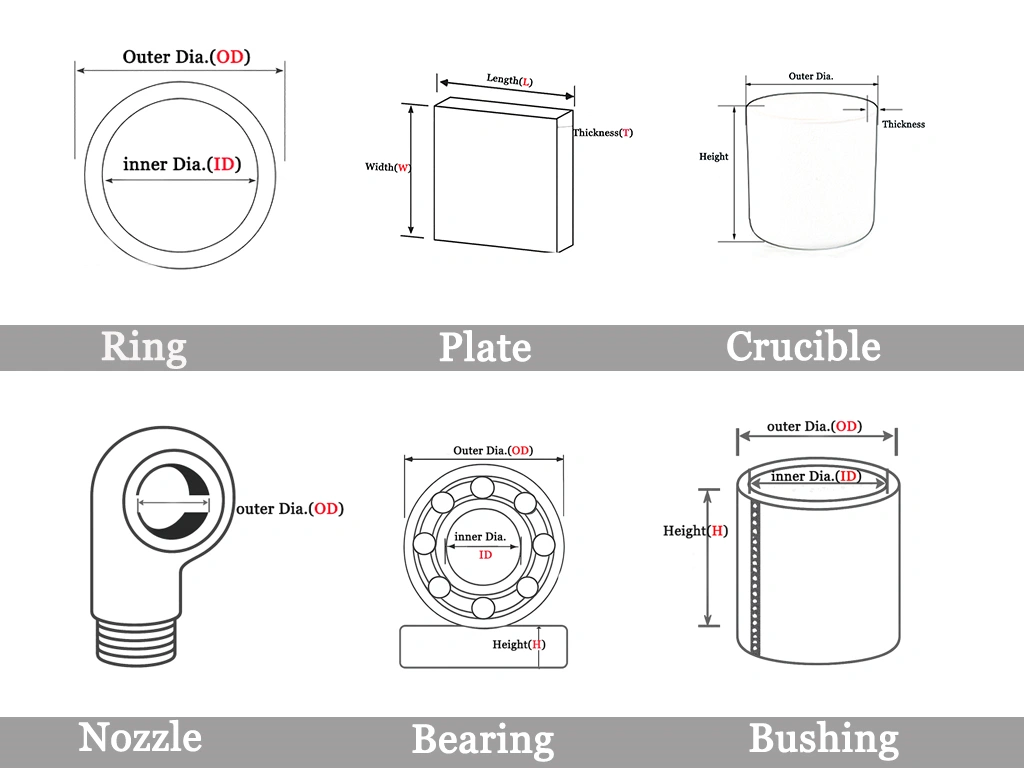
| Item No. | Outer Diameter(mm) | Inner Diameter(mm) | Thickness(mm) | Height(mm) | Number of Gear | Purity(%) |
| AT-SM-C001 | 360 | 334 | 13 | 65 | 80 | 95-99 |
| AT-SM-C002 | 460 | 420 | 20 | 100 | 70 | 95-99 |
| AT-SM-C003 | 490 | 440 | 25 | 120 | 80 | 95-99 |
| AT-SM-C004 | 500 | 450 | 25 | 120 | 140 | 95-99 |
| AT-SM-C005 | 640 | 600 | 20 | 136 | 200 | 95-99 |
| AT-SM-C006 | 700 | 650 | 25 | 157 | 220 | 95-99 |
Download the Product Catalogue
Alumina Ceramic Ring Gear Properties
| Property | Unit/condition | AD-ALU-950 | AD-ALU-960 | AD-ALU-990 | AD-ALU-995 | AD-ALU-997 | AD-ALU-999 |
|---|---|---|---|---|---|---|---|
| Al₂O₃ content | wt%, nominal | 95 | 96 | 99.00 | 99.50 | 99.70 | 99.90 |
| IEC 60672-3 class | Composition group | C795 | C795 | C795 | C799 | C799 | C799 |
| Bulk density | g/cm³, typical | 3.75 | 3.70 | 3.80–3.91 | 3.90–3.92 | 3.94 | 3.94 |
| Flexural strength | MPa, 20 °C | 280 | 300 | 300–320 | 320–350 | 330 | 315–340 |
| Compressive strength | MPa, 20 °C | 2000 | 2000 | 2400 | 2400 | 2500 | 2558–2900 |
| Fracture toughness, KIC | MPa·m½ | 3.0 | 3.5 | 3.3 | 3.5 | 3.6 | 3.8–4.2 |
| Young's modulus | GPa | 340 | 275 (20 °C) | 355 | 365 | 370 | 359–375 |
| Hardness | See note | Mohs 9 | 1600 HV1 | Mohs 9 | Mohs 9 | Mohs 9 | Mohs 9 |
| Mean CTE | 10⁻⁶/K, interval | 7.6 (25–800 °C) | 8.2 (25–1000 °C) | 7.2 (25–800 °C) | 7.6 (25–800 °C) | 7.6 (25–800 °C) | 7.6 (25–800 °C) |
| Thermal conductivity | W/(m·K) | 18–25 (25 °C) | 25 (20 °C) | 24 (25 °C) | 30–38 (25 °C) | 35–40 (25 °C) | 35–42 (25 °C) |
| Volume resistivity | Ω·cm, 20 °C | >10¹² | 10¹⁴ | >10¹⁴ | >10¹⁴ | >10¹⁴ | >10¹⁴ |
| Dielectric strength | kV/mm, specimen | 10 (5 mm) | 8.3 (AC, 6.35 mm) | 10 (5 mm) | 10 (5 mm) | 10 (5 mm) | 10 (5 mm) |
| Service temperature guide | °C, application-dependent | 1400 | 1600 max in air | 1600 | 1650 | 1700 | 1750 |
| Water absorption | % | ≤0.20 | ≈0 | ≤0.10 | ≤0.10 | ≤0.05 | ≤0.01 |
How to Select an Alumina Ring Gear
Work through five steps in order: envelope → tooth system → support → duty → material grade. Each decision helps define the next.
1. Check the available space
The six listed AT-SM-C models span OD 360–700 mm and ID 334–650 mm. Use a listed OD/ID pair as the starting point if it fits your assembly; keep each model’s paired dimensions together.
If no listed pair fits, provide your drawing for a custom review.
2. Match the tooth system to the pinion
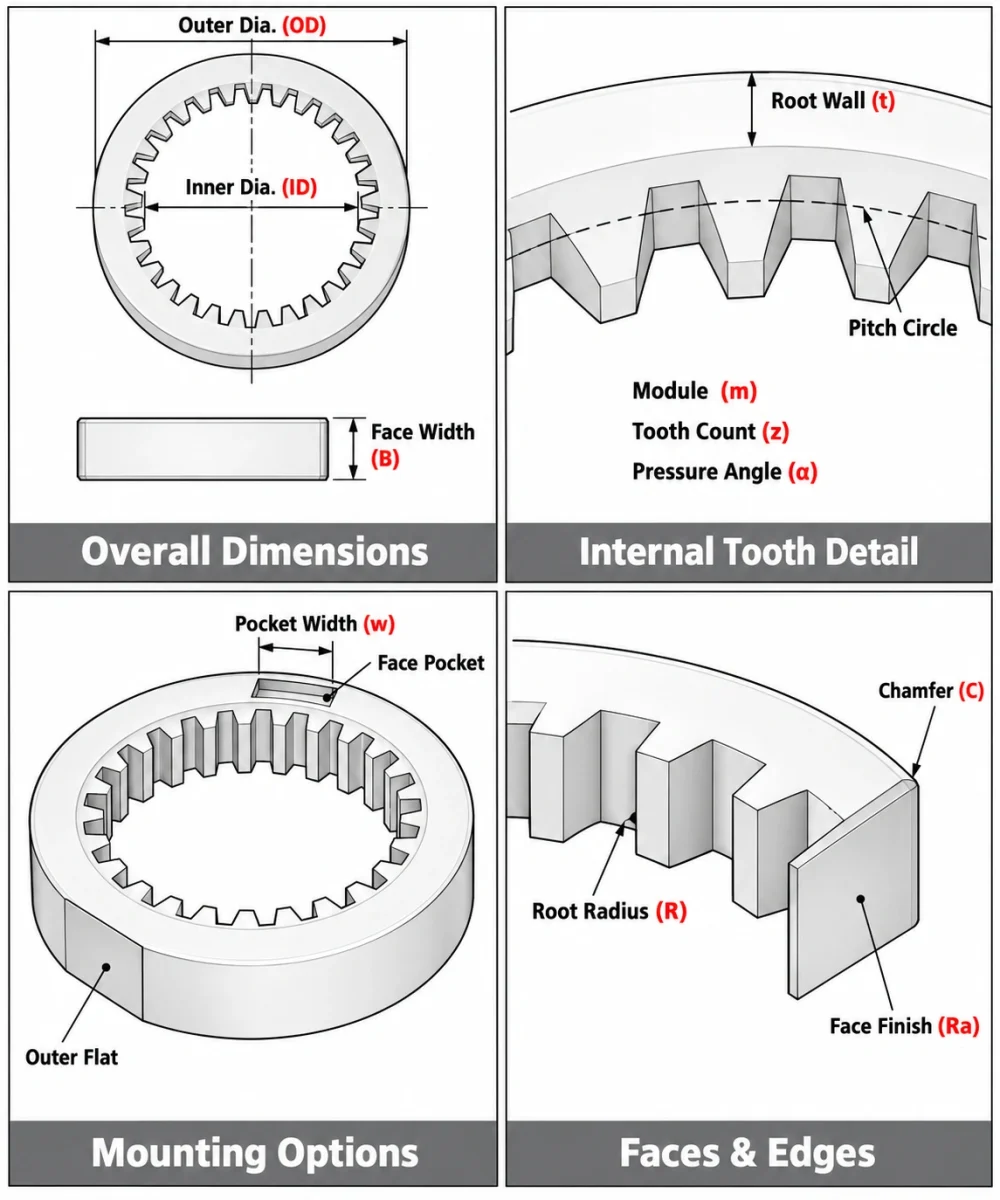
Define the module or diametral pitch, tooth count, pressure angle, profile shift and tooth thickness against the mating pinion.
Confirm centre distance, backlash and the required first-article contact pattern. Include the pinion drawing with your enquiry so the gear pair can be reviewed together.
3. Define support and mounting
Specify the bore fit, locating face, datums and runout limits. Provide even circumferential support to avoid concentrating loads on a few teeth.
Include the mounting material and operating temperature range so differential thermal expansion can be reviewed.
4. State the operating duty
Provide torque, speed, starts/stops, reversing cycles, fluid, lubrication and temperature range. These conditions guide both the geometry review and material selection.
5. Choose the alumina grade
All six grades are dense-sintered alumina, but higher purity does not improve every property equally:
- Strength: 95% alumina is listed at 280 MPa, compared with 320–350 MPa for 99.5% and 315–340 MPa for 99.9%.
- Toughness: 96% alumina is listed at 3.5 MPa·m½, compared with 3.3 for 99% and 3.8–4.2 for 99.9%.
- Other priorities: Review thermal expansion, electrical performance and cost against the assembly requirements.
Tell us whether your main concern is tooth chipping, strength, insulation, thermal cycling or cost. Send the ring and pinion drawings with the operating conditions so we can recommend a starting grade for review.
Alumina Compared with Stainless Steel, Polymers and Other Ceramics
- Stainless steel
Suitable for high loads and impact where the fluid is compatible. Consider alumina when steel wear, corrosion or metal contamination limits performance. Ceramic gears require careful control of shock loads and alignment. - Engineering polymers
PEEK and PVDF can suit lighter loads and moderate temperatures. Alumina offers greater stiffness and dimensional stability where polymer deformation affects tooth clearance or pump performance. - Silicon nitride
Consider silicon nitride when impact or rapid temperature changes dominate. Alumina remains an option where hardness, insulation and cost are the main priorities. - Silicon carbide
Consider silicon carbide for demanding abrasive or chemical service. Confirm compatibility with the actual fluid and the feasibility of machining the required tooth geometry. - Zirconia
Offers higher strength and toughness at moderate temperatures. Alumina may be preferable for hotter, continuous service, subject to the selected grade and operating conditions.
Confirm performance for the complete gear pair
Material choice alone does not establish torque capacity or service life. Review tooth geometry, mounting, the mating pinion and operating duty, then confirm performance through first-article evaluation.
Alumina Ceramic Ring Gear Packaging
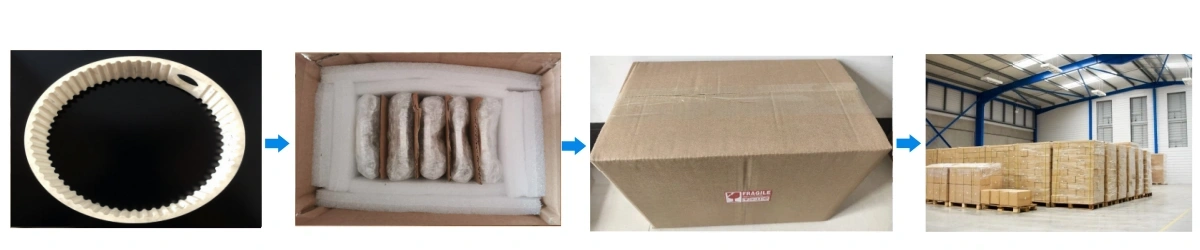
- Each alumina ring gear is individually protected with soft cushioning or blister packaging to avoid chipping of tooth edges during transport.