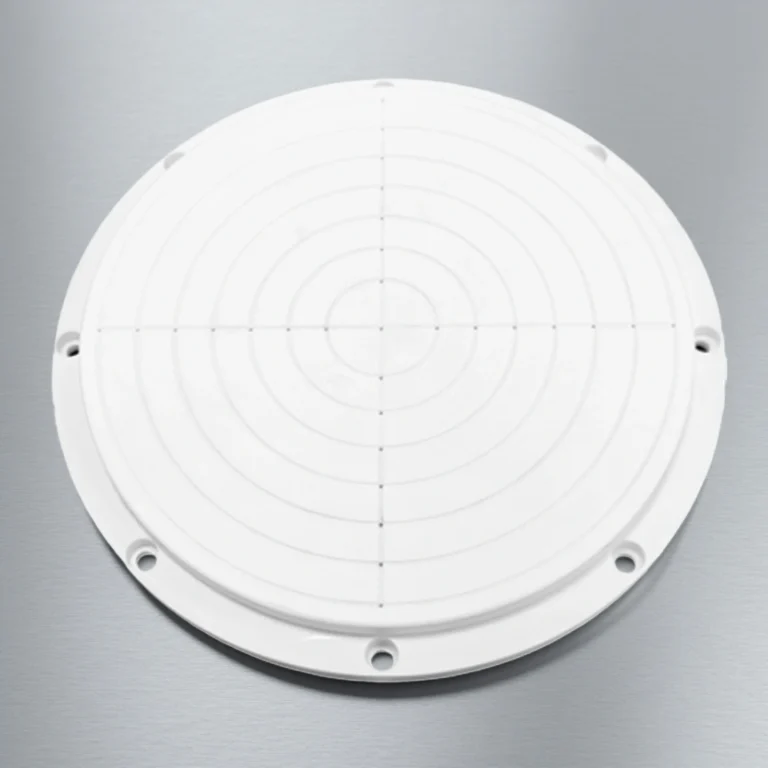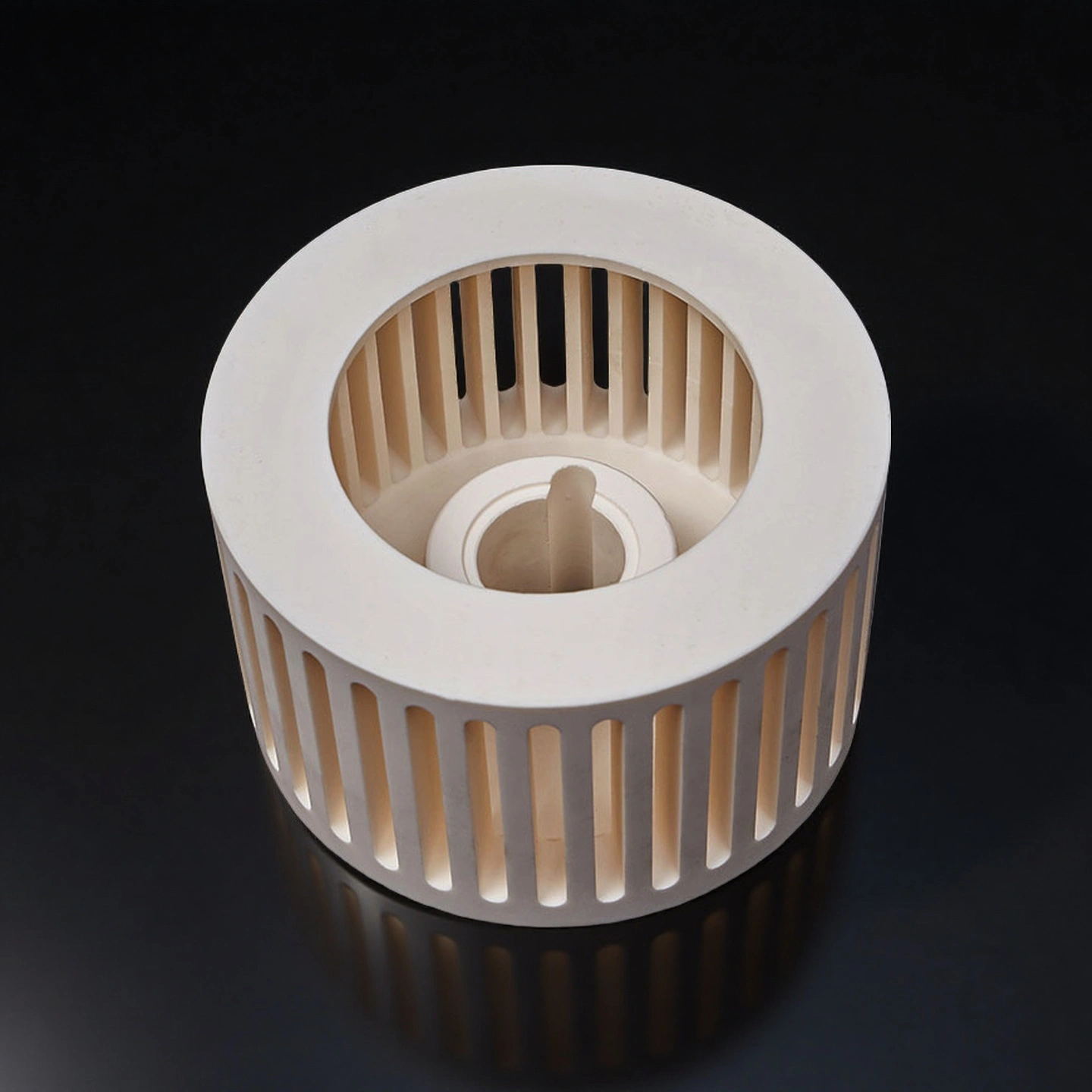
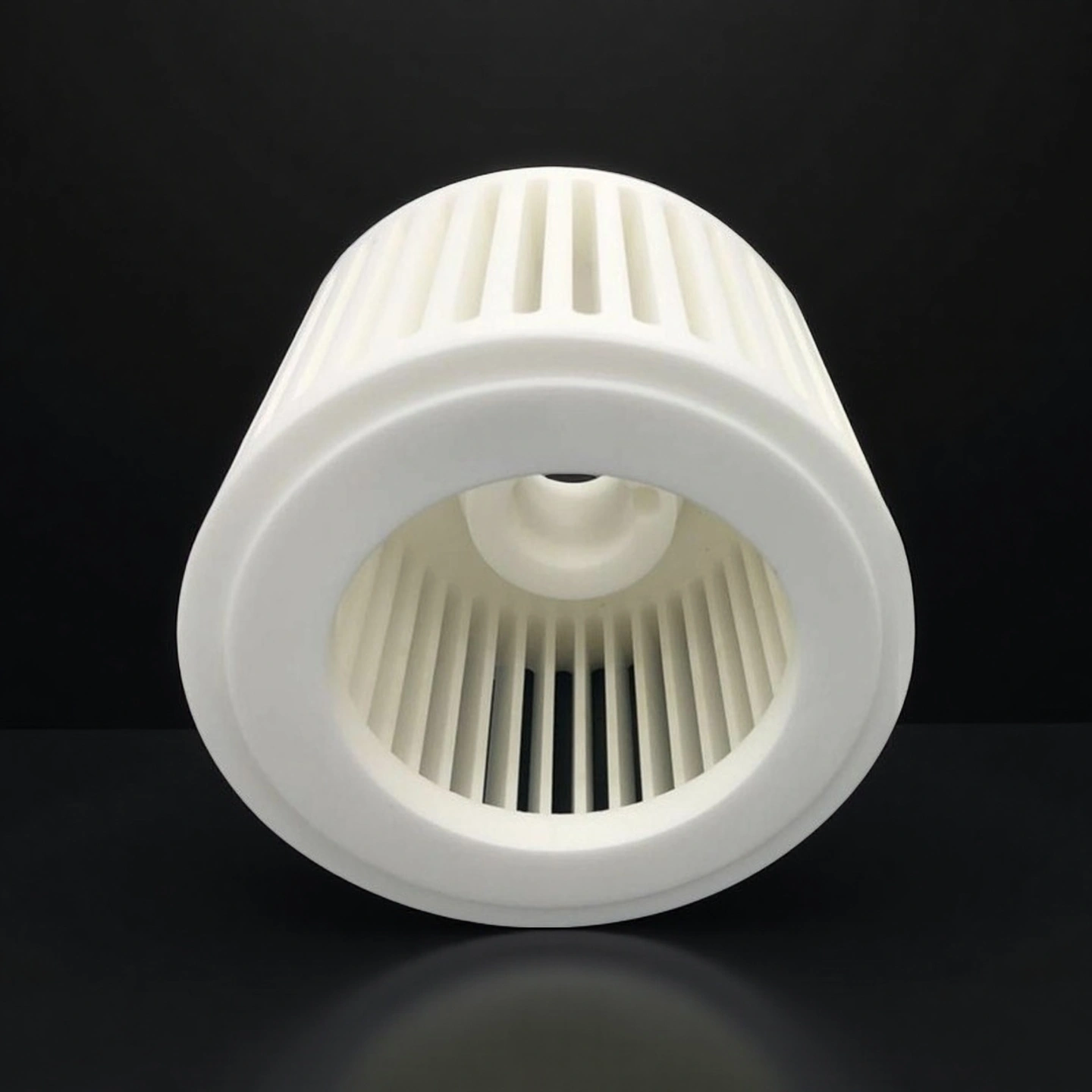
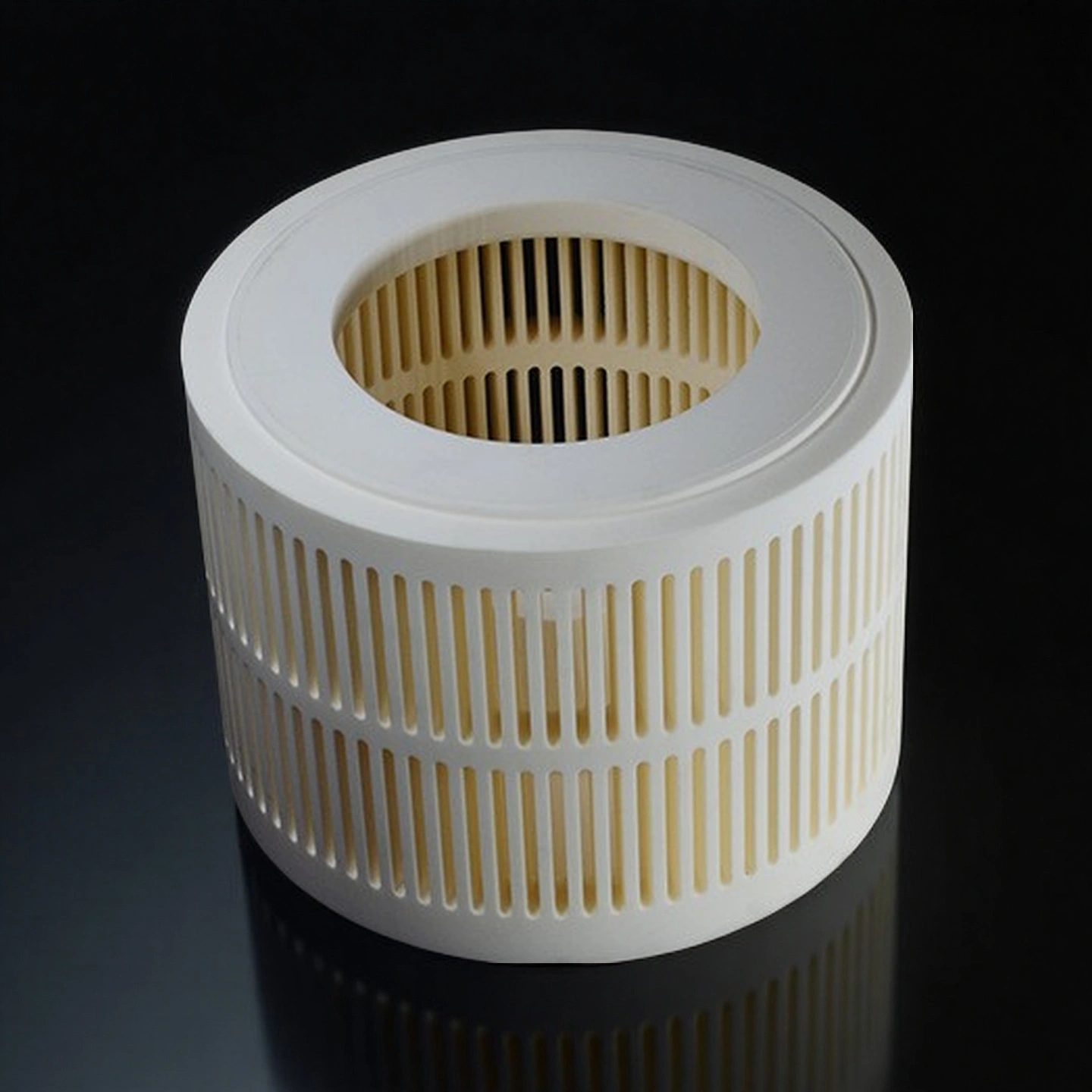
Alumina Ceramic Classifier Wheel for Air Classifier and Sand Mill Systems

This alumina classifier wheel for air classifiers and sand mills is supplied in standard diameters for common mill models and in fully customized designs by drawing or sample. Outer and inner diameters, thickness, slot number and profile can be tailored to your powder cut size, process air volume and machine layout.

Catalog No. AT-SM-A001
Material ≥ 96% Al2O3
Dimensional Tolerance ±0.05 mm
Bulk density (g/cm³)  3.7–3.9 g/cm³ for dense sintered alumina
Max continuous service temp.  Up to approx. 1600 °C in air
24H Standard Dispatch
Small Batch Support OEM
Factory Direct
Expert Engineering Support

Alumina Ceramic Classifier Wheel is a high-purity Al₂O₃ ceramic rotating separation component used in air classifiers, jet mills and sand mills to precisely separate fine and coarse powders, ensuring stable particle size control, high wear resistance and low metal contamination in mining, metallurgy, chemical and energy material processing.

Alumina Ceramic Classifier Wheel Benefits

  • Precision cut size control in air classifier systems
    The ceramic classifier wheel works with the air flow field to generate a stable separation zone, enabling fine powder cuts (often D97 below 10–20 µm depending on the mill design and speed) with narrow particle size distributions.

  • Wear-resistant alumina construction for abrasive powders
    High-purity alumina ceramics combine high hardness and abrasion resistance, so the classifier wheel withstands continuous contact with hard minerals, pigments and ceramic powders that would rapidly wear metallic wheels.

  • Metal-free powder flow path for contamination-sensitive products
    Using an alumina ceramic classifier wheel eliminates direct metal contact in the classification zone, reducing Fe and Ni contamination in battery materials, advanced ceramics and high-purity chemical powders.

  • Stable operation at high peripheral speed
    Dense, high-strength alumina with controlled dimensional tolerances supports high rotational speeds used in dynamic air classifiers, maintaining balance and minimizing vibration in long-term operation.

  • Compatible with different mills and classifier designs
    The alumina ceramic classifier wheel can be engineered as a mono-bloc disc, ring-type wheel or integrated rotor assembly to suit horizontal or vertical air classifiers, jet mills and combined grinding–classification systems.

Alumina Classifier Wheel Properties

Property Unit 99.5% Al₂O₃ 99.6% Al₂O₃ 99.7% Al₂O₃ 99.8% Al₂O₃ 99.9% Al₂O₃ 99.99% Al₂O₃
Alumina content % 99.5 99.6 99.7 99.8 99.9 99.99
Density g/cm³ 3.89 3.91 3.92 3.93 3.94 3.98
Open porosity % 0
Color Ivory Ivory Ivory Ivory Ivory Ivory
Water absorption % 0 0 0 0 0
Young’s modulus (Elastic modulus) GPa 375 356 357 358 359 362
Shear modulus GPa 152
Bulk modulus GPa 228
Poisson’s ratio 0.22
Compressive strength MPa 2600 2552 2554 2556 2558 2570
Flexural strength MPa 379 312 313 314 315 320
Fracture toughness MPa·m¹ᐟ² 4
Hardness GPa 14.1 (≈1440 kg/mm²) 23 24 25 26 30
Thermal conductivity W/m·K 35 32–37 33–38 34–39 35–40 36–42
Thermal shock resistance ΔT °C 222 223 224 225 228
Maximum use temperature (no load) °C ≤1750 1755 1760 1765 1770 1800
Coefficient of thermal expansion 10⁻⁶/°C 8.4
Specific heat J/kg·K 880
Volume resistivity Ω·cm >1×10¹⁴ >1×10¹⁴ >1×10¹⁴ >1×10¹⁴ >1×10¹⁴ >1×10¹⁴
Dielectric constant (relative permittivity) 9.8 9.83 9.84 9.85 9.86 9.92
Dielectric strength kV/mm 16.9 23.2 23.4 23.6 23.8 24
Dissipation factor (loss factor @ 1 kHz) 0.0002


Alumina Ceramic Classifier Wheel Specifications

Alumina Grading Wheel
Item No. Outer Diameter(mm) Inner Diameter  (mm) Height (mm) Purity
AT-SM-A001 50 30 70 95%-99%
AT-SM-A002 80 65 90 95%-99%
AT-SM-A003 100 75 80 95%-99%
AT-SM-A004 155 135 95 95%-99%
AT-SM-A005 250 220 100 95%-99%
AT-SM-A006 260 240 120 95%-99%


Alumina Ceramic Classifier Wheel Packaging

  • Each alumina ceramic classifier wheel is wrapped with soft cushioning material around the blades and bore to minimize impact and edge chipping during transit.
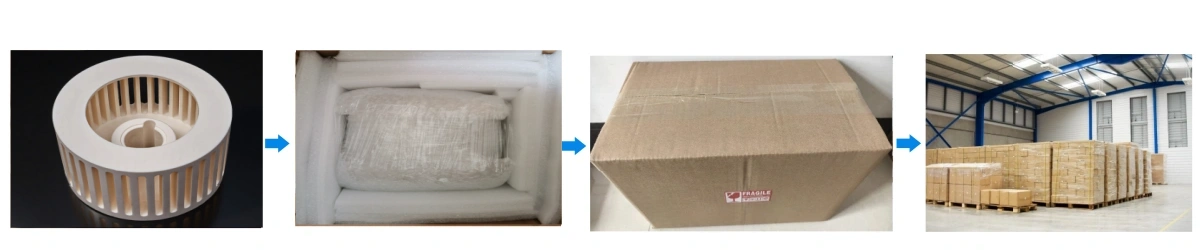
Alumina Ceramic Classifier Wheel Packaging

Applications of Alumina Ceramic Classifier Wheel

  • Battery Material Air Classifier Lines

    ✅Key Advantages

    1. Low Metal Contamination at ppm Level
    The alumina ceramic classifier wheel keeps Fe contamination below 10–20 ppm, compared with 50–120 ppm from stainless steel wheels in the same battery powder classification conditions.

    2. Stable Micron-Level Cut Size at High Speed
    At 3,000–6,000 rpm, the alumina classifier wheel controls D97 deviation within ±2 μm, maintaining consistent PSD in continuous cathode and anode powder production.

    3. Longer Wear Life in Hard Battery Powders
    In LFP, NCM and silicon-carbon anode powders, alumina classifier wheels achieve a 40–60% longer service life than alloy steel wheels.

    ✅ Problem Solved

    A lithium cathode material plant running three air classifier lines over 20 hours per day suffered Fe contamination above 30 ppm and PSD instability caused by rapid steel wheel wear. After replacing with customized alumina ceramic classifier wheels, Fe levels stabilized below 15 ppm, PSD drift was eliminated, and replacement cycles extended from 4 months to over 7 months, cutting both reprocessing loss and unplanned shutdowns.

  • Mining Air Classifier Lines

    ✅Key Advantages

    1. High Abrasion Resistance in Quartz and Feldspar Powders
    In quartz and feldspar classification, the alumina ceramic classifier wheel delivers 50–70% longer wear life than carbon steel wheels under the same throughput.

    2. Stable Cut Size Under Heavy Load Operation
    Open geometry enables inspection and tube replacement in less than 20 minutes during scheduled downtime.

    3. Reduced Shutdown Frequency in Continuous Mining Lines
    Typical replacement cycles are extended from 2–3 months to 5–6 months in abrasive mineral processing conditions.

    ✅ Problem Solved

    A calcium carbonate processing plant operating two air classifier lines at 24-hour continuous load experienced frequent wheel wear that caused PSD instability and forced shutdowns every 8–10 weeks. After switching to customized alumina ceramic classifier wheels, the replacement interval was extended to over 20 weeks, while fine powder yield increased by 9–12%, significantly improving annual production stability.

  • Chemical Powder Air Classifier Lines

    ✅  Key Advantages

    1. Corrosion-Resistant Classification in Acidic and Alkaline Powders
    In acidic additives and alkaline chemical powders, alumina ceramic classifier wheels show no measurable corrosion loss after 6,000+ hours of operation.

    2. Stable Fine Cut for Functional Chemical Powders
    For resin additives and catalyst carriers, the alumina classifier wheel controls D50 fluctuation within ±1.8 μm in continuous classification.

    3. Lower Dust Adhesion on Ceramic Separation Surfaces
    Compared with steel wheels, powder adhesion is reduced by 30–40%, improving air flow stability inside the classifier.

    ✅  Problem Solved

    A fine chemical manufacturer processing catalyst carrier powders required strict PSD control for downstream reaction efficiency. Their steel classifier wheels showed corrosion marks within 3 months, causing PSD drift and unstable product batches. After upgrading to alumina ceramic classifier wheels, corrosion was eliminated, PSD variation narrowed to ±1.8 μm, and batch rejection dropped by over 60%.


Al2O3 Alumina Ceramic Classifier Wheel Usage Instructions

  • Installation of Alumina Ceramic Classifier Wheel

    1. Verify the wheel diameter, bore size, direction of rotation and mounting pattern against the machine manual before installation.
    2. Clean the hub, shaft and contact surfaces to remove any residual powder or burrs that may introduce runout.
    3. Mount the alumina ceramic classifier wheel carefully, using recommended torque values on clamping bolts or locknuts to avoid point loading on the ceramic hub.
    4. Check axial and radial runout using a dial indicator where possible; adjust shimming or mounting surfaces until runout is within the mill manufacturer’s recommended limits.

  • Operation in Air Classifier or Mill

    1. Ramp up speed according to the machine’s standard start-up procedure, avoiding sudden acceleration that may generate shock loads.
    2. Monitor vibration levels and noise during the first hours of operation; abnormal vibration may indicate misalignment, unbalanced powder loading or foreign objects.
    3. Operate the alumina ceramic classifier wheel within the specified maximum rotational speed and process air volume to maintain the designed cut size and mechanical safety.

  • Storage of Spare Alumina Classifier Wheels

    1. Store wheels in a dry indoor environment on flat, cushioned surfaces, away from accidental impact.
    2. Avoid stacking unprotected wheels directly; use spacers or separate shelves so that blades and rims do not bear heavy loads.
    3. Keep labels and dimension information visible for quick identification when scheduling maintenance.

  • Cleaning and Maintenance

    1. During shutdowns, clean the alumina ceramic classifier wheel with compressed air or a soft brush to remove accumulated dust and agglomerates; avoid metal tools that can chip the ceramic.
    2. For sticky or oily powders, use compatible solvents or mild detergent solutions with soft cloths, ensuring components are fully dry before restart.
    3. Periodically inspect slot edges, blade leading edges and hub surfaces for signs of chipping or excessive wear that could affect cut size.

  • Typical Misuse Points and How to Handle Them

    1. Over-speed operation

    Issue: Running the classifier wheel above the machine’s specified maximum speed can overstress the ceramic and increase failure risk.
    Handling: Always set speed within the recommended range; if higher cut sharpness is needed, consult about slot geometry changes instead of simply raising RPM.

    2. Improper mounting with uneven bolt torque

    Issue: Uneven clamping can introduce stress concentrations and distort the wheel, leading to vibration or cracks.
    Handling: Use a cross-pattern tightening sequence and calibrated torque wrench; if high runout is observed, re-mount and re-check the hub.

    3. Foreign hard objects entering the classifier

    Issue: Bolts, tools or oversize tramp material striking the alumina ceramic classifier wheel can chip blades or cause fractures.
    Handling: Implement upstream screening and magnets where appropriate; if impact damage occurs, remove the wheel and inspect before continued operation.


FAQ – Alumina Ceramic Classifier Wheel

  1. Q: What is an alumina ceramic classifier wheel used for?
    A: An alumina ceramic classifier wheel is used inside air classifiers, jet mills and classifier mills to separate fine and coarse powder fractions, controlling the particle size distribution of minerals, pigments, chemicals and battery materials.
  2. Q: Why choose an alumina ceramic classifier wheel instead of a metal wheel?
    A: Compared with metal wheels, an alumina ceramic classifier wheel offers higher wear resistance and a metal-free powder path, which reduces iron contamination and extends service life in abrasive and high-purity applications.
  3. Q: What alumina purity is typical for your alumina ceramic classifier wheel?
    A: Alumina ceramic classifier wheels are commonly produced in 95–99.7% Al₂O₃ grades to balance wear resistance, mechanical strength and cost, depending on the target application and cut size.
  4. Q: Can an alumina ceramic classifier wheel handle abrasive mineral powders?
    A: Yes. Dense alumina ceramics with hardness above 15–20 GPa are widely used for abrasive mineral and ceramic powders; the alumina ceramic classifier wheel is suited to feldspar, quartz, talc and similar materials in air classifier circuits.
  5. Q: What operating temperature range is suitable for an alumina ceramic classifier wheel?
    A: High-purity alumina ceramics can operate continuously in air up to around 1600 °C, with short-term exposure possible at higher temperatures in suitable conditions, which covers typical gas temperatures in fine grinding and classification systems.
  6. Q: How do I specify a custom alumina classifier wheel for my air classifier mill?
    A: To specify a custom alumina ceramic classifier wheel, provide the existing wheel or drawing with outer diameter, inner bore, thickness, slot geometry, blade angle, material grade and machine operating speed so that the new design can match your cut size and mounting.

Customer Review about Alumina Ceramic Classifier Wheel

  • ⭐️⭐️⭐️⭐️⭐️
    After upgrading to an alumina ceramic classifier wheel in our mineral air classifier line, we saw more stable cut size and longer maintenance intervals, with less downtime for rotor replacement.
    -- Michael R.Process Engineer, NorthAmerica Minerals Group
  • ⭐️⭐️⭐️⭐️⭐️
    The alumina ceramic classifier wheels helped us keep pigment fineness within specification and reduced filter clogging. The price level and quality from ADCERAX as a ceramic supplier fit our plant requirements.
    -- Anna K.Production Manager, EU Coatings Plant
  • ⭐️⭐️⭐️⭐️⭐️
    We use customized alumina ceramic classifier wheels in several air classifier mills. The metal-free powder contact and stable wear behavior are important for our cathode material product lines.
    -- Hiroshi S.Equipment Engineer, Battery Materials Manufacturer
  • ⭐️⭐️⭐️⭐️⭐️
    Working with ADCERAX as a factory supplier of alumina classifier wheels allowed us to consolidate several spare parts, and the customized rotor dimensions matched our existing air classifier equipment without modification.
    -- Laura D.Purchasing Manager, Toll Grinding Service Company
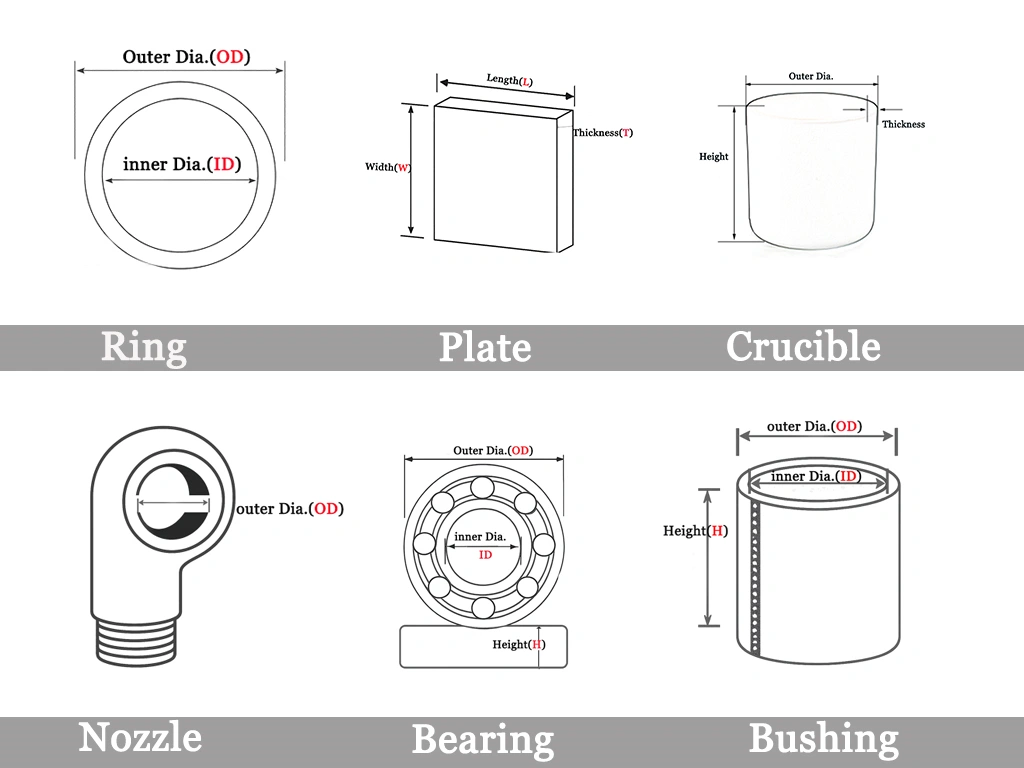
customize size

Custom Alumina Ceramic Classifier Wheel

ADCERAX alumina ceramic classifier wheel customization is focused on matching your existing classifier or mill platform while optimizing cut size, throughput and wear life.

1. Geometry and dimensions

  • Outer diameter range, e.g. approx. 80–600 mm
  • Inner bore diameter and hub interface
  • Total thickness and step thickness
  • Slot number, slot width and depth

2. Cutting and classification features

  • Blade profile (straight, curved, tapered)
  • Blade angle relative to rotation direction
  • Open area ratio to match desired air volume

3. Material and grade

  • Alumina purity range (e.g. 95%, 99%, 99.7% Al₂O₃)
  • Optional matching of hardness or density to existing wheels

4. Precision and finish

  • Dimensional tolerances on OD/ID/thickness (e.g. ±0.05–0.1 mm depending on size)
  • Surface finish in critical contact zones: ground, lapped or as-fired

5. Mounting interface

  • Keyways, bolting patterns, and locating shoulders
  • Direction of rotation markings and balancing requirements

Related Products

ADCERAX - Your Trusted Advanced Ceramics Manufacturing Partner

Direct factory manufacturing with comprehensive ceramic materials expertise and global supply capabilities

Direct Factory Manufacturing

China-based ceramic materials production facility with state-of-the-art equipment

Engineering Team

Experienced professionals in advanced ceramics applications and custom design

Quality Control

Strict quality control standards for technical ceramics manufacturing and quality management

Global Supply Chain

Serving customers worldwide with technical ceramics and rapid response

24/7 Technical Support

Round-the-clock support for ceramic components inquiries and technical assistance

500+ Satisfied Customers

Trusted by global customers for advanced ceramic materials and precision components

Get in touch with us

Our team will be happy to respond to you in less than 24 hours.

Adcerax's factory

Quick Quotation

*Our team will answer your inquiries within 24 hours.

*Your information will be kept strictly confidential.

Ready to Solve Your Engineering Challenge?

Partner with ADCERAX for reliable, high-performance advanced ceramic solutions. Our engineers are ready to discuss your project.

E-mail

info@adcerax.com

Phone

+(86) 0731-74427743 | WhatsApp: +(86) 19311583352

Response Time

Within 24 hours

Quick Quote

The more details you provide, the faster we can quote.

*We respond within 24 hours. All inquiries are confidential.

Download Catalog

Get Your Custom Sulution

The more details you provide, the faster we can respond.

customize size

*We respond within 24 hours. All inquiries are confidential.

Download Catalog