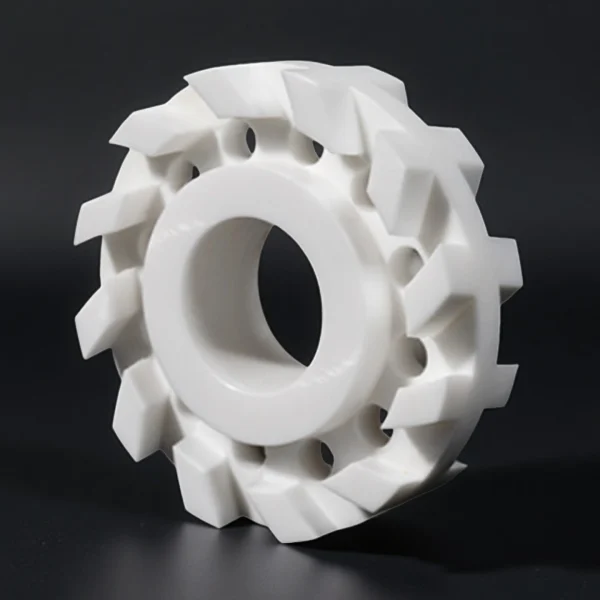
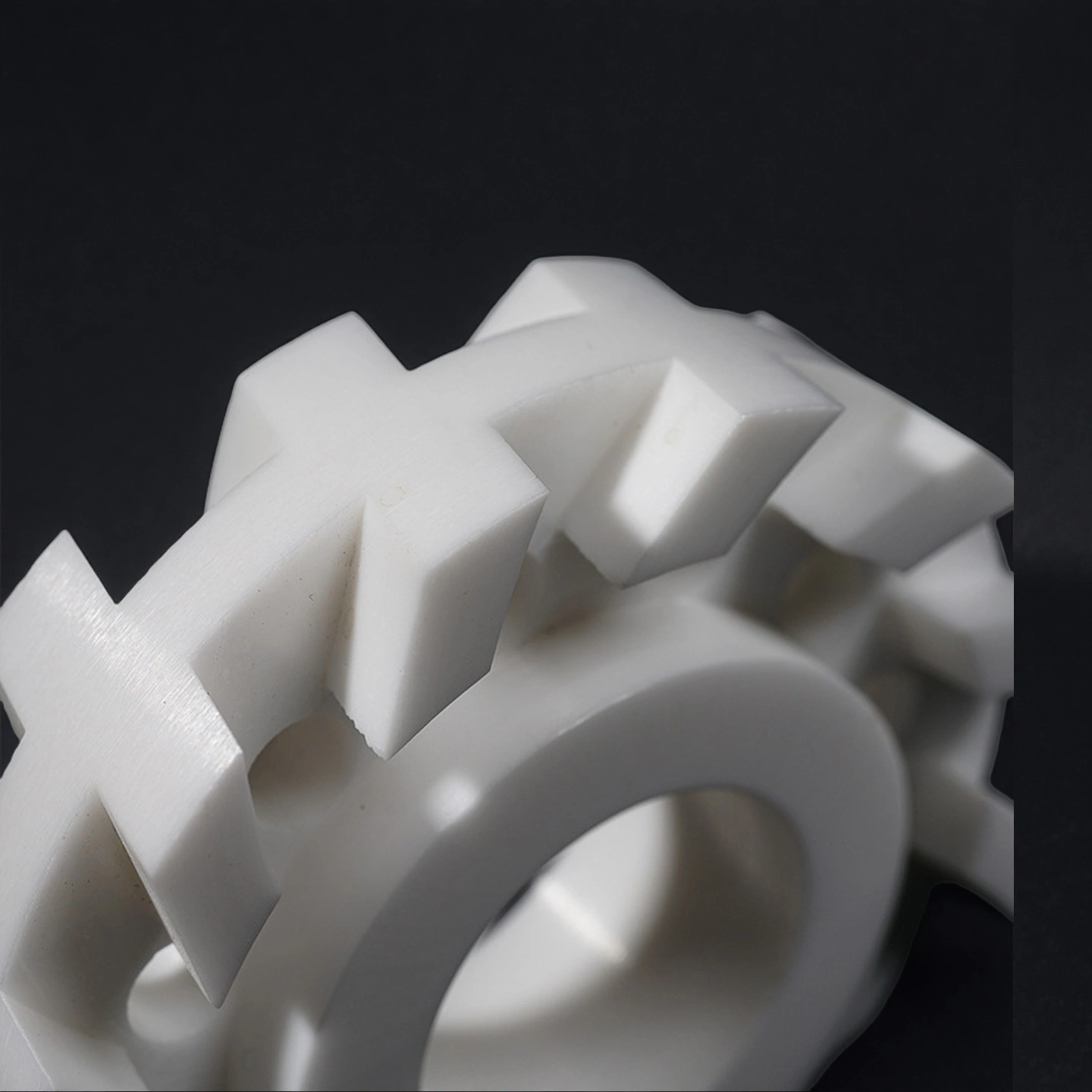
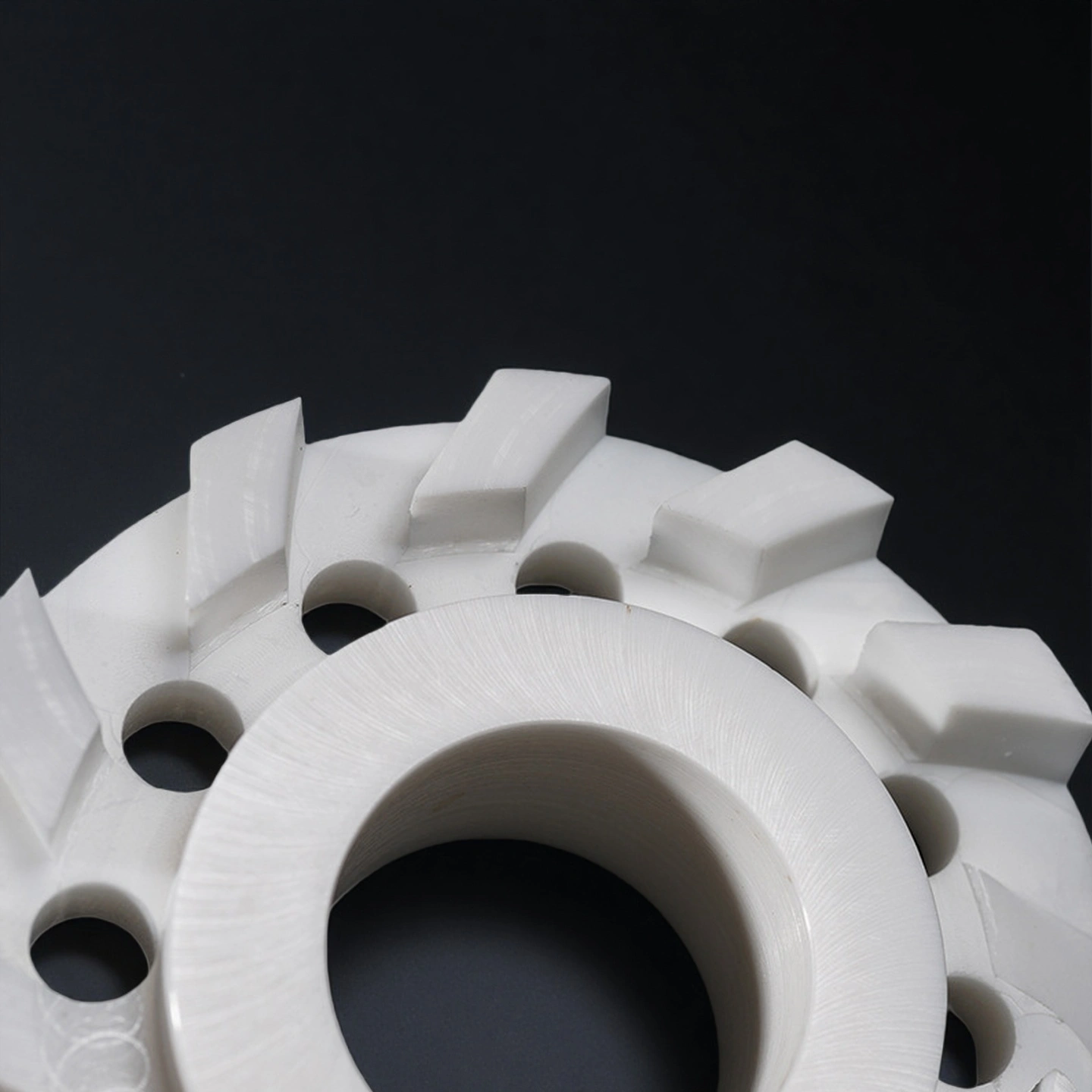
An alumina sand mill agitator disc is a ceramic wear part mounted on the mill shaft to transfer grinding energy to beads and slurry. It is selected when metal agitator discs cause fast wear, metallic contamination, unstable particle size or frequent replacement in wet grinding systems.
Why Alumina Ceramic Agitator Discs Are Used in Sand Mills
Alumina ceramic agitator discs are used in sand mills and bead mills when the grinding process requires wear resistance, lower metallic contamination and stable energy transfer. They are especially suitable for wet grinding systems used in coatings, inks, pigments, ceramic slurry and selected battery material processing.
Lower Metal Contamination
The alumina ceramic body helps reduce iron or alloy contamination compared with metallic agitator discs. This is important for light-colored coatings, high-strength pigments and electrochemical slurry systems where metallic wear debris may affect product quality.
Wear-Resistant Grinding Contact
High hardness and a dense ceramic structure help the disc resist abrasive contact with grinding beads, fillers and pigment particles. This makes alumina suitable for slurry systems where metal discs may wear quickly under repeated grinding cycles.
Stable Energy Transfer
Drawing-based disc geometry, bore fit and keyway design support repeatable energy transfer from the shaft to the grinding media. A properly matched ceramic agitator disc helps maintain bead movement, slurry circulation and grinding consistency.
Replacement-Friendly Design
ADCERAX can review the original disc sample or drawing to match the outer diameter, bore, keyway, thickness and mounting structure. This helps replacement projects reduce fitting risk before ceramic parts are produced.
Suitable for Ceramic-Lined Systems
Alumina discs can be used with ceramic-lined chambers and ceramic grinding media to reduce metallic wear sources in the grinding path. This is useful when the complete wet grinding system is designed for cleaner media contact and longer wear performance.
Material Properties Relevant to Wet Grinding Wear Parts
For sand mill agitator discs, alumina material should be evaluated by wear resistance, density, hardness, chemical stability and contamination control rather than by high-temperature insulation performance alone. Final suitability should be confirmed according to slurry chemistry, bead type, mill speed, shaft design and cleaning method.
| Property | Unit | 96% Al₂O₃ | 99% Al₂O₃ | 99.5% Al₂O₃ | 99.6% Al₂O₃ | 99.7% Al₂O₃ | 99.8% Al₂O₃ | 99.9% Al₂O₃ | 99.99% Al₂O₃ |
| Alumina content | % | 96 | 99 | 99.5 | 99.6 | 99.7 | 99.8 | 99.9 | 99.99 |
| Density | g/cm³ | 3.6-3.75 | 3.83 | 3.89 | 3.91 | 3.92 | 3.93 | 3.94 | 3.98 |
| Color | – | white | Ivory | Ivory | Ivory | Ivory | Ivory | Ivory | Ivory |
| Water absorption | % | 0 | 0 | – | 0 | 0 | 0 | 0 | 0 |
| Young’s modulus (Elastic modulus) | GPa | 300 | 350 | 375 | 356 | 357 | 358 | 359 | 362 |
| Shear modulus | GPa | – | – | 152 | – | – | – | – | – |
| Bulk modulus | GPa | – | – | 228 | – | – | – | – | – |
| Poisson’s ratio | – | – | – | 0.22 | – | – | – | – | – |
| Compressive strength | MPa | 1910 | 2210 | 2500 | 2552 | 2554 | 2556 | 2558 | 2570 |
| Flexural strength | MPa | 260 | 300 | 340 | 345 | 346 | 347 | 348 | 365 |
| Fracture toughness | MPa·m¹ᐟ² | – | – | 4 | – | – | – | – | – |
| Hardness | GPa | 14.5 | 17 | 17 | 23 | 24 | 25 | 26 | 30 |
| Thermal conductivity | W/m·K | 20 | 31 | 31 | 31-33 | 31-33 | 31-33 | 31-35 | 31-35 |
| Thermal shock resistance ΔT | °C | – | – | – | 222 | 223 | 224 | 225 | 228 |
| Maximum use temperature (no load) | °C | 1450 | 1680 | ≤1750 | 1755 | 1760 | 1765 | 1770 | 1800 |
| Coefficient of thermal expansion | 10⁻⁶/°C | 7.6 | 7.6 | 7.6 | 7.6 | 7.5 | 7.5 | 7.4 | 7.4 |
| Volume resistivity | Ω·cm | >1×10¹⁴ | >1×10¹⁴ | >1×10¹⁴ | >1×10¹⁴ | >1×10¹⁴ | >1×10¹⁴ | >1×10¹⁴ | >1×10¹⁴ |
| Dielectric constant (relative permittivity) | – | 9.2 | 9.5 | 9.8 | 9.83 | 9.84 | 9.85 | 9.86 | 9.92 |
| Dielectric strength | kV/mm | 15 | 19 | 16.9 | 23.2 | 23.4 | 23.6 | 23.8 | 24 |
| Dissipation factor (loss factor @ 1 kHz) | – | – | – | 0.0002 | – | – | – | – | – |
Reference Sizes for Alumina Sand Mill Agitator Disc
The following sizes are reference examples for initial review. Final dimensions should be confirmed according to the original disc drawing, shaft interface, keyway structure and disc stack arrangement.
| Alumina Ceramic Disc | ||||
| Item No. | Outer Diameter(mm) | Inner Diameter (mm) | Height (mm) | Purity |
| AT-SM-001 | 90 | 30 | 26 | 95%-99% |
| AT-SM-002 | 90 | 36 | 24 | 95%-99% |
| AT-SM-003 | 100 | 45 | 30 | 95%-99% |
| AT-SM-004 | 140 | 80 | 45 | 95%-99% |
| AT-SM-005 | 165 | 85 | 50 | 95%-99% |
Packaging and Inspection for Alumina Sand Mill Agitator Disc
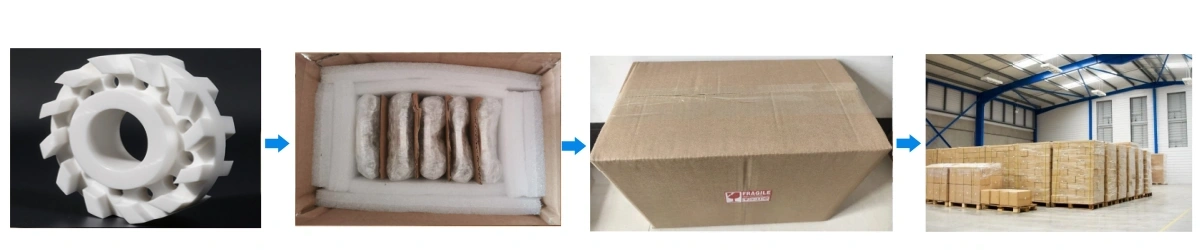
- Each alumina sand mill agitator disc should be separated and protected to avoid edge impact, bore damage and ceramic-to-ceramic contact during transport. Parts with thin walls, keyways, slots or precision hub surfaces require additional foam positioning and reinforced outer packaging.