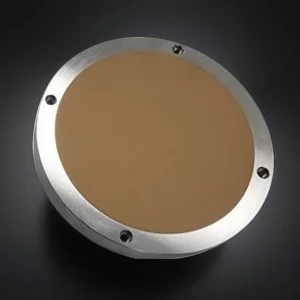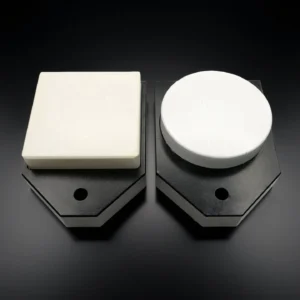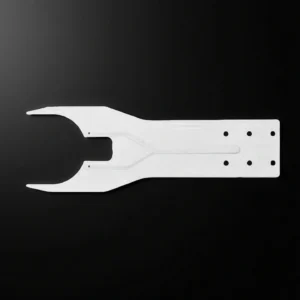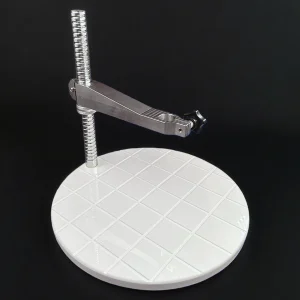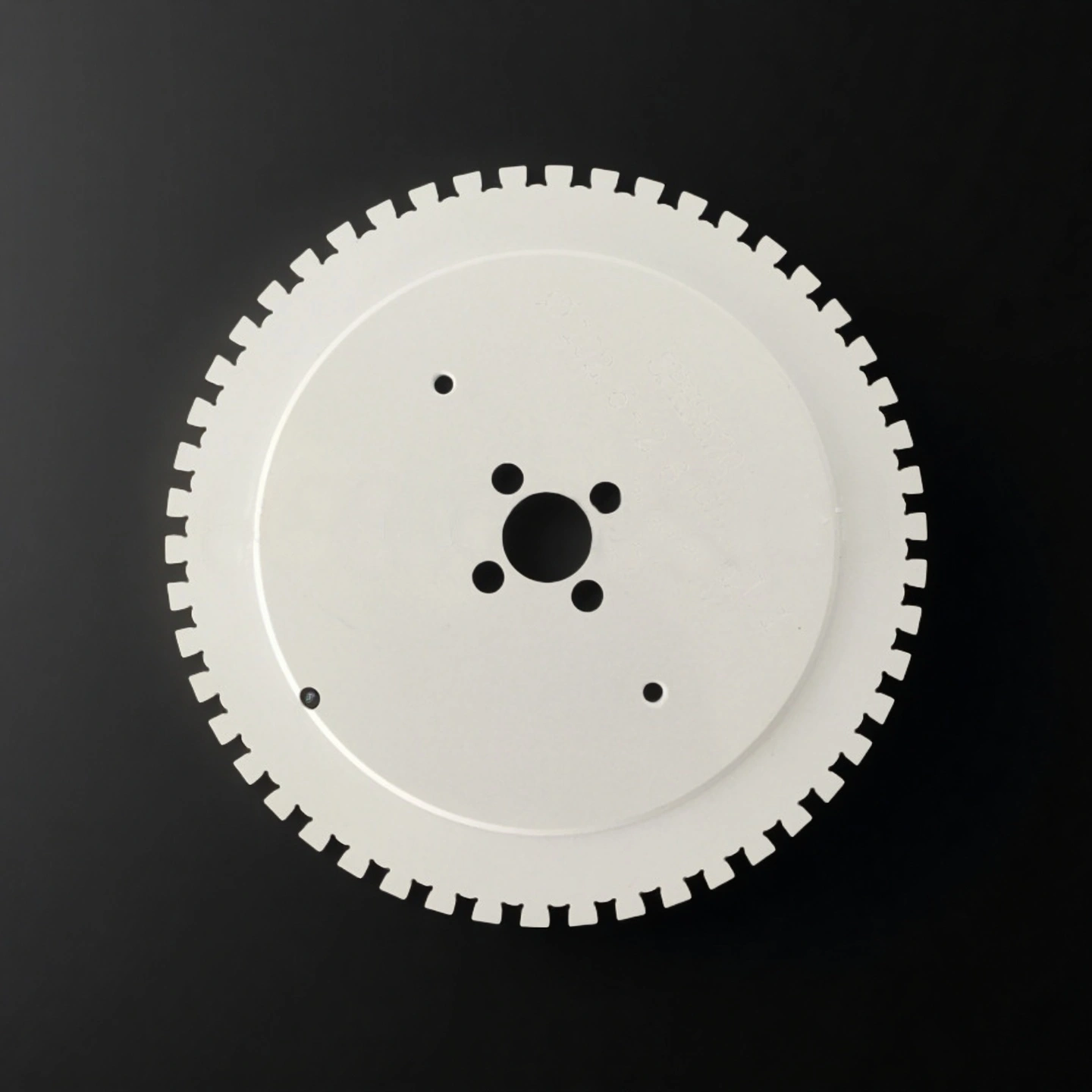
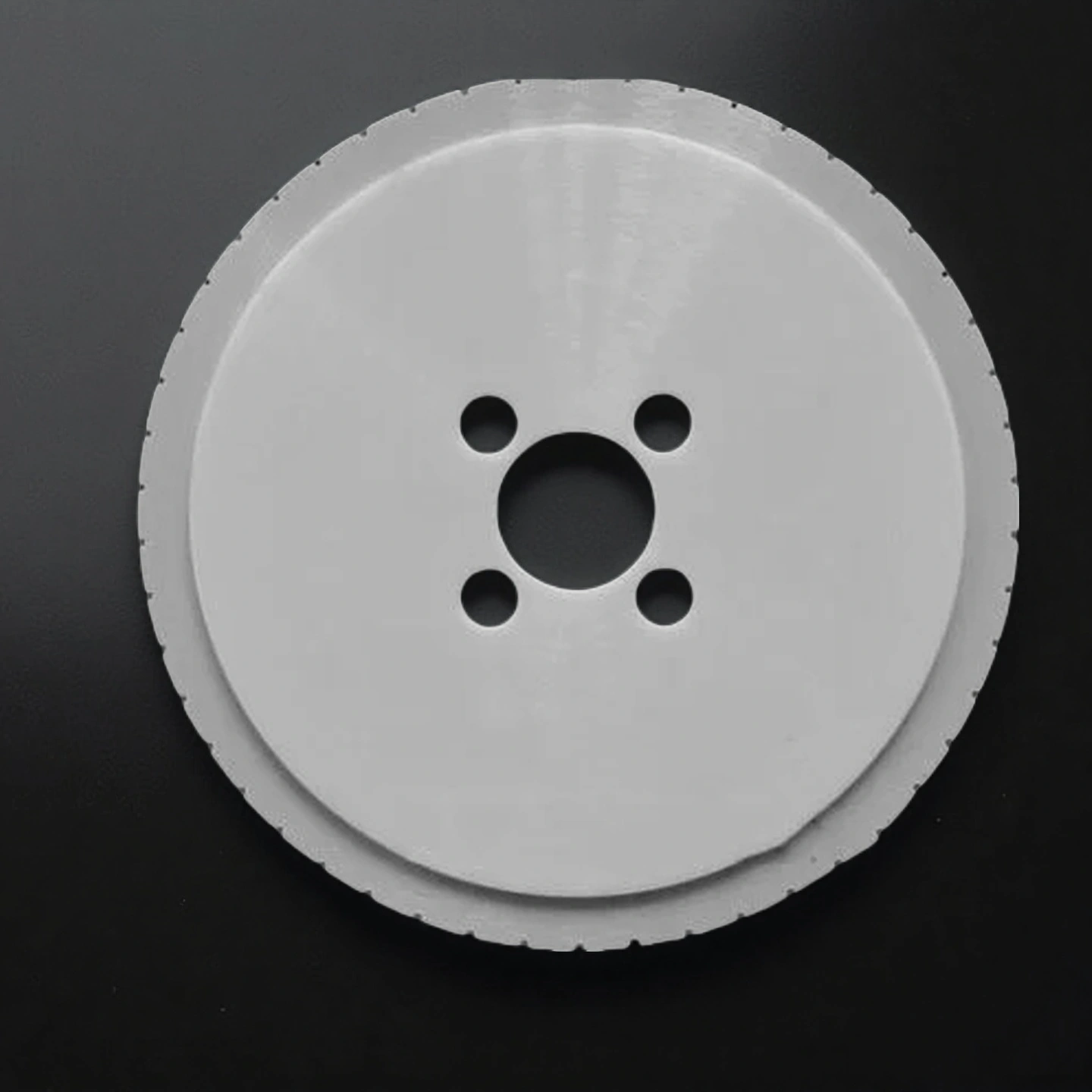
Alumina ceramic rotary indexing tables are designed for precise rotational positioning in high-precision equipment, including laser marking stations, CNC systems, and automated inspection platforms. Made from ≥95% alumina, the material offers exceptional hardness, dielectric strength, and thermal resistance, making it ideal for harsh industrial conditions or cleanroom environments.
Why Engineers Choose Alumina Ceramic Dial Plates Over Metal
- Electrical insulation — high dielectric strength and volume resistivity isolate test probes and fixtures from the drive and frame at in-line electrical stations.
- Non-magnetic & clean — alumina does not rust or magnetise and sheds few particles, which suits clean and inspection stations.
- Wear resistance — the hard ceramic surface resists indentation and groove wear from repeated clamping over high cycle counts.
- Dimensional stability — high stiffness and low thermal expansion help hold flatness and position through local heating steps.
- Heat & chemical resistance — the surface withstands repeated heating and many process chemicals in laser, curing and heating stations.
Alumina Rotary Indexing Table Properties
| Property | 96% Al₂O₃ | 99% Al₂O₃ | 99.5% Al₂O₃ | 99.7% Al₂O₃ | Note |
|---|---|---|---|---|---|
| Alumina Content (%) | 96 | 99 | 99.5 | 99.7 | Final grade confirmed per order |
| Density (g/cm³) | 3.60–3.75 | ≈3.83 | ≈3.89 | ≈3.92 | Higher-purity grades generally have greater density |
| Flexural Strength (MPa) | 260–320 | 300–350 | 350–380 | 360–400 | Dependent on test method, geometry, and size |
| Elastic Modulus (GPa) | 300–340 | 350–360 | ≈370 | 370–380 | High stiffness supports dimensional stability |
| Hardness (GPa) | ≈14–15 | ≈15–17 | ≈15–18 | ≈15–18 | Supports resistance to surface wear |
| Thermal Expansion (10⁻⁶/K) | 7.5–8.0 | 7.6–8.2 | 8.0–8.4 | 8.0–8.5 | Low thermal expansion supports repeatability |
| Volume Resistivity (Ω·cm) | >1 × 10¹⁴ | >1 × 10¹⁴ | >1 × 10¹⁴ | >1 × 10¹⁴ | Electrically insulating and non-magnetic |
| Typical Application Positioning | General-purpose | Precision automation | High-cleanliness applications | Semiconductor-adjacent equipment | Structural and handling components only |
Alumina Grade Selection Guide
| Alumina Grade | Typical Selection Considerations |
|---|---|
| 96% Al₂O₃ | General-purpose electrical insulation and wear resistance for standard automation stations. |
| 99% Al₂O₃ | Higher density and stability for precision automation and electronics assembly equipment. |
| 99.5% Al₂O₃ | Higher cleanliness and stability for more demanding automation and inspection stations. |
| 99.7% Al₂O₃ | Suitable for structural and handling components in semiconductor-adjacent equipment. This does not indicate wafer-contact or semiconductor-process qualification. |
| How We Select the Grade | Material purity is selected according to operating temperature, electrical or magnetic environment, cleanliness, load, geometry, and precision requirements. Final selection is confirmed through engineering review. |
Alumina Rotary Indexing Table Specifications
| Alumina Rotary Indexing Table | ||
| Item No. | Diameter (mm) | Thickness (mm) |
| AT-YHL-IW01 | Customize | |
Alumina Rotary Indexing Table Packaging
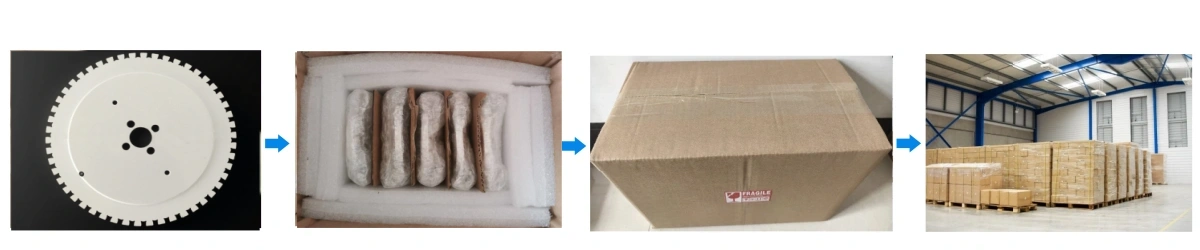
- Each alumina ceramic rotary indexing table plate is individually wrapped in soft protective film to prevent surface scratches.