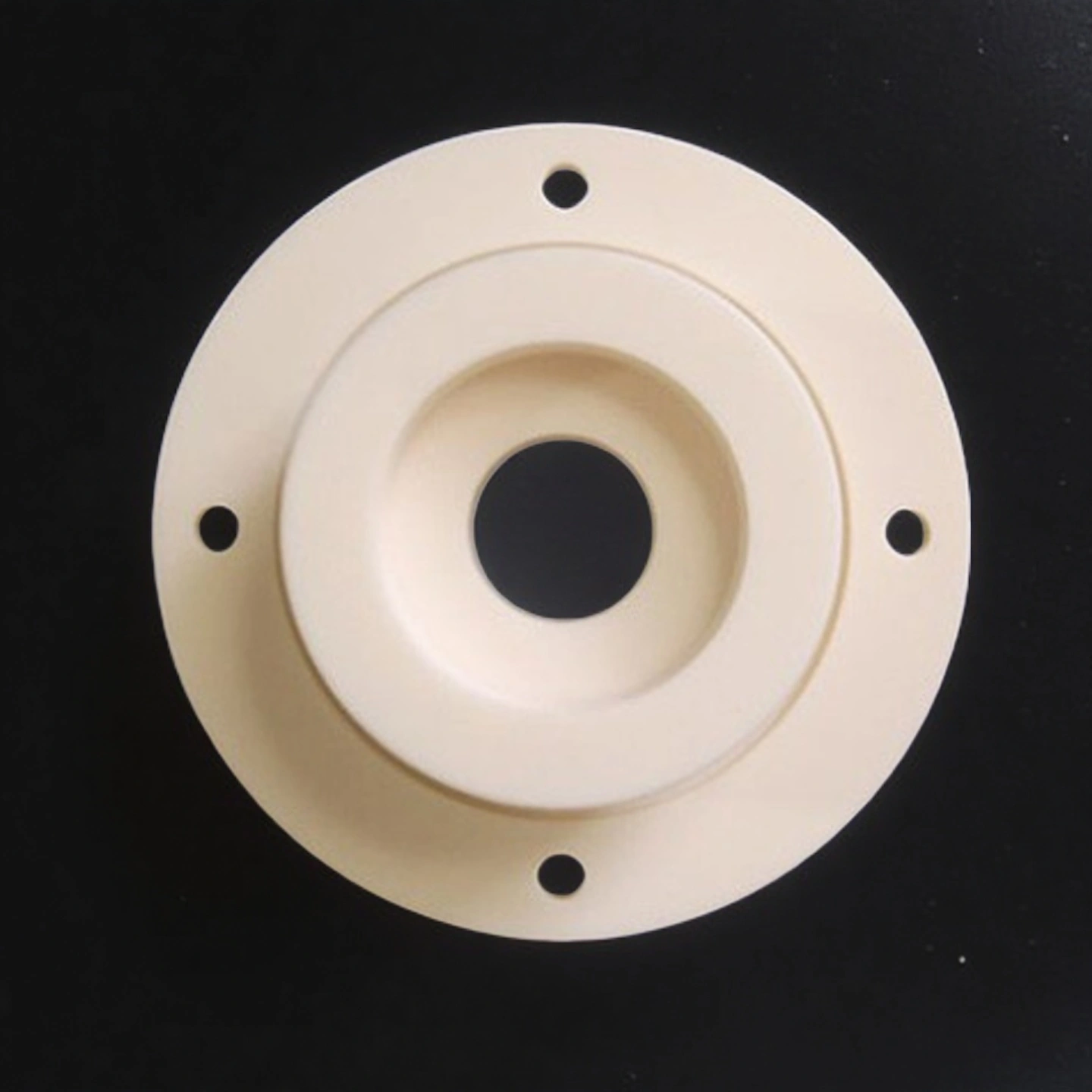
What Is an Alumina Ceramic Flange?
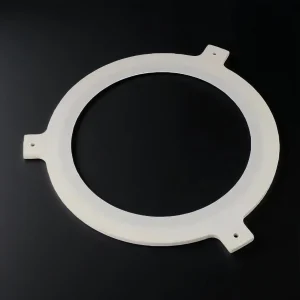
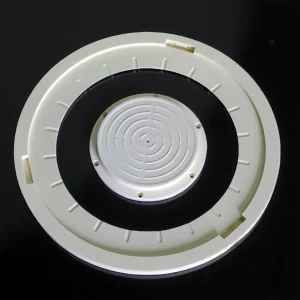
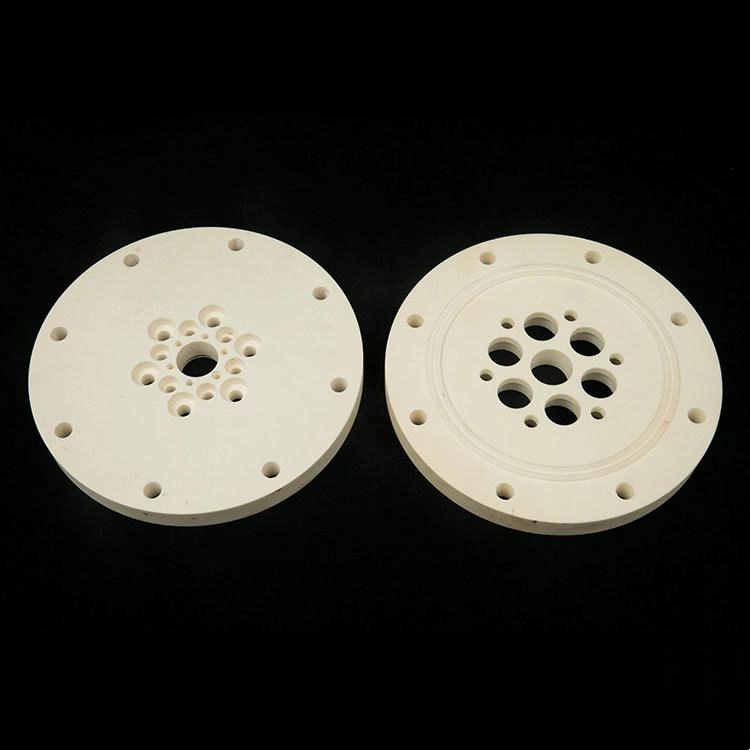
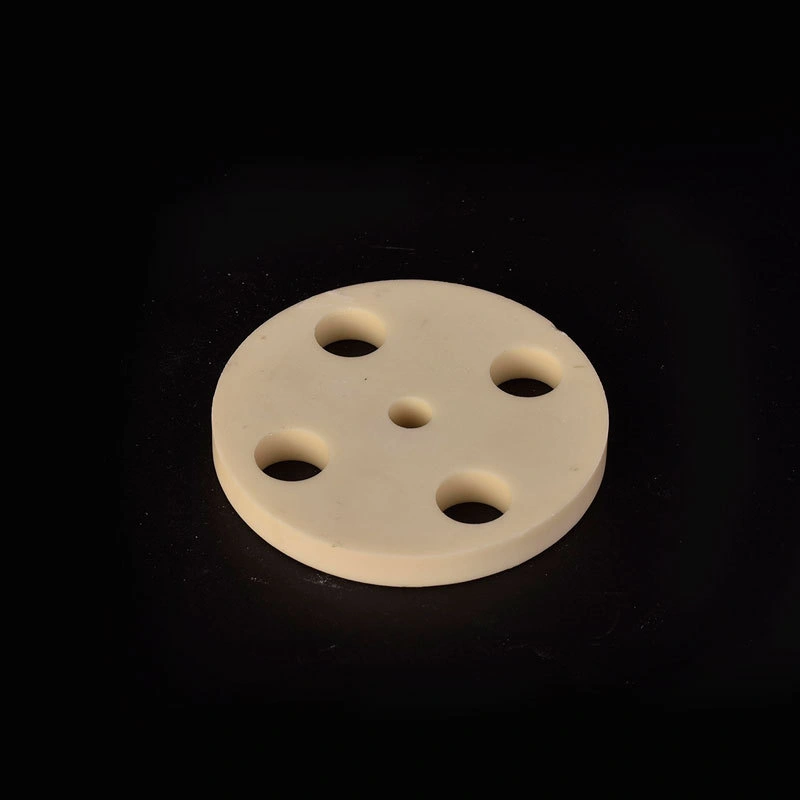
An alumina ceramic flange is a precision ceramic connection part used to support, locate, seal or electrically isolate tubes, heaters, chambers and mounting structures in high-temperature equipment. It is selected when metal flanges may deform, oxidize, conduct current or create contamination risk under heat, corrosion or electrical load.
Why Alumina Works for High-Temperature Flange Interfaces
Alumina ceramic is suitable for high-temperature flange interfaces because it combines heat resistance, electrical insulation, chemical stability and mechanical hardness in one material. This makes it useful for equipment connections where a metal flange may lose shape, oxidize, conduct current or affect process cleanliness.
Dense Al₂O₃ ceramic can help maintain stable support around furnace tube ends, heater interfaces and insulated mounting positions. It also provides electrical isolation between conductive hardware, which is important for heater assemblies, electrode supports and high-temperature electrical structures.
Alumina also resists many oxidizing and chemically aggressive conditions better than common metals. For demanding applications, the final alumina grade should be selected according to working temperature, atmosphere, chemical exposure, insulation requirement and machining complexity.
Properties of Alumina Ceramic Flange
| Property | Unit | 96% Al₂O₃ | 99% Al₂O₃ | 99.5% Al₂O₃ | 99.6% Al₂O₃ | 99.7% Al₂O₃ | 99.8% Al₂O₃ | 99.9% Al₂O₃ | 99.99% Al₂O₃ |
| Alumina content | % | 96 | 99 | 99.5 | 99.6 | 99.7 | 99.8 | 99.9 | 99.99 |
| Density | g/cm³ | 3.6-3.75 | 3.83 | 3.89 | 3.91 | 3.92 | 3.93 | 3.94 | 3.98 |
| Color | – | white | Ivory | Ivory | Ivory | Ivory | Ivory | Ivory | Ivory |
| Water absorption | % | 0 | 0 | – | 0 | 0 | 0 | 0 | 0 |
| Young’s modulus (Elastic modulus) | GPa | 300 | 350 | 375 | 356 | 357 | 358 | 359 | 362 |
| Shear modulus | GPa | – | – | 152 | – | – | – | – | – |
| Bulk modulus | GPa | – | – | 228 | – | – | – | – | – |
| Poisson’s ratio | – | – | – | 0.22 | – | – | – | – | – |
| Compressive strength | MPa | 1910 | 2210 | 2500 | 2552 | 2554 | 2556 | 2558 | 2570 |
| Flexural strength | MPa | 260 | 300 | 340 | 345 | 346 | 347 | 348 | 365 |
| Fracture toughness | MPa·m¹ᐟ² | – | – | 4 | – | – | – | – | – |
| Hardness | GPa | 14.5 | 17 | 17 | 23 | 24 | 25 | 26 | 30 |
| Thermal conductivity | W/m·K | 20 | 31 | 31 | 31-33 | 31-33 | 31-33 | 31-35 | 31-35 |
| Thermal shock resistance ΔT | °C | – | – | – | 222 | 223 | 224 | 225 | 228 |
| Maximum use temperature (no load) | °C | 1450 | 1680 | ≤1750 | 1755 | 1760 | 1765 | 1770 | 1800 |
| Coefficient of thermal expansion | 10⁻⁶/°C | 7.6 | 7.6 | 7.6 | 7.6 | 7.5 | 7.5 | 7.4 | 7.4 |
| Volume resistivity | Ω·cm | >1×10¹⁴ | >1×10¹⁴ | >1×10¹⁴ | >1×10¹⁴ | >1×10¹⁴ | >1×10¹⁴ | >1×10¹⁴ | >1×10¹⁴ |
| Dielectric constant (relative permittivity) | – | 9.2 | 9.5 | 9.8 | 9.83 | 9.84 | 9.85 | 9.86 | 9.92 |
| Dielectric strength | kV/mm | 15 | 19 | 16.9 | 23.2 | 23.4 | 23.6 | 23.8 | 24 |
| Dissipation factor (loss factor @ 1 kHz) | – | – | – | 0.0002 | – | – | – | – | – |
Alumina Ceramic Flange Specifications
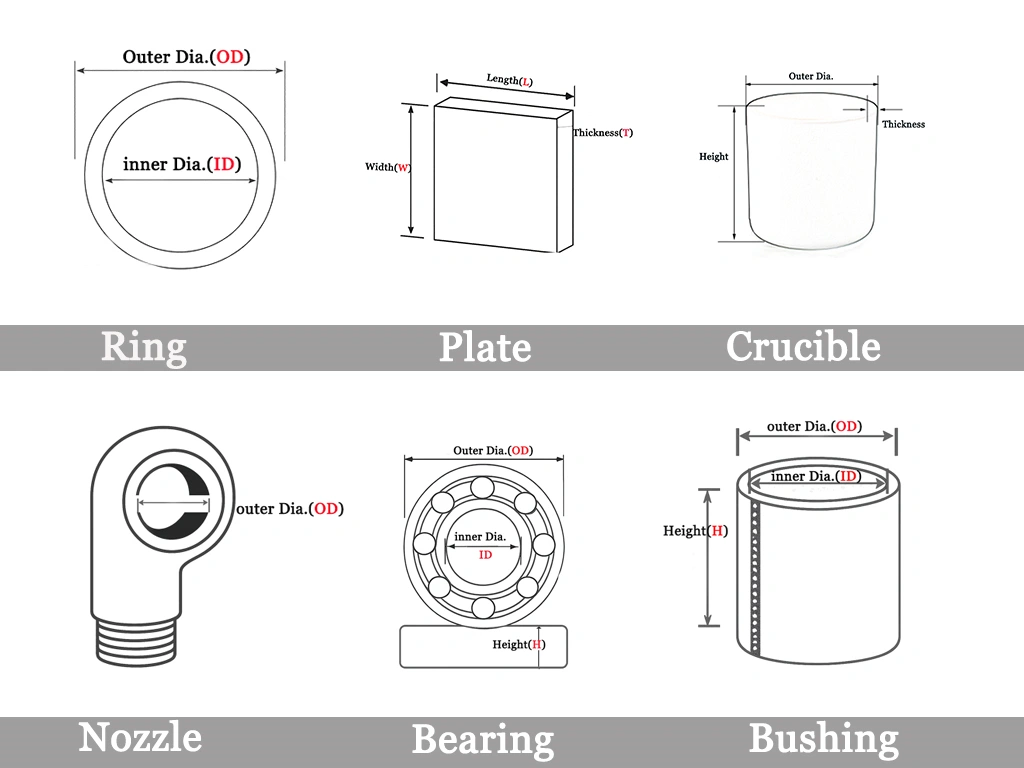
| Alumina Ceramic Flange | ||
| Item No. | Diameter (mm) | Thickness (mm) |
| AT-YHL-FL01 | Customize | |
Material Grade and Property Reference
Alumina ceramic flanges are commonly produced from 95%, 96%, 99% or 99.5% Al₂O₃ depending on temperature, insulation requirement, chemical exposure, cleanliness requirement and budget.
- 95% alumina is often selected for cost-effective industrial flange parts, furnace fixtures and general insulating supports. It is suitable when the application requires good heat resistance and insulation but does not require high-purity ceramic performance.
- 96% alumina provides a balanced choice for many heater assemblies, tube interfaces and electrical insulation structures. It is often used when the flange needs stable ceramic performance with practical machining and cost control.
- 99% alumina is suitable for higher-temperature, cleaner or more demanding insulation and sealing applications. It can be considered when the working environment requires improved purity, lower contamination risk or better long-term stability.
- 99.5% alumina is used when the flange requires higher purity, cleaner ceramic contact or more demanding technical performance. The final grade should be confirmed together with geometry, sealing method, working atmosphere and cost target. A higher alumina purity is not always necessary if the main requirement is mechanical fit or industrial insulation.
Alumina Ceramic Flange Packaging
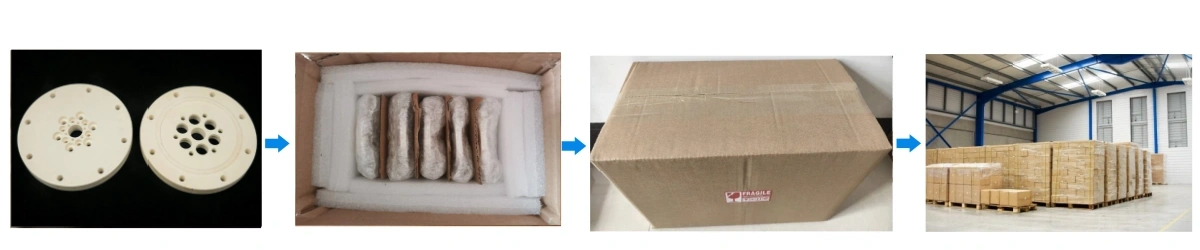
- Alumina ceramic flanges are inspected for critical dimensions, sealing faces, bolt holes and edge quality before shipment, then packed with protective separation to reduce impact, vibration and ceramic-to-ceramic contact during export transportation.