Alumina Washer for High-Temperature Electrical Insulation

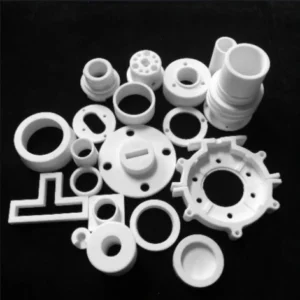
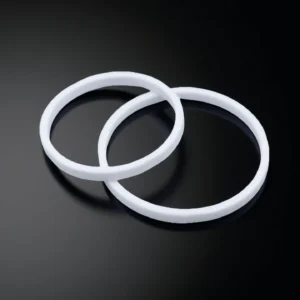
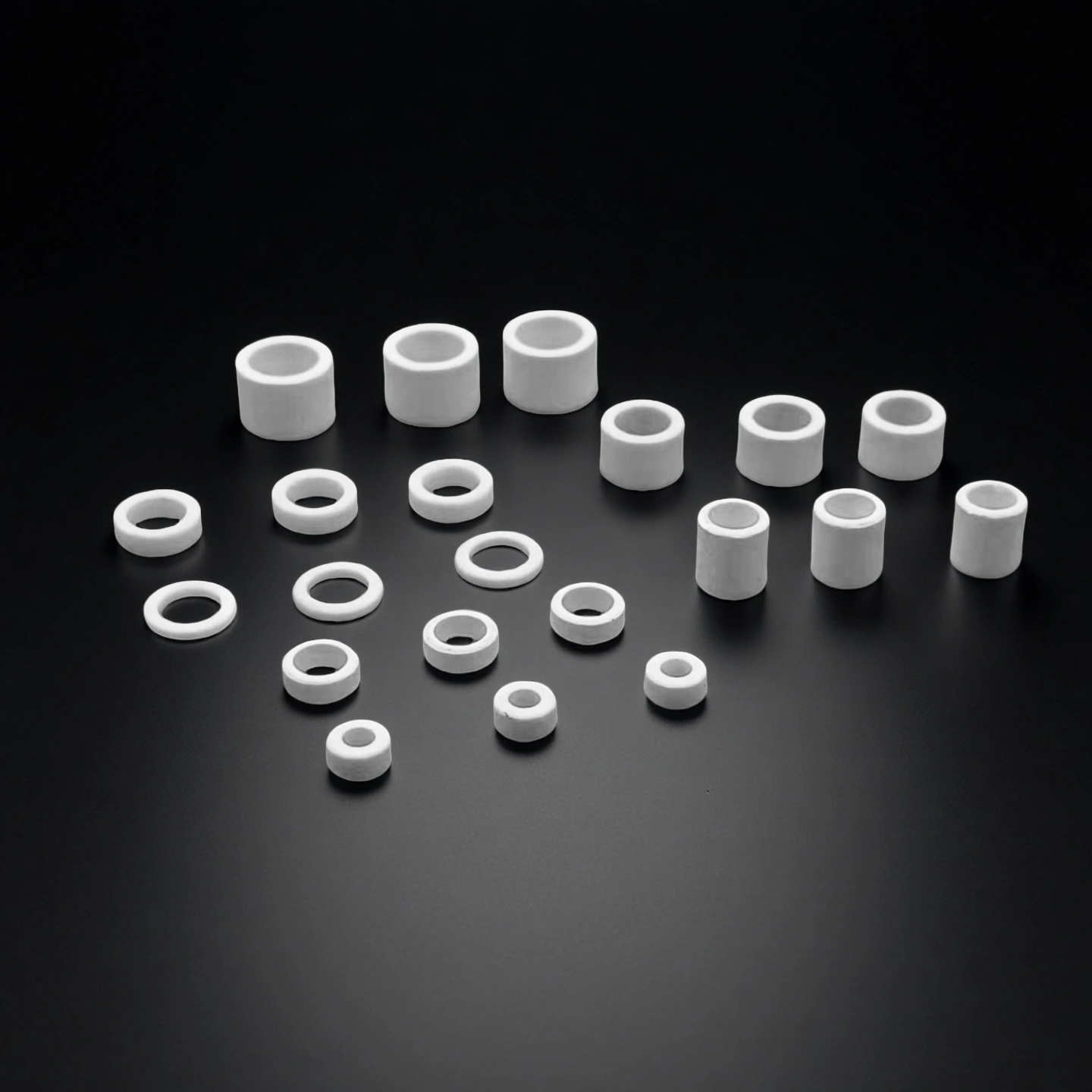
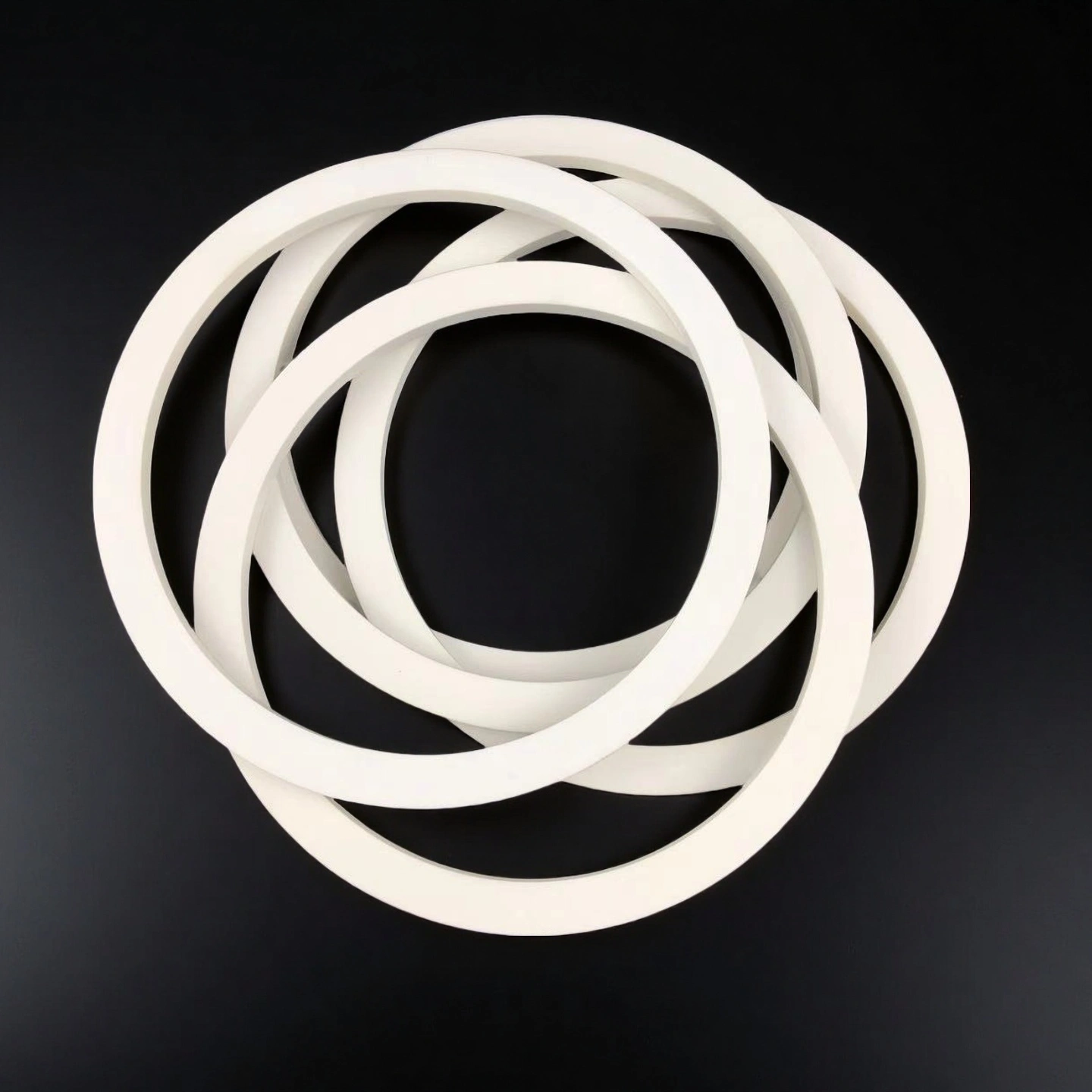
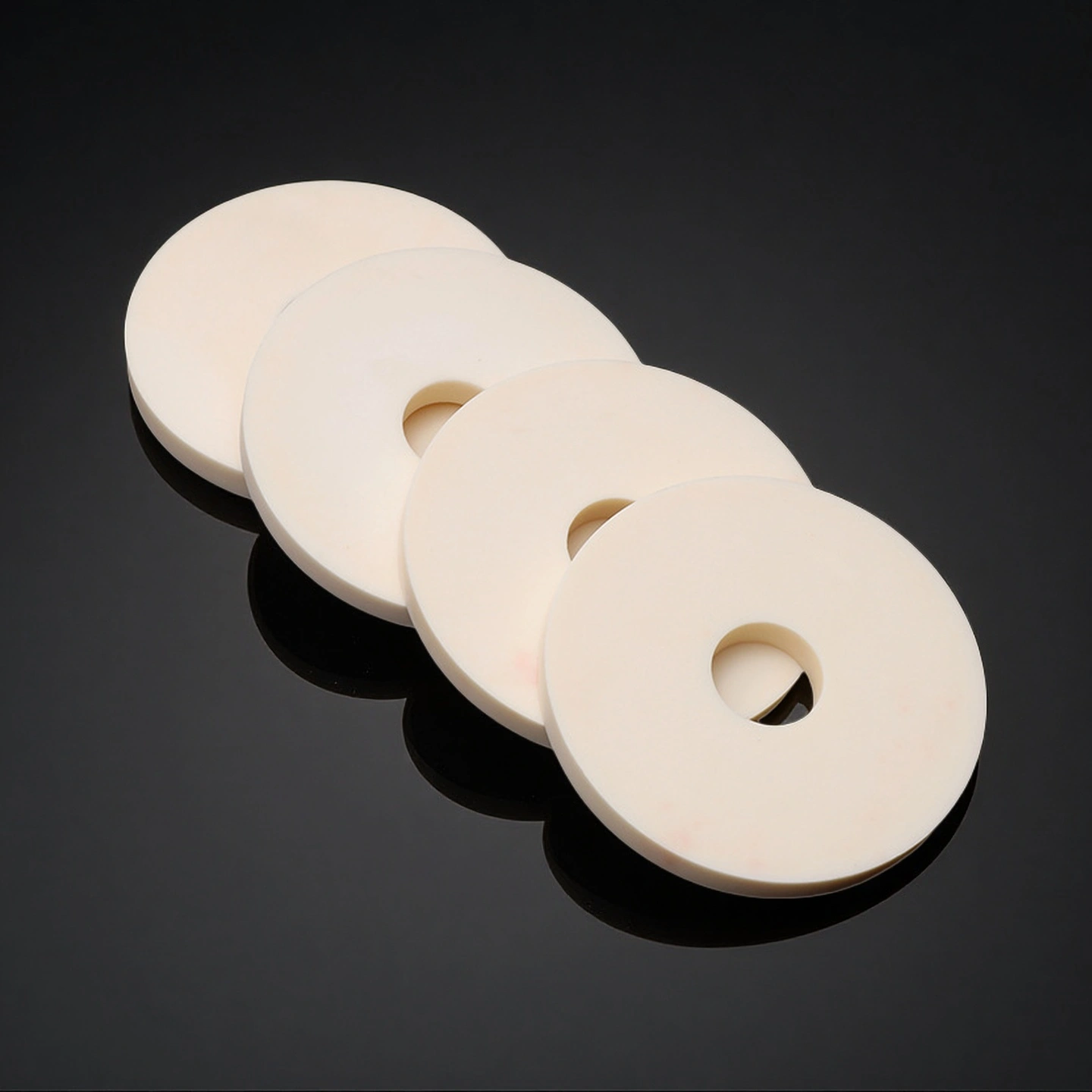
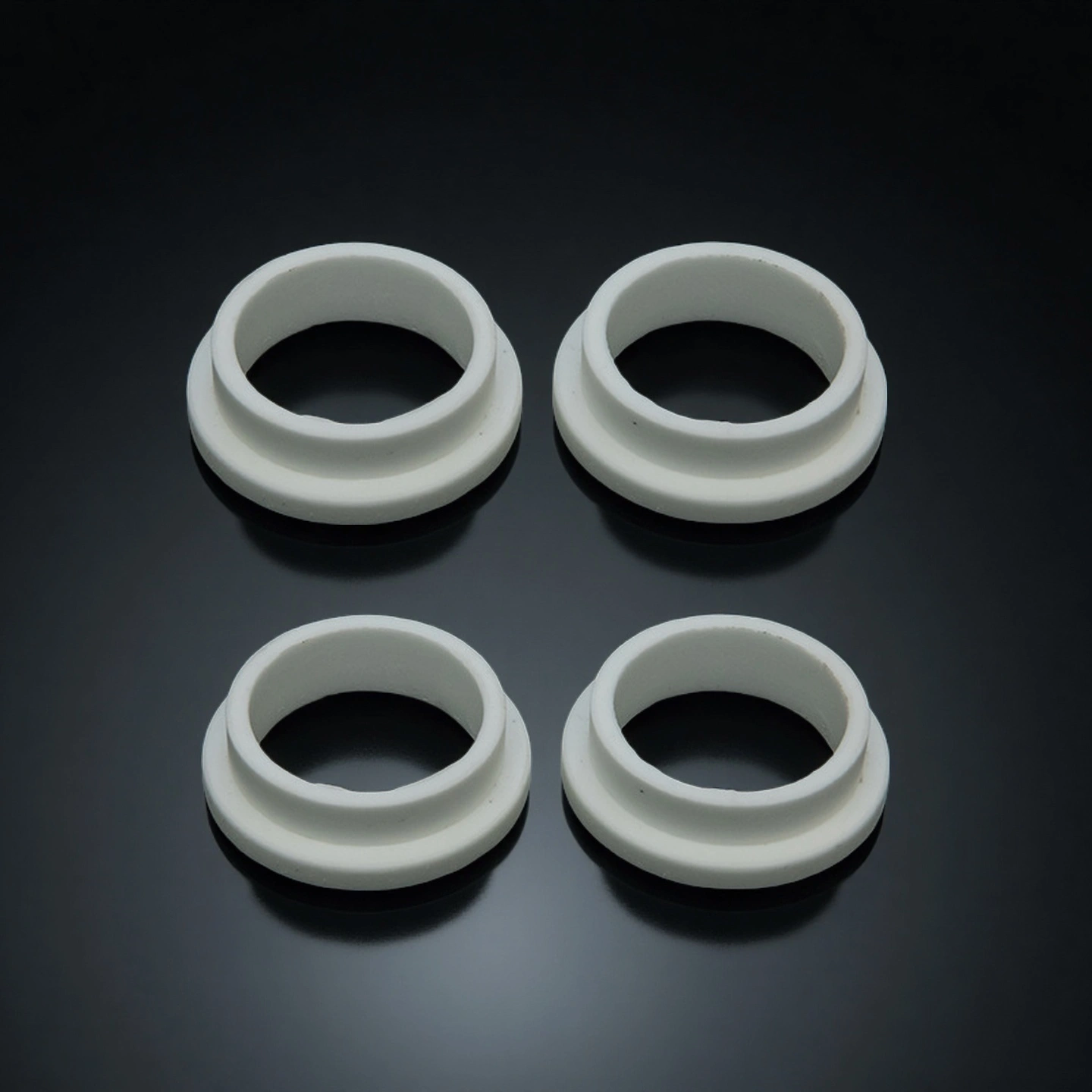
Standard alumina washers are available in flat and shoulder styles, with inner diameters matched to common screw sizes, outer diameters tuned for load distribution, and thickness options from thin shims to heavy sections. For applications that require non-standard ID/OD ratios, special thickness, or top-hat geometries, custom alumina washers can be produced directly from drawings or samples.

Catalog No. AT-YHL-DP001
Material 95–96%, 99%, 99.5% or 99.7% (C799) Al2O3
Max Operating Temp ≈ 1,450–1,730°C
Dimensional Tolerance ±0.005 mm (customizable)
Dielectric strength  ≈ 15- 23.4 kV/mm
Engineering RFQ Review
Small-Batch Custom Support
Factory-Direct Manufacturing
Drawing & Process Review

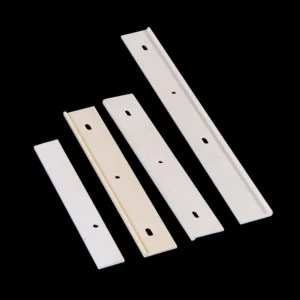
Alumina ceramic washers are precision ceramic components used to provide electrical insulation, thermal separation, spacing, and load distribution in mechanical assemblies. Depending on their geometry, alumina grade, and operating conditions, they may be used in furnace and vacuum fixtures, induction-heating equipment, power electronics and busbar assemblies, and selected chemical-processing equipment. Flat, shoulder, and top-hat designs can be manufactured to suit different fastening and isolation requirements.

Alumina Washer Advantages

  • Controlled thickness and flatness for repeatable clamping force
    Precision grinding or lapping can be applied to alumina washers so that stack thickness remains within a tight tolerance, helping engineers maintain a defined preload on fasteners and joints.
  • Stable insulation at elevated temperature
    In contrast to polymer or mica washers, alumina washers maintain high dielectric strength and low leakage current at temperatures exceeding 1,000–1,500°C, which is critical for heating, vacuum and power equipment.
  • Resistance to corrosion and process media
    Alumina ceramics tolerate many acids, alkalis, solvents and combustion atmospheres, so washers can operate in chemical process equipment, exhaust paths and furnace atmospheres without rapid degradation.
  • Non-porous surface for vacuum and clean applications
    High-purity, fully dense alumina washers are non-porous and compatible with vacuum bake-outs, which makes them suitable for UHV fixtures and analytical instruments.
  • Compatibility with flat and shouldered hardware interfaces
    Flat, top-hat and shoulder washer geometries allow designers to insulate screws, feedthroughs and busbars without changing the metal hardware design, reducing redesign cost and validation time.


Alumina Washer Specifications

Alumina Ceramic Washer
Item No. Inner Diameter (mm) Outer Diameter(mm) Thickness(mm) Purity(%)
AT-YHL-DP001 1 7 1.6 96-99
AT-YHL-DP002 2 4 4 96-99
AT-YHL-DP003 3 6 1 96-99
AT-YHL-DP004 3 6 1.5 96-99
AT-YHL-DP005 3 7 2 96-99
AT-YHL-DP006 3.2 6 4 96-99
AT-YHL-DP007 3.2 7.8 3.8 96-99
AT-YHL-DP008 4 6 1 96-99
AT-YHL-DP009 4 7 2.5 96-99
AT-YHL-DP010 4 8 1.5 96-99
AT-YHL-DP011 4 8 4 96-99
AT-YHL-DP012 4 10 1.5 96-99
AT-YHL-DP013 4 10 2 96-99
AT-YHL-DP014 4 15 1 96-99
AT-YHL-DP015 4 30 1.5 96-99
AT-YHL-DP016 5.5 8 1.8 96-99
AT-YHL-DP017 5 9 2 96-99
AT-YHL-DP018 5 10 1.5 96-99
AT-YHL-DP019 5 12.5 4 96-99
AT-YHL-DP020 5.5 12.5 4 96-99
AT-YHL-DP021 5 30 6 96-99
AT-YHL-DP022 6 12 1.5 96-99
AT-YHL-DP023 6.5 14 3 96-99
AT-YHL-DP024 7 14 2.7 96-99
AT-YHL-DP025 8 12 4 96-99
AT-YHL-DP026 8 18 2 96-99
AT-YHL-DP027 8.5 14 0.8 96-99
AT-YHL-DP028 8.5 14 1.5 96-99
AT-YHL-DP029 8.5 16 3 96-99
AT-YHL-DP030 8.5 30 3 96-99
AT-YHL-DP031 9.2 14.5 2.5 96-99
AT-YHL-DP032 9 18 2 96-99
AT-YHL-DP033 9.9 18 3 96-99
AT-YHL-DP034 10 27 0.7 96-99
AT-YHL-DP035 10 27 5 96-99
AT-YHL-DP036 10 38 5 96-99
AT-YHL-DP037 12.5 25.5 4.5 96-99
AT-YHL-DP038 14.8 30 2 96-99
AT-YHL-DP039 15.3 27 3.5 96-99
AT-YHL-DP040 16 27 6 96-99
AT-YHL-DP041 16 38 0.8 96-99
AT-YHL-DP042 21 23 6 96-99
AT-YHL-DP043 23 39 3.5 96-99
AT-YHL-DP044 23 32 3 96-99
AT-YHL-DP045 31 50.5 3.5 96-99
AT-YHL-DP046 40 54 3.5 96-99
AT-YHL-DP047 7.2 12 3 96-99
AT-YHL-DP048 14.1 20 3 96-99
AT-YHL-DP049 14.15 21.2 2 96-99
AT-YHL-DP050 17.15 24.2 3 96-99

Which Alumina Washer Do You Need?

Washer problems usually start with the wrong structure or grade, not the wrong material. This table routes your duty to the right type — then share a drawing or old-part photos for engineering review.

Your duty Right type What matters most
General insulation and spacing in fixtures Flat washer, 95–96% Al2O3 ID/OD/thickness to drawing, chamfer and edge condition against chipping
High temperature, vacuum or high-voltage duty Flat washer, 99% / 99.5% / 99.7% (C799) Grade by temperature, atmosphere and dielectric duty — C799 confirmed per order, never default
Isolating the screw shank from the clearance hole Shoulder / top-hat washer Shoulder diameter and height per drawing so the fastener never touches the metal part
Insulating TO-220 / TO-247 power devices on a heatsink TO package ceramic insulator pad — see our IC package alumina washer Package type, pad thickness (~1 mm typical), hole pattern, dielectric requirement
Stack height and load spreading Spacer disc, 95–99% Stack thickness tolerance, flatness and load distribution — reviewed per assembly


Alumina Ceramic Washer Packaging

  • Each batch of alumina washers is separated into small stacks or rows and wrapped in soft protective film or PE bags to help prevent chipping during transportation.
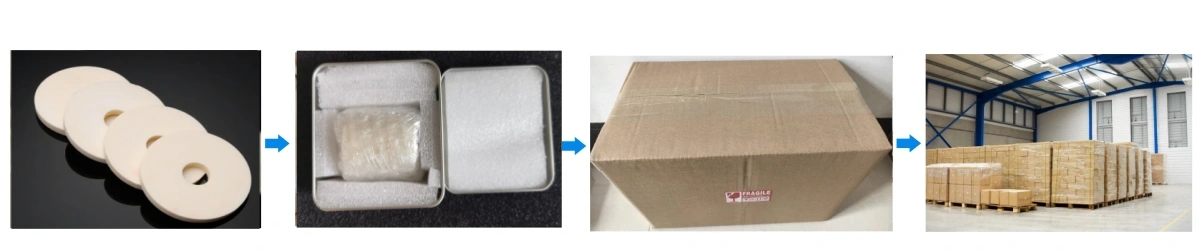

Alumina ceramic washers packed with protective material

Alumina Ceramic Washer Applications

Alumina ceramic washers are used in assemblies that require electrical isolation, thermal separation, controlled spacing or load distribution around fasteners and mounting points. ADCERAX manufactures standard and drawing-based flat, shoulder, top-hat and spacer-style alumina washers for high-temperature equipment, electrical systems, power electronics, chemical-processing assemblies and replacement-part programs.

The appropriate washer design depends on the alumina grade, geometry, operating temperature, atmosphere, electrical requirements and mechanical loading of the assembly.

  • Heat-Treatment, Vacuum Furnace and Industrial Heating Equipment

    Typical applications: Heat-treatment furnaces, vacuum furnace fixtures, induction-heating stations, heater supports, threaded-rod assemblies and controlled-atmosphere equipment.
    Role in the assembly: Alumina washers provide electrical isolation, thermal separation and controlled spacing between metallic fasteners, heating components, fixture plates and structural supports.
    ADCERAX manufacturing capability: Flat washers, thick spacer washers and shoulder or top-hat washers can be manufactured with application-specific ID, OD, thickness and edge details. Ground faces can also be produced where stack height, flatness or contact consistency is important.

  • Power Electronics, Busbars and High-Voltage Assemblies

    Typical applications: Busbar joints, power converters, inverters, motor terminals, high-voltage cabinets, electrical feedthroughs and insulated fastening points.
    Role in the assembly: Flat washers provide an insulating bearing surface under a fastener, while shoulder and top-hat washers can also isolate the screw shank from the surrounding metal hole.
    ADCERAX manufacturing capability: ADCERAX produces flat, shouldered and stepped alumina washers for different screw sizes, mounting-hole geometries and insulation paths. Designs can include controlled wall thickness, counterbores, recesses and anti-rotation features.

  • Power Semiconductor Packages and Heatsink Isolation

    Typical applications: TO-220, TO-247 and other power-device packages mounted to heatsinks, chassis plates or power-module assemblies.
    Role in the assembly: Thin alumina washers and insulating pads separate electrically active device surfaces from the heatsink while providing a rigid ceramic mounting interface.
    ADCERAX manufacturing capability: Package-style alumina washers can be manufactured with round or rectangular outlines, mounting holes, lead-hole patterns, slots and application-specific thicknesses for standard and non-standard package layouts.

  • Pumps and Chemical-Processing Equipment

    Typical applications: Chemical pumps, valves, process instruments, sensor mounts, reactor fixtures and equipment exposed to selected corrosive or high-temperature media.
    Role in the assembly: Alumina washers can provide spacing, electrical isolation and a stable ceramic interface between fasteners, housings, sensors and process-side components.
    ADCERAX manufacturing capability: Flat, stepped and ring-style washers can be produced with different alumina grades, surface finishes and edge profiles for selected chemical-processing and pump assemblies. Material compatibility remains dependent on the actual process medium and operating conditions.

  • Maintenance, Replacement and Legacy Equipment

    Typical applications: Furnace fixtures, laboratory equipment, electrical assemblies, imported machinery and older systems containing discontinued or difficult-to-source insulating washers.
    Role in the assembly: A drawing-based ceramic washer can restore the required spacing, fastening interface or insulation position while maintaining the original assembly concept.
    ADCERAX manufacturing capability: ADCERAX can manufacture repeat-production flat, shoulder, top-hat and special-profile washers for maintenance programs and legacy equipment. Dimensions, material grade and functional features can be matched to the approved replacement design.

Al2O3 Ceramic Washer Usage Instructions

  • Installation

    1. Check that all alumina washers are free from cracks, edge chipping and surface contamination before installation.
    2. Place the alumina washer between the metal nut/bolt head and the part to be insulated, ensuring full contact between surfaces.
    3. Do not simply reuse the torque values recommended for metal washers — ceramic does not deform plastically like metal, so clamp load and tightening torque should be confirmed for the ceramic washer during engineering review, and over-tightening must be avoided.
    4. For shoulder washers, make sure the shoulder fully fills the clearance hole and that the metal screw does not touch the surrounding metal part.

  • Use and Operation

    1. Use alumina washers in applications that are within the specified maximum service temperature and mechanical loading conditions.
    2. Avoid impact loading, bending or prying forces on the washer; ceramic is strong in compression but sensitive to tensile shock.
    3. In electrical assemblies, respect the minimum creepage and clearance distances defined in your design standards, using the washer as an additional insulation layer rather than the only safeguard.

  • Storage

    1. Store alumina washers in dry, clean containers or trays, separated by size and type to avoid confusion during maintenance.
    2. Avoid stacking heavy items on top of the boxes holding thin or small washers to reduce the risk of hidden cracks.
    3. Keep washers away from loose metal parts that could scratch or chip the ceramic surfaces.

  • Cleaning

    1. For general use, dust and light contamination can be removed with soft brushes or lint-free cloths.
    2. For vacuum, optical or electronics applications, ultrasonic cleaning in suitable solvents or de-ionized water can be used to remove fine particles and residues, as is recommended for alumina components used in clean environments.
    3. Dry thoroughly in a clean oven at moderate temperature before assembly, especially for vacuum service.

  • Common Misuse Points and Fixes

    1. Misuse: Over-tightening the bolt until the alumina washer cracks at the edge.
    Fix: Reduce applied torque, use a washer with slightly larger bearing area, or introduce a metal backing washer above the ceramic to spread the load.

    2. Misuse: Using an alumina washer as the only structural spacer in a joint subject to strong bending or shock.
    Fix: Add a separate metal support or redesign the joint so that the alumina washer works mainly in compression and insulation, not as the primary bending member.

    3. Misuse: Installing an alumina shoulder washer in a hole that is too tight or misaligned, forcing the shoulder and causing hidden cracks.
    Fix: Machine the hole with suitable clearance, deburr sharp edges, and verify fit on a sample before assembling large batches.

Alumina Ceramic Washer FAQ

  1. Q: Which alumina purity should I choose for my washer?
    A: Common grades include 95–96%, 99%, 99.5% and 99.7% alumina. Grades around 95–96% suit many mechanical and furnace fixtures, while 99% and higher-purity grades may be selected for more demanding electrical-insulation, vacuum and clean-equipment applications. The final grade depends on the operating temperature, voltage, atmosphere, mechanical load and cleanliness requirements; C799 should not be assumed as the default material.
  2. Q: What maximum temperature can an alumina washer withstand?
    A: Maximum no-load temperature is grade-dependent, with typical reference ranges of approximately 1,450–1,650°C for 95–96% alumina and up to about 1,700–1,800°C for selected high-purity grades. The safe working temperature may be lower because it also depends on mechanical load, atmosphere, joint design and thermal cycling. It should therefore be confirmed for the actual operating conditions rather than represented by one universal temperature.
  3. Q: How does an alumina washer compare with metal, mica or PTFE washers?
    A: Alumina provides electrical insulation and maintains its rigidity at temperatures where metal washers remain conductive and some mica or polymer washers may degrade, soften or creep. The trade-off is brittleness: alumina does not deform plastically like metal, so edge condition, contact surfaces, clamp load and tightening practice must be considered in the assembly. Metal-washer torque values should not be applied automatically to ceramic washers.
  4. Q: Do alumina washers seal like a gasket?
    A: No. Alumina washers are primarily used for electrical insulation, thermal separation, spacing and load distribution. Sealing is a separate function determined by the mating surfaces, sealing material, pressure, process medium and overall joint design. A ceramic washer should not be presented as a sealing gasket unless the complete sealing system has been specifically designed and validated for that purpose.
  5. Q: Can you make TO-220 or TO-247 insulator pads and shoulder washers?
    A: Yes. ADCERAX manufactures alumina insulator pads for TO-220, TO-247 and related power-device packages, as well as shoulder and top-hat washers for insulating fasteners from surrounding metal holes. Package outline, hole pattern, thickness, alumina grade and surface requirements vary by device and assembly, so both reference footprints and drawing-based configurations are available.
  6. Q: Can alumina washers be used in vacuum and UHV applications?
    A: Alumina washers can be considered for vacuum equipment, but vacuum or UHV suitability is not determined by the material name alone. Alumina purity, density, surface condition, cleaning method, packaging, geometry, bake-out conditions and system outgassing requirements must all be considered. UHV compatibility should not be claimed without application-specific verification.
  7. Q: Are alumina washers reusable after a thermal cycle?
    A: Alumina washers may be reused in some furnace and electrical assemblies when the operating conditions permit and the parts remain undamaged. Reuse depends on thermal cycling, mechanical load, atmosphere and handling history. Each washer should be inspected for cracks, edge chipping, surface damage and dimensional change before being returned to service.
customize size

Custom Aluminum Oxide Washer

We can supply standard and drawing-based alumina washers, allowing engineering teams to match the washer geometry to the exact screw size, clamping area and insulation path required by their equipment. Custom alumina washer production is available from prototype batches up to repeated production orders.

1. Inner diameter (ID) matched to thread sizes or shafts

  • From small sensor screws (e.g., ≈2–3 mm ID) up to large studs (20–30 mm ID or more).

2. Outer diameter (OD) and bearing surface

  • Fine-tuning of OD for load spreading on thin plates or compact designs.

3. Thickness and stack height

  • From thin shim-like washers to thicker insulating spacers, thickness tolerance down to around ±0.005–0.5 mm is feasible for ground parts.

4. Geometry type

  • Flat washer, shoulder / top-hat washer, countersunk face, recesses for screw heads.

5. Material grade

  • 95%, 97%, 99% or 99.7–99.8% Al₂O₃, depending on insulation, strength and budget requirements.

6. Surface finish

  • As-fired, ground, lapped or polished surfaces on one or both faces for better contact and reduced micro-gaps.

7. Edge and chamfer details

  • Chamfered or radiused edges to reduce chipping during assembly.

8. Hole and slot features

  • Additional slots or keyways for anti-rotation, alignment or venting.

9. Working temperature class

  • Grades validated for continuous use in the 1,500–1,700°C range for furnace and vacuum service.

Related Products

ADCERAX - Your Trusted Advanced Ceramics Manufacturing Partner

Direct factory manufacturing with comprehensive ceramic materials expertise and global supply capabilities

China-Based Manufacturer

ADCERAX supplies ceramic components for overseas OEMs, equipment builders, and labs.

Custom Drawing Support

We review drawings, dimensions, materials, and application conditions before quotation.

Ceramic Process Control

Forming, sintering, machining, grinding, and finishing are arranged by part requirements.

Pre-Shipment Inspection

Dimensional checks, visual inspection, and packaging review help reduce procurement risk.

Get in Touch with Us

Our team will be happy to respond to you in less than 24 hours.

Pingxiang Factory — Silicon carbide, silicon nitride, high-temperature ceramics

Quick Quotation

*Our team will answer your inquiries within 24 hours.

*Your information will be kept strictly confidential.

Ready to Solve Your Engineering Challenge?

Partner with ADCERAX for reliable, high-performance advanced ceramic solutions. Our engineers are ready to discuss your project.

E-mail

info@adcerax.com

Phone

Tel: +86-0731-84428843 WhatsApp: +86 19311583352

Response Time

Within 24 hours

Alumina ceramic washers are precision ceramic components used to provide electrical insulation, thermal separation, spacing, and load distribution in mechanical assemblies. Depending on their geometry, alumina grade, and operating conditions, they may be used in furnace and vacuum fixtures, induction-heating equipment, power electronics and busbar assemblies, and selected chemical-processing equipment. Flat, shoulder, and top-hat designs can be manufactured to suit different fastening and isolation requirements.

Alumina Washer Advantages

  • Controlled thickness and flatness for repeatable clamping force
    Precision grinding or lapping can be applied to alumina washers so that stack thickness remains within a tight tolerance, helping engineers maintain a defined preload on fasteners and joints.
  • Stable insulation at elevated temperature
    In contrast to polymer or mica washers, alumina washers maintain high dielectric strength and low leakage current at temperatures exceeding 1,000–1,500°C, which is critical for heating, vacuum and power equipment.
  • Resistance to corrosion and process media
    Alumina ceramics tolerate many acids, alkalis, solvents and combustion atmospheres, so washers can operate in chemical process equipment, exhaust paths and furnace atmospheres without rapid degradation.
  • Non-porous surface for vacuum and clean applications
    High-purity, fully dense alumina washers are non-porous and compatible with vacuum bake-outs, which makes them suitable for UHV fixtures and analytical instruments.
  • Compatibility with flat and shouldered hardware interfaces
    Flat, top-hat and shoulder washer geometries allow designers to insulate screws, feedthroughs and busbars without changing the metal hardware design, reducing redesign cost and validation time.


Alumina Washer Specifications

Alumina Ceramic Washer
Item No. Inner Diameter (mm) Outer Diameter(mm) Thickness(mm) Purity(%)
AT-YHL-DP001 1 7 1.6 96-99
AT-YHL-DP002 2 4 4 96-99
AT-YHL-DP003 3 6 1 96-99
AT-YHL-DP004 3 6 1.5 96-99
AT-YHL-DP005 3 7 2 96-99
AT-YHL-DP006 3.2 6 4 96-99
AT-YHL-DP007 3.2 7.8 3.8 96-99
AT-YHL-DP008 4 6 1 96-99
AT-YHL-DP009 4 7 2.5 96-99
AT-YHL-DP010 4 8 1.5 96-99
AT-YHL-DP011 4 8 4 96-99
AT-YHL-DP012 4 10 1.5 96-99
AT-YHL-DP013 4 10 2 96-99
AT-YHL-DP014 4 15 1 96-99
AT-YHL-DP015 4 30 1.5 96-99
AT-YHL-DP016 5.5 8 1.8 96-99
AT-YHL-DP017 5 9 2 96-99
AT-YHL-DP018 5 10 1.5 96-99
AT-YHL-DP019 5 12.5 4 96-99
AT-YHL-DP020 5.5 12.5 4 96-99
AT-YHL-DP021 5 30 6 96-99
AT-YHL-DP022 6 12 1.5 96-99
AT-YHL-DP023 6.5 14 3 96-99
AT-YHL-DP024 7 14 2.7 96-99
AT-YHL-DP025 8 12 4 96-99
AT-YHL-DP026 8 18 2 96-99
AT-YHL-DP027 8.5 14 0.8 96-99
AT-YHL-DP028 8.5 14 1.5 96-99
AT-YHL-DP029 8.5 16 3 96-99
AT-YHL-DP030 8.5 30 3 96-99
AT-YHL-DP031 9.2 14.5 2.5 96-99
AT-YHL-DP032 9 18 2 96-99
AT-YHL-DP033 9.9 18 3 96-99
AT-YHL-DP034 10 27 0.7 96-99
AT-YHL-DP035 10 27 5 96-99
AT-YHL-DP036 10 38 5 96-99
AT-YHL-DP037 12.5 25.5 4.5 96-99
AT-YHL-DP038 14.8 30 2 96-99
AT-YHL-DP039 15.3 27 3.5 96-99
AT-YHL-DP040 16 27 6 96-99
AT-YHL-DP041 16 38 0.8 96-99
AT-YHL-DP042 21 23 6 96-99
AT-YHL-DP043 23 39 3.5 96-99
AT-YHL-DP044 23 32 3 96-99
AT-YHL-DP045 31 50.5 3.5 96-99
AT-YHL-DP046 40 54 3.5 96-99
AT-YHL-DP047 7.2 12 3 96-99
AT-YHL-DP048 14.1 20 3 96-99
AT-YHL-DP049 14.15 21.2 2 96-99
AT-YHL-DP050 17.15 24.2 3 96-99

Which Alumina Washer Do You Need?

Washer problems usually start with the wrong structure or grade, not the wrong material. This table routes your duty to the right type — then share a drawing or old-part photos for engineering review.

Your duty Right type What matters most
General insulation and spacing in fixtures Flat washer, 95–96% Al2O3 ID/OD/thickness to drawing, chamfer and edge condition against chipping
High temperature, vacuum or high-voltage duty Flat washer, 99% / 99.5% / 99.7% (C799) Grade by temperature, atmosphere and dielectric duty — C799 confirmed per order, never default
Isolating the screw shank from the clearance hole Shoulder / top-hat washer Shoulder diameter and height per drawing so the fastener never touches the metal part
Insulating TO-220 / TO-247 power devices on a heatsink TO package ceramic insulator pad — see our IC package alumina washer Package type, pad thickness (~1 mm typical), hole pattern, dielectric requirement
Stack height and load spreading Spacer disc, 95–99% Stack thickness tolerance, flatness and load distribution — reviewed per assembly


Alumina Ceramic Washer Packaging

  • Each batch of alumina washers is separated into small stacks or rows and wrapped in soft protective film or PE bags to help prevent chipping during transportation.
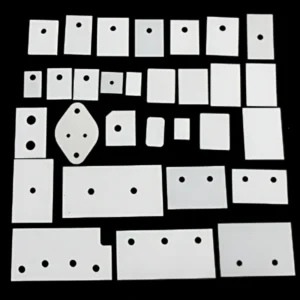
Alumina ceramic washers packed with protective material

Quick Quote

The more details you provide, the faster we can quote.

*All inquiries are confidential.

Get Your Custom Solution

The more details you provide, the faster we can respond.

customize size

*We respond within 24 hours. All inquiries are confidential.

Download Catalog