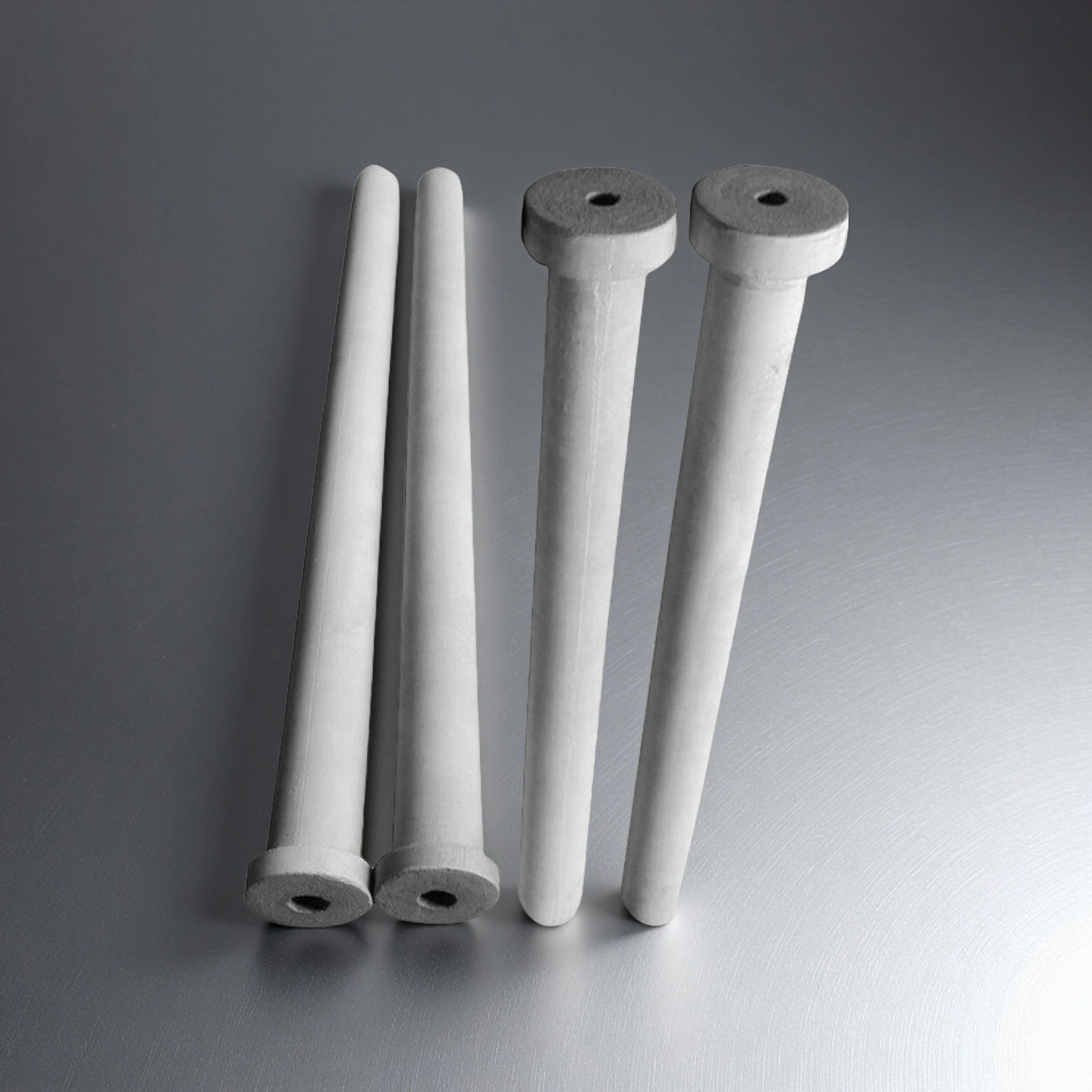
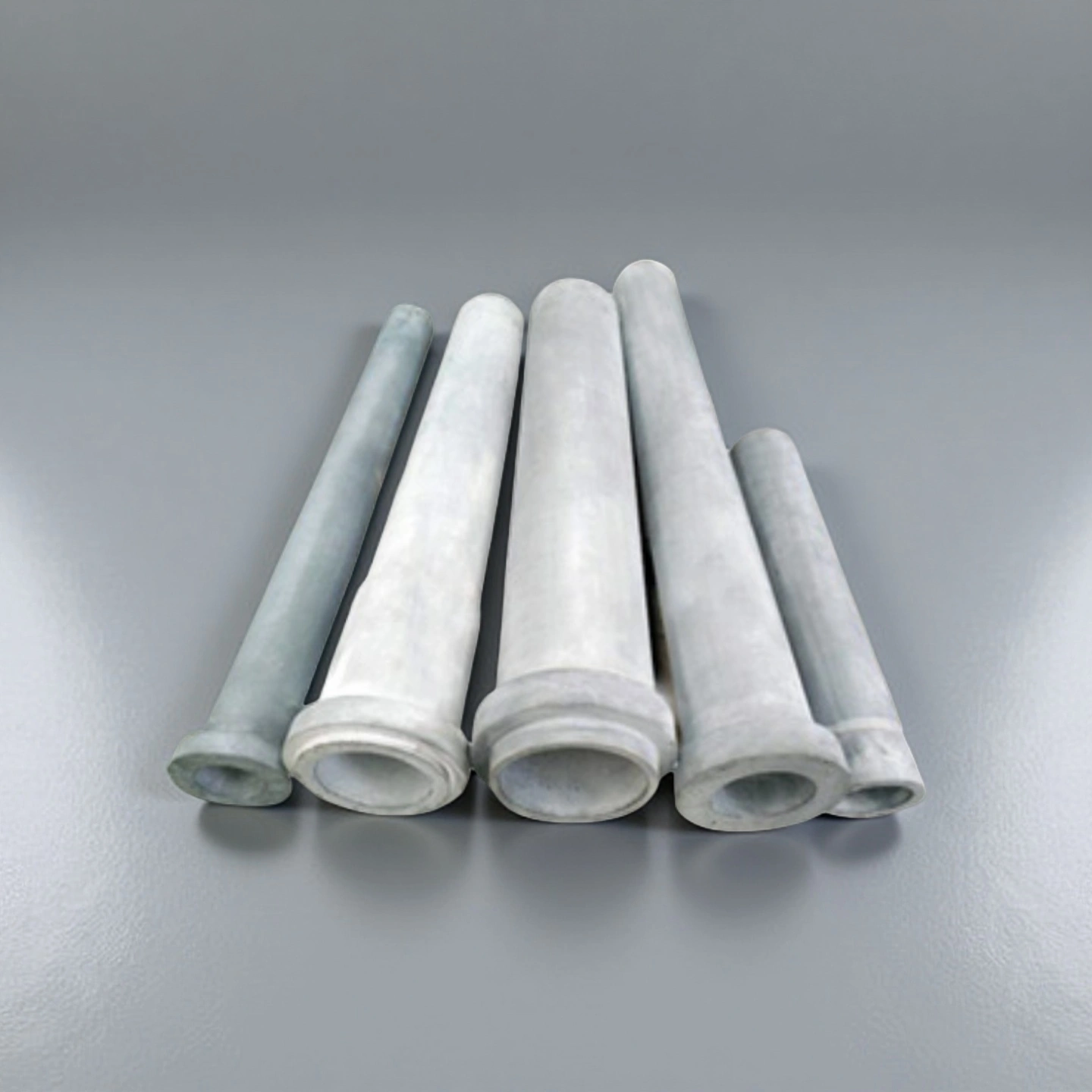
Nitride Bonded Silicon Carbide Riser Tube for Aluminum Low-Pressure Die Casting

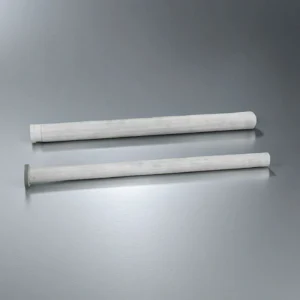
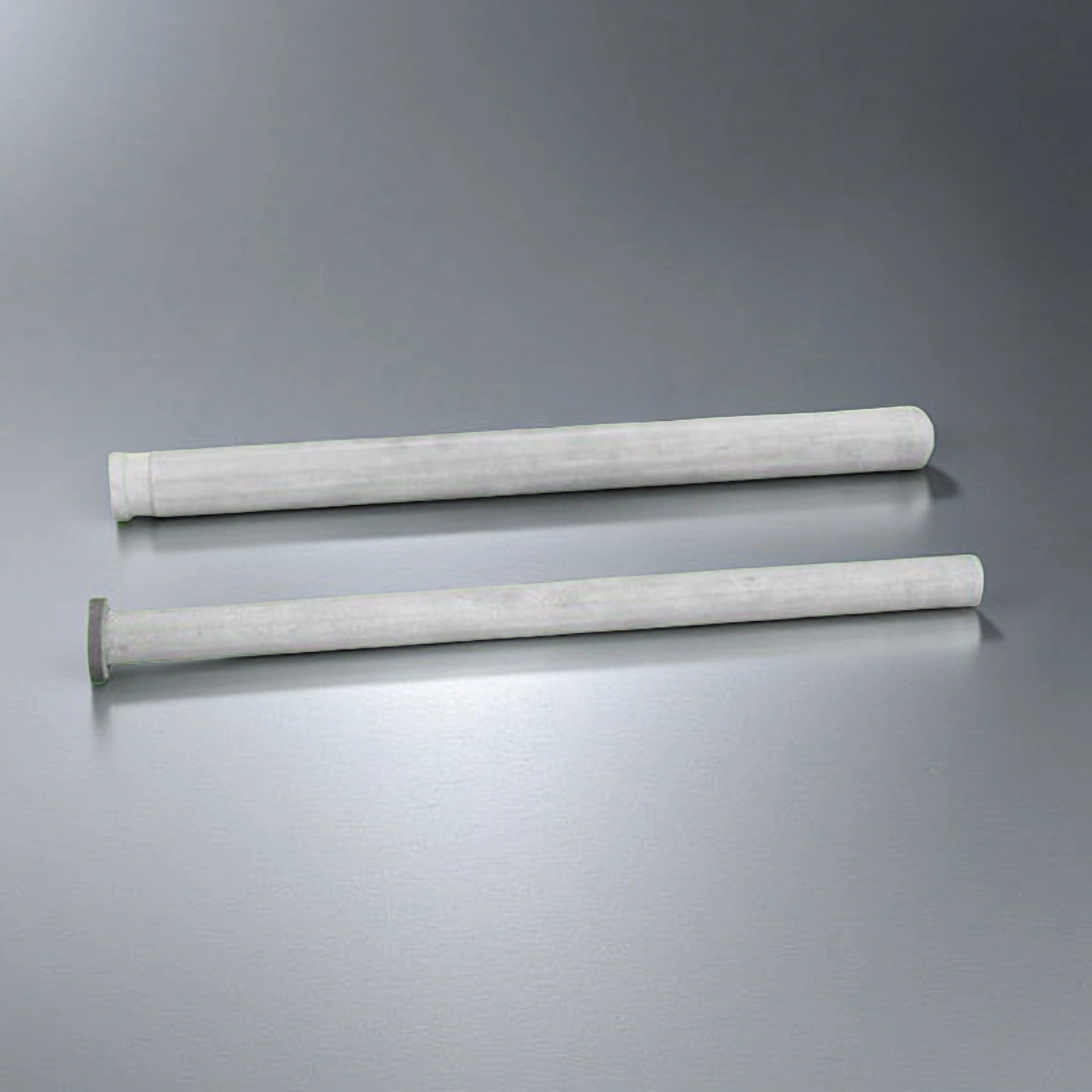
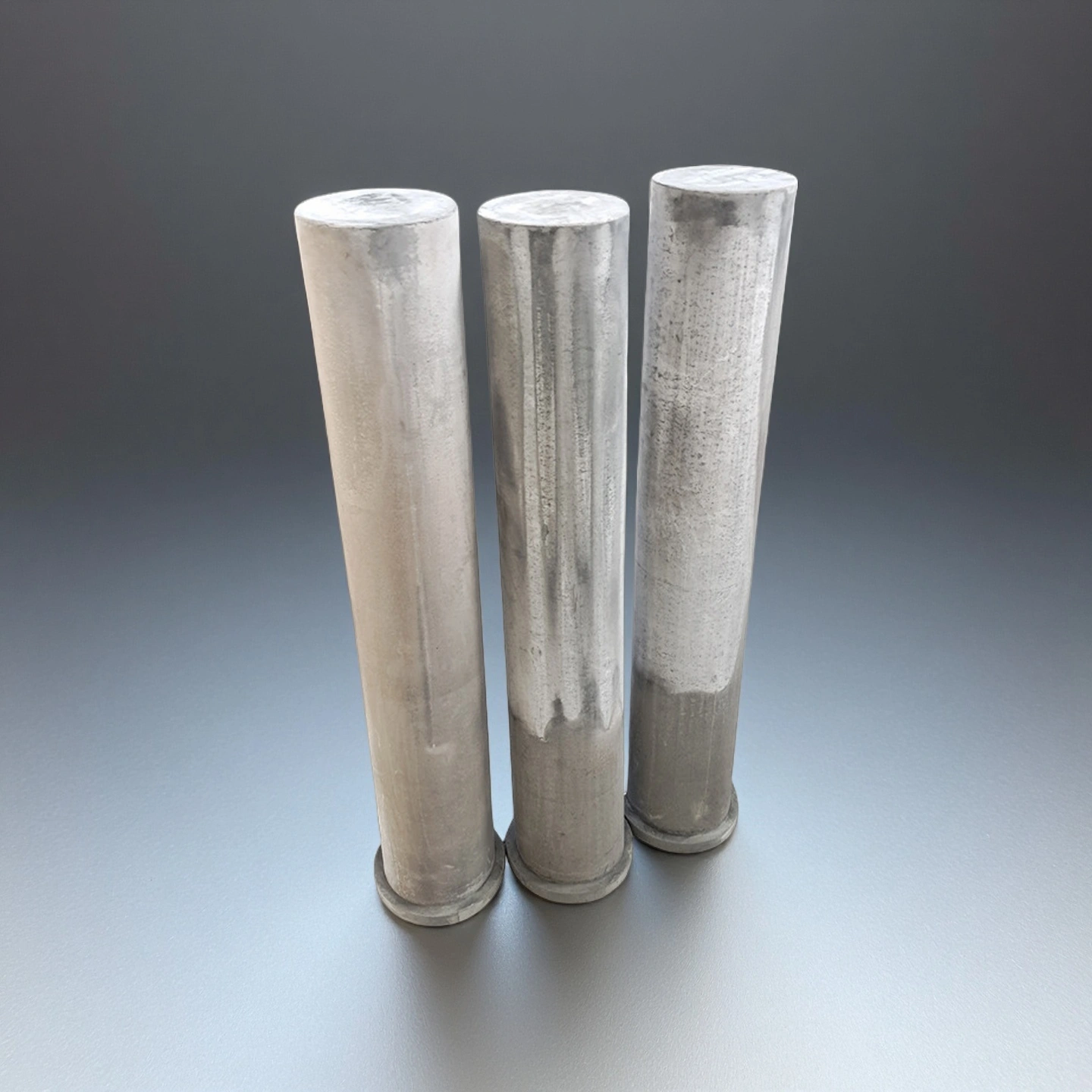
ADCERAX supplies nitride-bonded silicon carbide (NBSiC / NSiC) riser tubes for molten aluminum transfer from the holding furnace to the mold in low-pressure die casting (LPDC). Bore and end interfaces are specified for the casting station.

Catalogue No. AT-SIC-SY1001
Material Nitride-bonded silicon carbide (NBSiC / NSiC)
length 500–1100 mm
Assembly fit Drawing-based stepped or flanged ends, seals and supports
Diameter/Size Download More Sizes
Engineering RFQ Review
Small-Batch Custom Support
Drawing-Based Production
Drawing & Process Review

What Is a Nitride Bonded Silicon Carbide Riser Tube?

An NBSiC riser tube, also called a stalk tube, carries molten aluminum from the holding furnace up into the mold in a low-pressure die casting machine. Controlled furnace pressure pushes the metal through the tube bore toward the mold.

NBSiC combines a silicon carbide body with a silicon nitride bonding phase. The bore, lower inlet, upper connection and sealing surfaces form the transfer path of the casting station, so material and tube geometry are chosen together for the intended casting cycle.

Dimensions of Nitride Bonded Silicon Carbide Riser Tube

The following sizes are reference options for NBSiC riser tubes used in aluminum casting systems. Final dimensions should be confirmed according to the casting machine, furnace depth, mold interface, required molten metal flow and installation clearance.

NBSIC Riser Tube
Item No. Outer Diameter(mm) Inner Diameter(mm) Length(mm)
AT-SIC-SY1001 70 50 500-1100mm
AT-SIC-SY1002 75 54.8 500-1100mm
AT-SIC-SY1003 80 59.5 500-1100mm
AT-SIC-SY1004 82 61.8 500-1100mm
AT-SIC-SY1005 85 64.5 500-1100mm
AT-SIC-SY1006 90 69.5 500-1100mm
AT-SIC-SY1007 100 79.5 500-1100mm
AT-SIC-SY1008 115 94.4 500-1100mm
AT-SIC-SY1009 130 109.5 500-1100mm
AT-SIC-SY1010 142 121.5 500-1100mm
AT-SIC-SY1011 150 129 500-1100mm
AT-SIC-SY1012 180 159.2 500-1100mm
AT-SIC-SY1013 200 179 500-1100mm
AT-SIC-SY1014 215 194 500-1100mm
AT-SIC-SY1015 221 200 500-1100mm

Download the Product Catalogue

Technical Specifications of Nitride Bonded Silicon Carbide Riser Tube

Note: The following values are material reference data. Final suitability depends on tube dimensions, aluminum alloy, casting cycle, preheating method, machine interface and installation conditions.

Property AD-SIC-NB typical reference Condition/scope
Nominal composition SiC / Si₃N₄: 80 / 20 wt% Material composition reference
Density 2.80 g/cm³ Typical material value
Porosity 12 vol% Typical material porosity; define any finished-part leak test separately
Flexural strength 160 MPa at 20°C; 180 MPa at 1200°C Material bending data at the stated temperatures
Young’s modulus 220 GPa at 20°C Material stiffness at the stated temperature
Thermal conductivity 15 W/(m·K) at 1000°C Material measurement at the stated temperature
Initial material-selection temperature limit 1550°C Material selection input; confirm the tube’s LPDC cycle on the drawing

Choose the Right NBSiC Riser Tube

Selection point What to match Decision supported
Flow passage Listed OD/ID pair, inlet/outlet profile, lift height and filling behaviour Bore path for furnace-to-mould transfer
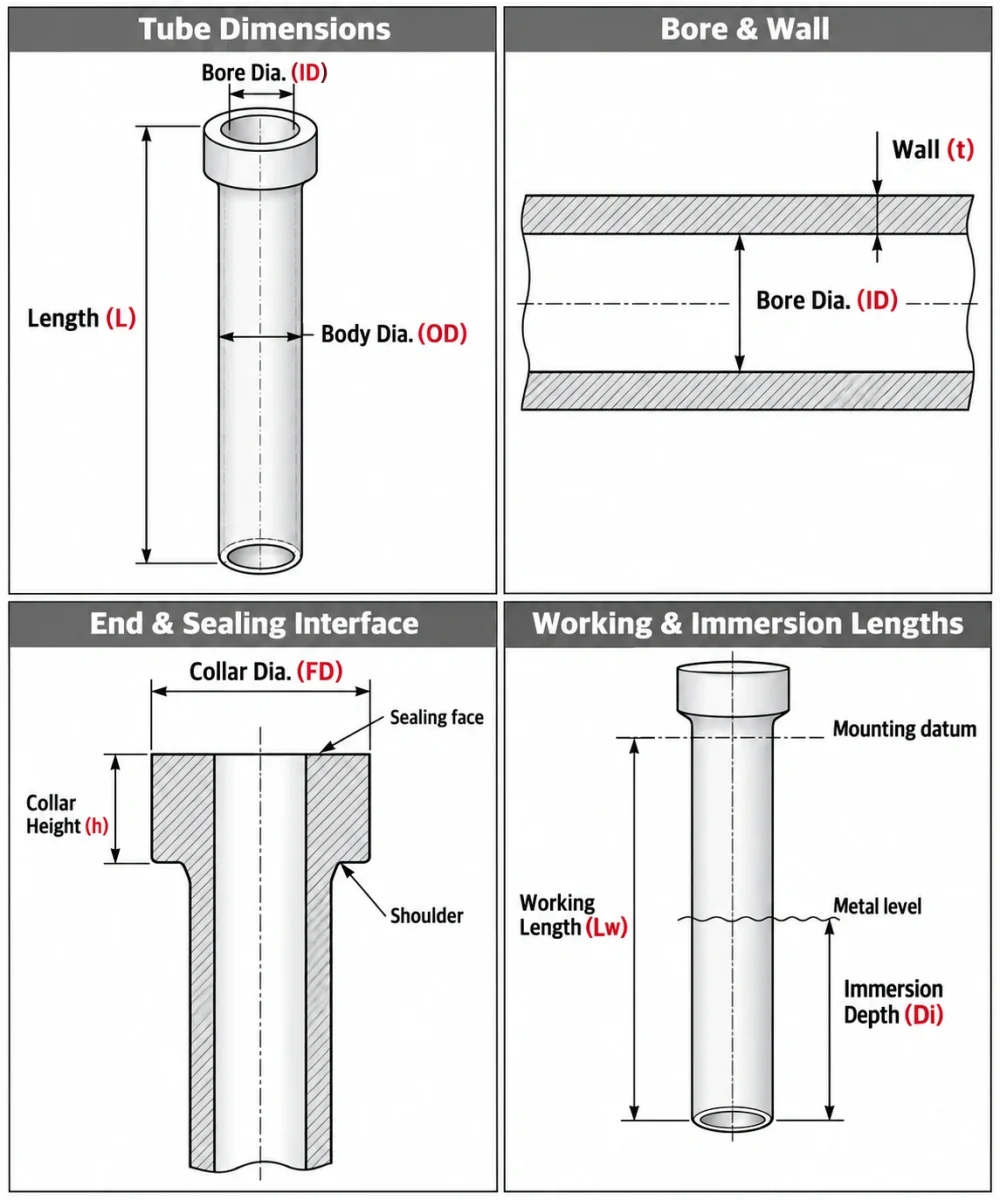
Installation Overall length; working length from mounting datum to lower end; immersion depth from metal level to lower end Installed position and furnace/mold clearance
End interfaces Shoulders or flanges, sealing faces, support contacts and alignment Fit to the mating assembly
Casting cycle Alloy, metal temperature, preheating, cycle frequency, flux and cleaning practice Material/surface choice and sample evaluation

NBSiC Compared with Other Riser Tube Materials

Material Typical character Often chosen when
NBSiC / NSiC (AD-SIC-NB) Porous silicon carbide body with a silicon nitride bonding phase; thermal-shock tolerant Aluminum LPDC transfer where thermal cycling and metal contact drive the choice
Reaction bonded SiC Silicon-infiltrated silicon carbide, denser body Applications needing a denser, low-porosity SiC body
Aluminum titanate Low expansion, aluminum-contact material Casting setups where its specific metal-contact behavior is preferred
Dense silicon nitride High-strength dense ceramic Higher-density, higher-strength ceramic parts

*These materials are not interchangeable, and their published values cannot be swapped between grades. Choose by alloy, metal temperature, casting cycle and cleaning practice, then confirm with a sample under the foundry’s own cycle.

Common NBSiC Riser Tube Service Conditions

Riser tubes are consumable parts. The conditions below are the ones most often seen in service and the checks that keep a tube in use longer.

Condition What it looks like How to reduce it
Thermal cracking Hairline cracks after rapid heating or cooling Follow the approved preheating and cooling sequence
Metal erosion/attack Worn bore or sealing faces where metal flows Match material to alloy and metal temperature; inspect at service intervals
Build-up/blockage Deposits narrowing the bore over time Use the agreed cleaning method and record deposit locations
Coating or surface loss Flaking or loss of surface where a coating is used Define coating type and coverage in the order; check at teardown

Packaging Method for Nitride Bonded Silicon Carbide Riser Tube

ADCERAX plans individual protection and cushioned wooden-crate packing around the agreed tube dimensions and shipping route.

On receipt, inspect the tube body, bore, ends and sealing surfaces. Keep the receipt inspection and part identification with the installation records.
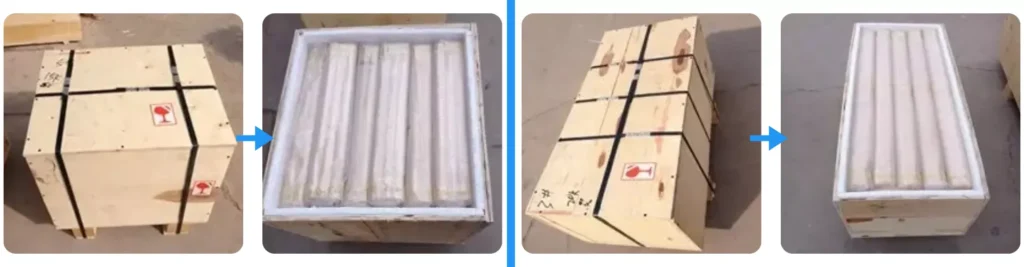
ADCERAX® Packaging of Silicon Nitride Bonded Silicon Carbide Riser Tube

NBSiC Riser Tube Applications in Aluminum LPDC

An aluminum LPDC line rises and falls with the transfer between furnace and mold. The riser tube sits at the center of that transfer, so the sections below frame the same part three ways: a running foundry, a new build, and a replacement on the floor.

  • Aluminum Wheel and Other LPDC Foundries

    Wheel lines and other aluminum LPDC cells run cycle after cycle, and every one of them depends on metal moving from the holding furnace up into the mold the same way each time. A riser tube that is matched to the alloy, the casting cycle and the furnace-to-mold layout is the part that keeps that path in service, day in and day out. Foundries that pour aluminum wheels, knuckles, housings and similar parts live with this day to day, which is why the tube is a routine but important consumable.

    To review it for your line, match the alloy, casting cycle and furnace-to-mold interfaces to the part drawing. If you run several tubes across a line, list each position with its OD/ID pair and installed lengths, so the order reflects what the line actually uses.

  • Equipment Builders and New Designs

    When a new LPDC machine or transfer system is designed, the riser tube is not a last-minute fitting. The bore path, lift height, upper connection, lower inlet, seal and supports all sit inside the machine layout, and the tube has to fit the assembly the builder is putting together. Getting it right at the design stage saves changeovers later.

    Plan these as one assembly. The installed working length guides the new part specification, and the part drawing should carry the upper connection, lower inlet, seals, supports and installed lengths together.

  • Replacement and Maintenance Projects

    A worn riser tube is a familiar sight on the floor: worn sealing faces, a narrowing bore, cracks at the ends. What matters most at replacement time is speed and fit. Comparing the old part with a published OD/ID pair is the fastest route to a specification that will actually drop in.

    Compare the existing part's end geometry and mating positions with a published OD/ID pair. Use the original mating geometry and service history to focus the replacement specification, and keep the old part or its drawing as the reference for the next order.

Handling, Installation and Maintenance Guide for NBSiC Riser Tubes

The ADCERAX nitride bonded silicon carbide riser tube is used in aluminum low-pressure die casting, where molten metal transfer, thermal cycling and equipment fit matter. Inspect, install and maintain it to suit the casting machine interface, alloy condition and your foundry procedure.

  • Handling and Installation

    1. Handle with care during unpacking, inspection and installation; sudden impact, dropping or rough handling can cause cracks or chips.
    2. Wear clean gloves to prevent contamination, scratches and surface damage.
    3. Align the riser tube with the machine interface, furnace connection and mold position; forced installation or uneven support builds up stress.
    4. Inspect the body, bore, end face and sealing area before installation, and do not install a tube with visible cracks or defects.

  • Operating Conditions

    1. Avoid sudden heating and rapid cooling; gradual temperature change reduces thermal stress across repeated casting cycles.
    2. Monitor molten aluminum flow; blockage, residue build-up or unstable flow affects casting consistency and adds stress.
    3. Keep the tube matched to the machine interface, support position, sealing face and installation clearance, and stop to review if vibration, leakage or misalignment appears.
    4. If cracking, heavy residue, sealing wear or flow instability occurs, check the operating condition before continuing.

  • Cleaning and Maintenance

    1. Clean to your foundry procedure; avoid aggressive scraping that damages the bore, end face or sealing surface.
    2. Inspect the bore and molten-aluminum contact area regularly and remove residue or blockage carefully.
    3. Check the end, sealing surface and support contact area, which most affect installation stability and metal flow.
    4. If the tube cracks or fails early, record the failure location, cycle, heating and cleaning method and installation condition to review the cause.

  • Storage and Reuse

    1. Keep spare riser tubes dry, clean and stable; avoid moisture, impact, heavy stacking and hard contact.
    2. For long storage, keep the protective packaging or add cushioning to reduce movement and edge damage.
    3. Before reusing a stored or previously used tube, check the body, bore, end face and sealing area, and confirm it is free of visible cracks, chips or serious damage.

Frequently Asked Questions About NBSiC Riser Tubes

  1. Q1: Is a nitride bonded silicon carbide riser tube suitable for aluminum low-pressure die casting?
    A1: Yes. NBSiC riser tubes are commonly selected for aluminum low-pressure die casting systems where molten aluminum transfer, thermal cycling, corrosion resistance and dimensional stability are important. The final suitability should be reviewed according to the casting machine, aluminum alloy, tube dimensions and working cycle.
  2. Q2: What information should I provide before requesting a quotation?
    A2: Please provide the outer diameter, inner diameter, length, wall thickness, end geometry, machine interface, quantity and application details. Drawings, sample photos and failed-tube photos are helpful because they allow ADCERAX to review fit, material suitability and possible failure causes before quotation.
  3. Q3: Can ADCERAX make custom NBSiC riser tubes from drawings or samples?
    A3: Yes. ADCERAX can review drawing-based or sample-based NBSiC riser tubes, including custom OD, ID, length, wall thickness, end design, sealing surface and installation clearance. Final manufacturability depends on size, geometry and tolerance requirements.
  4. Q4: How do I choose between NBSiC, silicon nitride and aluminum titanate riser tubes?
    A4: The selection depends on the casting system, alloy type, thermal cycling, mechanical load and replacement history. NBSiC is often considered when mechanical stability, molten aluminum resistance and drawing-based customization are important. Silicon nitride and aluminum titanate may be reviewed when different thermal shock or non-wetting requirements are the priority.
  5. Q5: What factors affect the service life of a ceramic riser tube?
    A5: Service life is affected by preheating method, temperature gradient, aluminum alloy chemistry, flux contact, machine alignment, support condition, wall thickness, cleaning practice and handling damage. If a tube fails early, the failure position and operating history should be reviewed before repeating the same design.
  6. Q6: Can standard sizes be supplied, or is every riser tube custom made?
    A6: Both options may be reviewed. Standard OD, ID and length ranges can be used as a starting point, but many foundry projects require drawing-based adjustment to match the furnace, mold interface and installation space. For replacement projects, original tube dimensions are the most useful reference.
  7. Q7: How can I specify a replacement from a worn tube?
    A7: Use intact mating faces and unworn sections as dimensional references, and mark worn areas separately. This helps distinguish the intended installation fit from dimensions altered during service. Include the original drawing revision when available.
  8. Q8: How should I identify tubes in a multi-tube LPDC assembly?
    A8: Link each installation-position label to the applicable drawing revision, OD/ID pair, installed lengths and end interfaces. State the quantity for each position so the enquiry identifies each tube correctly.
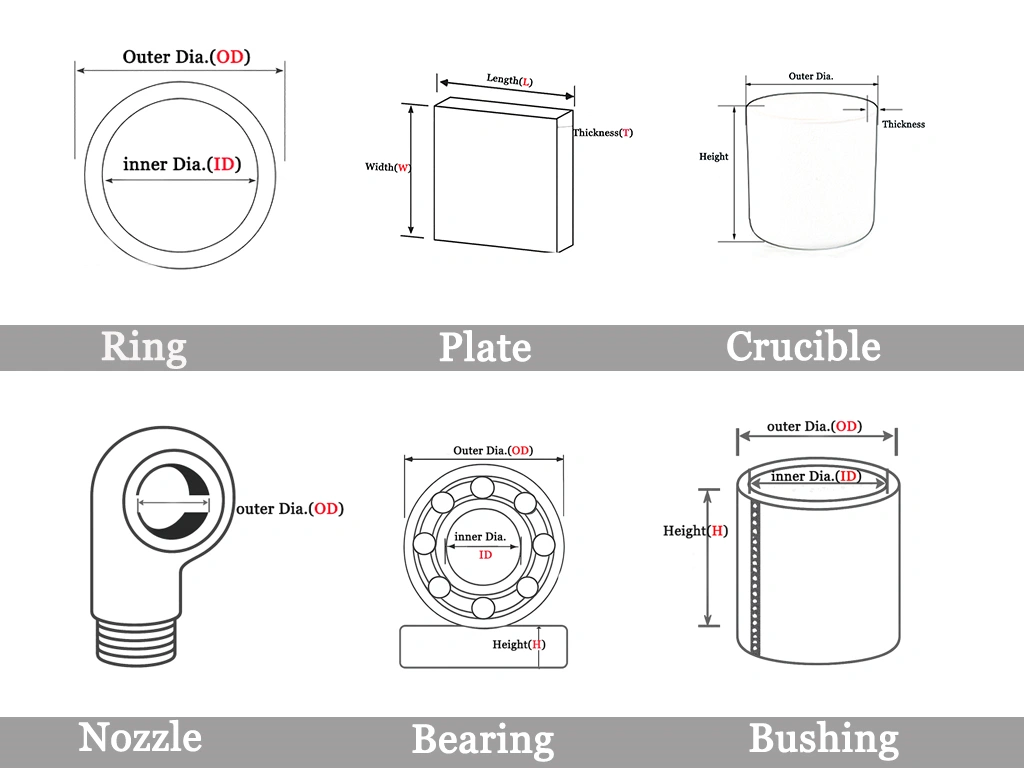
NBSiC riser tube diagrams showing tube dimensions, bore diameter, wall thickness, sealing interface, working length and immersion depth.

Customization Services for NBSiC Riser Tube

At ADCERAX, the NBSiC Riser Tube is available with a range of customizable features to meet the specific needs of various industrial applications.

Custom Tube Dimensions

  • Length: Adjusted to accommodate specific mold and casting line requirements.
  • Diameter: Can be customized for optimal molten metal flow control.
  • Wall Thickness: Modified to meet the stress and pressure demands of your specific application.

Customized Material Composition

  • Thermal Shock Resistance: Modified for enhanced shock resistance, ensuring stability in varying temperature conditions.
  • Corrosion Resistance: Material can be adjusted to better resist specific molten metal corrosion.
  • Mechanical Strength: Tailored to meet the mechanical stresses involved in the molten metal transport process.

Related Products

ADCERAX - Your Trusted Advanced Ceramics Manufacturing Partner

ADCERAX – Custom Ceramic Supply and Engineering Coordination
ADCERAX coordinates drawing review, production and inspection with manufacturing partners against agreed specifications.

China-Based Ceramic Supply Partner

ADCERAX coordinates custom ceramic supply for overseas OEMs, equipment builders, and labs.

Custom Drawing Support

We review drawings, dimensions, materials, and application conditions before quotation.

Ceramic Process Control

Forming, sintering, machining, grinding, and finishing are arranged by part requirements.

Pre-Shipment Inspection

Dimensional checks, visual inspection, and packaging review help reduce procurement risk.

Get in Touch with Us

Our team will be happy to respond to you in less than 24 hours.

Adcerax's factory

Quick Quotation

*Our team will review your inquiry and respond with the next steps.

*Your information will be kept strictly confidential.

Ready to Solve Your Engineering Challenge?

Partner with ADCERAX for reliable, high-performance advanced ceramic solutions. Our engineers are ready to discuss your project.

E-mail

info@adcerax.com

Phone

Tel: +86-0731-84428843 WhatsApp: +86 19311583352

Response Time

Within 24 hours

Quick Quote

The more details you provide, the faster we can quote.

*All inquiries are confidential.

Get Your Custom Solution

The more details you provide, the faster we can respond.

customize size

*We respond within 24 hours. All inquiries are confidential.

Download Catalog