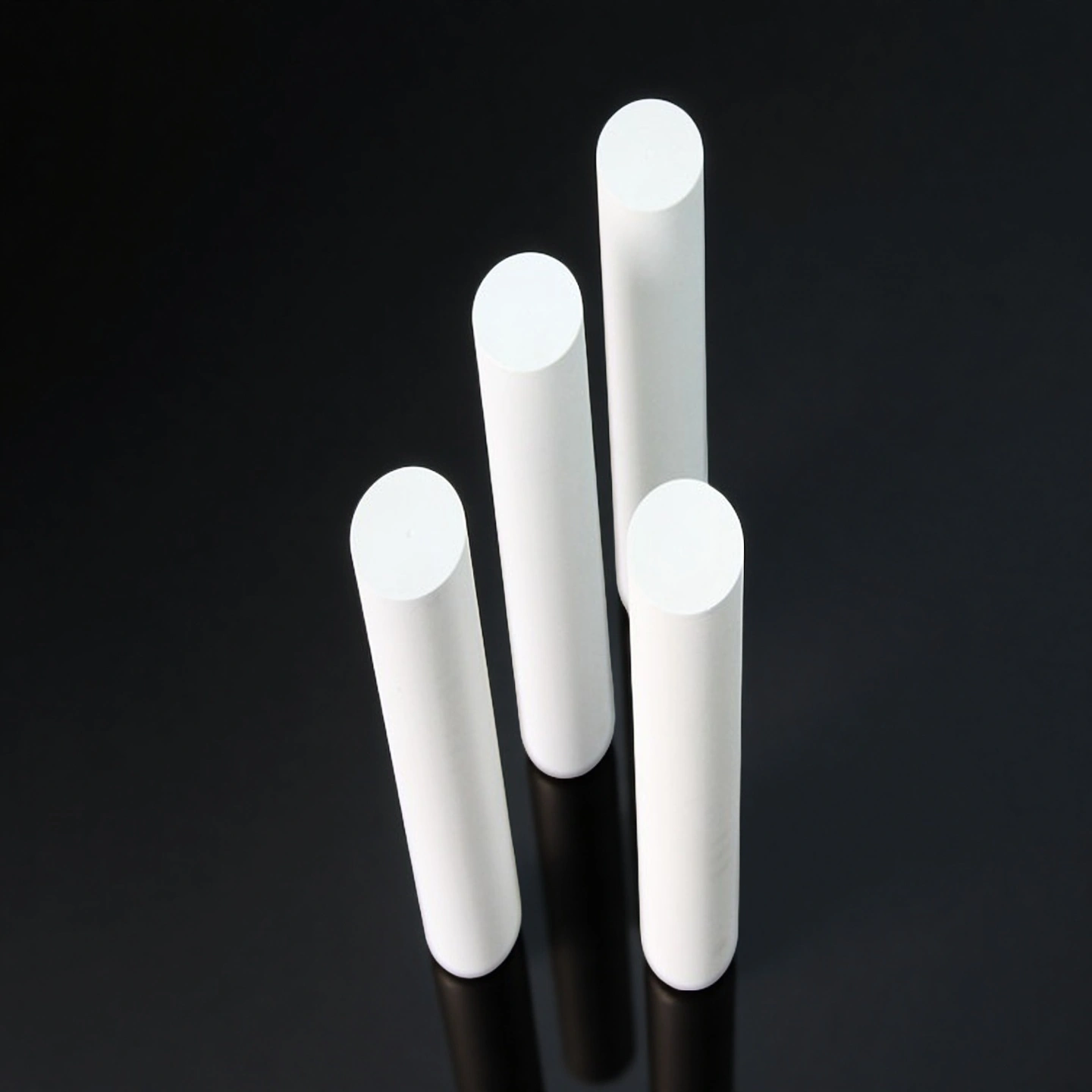
Boron Nitride(BN) Rod Insulator Bar for High-Temperature Lab Setups — Clean Contact Parts

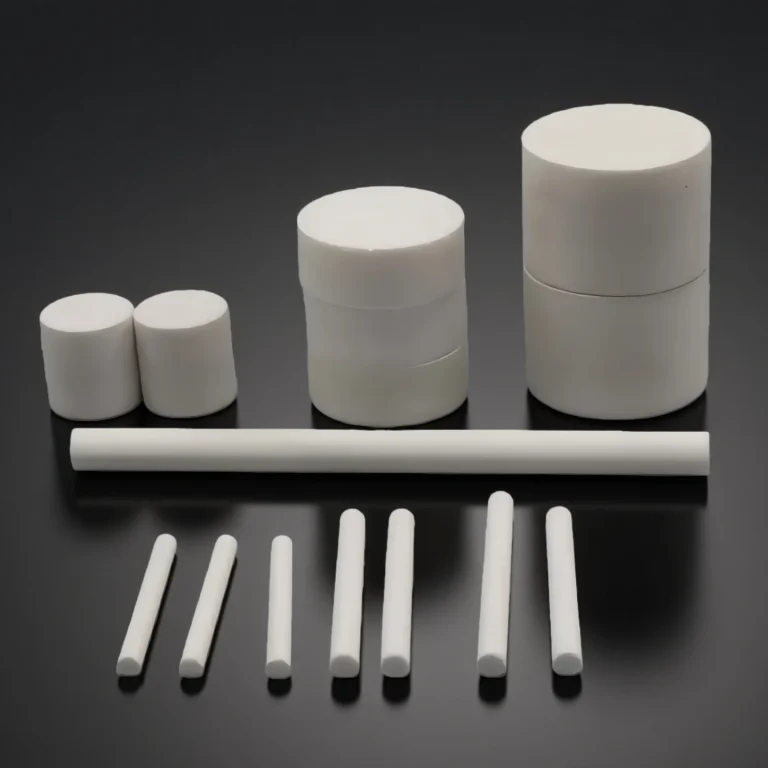
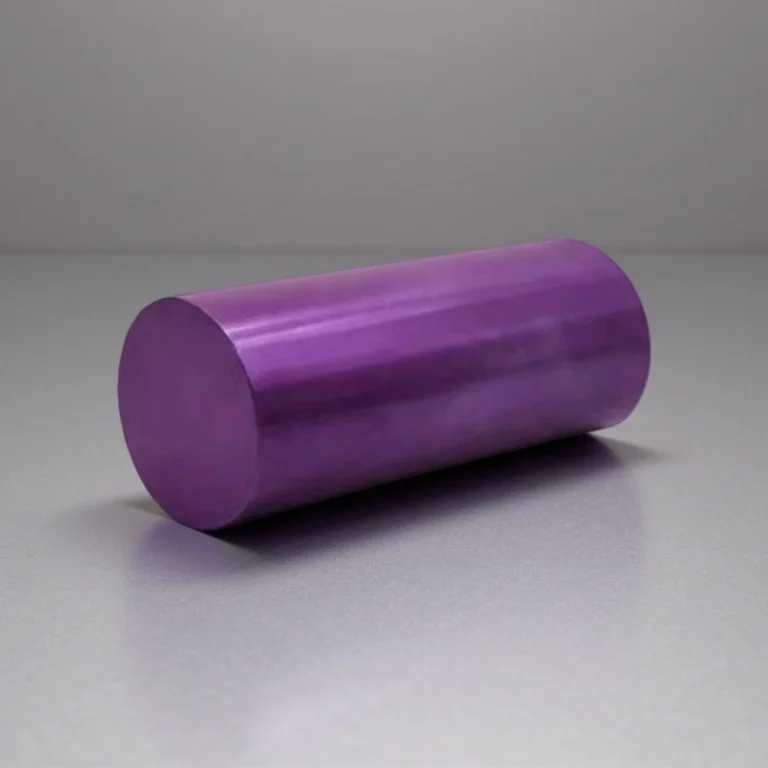
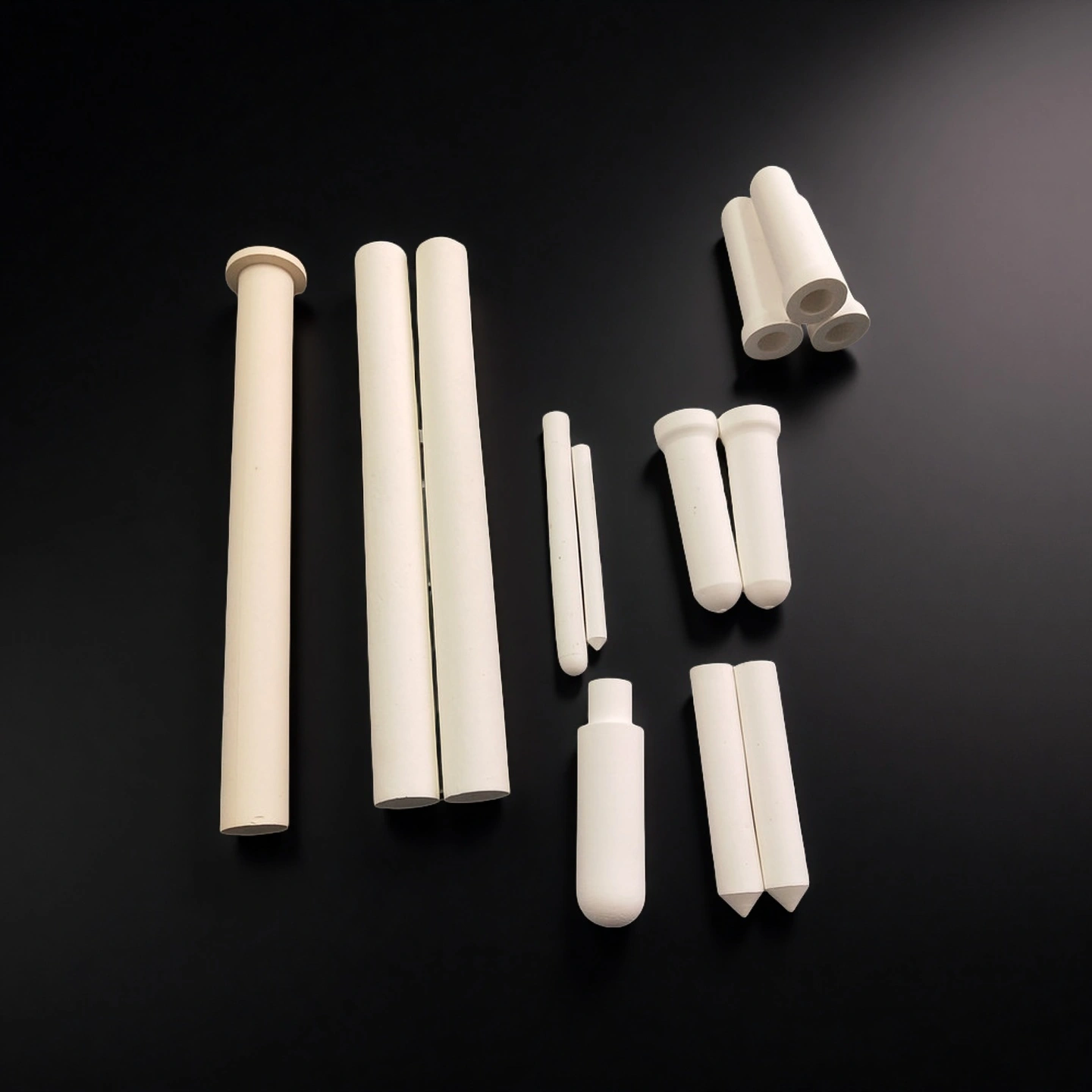
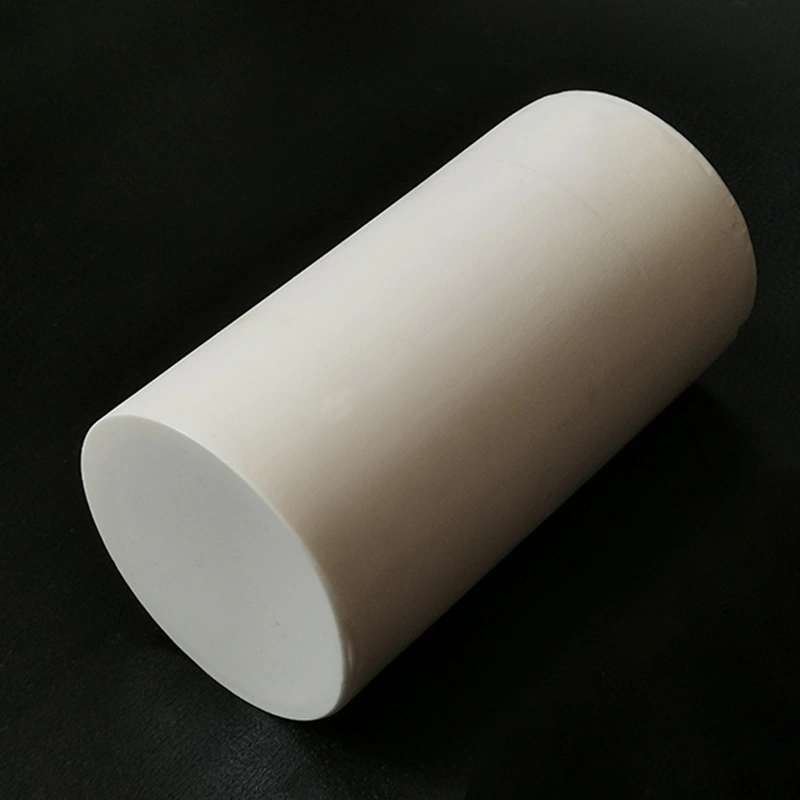
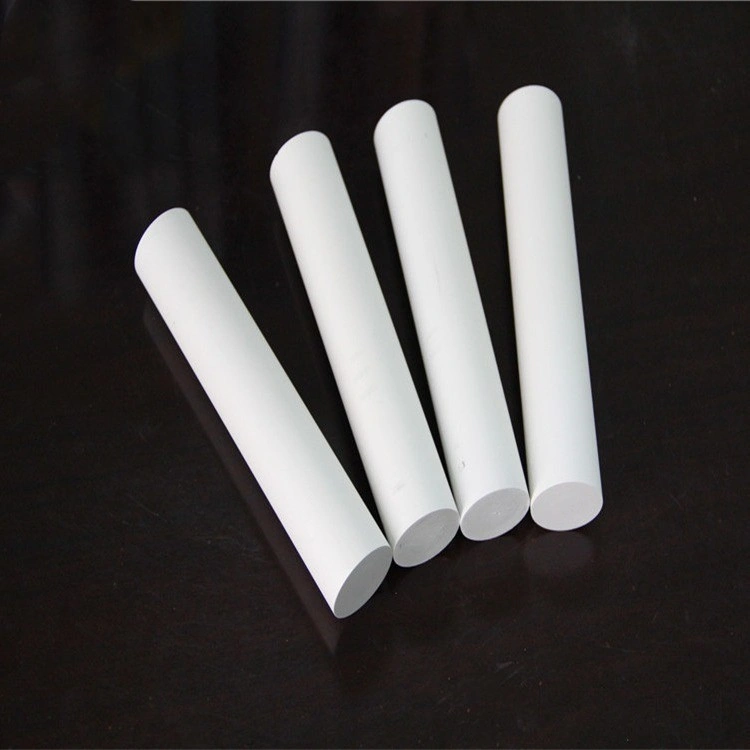
Boron nitride rod is a machinable, electrically insulating ceramic bar used as alignment pins, push rods, and non-wetting contact pieces in vacuum furnaces, PVD fixtures, and glass/metal processing. Standard diameters cover Ø3–Ø60 mm with lengths up to 1000 mm; custom BN rod machining supports ±0.05–0.10 mm typical diameter control, straightness and end-face flatness verification, and optional threaded/stepped ends.

Catalogue No. AT-BN-G1001
Material Nitride Bonded Silicon Carbide
Maximum Working Temperature 1450°C
Wall Thickness Tolerance ±0.3mm
Dimensions/Sizes Download PDF
24H Standard Dispatch
Small Batch Support OEM
Factory Direct
Expert Engineering Support

Boron nitride rod is a machinable ceramic component fabricated from hexagonal boron nitride (hBN), a compound composed of boron and nitrogen atoms arranged in a layered hexagonal lattice. This crystalline structure gives the material graphite-like lubricity while retaining the ceramic attributes of thermal stability, chemical inertness, and electrical insulation.

Boron Nitride Rod Benefits

  • Tight Diameter & Runout: Typical diameter tolerance ±0.05–0.10 mm with controlled runout for guided movement.
  • End-Face Accuracy: Machined faces to low Ra with squareness control for repeatable clamping.
  • Non-Wetting Contact: Reduces sticking with molten glass/metal at elevated temperatures, improving part release.
  • Clean Machined Surfaces: Low particle generation after finishing and independent bagging.
  • Custom Features: Threads, slots, stepped ends, cross-holes for pins or set screws.

Boron Nitride Rod Properties

Property Unit Pyrolytic Boron Nitride Hot Pressed Boron Nitride
Purity 99.99% 99.50%
Density g/cm3 2.15-2.19 1.96-2
Hardness HV0.5 651 62
Volume resistivity Ohm*cm 2*1014 1.2*1014
Dielectric strength kV/mm 55 76
Maximum working temperature 1000 (air), 2300 (vacuum) 900 (air), 1850 (vacuum)
Bending strength MPa 173 (A direction) 310
Thermal conductivity W/m*K 60 (A direction) 55
Tensile strength MPa 112 (A direction) 110
Thermal expansion coefficient /℃ 6*10-7 1.8*10-6
Compressive strength MPa 154 (A direction) 120


Boron Nitride Rod Specifications

Hexagonal Boron Nitride Rod
Item No. Diameter (mm) Length (mm) Purity %
AT-BN-B1001 10 100 99.5
AT-BN-B1002 10 200 99.5
AT-BN-B1003 10 300 99.5
AT-BN-B1004 12 100 99.5
AT-BN-B1005 15 100 99.5
AT-BN-B1006 15 200 99.5
AT-BN-B1007 15 300 99.5
AT-BN-B1008 20 100 99.5
AT-BN-B1009 20 200 99.5
AT-BN-B1010 20 300 99.5
AT-BN-B1011 25 100 99.5
AT-BN-B1012 25 200 99.5
AT-BN-B1013 25 300 99.5
AT-BN-B1014 30 100 99.5
AT-BN-B1015 30 200 99.5
AT-BN-B1016 30 300 99.5
AT-BN-B1017 35 100 99.5
AT-BN-B1018 35 200 99.5
AT-BN-B1019 35 300 99.5
AT-BN-B1020 40 100 99.5
AT-BN-B1021 40 200 99.5
AT-BN-B1022 40 300 99.5
AT-BN-B1023 45 100 99.5
AT-BN-B1024 45 200 99.5
AT-BN-B1025 45 300 99.5
AT-BN-B1026 50 100 99.5
AT-BN-B1027 50 200 99.5
AT-BN-B1028 50 300 99.5
AT-BN-B1029 60 100 99.5
AT-BN-B1030 60 200 99.5
AT-BN-B1031 60 300 99.5
AT-BN-B1032 70 100 99.5
AT-BN-B1033 70 200 99.5
AT-BN-B1034 70 300 99.5
AT-BN-B1035 80 100 99.5
AT-BN-B1036 80 200 99.5
AT-BN-B1037 80 300 99.5
AT-BN-B1038 90 100 99.5
AT-BN-B1039 90 200 99.5
AT-BN-B1040 90 300 99.5
AT-BN-B1041 100 100 99.5
AT-BN-B1042 100 200 99.5
AT-BN-B1043 100 300 99.5


Boron Nitride Lubricating Rod
Item No. Diameter (mm) Length (mm)
AT-BN-LB001 60 210
AT-BN-LB002 70 100
AT-BN-LB003 70 110
AT-BN-LB004 70 120
AT-BN-LB005 70 130


Boron Nitride Ceramic Rod Packaging

  • Each rod is individually packed in anti-static foam and sealed in vacuum bags.
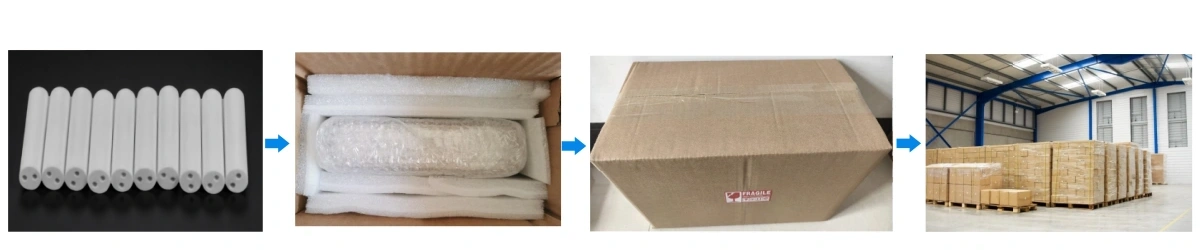
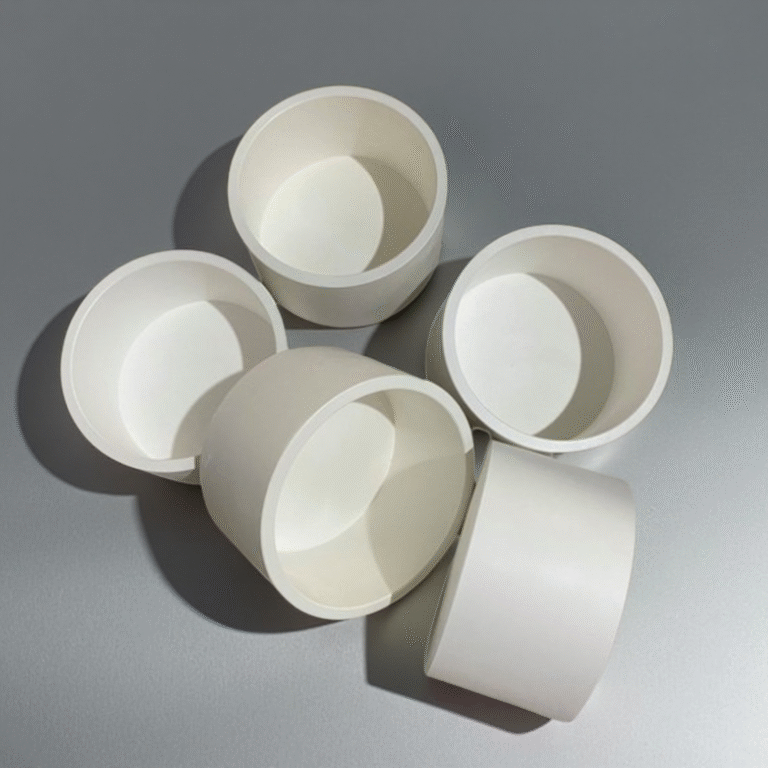
Boron Nitride Ceramic Tube Packaging

Boron Nitride Rod Applications

  • Vacuum/Inert Atmosphere Furnaces

    ✅Key Advantages

    1. Dimensional Stability: BN rod maintains guidance within ±0.1 mm across typical fixture spans.
    2. Electrical Insulation: Low εr (~3.5–4.0) and high resistivity reduce leakage paths in jigs.
    3. Thermal Cycle Endurance: Machinable BN tolerates frequent heat-up/cool-down under inert/vacuum.

    ✅ Problem Solved

    A heat-treat OEM replaced alumina pins with BN rods on an alignment fixture. With ±0.05 mm OD control and polished ends, setup time dropped 18%, fixture wear marks decreased, and unplanned maintenance intervals extended from 6 to 9 weeks, reducing line downtime by ~14 hours/quarter.

  • Glass & Metal Forming Lines

    ✅Key Advantages

    1. Non-Wetting Contact: BN reduces sticking to molten glass/metal at contact interfaces.
    2. Smooth Release: Low Ra end faces minimize surface defects on parts.
    3. Predictable Lifing: Thermal shock tolerance improves re-use rate under scheduled cycles.

    ✅ Problem Solved

    A glass-forming plant used BN guide rods with chamfered ends. Defect rate related to sticking fell from 1.9% to 0.7%, and rod changeovers shifted from every 3 to every 5 production cycles, saving ~9 changeovers/quarter.

  • PVD/Coating Fixtures

    ✅Key Advantages

    1. Low Dielectric Signature: Helps maintain uniform fields near sensitive parts.
    2. Clean Surfaces: Low particle generation reduces contamination risk in chambers.
    3. Custom End Geometry: Threaded and stepped ends speed fixture assembly and alignment.

    ✅ Problem Solved

    A coating job-shop standardized on Ø10 BN rods with M6 threaded ends. Fixture build time dropped 22%, chamber cleaning frequency reduced from every 4 to every 6 runs, and first-pass yield improved by 2.3 pp.

Boron Nitride Rod Usage Instructions

Proper handling and operation extend the service life and accuracy of boron nitride rods (hBN rods) in thermal, vacuum, or fixture applications. Follow these guidelines to maintain structural integrity and performance consistency.

  • Install

    1. Check accuracy before assembly: Verify outer diameter, length, and straightness against the drawing; perform a dry-fit to confirm mechanical alignment before final torque.
    2. Threaded ends: Follow recommended torque limits (avoid over-tightening). Use washers or flat shoulders to distribute load evenly; avoid direct point-contact from set screws.
    3. Sliding or locating features: Add chamfers, radii, or reliefs to reduce edge chipping or scoring under repeated movement.
    4. Adhesive mounting: When bonding to metal fixtures, use high-temperature, non-reactive adhesives (e.g., BN or alumina-based) to prevent chemical interaction.

  • Use

    1. Operating environment: Designed for vacuum, nitrogen, argon, or inert atmospheres up to 2000 °C. Avoid exposure to air above 900 °C unless coated with oxidation protection.
    2. Thermal cycling: Prevent thermal shock — reintroduce air or coolant gradually after high-temperature operation.
    3. Surface protection: Keep rod surfaces free from metal, graphite, or glass contact to maintain non-wetting and electrical insulation behavior.
    4. Mechanical load: Avoid bending forces during setup; support long rods along the length to prevent sagging or fracture.

  • Store

    1. Environment: Store in a dry, temperature-stable environment, ideally in the original protective packaging or foam tray to prevent microcracks.
    2. Traceability: Mark or record each batch with its drawing number and lot code to maintain inspection traceability.
    3. Handling: Avoid stacking or dropping rods; handle with nitrile or cotton gloves to prevent oil contamination.

  • Clean

    1. Routine cleaning: Use lint-free wipes, a soft brush, or dry compressed air to remove surface particles.
    2. Solvent cleaning: If residue is present, use isopropyl alcohol or approved non-aqueous solvents — never use acidic or alkaline cleaners.
    3. Surface coatings: For oxidation-protected rods, follow the coating supplier’s cleaning specifications to prevent film damage.
    4. Maintenance interval: Inspect after every 5–10 heating cycles for cracks or surface wear.

  • Cautions/Common Misuse & Fixes

    1. Over-tightening threaded ends → Follow torque guideline (max 0.5–1.0 Nm for Ø10 mm threads); use washer or collar to spread stress.
    2. Running in air at red heat → Limit exposure above 900 °C; use BN coating or inert gas purge to prevent oxidation.
    3. Unsupported long rods → Add mid-span supports; ensure straightness tolerance within ±0.1 mm per 100 mm.
    4. Sudden quenching after heating → Allow controlled cooling (≤5 °C/s) to prevent microcrack propagation.
    5. Using metal tools directly → Always handle with plastic or coated fixtures to avoid contamination and surface abrasion.

Boron Nitride Ceramic Rod FAQ

  1. Q: What is a boron nitride rod made of, and how is it different from other ceramic rods?
    A: A boron nitride rod is made from hexagonal boron nitride (hBN), a ceramic with a layered structure similar to graphite. Unlike alumina or zirconia rods, hBN rods combine high-temperature endurance, electrical insulation, and machinability, allowing precise shaping with standard metal tools.
  2. Q: Are boron nitride rods electrically insulating or conductive?
    A: They are excellent electrical insulators (volume resistivity > 10¹³ Ω·cm) while maintaining moderate thermal conductivity (~40 W/m·K), which makes them ideal for electro-thermal isolation in high-temperature or plasma systems.
  3. Q: Can boron nitride rods be machined or drilled?
    A: Yes. hBN is one of the few ceramics that can be machined using standard metalworking tools such as carbide or diamond cutters. It allows tight tolerances down to ±0.05 mm, suitable for threaded, slotted, or stepped geometries.
  4. Q: Can boron nitride rods be bonded or joined to metal parts?
    A: Yes. They can be bonded using high-temperature ceramic adhesives (BN, alumina, or zirconia-based) that maintain strength in vacuum or inert gas environments up to 1500 °C. Mechanical joints should include thermal expansion relief.

  5. Q: How long do boron nitride rods typically last in use?
    A: Service life depends on temperature, atmosphere, and handling. In vacuum systems, BN rods can maintain dimensional stability for over 500–800 thermal cycles. Exposure to air or mechanical shock may shorten lifespan.
  6. Q: Why choose ADCERAX for boron nitride rod manufacturing?
    A: ADCERAX provides direct factory machining, custom geometry support, and quick lead times. Our in-house material control ensures consistent purity (≥99%) and reliable batch traceability for industrial clients worldwide.
  7. Q: How is the boron nitride rods price determined?
    A: The boron nitride rods price depends on several factors, including rod dimensions, purity level, machining complexity, surface finish, and order volume. Custom drawings or tight-tolerance designs usually require precision machining and material verification, which affect cost. To obtain an accurate quotation, please share size specifications, quantity, and application details—ADCERAX will provide a tailored offer with technical support and lead time confirmation.
  8. Q: How can I get a quotation for boron nitride rods?
    A: To get a boron nitride rods quotation, please share your drawing, dimensions, quantity, and application. Our engineers will confirm feasibility and send a custom offer with lead time within one working day.

Boron Nitride Rods Reviews

  • ⭐️⭐️⭐️⭐️⭐️
    We switched to boron nitride rods with threaded ends for a vacuum fixture. OD tolerance at ±0.05 mm matched our bushings, and assembly time fell about 20% across three product families.
    Daniel Rivera, Manufacturing Engineer — Helios Thermal Systems (USA)
  • ⭐️⭐️⭐️⭐️⭐️
    BN rods reduced sticking on a tricky forming step. Changeover frequency moved from 3 to 5 runs, and surface rejects dropped below 1%.
    Mina Sato, Process Engineer — Kogei Glass Line (JP)
  • ⭐️⭐️⭐️⭐️⭐️
    ADCERAX supported custom hexagonal boron nitride rod with measured straightness and clean packaging. Unit cost was fair considering the machining and the inspection data included.
    Lucas Weber, Procurement — Adler Coating Services (DE)
  • ⭐️⭐️⭐️⭐️⭐️
    For small fixtures we ordered Ø6 mini BN rods with polished ends. The parts arrived clean, labeled by drawing number, and integrated into our test jigs without adjustments.
    Priya N., R&D Lab Manager — Northbridge Materials (UK)
customize size

Customize Boron Nitride Rods

Short lead custom machining allows fit-to-print boron nitride rods for both prototype and production use. Customers can provide detailed drawings or dimensional sketches; ADCERAX engineers will verify manufacturability, tolerance, and performance compatibility before production.

1. Outer/Inner Dimensions

  • Diameter range: Ø3 mm to Ø60 mm (standard), larger sizes available upon request.
  • Dimensional tolerance: typically ±0.05–0.10 mm, depending on diameter and geometry complexity.
  • Inner bores (if required): ID tolerance within ±0.05 mm, concentricity checked over full length.

2. Length Options

  • Maximum length up to 1000 mm, recommended ≤600 mm for thin rods to minimize bending risk.
  • Straightness controlled to ≤0.1 mm per 100 mm, ensuring fixture alignment accuracy.

3. End Details & Interface Types

  • Configurable ends: flat, chamfered, radiused, or custom stepped shoulders.
  • Threaded ends available (metric/UNC); optional countersink or locator tip machining for quick fixture assembly.

4. Cross-Section & Structural Features

  • Complex shapes: keyways, grooves, cross-holes, through-holes, or alignment flats.
  • Multi-segment assemblies supported for modular fixture builds.

5. Surface Finish & Machining Grades

  • Supplied as-machined, fine-ground, or polished per drawing requirements.
  • Typical surface roughness Ra 0.8–1.6 µm for polished ends to reduce particle generation and friction wear.

6. Dimensional & Quality Verification

  • Each batch can include straightness, flatness, and end-face squareness measurements.
  • Density verification and batch traceability (COC) are available for regulated industries.

7. Operating Envelope (Performance Design)

  • Optimized for vacuum or inert atmospheres, serviceable up to 1800–2000 °C.
  • Suitable for repeated thermal cycling; compatible with nitrogen, argon, or forming gas environments.
  • Guidance available for heat-load distribution, support span, and contact clearance design.

Related Products

ADCERAX - Your Trusted Advanced Ceramics Manufacturing Partner

Direct factory manufacturing with comprehensive ceramic materials expertise and global supply capabilities

Direct Factory Manufacturing

China-based ceramic materials production facility with state-of-the-art equipment

Engineering Team

Experienced professionals in advanced ceramics applications and custom design

Quality Control

Strict quality control standards for technical ceramics manufacturing and quality management

Global Supply Chain

Serving customers worldwide with technical ceramics and rapid response

24/7 Technical Support

Round-the-clock support for ceramic components inquiries and technical assistance

500+ Satisfied Customers

Trusted by global customers for advanced ceramic materials and precision components

Get in touch with us

Our team will be happy to respond to you in less than 24 hours.

Adcerax's factory

Quick Quotation

*Our team will answer your inquiries within 24 hours.

*Your information will be kept strictly confidential.

Ready to Solve Your Engineering Challenge?

Partner with ADCERAX for reliable, high-performance advanced ceramic solutions. Our engineers are ready to discuss your project.

E-mail

info@adcerax.com

Phone

+(86) 0731-74427743 | WhatsApp: +(86) 19311583352

Response Time

Within 24 hours

Quick Quote

The more details you provide, the faster we can quote.

*We respond within 24 hours. All inquiries are confidential.

Download Catalog

Get Your Custom Sulution

The more details you provide, the faster we can respond.

customize size

*We respond within 24 hours. All inquiries are confidential.

Download Catalog