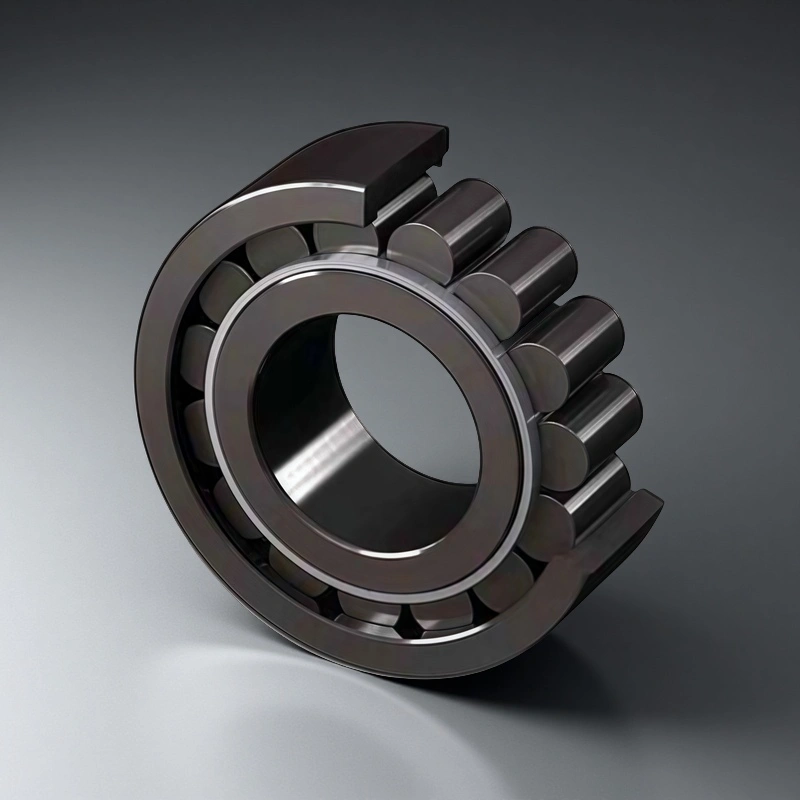
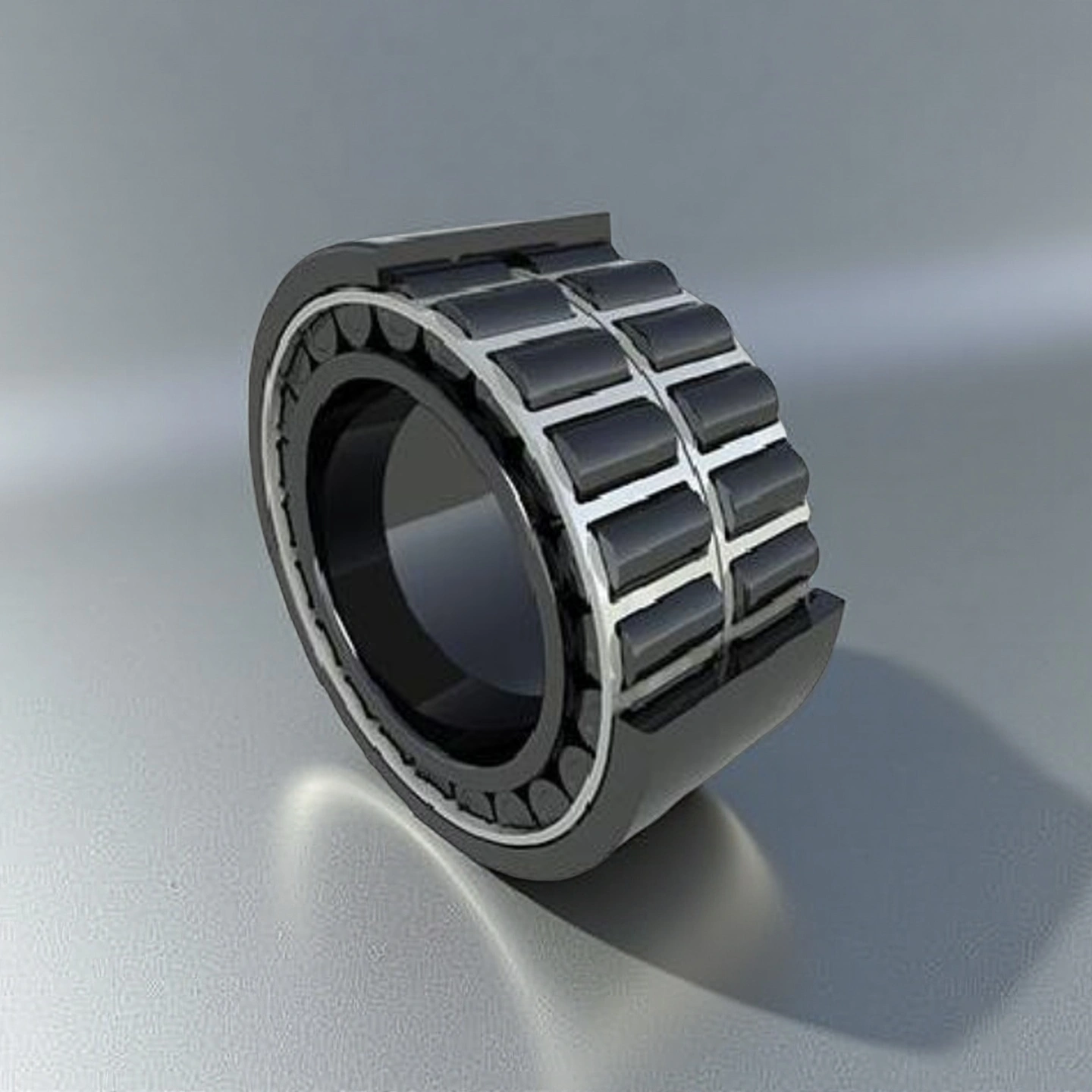
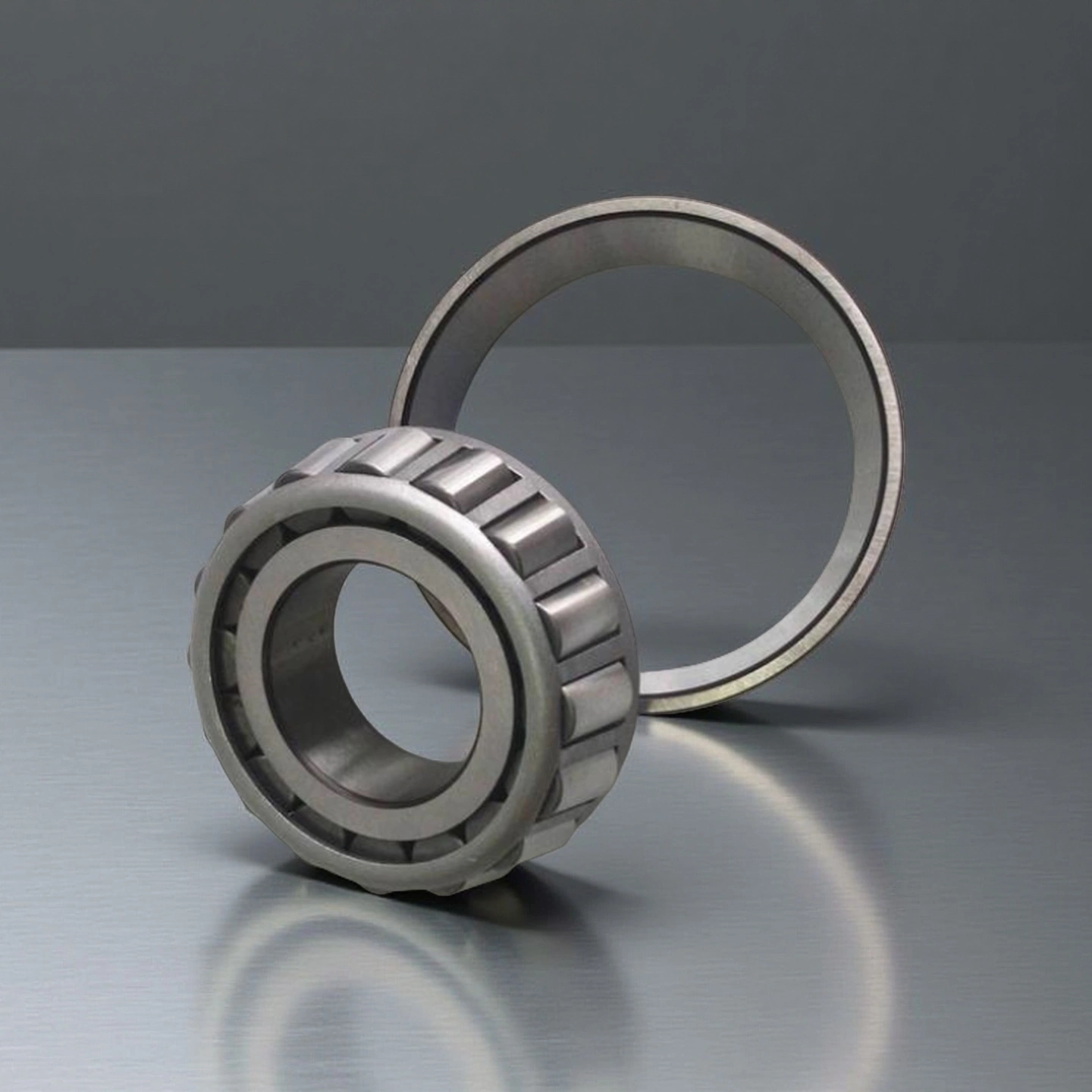
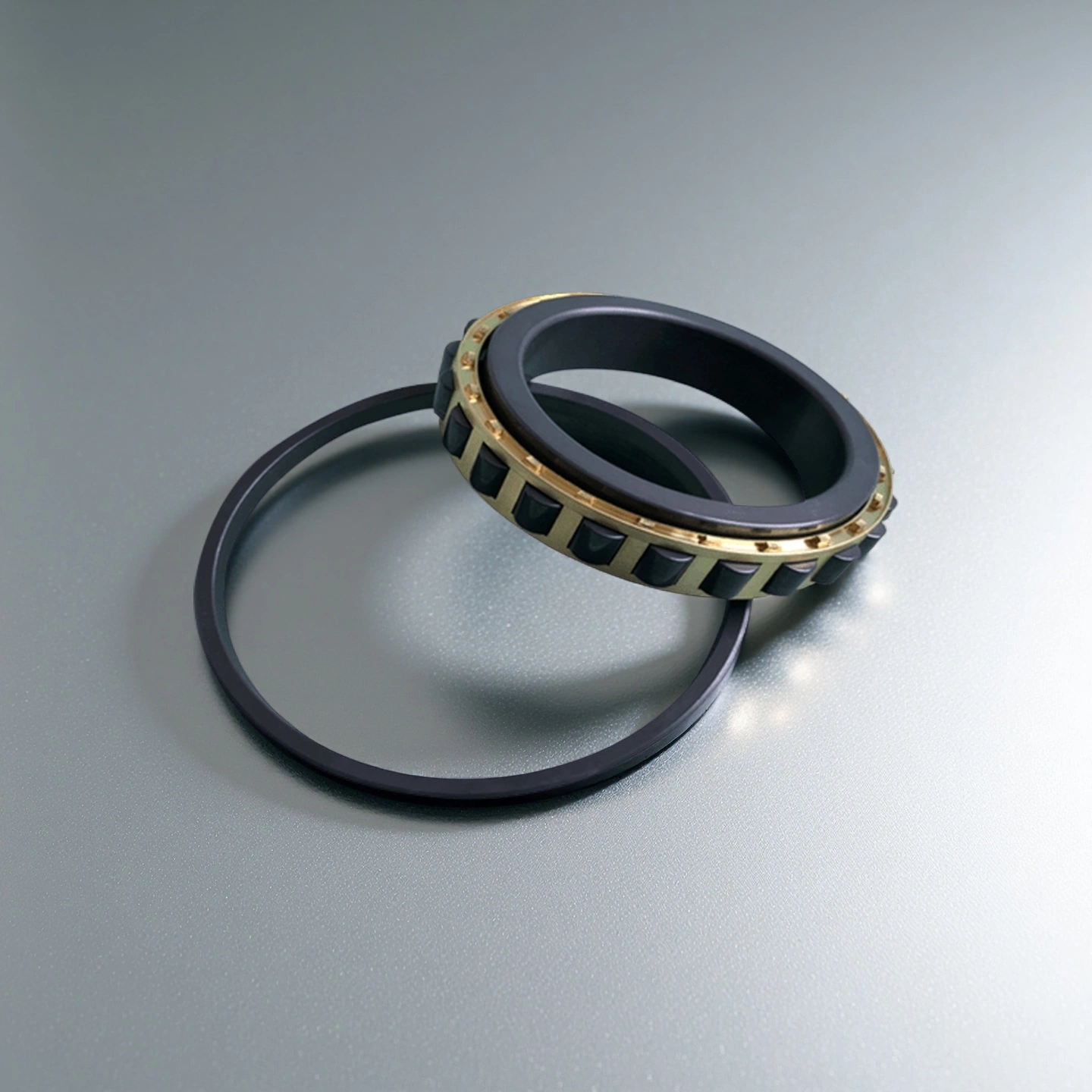
Silicon Nitride Roller Bearing for High-Speed, Insulated, Low-Loss Rotating Systems

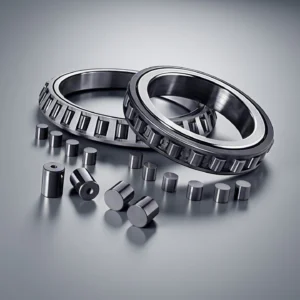
Silicon nitride roller bearings with precision-ground Si₃N₄ rollers are supplied in standard sizes and custom builds to meet spindle, motor, and vacuum duty, balancing speed capability, insulation, and dimensional stability.Standard cylindrical rollers span 3–20 mm OD and common bearing series; custom length/OD/edge geometry and preload targets are available.

Catalogue No. AT-SIN-ZC001
Material Silicon Nitride
Flexural Strength  ≥ 800 MPa
Surface Roughness (OD) Ra ≤0.02 μm
Roundness /Cylindricity ≤1–3 μm
24H Standard Dispatch
Small Batch Support OEM
Factory Direct
Expert Engineering Support

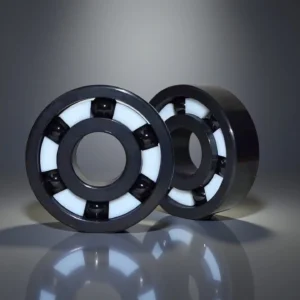
Silicon nitride roller bearing is a rolling-element bearing that uses Si₃N₄ (silicon nitride) cylindrical rollers running against steel or hybrid rings. By replacing steel rollers with ceramic rollers, the bearing gains lower mass, electrical insulation, and stable geometry at high temperature/speed, which helps reduce heat, vibration, and electrical pitting in inverter-driven or high-rpm machines.

Si₃N₄ Roller Bearing Benefits

1. High-Speed Readiness
Low-density Si₃N₄ rollers generate 60% less centrifugal force than equivalent steel rollers at the same dn value. This allows stable operation above 1.2×10⁶ dn, with reduced contact stress and slower temperature rise under sustained high-rpm loads. The result is better thermal equilibrium, improved bearing stiffness, and consistent preload retention in long-cycle operations.

2. Insulation Under VFD Drive
The non-conductive ceramic rolling path effectively interrupts stray currents generated by inverter-driven (VFD) systems, preventing electrical discharge machining (EDM) and grease carbonization. Tests on hybrid bearings with Si₃N₄ rollers show over 90% reduction in current erosion marks compared with standard steel rollers, extending bearing life in traction motors and precision drives.

3. Tight Geometry and Dimensional Control
Each roller is precision ground to ≤1–3 μm roundness and length matching within ±2 μm, ensuring consistent load sharing and minimized runout. This tight tolerance control enhances system NVH (noise, vibration, harshness) performance and maintains preload accuracy in high-stiffness spindle or motor assemblies.

4. Stable Surface Finish and Friction Behaviour
A super-finished outer diameter Ra ≤0.02 μm reduces friction scatter, helping maintain predictable torque and temperature profiles during acceleration phases. Polished surfaces also minimize lubricant shear degradation and stabilize the bearing’s thermal expansion, which is critical in continuous-duty or thermally cycled environments.

5. Clean Running for Vacuum and Precision Assemblies
Silicon nitride’s dense, closed microstructure and smooth surface drastically lower particle emission. This supports ISO Class 5–6 cleanroom compatibility and ensures long-term reliability in turbomolecular pumps, vacuum coating chambers, and analytical instruments. The low-wettability surface reduces adhesion of contaminants, maintaining internal cleanliness and balance stability.

Silicon Nitride Rollers Bearing Properties

1.  Silicon Nitride Bearing Rollers Technical Sheet

Si3N4 Type Gas pressure sintering Si3N4 Hot pressing sintering Si3N4 High thermal conductivity Si3N4
Density (g/cm3) 3.2 3.3 3.25
Flexture strength (MPa) 700 900 600~800
Young Modulus (GPa) 300 300 300~320
Poisson's ratio 0.25 0.28 0.25
Compressive strength (MPa) 2500 3000 2500
Hardness (GPa) 15 16 15
Fracture toughness (MPa*m1/2) 5~7 6~8 6~7
Maximum working temperature (℃) 1100 1300 1100
Thermal conductivity (W/m*K) 20 25 80~100
Thermal expansion coefficient (/℃) 3*10-6 3.1*10-6 3*10-6
Thermal shock resistance (ΔT ℃) 550 800 /


2. Roller Grade Tolerance (Unit: μm)

Tolerance Grade Ra (Surface Roughness) Rolling Surface (max) End Face (max) Chamfer (max)
0 0.1 0.125 1.25
I 0.125 1.16 1.25
II 0.16 0.25 2.5
III 0.25 0.32 2.5

Si3N4 Roller Bearing Specifications

Si3N4 Roller Bearing
Item NO. Inner Diameter(mm) Outer Diameter (mm) Width(mm)
AT-SIN-ZC001 25 52 15
AT-SIN-ZC002 100 180 34


Silicon Nitride Cylindrical Roller Bearing Packaging

  • Each bearing is sealed in anti-static polyethene bags
  • Packaged in foam-lined rigid cartons for shock protection
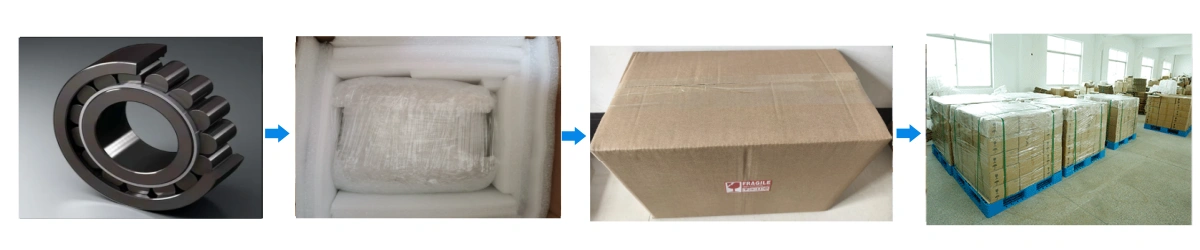
Silicon Nitride Cylindrical Roller Bearing Packaging

Applications of Silicon Nitride Roller Bearing

  • Machine Tool Spindles

    ✅Key Advantages

    1. Speed Stability — lower mass reduces centrifugal load, supporting dn up to high-speed classes in matched sets.
    2. Low NVH — polished OD and tight length variance reduce vibration peaks at operating rpm.
    3. Thermal Control — limited heat rise improves dimensional stability at duty speed.

    ✅ Problem Solved

    A grinding spindle operating above 30,000 rpm reported temperature drift and chatter. After switching to a silicon nitride roller bearing with matched length and ≤2 μm roundness, the average temperature at steady state dropped several degrees and peak vibration at the tool edge decreased, extending the dressing interval and stabilizing surface finish across long shifts.

  • EV/High-Efficiency Motors

    ✅Key Advantages

    1. Electrical Insulation — ceramic rollers interrupt current paths under inverter switching.
    2. Grease Life Support — lower EDM activity reduces lubricant degradation rate.
    3. Efficiency Retention — moderated heat build-up preserves torque output window.

    ✅ Problem Solved

    A traction motor using VFD drive experienced bearing current marks and early grease darkening. Adopting an insulated silicon nitride roller bearing reduced current scarring evidence in teardown checks and aligned the maintenance interval with the fleet target mileage.

  • Vacuum Pumps /TMP

    ✅Key Advantages

    1. Clean Running — low particle generation with polished ceramic OD.
    2. Low Vibration — controlled roundness maintains rotor balance margins.
    3. Service Window — predictable wear pattern supports planned maintenance.

    ✅ Problem Solved

    A turbomolecular pump line saw micro-vibration spikes during extended runs. With Si₃N₄ roller sets graded to ≤3 μm cylindricity, the vibration envelope tightened and bearing change-out aligned with quarterly service, improving tool uptime.

Silicon Nitride Roller Bearing Usage Instructions

  • Installation

    1. Geometry Verification – Confirm shaft and housing concentricity, chamfer angle, and seat surface roughness (Ra ≤ 0.4 μm recommended). Flush all components with filtered solvent, dry thoroughly, and ensure zero residue before assembly.
    2. Handling – Always use lint-free gloves and non-metallic tools. Avoid point impact or side-loading on the roller ends; Si₃N₄ ceramics have high hardness but low fracture toughness to edge impact.
    3. Preload & Alignment – Apply preload per design calculation and verify axial play at both ambient and stabilized operating temperature. For paired roller sets, confirm contact alignment using runout and axial float gauges before final assembly torque.
    4. Assembly Environment – Conduct fitting in a clean, controlled area (ISO Class 8 or better for vacuum-grade bearings) to minimize particle inclusion.

  • Operation

    1. Speed Ramp-Up – Increase speed gradually during first runs. Continuously monitor bearing temperature, current, and vibration envelope (overall g rms) to establish baseline.
    2. Lubrication Control – Use grease or oil types specifically formulated for ceramic hybrid bearings; over-greasing can elevate temperature and shear stress. Typical fill ratio: 25–35 % of cavity volume.
    3. Electrical Protection – For VFD or inverter drives, verify installation of grounding brushes or insulated couplings. Silicon nitride rollers interrupt current through the rolling path, but system-level return paths still require control.
    4. Operating Limits – Avoid sudden speed changes exceeding 15 % of nominal rpm in less than 2 s; allow bearing to reach steady thermal balance before full-load operation.

  • Storage

    1. Environmental Conditions – Keep bearings sealed in clean, dry packaging with desiccant and nitrogen purge if possible. Maintain temperature between 10–30 °C and <50 % RH.
    2. Mechanical Protection – Do not stack trays or apply direct load on packaged bearings. Record lot number, inspection ID, and shelf date for traceability.
    3. Long-Term Storage – For periods > 12 months, re-inspect packaging integrity and desiccant colour before use.

  • Cleaning

    1. Cleaning Method – When required, perform ultrasonic cleaning with non-residue solvent (e.g., isopropanol or petroleum ether). Rinse in filtered solvent baths and dry using oil-free compressed nitrogen or HEPA-filtered air.
    2. Surface Care – Never abrade the ceramic outer diameter; avoid cloths or wipes that shed fibers or contain silicon compounds, which can scratch or contaminate the surface.
    3. Inspection After Cleaning – Check for water spots or discolouration; if visible, repeat solvent rinse and air-dry under cleanroom airflow.

  • Cautions & Troubleshooting

    1. Unexpected Heat Rise
    Root Causes: Excess preload, improper lubricant fill, or housing misalignment.
    Action: Verify axial preload value, confirm grease quantity < 40 % volume, and recheck fit tolerances between ring and seat. If the temperature exceeds 80 °C above ambient during ramp-up, stop and inspect immediately.

    2. Vibration Peaks at Specific RPM
    Root Causes: Roller length variation or end-geometry mismatc,h creating uneven load distribution.
    Action: Inspect roller set matching (length ≤ ±2 μm variance) and end form. Balance spindle assembly statically/dynamically after reinstallation; ensure shaft straightness within 5 μm/100 mm.

    3. Grease Darkening or Leakage
    Root Causes: Electrical erosion through bearing path or seal drag leading to lubricant oxidation.
    Action: Confirm electrical grounding at motor housing; reduce seal interference; verify purge schedule for contamination control. Replace grease if color change > 25 % or metallic sheen appears.

Si₃N₄ Roller Bearing FAQ

  1. Q: How is a silicon nitride roller bearing different from a standard steel bearing?
    A: A silicon nitride roller bearing uses Si₃N₄ ceramic rollers instead of steel. This material is lighter, stiffer, and electrically insulating. Compared with standard bearings, it reduces centrifugal force by about 60%, allowing higher speed operation, lower vibration, and resistance to electrical erosion (EDM) in inverter-driven systems.
  2. Q: Why do high-speed spindles and electric motors prefer silicon nitride rollers?
    Because low density (3.2 g/cm³) and high stiffness (E ≈ 310 GPa) enable stable geometry under high dn values (up to 1.2×10⁶). The result is reduced friction heat, tighter preload control, and extended grease life—essential for grinders, machining centres, and EV traction drives.
  3. Q: How does silicon nitride prevent bearing current damage under VFD control?
    A: The ceramic rolling elements in a silicon nitride roller bearing are electrically non-conductive, breaking current paths through the bearing. This prevents electrical discharge machining (EDM) that otherwise causes pitting and grease degradation, especially in variable-frequency drive (VFD) systems.
  4. Q: Can silicon nitride roller bearings be used in vacuum or cleanroom environments?
    A: Yes. The dense, non-porous microstructure of Si₃N₄ resists gas absorption and particle generation. With ultrasonic cleaning and vacuum-grade packaging, these bearings are ideal for turbomolecular pumps, semiconductor tools, and analytical instruments that require ISO Class 5–6 cleanliness.
  5. Q: What lubrication is suitable for silicon nitride roller bearings?
    A: Use low-volatility synthetic greases or high-speed oils compatible with ceramic hybrid bearings. The grease fill should not exceed 30–35% of the cavity. Over-greasing causes shear heating. For vacuum systems, dry-film or MoS₂-based coatings may be used upon request.
  6. Q: What common installation mistakes should be avoided?

    A: a. Forcing ceramic rollers during fitting or using metallic tools (risk of chipping edges).
    b. Skipping preload verification at both ambient and thermal equilibrium.
    c. Overfilling lubricant cavity.
    d. Ignoring grounding requirements in inverter systems.
    Proper installation and alignment ensure that the silicon nitride roller bearing achieves its rated life and precision.

What Our Clients Say about Silicon Nitride Roller Bearing

  • ⭐️⭐️⭐️⭐️
    We integrated ADCERAX’s silicon nitride roller bearings into our new high-speed grinding spindle platform. The measured runout dropped below 2 µm, and thermal drift at 30,000 rpm reduced by nearly 20%. The tight geometry and smooth surface finish have clearly improved spindle stability and surface quality.
    -- Michael Reyes — Maintenance Manager, Apex Motors (US)
  • ⭐️⭐️⭐️⭐️⭐️
    ADCERAX proved to be a reliable silicon nitride roller bearing supplier. The quotation was competitive, and communication was fast. Despite the small batch, the delivery included full inspection data and Cpk reports. Their factory pricing was transparent, and the dimensional tolerance met our ±0.003 mm spec without rework.
    -- Yuki Tanaka — Spindle Engineering Lead, KJ Precision (JP)
  • ⭐️⭐️⭐️⭐️⭐️
    We switched to Si3N4 roller bearings for our turbomolecular pump overhaul line. The bearings ran cleaner and quieter, showing no particle contamination after 1,000 hours of operation. It’s a real upgrade from the steel versions, especially for systems that must stay below ISO Class 6 contamination levels.
    -- Laura Schmidt — Purchasing, NordVac Systems (DE)
  • ⭐️⭐️⭐️⭐️⭐️
    Among several Si₃N₄ roller bearing factories, ADCERAX offered the best balance between price and technical quality. The rollers arrived vacuum-packed, and all dimensions matched the drawing perfectly. The custom chamfered ends reduced edge stress in our heavy-load compressor design, confirming consistent factory capability.
    -- Carlos M. — Director, Rotodynamics Service (MX)
customize size

Custom Silicon Nitride Roller Bearing

Customization targets the roller geometry, surface state, and bearing integration to meet specific speed, temperature, and electrical conditions. Drawings or target dn/NVH envelopes can be used to define inspection points. What you can specify:

  • Outer /Inner Dimensions
    Available roller diameters from 3–25 mm and lengths 5–30 mm.
    Dimensional tolerance bands can reach ±0.002 – ±0.005 mm, suitable for high-precision spindle, motor, or vacuum applications. Custom diameters and length combinations are supported per drawing or preload design.

  • Roundness /Cylindricity
    Precision grades down to ≤1–3 μm roundness and ≤2–5 μm length matching for preload consistency.
    Roller sets can be graded and paired to maintain uniform stiffness and low vibration under high-speed dn operation.

  • Edge /End Details
    Options include chamfered, radiused, flat, or crowned ends to optimize contact stress distribution.
    Edge geometry is inspected for alignment and smooth transition to prevent micro-scoring on raceways during acceleration.

  • Pairs /Sets and Grading
    Rollers can be supplied as graded and matched sets to ensure preload uniformity.
    Available in Grade 0 – III accuracy classes (Ra 0.1–0.25 μm) to meet spindle, vacuum, and motor tolerance targets.

  • Surface Finish
    Choices include raw ground, super-finished, or mirror-polished surfaces with Ra ≤ 0.02 μm.
    Polished Si₃N₄ surfaces lower friction scatter, reduce lubricant shear, and minimize temperature rise at high rpm.

  • Material Options
    Multiple Si₃N₄ grades optimized for strength, fracture toughness, and thermal expansion match.
    Ring materials can be specified (bearing steel, stainless, tool steel) depending on application and preload regime.

  • Cleanliness & Processing
    Each roller undergoes ultrasonic cleaning, particle-level inspection, and dry-purged packaging to meet vacuum or cleanroom use (ISO Class 5–6) requirements.

Related Products

ADCERAX - Your Trusted Advanced Ceramics Manufacturing Partner

Direct factory manufacturing with comprehensive ceramic materials expertise and global supply capabilities

Direct Factory Manufacturing

China-based ceramic materials production facility with state-of-the-art equipment

Engineering Team

Experienced professionals in advanced ceramics applications and custom design

Quality Control

Strict quality control standards for technical ceramics manufacturing and quality management

Global Supply Chain

Serving customers worldwide with technical ceramics and rapid response

24/7 Technical Support

Round-the-clock support for ceramic components inquiries and technical assistance

500+ Satisfied Customers

Trusted by global customers for advanced ceramic materials and precision components

Get in touch with us

Our team will be happy to respond to you in less than 24 hours.

Adcerax's factory

Quick Quotation

*Our team will answer your inquiries within 24 hours.

*Your information will be kept strictly confidential.

Ready to Solve Your Engineering Challenge?

Partner with ADCERAX for reliable, high-performance advanced ceramic solutions. Our engineers are ready to discuss your project.

E-mail

info@adcerax.com

Phone

+(86) 0731-74427743 | WhatsApp: +(86) 19311583352

Response Time

Within 24 hours

Quick Quote

The more details you provide, the faster we can quote.

*We respond within 24 hours. All inquiries are confidential.

Download Catalog

Get Your Custom Sulution

The more details you provide, the faster we can respond.

customize size

*We respond within 24 hours. All inquiries are confidential.

Download Catalog