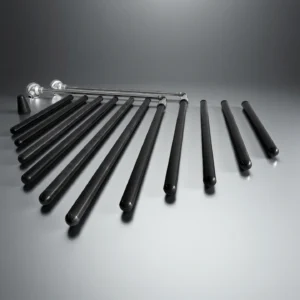
Silicon Nitride Gas Baffle for Aluminum Melting Furnace Flue and Hot Gas Control

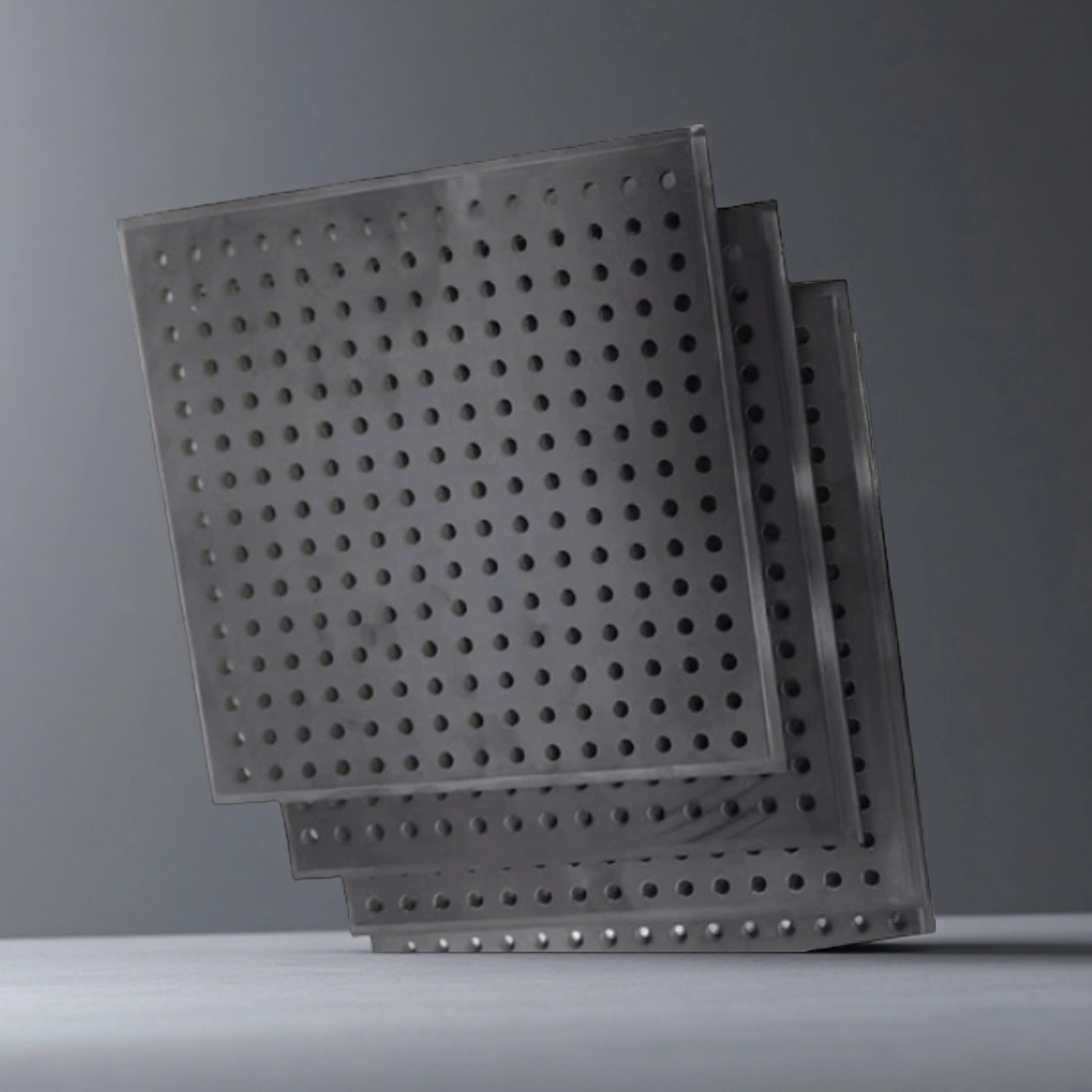
Silicon nitride gas baffles are available as solid or perforated plates, discs, and custom shapes with typical thickness from 10–40 mm and side lengths or diameters from 150–800 mm, and can be fully customised in outer dimensions, hole layout, and mounting details according to customer drawings or existing furnace hardware.

Catalogue No. AT-SN-BS001
Material Silicon Nitride
Thermal Expansion Coefficient ≤ 3.2 × 10⁻⁶ /K
Maximum Operating Temperature 1200°C in air, 1600°C in inert gas
Flexural strength ~700–900 MPa
24H Standard Dispatch
Small Batch Support OEM
Factory Direct
Expert Engineering Support

Silicon nitride gas baffle is a high-temperature ceramic flow-control plate or disc made from Si₃N₄ (silicon nitride), installed inside melting furnaces, holding furnaces, rotary degassing units or hot gas ducts to guide and regulate gas movement.

Silicon Nitride Gas Baffle Benefits

  • Stable geometry under thermal cycling
    The Si₃N₄ gas baffle retains its shape in furnaces operating in the 700–1100 °C range, reducing warping and cracking that are common with castable refractory baffles.

  • Low wettability to molten aluminum
    Silicon nitride shows low adhesion to molten aluminum, which helps reduce metal build-up on the baffle edges and lowers the risk of frozen bridges or blocked gas passages.

  • High mechanical strength and erosion resistance
    The combination of high flexural strength and hardness provides resistance against high-velocity gas streams and entrained particles in flues and furnace roofs.

  • Perforation and flow design flexibility
    Perforated silicon nitride gas baffle plates can be supplied with custom hole diameters, patterns, and open-area ratios to tune gas velocity and distribution in the furnace chamber.

  • Compatibility with rotary degassing systems
    Si₃N₄ gas baffles can be integrated into rotary degassing units to work with silicon nitride rotors and riser tubes, supporting efficient bubble dispersion and hydrogen removal.

Si3N4 Ceramic Gas Baffle

Si3N4 Type Gas pressure sintering Si3N4 Hot pressing sintering Si3N4 High thermal conductivity Si3N4
Density (g/cm3) 3.2 3.3 3.25
Flexture strength (MPa) 700 900 600~800
Young Modulus (GPa) 300 300 300~320
Poisson's ratio 0.25 0.28 0.25
Compressive strength (MPa) 2500 3000 2500
Hardness (GPa) 15 16 15
Fracture toughness (MPa*m1/2) 5~7 6~8 6~7
Maximum working temperature (℃) 1100 1300 1100
Thermal conductivity (W/m*K) 20 25 80~100
Thermal expansion coefficient (/℃) 3*10-6 3.1*10-6 3*10-6
Thermal shock resistance (ΔT ℃) 550 800 /


Si3N4 Gas Baffle Specifications

Silicon Nitride Gas Baffle
Item No. Diameter (mm) Thickness (mm)
AT-SN-BS001 Customize


Silicon Nitride Gas Baffle Plate Packaging

  • Silicon nitride gas baffles are wrapped in soft protective layers and packed in reinforced wooden or heavy-duty cartons to prevent edge chipping.
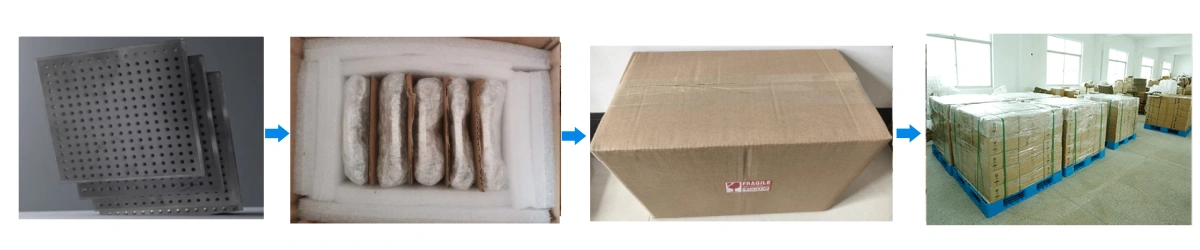
Silicon Nitride Baffle Plate Packaging

Silicon Nitride Gas Baffle Applications

  • Aluminum Melting and Holding Furnaces

    ✅Key Advantages

    1. Controlled flue gas path over the molten bath – The silicon nitride gas baffle guides hot combustion gases along the furnace roof and back wall instead of directly across the melt surface.
    2. Reduced heat loss through the flue opening – Properly sized openings in the Si₃N₄ gas baffle limit uncontrolled hot gas escape and support more stable furnace temperature profiles.
    3. Lower dross formation at the bath surface – By smoothing gas flow and limiting direct flame impingement, the gas baffle promotes calmer melt conditions and less oxidation.

    ✅ Problem Solved

    An aluminum foundry operating a reverberatory furnace observed high fuel consumption and frequent dross build-up near the flue. After installing a perforated silicon nitride gas baffle designed to redirect hot gases along the roof before exit, the plant measured a more uniform roof temperature and a reduction in visible flame over the melt surface. Over several months of operation, the maintenance team reported fewer large dross ridges at the charge end and more stable tapping temperatures during peak production hours.

  • Rotary Degassing Units in Casting Cells

    ✅Key Advantages

    1. Improved inert gas distribution under the rotor – A disc-type Si₃N₄ gas baffle channels nitrogen or argon bubbles throughout the bath area instead of allowing them to rise in a narrow column.
    2. Mechanical compatibility with Si₃N₄ rotor and riser tube – Matching materials reduce local thermal expansion mismatch at high operating temperatures.
    3. Reduced metal splash and turbulence near the launder – A carefully sized gas baffle stabilises melt movement around the rotor region.

    ✅ Problem Solved

    A casting cell using rotary degassing reported uneven hydrogen values along the launder and high inclusion rates at one mold group. By adding a custom silicon nitride gas baffle under the rotor, with a central opening for the shaft and tuned outer diameter, the plant achieved more uniform bubble distribution in the treated bath. Subsequent quality checks showed tighter hydrogen levels across molds and a lower proportion of scrap attributed to gas porosity.

  • Aluminum Recycling and Secondary Smelting

    ✅Key Advantages

    1. Stabilised gas flow in furnaces with diverse charge materials – The Si₃N₄ gas baffle helps maintain a consistent hot gas pattern even when scrap loading conditions change.
    2. Enhanced utilisation of burner energy – By directing gas flow across areas with heavy scrap accumulation, the baffle can support more uniform melting rates.
    3. Lower risk of rapid refractory wear near the flue – Controlled gas velocity at the outlet reduces local overheating and erosion at the flue area.

    ✅ Problem Solved

    A secondary aluminum plant processing mixed scrap experienced accelerated wear in the flue region of one melting furnace, along with inconsistent melting times between charges. A segmented silicon nitride gas baffle was installed in the roof near the flue to slow and redistribute the exiting hot gases. Over the following maintenance cycle, inspection indicated less severe wear around the flue region, and operating data showed more stable melting times from charge to charge despite variations in scrap density and packing.


Usage Instructions of  Si3N4  Gas Baffle

  • Installation

    1. Check each silicon nitride gas baffle for visible cracks, chips, or transport damage before lifting it into the furnace.
    2. Use lifting fixtures and slings that support the ceramic uniformly; avoid point loads on corners or unsupported edges.
    3. Ensure that the supporting steel or refractory structure is flat, clean, and free of loose particles that could create point stress.
    4. Align perforations and cut-outs with burners, flues, riser tubes, or design features according to the furnace layout drawing.

  • Operation

    1. Raise furnace temperature according to standard heating curves, avoiding very rapid changes that would generate large temperature gradients across the baffle.
    2. Monitor roof and flue temperatures during the first campaigns with the new gas baffle to confirm that gas flow is following the expected path.
    3. If the gas baffle works with a rotary degassing unit, verify that the rotor immersion depth and distance to the baffle match the specified values.

  • Cleaning and Inspection

    1. Plan regular visual inspections during scheduled shutdowns to look for cracks, erosion, or metal build-up at the edges and perforations.
    2. Remove adherent dross or frozen metal with non-metallic tools where possible, avoiding aggressive hammering on ceramic surfaces.
    3. If fine cracks are detected, monitor their growth between shutdowns and prepare a replacement schedule before they pose a structural risk.

  • Storage

    1. Store spare silicon nitride gas baffles on padded supports or racks that prevent direct contact between ceramic edges.
    2. Keep storage areas dry and limit exposure to accidental impacts from tools or forklifts.
    3. Label each baffle with furnace ID and installation position to reduce handling time during future maintenance.

  • Typical Misuse Points and Handling

    1. Excessive thermal shock during startup or emergency cooling
    Issue: Rapid temperature changes can create high thermal gradients across the gas baffle.
    Handling: Use controlled heating and cooling ramps, and avoid directing very cold air or water at a hot ceramic surface.
    Insufficient support or uneven seating

    2. Issue: Point loads and uneven contact can lead to local stress and early cracking.
    Handling: Verify that support surfaces are level, free of debris, and sized to carry the weight of the baffle evenly.
    Unexpected contact with mechanical tools or scrap

    3. Issue: Falling heavy objects or improper use of metal tools on the baffle surface can chip or fracture the ceramic.
    Handling: Train crews to treat the silicon nitride gas baffle as a structural ceramic part, and protect it during charging and maintenance activities.

Silicon Nitride Ceramic Gas Baffle FAQ

  1. Q: Where is a silicon nitride gas baffle typically used?
    A: It is commonly used in aluminum melting and holding furnaces, rotary degassing units, aluminum recycling furnaces, and industrial furnaces that require controlled gas flow near the roof or flue.
  2. Q: Why choose a silicon nitride gas baffle instead of a cast refractory plate?
    A: Silicon nitride offers higher mechanical strength, better thermal shock resistance, and lower wettability to molten aluminum, so the baffle keeps its geometry more consistently and usually lasts longer under cyclic high-temperature service.
  3. Q: Is a silicon nitride gas baffle compatible with molten aluminum?
    A: Yes. Silicon nitride has low reactivity and low wettability with molten aluminum compared with many refractory materials, which helps reduce buildup and facilitates cleaning.
  4. Q: Can a silicon nitride gas baffle be used in rotary degassing systems?
    A: Yes. Disc-type Si₃N₄ gas baffles are often placed under the rotor in degassing units to help distribute inert gas bubbles and stabilise melt flow.
  5. Q: What information is needed to design a custom silicon nitride gas baffle?
    A: Typical inputs include furnace drawings or sketches, temperatures, target gas path, flue and burner position, desired open area, and mounting or support details.
  6. Q: How long does a silicon nitride gas baffle typically last?
    A: Lifetime depends on furnace temperature, atmosphere, mechanical loads, and installation quality. In many aluminum applications, plants aim to run a gas baffle through at least one planned maintenance cycle before replacement.
  7. Q: How do I know if a silicon nitride gas baffle is suitable for my furnace?
    A: If your furnace operates in the 700–1100 °C range, handles molten aluminum or similar metals, and suffers from uneven heating, high flue temperatures, or rapid wear of existing baffles, a technical evaluation of silicon nitride gas baffles is usually worthwhile.


Silicon Nitride Gas Baffle Reviews

  • ⭐️⭐️⭐️⭐️⭐️
    We replaced a cast refractory baffle in our main melting furnace with a silicon nitride gas baffle. The new baffle has kept its shape through several heating cycles, and temperature readings at the roof have become more uniform across the charge and tap ends.
    -- Mark H., Furnace Engineer, NorthRiver Aluminum Casting (USA)
  • ⭐️⭐️⭐️⭐️⭐️
    Our recycling furnace had strong gas flow at the flue and visible wear at the outlet. After installing a custom Si₃N₄ gas baffle supplied by ADCERAX, we noticed a calmer flame pattern and more stable melting times. The cost made sense compared to the downtime we wanted to avoid.
    -- Elena G., Operations Manager, Iberia Secondary Metals (Spain)
  • ⭐️⭐️⭐️⭐️⭐️
    We use a silicon nitride gas baffle together with a Si₃N₄ rotor in one of our rotary degassing units. The melt surface is less disturbed, and hydrogen levels along the launder are now more consistent from mold to mold.
    -- Jürgen L., Maintenance Supervisor, AutoCast Components GmbH (Germany)
  • ⭐️⭐️⭐️⭐️⭐️
    ADCERAX supported us with drawings and installation guidance for a segmented silicon nitride gas baffle above the bath. The ceramic panels survived the first full campaign without cracking, and we have seen less heavy dross accumulation near the flue.
    -- Carlos M., Plant Director, Atlantic Alloy Foundry (Mexico)
customize size

Custom Silicon Nitride Gas Baffle

Silicon nitride gas baffles are seldom standard parts, as each furnace has its own burner layout, flue path, and melt depth. A custom-matched baffle aligns gas flow with your actual furnace geometry, improving heat distribution, reducing turbulence, and lowering energy loss.

1. Overall dimensions

  • Plate or disc diameter/side length
  • Thickness range (for mechanical strength and weight)

2. Shape and segmentation

  • Single-piece plate, disc, or ring
  • Segmented baffle panels for large roof or flue openings
  • Cut-outs for riser tubes, burners, or inspection openings

3. Perforation and open area

  • Hole diameters and patterns
  • Open-area percentage to control gas velocity
  • Slot or round-hole geometry for specific flow patterns

4. Mounting and support details

  • Bolt hole pattern
  • Notches or recesses for support beams
  • Interfaces with steel frames or refractory hangers

5. Material and surface

  • Standard dense Si₃N₄ grade for molten aluminum service
  • Optional surface finish levels on gas-contact or melt-contact sides
  • Chamfers and rounded edges to reduce stress concentration


Related Products

ADCERAX - Your Trusted Advanced Ceramics Manufacturing Partner

Direct factory manufacturing with comprehensive ceramic materials expertise and global supply capabilities

Direct Factory Manufacturing

China-based ceramic materials production facility with state-of-the-art equipment

Engineering Team

Experienced professionals in advanced ceramics applications and custom design

Quality Control

Strict quality control standards for technical ceramics manufacturing and quality management

Global Supply Chain

Serving customers worldwide with technical ceramics and rapid response

24/7 Technical Support

Round-the-clock support for ceramic components inquiries and technical assistance

500+ Satisfied Customers

Trusted by global customers for advanced ceramic materials and precision components

Get in touch with us

Our team will be happy to respond to you in less than 24 hours.

Adcerax's factory

Quick Quotation

*Our team will answer your inquiries within 24 hours.

*Your information will be kept strictly confidential.

Ready to Solve Your Engineering Challenge?

Partner with ADCERAX for reliable, high-performance advanced ceramic solutions. Our engineers are ready to discuss your project.

E-mail

info@adcerax.com

Phone

+(86) 0731-74427743 | WhatsApp: +(86) 19311583352

Response Time

Within 24 hours

Quick Quote

The more details you provide, the faster we can quote.

*We respond within 24 hours. All inquiries are confidential.

Download Catalog

Get Your Custom Sulution

The more details you provide, the faster we can respond.

customize size

*We respond within 24 hours. All inquiries are confidential.

Download Catalog