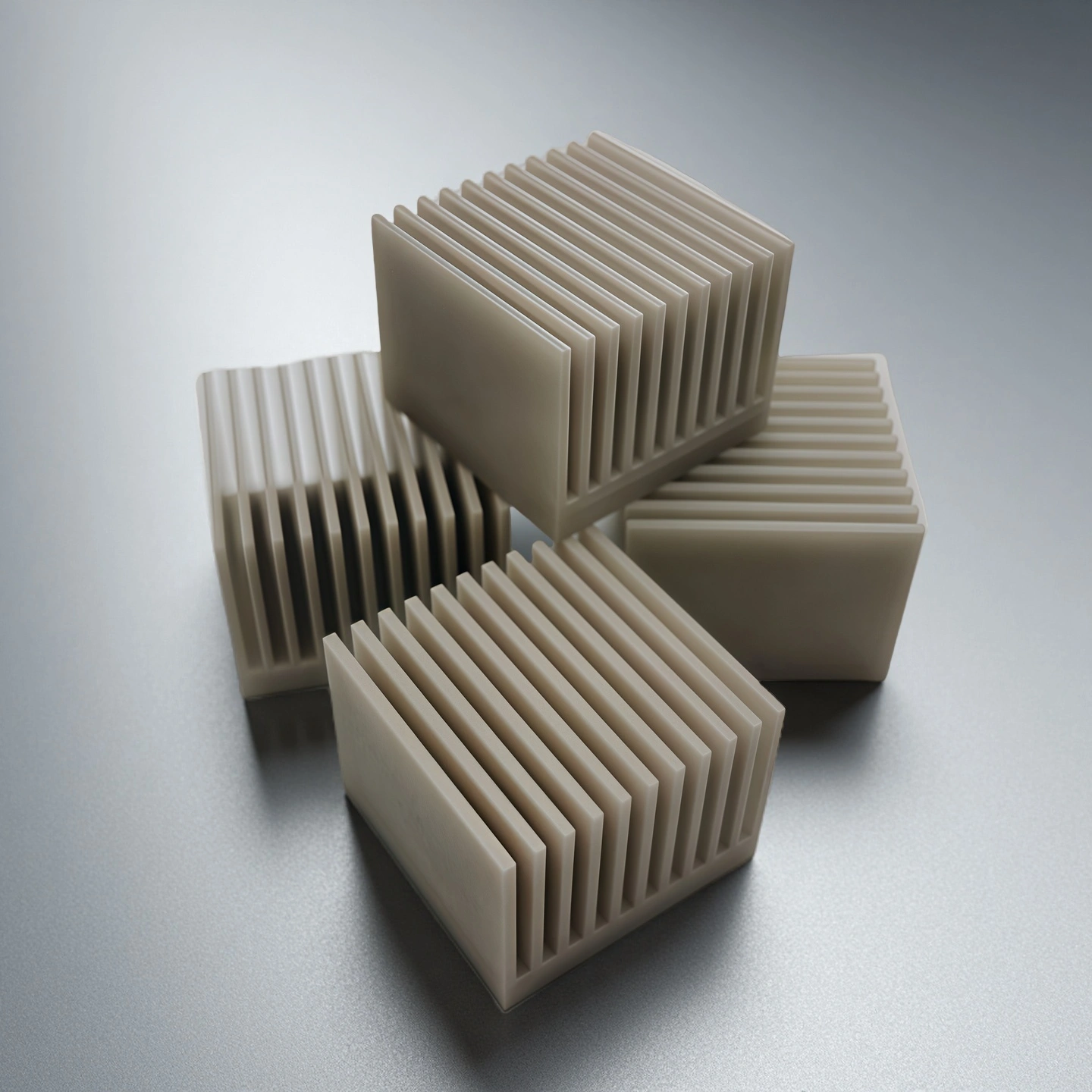
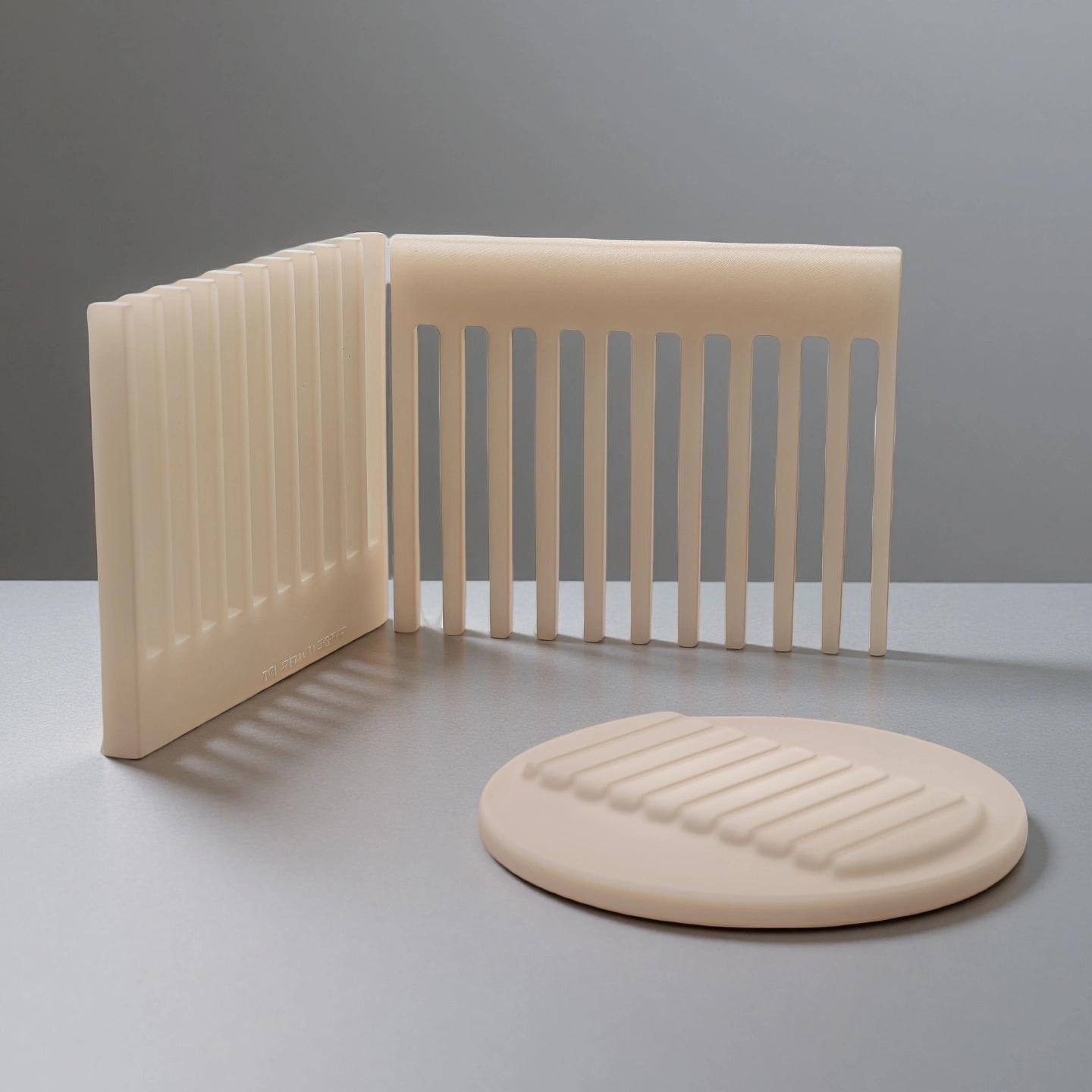
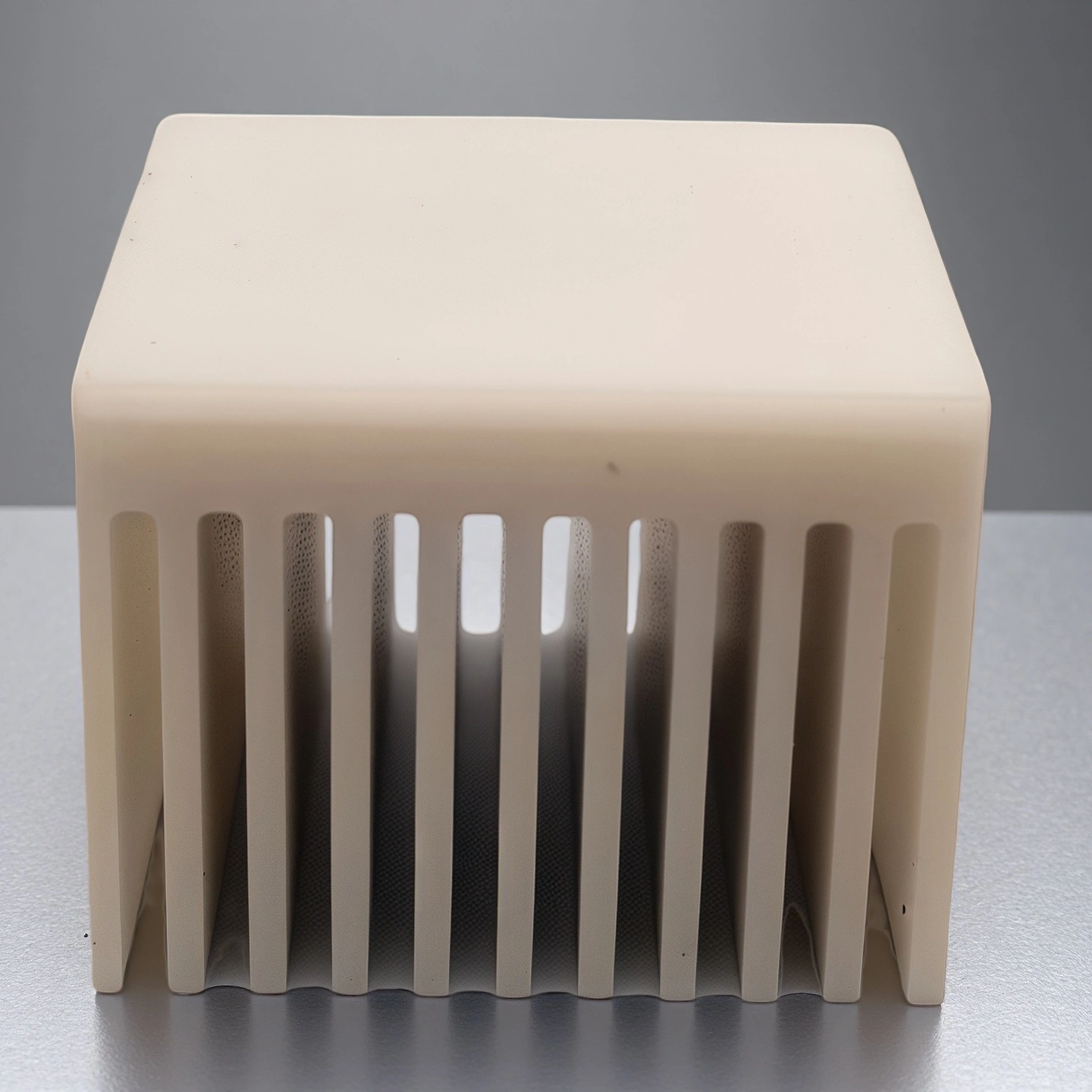
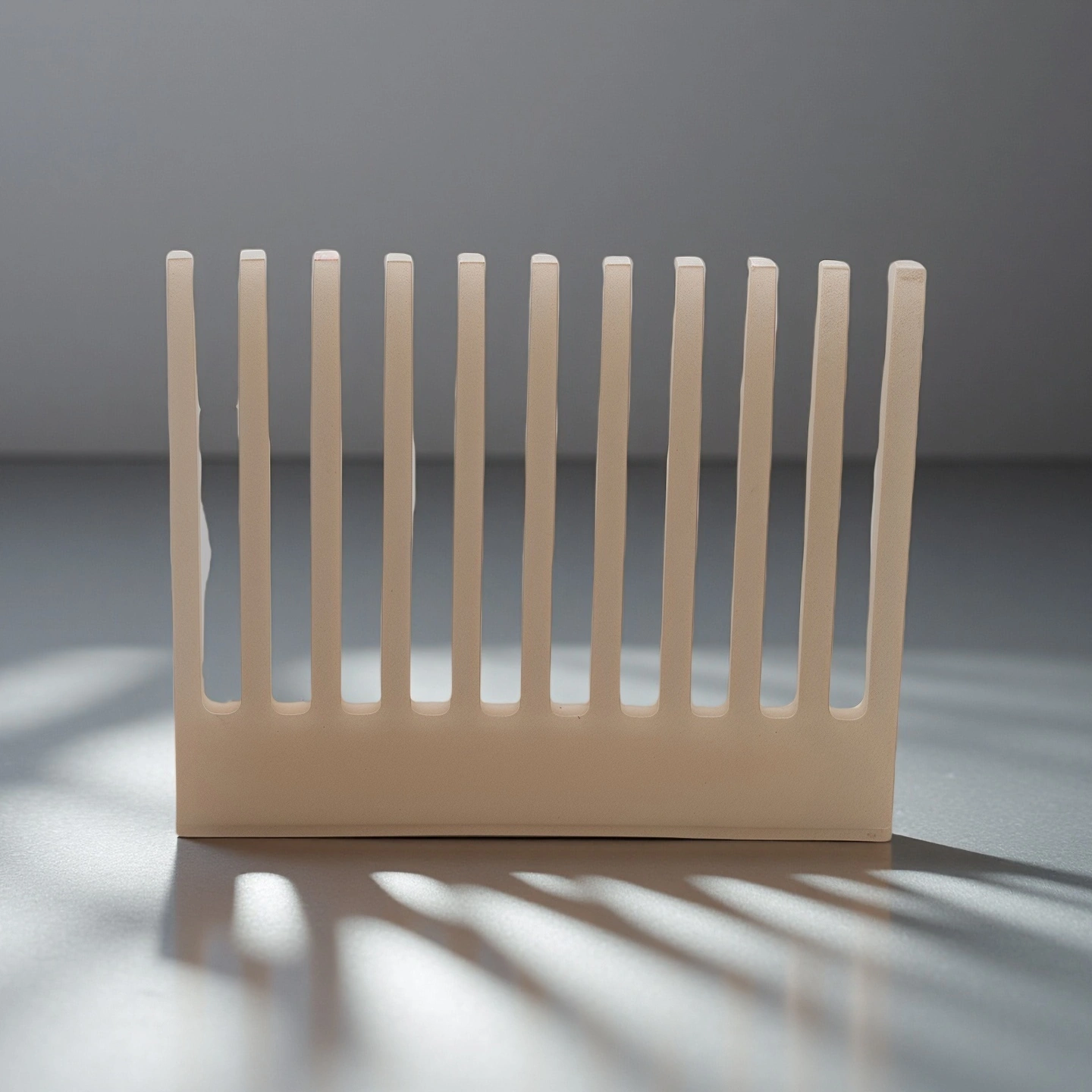
Custom Aluminum Nitride Ceramic Heat Sink for Compact Inverter Design

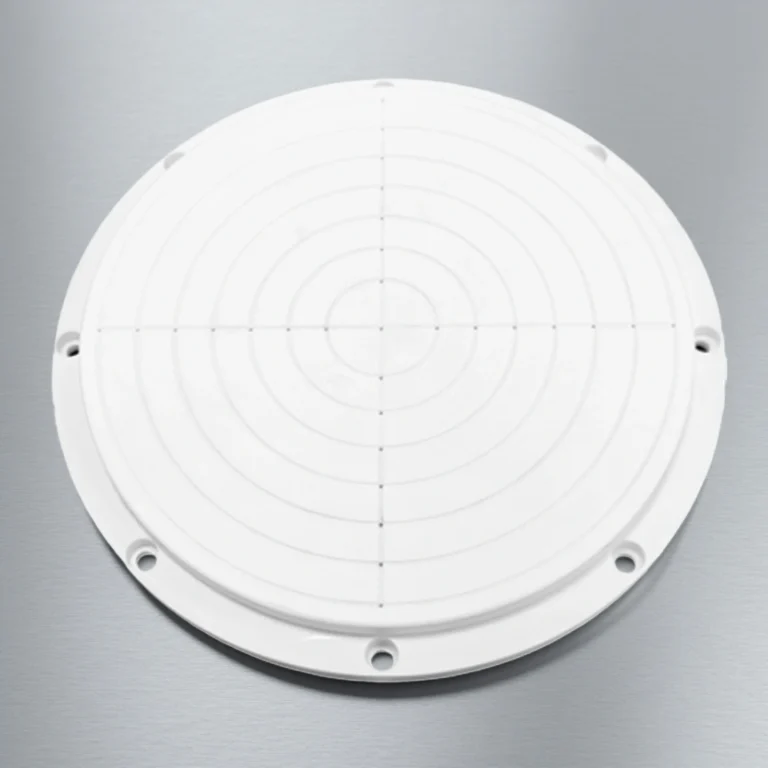
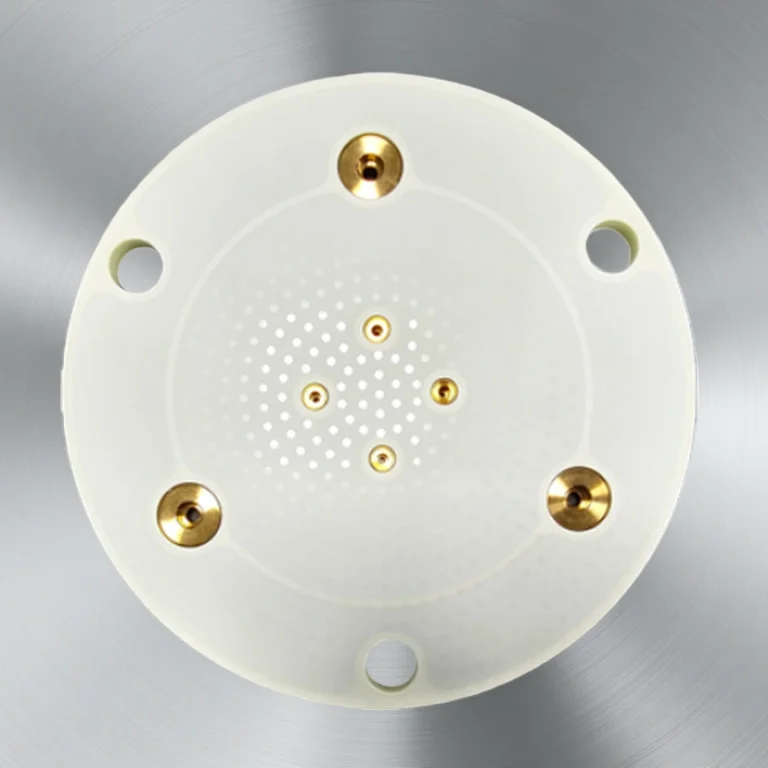
Aluminum nitride ceramic heat sink plates are supplied in standard sizes from about 10 × 10 mm up to around 50 × 50 mm with thicknesses typically from 0.32–2.0 mm, and the aluminum nitride ceramic heat sink can also be fully customized in length, width, thickness, and metallization layout based on customer drawings.

Catalogue No. AT-AIN-SR1001
Material  Aluminum Nitride
Thermal Conductivity(25 °C) 160–180 W/m·K
Maximum Continuous Operating Temperature 800–900 °C (in air)
Volume Resistivity (25 °C) ≥ 10¹² Ω·cm
24H Standard Dispatch
Small Batch Support OEM
Factory Direct
Expert Engineering Support

An aluminum nitride ceramic heat sink is a precision-machined AlN thermal management component that combines high thermal conductivity with intrinsic electrical insulation, enabling efficient heat spreading and heat transfer for power semiconductor, LED/LD, and RF devices while maintaining dielectric isolation and dimensional stability under thermal cycling.


Aluminum Nitride Ceramic Heat Sink Benefits

  • High Heat Flux Handling in Compact Footprints
    The aluminum nitride ceramic heat sink provides thermal conductivity in the 160–180 W/m·K range, allowing designers to move from larger alumina-based layouts to smaller, higher power density modules.

  • Electrical Insulation with Stable Dielectric Performance
    The AlN ceramic heat sink combines high breakdown strength and stable dielectric constant, which supports reliable isolation between live copper traces and grounded baseplates.

  • Tight Flatness and Thickness Tolerance for Reliable Assembly
    The aluminum nitride ceramic heat sink can be ground to tight thickness and flatness tolerances so that solder layers and thermal interface materials achieve consistent bond line thickness and low thermal resistance.

  • Matched Thermal Expansion for Silicon and Power Packages
    The coefficient of thermal expansion of the AlN heat sink is closer to silicon and many power packages than metals, which helps reduce thermo-mechanical stress and improves thermal cycling performance.

  • Flexible Copper Patterns and Surface Finishes
    The AlN ceramic heat sink can be supplied bare or with copper, Ni/Au or Ag metallization and patterned pads, so it can serve as both heat spreader and circuit substrate in one component.

AlN Ceramic Heat Sink Properties

Property Content Unit Unit ALN-170 ALN-200 ALN-230
Basic Properties Color gray light yellow light yellow
Density g/cm³ 3.2-3.3 3.2-3.3 3.2-3.3
Surface Roughness μm 0.2-0.75 0.2-0.75 0.2-0.8
Camber length ‰ ≤3‰ ≤3‰ ≤3‰
Hardness HV 1100 1100 1100
Thermal Properties Max Operating Temperature °C 1100 1100 1100
Thermal Conductivity W/m·K 170-190 190-220 220-230
Coefficient of Thermal Expansion 10⁻⁶/K(20-400°c) 4-5 4-5 4-5
Coefficient of Thermal Expansion 10⁻⁶/K(400-800°c) 5-6 5-6 5-6
Mechanical Properties Flexural Strength MPa 300-400 350-450 400-500
Tensile Strength MPa 200-300 250-350 280-380
Compressive Strength MPa 2000-3000 2200-3200 2500-3500
Electrical properties Dielectric Constant at 1MHz 8-9 8-9 8-9
Dielectric strength KV/mm ≥15 ≥15 ≥15
Volume resistivity 20℃ Ω.cm ≥1014 ≥1014 ≥1014


AlN Ceramic Heat Sink Specifications

Item No. Diameter (mm) Thickness (mm) Purity
AT-AIN-SR1001 Customize


AlN Heat Sink Packaging

  • Each aluminum nitride ceramic heat sink is separated with protective paper or film and stacked in partitioned trays or vacuum sealed bags to prevent scratching of functional surfaces.
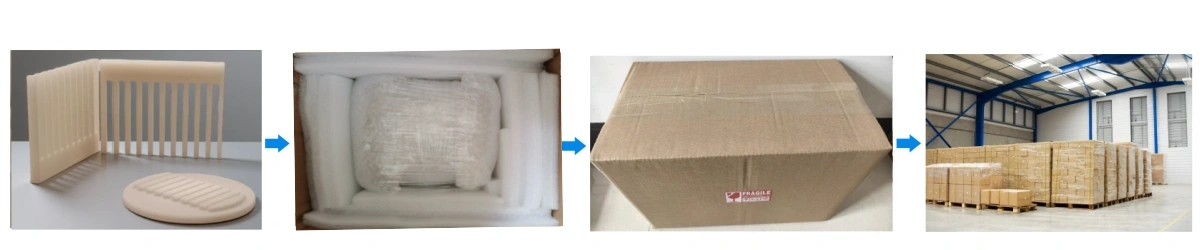

Aluminum Nitride Ceramic Heat Sink

Aluminum Nitride Ceramic Heat Sink Applications

  • High-Power LED and Laser Modules

    ✅Key Advantages

    1. Lower Junction Temperature in Compact Optics – The aluminum nitride ceramic heat sink spreads several watts per square centimeter of LED or laser power across a small footprint, helping to keep junction temperature within the specified limit.
    2. Stable Alignment for Optical Systems – The flat and dimensionally stable AlN heat sink maintains the relative position of LED arrays or laser diodes so that optics stays aligned over long operating times.
    3. Electrically Insulating Thermal Path – The electrically insulating AlN ceramic heat sink allows the thermal path to remain isolated from grounded housings and metal reflectors.

    ✅ Problem Solved

    An LED module manufacturer building a 150 W spotlight previously used an alumina substrate and metal base, which resulted in junction temperatures about 15–20 °C above the design target at rated power. By switching to an aluminum nitride ceramic heat sink of similar size and optimizing the copper layout, the measured junction temperature dropped by roughly 12–15 °C at full load, and lumen maintenance after 3,000 hours improved by more than 10%, reducing early replacement claims in demanding architectural lighting projects.

  • Power Electronics Modules for Inverters and Drives

    ✅Key Advantages

    1. High Thermal Conductivity for Dense Switch Layouts – The AlN ceramic heat sink allows several IGBT or MOSFET dies to be placed closer together without exceeding the allowable temperature rise.
    2. Controlled Thickness for Low Thermal Resistance Interfaces – Tight control of thickness and flatness helps maintain thin solder or TIM layers between the aluminum nitride ceramic heat sink and the cooler or baseplate.
    3. Thermal Expansion Matching with Semiconductor Materials – The AlN heat sink reduces mechanical stress during thermal cycling compared with metal heat spreaders, which supports longer module life.

    ✅ Problem Solved

    A manufacturer of 30 kW industrial inverters experienced solder joint fatigue in a module using a metal base and alumina substrate, leading to field returns after around 5,000–7,000 operating hours. After re-designing the module with an aluminum nitride ceramic heat sink as the insulated base and adjusting the layer stack, the module passed more than 10,000 thermal cycles between approximately –40 °C and 125 °C in testing, and warranty-related returns for that product line dropped by more than half over the next release cycle.

  • RF and Microwave Power Amplifier Hardware

    ✅Key Advantages

    1. Efficient Heat Spreading Under RF Transistors – The aluminum nitride ceramic heat sink spreads heat from localized RF transistor footprints into a larger area to stabilize device temperature during high peak power operation.
    2. Stable Dielectric Properties at High Frequency – The AlN ceramic heat sink provides stable dielectric constant and low loss, which supports controlled impedance routing near high-frequency components.
    3. Electrically Isolated Thermal Paths for Multi-Channel Modules – The AlN heat sink allows separate RF channels to share a common thermal path while maintaining electrical isolation between circuits.

    ✅ Problem Solved

    A telecom supplier building RF power amplifiers for base stations observed gain drift and reduced output at elevated ambient temperatures due to uneven device heating on a metal-backed board. By integrating an aluminum nitride ceramic heat sink beneath the RF transistor array and refining the layout, channel temperature variation across the module decreased by about 8–10 °C under load in testing, and power output remained within specification over a wider ambient temperature range, which helped reduce the need for derating in warm climates.

Aluminum Nitride Ceramic Heat Sink Use Guide

  • Installation

    1. Verify that the aluminum nitride ceramic heat sink and mating surfaces are clean, flat and free of particles or burrs before assembly.
    2. When soldering the AlN ceramic heat sink to a metal baseplate, use a suitable solder alloy and controlled heating profile so that the ceramic sees moderate thermal gradients and the solder layer reaches uniform thickness.
    3. If a thermal interface material is used instead of solder, apply a consistent, thin layer and avoid excessive pressure that might cause bowing or cracking of the ceramic plate.
    4. Align mounting holes, isolation slots and copper pads with the module housing and power devices before tightening mechanical fasteners.

  • Operation

    1. Monitor the temperature of the devices attached to the aluminum nitride ceramic heat sink during initial ramp-up to confirm that the thermal design performs as expected.
    2. Avoid operating modules far beyond their rated power or switching frequency without re-evaluating thermal margins on the AlN heat sink.
    3. Ensure that cooling systems, such as heat sinks, cold plates or forced-air systems, remain within their design performance so that the AlN heat sink is not forced to work beyond intended temperature limits.

  • Storage

    1. Store aluminum nitride ceramic heat sink plates in their original packaging or trays in a dry, temperature-controlled area away from vibration and heavy loads.
    2. Do not stack loose AlN heat sinks directly on top of each other, and avoid placing heavy objects on boxes that contain flat ceramic plates.
    3. Keep batch and drawing information with the stored parts so that the correct lot can be matched to the associated project or module revision.

  • Cleaning and Handling

    1. Handle aluminum nitride ceramic heat sink parts with clean gloves to avoid contamination of thermal and electrical contact surfaces.
    2. For surface cleaning, use clean dry air or a lint-free cloth; if necessary, apply a mild solvent compatible with copper and plating and dry the part completely.
    3. Avoid abrasive pads or aggressive mechanical cleaning that could change the surface roughness or remove thin surface finishes in functional areas.

  • Typical Misuse Points and Solutions

    1. Uneven Solder Layer Under the AlN Heat Sink
    Issue: Uneven solder thickness under the aluminum nitride ceramic heat sink increases thermal resistance and can stress the ceramic during cycling.
    Solution: Use a controlled soldering process with appropriate fixturing and temperature profiling, and confirm solder layer uniformity during initial qualification.

    2. Overtightened Mechanical Fasteners
    Issue: Excessive torque on screws passing through or around the AlN ceramic heat sink can cause local stress concentrations.
    Solution: Follow recommended torque values for the hardware, use washers or load-spreading features, and avoid forcing misaligned parts together during assembly.

    3. Contaminated Thermal Interface Areas
    Issue: Dust, fingerprints or oxide layers on the aluminum nitride ceramic heat sink surface can increase contact resistance and reduce cooling performance.
    Solution: Introduce a simple cleaning step before applying TIM, and protect prepared surfaces from re-contamination until final assembly.

FAQ – Aluminum Nitride Ceramic Heat Sink

  1. Q: What is an aluminum nitride ceramic heat sink used for?
    A: An aluminum nitride ceramic heat sink is used to spread heat from power semiconductors, LEDs, RF devices and other components while maintaining electrical insulation between the device and the chassis or cooling plate.

  2. Q: How does an aluminum nitride ceramic heat sink compare with an alumina heat sink?
    A: Compared with alumina, an aluminum nitride heat sink typically offers higher thermal conductivity, which allows similar or better cooling performance in a smaller footprint at comparable electrical insulation levels.
  3. Q: Can an AlN ceramic heat sink replace a metal heat sink?
    A: An AlN ceramic heat sink usually replaces the insulated substrate or heat spreader layer in contact with the device, and it is commonly used together with a metal heat sink or cold plate rather than as the only cooling element.
  4. Q: What thermal conductivity can I expect from an aluminum nitride ceramic heat sink?
    A: Many aluminum nitride ceramic heat sink materials provide thermal conductivity in the approximate range of 160–180 W/m·K at room temperature, although the exact value depends on the specific composition and processing.
  5. Q: Is an AlN ceramic heat sink electrically insulating at high voltage?
    A: Yes, an AlN ceramic heat sink has high volume resistivity and high dielectric strength, and properly designed thickness and layout can support the insulation requirements of many power electronics and RF applications.
  6. Q: Can you supply custom aluminum nitride ceramic heat sink designs with complex copper layouts?
    A: We can produce custom aluminum nitride ceramic heat sink plates with one- or two-sided copper, patterned pads, isolation slots and through-holes according to customer drawings and design rules discussed in the early stage.

Customer Reviews – Aluminum Nitride Ceramic Heat Sink

  • ⭐️⭐️⭐️⭐️⭐️
    We introduced aluminum nitride ceramic heat sink substrates into one of our inverter platforms and saw a notable drop in device junction temperature without increasing the overall module size.
    -- Michael P., Power Electronics Engineer – DeltaDrive Controls
  • ⭐️⭐️⭐️⭐️⭐️
    ADCERAX supported us with several custom aluminum nitride ceramic heat sink layouts and provided clear feedback on tolerances and copper patterns, which made the qualification and sourcing process easier.
    -- Sarah L., Purchasing Manager – Horizon Power Systems
  • ⭐️⭐️⭐️⭐️⭐️
    The AlN ceramic heat sink plates allowed us to keep a compact LED module while pushing the drive current higher, and the thermal performance in our life tests matched the simulated values closely.
    -- Tom Becker, Hardware Lead – Lumexa LED Solutions
  • ⭐️⭐️⭐️⭐️⭐️
    After moving to aluminum nitride ceramic heat sink bases in our RF amplifier line, the devices ran cooler and showed more stable output power across the operating temperature range, which helped us meet tighter specifications.
    -- Jae-Min Choi, Product Development Engineer – NexWave RF Technologies
customize size

Custom Aluminum Nitride Heat Sink

We manufacture custom aluminum nitride ceramic heat sink parts according to your drawings or co-developed layouts so that the thermal, mechanical and electrical design can be matched to each power module or LED board.

  • Overall length and width options, typically from 10 × 10 mm up to 60 × 80 mm, with optional oversized blanks for machining complex module footprints.

  • Thickness configurations from 0.32–2.0 mm, with achievable thickness tolerance of ±0.03–0.05 mm on critical layers to ensure predictable thermal impedance.

  • Ground, lapped or double-side polished surfaces to achieve flatness needed for high-performance solder interfaces or TIM layers (<0.03–0.05 mm over the active mounting zone).

  • Flatness and parallelism control across mounting areas to maintain uniform bond-line thickness for power devices and minimize thermal resistance variation.

  • Edge profile engineering, including chamfers, rounded edges, micro-bevels, alignment notches, and stress-relief cuts for safe handling and automated placement.

  • Copper metallization thickness options such as 18, 35 or 70 µm on one or both sides, supporting high-current traces, heat spreading pads, or large solderable footprints.

  • Copper circuit patterning, including pad geometries, creepage/clearance distances, and fine-line track widths to match power device footprints or RF layouts.

  • Surface finish selections, including bare copper, Ni/Au, Ag, ENIG, or other solderable finishes optimized for reflow, die attach or wire bonding processes.

  • Through-holes, vias and mounting features for screws, standoffs, sensor leads or electrical interconnects, spaced according to customer assembly constraints.

  • Isolation slots, windows and cut-outs to separate high-voltage domains, reduce parasitic coupling, or define thermal control regions within hybrid modules.

Related Products

ADCERAX - Your Trusted Advanced Ceramics Manufacturing Partner

Direct factory manufacturing with comprehensive ceramic materials expertise and global supply capabilities

Direct Factory Manufacturing

China-based ceramic materials production facility with state-of-the-art equipment

Engineering Team

Experienced professionals in advanced ceramics applications and custom design

Quality Control

Strict quality control standards for technical ceramics manufacturing and quality management

Global Supply Chain

Serving customers worldwide with technical ceramics and rapid response

24/7 Technical Support

Round-the-clock support for ceramic components inquiries and technical assistance

500+ Satisfied Customers

Trusted by global customers for advanced ceramic materials and precision components

Get in touch with us

Our team will be happy to respond to you in less than 24 hours.

Adcerax's factory

Quick Quotation

*Our team will answer your inquiries within 24 hours.

*Your information will be kept strictly confidential.

Ready to Solve Your Engineering Challenge?

Partner with ADCERAX for reliable, high-performance advanced ceramic solutions. Our engineers are ready to discuss your project.

E-mail

info@adcerax.com

Phone

+(86) 0731-74427743 | WhatsApp: +(86) 19311583352

Response Time

Within 24 hours

Quick Quote

The more details you provide, the faster we can quote.

*We respond within 24 hours. All inquiries are confidential.

Download Catalog

Get Your Custom Sulution

The more details you provide, the faster we can respond.

customize size

*We respond within 24 hours. All inquiries are confidential.

Download Catalog